
No products in the cart.
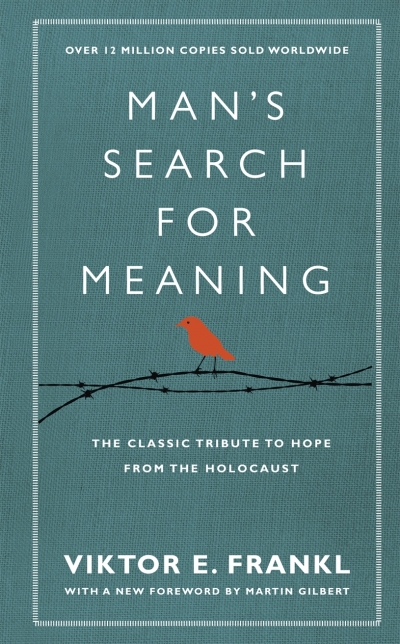
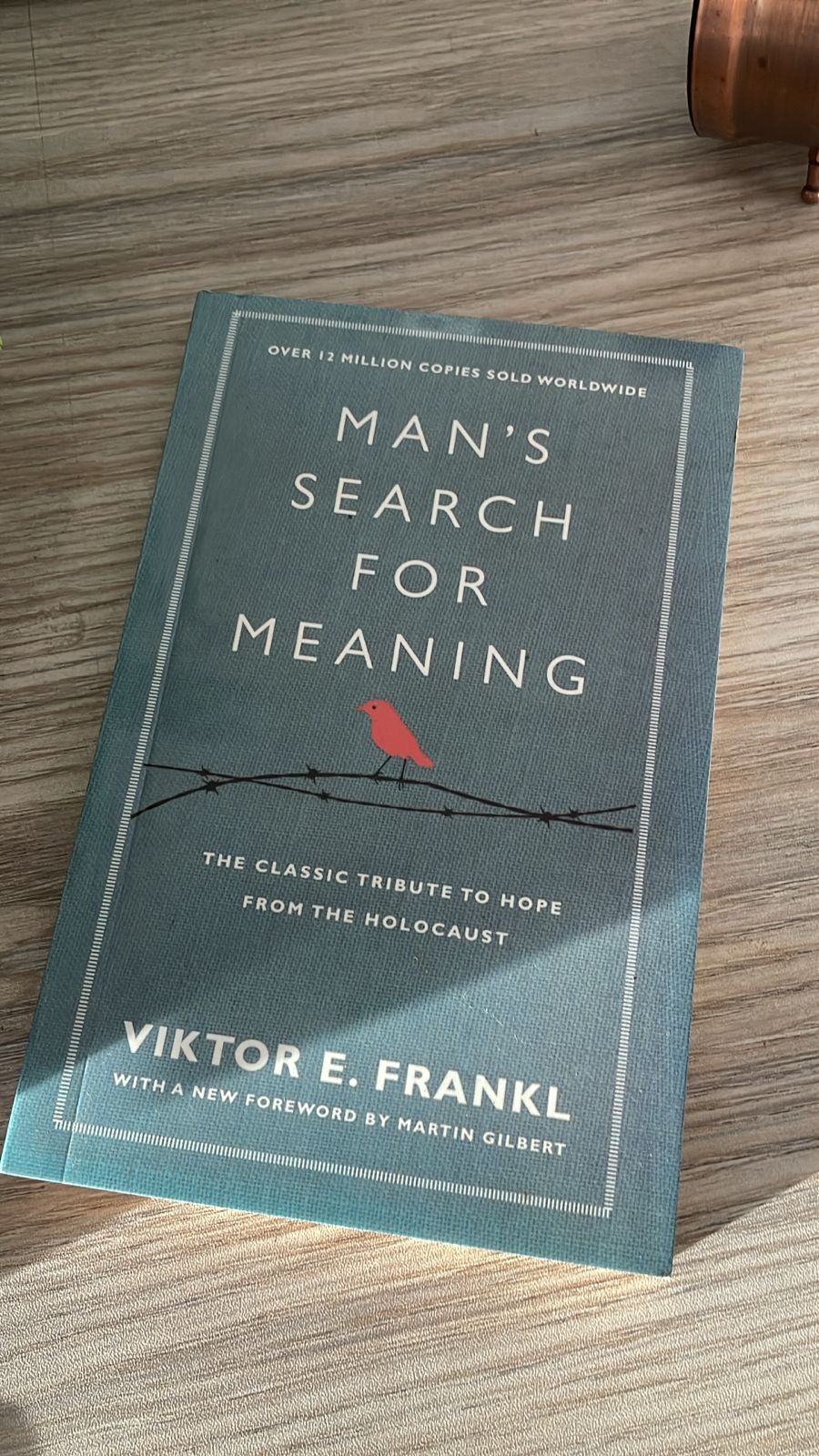

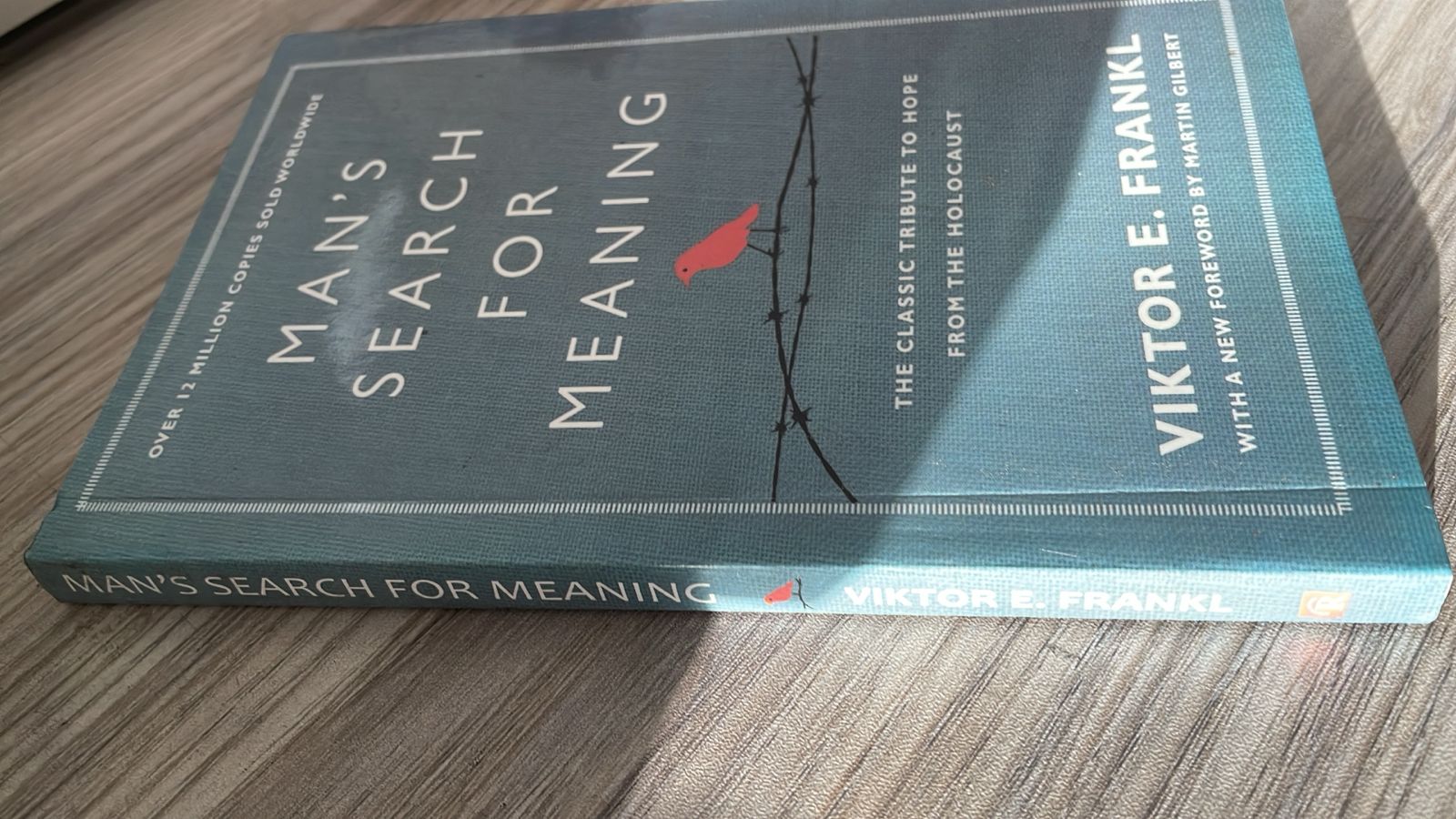





Man’s searching for meaning by Viktor E. Frankl


රු1,450.00
3 X Rs. 483.33 or 8% Cashback with


or 3 X රු483.33 with


or up to 4 X රු362.50 with


Mans Search for Meaning by Viktor Frankl is a powerful memoir and psychology classic combining Viktor Frankl’s experiences in Nazi concentration camps with his introduction to logotherapy, a meaning-centered approach to psychology. Exploring purpose, love, suffering, responsibility, resilience, hope and the human search for meaning, this influential book asks how people can continue living meaningfully even under extreme circumstances. Ideal for readers interested in psychology, philosophy, Holocaust memoirs, personal development and deeper questions about purpose and human resilience.
Out of stock
Email when stock available
Mans Search for Meaning by Viktor Frankl is a profound memoir and psychology classic about suffering, resilience, purpose, responsibility and the human capacity to discover meaning even during extraordinarily difficult circumstances.
Viktor E. Frankl was an Austrian psychiatrist and neurologist who survived Nazi concentration camps during the Holocaust.
In this influential book, he reflects on what he witnessed and experienced while imprisoned.
Hunger.
Loss.
Fear.
Exhaustion.
Humiliation.
Death.
Uncertainty.
Yet Frankl’s central question is not simply:
How much suffering can a person endure?
It is:
What helps a human being continue when almost everything has been taken away?
Frankl observed that people often needed something beyond immediate survival.
A person to love.
A responsibility still waiting.
Work left unfinished.
A future goal.
A reason to continue.
This insight became closely connected with logotherapy, Frankl’s psychological approach emphasizing the human search for meaning.
But the book does not argue that suffering is automatically good.
Nor does it suggest that people should seek pain.
Instead, Frankl focuses particularly on suffering that cannot be avoided.
When circumstances cannot immediately be changed, he asks whether a person can still choose something about their response.
Mans Search for Meaning by Viktor Frankl is therefore both a historical testimony and a deeply reflective book about psychology, purpose, freedom, responsibility and the question of what makes life worth living.
Mans Search for Meaning by Viktor Frankl – Book Overview
Mans Search for Meaning by Viktor Frankl is generally divided into two major parts.
The first reflects on Frankl’s experiences as a prisoner in Nazi concentration camps.
The second introduces the central principles of logotherapy.
Many modern editions also include additional material discussing what Frankl called tragic optimism.
Together, these sections connect real human suffering with psychological questions about meaning.
Why do some people retain hope?
Why do others lose it?
What gives a person something to live for?
How does responsibility influence purpose?
Can meaning exist even when circumstances are painful?
Frankl does not provide easy answers.
Instead, he asks readers to think differently about life.
Viktor E. Frankl
Viktor Emil Frankl was an Austrian psychiatrist, neurologist and founder of logotherapy.
Before the Holocaust, he had already developed an interest in questions involving:
Meaning.
Suicide prevention.
Psychotherapy.
Responsibility.
Human motivation.
His experiences during the Holocaust later became inseparable from the way readers understood his psychological ideas.
Frankl survived concentration camps, while many members of his family were killed.
His writing therefore emerges from both professional psychology and personal catastrophe.
A Holocaust Memoir
The first part of Mans Search for Meaning by Viktor Frankl describes life inside Nazi concentration camps.
Frankl writes about:
Arrival.
Loss of identity.
Forced labor.
Starvation.
Cold.
Violence.
Death.
Fear.
Psychological adaptation.
Prisoners were stripped of:
Possessions.
Privacy.
Freedom.
Security.
Often even their names were replaced by numbers.
The system was designed to dehumanize.
Dehumanization
One of the most disturbing realities Frankl describes is the systematic destruction of individual dignity.
When people are treated as objects, maintaining an inner sense of humanity becomes extraordinarily difficult.
Frankl became interested in what remained when nearly everything external was taken away.
Inner Freedom
One of the book’s most famous ideas concerns inner freedom.
Frankl observed that even under extreme oppression, people sometimes retained the ability to choose something about their attitude or response.
This idea requires careful interpretation.
Prisoners did not control:
Their imprisonment.
Violence.
Hunger.
Death.
Forced labor.
Nazi cruelty.
Frankl was not suggesting that they could simply think positively and remove those realities.
His point was narrower and more profound.
Even when external freedom becomes terribly limited, a person may sometimes retain an inner capacity to decide what values they will try to preserve.
Choice Under Extreme Conditions
Choice in the camps was severely restricted.
That is important.
Frankl does not describe ordinary self-help circumstances.
He is reflecting on one of history’s most extreme systems of persecution and mass murder.
Within those conditions, even a small act could represent humanity.
Helping another prisoner.
Sharing food.
Remembering someone loved.
Maintaining dignity.
Refusing to become completely emotionally numb.
Meaning
Meaning is the central theme of Mans Search for Meaning by Viktor Frankl.
Frankl believed that human beings are strongly motivated by a desire for meaning.
But meaning is not identical for everyone.
One person may find meaning through:
Work.
Another through:
Love.
Another through:
Responsibility.
Another through:
How they respond to unavoidable suffering.
Meaning is personal.
Meaning Is Not One Universal Answer
Frankl does not provide one sentence that explains the meaning of life for every human being.
Instead, he suggests that life continually asks something of us.
Our responsibility is to respond.
The right answer depends on:
The person.
The moment.
The responsibility.
The circumstances.
Purpose
People often ask:
“What is my purpose?”
Frankl’s approach shifts the question.
Instead of demanding that life explain itself to us, perhaps we should ask:
What is life asking from me now?
What responsibility is mine?
What person needs me?
What work remains unfinished?
What decision must I make?
Purpose becomes active rather than abstract.
Responsibility
Responsibility is one of the most important themes in Mans Search for Meaning by Viktor Frankl.
Freedom without responsibility can become directionless.
If people can choose, they must also take responsibility for those choices.
Frankl strongly connects meaning with responsibility.
Meaning Through Work
One way people can discover meaning is through creative or productive contribution.
Work can provide:
Purpose.
Service.
Achievement.
Expression.
Contribution.
Frankl himself thought about intellectual and professional work that remained unfinished.
That future responsibility helped connect him with life beyond the camp.
Meaning Through Love
Love is another major source of meaning.
Frankl writes powerfully about thinking of his wife while imprisoned.
He did not always know whether she was alive.
Yet the experience of loving her remained psychologically significant.
This leads toward one of Frankl’s most powerful ideas:
Love allows us to perceive another human being deeply.
Love Beyond Physical Presence
A person can remain meaningful to us even when physically absent.
Memory.
Love.
Connection.
These can continue internally.
For prisoners separated from family, that inner connection could become emotionally important.
Meaning Through Suffering
This is one of the most misunderstood parts of the book.
Frankl does not argue that suffering is necessary for a meaningful life.
If suffering can be removed, he believes people should work to remove it.
Pain should not be romanticized.
But some suffering cannot immediately be changed.
Death.
Loss.
Illness.
Past events.
Certain unavoidable circumstances.
In those situations, Frankl asks whether meaning may still be found through the way a person bears what cannot be changed.
Do Not Seek Suffering
A useful distinction is:
Meaning despite suffering is not the same as meaning because suffering is desirable.
Frankl’s philosophy should not be used to tell someone to remain in an abusive, dangerous or preventable situation.
If circumstances can be changed, action matters.
Logotherapy
The second major section introduces logotherapy.
The word comes from the Greek word logos, which Frankl connects with meaning.
Logotherapy is sometimes described as a meaning-centered form of psychotherapy.
It emphasizes the human desire to discover meaning in life.
The Will to Meaning
Frankl describes a will to meaning.
He believed that people are fundamentally motivated by the search for purpose and significance.
People want their lives to matter.
They want reasons for:
Working.
Loving.
Continuing.
Sacrificing.
Growing.
When meaning disappears, psychological difficulty can follow.
Existential Frustration
Frankl discusses what can happen when the desire for meaning becomes frustrated.
A person may ask:
Why am I doing this?
What is the point?
Why should I continue?
These questions can create emptiness.
Existential Vacuum
Frankl uses the idea of an existential vacuum to describe a sense of inner emptiness or lack of meaning.
A person may have:
Comfort.
Money.
Entertainment.
Free time.
and still feel:
Empty.
Bored.
Directionless.
Material comfort does not automatically provide purpose.
Boredom
Boredom can sometimes reveal more than a lack of entertainment.
It can reveal the absence of meaningful engagement.
People may constantly distract themselves because silence creates uncomfortable questions.
What am I doing with my life?
What matters?
Where am I going?
Success
Frankl warns against pursuing success too directly.
Success often appears as a consequence of committing yourself to something meaningful.
Constantly asking:
“Am I successful yet?”
can become distracting.
A better question may be:
“What meaningful work deserves my attention?”
Happiness
The same principle applies to happiness.
Trying desperately to force happiness can sometimes make it harder to experience.
Meaningful engagement often creates conditions in which happiness can emerge naturally.
Self-Transcendence
Frankl’s philosophy frequently points beyond excessive self-focus.
Human beings often find meaning by directing attention toward:
A person.
A cause.
A responsibility.
A piece of work.
Something larger than themselves.
This movement beyond the self is sometimes discussed as self-transcendence.
Why Helping Others Can Create Meaning
A life focused entirely on personal satisfaction can eventually become empty.
Contribution gives another dimension to existence.
Teaching someone.
Caring for family.
Creating useful work.
Serving a community.
Meaning frequently involves connection.
Future Orientation
Prisoners who could imagine something beyond the camp sometimes possessed an important psychological resource.
A future person.
A future project.
A future conversation.
A future responsibility.
Frankl observed how important future orientation could become.
A Reason to Continue
One of the central ideas associated with the book is that people can endure extraordinary difficulty when they have a powerful reason to continue.
That reason will differ from person to person.
Family.
Love.
Responsibility.
Faith.
Work.
Future possibility.
Hope
Hope in Mans Search for Meaning by Viktor Frankl is not simple optimism.
It is not:
“Everything will definitely become easy.”
Hope can exist even without certainty.
It may mean:
There is still something worth living toward.
Despair
Despair can arise when suffering appears meaningless.
Pain combined with hopelessness can become psychologically devastating.
Meaning does not remove pain.
But it may change the relationship someone has with it.
Human Dignity
Dignity is one of the most important moral themes of the book.
A person’s circumstances do not determine their human worth.
Even inside a system designed to erase individuality, small acts of dignity matter.
Kindness in Terrible Circumstances
Frankl remembers moments when prisoners showed kindness despite having almost nothing.
That raises a powerful question.
If someone with nearly nothing can still share, what does that reveal about human character?
Cruelty and Kindness
The camps revealed extremes of human behavior.
Cruelty.
Indifference.
Selfishness.
But also:
Compassion.
Sacrifice.
Generosity.
Courage.
Frankl’s reflections avoid reducing humanity to one simple category.
Character
Extreme circumstances can reveal character.
But Frankl is careful about judging prisoners too easily.
People were experiencing conditions beyond ordinary comprehension.
Human behavior under such extreme suffering cannot be understood through comfortable moral assumptions alone.
Psychological Adaptation
Frankl describes several psychological changes prisoners could experience.
Shock.
Apathy.
Emotional numbing.
Disillusionment.
These were not signs that prisoners lacked humanity.
They could function as psychological responses to unbearable conditions.
Apathy
After prolonged exposure to suffering, emotional numbness can become a defense.
A person cannot react with full emotional intensity to every horror and still function.
The mind adapts.
Trauma
Today, many readers may interpret Frankl’s descriptions through modern understanding of trauma.
However, the book was written in a different psychological era.
Frankl’s language and framework should therefore be understood within his own historical and professional context.
Loss
Loss permeates Mans Search for Meaning by Viktor Frankl.
Loss of:
Family.
Home.
Work.
Freedom.
Identity.
Security.
Health.
Future certainty.
The book asks how a person rebuilds when the life they knew has been destroyed.
Grief
Frankl’s story includes profound bereavement.
Survival itself did not erase grief.
Liberation meant freedom, but it also meant discovering how much had been lost.
Survival Is Complicated
Stories about survival are sometimes told as though liberation immediately produces happiness.
Frankl’s reflections are more complicated.
After severe trauma, returning to ordinary life can itself be difficult.
Freedom After Imprisonment
When freedom finally arrives, prisoners may not instantly know how to experience it.
The body is free.
But the mind has undergone enormous trauma.
Recovery takes time.
Disillusionment After Liberation
Frankl also describes the painful experience of discovering that the world outside did not necessarily contain everything a survivor had hoped for.
Loved ones may be gone.
Homes may be gone.
Life may never return to what it was.
Starting Again
One of the extraordinary facts of Frankl’s life is that he continued his professional work after the Holocaust.
He wrote.
Taught.
Practiced psychiatry.
Developed logotherapy.
He carried profound loss while continuing to create.
Post-Traumatic Growth
The book is sometimes associated with ideas resembling what later psychology would call post-traumatic growth.
But this must be handled carefully.
Trauma does not automatically improve people.
Suffering can devastate.
Growth is possible, but it should never be demanded from survivors.
Responsibility Toward Survivors
A dangerous misuse of Frankl would be telling someone:
“You suffered, so find meaning in it.”
Meaning cannot be imposed from outside.
Frankl’s central emphasis is personal responsibility and individual meaning.
Each person must discover meaning themselves.
Freedom and Responsibility
Frankl believed freedom should be balanced by responsibility.
Freedom asks:
What can I choose?
Responsibility asks:
What should I do with that choice?
Both are necessary.
Attitude
Attitude is another important concept.
When circumstances cannot be changed immediately, attitude may remain one area where some freedom exists.
Again, this does not mean attitude can magically remove oppression.
It means the oppressor does not necessarily control every inner value.
You Cannot Control Everything
Life contains many things outside personal control.
Other people’s behavior.
The past.
Death.
Certain illnesses.
Unexpected disasters.
Frankl asks readers to distinguish between:
What can be changed.
And what cannot.
Change What Can Be Changed
Meaning-centered thinking should not encourage passivity.
If a problem can be addressed:
Act.
Seek help.
Change the situation.
Protect yourself.
Solve what can be solved.
Acceptance becomes relevant when reality cannot simply be removed.
Tragic Optimism
Many modern editions discuss Frankl’s idea of tragic optimism.
This means maintaining the possibility of meaning despite life’s unavoidable tragic elements.
Pain.
Guilt.
Death.
Optimism here does not mean denying reality.
It means refusing to conclude that suffering makes all meaning impossible.
Optimism Without Denial
Healthy optimism recognizes:
This hurts.
This is unfair.
This happened.
I cannot undo it.
And still asks:
What is possible now?
That is very different from pretending everything is fine.
Guilt
People make mistakes.
Guilt can become destructive if it produces only self-hatred.
But guilt can also become a reason to change.
Responsibility transforms guilt into the possibility of different future behavior.
Mortality
Awareness of death can make life more meaningful.
If time were unlimited, every decision could be postponed forever.
Because life is finite, choices matter.
Life Is Temporary
Moments cannot be repeated indefinitely.
That gives ordinary experiences value.
A conversation.
A meal.
A friendship.
A morning.
Time matters because it is limited.
The Past Cannot Be Erased
Frankl offers an interesting perspective on the past.
Something meaningful that has genuinely happened cannot be removed from history.
A loving moment existed.
Work was completed.
Someone was helped.
The fact that time passes does not make those moments meaningless.
Meaning in Everyday Life
You do not need to survive an extreme historical tragedy to ask questions about meaning.
Readers can apply Frankl’s broader questions to ordinary life.
What responsibility matters today?
Who needs my attention?
What work should I complete?
What values am I living?
Career
Meaningful work does not necessarily mean having a glamorous career.
A job can become meaningful through:
Service.
Craft.
Contribution.
Responsibility.
Relationships.
The same occupation may have different meaning for different people.
Relationships
Relationships can be a major source of meaning.
Love involves recognizing another person as more than a role.
Not simply:
Partner.
Employee.
Parent.
Friend.
But a unique human being.
Family
Family responsibility may give someone a powerful reason to continue during hardship.
But meaning should never be reduced to one formula.
Not everyone finds meaning through family.
Different lives create different responsibilities.
Purpose Without Fame
A meaningful life does not require becoming famous.
Most meaningful actions happen without public recognition.
Raising a child.
Helping a friend.
Teaching.
Creating.
Caring.
Doing honest work.
Success Without Recognition
Someone can live meaningfully without becoming known by millions.
Frankl’s philosophy shifts attention from recognition toward responsibility.
What matters is not simply:
Who noticed?
But:
What did you contribute?
Comparison
Modern life encourages constant comparison.
More money.
More success.
More followers.
More achievements.
Frankl’s approach suggests a different question.
What does your life require from you?
Meaning is personal.
Social Media and Meaning
Although Frankl wrote long before social media, his ideas remain relevant.
Modern platforms can encourage people to measure worth through:
Attention.
Popularity.
Approval.
Comparison.
But external attention cannot replace purpose.
Consumerism
Buying more things can create temporary pleasure.
But possessions alone rarely answer deeper questions about meaning.
Material comfort and meaningful existence are not identical.
Depression
The book is often recommended to people experiencing depression because it discusses meaning and hope.
However, it should not be treated as a replacement for professional mental-health care.
Depression is a serious condition.
A book can provide perspective, but professional support may also be necessary.
Suicide
Frankl had professional experience related to suicide prevention before the Holocaust, and suicide is also a significant theme connected with despair within the camp experience.
Readers should know that Mans Search for Meaning by Viktor Frankl contains discussion of suicide and severe psychological suffering.
Mental Health
Frankl’s psychological ideas remain influential, but the book should be read as:
Historical testimony.
Psychological philosophy.
An introduction to logotherapy.
It is not a complete modern clinical psychology textbook.
Is Mans Search for Meaning a Self-Help Book?
Partly.
It is commonly read as a personal-development classic.
However, it is also:
A Holocaust memoir.
A psychology book.
A philosophical work.
An introduction to logotherapy.
Calling it only “self-help” can undersell its historical and psychological importance.
Is It a Holocaust Book?
Yes.
A substantial portion of the book directly reflects on Frankl’s experiences in Nazi concentration camps.
Readers should approach this historical material seriously and respectfully.
Is It a Psychology Book?
Yes.
The second major section introduces principles of logotherapy and discusses psychological ideas about meaning, anxiety, responsibility and human motivation.
Is It Difficult to Read?
The prose itself is generally accessible.
However, the subject matter can be emotionally difficult.
Readers encounter descriptions of:
Concentration camps.
Death.
Starvation.
Violence.
Loss.
Suicide.
Psychological trauma.
The emotional difficulty is much greater than the linguistic difficulty.
Is It a Long Book?
Most editions are relatively short compared with many psychology classics.
This makes the book approachable.
But its ideas often require slow reading and reflection.
A Book to Reread
Mans Search for Meaning by Viktor Frankl is one of those books many readers return to at different stages of life.
A passage that means little at twenty may feel completely different at:
Thirty.
Forty.
Sixty.
Experience changes interpretation.
Philosophical Questions
The book encourages questions such as:
What makes life meaningful?
What am I responsible for?
How should I respond to suffering?
What matters when circumstances change?
Who depends on me?
What work remains unfinished?
These questions do not have easy universal answers.
Why the Book Endures
The book remains widely read because its central question is timeless.
Human circumstances change.
Technology changes.
Careers change.
Societies change.
But people still ask:
Why am I here?
What makes life worth living?
How do I continue after loss?
What should I do with my freedom?
Content Considerations
Mans Search for Meaning by Viktor Frankl contains extremely serious historical and psychological material, including:
- The Holocaust
- Nazi concentration camps
- Antisemitic persecution
- Starvation and extreme hunger
- Forced labor
- Physical violence
- Death and mass death
- Loss of family members
- Dehumanization
- Severe illness
- Psychological trauma
- Suicide and suicidal thoughts
- Grief and bereavement
- Despair
- References to gas chambers and executions
- Extreme physical and emotional suffering
Readers sensitive to Holocaust testimony or suicide-related material should approach the book with care.
7 Powerful Life Lessons From Mans Search for Meaning by Viktor Frankl
There are many important ideas in Mans Search for Meaning by Viktor Frankl, but seven stand out:
- Meaning can remain even when circumstances are painful – Suffering does not automatically destroy every possibility of purpose, although preventable suffering should never be glorified.
- You cannot control everything, but some response may still remain yours – Frankl emphasizes a limited but important inner freedom even when external circumstances are severely restricted.
- Love can become a powerful source of meaning – The memory and recognition of another person’s unique value can give life profound significance.
- Responsibility gives freedom direction – Meaning is not simply about asking what life can give us; it also involves asking what life requires from us.
- Work and contribution can create purpose – Creating, serving, teaching, helping and completing meaningful responsibilities can connect people with something beyond themselves.
- Hope needs a future – A person who can imagine something or someone worth living toward may possess an important psychological resource during hardship.
- Suffering should never be sought, but unavoidable suffering can still be faced meaningfully – Frankl’s philosophy distinguishes between problems we should change and realities we sometimes must learn to endure.
Why Read Mans Search for Meaning by Viktor Frankl?
Mans Search for Meaning by Viktor Frankl is an excellent choice for readers interested in:
- Viktor Frankl
- Psychology
- Logotherapy
- Meaning of life
- Purpose
- Holocaust memoirs
- Personal development
- Resilience
- Mental strength
- Philosophy
- Human behavior
- Responsibility
- Hope
- Grief
- Survival
- Trauma
- Existential psychology
- Self-reflection
- Classic psychology books
- Books about overcoming adversity
It is particularly valuable for readers who want a serious book about meaning rather than a simple motivational guide.
Who Should Read This Book?
Mans Search for Meaning by Viktor Frankl may especially appeal to:
- Psychology students
- Mental-health professionals
- Personal-development readers
- Philosophy readers
- Readers interested in the Holocaust
- Readers exploring purpose
- People experiencing major life changes
- Readers interested in resilience
- Students
- Teachers
- Counselors
- Leaders
- Readers interested in existential psychology
- People exploring grief and loss
- Anyone asking deeper questions about what makes life meaningful
Mans Search for Meaning by Viktor Frankl – Finding a Why to Live For
Mans Search for Meaning by Viktor Frankl is difficult to reduce to a motivational slogan.
Its historical context is too serious.
Its psychological ideas are too nuanced.
Frankl is not promising that positive thinking eliminates suffering.
He is not saying every tragedy happens for a good reason.
He is not telling people to tolerate preventable pain.
Instead, he explores a harder question.
When something truly cannot be changed, what remains?
Perhaps:
Love.
Responsibility.
Memory.
Choice.
Dignity.
A future task.
A person still needing you.
A value you refuse to abandon.
Meaning does not make suffering painless.
But it can sometimes prevent suffering from becoming the entire definition of a life.
This is why Frankl’s work continues to resonate.
People lose jobs.
Relationships end.
Loved ones die.
Health changes.
Plans fail.
Entire futures can suddenly look different.
At those moments, the question:
“Why did this happen?”
may have no satisfying answer.
Frankl suggests another possible question:
What does life require from me now?
That question shifts attention toward responsibility.
Perhaps there is someone to love.
Work to complete.
A decision to make.
A value to preserve.
A future still capable of containing something meaningful.
For readers interested in psychology, purpose, resilience, Holocaust testimony and profound questions about human existence, Mans Search for Meaning by Viktor Frankl remains one of the most influential and challenging books about what it means to continue living meaningfully even when life becomes extraordinarily difficult.
Learn more about Man’s Search for Meaning by Viktor E. Frankl on the official Penguin Random House website.
Explore more psychology and personal development books at Bargain Books.
| Author | Viktor E. Frankl |
|---|---|
| Language | English |
| Type | Paperback Printed Book |
| ISBN/ISSN | 978-1846041242, 9781846041242 |
| Pages | 160 |
Be the first to review “Man’s searching for meaning by Viktor E. Frankl”
Related products
-28%

Self-Help & Psychology
Original price was: රු1,800.00.රු1,300.00Current price is: රු1,300.00.
3 X Rs. 433.33 or 8% Cashback with
or 3 X රු433.33 with
or up to 4 X රු325.00 with
-24%
Out of stock
Non-Fiction & Knowledge
Original price was: රු2,100.00.රු1,600.00Current price is: රු1,600.00.
3 X Rs. 533.33 or 8% Cashback with
or 3 X රු533.33 with
or up to 4 X රු400.00 with
-14%
Out of stock
Self-Help & Psychology
Original price was: රු2,900.00.රු2,500.00Current price is: රු2,500.00.
3 X Rs. 833.33 or 8% Cashback with
or 3 X රු833.33 with
or up to 4 X රු625.00 with

Out of stock
Non-Fiction & Knowledge
රු1,600.00
3 X Rs. 533.33 or 8% Cashback with
or 3 X රු533.33 with
or up to 4 X රු400.00 with
-24%

Non-Fiction & Knowledge
Original price was: රු2,300.00.රු1,750.00Current price is: රු1,750.00.
3 X Rs. 583.33 or 8% Cashback with
or 3 X රු583.33 with
or up to 4 X රු437.50 with

Non-Fiction & Knowledge
රු1,950.00
3 X Rs. 650.00 or 8% Cashback with
or 3 X රු650.00 with
or up to 4 X රු487.50 with

Non-Fiction & Knowledge
රු1,700.00
3 X Rs. 566.67 or 8% Cashback with
or 3 X රු566.67 with
or up to 4 X රු425.00 with

Non-Fiction & Knowledge
රු2,450.00
3 X Rs. 816.67 or 8% Cashback with
or 3 X රු816.67 with
or up to 4 X රු612.50 with
Reviews
There are no reviews yet.