
No products in the cart.
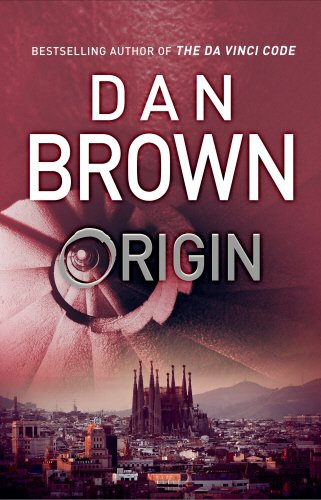
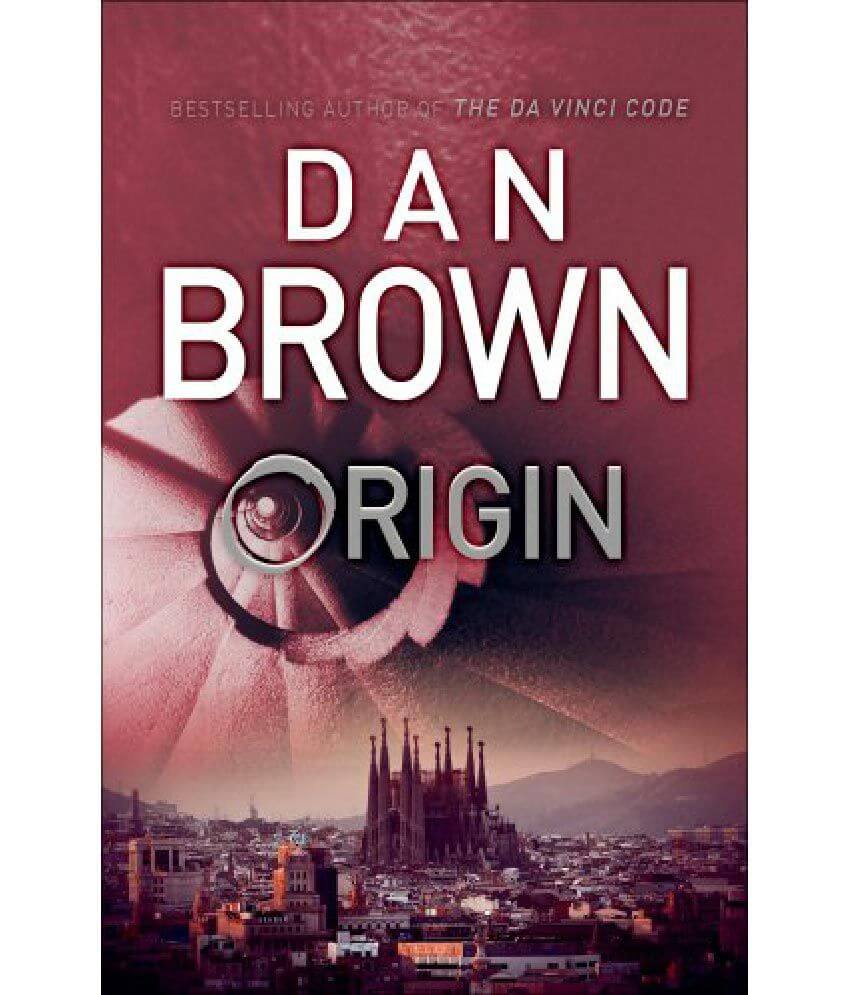



Origin by Dan Brown is a fast-paced intellectual thriller that sends Harvard professor Robert Langdon into a dangerous race across Spain after a brilliant futurist prepares to reveal a scientific discovery capable of challenging humanity’s understanding of its past and future.
Robert Langdon arrives at the spectacular Guggenheim Museum Bilbao for an event hosted by Edmond Kirsch, a billionaire computer scientist, inventor and futurist who was once one of Langdon’s students.
Kirsch claims he has solved two of the most fundamental questions in human history:
Where do we come from?
Where are we going?
Hundreds of invited guests—and potentially millions of people around the world—are waiting to hear his answer.
But before Kirsch’s discovery can be properly revealed, the evening is violently thrown into chaos.
Suddenly, Langdon finds himself caught inside a mystery involving science, religion, technology, Spanish history, artificial intelligence, royal institutions and a secret that powerful people may be desperate to suppress.
Working alongside Ambra Vidal, director of the Guggenheim Bilbao, Langdon must locate the key to Kirsch’s presentation before the discovery disappears.
Their search takes them through modern art, architecture, symbols and religious history while an enemy remains dangerously close behind.
Origin by Dan Brown combines the puzzle-solving style readers expect from the Robert Langdon novels with unusually modern subjects such as artificial intelligence, technological disruption, scientific theories about life and the question of whether religion and science must always exist in conflict.
Origin by Dan Brown – Book Overview
Origin by Dan Brown is the fifth Robert Langdon thriller.
Like The Da Vinci Code, Angels & Demons and Inferno, the novel takes a huge philosophical question and turns it into a fast-moving mystery.
This time, the central conflict is especially modern.
Instead of focusing primarily on an ancient secret, Langdon is trying to protect a future-changing scientific discovery.
That gives Origin a distinctive position within the series.
It is simultaneously interested in:
Ancient belief.
Modern science.
Artificial intelligence.
Architecture.
Religion.
Evolution.
Technology.
And humanity’s future.
Robert Langdon
Robert Langdon is a Harvard professor specializing in symbology and religious iconology.
He is not a conventional action hero.
His greatest weapons are:
Knowledge.
Memory.
Pattern recognition.
History.
Art.
Symbols.
Logical reasoning.
Langdon succeeds by noticing connections other people overlook.
That makes Dan Brown’s thrillers especially appealing to readers who enjoy mysteries built around ideas as much as physical danger.
Edmond Kirsch
Edmond Kirsch is central to the story.
He is:
A computer scientist.
Futurist.
Inventor.
Entrepreneur.
Atheist.
Technology visionary.
And former student of Robert Langdon.
Kirsch believes scientific progress is moving humanity toward a major turning point.
He has spent enormous resources trying to answer questions humans have debated for thousands of years.
His presentation is intended to change the global conversation.
Where Do We Come From?
The first question concerns the origin of life.
For centuries, religions have offered creation stories explaining human existence.
Science has developed very different frameworks involving:
Physics.
Chemistry.
Biology.
Evolution.
Origin places these different approaches into direct conversation.
The novel does not merely ask:
Which side wins?
It asks what happens socially when new scientific information challenges beliefs people consider central to their identities.
Where Are We Going?
The second question may be even more unsettling.
Human beings understand that technology is changing society.
Artificial intelligence.
Automation.
Genetics.
Computing.
Robotics.
What does that mean for our future?
Will technology simply give humans better tools?
Or could technological evolution change what it means to be human?
These questions give Origin by Dan Brown a strong science-and-future element.
Science Versus Religion
The relationship between science and religion is one of the novel’s biggest themes.
Some people imagine the two as permanent enemies.
Science asks for evidence.
Religion may involve faith.
But human history is more complicated.
Scientists can be religious.
Religious institutions can support scholarship.
Scientific discoveries can challenge traditional interpretations without automatically answering every philosophical question.
Dan Brown uses this tension to create the intellectual conflict behind the thriller.
Faith
The novel does not treat faith simply as one thing.
Different religious figures respond differently to technological and scientific change.
This matters because religions contain:
Institutions.
Traditions.
Communities.
Individuals.
A belief system cannot always be represented accurately by one extreme voice.
Religious Extremism
At the same time, Origin by Dan Brown explores the danger that arises when belief becomes intolerant of contradiction.
When someone becomes convinced that only one worldview is permitted, information itself may begin to feel threatening.
That creates fertile ground for violence.
Artificial Intelligence
One of the most memorable technological elements in Origin is the presence of advanced artificial intelligence.
Brown explores what happens when AI becomes capable of:
Conversation.
Planning.
Analysis.
Personal assistance.
Rapid decision-making.
And interacting with people almost as naturally as another human being.
Considering how much generative AI has developed since the novel’s 2017 publication, this aspect of the story now feels particularly interesting.
AI and Trust
An important question is:
When should we trust an intelligent machine?
An AI system might have access to enormous amounts of information.
But information is not the same as:
Judgment.
Morality.
Human values.
Accountability.
The novel encourages readers to think about what happens when people become comfortable delegating important decisions to technology.
Technology Moves Faster Than Ethics
This is one of the most relevant ideas in Origin by Dan Brown.
We are often capable of inventing technologies before society fully agrees on how they should be used.
We can ask:
Can we build this?
But perhaps we should also ask:
Should we?
Who controls it?
Who is responsible when it causes harm?
Those questions remain increasingly important today.
The Guggenheim Museum Bilbao
The novel opens at the famous Guggenheim Museum Bilbao, designed by architect Frank Gehry.
Its futuristic appearance is ideal for Edmond Kirsch’s presentation.
The location represents:
Innovation.
Modernity.
Creative disruption.
Technology.
New ways of seeing the world.
Dan Brown frequently uses real architecture as part of his storytelling, and Origin continues that tradition.
Bilbao
Bilbao becomes more than background scenery.
The city represents the meeting of:
Old Europe.
Modern architecture.
Technology.
Culture.
This contrast fits the central conflict between ancient beliefs and futuristic scientific ideas.
Barcelona
The story later moves toward Barcelona, another city rich in:
Architecture.
Religion.
History.
Art.
Barcelona allows Brown to bring modern technology into direct contact with some of Spain’s most distinctive historic and artistic spaces.
Antoni Gaudí
Readers interested in architecture will find connections to the work of Antoni Gaudí especially enjoyable.
Gaudí’s buildings often combine:
Nature.
Geometry.
Religion.
Symbolism.
Architecture.
That makes his work particularly appropriate for a Robert Langdon story.
The Sagrada Família
Barcelona’s Sagrada Família naturally fits the themes of Origin.
It combines religious devotion with extraordinary architectural imagination.
Its presence emphasizes the novel’s recurring question:
Does scientific progress necessarily erase spirituality?
Or can human creativity occupy both worlds?
Art
Modern art also plays an important role.
Langdon is constantly interpreting visual information.
Artwork can communicate ideas differently from scientific papers or religious texts.
A painting or sculpture can challenge assumptions without giving a single definitive answer.
Symbols
As expected from a Robert Langdon novel, symbols matter.
A symbol can survive across centuries while changing meaning.
The same image may be interpreted differently by:
Religions.
Artists.
Governments.
Individuals.
Understanding context becomes crucial.
Passwords and Codes
The plot involves locating the password necessary to unlock Kirsch’s discovery.
This transforms the mystery into a race against time.
The password is not simply a random sequence.
Like many Dan Brown puzzles, it is tied to:
Culture.
Knowledge.
Literature.
Personal meaning.
That creates the familiar pleasure of trying to solve the puzzle alongside Langdon.
Poetry and Literature
Dan Brown frequently combines literature with codes.
Words can hide:
References.
Patterns.
Historical connections.
Double meanings.
Readers who enjoy puzzles based on literature and symbolism will find plenty to explore.
Hidden History
Origin by Dan Brown also uses Spanish history as part of its mystery.
Modern Spain carries the legacy of:
Monarchy.
Catholicism.
Political conflict.
Dictatorship.
Social transformation.
This background adds complexity to the novel’s religious and political tensions.
The Spanish Royal Family
The story also brings the Spanish monarchy into the larger mystery.
Royal institutions represent another kind of continuity.
Like religion, monarchy connects:
Tradition.
History.
Identity.
Modern politics.
A rapidly changing technological world creates pressure on institutions built around centuries of tradition.
Tradition Versus Change
This becomes one of the biggest themes in the novel.
Human civilization depends on tradition.
Tradition preserves:
Knowledge.
Identity.
Community.
But refusing all change can prevent progress.
The challenge is deciding:
What should be preserved?
What should change?
And who gets to decide?
Progress
Technological progress is often treated as automatically positive.
Faster.
Smarter.
More efficient.
But progress creates new questions.
If machines replace certain jobs, who benefits?
If algorithms know us better, what happens to privacy?
If science changes our understanding of life, how will culture respond?
Origin by Dan Brown uses a thriller structure to bring these questions into popular fiction.
Evolution
Evolution is naturally connected to the central mystery.
Human beings have long asked why we exist.
Evolution explains biological development through natural processes.
Yet the scientific explanation of how life changes does not automatically settle every philosophical argument about meaning.
Brown uses this distinction to generate tension.
Creation
Creation stories exist across cultures.
They provide answers not only about biology but about:
Purpose.
Identity.
Morality.
Human significance.
A scientific discovery that challenges literal interpretations can therefore affect much more than one academic theory.
Can Science Answer Everything?
Science is extraordinarily powerful at answering questions about the observable universe.
But some questions remain philosophical.
What makes a meaningful life?
What should people value?
What is morally right?
What responsibilities do we have toward each other?
A scientific formula alone may not answer these questions.
Can Religion Ignore Science?
Likewise, religious belief cannot make empirical evidence disappear.
When evidence changes our understanding of nature, societies must decide how belief and knowledge interact.
The tension between these two mistakes makes the novel more interesting than simply declaring one side victorious.
Futurism
Edmond Kirsch is a futurist.
Futurists examine trends and try to imagine where technology and society may be heading.
But prediction is difficult.
People often:
Overestimate short-term changes.
Underestimate long-term changes.
Predict technologies correctly but misunderstand their social effects.
The future rarely arrives exactly as expected.
Technology and Humanity
One of the deepest questions behind Origin by Dan Brown is whether technology is something humans use—or something that will eventually transform humans themselves.
Smartphones already influence:
Memory.
Attention.
Communication.
Relationships.
Navigation.
Information access.
AI could deepen this relationship significantly.
Human-Machine Relationships
As digital assistants become more capable, people may increasingly treat machines as:
Advisers.
Teachers.
Companions.
Decision tools.
The boundary between using technology and depending upon technology becomes increasingly important.
Information
The thriller depends heavily on controlling information.
Who knows Kirsch’s discovery?
Who can access it?
Who can stop it?
Information can create power.
This is especially true in the digital age, where a discovery can potentially reach billions of people almost instantly.
The Internet Changes Secrecy
Historically, suppressing information could mean destroying:
A manuscript.
A book.
A person.
Digital information works differently.
It can be copied.
Uploaded.
Mirrored.
Distributed globally.
That makes secrecy both easier and more difficult.
Media
The novel also reflects the way major events become global media spectacles.
A scientific announcement is no longer limited to academics sitting inside one room.
Millions can watch remotely.
That changes how:
Ideas spread.
Controversies develop.
Institutions respond.
Public Opinion
Facts do not enter an empty social environment.
People interpret new discoveries through existing beliefs.
Two people can receive the same information and react completely differently.
That means communication matters as much as discovery.
Fear of Change
Human beings often fear technologies that challenge familiar ways of life.
Sometimes those fears are exaggerated.
Sometimes they are justified.
Good judgment requires separating:
Real risks.
Uncertainty.
Hype.
Moral panic.
Conspiracy
Dan Brown’s thrillers often explore the possibility that powerful groups are hiding information.
Origin continues this tradition.
However, readers should remember that it is fiction.
The historical, scientific and architectural references create realism, but the central conspiracy and characters belong to the novel’s fictional plot.
Fast-Paced Thriller
Readers should expect short chapters, frequent cliffhangers and rapid movement between perspectives and locations.
This makes Origin by Dan Brown particularly suitable for readers who enjoy:
Quick pacing.
Mysteries.
Puzzle solving.
International settings.
Conspiracies.
High-stakes secrets.
Is Origin Part of a Series?
Yes.
Origin is officially Robert Langdon Book 5.
As of 2026, the Robert Langdon novels are:
- Angels & Demons – 2000
- The Da Vinci Code – 2003
- The Lost Symbol – 2009
- Inferno – 2013
- Origin – 2017
- The Secret of Secrets – 2025
Dan Brown’s official site currently lists The Secret of Secrets as the sixth Robert Langdon novel.
Do You Need to Read the Robert Langdon Books in Order?
No.
Each Robert Langdon novel contains its own central mystery and can generally be read independently.
You can begin directly with Origin by Dan Brown without reading The Da Vinci Code first.
However, publication order is useful if you want to follow Langdon’s appearances chronologically.
Is Origin Connected to Inferno?
Yes, in the sense that Robert Langdon appears in both.
Inferno is Book 4 and Origin is Book 5.
But Origin introduces a new central mystery, new supporting characters and a different setting.
Reading Inferno is not required to understand the plot.
What Comes After Origin?
The next Robert Langdon novel is The Secret of Secrets, published in 2025. It follows Langdon into a new mystery involving consciousness and noetic science.
Is Origin Based on a True Story?
No.
Origin by Dan Brown is fiction.
However, Brown incorporates real:
Museums.
Architecture.
Cities.
Works of art.
Historical references.
Scientific ideas.
Religious traditions.
That mixture of factual background and fictional conspiracy is one of the defining features of his thrillers.
Is Origin About AI?
Partly.
Artificial intelligence plays a significant role, but the novel is broader than a pure AI thriller.
Its main themes include:
Human origins.
Evolution.
Religion.
Science.
Technology.
The future.
AI becomes part of the larger question about where humanity may be heading.
Is Origin a Religious Thriller?
Yes, but it is equally a science-and-technology thriller.
Religion is central because Edmond Kirsch believes his discovery could transform how humanity understands creation.
The story therefore places technological futurism against ancient religious institutions.
Is Origin Difficult to Read?
Generally, no.
Brown explains historical and scientific ideas through the story rather than expecting readers to already understand them.
The chapters are relatively short and the mystery moves quickly.
This makes the book approachable even for readers who do not usually read science or history.
Is Origin a Standalone?
The central mystery is standalone.
Robert Langdon is a recurring protagonist, but you can read Origin by Dan Brown as an independent thriller.
Is There Romance?
There is interpersonal chemistry and emotional connection, but Origin is not primarily a romance.
Its focus is:
Mystery.
Science.
Religion.
Conspiracy.
Technology.
Adventure.
Movie Adaptation
As of September 2026, Origin has not received the major Ron Howard/Tom Hanks film adaptation that The Da Vinci Code, Angels & Demons and Inferno received. Dan Brown’s official site identifies those three earlier Langdon novels as the ones adapted into the major film franchise.
Dan Brown
Dan Brown is the bestselling author of thrillers including:
Digital Fortress
Deception Point
Angels & Demons
The Da Vinci Code
The Lost Symbol
Inferno
Origin
and The Secret of Secrets.
His Robert Langdon novels combine:
Art.
Codes.
History.
Religion.
Architecture.
Science.
Technology.
International adventure.
Your BookLounge Edition
Your BookLounge listing currently uses:
Title: Origin by Dan Brown
Product Code: 10279
Category: Fiction > Thriller, Mystery & Crime
Your WordPress media uses ISBN 9780552174169 for the cover image.
Penguin confirms that ISBN for the Corgi paperback edition, with:
ISBN: 9780552174169
Format: Paperback
Length: 560 pages
Series: Robert Langdon #5
So the ISBN associated with your current cover is consistent with the official publisher record.
Content Considerations
Origin by Dan Brown includes mature thriller material such as:
- Murder and death
- Assassination
- Violence
- Threats
- Religious extremism
- Conspiracy
- Political tension
- Discussions of death and human origins
- Some disturbing imagery
- High-stress pursuit and danger
It is primarily an adult thriller, though older teen readers accustomed to crime and conspiracy novels may also find it accessible.
Important Themes
Origin by Dan Brown explores:
- Science
- Religion
- Human origins
- Artificial intelligence
- Technology
- Evolution
- Creation
- Futurism
- Art
- Architecture
- Symbols
- Faith
- Information
- Conspiracy
- Progress
- Tradition
- Power
- Ethics
- Human identity
- The future of humanity
7 Powerful Reasons to Read Origin by Dan Brown
- It asks two enormous questions. The thriller revolves around where humanity came from and where humanity may be going, giving the mystery much bigger stakes than an ordinary crime investigation.
- Robert Langdon returns with his trademark puzzle solving. Art, architecture, literature, symbols and historical references become clues in a race to preserve Edmond Kirsch’s discovery.
- The Spanish setting is visually spectacular. Bilbao, Barcelona, the Guggenheim Museum and distinctive Spanish architecture give the story a vivid sense of place.
- Artificial intelligence plays an important role. The book’s interest in AI, automation and human-machine interaction feels even more relevant now than when the novel first appeared in 2017.
- Science and religion create an intelligent central conflict. Instead of limiting the plot to a murder, Brown explores how disruptive scientific discoveries can collide with deeply held beliefs.
- The chapters are built for fast reading. Short sections, cliffhangers and rapidly changing perspectives make it easy to keep saying, “one more chapter.”
- You can read it without starting the whole Robert Langdon series. Although it is Book 5, its mystery is self-contained, making Origin by Dan Brown an easy entry point for new readers.
Why Read Origin by Dan Brown?
Origin by Dan Brown is an excellent choice for readers interested in:
- Dan Brown
- Robert Langdon
- The Da Vinci Code
- Conspiracy thrillers
- Mystery novels
- Artificial intelligence
- Science fiction ideas in realistic thrillers
- Religion and science
- Modern art
- Architecture
- Spain
- Bilbao
- Barcelona
- Evolution
- Futurism
- Codes and symbols
- Fast-paced thrillers
- Intellectual mysteries
- Technology
- Books with major twists
It is particularly suited to readers who enjoy thrillers that make them think while still moving quickly.
Who Should Read This Book?
Origin by Dan Brown may especially appeal to:
- Dan Brown fans
- Robert Langdon readers
- Mystery and thriller fans
- Readers interested in AI
- Technology enthusiasts
- Readers fascinated by religion and science
- Art and architecture lovers
- Fans of international thrillers
- Readers who enjoy codes and puzzles
- Readers who enjoyed The Da Vinci Code
- Readers who enjoy scientific mysteries
- Fans of conspiracy fiction
- Anyone interested in big questions about humanity’s future
Origin by Dan Brown – Where Do We Come From and Where Are We Going?
Origin by Dan Brown begins with a discovery.
Not treasure.
Not an ancient manuscript.
Not a lost painting.
A scientific discovery.
Edmond Kirsch believes he has found something capable of transforming humanity’s understanding of itself.
He does not simply want to publish a research paper.
He wants the world to watch.
Where do we come from?
Where are we going?
Those questions have existed far longer than modern science.
Religions have answered them.
Philosophers have debated them.
Scientists have investigated them.
Now Kirsch believes he has an answer powerful enough to disrupt all three worlds.
Then the presentation collapses into chaos.
The information may disappear.
And Robert Langdon is forced into the kind of race he understands all too well.
Find the clue.
Interpret the symbol.
Solve the password.
Stay alive.
But Origin differs from some earlier Langdon adventures because the great secret is aimed toward the future, not simply buried in the past.
The novel asks what happens when our technology becomes powerful enough to change the stories humanity tells about itself.
If science explains more of our origins, what happens to faith?
If artificial intelligence becomes more capable, what happens to human uniqueness?
If technological evolution accelerates, what will humanity look like in another century?
Dan Brown does not turn these questions into a textbook.
He turns them into a chase.
Museums become crime scenes.
Architecture becomes evidence.
Poetry becomes code.
Technology becomes both guide and threat.
And a discovery intended to answer humanity’s biggest questions creates another one:
Are we ready for the truth we say we want?
For readers who enjoy intelligent thrillers filled with science, religion, AI, history, art and fast-moving mystery, Origin by Dan Brown is one of the most modern and thought-provoking Robert Langdon adventures.
Learn more about Origin by Dan Brown on the official Dan Brown website.
Explore more mystery and thriller books at Bargain Books.
| Author | Dan Brown |
|---|---|
| Language | English |
| Type | Paperback Printed Book (Second Quality Copy) |
Be the first to review “Origin by dan brown”
Related products
Out of stock
Children & Young Adult
රු3,200.00
3 X Rs. 1,066.67 or 8% Cashback with


or 3 X රු1,066.67 with


or up to 4 X රු800.00 with

Out of stock
Fiction & Literature
රු1,700.00
3 X Rs. 566.67 or 8% Cashback with
or 3 X රු566.67 with
or up to 4 X රු425.00 with
-20%
Out of stock
Fiction & Literature
Original price was: රු2,450.00.රු1,950.00Current price is: රු1,950.00.
3 X Rs. 650.00 or 8% Cashback with
or 3 X රු650.00 with
or up to 4 X රු487.50 with
Out of stock
Classics & Literary Fiction
රු1,750.00
3 X Rs. 583.33 or 8% Cashback with
or 3 X රු583.33 with
or up to 4 X රු437.50 with
-48%

Out of stock
Classics & Literary Fiction
Original price was: රු3,000.00.රු1,550.00Current price is: රු1,550.00.
3 X Rs. 516.67 or 8% Cashback with
or 3 X රු516.67 with
or up to 4 X රු387.50 with
-26%

Contemporary romance
Original price was: රු1,950.00.රු1,450.00Current price is: රු1,450.00.
3 X Rs. 483.33 or 8% Cashback with
or 3 X රු483.33 with
or up to 4 X රු362.50 with
-6%
Original price was: රු8,700.00.රු8,200.00Current price is: රු8,200.00.
3 X Rs. 2,733.33 or 8% Cashback with
or 3 X රු2,733.33 with
or up to 4 X රු2,050.00 with

Out of stock
Children & Young Adult
රු12,000.00
3 X Rs. 4,000.00 or 8% Cashback with
or 3 X රු4,000.00 with
or up to 4 X රු3,000.00 with
Reviews
There are no reviews yet.