
No products in the cart.
-18%
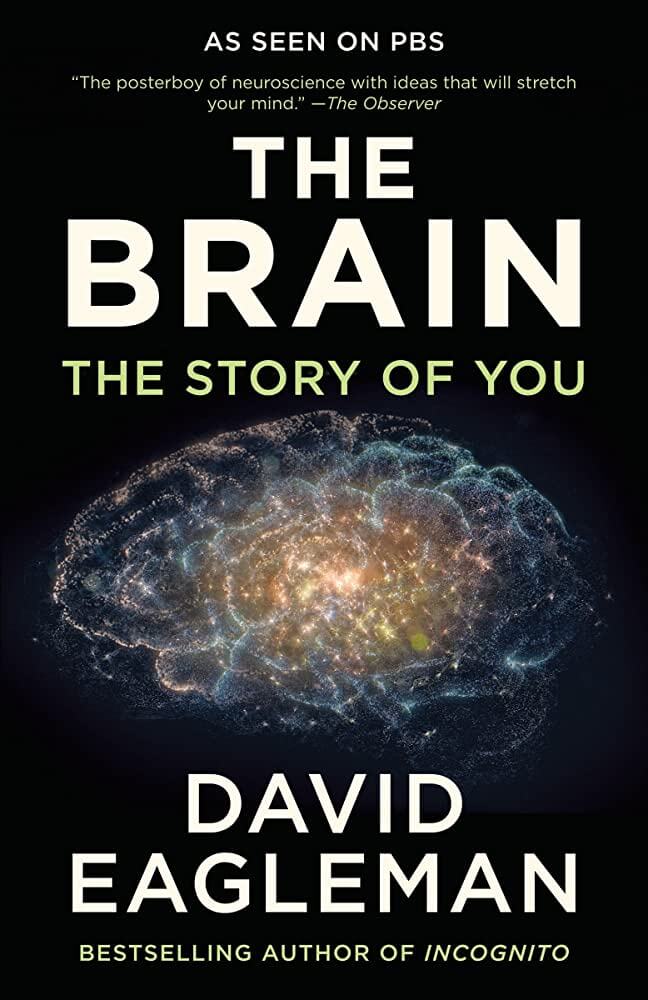
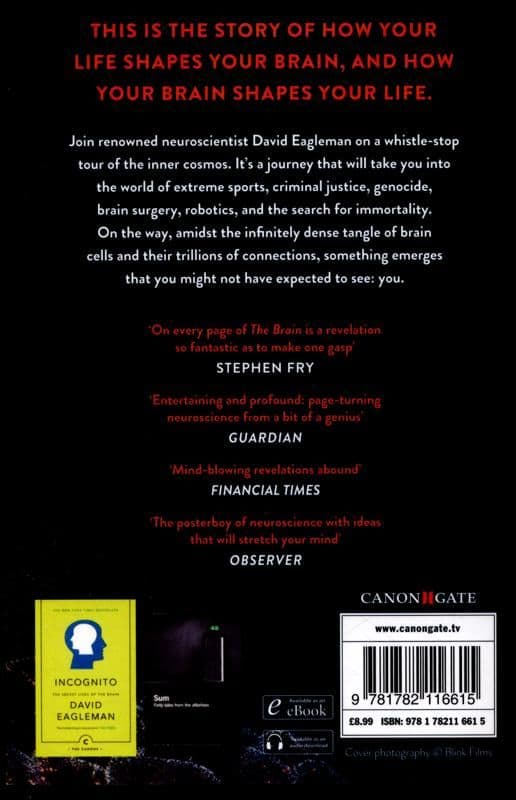
The Brain: The Story of You by David Eagleman
Original price was: රු2,800.00.රු2,300.00Current price is: රු2,300.00.
3 X Rs. 766.67 or 8% Cashback with


or 3 X රු766.67 with


or up to 4 X රු575.00 with


Embark on a fascinating exploration of the brain with ‘The Brain: The Story of You’ by David Eagleman. This bestselling book takes readers on a captivating journey through the complexities of the human brain, unraveling the mysteries of consciousness and identity. Ideal for those seeking an engaging and accessible guide to the wonders of neuroscience.
Out of stock
Email when stock available
The Brain: The Story of You by David Eagleman
The Brain Story of You by David Eagleman is a fascinating introduction to neuroscience, consciousness, identity, decision-making, perception, relationships, and human behaviour.
The book explores one of the most mysterious objects we know: the human brain.
Eagleman asks questions that feel simple at first.
Who are you?
How do you experience reality?
How do you make decisions?
Why does your brain need other people?
And how could technology change the human experience?
Why Read The Brain Story of You?
The Brain Story of You is an excellent choice for readers who want to understand neuroscience without reading a highly technical textbook.
Eagleman uses stories, scientific ideas, unusual cases, and real-world examples to explain how the brain creates the experience we call everyday life.
The book connects biology with questions about personality, behaviour, relationships, morality, and technology.
This makes it useful for both science readers and people interested in psychology.
Your Brain Creates Your Reality
We experience the world through sight, sound, touch, smell, and taste.
But the brain does not simply record reality like a camera.
It receives information from the senses and constructs an internal interpretation of what is happening around us.
Eagleman explores how this process shapes what we experience as reality.
This raises an interesting question.
If the brain is interpreting everything, how much of what we experience is created inside our own minds?
What Makes You You?
Identity is one of the central themes in The Brain Story of You.
People often think of personality as something fixed.
But the brain constantly changes through experiences, relationships, learning, memories, and choices.
Our sense of self therefore emerges from an enormously complicated biological system.
Penguin Random House describes the book as exploring how life shapes the brain and how the brain, in return, shapes life.
How Do We Make Decisions?
Decision-making may feel completely conscious.
You compare options.
You think about consequences.
Then you choose.
But the brain contains many processes operating beneath conscious awareness.
Past experiences, emotions, habits, expectations, and biological signals can all influence choices.
Understanding this can help readers think more carefully about why people behave the way they do.
Gut Feelings and Intuition
Sometimes a person feels that something is right or wrong without being able to explain exactly why.
Eagleman explores topics including gut feelings as part of his wider investigation into how the brain works.
These experiences remind us that conscious reasoning is only one part of mental activity.
The brain may process information before we can clearly put that information into words.
Why Other People Matter
Humans are deeply social.
Our brains develop within families, friendships, communities, and cultures.
The Brain Story of You asks why the human brain needs other people and examines the social side of neuroscience.
Relationships influence emotions.
They influence behaviour.
They also influence how we understand ourselves.
The person you become is shaped partly through interactions with other people.
Facial Expressions and Communication
People constantly read one another.
A small change in facial expression can communicate happiness, fear, anger, uncertainty, or discomfort.
Much of this happens quickly.
Eagleman uses subjects such as facial expressions to explore how the brain interprets social information.
This makes neuroscience relevant to communication and relationships, not only biology.
The Brain and Morality
The book also enters areas such as criminal justice and human behaviour.
These subjects raise difficult questions.
If biology influences behaviour, how should society think about responsibility?
How much control does a person have over every impulse?
Neuroscience does not provide simple answers to these questions.
But it gives us another perspective from which to examine them.
The Brain Can Change
One of the most fascinating characteristics of the brain is its ability to adapt.
Experience changes neural connections.
Learning changes them.
Practice changes them.
This ability means the brain is not simply completed once childhood ends.
Our experiences continue shaping the system throughout life.
Brain Surgery and Neuroscience
The Brain Story of You introduces readers to examples involving brain surgery as part of its exploration of consciousness and identity.
Studying what happens when particular brain systems change can reveal surprising information about how the normal brain works.
These cases help transform abstract neuroscience into human stories.
Technology and the Future of Humanity
Technology is another major theme.
The book asks how emerging technologies may change what it means to be human.
Modern neuroscience increasingly overlaps with robotics, artificial intelligence, sensory technology, and brain-machine interfaces.
These developments raise exciting possibilities.
They also raise difficult ethical questions.
Can Humans Develop New Abilities?
Technology may eventually allow people to interact with information in ways that feel unfamiliar today.
The limits of human perception are partly determined by the biological senses we were born with.
But technological devices can potentially translate new types of information into signals the brain can learn to interpret.
This makes the relationship between the brain and technology particularly interesting.
The Search for Immortality
Eagleman even touches on the search for immortality while examining the future of identity and the brain.
If identity emerges from patterns of activity in the brain, could some version of those patterns ever be preserved?
Questions like this sit somewhere between neuroscience, philosophy, and technology.
They encourage readers to think beyond everyday assumptions about the mind.
Neuroscience Without Heavy Technical Language
One advantage of The Brain Story of You is its accessibility.
Penguin Random House presents it as an introduction to major questions about the brain, reality, identity, social behaviour, and technology.
Readers do not need advanced training in neuroscience.
The focus is on understanding ideas and their implications rather than memorizing complicated terminology.
Companion to The Brain Television Series
The book was created as the companion volume to David Eagleman’s international PBS television series The Brain.
This helps explain its broad and visual approach.
The paperback edition also contains colour illustrations throughout.
Readers who enjoy documentaries about science and human behaviour may find the style especially approachable.
About David Eagleman
David Eagleman is a neuroscientist, author, and the creator and host of the Emmy-nominated television series The Brain. Penguin Random House also identifies him as the CEO of Neosensory, a company developing neuroscience-related hardware.
His other books include Incognito and Livewired.
His writing often focuses on explaining complex neuroscience through accessible examples and larger questions about human life.
7 Amazing Lessons from The Brain Story of You
1. Your brain helps construct your reality.
What you experience depends on how your brain interprets sensory information.
2. Identity is connected to biology.
The person you experience as “you” emerges from an extraordinarily complex brain.
3. Decision-making is more complicated than conscious thought.
Many mental processes operate outside immediate awareness.
4. Other people shape us.
Social relationships play an important role in the human brain.
5. Experience changes the brain.
Learning and everyday life influence neural connections.
6. Neuroscience raises difficult questions about responsibility.
Understanding the biology of behaviour can change how we think about human choices.
7. Technology may expand human possibilities.
Future technologies could influence perception, identity, and the limits of human experience.
Book Details
Penguin Random House lists its Vintage paperback edition with these details:
Author: David Eagleman
Format: Paperback
Pages: 256
Publisher: Vintage
ISBN: 9780525433446
Publication Date: March 7, 2017
Different international editions may have different ISBNs and page counts, so use the information printed on your physical copy when completing WooCommerce product specifications.
Perfect for Readers Interested In
The Brain Story of You is a strong choice for readers interested in:
- Neuroscience
- Psychology
- Consciousness
- Human behaviour
- Decision-making
- Identity
- Brain science
- Technology
- Artificial intelligence
- Perception
- Popular science
- David Eagleman books
It is especially suitable for readers looking for an accessible introduction to the relationship between the brain and everyday human experience.
Buy The Brain Story of You in Sri Lanka
Looking for The Brain Story of You in Sri Lanka?
David Eagleman’s fascinating neuroscience book is an excellent choice for readers who want to understand how the brain shapes identity, perception, decision-making, relationships, behaviour, and our experience of reality.
Explore the extraordinary biological system inside your head and discover how it contributes to the person you experience as you.
Add this thought-provoking neuroscience book to your collection today. https://www.penguinrandomhouse.com/books/250966/the-brain-by-david-eagleman/
| Author | David Eagleman |
|---|---|
| Type | Paperback Printed Book |
| ISBN/ISSN | 1782116613, 978-1782116615 |
| Language | English |
| Pages | 256 |
Be the first to review “The Brain: The Story of You by David Eagleman”
Related products
-48%

Out of stock
Classics & Literary Fiction
Original price was: රු3,000.00.රු1,550.00Current price is: රු1,550.00.
3 X Rs. 516.67 or 8% Cashback with
or 3 X රු516.67 with
or up to 4 X රු387.50 with
-10%

Out of stock
Original price was: රු5,000.00.රු4,500.00Current price is: රු4,500.00.
3 X Rs. 1,500.00 or 8% Cashback with
or 3 X රු1,500.00 with
or up to 4 X රු1,125.00 with
-17%

Classics & Literary Fiction
Original price was: රු2,400.00.රු1,990.00Current price is: රු1,990.00.
3 X Rs. 663.33 or 8% Cashback with
or 3 X රු663.33 with
or up to 4 X රු497.50 with
-25%

Out of stock
Children & Young Adult
Original price was: රු2,000.00.රු1,500.00Current price is: රු1,500.00.
3 X Rs. 500.00 or 8% Cashback with
or 3 X රු500.00 with
or up to 4 X රු375.00 with
-21%

Out of stock
Contemporary Fiction
Original price was: රු2,400.00.රු1,900.00Current price is: රු1,900.00.
3 X Rs. 633.33 or 8% Cashback with
or 3 X රු633.33 with
or up to 4 X රු475.00 with

Contemporary romance
රු1,950.00
3 X Rs. 650.00 or 8% Cashback with
or 3 X රු650.00 with
or up to 4 X රු487.50 with
-18%
Fiction & Literature
Original price was: රු2,750.00.රු2,250.00Current price is: රු2,250.00.
3 X Rs. 750.00 or 8% Cashback with
or 3 X රු750.00 with
or up to 4 X රු562.50 with
-20%

Out of stock
Fiction & Literature
Original price was: රු2,450.00.රු1,950.00Current price is: රු1,950.00.
3 X Rs. 650.00 or 8% Cashback with
or 3 X රු650.00 with
or up to 4 X රු487.50 with
Reviews
There are no reviews yet.