
No products in the cart.
-20%
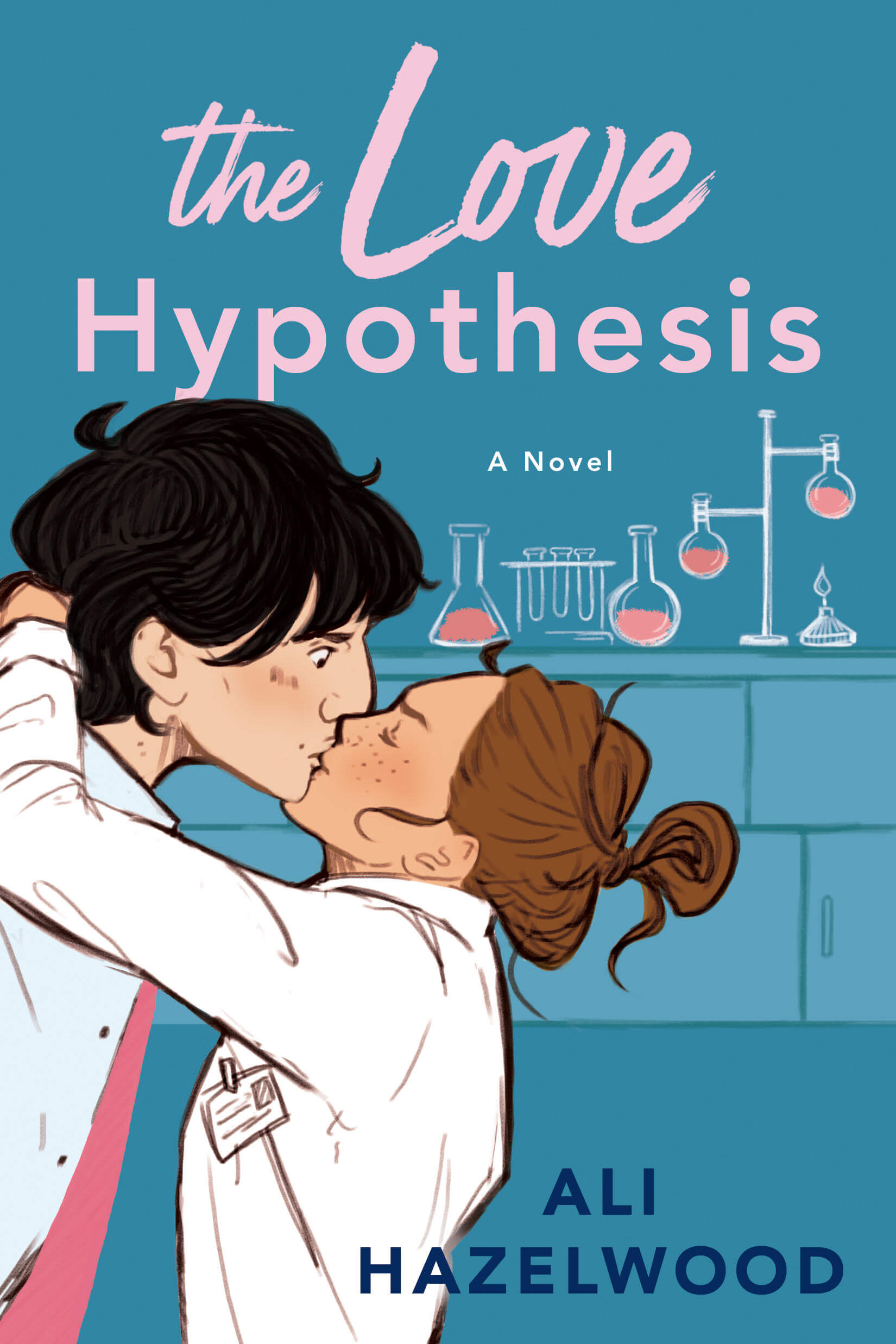
The Love Hypothesis Novel by Ali Hazelwood


Original price was: රු2,200.00.රු1,750.00Current price is: රු1,750.00.
3 X Rs. 583.33 or 8% Cashback with


or 3 X රු583.33 with


or up to 4 X රු437.50 with


The Love Hypothesis by Ali Hazelwood is a bestselling STEM romantic comedy following Stanford PhD candidate Olive Smith and intimidating professor Adam Carlsen after an impulsive kiss leads them into a fake-dating arrangement. Featuring fake dating, grumpy-sunshine chemistry, slow-burn attraction, witty banter, supportive friendships and women in science, this emotional standalone romance is perfect for readers who enjoy intelligent, funny and heartfelt contemporary love stories.
Out of stock
Email when stock available
The Love Hypothesis by Ali Hazelwood is a funny, intelligent and emotionally satisfying contemporary romance about fake dating, scientific ambition, friendship, vulnerability and discovering that love may be much harder to understand than any research hypothesis.
Olive Smith is a PhD candidate at Stanford.
She believes in science.
Evidence.
Research.
Data.
But romance?
That is much harder.
Olive has convinced her best friend Anh that she has moved on from a previous relationship.
There is only one problem.
Anh does not completely believe her.
So Olive makes an impulsive decision.
She kisses the first man she sees.
Unfortunately, that man happens to be Dr. Adam Carlsen.
Adam is a respected professor with a terrifying reputation.
Brilliant.
Serious.
Intimidating.
Blunt.
Not exactly the obvious choice for a fake boyfriend.
Yet circumstances push Olive and Adam into an arrangement that neither planned.
They will pretend to date.
For Olive, it solves a friendship problem.
For Adam, the arrangement unexpectedly has advantages of its own.
But the more time they spend together, the harder it becomes to separate:
Pretending.
Friendship.
Attraction.
And genuine feelings.
The Love Hypothesis by Ali Hazelwood combines the beloved fake-dating and grumpy-sunshine romance tropes with a STEM setting, witty dialogue and deeper themes involving academic pressure, confidence, grief and women navigating scientific careers.
The Love Hypothesis by Ali Hazelwood – Book Overview
The Love Hypothesis by Ali Hazelwood follows Olive Smith, a graduate researcher trying to build a future in science while also protecting the people she cares about.
Olive is not especially interested in romance when the story begins.
Her priorities are:
Research.
Finishing her PhD.
Securing her future.
Supporting her friends.
Then one impulsive kiss creates an entirely new problem.
Adam Carlsen is one of Stanford’s most intimidating professors.
Students are afraid of him.
He has a reputation for being:
Demanding.
Difficult.
Brutally honest.
Yet when Olive proposes a fake relationship, Adam surprisingly agrees.
The arrangement begins with rules.
Boundaries.
Pretending.
But rules become difficult to follow when real emotions become involved.
Olive Smith
Olive is intelligent, ambitious and deeply committed to her scientific work.
She is also:
Awkward.
Caring.
Insecure at times.
Extremely loyal.
Her scientific abilities do not mean she always understands her own emotions.
That contrast makes her relatable.
Women in STEM
One important element of The Love Hypothesis by Ali Hazelwood is its focus on women working in science.
Olive is building a career in a demanding academic environment.
She has to think about:
Research funding.
Experiments.
Academic reputation.
Career opportunities.
Mentorship.
Professional relationships.
The novel shows that scientific careers involve much more than experiments in a laboratory.
Academic Pressure
Graduate research can involve enormous pressure.
Students may spend years working toward:
A PhD.
Publication.
Funding.
Research positions.
A single opportunity can significantly influence their future.
Olive’s academic goals therefore matter as much as her romantic decisions.
Adam Carlsen
Adam initially appears to be the classic intimidating professor.
He is known for high standards.
Many students fear his criticism.
But as Olive spends more time with him, she discovers that reputation does not reveal everything about a person.
Adam can also be:
Supportive.
Protective.
Thoughtful.
Funny in unexpected ways.
Extremely attentive.
Grumpy-Sunshine Romance
The Love Hypothesis by Ali Hazelwood is often associated with the popular grumpy-sunshine romance trope.
Adam is the grumpy one.
Olive brings more chaotic and optimistic energy.
Their different personalities create:
Humor.
Tension.
Chemistry.
But underneath the trope, both characters are more complicated than they initially appear.
Fake Dating
Fake dating is the central romantic setup.
The idea seems simple.
Pretend to be together.
Convince other people.
Avoid getting emotionally involved.
Romance readers know what usually happens next.
The problem with fake dating is that the couple must behave like people who genuinely care about one another.
They spend time together.
Talk.
Help each other.
Learn personal details.
Eventually, pretending can start feeling surprisingly real.
Why Fake Dating Works So Well
Fake dating creates a fascinating situation.
Two people believe they are emotionally safe because:
“This isn’t real.”
That allows them to lower their defenses.
They may become more honest.
More comfortable.
More vulnerable.
Then one day they realize the feelings are no longer fake.
Friendship
Friendship is another major theme in The Love Hypothesis by Ali Hazelwood.
Olive’s relationship with Anh matters enormously to her.
In fact, the fake-dating situation begins partly because Olive wants her friend to feel comfortable pursuing happiness.
This shows Olive’s loyalty.
However, the story also explores the danger of making major decisions without communicating honestly.
Anh
Anh is more than simply the best friend who creates the fake-dating situation.
She represents:
Friendship.
Support.
Women supporting women in STEM.
Community.
Graduate school can be isolating.
Friends provide emotional support when research and career pressure become overwhelming.
Malcolm
Olive’s friend Malcolm also contributes significantly to the humor and warmth of the story.
Together, Olive, Anh and Malcolm create a supportive friendship group.
Their relationship demonstrates that romance does not need to replace friendship.
Both can be important.
Love and Science
The title itself is clever.
A hypothesis is a proposed explanation that can be tested.
Olive understands scientific hypotheses.
Love is much harder.
There is no controlled experiment.
No perfect data set.
No guaranteed result.
You cannot always scientifically predict how another person will feel.
Evidence
Olive often understands other people’s behavior through assumptions.
But assumptions are not evidence.
This becomes an important emotional lesson.
Sometimes you need to:
Ask.
Communicate.
Listen.
Instead of deciding what another person feels without giving them the chance to explain.
Miscommunication
Miscommunication is an important romance element in The Love Hypothesis by Ali Hazelwood.
Characters sometimes misunderstand:
Intentions.
Feelings.
Motivations.
Romantic signals.
This creates both humor and frustration.
Communication
A strong relationship eventually requires honest communication.
You cannot build trust entirely from assumptions.
Sometimes people avoid asking questions because they fear the answer.
But avoiding the question does not eliminate the uncertainty.
Vulnerability
Olive is extremely capable academically.
Emotionally, vulnerability can be much harder.
Caring about someone means accepting risk.
They may reject you.
They may leave.
They may hurt you.
But refusing vulnerability also limits intimacy.
Fear of Rejection
One reason people hide feelings is because uncertainty feels safer than rejection.
As long as you do not ask, you can imagine possibilities.
But eventually, relationships require honesty.
Chemistry
The chemistry between Olive and Adam develops gradually.
At first, their relationship is an arrangement.
Then small moments begin to matter.
Conversations.
Coffee.
Support.
Physical closeness.
Shared experiences.
The attraction becomes increasingly difficult to dismiss.
Slow-Burn Romance
The romance has a strong slow-burn element.
Readers spend time watching emotional tension build.
That makes later romantic developments more satisfying.
Opposites Attract
Olive and Adam appear very different.
Adam is:
Controlled.
Serious.
Reserved.
Olive is:
More spontaneous.
Emotionally expressive.
Sometimes chaotic.
Yet their differences can complement each other.
First Impressions
Another lesson in The Love Hypothesis by Ali Hazelwood is that first impressions are incomplete.
Everyone believes Adam is terrifying.
That reputation contains some truth.
But it is not the whole truth.
People behave differently depending on:
Context.
Relationship.
Trust.
Reputation Versus Reality
A person may have a professional reputation that does not perfectly represent who they are privately.
This is especially true in academic environments where people know each other through:
Classes.
Research.
Publications.
Work.
Olive gradually learns the difference between Adam’s reputation and his actual personality.
Career Ambition
Olive takes her career seriously.
This is important because the novel does not suggest that finding romance should replace professional ambition.
She still cares deeply about:
Science.
Research.
Her future.
Romance becomes part of her life rather than her entire identity.
Research
Olive’s scientific work has personal meaning.
Her motivation for research is connected with experiences involving illness and loss.
This gives her academic ambitions emotional depth.
Science is not merely a job.
It represents the possibility of helping people.
Grief
Grief quietly influences Olive’s character.
The loss of her mother has shaped her.
It contributes to her scientific interests and affects the way she approaches emotional relationships.
Grief can influence someone for years without dominating every moment of their life.
Purpose
Olive’s story shows how personal experiences can create professional purpose.
Sometimes people choose careers because they want to solve a problem that once affected them personally.
Purpose can create motivation during difficult years of education and research.
Confidence
Academic environments can make talented people question themselves.
Am I good enough?
Does my research matter?
Will anyone take me seriously?
Can I succeed here?
Olive experiences moments of uncertainty despite being intelligent and capable.
Impostor Feelings
Many students and professionals experience the feeling that everyone else belongs while they somehow entered by mistake.
The novel touches on this insecurity through Olive’s experiences in science.
Confidence does not always arrive before achievement.
Sometimes it develops through experience.
Mentorship
Mentorship can significantly influence young researchers.
A supportive mentor can provide:
Opportunity.
Advice.
Confidence.
Professional connections.
But academic power structures can also create problems when authority is abused.
Power in Academia
The Love Hypothesis by Ali Hazelwood explores some uncomfortable realities of academic environments.
Senior researchers may have significant influence over:
Careers.
Funding.
Recommendations.
Research opportunities.
That creates unequal power relationships.
Sexual Harassment
The novel includes a storyline involving inappropriate behavior and sexual harassment within an academic context.
This becomes one of the more serious elements of the book.
It highlights how difficult it can be for junior researchers to challenge someone with professional power.
Believe and Support People
When someone reports inappropriate behavior, support matters.
Fear of:
Career damage.
Disbelief.
Retaliation.
can make speaking up extremely difficult.
This gives the story greater emotional seriousness beyond its romantic comedy elements.
Consent
Consent and boundaries matter throughout romantic relationships.
Healthy attraction requires respect.
Characters need the freedom to communicate what they:
Want.
Do not want.
Feel comfortable with.
Adult Romance
The Love Hypothesis by Ali Hazelwood is an adult contemporary romance.
Readers should expect mature romantic themes and sexual content.
It is not a children’s or young-teen romance.
Humor
Despite heavier themes, the novel is widely loved for its humor.
Much of that humor comes from:
Awkward situations.
Fake-dating rules.
Olive’s internal thoughts.
Adam’s seriousness.
Academic life.
Romantic misunderstandings.
The balance of comedy and emotion makes the novel highly readable.
Banter
Banter helps create romantic chemistry.
Olive and Adam’s different personalities make their conversations entertaining.
Good romance dialogue can reveal attraction long before characters admit it directly.
Coffee
Small details become part of the romance.
Coffee and other recurring moments create familiarity between the characters.
Romance is often built through ordinary interactions rather than dramatic declarations alone.
Acts of Care
A powerful relationship is often revealed through what someone does.
Do they:
Listen?
Remember?
Help?
Show up?
Support your goals?
The small acts between Olive and Adam gradually reveal more than their fake relationship is supposed to contain.
Healthy Support
A good romantic partner should not require someone to abandon their ambitions.
Support means wanting the other person to succeed.
This becomes particularly important because Olive’s scientific career matters deeply to her.
Love Should Expand Your Life
A strong relationship can make room for:
Career.
Friendship.
Individual goals.
Romance.
Love should not necessarily require someone to become smaller.
STEM Romance
One major reason The Love Hypothesis by Ali Hazelwood became so popular is its STEM setting.
Many romance novels take place in:
Offices.
Small towns.
Celebrity worlds.
This story instead centers:
Laboratories.
Universities.
Graduate research.
Academic conferences.
That setting gives it a distinctive identity.
Ali Hazelwood
Ali Hazelwood is known for contemporary romances centered around women in STEM.
Her stories frequently combine:
Science.
Academia.
Ambitious women.
Romantic comedy.
Emotional vulnerability.
Workplace dynamics.
Other Books by Ali Hazelwood
Readers who enjoy The Love Hypothesis by Ali Hazelwood may also like:
Love on the Brain
Love, Theoretically
Check & Mate
Not in Love
Deep End
Her books often feature intelligent, ambitious characters navigating both professional and romantic challenges.
Is The Love Hypothesis a Standalone?
Yes.
The Love Hypothesis by Ali Hazelwood can be read as a complete standalone romance.
You do not need to read another novel before it.
Olive and Adam’s central story is completed within this book.
Is It Part of a Series?
It is not the first installment of a required continuing series.
Ali Hazelwood has written other STEM-focused romances, but readers can choose them independently.
Is The Love Hypothesis Spicy?
The novel contains adult romantic and sexual content, including an explicit intimate scene.
Readers looking for a completely clean romance should be aware of this before purchasing.
Popular Romance Tropes
The book includes several popular romance elements:
- Fake dating
- Grumpy sunshine
- Academia romance
- STEM romance
- Slow burn
- Opposites attract
- Workplace proximity
- He falls hard
- Emotional vulnerability
- Supportive friendships
Content Warning
The Love Hypothesis by Ali Hazelwood contains mature or potentially sensitive themes, including:
- Sexual content
- Sexual harassment
- Academic power imbalance
- Grief and loss of a parent
- Discussions of serious illness and cancer
- Workplace and academic pressure
- Emotional distress
- Strong language
- Relationship misunderstandings
These themes are balanced by humor, friendship and an ultimately romantic and hopeful tone.
7 Powerful Reasons to Read The Love Hypothesis by Ali Hazelwood
There are many reasons readers enjoy The Love Hypothesis by Ali Hazelwood, but seven stand out:
- The fake-dating setup creates immediate romantic tension – Olive and Adam begin by pretending, but every fake interaction makes their real feelings harder to ignore.
- Olive is an intelligent and ambitious STEM heroine – Her career, research and friendships remain important alongside her romantic storyline.
- Adam delivers the beloved grumpy-sunshine dynamic – His intimidating professional reputation contrasts perfectly with Olive’s more spontaneous personality.
- The romance develops through small acts of care – The relationship becomes believable because attraction grows alongside trust, friendship and emotional support.
- The academic setting feels fresh and distinctive – Laboratories, graduate research and scientific careers give the story an identity beyond a standard romantic comedy.
- The novel balances humor with serious issues – Beneath the funny fake-dating situations are themes involving grief, career pressure, harassment and unequal professional power.
- It is a satisfying standalone romance – Readers can experience Olive and Adam’s entire emotional journey in one book without needing to continue a series.
Why Read The Love Hypothesis by Ali Hazelwood?
The Love Hypothesis by Ali Hazelwood is an excellent choice for readers interested in:
- Ali Hazelwood books
- Contemporary romance
- Fake dating
- STEM romance
- Academia romance
- Grumpy sunshine
- Slow-burn romance
- Opposites attract
- Romantic comedy
- Women in science
- PhD student romance
- Workplace romance
- Intelligent heroines
- Friendship
- Emotional romance
- Adult romance
- Science fiction? No—science-themed contemporary romance
- Standalone romance novels
- BookTok romance
- Popular modern romance
It is especially suitable for readers who love romantic comedies featuring ambitious characters and plenty of emotional tension.
Who Should Read This Book?
The Love Hypothesis by Ali Hazelwood may especially appeal to:
- Contemporary romance readers
- Ali Hazelwood fans
- Fans of fake dating
- Readers who love grumpy-sunshine romances
- STEM students
- Science lovers
- University and academic readers
- Fans of slow-burn romance
- Readers who enjoy witty banter
- BookTok romance readers
- Readers interested in strong female protagonists
- Adult romance readers
- Readers who enjoy emotional but funny love stories
- Fans of standalone romances
The Love Hypothesis by Ali Hazelwood – When Fake Dating Becomes Real Chemistry
The Love Hypothesis by Ali Hazelwood begins with an impulsive kiss and a ridiculous plan.
Olive needs someone to believe she has moved on.
Adam agrees to pretend.
It should be simple.
A fake relationship.
A few public appearances.
Clear boundaries.
No emotional complications.
But human emotions rarely follow carefully designed research protocols.
The more Olive learns about Adam, the less he resembles the frightening professor everyone talks about.
And the more time Adam spends with Olive, the harder their connection becomes to dismiss as part of an arrangement.
Their relationship grows through:
Conversation.
Support.
Trust.
Humor.
Attraction.
And small moments that stop feeling fake.
At the same time, Olive has to navigate the difficult realities of building a career in science.
She must learn to trust her abilities.
Protect her future.
Recognize inappropriate professional behavior.
And understand that asking for support does not make her weak.
That combination gives the novel its appeal.
It is romantic.
Funny.
Comforting.
But it also takes Olive’s ambitions seriously.
She does not have to choose between being:
A scientist.
A friend.
A woman in love.
She can be all three.
For readers who enjoy fake dating, grumpy-sunshine chemistry, STEM heroines, academic settings, slow-burn attraction and emotional contemporary romance, The Love Hypothesis by Ali Hazelwood is a charming and addictive story about discovering that sometimes the hypothesis you are most afraid to test may turn out to be true.
Learn more about The Love Hypothesis by Ali Hazelwood on the official Penguin Random House website.
Explore more romance books at Bargain Books.
| Author | Ali Hazelwood |
|---|---|
| Type | Paperback Printed Book |
| Language | English |
| Pages | 373 |
Be the first to review “The Love Hypothesis Novel by Ali Hazelwood”
Related products
-17%

Classics & Literary Fiction
Original price was: රු2,400.00.රු1,990.00Current price is: රු1,990.00.
3 X Rs. 663.33 or 8% Cashback with
or 3 X රු663.33 with
or up to 4 X රු497.50 with
-20%

Out of stock
Fiction & Literature
Original price was: රු2,450.00.රු1,950.00Current price is: රු1,950.00.
3 X Rs. 650.00 or 8% Cashback with
or 3 X රු650.00 with
or up to 4 X රු487.50 with

Fiction & Literature
රු1,700.00
3 X Rs. 566.67 or 8% Cashback with
or 3 X රු566.67 with
or up to 4 X රු425.00 with

Out of stock
Contemporary romance
රු1,850.00
3 X Rs. 616.67 or 8% Cashback with
or 3 X රු616.67 with
or up to 4 X රු462.50 with
-23%

Out of stock
Contemporary Fiction
Original price was: රු2,200.00.රු1,700.00Current price is: රු1,700.00.
3 X Rs. 566.67 or 8% Cashback with
or 3 X රු566.67 with
or up to 4 X රු425.00 with
-18%
Fiction & Literature
Original price was: රු2,750.00.රු2,250.00Current price is: රු2,250.00.
3 X Rs. 750.00 or 8% Cashback with
or 3 X රු750.00 with
or up to 4 X රු562.50 with

Out of stock
Fiction & Literature
රු1,700.00
3 X Rs. 566.67 or 8% Cashback with
or 3 X රු566.67 with
or up to 4 X රු425.00 with
-20%

Fiction & Literature
Original price was: රු2,500.00.රු1,990.00Current price is: රු1,990.00.
3 X Rs. 663.33 or 8% Cashback with
or 3 X රු663.33 with
or up to 4 X රු497.50 with
Reviews
There are no reviews yet.