
No products in the cart.
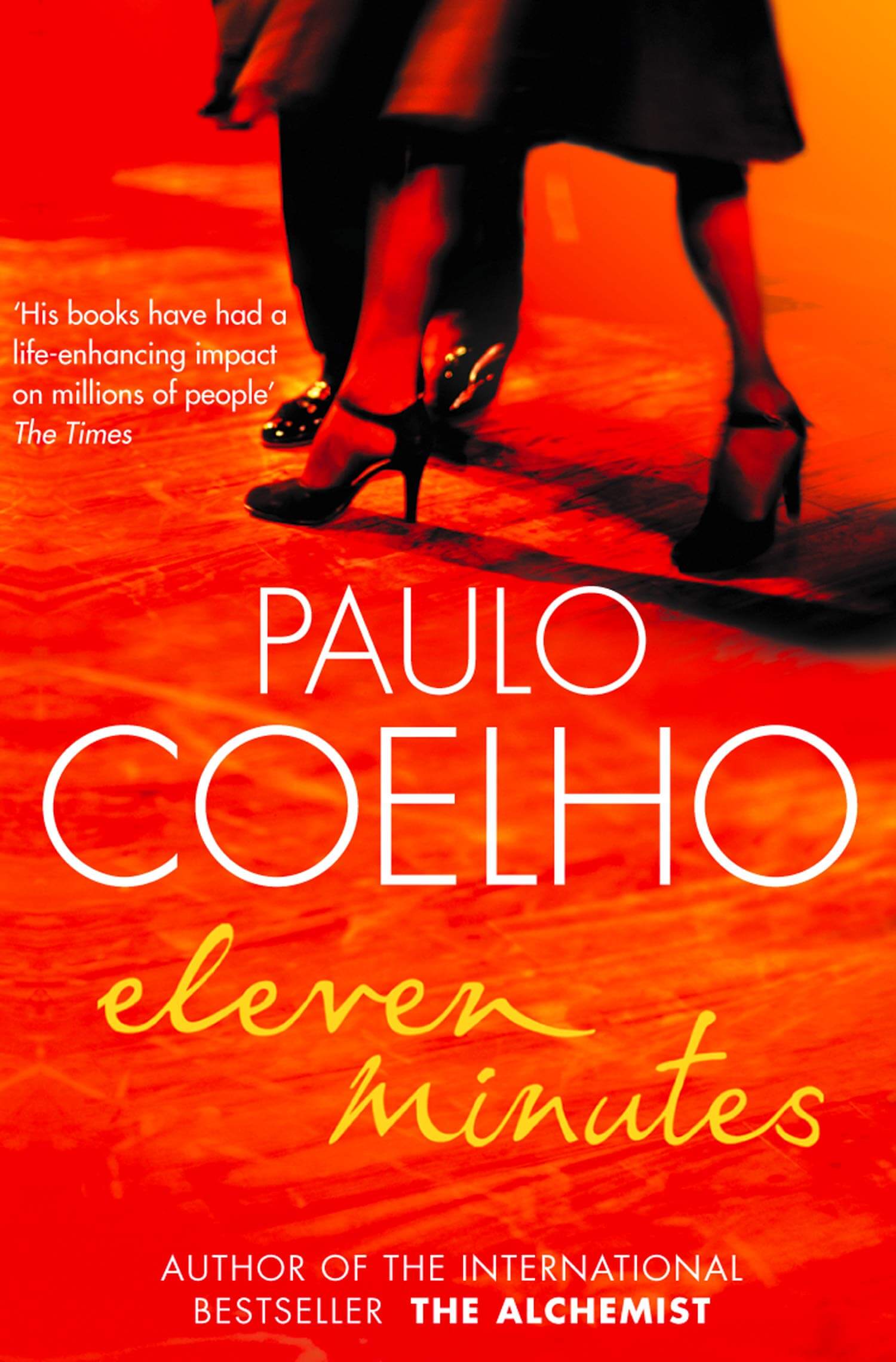




Eleven Minutes by Paulo Coelho is a provocative and emotional novel about love, desire, intimacy, identity and the search for deeper meaning.
The story follows Maria, a young woman from Brazil whose early experiences leave her disappointed in romantic love.
She dreams of building a different life.
That dream eventually takes her far from home to Geneva, Switzerland, where her expectations of success and happiness begin to change.
What follows is not simply a romance.
Eleven Minutes explores the complicated relationship between physical desire and emotional connection.
It asks whether intimacy without love can ever create genuine fulfillment.
It also examines whether someone who has become emotionally guarded can learn to trust another person again.
Why Read Eleven Minutes?
Eleven Minutes is ideal for readers who enjoy philosophical fiction focused on relationships and human emotions.
Paulo Coelho uses Maria’s experiences to explore questions many people rarely discuss openly.
What is love?
What is desire?
Can physical intimacy exist separately from emotional connection?
Why do people sometimes protect themselves from love even when they desperately want it?
These questions give Eleven Minutes more depth than a conventional romantic novel.
The story is intimate, reflective and mature.
Eleven Minutes and Maria’s Journey
Maria begins the story with hopes for a better future.
She comes from a modest background in Brazil and dreams of discovering a larger world.
But her early encounters with romance teach her that relationships can bring disappointment as easily as happiness.
She gradually begins protecting herself emotionally.
Later, an opportunity takes her to Europe.
Maria believes she may find financial success and perhaps even fame.
Instead, her life moves in a very different direction.
This unexpected path becomes the foundation of Eleven Minutes.
Maria in Eleven Minutes
Maria is the emotional centre of the novel.
She is curious.
Independent.
Observant.
And determined to understand the choices she makes.
Even when her circumstances become difficult, Maria continues analysing her experiences.
She does not simply move through life without reflection.
She asks what those experiences mean.
That makes Eleven Minutes partly a story about consciousness and self-understanding.
Maria wants to understand not only other people but also herself.
Eleven Minutes and Love
Love is one of the main themes in Eleven Minutes.
Maria begins with a complicated relationship with romantic love.
Early disappointment teaches her to become cautious.
She begins to believe that emotional distance may protect her from pain.
But protecting yourself from heartbreak can also prevent genuine connection.
This creates one of the novel’s central conflicts.
Is emotional safety worth the cost of avoiding love?
Maria gradually discovers that love cannot always be controlled through logic.
Desire vs Emotional Connection
A major theme in Eleven Minutes is the difference between physical desire and emotional intimacy.
People can be physically close without truly understanding one another.
They can also experience deep emotional connection without immediately expressing it physically.
Coelho explores this tension through Maria’s experiences in Geneva and her developing relationship with a painter.
That relationship challenges many assumptions Maria has developed about intimacy.
Maria Meets Ralf Hart
An important turning point occurs when Maria meets a young painter.
HarperCollins’ description identifies this relationship as the experience that forces Maria to reconsider her increasingly cynical view of love.
The connection is different from what she expects.
It becomes less about transaction and more about understanding.
This creates emotional risk.
Maria has learned how to protect herself.
Genuine intimacy threatens that protection.
Eleven Minutes and Self-Discovery
Eleven Minutes is ultimately a novel about self-discovery.
Maria’s journey is not only geographical.
She travels emotionally too.
She learns about desire.
Money.
Independence.
Loneliness.
Trust.
Fear.
And the difference between appearing strong and actually understanding yourself.
The novel gradually pushes Maria toward one question:
What kind of life does she really want?
Searching for Happiness
Many people believe happiness will arrive when circumstances improve.
More money.
A different country.
A better relationship.
A more exciting life.
Maria experiences several of these possibilities.
Yet Eleven Minutes suggests that external change does not automatically create internal fulfillment.
Someone can achieve financial independence and still feel emotionally disconnected.
Someone can have attention and still feel lonely.
The novel therefore encourages readers to think about what real fulfillment actually requires.
Eleven Minutes and Personal Freedom
Freedom is another important theme.
Maria wants independence.
She wants control over her own future.
She does not want another person to decide what her life should become.
That desire for control helps her become stronger.
But absolute independence can also create isolation.
Eleven Minutes explores the tension between being free and being emotionally connected to someone else.
Love requires vulnerability.
Vulnerability requires giving up some control.
That is exactly what Maria finds difficult.
Money and Relationships
Money affects many relationships in the story.
Maria begins thinking practically about survival and financial independence.
This encourages her to separate emotion from certain parts of her life.
Yet the more she tries to divide money, intimacy and emotion into separate categories, the more complicated those boundaries become.
Eleven Minutes asks whether everything important can really be treated as a transaction.
Some experiences cannot be measured financially.
Eleven Minutes and Loneliness
Loneliness can exist even when someone is surrounded by other people.
That idea runs throughout Eleven Minutes.
Maria interacts with many people.
She learns how to understand what others want.
Yet being understood herself is much more difficult.
This creates emotional distance.
The novel suggests that true intimacy begins when someone allows another person to see more than the surface.
Learning to Trust Again
Trust can become difficult after disappointment.
Once someone has been hurt, emotional distance may feel safer.
Maria understands this.
She learns to protect herself through independence and control.
But new relationships challenge that strategy.
Eleven Minutes shows that trust cannot exist without risk.
There is always uncertainty.
Another person might hurt you.
But refusing to trust anyone can create another kind of suffering.
Eleven Minutes and Vulnerability
Vulnerability is often treated as weakness.
The novel presents a more complicated picture.
Someone can be physically confident while emotionally guarded.
Another person can appear vulnerable while actually displaying enormous courage.
Maria gradually learns that emotional openness may require more strength than maintaining distance.
This becomes one of the most meaningful developments in Eleven Minutes.
The Search for Meaning
Paulo Coelho is known for fiction that combines storytelling with philosophical questions.
Eleven Minutes uses Maria’s experiences to examine meaning inside relationships.
Physical experiences alone do not necessarily answer emotional questions.
Money alone does not create connection.
Freedom alone does not guarantee peace.
The story repeatedly pushes Maria toward a deeper understanding of herself.
Eleven Minutes and Sacred Love
The novel contrasts physical pleasure with a deeper form of intimacy connected to trust, love and emotional understanding.
HarperCollins’ description presents Maria as confronting a choice between pursuing pleasure for its own sake and risking emotional openness for a more meaningful connection.
This gives the novel a spiritual dimension.
Coelho is not simply interested in attraction.
He is interested in what transforms intimacy into genuine connection.
A Mature Paulo Coelho Novel
Eleven Minutes deals openly with adult themes.
It includes sex work, sexuality, intimate relationships and emotional vulnerability.
Readers should therefore understand that this is an adult novel, not a young-adult romance.
Its mature content is used to explore philosophical questions about love, identity and the human need for connection.
7 Powerful Lessons From Eleven Minutes
- Love Requires Vulnerability – Protecting yourself from pain can also prevent meaningful connection.
- Desire and Love Are Different – Physical attraction does not automatically create emotional intimacy.
- Money Cannot Create Every Kind of Fulfillment – Financial independence and emotional happiness are not the same.
- Self-Knowledge Matters – Understanding your own fears and desires can change the choices you make.
- Freedom Requires Responsibility – Independence also means accepting the consequences of your decisions.
- Trust Always Involves Risk – Genuine relationships cannot exist without some uncertainty.
- Real Intimacy Goes Beyond the Physical – Eleven Minutes ultimately explores emotional and spiritual connection as much as physical desire.
What You Can Expect From Eleven Minutes
Readers can expect:
- Paulo Coelho
- Maria
- Love and desire
- Adult relationships
- Geneva
- Brazil
- Self-discovery
- Emotional intimacy
- Personal freedom
- Loneliness
- Trust
- Vulnerability
- Identity
- Spiritual reflection
- Philosophical fiction
- Mature themes
- Human relationships
Who Should Read Eleven Minutes?
Eleven Minutes is ideal for readers who enjoy philosophical fiction.
Fans of Paulo Coelho may appreciate the novel’s reflective approach to love and personal transformation.
Readers interested in stories about self-discovery may connect with Maria’s journey.
It may also appeal to readers who enjoy emotionally complex novels where romance is used to explore deeper questions about identity and meaning.
Because of the novel’s explicit adult themes involving sexuality and sex work, it is better suited to mature readers.
A Powerful Novel About Love and Self-Discovery
Eleven Minutes begins with a young woman searching for a better life.
But Maria’s journey becomes much more complicated than she imagined.
She travels from Brazil to Geneva.
She discovers financial independence.
She experiences relationships that challenge her assumptions.
And she gradually begins questioning the emotional walls she has built around herself.
Paulo Coelho uses Maria’s story to examine love, desire, loneliness, trust and the search for genuine intimacy.
The result is a mature and thought-provoking novel about the difference between experiencing pleasure and experiencing meaningful connection.
For readers interested in Paulo Coelho, philosophical fiction and emotionally challenging stories about love and self-discovery, Eleven Minutes is a memorable addition to any bookshelf.
Book Details
Title: Eleven Minutes
Author: Paulo Coelho
Original Title: Onze Minutos
Genre: Literary Fiction / Contemporary Fiction / Philosophical Fiction
Original Publication: 2003.
English Publisher: HarperCollins.
English Translator: Margaret Jull Costa is credited on the original HarperCollins English edition.
Paperback Edition Details
A common HarperCollins paperback edition is listed as:
ISBN-13: 9780060589288
Format: Paperback
Pages: 320
Publication Date: March 29, 2005.
Edition note: Eleven Minutes exists in multiple editions, and page counts vary. Use the ISBN printed on your physical copy if it differs from the edition above.
Content Note
Eleven Minutes contains mature themes involving:
- Sex work
- Sexual relationships
- Adult intimacy
- Emotional trauma
- Explicit discussions of sexuality
It is best marketed as an adult novel rather than YA fiction. https://yourwebsite.com/eleven-minutes/
| Author | Paulo Coelho |
|---|---|
| Language | English |
| Type | Paperback Printed Book (Second Quality Copy) |
Be the first to review “Eleven Minutes by Paulo Coelho”
Related products

Out of stock
Contemporary romance
රු1,850.00
3 X Rs. 616.67 or 8% Cashback with


or 3 X රු616.67 with


or up to 4 X රු462.50 with

-6%

Original price was: රු8,700.00.රු8,200.00Current price is: රු8,200.00.
3 X Rs. 2,733.33 or 8% Cashback with
or 3 X රු2,733.33 with
or up to 4 X රු2,050.00 with
Out of stock
Fiction & Literature
රු1,700.00
3 X Rs. 566.67 or 8% Cashback with
or 3 X රු566.67 with
or up to 4 X රු425.00 with

Contemporary romance
රු1,900.00
3 X Rs. 633.33 or 8% Cashback with
or 3 X රු633.33 with
or up to 4 X රු475.00 with
-22%

Out of stock
Fiction & Literature
Original price was: රු2,250.00.රු1,750.00Current price is: රු1,750.00.
3 X Rs. 583.33 or 8% Cashback with
or 3 X රු583.33 with
or up to 4 X රු437.50 with

Out of stock
Children & Young Adult
රු3,200.00
3 X Rs. 1,066.67 or 8% Cashback with
or 3 X රු1,066.67 with
or up to 4 X රු800.00 with

Out of stock
රු14,500.00
3 X Rs. 4,833.33 or 8% Cashback with
or 3 X රු4,833.33 with
or up to 4 X රු3,625.00 with
-23%

Out of stock
Contemporary Fiction
Original price was: රු2,200.00.රු1,700.00Current price is: රු1,700.00.
3 X Rs. 566.67 or 8% Cashback with
or 3 X රු566.67 with
or up to 4 X රු425.00 with
Reviews
There are no reviews yet.