
No products in the cart.
-25%
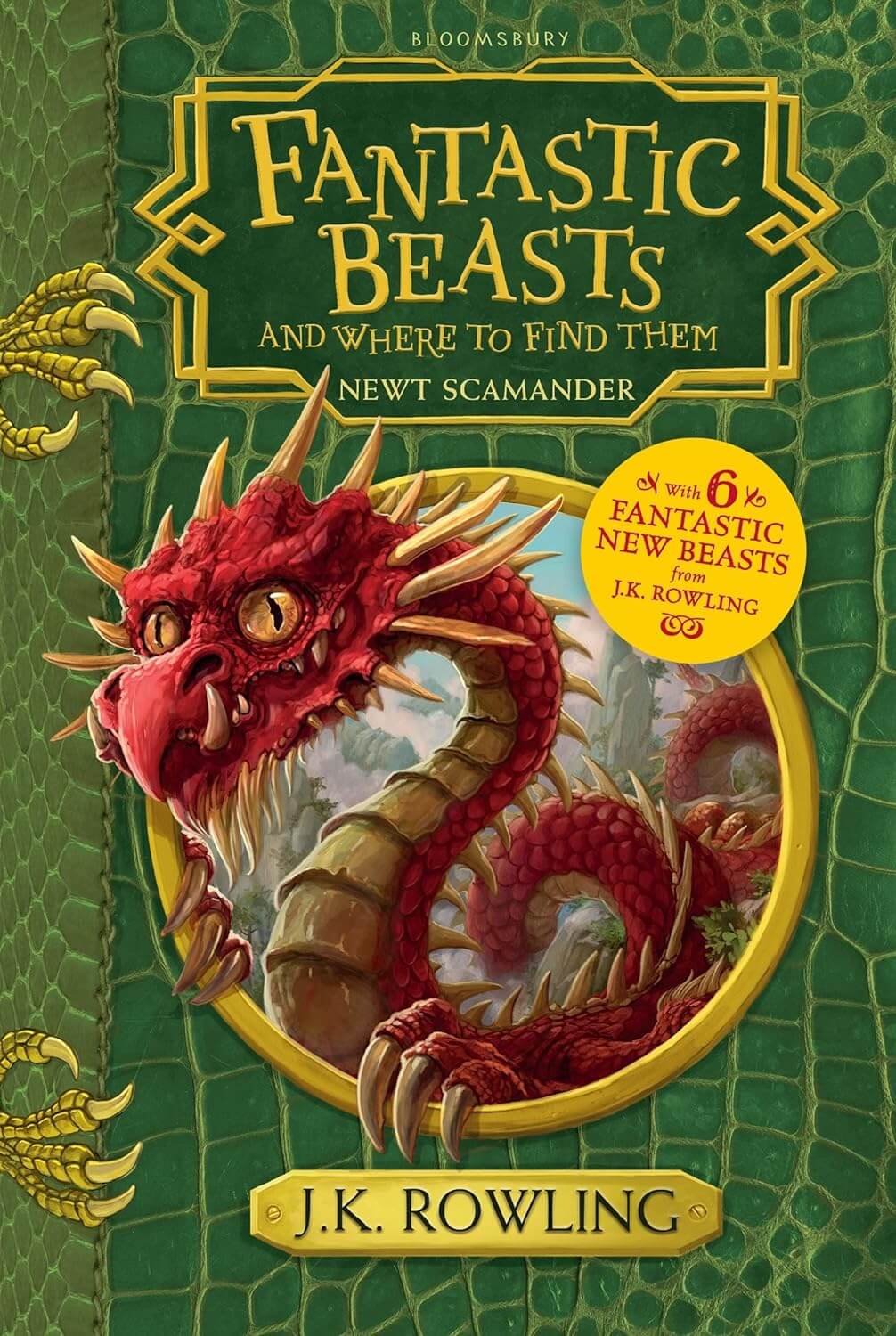
Fantastic Beasts and Where to Find Them by Jk Rowling

Original price was: රු2,000.00.රු1,500.00Current price is: රු1,500.00.
3 X Rs. 500.00 or 8% Cashback with


or 3 X රු500.00 with


or up to 4 X රු375.00 with


“Step into the enchanting world of ‘Fantastic Beasts and Where to Find Them’ by J.K. Rowling. This magical guide, inspired by the wizarding universe of Harry Potter, unveils a menagerie of extraordinary creatures. Whether you’re a devoted fan or a newcomer to the wizarding realm, prepare to be captivated by the whimsical and fantastical creatures that inhabit this delightful book.”
Out of stock
Email when stock available
Fantastic Beasts and Where to Find Them by J.K. Rowling invites readers to step beyond Hogwarts and explore the extraordinary creatures that inhabit the wider wizarding world.
Dragons.
Hippogriffs.
Basilisks.
Nifflers.
Thunderbirds.
And creatures far stranger than anything most Muggles could imagine.
Presented as a textbook written by legendary magizoologist Newt Scamander, the book feels like something taken directly from a Hogwarts student’s schoolbag.
It is not a traditional Harry Potter novel.
Instead, it is a magical reference guide packed with descriptions of fascinating creatures, their habits, habitats and classifications.
For fans who have ever wondered what else lives beyond the familiar corridors of Hogwarts, Fantastic Beasts and Where to Find Them offers a much bigger look at J.K. Rowling’s wizarding world.
Why Read Fantastic Beasts and Where to Find Them?
Fantastic Beasts and Where to Find Them is perfect for readers who want to explore the magical world beyond Harry, Ron and Hermione.
The book includes information about creatures found across different parts of the world.
Some are familiar from the Harry Potter stories.
Others may be completely new.
Readers can discover:
- Magical creatures
- Creature classifications
- Habitats
- Behaviour
- Wizarding-world history
- Magizoology
- Dangerous beasts
- Friendly creatures
- Dragons
- Magical folklore
Bloomsbury describes the book as an introduction to magical beasts from across five continents.
Fantastic Beasts and Where to Find Them and Newt Scamander
At the centre of the book is Newt Scamander.
Within the wizarding world, Newt is a respected magizoologist.
His speciality is magical creatures.
He travels widely.
Studies unusual species.
Records their behaviour.
And tries to improve the way witches and wizards understand magical animals.
The book is presented as the result of those travels and years of research.
That creative format makes Fantastic Beasts and Where to Find Them feel like an authentic object from the Harry Potter universe rather than an ordinary companion guide.
A Hogwarts Textbook
One of the most enjoyable features of Fantastic Beasts and Where to Find Them is that it is presented as a real Hogwarts textbook.
Within the fictional world, generations of students have studied Newt Scamander’s work.
That gives the book an immersive quality.
Readers are not simply reading about Hogwarts.
They are reading something that Hogwarts students themselves might use.
For Harry Potter fans, that small idea makes the experience much more fun.
Fantastic Beasts and Where to Find Them Is Not the Movie Screenplay
This distinction is important.
Fantastic Beasts and Where to Find Them is the magical-creature guide connected with the Hogwarts Library.
It is different from Fantastic Beasts and Where to Find Them: The Original Screenplay, which contains the screenplay of the 2016 film.
The guidebook focuses on magical beasts.
It is designed more like a reference book than a novel.
So readers who want Newt Scamander’s magical-creature encyclopedia should choose this title rather than the screenplay.
Magical Creatures in Fantastic Beasts and Where to Find Them
The biggest attraction is naturally the creatures.
Some will immediately be familiar to Harry Potter fans.
Bloomsbury specifically highlights creatures such as the Hippogriff, Basilisk, Hungarian Horntail, Niffler and Thunderbird across its editions.
But those famous creatures are only part of the fun.
The wizarding world contains many species with unusual powers, habits and appearances.
Some are dangerous.
Some are strange.
Some are surprisingly lovable.
And some are creatures most witches and wizards would probably prefer never to meet.
Dragons in Fantastic Beasts and Where to Find Them
Dragons are among the most memorable creatures in the Harry Potter universe.
Fans may remember the Hungarian Horntail from the Triwizard Tournament.
But dragons are much more diverse than one species.
The illustrated edition of Fantastic Beasts and Where to Find Them highlights ten different breeds of dragon among its magical fauna.
That makes the book especially interesting for readers fascinated by the magical creatures only briefly mentioned in the novels.
The Niffler
Nifflers became especially popular through the Fantastic Beasts films.
Small.
Curious.
And obsessed with shiny objects.
They are exactly the kind of magical creature that can be charming and troublesome at the same time.
Readers familiar with the films can use Fantastic Beasts and Where to Find Them to discover more about creatures associated with Newt Scamander’s magical world.
Hippogriffs
Harry Potter readers will remember Hippogriffs from Harry Potter and the Prisoner of Azkaban.
They are proud creatures.
Powerful.
Majestic.
And deserving of respect.
Their presence helps connect Fantastic Beasts and Where to Find Them directly with moments fans remember from the main novels.
That is part of the book’s appeal.
It adds context to creatures readers have already encountered.
The Basilisk
The Basilisk is one of the most dangerous creatures in the wizarding world.
Readers of Harry Potter and the Chamber of Secrets already know just how terrifying one can be.
Seeing creatures like the Basilisk included in a broader magical guide helps readers understand that the creatures appearing in Harry’s adventures are part of a much larger magical ecosystem.
Fantastic Beasts and Where to Find Them Expands the Wizarding World
The main Harry Potter novels naturally focus on Harry’s story.
That means there are countless parts of the magical world that are only briefly mentioned.
Fantastic Beasts and Where to Find Them explores one of those areas in much greater detail.
Magical animals.
Their habitats.
Their classifications.
Their relationships with witches and wizards.
And the way magical society attempts to understand and manage them.
The result is a book that makes the wizarding world feel larger.
What Is Magizoology?
Magizoology is essentially the magical equivalent of zoology.
A magizoologist studies magical creatures.
Newt Scamander is one of the wizarding world’s most famous practitioners.
That makes Fantastic Beasts and Where to Find Them especially enjoyable for readers who love both fantasy and animals.
It combines the structure of a creature guide with imaginative fantasy world-building.
Fantastic Beasts and Where to Find Them and Creature Classification
Not every magical beast presents the same level of danger.
Some can live relatively peacefully around witches and wizards.
Others should only be approached by experts.
Creature classification gives the wizarding world another layer of realism.
Instead of treating every magical creature as simply “good” or “bad,” the book presents them as species with different characteristics and risks.
That makes the fantasy world feel more organized and believable.
A Fun Book for Harry Potter Fans
Readers who love the main Harry Potter series will recognize many references.
Hogwarts.
Wizarding traditions.
Magical terminology.
Familiar creatures.
Newt Scamander.
The book feels connected to the same world without simply repeating the original novels.
That makes Fantastic Beasts and Where to Find Them an excellent companion book.
It can be read before or after the Harry Potter series.
But fans familiar with Harry’s adventures will probably recognize more references.
Fantastic Beasts and Where to Find Them for Movie Fans
Readers who discovered Newt Scamander through the Fantastic Beasts films may also enjoy this book.
The films turned Newt into a major character.
But this book represents the famous textbook associated with him.
It offers a different experience.
There is no conventional movie-style plot.
Instead, readers explore the subject Newt loves most.
Magical creatures.
A Book You Can Dip Into
You do not need to read Fantastic Beasts and Where to Find Them exactly like a novel.
You can open it anywhere.
Read about one creature.
Move to another.
Return later.
That makes it a great book for casual reading.
It is especially suitable for readers who enjoy fantasy encyclopedias, creature guides and fictional reference books.
Fantastic Beasts and Where to Find Them for Young Readers
The book works especially well for younger Harry Potter fans.
The entries are generally much shorter than chapters in a full novel.
That makes it easier to read in small sections.
Children who love animals may enjoy comparing the magical creatures.
Children who love fantasy may enjoy imagining what each beast looks like.
And children already familiar with Harry Potter will enjoy recognizing creatures they have encountered before.
Fantastic Beasts and Where to Find Them for Collectors
Harry Potter collectors often enjoy companion books because they expand a collection beyond the seven main novels.
Fantastic Beasts and Where to Find Them is part of the wider Hogwarts Library world.
It sits naturally alongside other companion titles such as:
- Quidditch Through the Ages
- The Tales of Beedle the Bard
Together, these books create the feeling of owning literature that exists inside the wizarding world itself.
The Updated Edition
The revised text released in 2017 expanded the creature guide.
Bloomsbury states that the updated edition added six new beasts and a new foreword, while the later paperback edition retained that revised text.
This is useful to know when comparing older and newer copies.
Different editions may contain slightly different content.
Illustrated Editions
There is also a larger illustrated edition.
That version features artwork by Olivia Lomenech Gill and presents the creatures in full colour.
Bloomsbury lists the illustrated hardback at 160 pages and describes it as containing magical creatures from Acromantula to Yeti, including multiple breeds of dragon.
The illustrated format can be especially appealing for children, collectors and readers who enjoy fantasy art.
Fantastic Beasts and Where to Find Them and Imagination
One reason magical-creature books are so enjoyable is that they encourage imagination.
What would a Niffler be like as a pet?
What would happen if you encountered a dragon?
Which creatures would be most dangerous?
Which would you most like to see?
The book naturally encourages readers to imagine themselves as students or explorers in the wizarding world.
World-Building Without a Traditional Plot
A novel usually follows characters through a beginning, middle and ending.
Fantastic Beasts and Where to Find Them works differently.
Its appeal comes from world-building.
Every creature reveals another detail about magical society.
Some entries explain danger.
Others explain habitats.
Others create humour.
Together, these details make J.K. Rowling’s magical universe feel deeper.
Fantastic Beasts and Where to Find Them and Magical Exploration
Newt Scamander’s fictional travels take the concept beyond Britain.
Magical beasts exist around the world.
Bloomsbury describes the guide as covering creatures across five continents.
That expands the wizarding world beyond Hogwarts.
Magic is not limited to one school or one country.
There is an entire world of magical wildlife waiting to be explored.
7 Amazing Reasons to Read Fantastic Beasts and Where to Find Them
- Explore Magical Creatures – Discover fascinating beasts from throughout the wizarding world.
- Meet Newt Scamander Through His Work – The book is presented as his famous Hogwarts textbook.
- Recognize Harry Potter Creatures – Hippogriffs, Basilisks and Hungarian Horntails are among the familiar beasts.
- Discover More of the Wizarding World – Explore magical life beyond the main Harry Potter storyline.
- Easy to Read in Short Sections – The reference-book format is perfect for dipping in and out.
- Great for Harry Potter Collections – It makes a natural companion to the main novels and other Hogwarts Library books.
- Updated Editions Add More Creatures – The revised edition includes six additional beasts.
What You Can Expect From Fantastic Beasts and Where to Find Them
Readers can expect:
- Newt Scamander
- Magical creatures
- Magizoology
- Dragons
- Hippogriffs
- Basilisks
- Nifflers
- Thunderbirds
- Creature classifications
- Magical habitats
- Wizarding-world history
- Hogwarts references
- Fantasy world-building
- Humour
- Imaginative details
Who Should Read Fantastic Beasts and Where to Find Them?
Fantastic Beasts and Where to Find Them is ideal for:
Harry Potter fans.
Fantastic Beasts movie fans.
Young fantasy readers.
Creature lovers.
Collectors.
Readers interested in fictional encyclopedias.
Fans of magical world-building.
Children fascinated by dragons and mythical animals.
Anyone wanting to explore more of J.K. Rowling’s wizarding world.
A Magical Companion to Harry Potter
Fantastic Beasts and Where to Find Them takes something mentioned inside the Harry Potter universe and turns it into a book readers can actually hold.
That is what makes it special.
It feels like a piece of Hogwarts.
A textbook filled with strange creatures.
A guide created by one of the wizarding world’s great magizoologists.
And an opportunity to discover how much magical life exists beyond Harry Potter’s main adventures.
For readers who love Hogwarts, magical animals, dragons, fantasy and imaginative world-building, Fantastic Beasts and Where to Find Them is a fun and fascinating addition to any Harry Potter collection.
Book Details
Title: Fantastic Beasts and Where to Find Them
Author: J.K. Rowling
In-Universe Author: Newt Scamander
Series / Collection: Hogwarts Library / Wizarding World
Genre: Fantasy / Children’s Fiction / Companion Guide
Subject: Magical Creatures and Magizoology
Publisher: Bloomsbury Children’s Books
Popular Paperback Edition
Bloomsbury lists a paperback edition with the following details:
ISBN-13: 9781408896945
Format: Paperback
Publication Date: 25 January 2018
Pages: 144
Dimensions: 198 × 129 mm
Publisher: Bloomsbury Publishing.
Hardback Edition
Bloomsbury also lists a hardback edition:
ISBN-13: 9781408880715
Format: Hardback
Publication Date: 14 March 2017
Pages: 144
Dimensions: 198 × 129 mm
Illustrations: 30 black-and-white line illustrations.
Illustrated Edition
ISBN-13: 9781408885260
Format: Illustrated Hardback
Illustrator: Olivia Lomenech Gill
Pages: 160
Dimensions: 290 × 250 mm
Publication Date: 7 November 2017.
Edition Note
Several versions of Fantastic Beasts and Where to Find Them are available.
Page count, ISBN, dimensions and illustrations vary by edition.
Use the ISBN printed on your physical copy before entering exact edition details on your website. fantastic-beasts-and-where-to-find-them
| Author | Jk Rowling |
|---|---|
| Type | Paperback Printed Book |
| ISBN/ISSN | 1408880717, 978-1408880715 |
| Language | English |
| Pages | 144 |
Be the first to review “Fantastic Beasts and Where to Find Them by Jk Rowling”
Related products

Out of stock
Children & Young Adult
රු12,000.00
3 X Rs. 4,000.00 or 8% Cashback with
or 3 X රු4,000.00 with
or up to 4 X රු3,000.00 with
Out of stock
Contemporary romance
රු1,850.00
3 X Rs. 616.67 or 8% Cashback with
or 3 X රු616.67 with
or up to 4 X රු462.50 with

Out of stock
Children & Young Adult
රු3,200.00
3 X Rs. 1,066.67 or 8% Cashback with
or 3 X රු1,066.67 with
or up to 4 X රු800.00 with
-19%

Out of stock
Contemporary romance
Original price was: රු2,600.00.රු2,100.00Current price is: රු2,100.00.
3 X Rs. 700.00 or 8% Cashback with
or 3 X රු700.00 with
or up to 4 X රු525.00 with
-22%
Out of stock
Fiction & Literature
Original price was: රු2,250.00.රු1,750.00Current price is: රු1,750.00.
3 X Rs. 583.33 or 8% Cashback with
or 3 X රු583.33 with
or up to 4 X රු437.50 with
-20%
Fiction & Literature
Original price was: රු2,500.00.රු1,990.00Current price is: රු1,990.00.
3 X Rs. 663.33 or 8% Cashback with
or 3 X රු663.33 with
or up to 4 X රු497.50 with
-10%
Out of stock
Original price was: රු5,000.00.රු4,500.00Current price is: රු4,500.00.
3 X Rs. 1,500.00 or 8% Cashback with
or 3 X රු1,500.00 with
or up to 4 X රු1,125.00 with
Out of stock
Classics & Literary Fiction
රු1,750.00
3 X Rs. 583.33 or 8% Cashback with
or 3 X රු583.33 with
or up to 4 X රු437.50 with
Reviews
There are no reviews yet.