
No products in the cart.
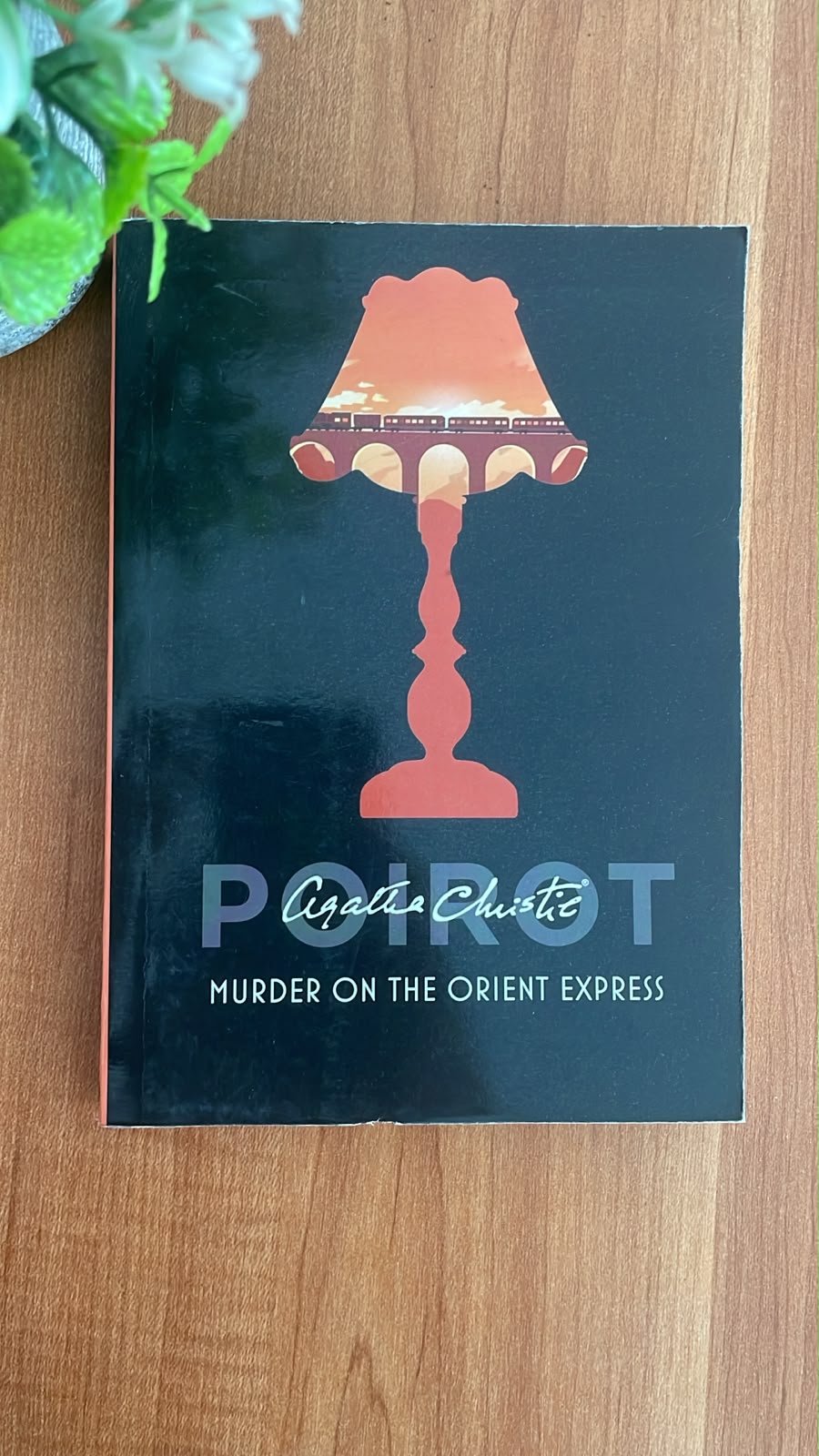
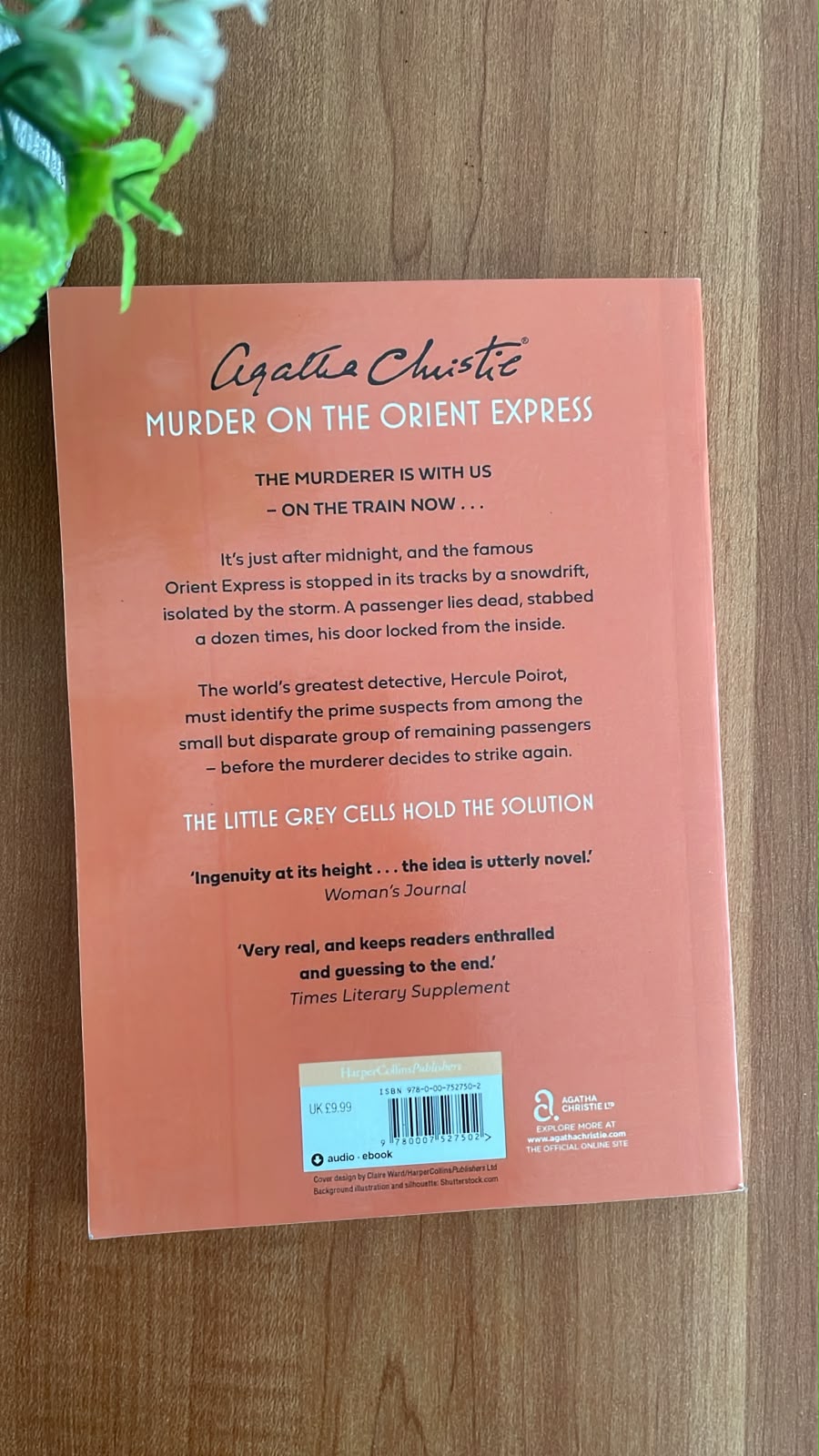
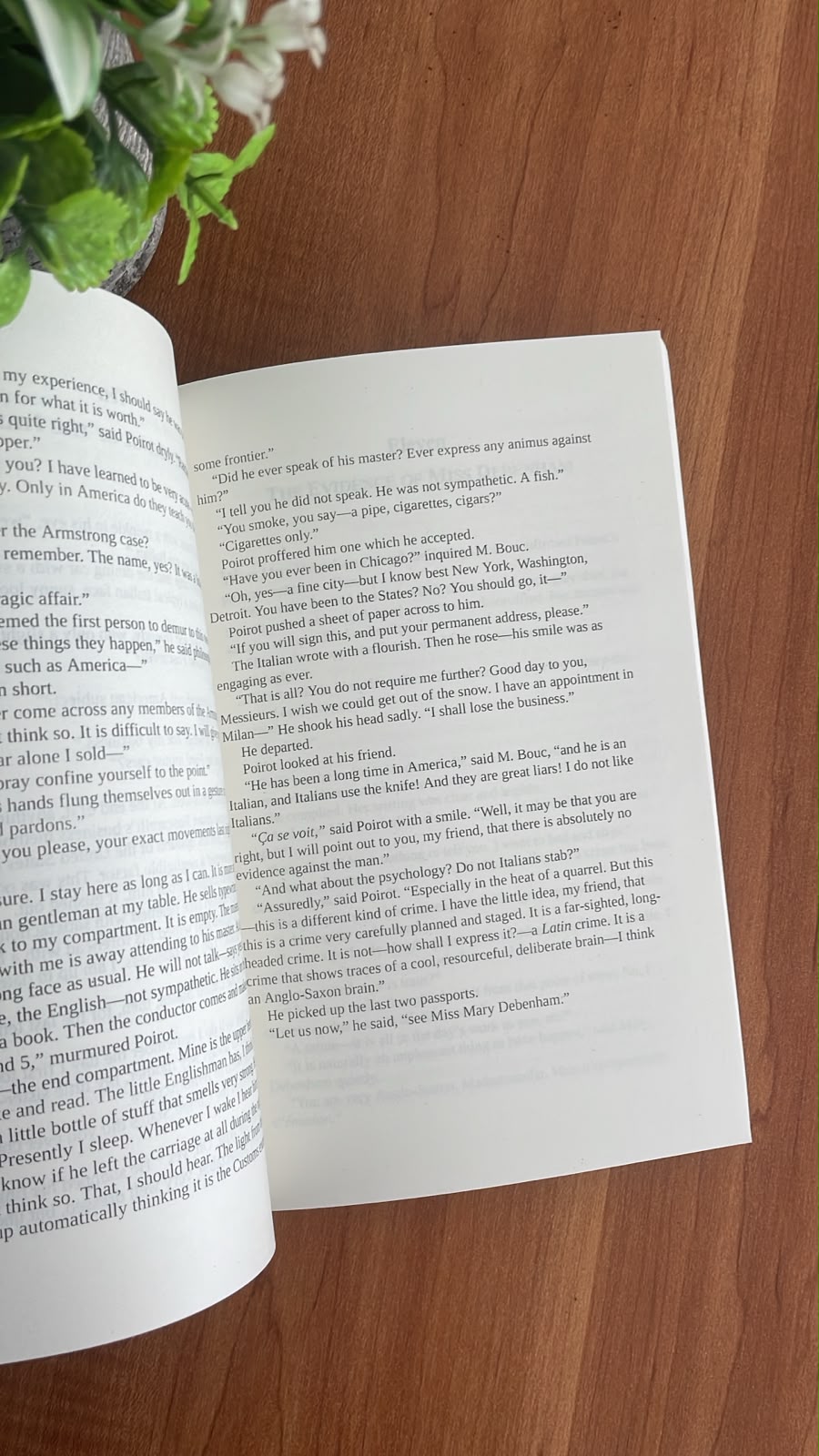
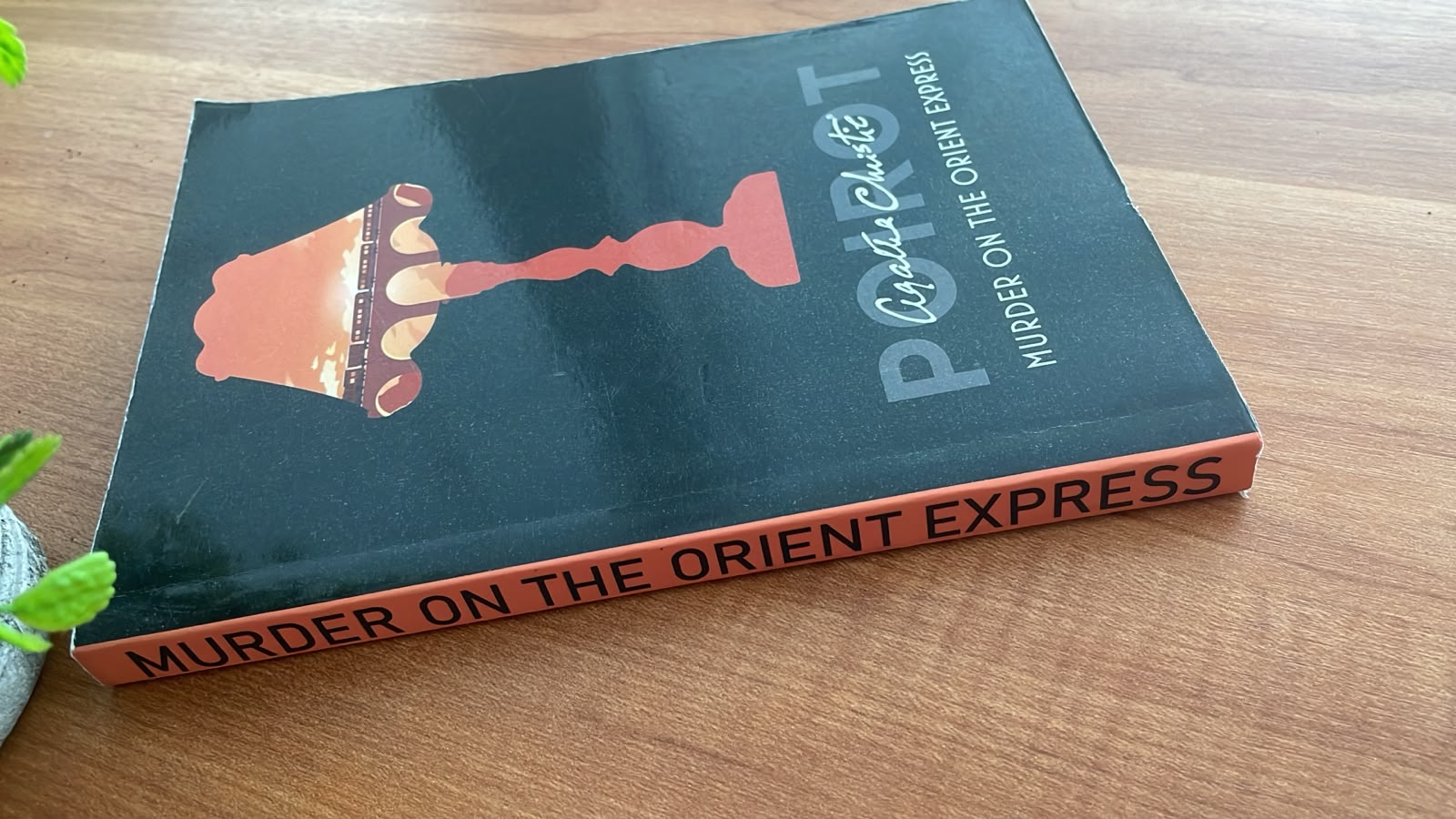




POIROT-MURDER ON THE ORIENT EXPRESS by Agatha Christie


රු1,850.00
3 X Rs. 616.67 or 8% Cashback with


or 3 X රු616.67 with


or up to 4 X රු462.50 with


Murder on the Orient Express by Agatha Christie is a legendary Hercule Poirot mystery set aboard the luxurious Orient Express. When heavy snow traps the train and wealthy passenger Samuel Ratchett is discovered murdered inside his compartment, Poirot must question a group of suspicious travellers, examine contradictory clues and uncover the truth before the journey can continue. Clever, atmospheric and brilliantly constructed, it is an essential read for fans of classic mysteries, whodunits and detective fiction.
2 in stock
Murder on the Orient Express by Agatha Christie is one of the most famous detective novels ever written, bringing legendary Belgian detective Hercule Poirot aboard a luxurious train where an apparently impossible murder turns every passenger into a suspect.
The journey should have been simple.
Poirot is travelling aboard the famous Orient Express, surrounded by passengers from different countries, professions and social backgrounds.
Then heavy snow stops the train.
The passengers are stranded.
Nobody can easily leave.
And by morning, wealthy American traveller Samuel Ratchett is found murdered inside his compartment.
He has been stabbed repeatedly.
His door appears locked.
The train is isolated.
And the killer may still be aboard.
Suddenly, an elegant railway journey becomes a tightly sealed crime scene.
Poirot begins questioning the passengers.
Everyone has a story.
Everyone seems to have an explanation.
But some explanations do not fit.
A strange object.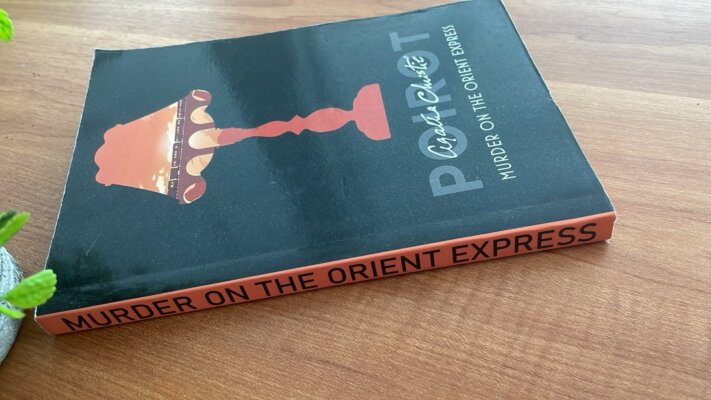
A suspicious timeline.
A conversation overheard during the night.
A clue that appears to point in one direction while another points somewhere completely different.
As the evidence becomes increasingly contradictory, Poirot must use his famous “little grey cells” to discover what really happened before the train begins moving again.
Murder on the Orient Express by Agatha Christie is an ideal read for anyone who loves classic mysteries, intelligent detectives, closed-circle crime stories and novels that invite the reader to solve the puzzle alongside the investigator.
Murder on the Orient Express by Agatha Christie – Book Overview
Murder on the Orient Express by Agatha Christie was first published in 1934 and has become one of Agatha Christie’s best-known Hercule Poirot novels. The official Christie site describes it as one of her greatest mysteries and centers the story on Poirot investigating a murder after a snowdrift traps the Orient Express.
The setup is beautifully simple.
A train.
A murder.
A limited group of suspects.
A detective.
No easy escape.
From that restricted environment, Christie constructs a mystery full of psychological observation and misdirection.
Hercule Poirot
Hercule Poirot is Agatha Christie’s famous Belgian detective.
He is known for:
Careful observation.
Order.
Logic.
Psychology.
Attention to contradiction.
And absolute confidence in his ability to reason through apparently impossible crimes.
Poirot does not need constant action to solve a mystery.
He listens.
He compares statements.
He examines behavior.
He asks why a person might lie.
And most importantly, he looks for a theory that explains all the evidence rather than only one convenient clue.
A Murder on a Luxury Train
The train setting is one of the greatest strengths of Murder on the Orient Express by Agatha Christie.
Normally, a train represents movement.
Here, snow transforms it into confinement.
The passengers cannot simply disappear into a city.
The murderer cannot easily escape.
Poirot knows the solution must exist somewhere inside this limited environment.
That makes every passenger more suspicious.
Samuel Ratchett
Before the murder, Ratchett tells Poirot he believes his life is in danger.
He wants protection.
Poirot refuses.
Soon afterward, Ratchett is found dead.
This immediately raises difficult questions.
Who wanted him dead?
Why was he threatened?
Was someone following him?
Did another passenger know him before boarding the train?
And is Ratchett himself exactly who he appears to be?
Everyone Is a Suspect
One of the most entertaining features of Murder on the Orient Express by Agatha Christie is the large cast of possible suspects.
The passengers come from different nationalities and social positions.
There are servants.
Professionals.
Wealthy travellers.
Aristocrats.
People who seem nervous.
People who seem completely calm.
Each passenger has information.
Each passenger may be hiding something.
Poirot has to decide which secrets are connected to the murder.
The Closed-Circle Mystery
This book is a classic example of a closed-circle mystery.
The number of suspects is limited.
The crime scene is isolated.
Outside interference appears difficult.
The detective therefore works within a controlled environment.
Readers who enjoy:
Locked-room mysteries.
Country-house murders.
Island mysteries.
Snowbound mysteries.
will probably enjoy this structure.
Clues Matter
Christie rewards careful readers.
Something that appears insignificant may eventually matter.
A detail that looks obvious may be misleading.
A statement may be technically true while still hiding important information.
That means readers can participate.
Do not simply wait for Poirot to explain everything.
Pause occasionally and ask:
Who do I suspect?
What is the motive?
Which statement does not fit?
Which clue seems deliberately strange?
Red Herrings
A red herring is information designed to lead suspicion away from the truth.
Agatha Christie was famous for using misdirection without simply making the solution random.
The best red herrings feel meaningful.
Readers think:
“This must be the answer.”
Then another detail changes the picture.
Testimony
Much of Poirot’s investigation involves interviewing people.
But testimony creates problems.
People can:
Lie.
Misremember.
Hide embarrassing information.
Protect another person.
Misunderstand what they saw.
Poirot therefore examines not only what each passenger says but also why they might say it.
Psychology
Physical evidence matters, but Poirot is fascinated by human psychology.
What kind of person would behave this way?
Why did someone react strangely?
Why is one passenger too nervous?
Why is another unusually calm?
Understanding motives becomes as important as examining objects.
Motive
A suspect may have opportunity.
But why would they kill Ratchett?
Money?
Fear?
Revenge?
Protection?
Personal history?
Without motive, the puzzle remains incomplete.
Justice
One reason Murder on the Orient Express by Agatha Christie remains so memorable is that the story eventually becomes more than a question of identifying a killer.
It raises difficult questions about justice.
Is legal justice always the same as moral justice?
What happens when people believe an unforgivable crime has gone unanswered?
Who has the authority to punish someone?
These questions give the novel unusual moral complexity.
Revenge
Revenge is connected closely with the novel’s exploration of justice.
A person who has suffered may believe revenge is justified.
But revenge creates another problem:
Does one wrong justify another?
Christie uses the murder puzzle to push readers toward uncomfortable moral questions without turning the novel into a philosophical lecture.
Truth
Poirot wants the truth.
But knowing the truth and deciding what to do with it are not always exactly the same problem.
That distinction becomes increasingly important as the investigation develops.
Appearance Versus Reality
People present themselves in particular ways.
Respectable.
Innocent.
Nervous.
Important.
Ordinary.
Poirot understands that appearances can influence judgment.
A wealthy person is not automatically trustworthy.
A nervous person is not automatically guilty.
A confident person is not automatically innocent.
Class and Status
The Orient Express brings together people who might not normally share the same space.
Different social classes and backgrounds temporarily become neighbours.
This gives Christie an excellent environment for exploring assumptions about:
Status.
Respectability.
Education.
Wealth.
Nationality.
The Snowstorm
The snow is not merely decoration.
It transforms the entire structure of the mystery.
Without the snow, suspects could leave.
Police could arrive.
The train could continue.
Instead, the storm freezes everyone in place.
Nature creates the perfect investigative chamber.
Why the Orient Express Works So Well
The historic Orient Express became associated with glamorous international travel.
That elegance contrasts beautifully with murder.
Luxury dining.
Private compartments.
Formal clothing.
International travellers.
Then:
Blood.
Fear.
Suspicion.
The contrast gives the novel its unforgettable atmosphere.
A Puzzle for the Reader
Murder on the Orient Express by Agatha Christie is perfect for readers who enjoy treating mysteries almost like games.
The author gives you:
Suspects.
Statements.
Timelines.
Clues.
Contradictions.
Your task is to build a theory.
Poirot has the same basic evidence.
Can you reach the answer before he does?
Poirot’s Little Grey Cells
Poirot frequently emphasizes the importance of thinking.
This is part of what distinguishes him from more action-oriented detectives.
The weapon he trusts most is his mind.
Evidence alone does not solve the case.
Evidence needs interpretation.
Is Murder on the Orient Express Part of a Series?
Yes.
It is part of Agatha Christie’s Hercule Poirot series. The official Christie site classifies it as a Poirot novel.
However, the individual mystery is self-contained.
Do You Need to Read Other Poirot Books First?
No.
You can begin directly with Murder on the Orient Express by Agatha Christie.
You do not need to know the entire Poirot chronology.
All you really need to understand is that Poirot is a famous Belgian detective known for exceptional deductive ability.
Is This the Same as “Agatha Christie’s Poirot: Murder on the Orient Express”?
Yes, if that wording appears on your cover or supplier record, it generally refers to the same Agatha Christie story featuring Hercule Poirot.
For your WooCommerce product title, the cleaner version is:
Murder on the Orient Express by Agatha Christie
If you want to highlight the series, use:
Murder on the Orient Express: A Hercule Poirot Mystery by Agatha Christie
A HarperCollins authorized edition is indeed marketed with the subtitle “A Hercule Poirot Mystery.”
Do not use:
“by Agatha Christie’s Poirot”
because Poirot is the fictional detective, not the author.
Is It a Thriller?
It is primarily a classic mystery / detective novel.
Modern thrillers often emphasize:
Chases.
Fast action.
Physical danger.
This story builds suspense mainly through:
Interviews.
Clues.
Secrets.
Deduction.
Psychological tension.
Is It Difficult to Read?
Generally, no.
The language is accessible for a classic mystery.
The main challenge is remembering the relatively large group of passengers.
Readers who enjoy mysteries often find that part enjoyable because everyone may matter.
Is It Good for Beginners?
Yes.
Murder on the Orient Express by Agatha Christie is one of the strongest starting points for readers new to classic detective fiction.
You get:
A famous detective.
An iconic setting.
A clearly defined crime.
Multiple suspects.
A clever solution.
Film and Television Adaptations
The novel has been adapted many times.
The official Christie site highlights the famous 1974 film, later television versions, the 2010 David Suchet Poirot adaptation, and the 2017 Kenneth Branagh film.
If you have never read the story and do not know the solution, reading the book before watching an adaptation is strongly recommended.
Avoid Spoilers
This is especially important.
The ending of Murder on the Orient Express by Agatha Christie is extremely famous.
Avoid searching for:
Ending explained.
Killer revealed.
Full plot summary.
Character solution.
The first reading is much more enjoyable when you genuinely do not know the answer.
Rereading the Novel
Once you know the solution, the novel becomes interesting in a different way.
On a second reading, you can study:
Foreshadowing.
Word choice.
Character behavior.
Hidden connections.
Clues that seemed unimportant.
First reading:
Who did it?
Second reading:
How did Christie hide it?
Historical Context
The novel was first published in 1934.
Readers should therefore expect some language, cultural assumptions and social attitudes reflecting its period.
That does not remove the mystery’s appeal, but historical context is useful when reading older fiction.
Content Considerations
Murder on the Orient Express by Agatha Christie contains themes including:
- Murder
- Stabbing
- Death
- Threats
- Revenge
- Kidnapping references
- Violence involving a child in the backstory
- Grief
- Crime
- Psychological tension
- Period-era stereotypes and attitudes
The novel focuses much more strongly on investigation and deduction than graphic violence.
Important Themes
Murder on the Orient Express by Agatha Christie explores:
- Murder mystery
- Justice
- Revenge
- Truth
- Morality
- Evidence
- Deduction
- Human psychology
- Secrets
- Deception
- Class
- Identity
- Loyalty
- Responsibility
- Appearance versus reality
- Law versus morality
7 Brilliant Reasons to Read Murder on the Orient Express by Agatha Christie
- Hercule Poirot is at his brilliant best. The case depends on careful reasoning, psychology and contradiction rather than simply chasing a criminal.
- The trapped-train setting is perfect for mystery. Snow seals the suspects inside the Orient Express and creates a tense closed-circle investigation.
- Every passenger feels suspicious. Christie gives readers multiple believable possibilities, constantly changing where suspicion falls.
- The clues reward careful reading. Small details eventually become important, making the novel especially satisfying for readers who enjoy solving mysteries themselves.
- The book asks deeper questions about justice. The case eventually becomes more morally complicated than a simple question of identifying the murderer.
- You can read it without any previous Poirot novel. The mystery is self-contained, making it an excellent introduction to Agatha Christie.
- The solution remains one of crime fiction’s most memorable. Without spoiling anything, its unusual structure is a major reason the story has remained famous for generations.
Why Read Murder on the Orient Express by Agatha Christie?
Murder on the Orient Express by Agatha Christie is an excellent choice for readers who enjoy Agatha Christie, Hercule Poirot, classic mysteries, crime fiction, locked-room-style puzzles, closed-circle mysteries, detective stories, train mysteries and intelligent whodunits.
It is especially suitable for readers who like mysteries where the detective and reader receive many of the same clues.
Rather than asking you merely to watch the detective solve the crime, Christie invites you to compete.
Who Should Read This Book?
Murder on the Orient Express by Agatha Christie may especially appeal to:
- Agatha Christie fans
- Hercule Poirot fans
- Mystery readers
- Classic-fiction readers
- Crime-fiction fans
- Readers new to detective novels
- Fans of whodunits
- Readers who enjoy puzzle mysteries
- Fans of closed-circle mysteries
- Readers who enjoy train settings
- People who have watched an adaptation and want to read the original novel
Murder on the Orient Express by Agatha Christie – Everyone Has a Story
Murder on the Orient Express by Agatha Christie begins with strangers sharing a train.
Each has a destination.
Each has a private life.
Each believes the journey will eventually end.
Then the snow stops everything.
Soon afterward, one passenger is dead.
Now the Orient Express is not merely a train.
It is a crime scene.
Every compartment matters.
Every timeline matters.
Every passenger matters.
Poirot begins listening.
He does not simply ask:
Who looks guilty?
He asks:
What explanation can account for everything?
That is what makes the mystery so satisfying.
The evidence initially seems impossible.
The stories conflict.
The clues refuse to fit neatly together.
But Poirot believes that if something happened, there must be an explanation.
The impossible cannot truly be impossible.
It merely appears that way because something has not yet been understood.
For readers who enjoy intelligent mysteries, unforgettable settings, suspicious characters and detective stories that challenge the mind, Murder on the Orient Express by Agatha Christie remains one of the essential classics of crime fiction.
Learn more about Murder on the Orient Express by Agatha Christie on the official Agatha Christie website.
Explore more mystery and detective books at Bargain Books.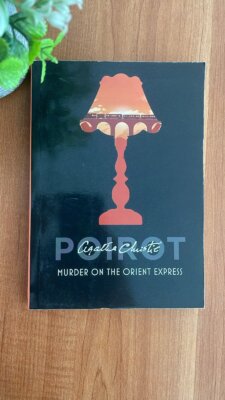
| Author | Agatha Christie |
|---|---|
| Language | English |
| Type | Paperback Printed Book (Second Quality Copy) |
Be the first to review “POIROT-MURDER ON THE ORIENT EXPRESS by Agatha Christie”
Related products
-17%

Classics & Literary Fiction
Original price was: රු2,400.00.රු1,990.00Current price is: රු1,990.00.
3 X Rs. 663.33 or 8% Cashback with
or 3 X රු663.33 with
or up to 4 X රු497.50 with
Out of stock
Classics & Literary Fiction
රු1,750.00
3 X Rs. 583.33 or 8% Cashback with
or 3 X රු583.33 with
or up to 4 X රු437.50 with
-24%
Out of stock
Classics & Literary Fiction
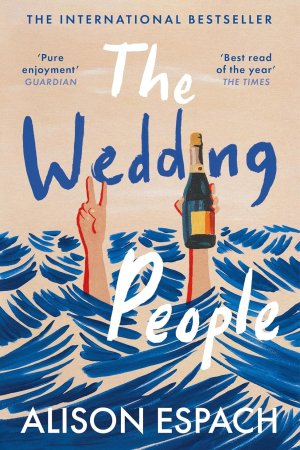
The Wedding People by Alison Espach – A Heartfelt Novel of Unexpected Friendships by Alison Espach
Original price was: රු2,500.00.රු1,900.00Current price is: රු1,900.00.
3 X Rs. 633.33 or 8% Cashback with
or 3 X රු633.33 with
or up to 4 X රු475.00 with
-17%

Classics & Literary Fiction
If He Had Been with Me by Laura Nowlin | Kindle Edition – YA Romance Bestseller
Original price was: රු2,400.00.රු1,990.00Current price is: රු1,990.00.
3 X Rs. 663.33 or 8% Cashback with
or 3 X රු663.33 with
or up to 4 X රු497.50 with
Out of stock
Classics & Literary Fiction
රු1,800.00
3 X Rs. 600.00 or 8% Cashback with
or 3 X රු600.00 with
or up to 4 X රු450.00 with
-17%
Out of stock
Classics & Literary Fiction
Original price was: රු2,900.00.රු2,400.00Current price is: රු2,400.00.
3 X Rs. 800.00 or 8% Cashback with
or 3 X රු800.00 with
or up to 4 X රු600.00 with
Classics & Literary Fiction
රු1,600.00
3 X Rs. 533.33 or 8% Cashback with
or 3 X රු533.33 with
or up to 4 X රු400.00 with
-28%

Out of stock
Classics & Literary Fiction
Original price was: රු1,800.00.රු1,300.00Current price is: රු1,300.00.
3 X Rs. 433.33 or 8% Cashback with
or 3 X රු433.33 with
or up to 4 X රු325.00 with
Reviews
There are no reviews yet.