
No products in the cart.
-37%
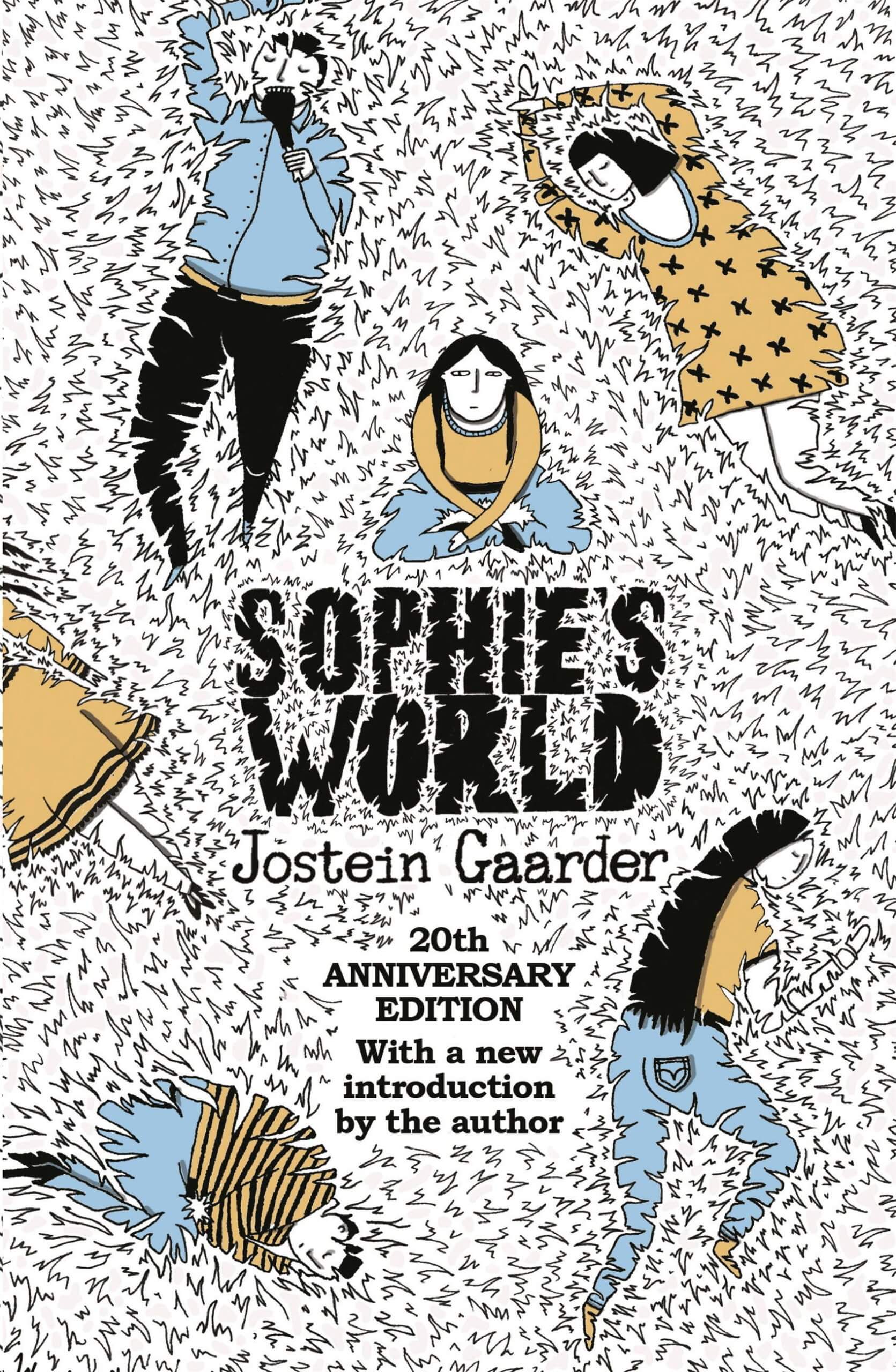
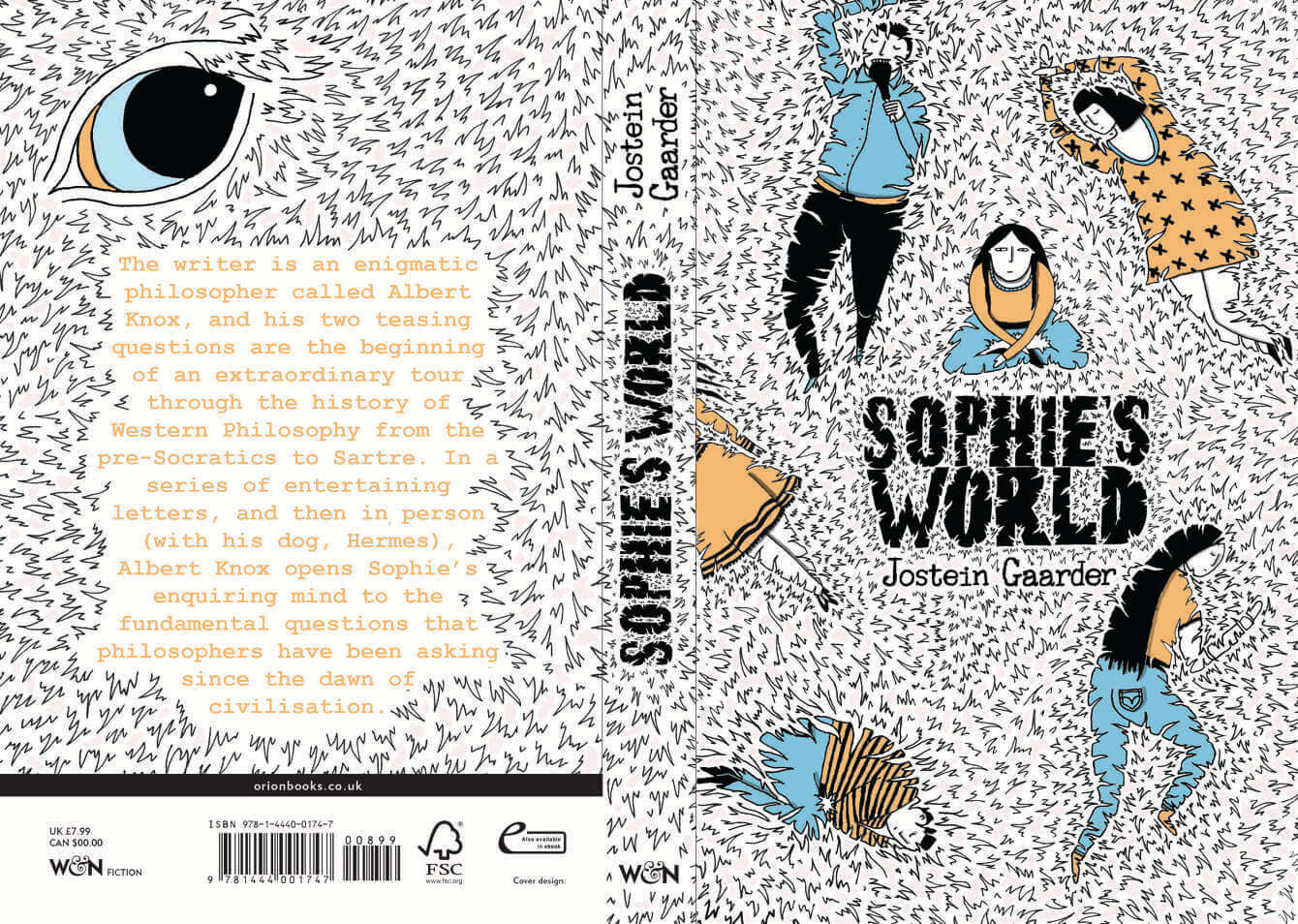

Sophie’s World by Jostein Gaarder


Original price was: රු3,000.00.රු1,900.00Current price is: රු1,900.00.
3 X Rs. 633.33 or 8% Cashback with


or 3 X රු633.33 with


or up to 4 X රු475.00 with


Embark on a philosophical adventure with “Sophie’s World” by Jostein Gaarder. This captivating novel introduces readers to the world of philosophy through the eyes of a young girl named Sophie. Order now for a thought-provoking exploration of life’s fundamental questions.
Out of stock
Email when stock available
Sophie’s World by Jostein Gaarder
Sophie’s World by Jostein Gaarder is a fascinating philosophical novel that combines mystery, adventure, coming-of-age fiction, and an introduction to the history of Western philosophy.
The story follows fourteen-year-old Sophie Amundsen.
Her ordinary life suddenly changes when she discovers mysterious messages in her mailbox.
One asks a simple but enormous question: Who are you?
Another asks where the world comes from.
These questions begin a journey that changes the way Sophie understands herself and reality.
About Sophie’s World
Sophie’s World begins as a mystery.
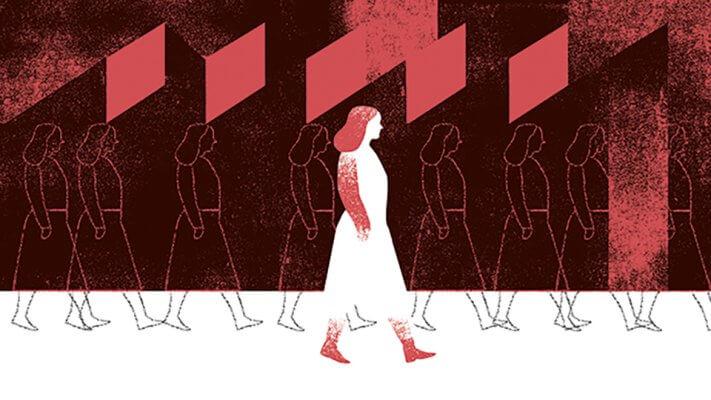
Sophie starts receiving philosophical lessons from an unknown teacher.
The lessons introduce her to some of history’s greatest thinkers.
She learns about ancient Greek philosophers, medieval thought, the Renaissance, Enlightenment ideas, existentialism, and modern philosophy.
But another mystery soon appears.
Sophie begins receiving letters intended for a girl named Hilde.
Who is Hilde?
Why are her messages appearing in Sophie’s life?
The answer becomes stranger as the story develops.
7 Powerful Reasons to Read Sophie’s World
1. Philosophy Becomes Easy to Explore
Philosophy can sometimes seem complicated.
Jostein Gaarder presents major philosophical ideas through a story rather than a traditional textbook.
Readers encounter important thinkers while following Sophie’s personal adventure.
This makes difficult ideas more approachable.
2. It Asks Big Questions
What does it mean to exist?
How can we know what is real?
Where did the universe come from?
What makes someone human?
These questions have fascinated people for thousands of years.
The novel encourages readers to think about them for themselves rather than simply memorizing answers.
3. It Introduces Famous Philosophers
Sophie’s World takes readers through a broad history of Western philosophical thought.
Socrates, Plato, Aristotle, Descartes, Spinoza, Locke, Hume, Kant, Hegel, Kierkegaard, Marx, Darwin, Freud, and other major thinkers appear through Sophie’s lessons.
Readers see how philosophical ideas developed and challenged earlier beliefs.
4. There Is a Genuine Mystery
This is not simply a series of philosophy lessons.
Sophie is also trying to understand strange events happening around her.
The mysterious Hilde becomes increasingly important.
Reality itself begins to feel uncertain.
The mystery gives readers another reason to continue turning the pages.
5. Philosophy and Fiction Work Together
Gaarder uses fiction to demonstrate philosophical questions.
Ideas about reality, identity, freedom, and existence are not merely discussed.
They become connected to what Sophie experiences.
This combination makes the book unusual among both novels and introductory philosophy books.
6. It Encourages Curiosity
One of the strongest messages of the novel is the importance of wonder.
People often become accustomed to the world around them.
Things that once seemed extraordinary begin to feel ordinary.
Sophie learns to look at existence differently.
The book encourages readers to recover that same curiosity.
7. It Can Change How You Think
This is a novel that asks readers to participate intellectually.
You may find yourself stopping to consider the questions Sophie receives.
The story does not simply tell readers what to believe.
Instead, it encourages questioning, reflection, and independent thought.
Sophie’s Philosophical Journey
At first, Sophie knows little about philosophy.
Her mysterious teacher gradually introduces her to different schools of thought.
Each philosopher approaches reality from another perspective.
Some focus on reason.
Others emphasize experience.
Some ask questions about morality, religion, politics, consciousness, or freedom.
Sophie begins to understand that many modern ideas developed from questions people have debated for centuries.
From Ancient Greece to Modern Thought
The philosophical journey begins with early Greek thinkers.
Readers encounter Socrates, Plato, and Aristotle.
The story then moves through later periods of intellectual history.
The Middle Ages introduce different relationships between philosophy and religion.
The Renaissance brings renewed interest in humanity, science, and individual thought.
Later philosophers challenge assumptions about knowledge and reality.
This creates an accessible overview of how Western philosophical thinking evolved.
Mystery, Hilde, and Reality
The mysterious letters addressed to Hilde gradually become impossible for Sophie to ignore.
At first, they appear to be an unrelated puzzle.
Eventually, they raise much deeper questions.
What is real?
Who controls a story?
How much freedom does a person truly have?
The novel begins playing with the boundary between fiction and reality.
This gives the philosophical lessons an entirely new meaning.
A Coming-of-Age Story
Sophie’s World is also about growing up.
Sophie is at an age when many people begin questioning the ideas they previously accepted.
Her philosophical education pushes this process much further.
She learns not to accept everything automatically.
She begins looking at herself, society, and the universe from different perspectives.
Her intellectual development becomes an important part of her journey toward maturity.
Why Philosophy Still Matters
Many philosophical questions are thousands of years old.
Yet they remain relevant.
Questions about truth, freedom, morality, identity, government, consciousness, and existence continue influencing modern life.
The book demonstrates how philosophy connects to everyday thinking.
Even people who have never studied philosophy professionally regularly make assumptions about these subjects.
Learning about philosophy can help readers recognize and question those assumptions.
Who Should Read This Book?
Sophie’s World is ideal for readers curious about philosophy but unsure where to begin.
It can also appeal to readers who enjoy mystery and intellectual fiction.
Students may find it useful as an accessible introduction to major philosophical thinkers.
Adult readers can enjoy it as both a refresher and a novel.
It is particularly suitable for people who enjoy books that leave them thinking long after the final page.
About Jostein Gaarder
Jostein Gaarder is a Norwegian author known for combining philosophy, imagination, and storytelling.
He was born in Oslo in 1952.
His other books include The Orange Girl, The Christmas Mystery, and The Ringmaster’s Daughter.
His publisher reports that the novel has been translated into around sixty languages and sold tens of millions of copies worldwide.
Readers can learn more through the official Macmillan Sophie’s World page.
Product Details
Title: Sophie’s World
Author: Jostein Gaarder
Original Norwegian Title: Sofies verden
Genre: Philosophical Fiction / Literary Fiction / Coming-of-Age
Original Publication: 1991
English Translator: Paulette Møller
Language: English
Your current Bargain Books listing identifies the stocked paperback with ISBN 9781474602280 and 448 pages.
Specifications can vary significantly between editions.
For example, Macmillan’s Farrar, Straus and Giroux paperback edition carries ISBN 9780374530716 and contains 544 pages.
Always use the ISBN and specifications printed on the physical copy being sold.
Explore More Thought-Provoking Fiction
Sophie’s World combines a mysterious adventure with some of humanity’s oldest and most important questions.
Sophie begins as an ordinary teenager.
Her mysterious philosophy lessons gradually force her to question reality, knowledge, identity, and even her own existence.
Readers looking for more literary and thought-provoking stories can explore Fiction & Literature Books at Bargain Books.
For anyone curious about philosophy but wanting something more entertaining than a conventional textbook, Sophie’s World offers a memorable place to begin.
| Author | Jostein Gaarder |
|---|---|
| Type | Paperback Printed Book |
| ISBN/ISSN | 1474602282, 978-1474602280 |
| Language | English |
| Pages | 448 |
Be the first to review “Sophie’s World by Jostein Gaarder”
Related products
-17%

Classics & Literary Fiction
If He Had Been with Me by Laura Nowlin | Kindle Edition – YA Romance Bestseller
Original price was: රු2,400.00.රු1,990.00Current price is: රු1,990.00.
3 X Rs. 663.33 or 8% Cashback with
or 3 X රු663.33 with
or up to 4 X රු497.50 with
-19%

Classics & Literary Fiction
Original price was: රු2,700.00.රු2,200.00Current price is: රු2,200.00.
3 X Rs. 733.33 or 8% Cashback with
or 3 X රු733.33 with
or up to 4 X රු550.00 with
-11%
Out of stock
Classics & Literary Fiction
Original price was: රු1,800.00.රු1,600.00Current price is: රු1,600.00.
3 X Rs. 533.33 or 8% Cashback with
or 3 X රු533.33 with
or up to 4 X රු400.00 with
Out of stock
Classics & Literary Fiction
රු2,590.00
3 X Rs. 863.33 or 8% Cashback with
or 3 X රු863.33 with
or up to 4 X රු647.50 with
-24%

Out of stock
Classics & Literary Fiction
The Wedding People by Alison Espach – A Heartfelt Novel of Unexpected Friendships by Alison Espach
Original price was: රු2,500.00.රු1,900.00Current price is: රු1,900.00.
3 X Rs. 633.33 or 8% Cashback with
or 3 X රු633.33 with
or up to 4 X රු475.00 with
Out of stock
Classics & Literary Fiction
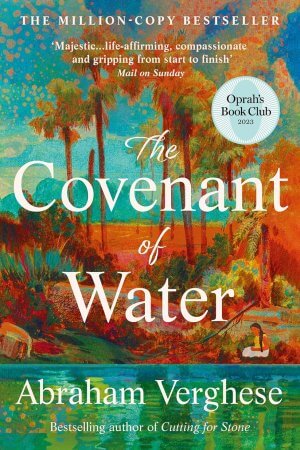
The Covenant of Water by Abraham Verghese | Oprah’s Book Club Selection | Paperback Edition
රු2,750.00
3 X Rs. 916.67 or 8% Cashback with
or 3 X රු916.67 with
or up to 4 X රු687.50 with

Out of stock
Classics & Literary Fiction
රු1,600.00
3 X Rs. 533.33 or 8% Cashback with
or 3 X රු533.33 with
or up to 4 X රු400.00 with

Out of stock
Classics & Literary Fiction
රු1,600.00
3 X Rs. 533.33 or 8% Cashback with
or 3 X රු533.33 with
or up to 4 X රු400.00 with
Reviews
There are no reviews yet.