
No products in the cart.
-18%
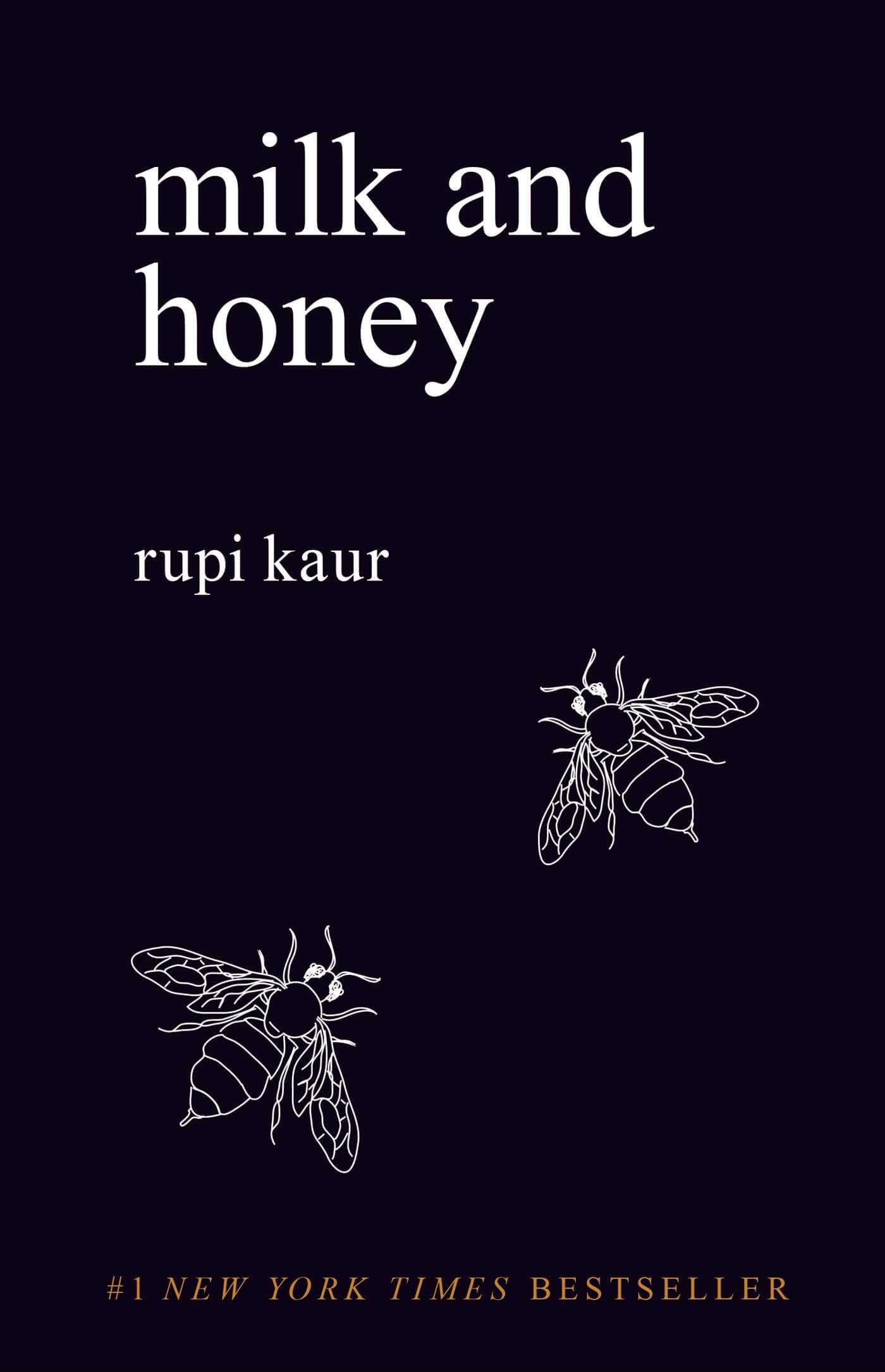


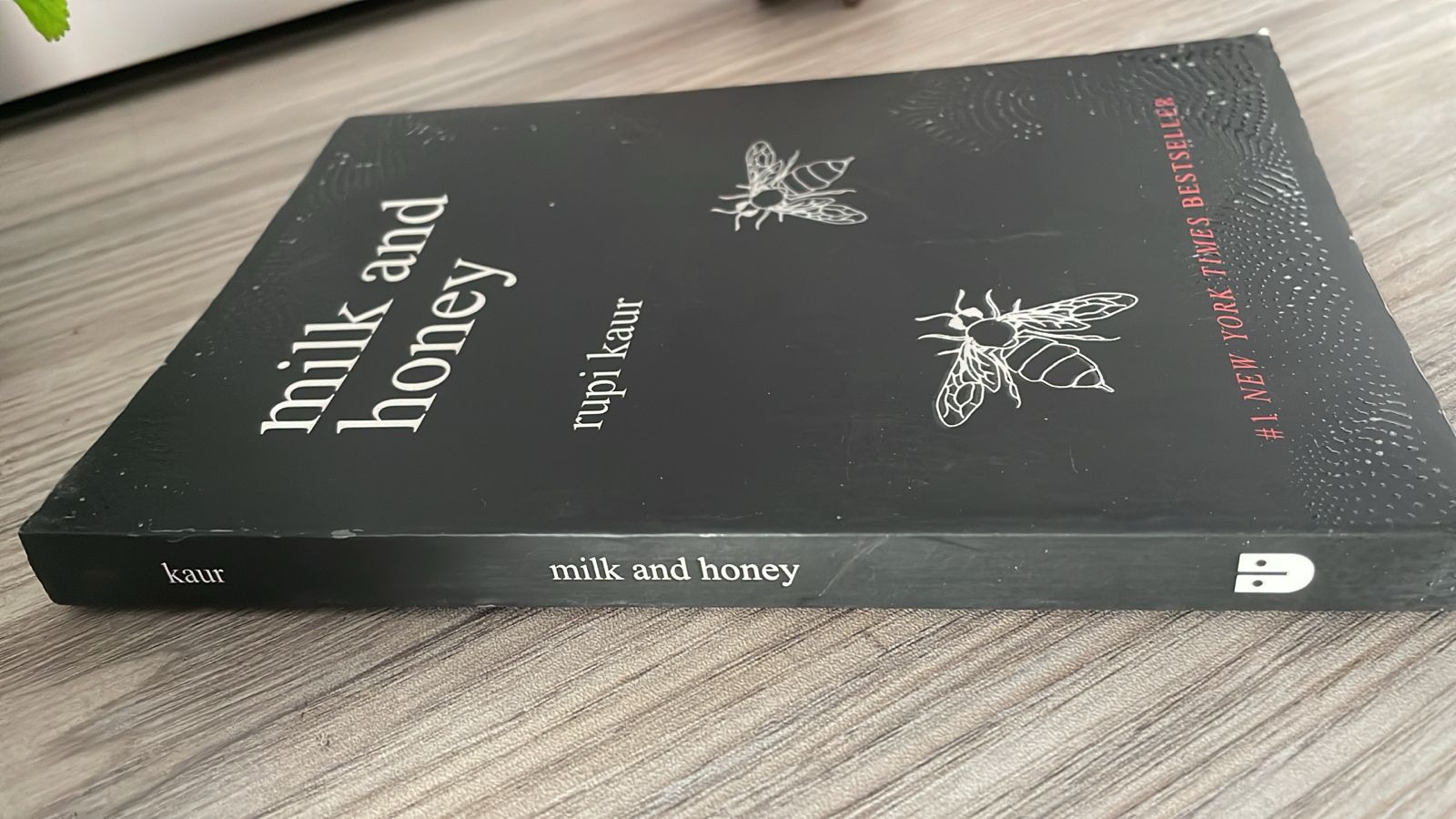
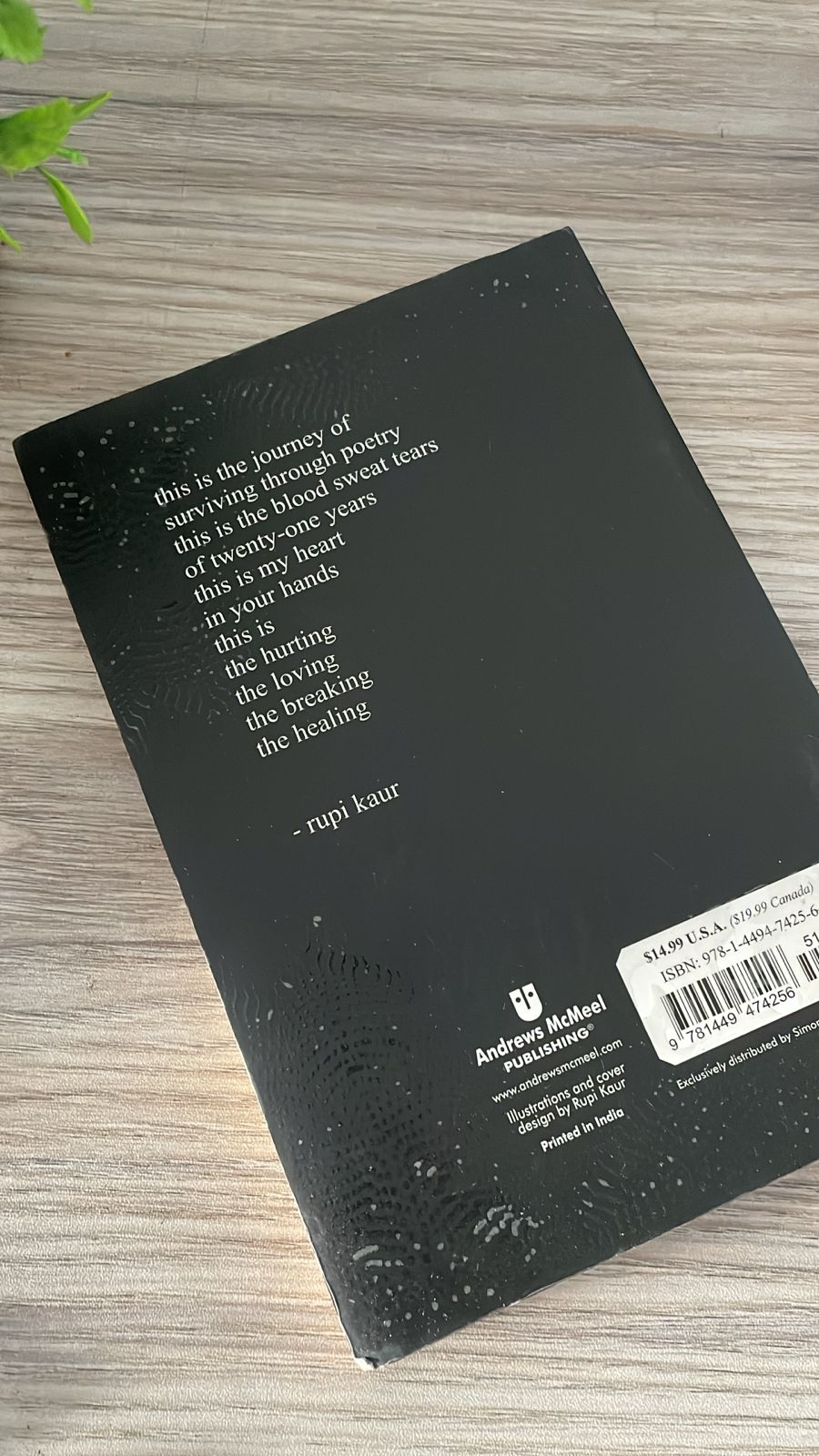
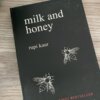



Milk and honey by Rupi Kaur


Original price was: රු1,950.00.රු1,600.00Current price is: රු1,600.00.
3 X Rs. 533.33 or 8% Cashback with


or 3 X රු533.33 with


or up to 4 X රු400.00 with


Milk and Honey by Rupi Kaur is a bestselling contemporary poetry and prose collection divided into four emotional sections: the hurting, the loving, the breaking, and the healing. Through short poems and minimalist illustrations, Rupi Kaur explores love, trauma, heartbreak, femininity, body image, self-worth and recovery. Emotional, accessible and deeply personal, it is ideal for readers interested in modern poetry, relationships, self-love and healing.
1 in stock
Milk and Honey by Rupi Kaur is a deeply personal poetry and prose collection about love, heartbreak, trauma, femininity, healing, self-worth and the difficult process of learning to survive painful experiences.
The collection moves through four emotional stages:
the hurting
the loving
the breaking
the healing
Each section explores a different part of human experience.
Pain.
Love.
Loss.
Recovery.
Rupi Kaur uses short poems, simple language and minimalist illustrations to express emotions that can sometimes be difficult to explain.
The poems deal with relationships between:
Parents and children.
Partners.
Women and their bodies.
People and their memories.
The past and the person trying to move beyond it.
Some poems are only a few lines long.
Others read almost like short reflections or personal observations.
The writing is direct.
Emotional.
Accessible.
And often deliberately raw.
Milk and Honey by Rupi Kaur became especially popular among younger readers because it presents poetry in a modern, approachable style that does not require previous experience with literary poetry.
But beneath its simplicity are serious themes involving:
Abuse.
Sexual violence.
Heartbreak.
Body image.
Loss.
Self-respect.
Womanhood.
Healing.
The book’s broader message is not that pain disappears easily.
Instead, healing often begins when a person recognizes their worth and refuses to let painful experiences become their entire identity.
Milk and Honey by Rupi Kaur – Book Overview
Milk and Honey by Rupi Kaur follows an emotional journey from suffering toward recovery.
The four sections create that progression.
The first examines pain.
The second explores love.
The third focuses on heartbreak and separation.
The final section turns toward healing and self-worth.
This structure makes the collection feel almost like an emotional journey.
Readers move through:
What hurt.
What felt beautiful.
What was lost.
What can still be rebuilt.
The Hurting
The first section, the hurting, is the darkest part of the collection.
It addresses experiences involving:
Abuse.
Trauma.
Fear.
Violence.
Family relationships.
The female body.
Sexual harm.
These poems can be emotionally difficult.
Kaur often uses very few words to communicate experiences that carry enormous emotional weight.
Pain and Silence
Trauma can be difficult to describe.
Sometimes people cannot easily explain what happened.
Sometimes they have spent years trying not to think about it.
Poetry provides another language.
An image.
A sentence.
A fragment.
These can communicate feelings that ordinary explanation struggles to capture.
Trauma
Milk and Honey by Rupi Kaur does not present trauma as something simple to overcome.
The past can influence:
Relationships.
Trust.
Self-image.
The body.
Intimacy.
Memory.
Healing often involves recognizing these effects rather than pretending they do not exist.
The Body
The female body is central to many poems.
The body can become a place associated with:
Beauty.
Desire.
Pain.
Judgment.
Shame.
Power.
Survival.
Kaur explores the complicated relationship people can have with their own bodies.
Shame
People who experience trauma may carry shame even when they were not responsible for what happened.
One theme throughout the collection is reclaiming ownership over:
Body.
Voice.
Identity.
Worth.
The Loving
The second section, the loving, shifts toward romantic connection.
Love can feel transformative.
Another person suddenly becomes:
Important.
Comforting.
Exciting.
Familiar.
The poems explore physical and emotional intimacy.
Falling in Love
Early love often contains intensity.
The other person occupies your thoughts.
Small moments feel enormous.
Words matter.
Touch matters.
Presence matters.
Kaur captures this emotional immediacy through short, direct poems.
Intimacy
Intimacy requires vulnerability.
To love someone deeply is to allow them access to parts of yourself that can be hurt.
That makes love both beautiful and frightening.
Being Seen
One of the strongest desires in relationships is to feel truly seen.
Not simply:
Looked at.
But understood.
The collection repeatedly explores the emotional need to feel accepted by another person.
Desire
Some poems contain sexual and sensual material.
Desire is presented as part of:
Intimacy.
Womanhood.
Relationships.
The body.
However, the collection also contrasts healthy intimacy with experiences involving harm or exploitation.
The Breaking
The third section, the breaking, moves into heartbreak.
Relationships end.
Trust disappears.
Someone who once felt like home can become a stranger.
This emotional shift is one reason Milk and Honey by Rupi Kaur resonates strongly with readers dealing with breakups or rejection.
Heartbreak
Heartbreak is not only sadness.
It can contain:
Anger.
Confusion.
Longing.
Jealousy.
Memory.
Hope.
Resentment.
Someone can know a relationship was unhealthy and still miss the person.
Emotions are rarely perfectly logical.
Missing Someone Who Hurt You
One of the painful realities of relationships is that love does not always disappear immediately when someone behaves badly.
You can understand:
This person was not good for me.
while still feeling:
I miss them.
Healing requires accepting both realities without using longing as a reason to return to something harmful.
Losing Yourself in Love
Some relationships become unhealthy because a person gradually abandons:
Friends.
Goals.
Boundaries.
Preferences.
Self-respect.
The collection often encourages readers not to destroy themselves in order to keep another person.
Love Should Not Require Self-Erasure
A recurring message in Milk and Honey by Rupi Kaur is that romantic love should not require losing your own identity.
A relationship should not demand that you become:
Smaller.
Silent.
Afraid.
Invisible.
Boundaries
Boundaries are an important part of healthy relationships.
Saying:
No.
This hurts me.
I will not accept this.
can be an act of self-respect.
Letting Go
Leaving can be difficult even when it is necessary.
People often remain attached to:
Memories.
Possibility.
The person someone used to be.
The future they imagined together.
Letting go means grieving not only what happened but what you hoped would happen.
The Healing
The final section, the healing, shifts toward recovery.
Healing is not simply forgetting.
It is learning how to carry the past differently.
You may remember.
But the memory no longer controls every decision.
Self-Love
Self-love becomes one of the central themes in Milk and Honey by Rupi Kaur.
This does not mean believing you are perfect.
It means developing enough self-respect to recognize:
Your needs matter.
Your boundaries matter.
Your body belongs to you.
Your life has value.
You Are More Than Someone’s Approval
People often build self-worth around:
Romantic attention.
Beauty.
Praise.
Social approval.
But external validation is unstable.
Someone can admire you today and leave tomorrow.
A stronger sense of worth must come partly from within.
Healing Is Not Linear
Recovery does not move perfectly forward.
One day you feel strong.
The next day an old memory returns.
This does not necessarily mean you have lost all progress.
Healing can include setbacks.
Grief and Recovery
Grief does not always disappear.
Sometimes it becomes less dominant.
You learn:
How to live with memory.
How to experience happiness again.
How to build new relationships.
How to trust carefully.
Womanhood
The collection explores womanhood through:
Body.
Family.
Sexuality.
Beauty standards.
Relationships.
Strength.
Vulnerability.
Kaur frequently writes from a distinctly female perspective.
Mothers and Daughters
Family relationships are also important.
Women may inherit:
Strength.
Pain.
Expectations.
Cultural traditions.
Ideas about gender.
The relationship between generations becomes part of how identity is formed.
Beauty Standards
Society constantly tells women how they should look.
Thin enough.
Beautiful enough.
Young enough.
Desirable enough.
Comparing yourself against constantly changing standards can damage self-worth.
The collection pushes toward greater acceptance of the body.
The Female Body and Ownership
A key idea is that a woman’s body belongs to herself.
It should not be understood primarily through:
Male approval.
Beauty standards.
Social expectations.
The body is part of personal identity and autonomy.
Love and Self-Respect
Love does not require accepting everything.
You can love someone and still decide:
This relationship is hurting me.
Leaving does not automatically mean love never existed.
Sometimes leaving is an act of self-preservation.
Relationships
Milk and Honey by Rupi Kaur examines many kinds of relationship dynamics.
Healthy affection.
Unrequited love.
Intimacy.
Dependency.
Heartbreak.
Emotional imbalance.
The poems repeatedly ask what relationships should give rather than only what they take.
Toxic Relationships
Some poems address relationships where one person gives much more than the other.
A relationship can become harmful when love is used to justify:
Disrespect.
Manipulation.
Control.
Repeated betrayal.
Emotional neglect.
Love alone does not automatically create a healthy relationship.
Red Flags
Strong attraction can sometimes make people ignore signs that something is wrong.
The collection encourages readers to protect:
Dignity.
Boundaries.
Self-respect.
Loneliness
Being alone and being lonely are not identical.
A person can feel lonely inside a relationship.
Another can be alone and still feel peaceful.
The difference often involves connection with yourself.
Learning to Be Alone
After a breakup, solitude can initially feel frightening.
But time alone can create space for:
Reflection.
Growth.
New interests.
Friendships.
Recovery.
The goal is not permanent isolation.
It is learning that your existence does not depend entirely on another person’s presence.
Strength
Strength in Milk and Honey by Rupi Kaur is not emotional numbness.
Strong people can:
Cry.
Grieve.
Miss someone.
Feel afraid.
Strength may simply mean continuing.
Vulnerability
Vulnerability is not automatically weakness.
To admit:
I was hurt.
I loved deeply.
I am afraid.
requires honesty.
The challenge is becoming vulnerable with people who treat that vulnerability responsibly.
Forgiveness
Forgiveness appears as part of healing.
But forgiveness does not necessarily mean:
Returning.
Reconnecting.
Removing boundaries.
Sometimes forgiveness means releasing enough anger to move forward.
Self-Respect
Self-respect changes decisions.
You begin asking:
Does this person treat me well?
Instead of:
How can I convince this person to love me?
That is a major emotional shift.
Poetry Style
One reason Milk and Honey by Rupi Kaur became widely read is its distinctive minimalist style.
Many poems use:
Short lines.
Simple vocabulary.
Lowercase text.
White space.
Minimal punctuation.
Simple drawings.
This creates a visual and emotional reading experience.
Accessible Poetry
Traditional poetry can sometimes intimidate new readers.
Readers may worry about:
Complex symbolism.
Meter.
Historical context.
Academic interpretation.
Kaur’s style is deliberately accessible.
Readers can engage immediately with the emotional content.
Short Poems, Strong Emotions
A poem does not need to be long to create impact.
Sometimes a few lines can capture:
A breakup.
A realization.
An insecurity.
A memory.
The brevity allows readers to pause and reflect.
Illustrations
Rupi Kaur’s simple line drawings appear throughout the collection.
They complement themes involving:
Bodies.
Nature.
Relationships.
Women.
Emotion.
The visual elements are part of the book’s recognizable style.
Instagram Poetry
Kaur became strongly associated with the rise of poetry shared through social media.
This style is sometimes called Instapoetry.
Short, visually striking poems worked naturally on platforms such as Instagram.
Her success helped introduce many younger readers to contemporary poetry.
Why Milk and Honey Became So Popular
The collection connects with universal emotional experiences.
People recognize:
Heartbreak.
Insecurity.
Longing.
Loss.
Healing.
The accessible writing allows readers to find lines that feel personally meaningful.
Criticism
Like many extremely popular books, Milk and Honey by Rupi Kaur has also received criticism.
Some readers appreciate its simplicity and emotional honesty.
Others believe the poems are:
Too short.
Too direct.
Too similar to social-media posts.
This difference reflects a broader debate about what contemporary poetry should look like.
Is Simplicity Bad Poetry?
Not necessarily.
Poetry can be:
Complex.
Simple.
Formal.
Experimental.
Narrative.
Fragmentary.
Different styles serve different readers.
Kaur’s work prioritizes emotional accessibility over traditional poetic complexity.
Reading Personal Poetry
Poetry does not always need to be interpreted like a puzzle.
Sometimes the purpose is emotional recognition.
A reader encounters a line and thinks:
I have felt this.
That recognition can itself be meaningful.
Rupi Kaur
Rupi Kaur is a poet, artist and performer whose work explores themes involving:
Love.
Trauma.
Womanhood.
Migration.
Healing.
Family.
Self-worth.
Her visual presentation and social-media presence helped her become one of the most widely recognized contemporary poets.
Other Books by Rupi Kaur
Readers who enjoy Milk and Honey by Rupi Kaur may also be interested in:
The Sun and Her Flowers
Home Body
These collections continue exploring themes involving:
Relationships.
Identity.
Healing.
Growth.
The body.
Is Milk and Honey a Novel?
No.
Milk and Honey by Rupi Kaur is a poetry and prose collection.
It does not tell one continuous fictional story with traditional characters and chapters.
Instead, the poems are organized thematically.
Is Milk and Honey a Romance Book?
Not exactly.
Romantic love is important, but the collection also explores:
Trauma.
Abuse.
Family.
Self-love.
Femininity.
Healing.
Therefore, it is better described as contemporary poetry rather than romance fiction.
Is Milk and Honey Good for Beginners?
Yes.
Its accessible language makes it especially popular among people who do not normally read poetry.
Many poems can be read quickly while still encouraging reflection.
Is Milk and Honey Sad?
Parts of the collection are extremely emotional and dark.
The first sections include trauma and heartbreak.
However, the final movement of the book focuses increasingly on:
Healing.
Self-worth.
Strength.
Hope.
Is Milk and Honey Only for Women?
No.
Although much of the collection is written from a female perspective, themes involving:
Love.
Heartbreak.
Loss.
Self-worth.
Healing.
are widely relatable.
Is Milk and Honey a Self-Help Book?
No.
It is poetry.
However, many readers find its reflections on self-respect, healing and relationships personally encouraging.
It should not be treated as professional psychological guidance.
Mental Health and Trauma
Some readers may connect strongly with the book because of their own experiences of trauma or abuse.
Poetry can help people feel understood.
However, a poetry collection cannot replace qualified support for serious trauma or mental-health difficulties.
Content Considerations
Milk and Honey by Rupi Kaur contains potentially sensitive and mature material including:
- Sexual assault
- Sexual abuse
- Physical and emotional abuse
- Trauma
- Family difficulties
- Violence
- Heartbreak
- Toxic relationships
- Sexual content
- Body image
- Misogyny
- Self-worth struggles
- Grief and emotional pain
Some readers may find the first section particularly intense.
Important Themes
Milk and Honey by Rupi Kaur explores:
- Love
- Heartbreak
- Healing
- Trauma
- Abuse
- Femininity
- Self-worth
- Womanhood
- Relationships
- Sexuality
- Body image
- Grief
- Loneliness
- Self-love
- Survival
- Boundaries
- Family
- Strength
- Recovery
- Personal growth
The Four Sections of Milk and Honey
The four sections create the emotional structure of the collection:
The Hurting
Focuses on trauma, pain, abuse and difficult experiences.
The Loving
Explores romantic love, desire, connection and intimacy.
The Breaking
Deals with heartbreak, separation, betrayal and loss.
The Healing
Moves toward self-love, recovery, acceptance and rebuilding.
Together, the sections create a movement from pain toward greater emotional independence.
7 Powerful Reasons to Read Milk and Honey by Rupi Kaur
There are many reasons readers connect with Milk and Honey by Rupi Kaur, but seven stand out:
- It makes contemporary poetry accessible – The short poems and direct language make the collection approachable even for readers who rarely read poetry.
- It explores difficult emotions honestly – Trauma, heartbreak, loneliness and insecurity are presented without pretending that healing is simple.
- The four-part structure creates an emotional journey – Readers move from hurting and loving through breaking and eventually toward healing.
- It emphasizes self-worth after difficult relationships – The collection repeatedly encourages readers to value themselves rather than depending completely on another person’s approval.
- The poems explore womanhood and the body – Kaur writes directly about femininity, sexuality, beauty standards, autonomy and the emotional experiences surrounding the female body.
- Its minimalist style makes individual lines memorable – Short poems and illustrations create moments readers can pause over and revisit.
- The collection ultimately moves toward recovery – Although much of the book is painful, its final direction emphasizes resilience, self-love and the possibility of rebuilding after loss.
Why Read Milk and Honey by Rupi Kaur?
Milk and Honey by Rupi Kaur is an excellent choice for readers interested in:
- Rupi Kaur
- Contemporary poetry
- Love poetry
- Heartbreak poetry
- Healing
- Self-love
- Women’s poetry
- Feminist poetry
- Relationships
- Trauma recovery themes
- Emotional poetry
- Modern poetry
- Short poems
- Poetry for beginners
- Womanhood
- Body image
- Self-worth
- Personal growth
- Breakup books
- Books about healing
It is especially suitable for readers who enjoy short, emotionally direct poetry focused on relationships, identity and recovery.
Who Should Read This Book?
Milk and Honey by Rupi Kaur may especially appeal to:
- Contemporary-poetry readers
- Rupi Kaur fans
- Young adult and adult readers
- Readers dealing with heartbreak
- Readers interested in self-love
- People exploring emotional healing
- Readers interested in women’s experiences
- Poetry beginners
- Readers who enjoy short reflective writing
- People who enjoy illustrated poetry
- Readers interested in relationships
- Fans of emotionally direct writing
- Readers looking for a meaningful gift
- Anyone interested in modern poetry about love, pain and recovery
Milk and Honey by Rupi Kaur – From Hurting to Healing
Milk and Honey by Rupi Kaur begins in pain.
It moves through love.
Then heartbreak.
And finally healing.
That progression is what gives the collection its emotional shape.
Pain is real.
Love can be beautiful.
Love can also end.
People can disappoint us.
Bodies can carry difficult memories.
Relationships can damage self-worth.
But those experiences do not have to become the final chapter.
Healing begins slowly.
Sometimes it begins by recognizing:
What happened was painful.
Sometimes by setting a boundary.
Sometimes by leaving.
Sometimes by learning to be alone.
Sometimes by looking at yourself without asking whether another person approves.
The book does not promise that every wound disappears.
Instead, it suggests that people can become larger than the experiences that hurt them.
That is one reason Milk and Honey by Rupi Kaur continues to resonate with readers.
The poems are not primarily interested in pretending life is easy.
They acknowledge:
Trauma.
Heartbreak.
Abandonment.
Insecurity.
But they also leave room for:
Growth.
Strength.
Self-respect.
Love.
Recovery.
For readers who enjoy poetry about relationships, womanhood, trauma, self-worth and healing, Milk and Honey by Rupi Kaur offers an accessible and emotionally intense collection about surviving painful chapters and slowly learning how to write a different future.
Learn more about Milk and Honey by Rupi Kaur on Rupi Kaur’s official website.
Explore more poetry books at Bargain Books.
| Author | Rupi Kaur |
|---|---|
| Language | English |
| Type | Paperback Printed Book (Second Quality Copy) |
Be the first to review “Milk and honey by Rupi Kaur”
Related products
-28%

Out of stock
Classics & Literary Fiction
Original price was: රු1,800.00.රු1,300.00Current price is: රු1,300.00.
3 X Rs. 433.33 or 8% Cashback with
or 3 X රු433.33 with
or up to 4 X රු325.00 with

Out of stock
Classics & Literary Fiction
රු1,800.00
3 X Rs. 600.00 or 8% Cashback with
or 3 X රු600.00 with
or up to 4 X රු450.00 with
-18%
Out of stock
Fiction & Literature
Original price was: රු2,750.00.රු2,250.00Current price is: රු2,250.00.
3 X Rs. 750.00 or 8% Cashback with
or 3 X රු750.00 with
or up to 4 X රු562.50 with
-22%

Out of stock
Fiction & Literature
Original price was: රු2,250.00.රු1,750.00Current price is: රු1,750.00.
3 X Rs. 583.33 or 8% Cashback with
or 3 X රු583.33 with
or up to 4 X රු437.50 with
Classics & Literary Fiction
රු1,750.00
3 X Rs. 583.33 or 8% Cashback with
or 3 X රු583.33 with
or up to 4 X රු437.50 with
-14%

Out of stock
Adventure Fiction
Original price was: රු3,650.00.රු3,150.00Current price is: රු3,150.00.
3 X Rs. 1,050.00 or 8% Cashback with
or 3 X රු1,050.00 with
or up to 4 X රු787.50 with

Out of stock
Fiction & Literature
රු1,750.00
3 X Rs. 583.33 or 8% Cashback with
or 3 X රු583.33 with
or up to 4 X රු437.50 with

Classics & Literary Fiction
රු1,750.00
3 X Rs. 583.33 or 8% Cashback with
or 3 X රු583.33 with
or up to 4 X රු437.50 with
Reviews
There are no reviews yet.