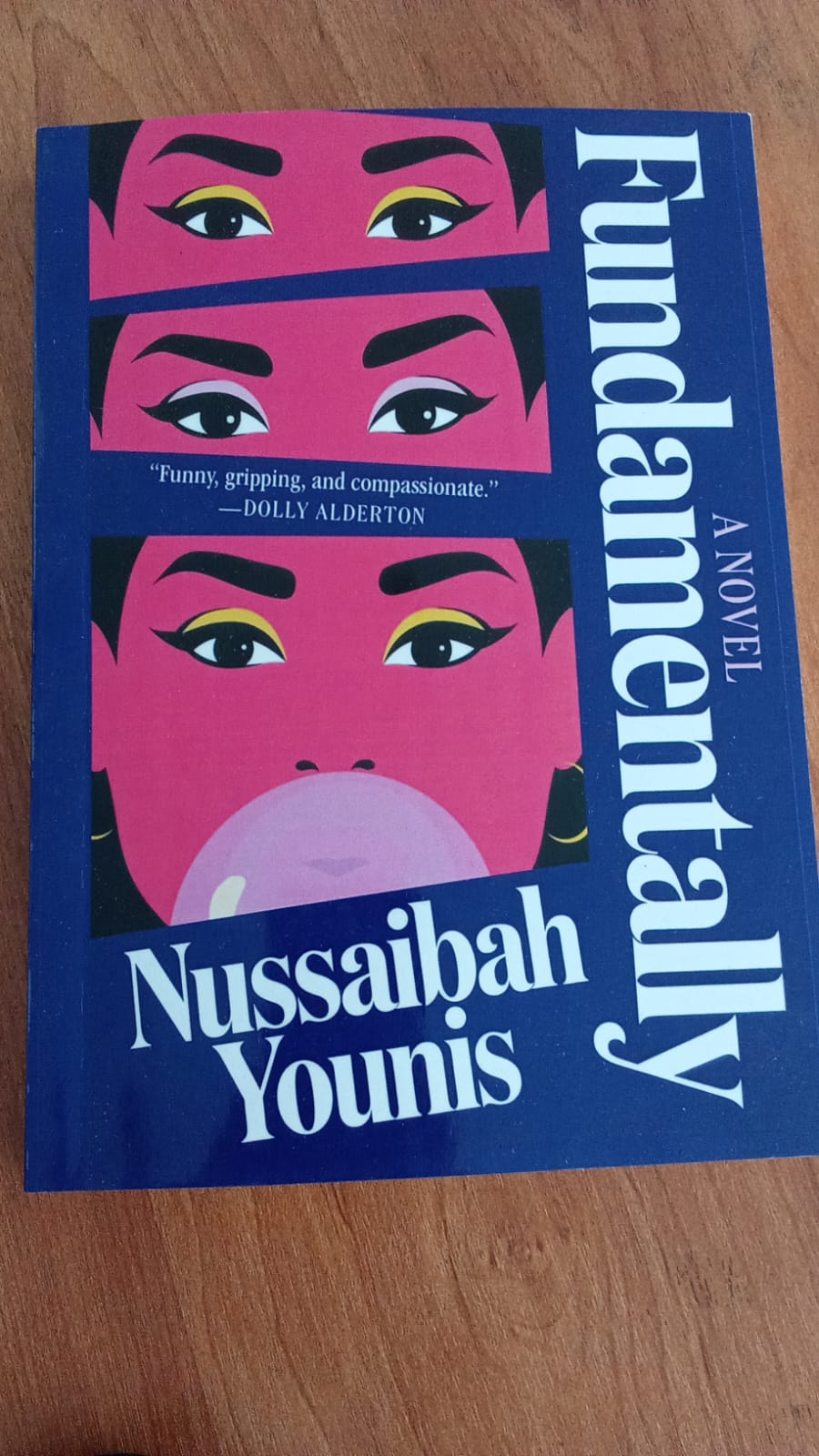
Fundamentally by Nussaibah Younis
Fundamentally by Nussaibah Younis is a bold contemporary novel combining dark humour, complicated relationships and difficult questions about identity, ideology and belonging.

It follows Nadia, an academic who travels to Iraq after both her personal and family relationships have become increasingly difficult.
What begins as an escape soon places her inside a complicated international programme where theory and reality are very different things.
Fundamentally
Fundamentally introduces readers to Nadia, an intelligent but deeply imperfect academic.
She has knowledge, opinions and confidence.
Yet she is also dealing with heartbreak, family conflict and uncertainty about what she wants from her own life.
When an opportunity arrives to work in Iraq, leaving home suddenly seems attractive.
The job offers distance from her problems.
It also gives her the chance to put her academic ideas into practice.
From Academic Theory to Reality
Studying a difficult subject from a university can feel very different from confronting it in real life.
Nadia quickly discovers this difference.
Her new role places her inside the complicated world of international aid.
There are organisational disagreements.
There are competing priorities.
There are cultural misunderstandings.
There are also people whose lives cannot easily be reduced to theories or policy documents.
This tension gives the novel much of its energy.
A Story About Belonging
One of the strongest themes in Fundamentally is belonging.
People want communities.
They want identities.
They want to feel understood.
Those desires can influence decisions in powerful ways.
The novel explores what can happen when someone feels disconnected from family, society or the people around them.
It also asks what individuals may be willing to believe or sacrifice in order to belong somewhere.
Nadia’s Own Search for Belonging
Nadia is not simply observing other people’s struggles.
She has her own.
Her relationship with her mother has broken down.
Her romantic life has also become painful.
She may appear professionally confident while still feeling uncertain personally.
This creates an important parallel within the story.
Nadia is supposed to understand why other people make difficult choices.
Yet she is still trying to understand many of her own.
Meeting Sara
A central relationship develops between Nadia and Sara.
Sara is from East London.
She joined ISIS while still very young.
On paper, Nadia and Sara may appear completely different.
In person, their similarities become harder to ignore.
Both can be outspoken.
Both can be difficult.
Both have complicated relationships with identity and belonging.
Their connection becomes one of the novel’s most important elements.
Friendship in an Unexpected Place
Fundamentally uses friendship to complicate easy judgments.
Nadia begins with professional responsibilities.
Her relationship with Sara gradually becomes more personal.
That shift raises uncomfortable questions.
Can someone remain objective when they care deeply about the person they are supposed to help?
Can friendship survive major differences in beliefs?
How should compassion operate when someone’s choices have caused or supported harm?
The novel refuses to reduce those questions to simple answers.
Serious Ideas with Dark Humour
The subject matter of Fundamentally is serious.
The writing, however, frequently uses humour.
This contrast is central to the novel’s style.
The humour does not remove the difficult questions.
Instead, it often exposes hypocrisy, confusion and contradictions.
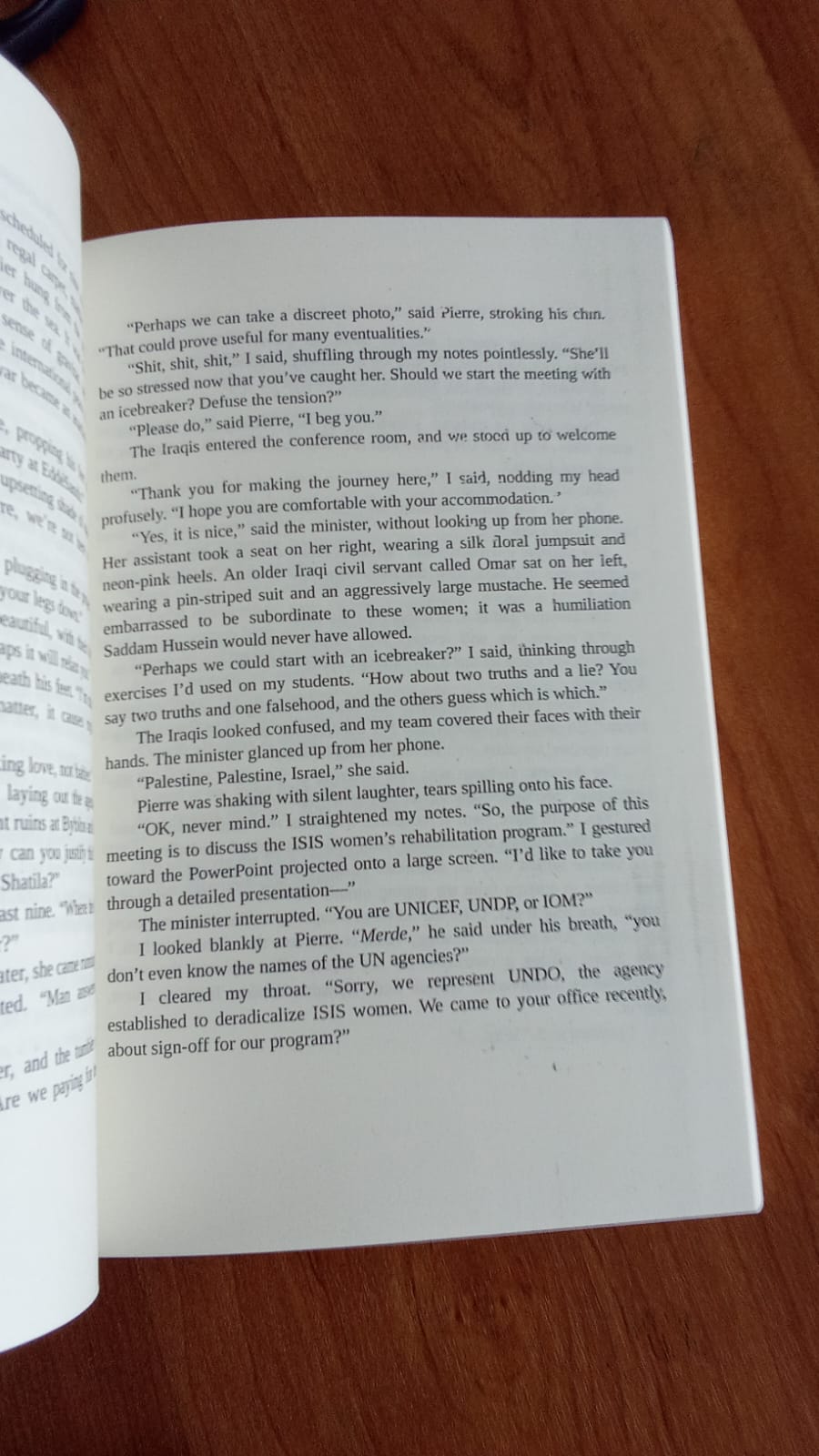
Bureaucracy becomes a source of comedy.
Personal relationships become chaotic.
Characters say things that are uncomfortable, inappropriate or unexpectedly funny.
This gives the novel a distinctive voice.
International Aid and Bureaucracy
Another important theme is international aid.
Nadia enters a world filled with organisations, programmes and professional language.
Yet institutions are made up of people.
People have ambitions.
They have disagreements.
They misunderstand one another.
They also make mistakes.
Fundamentally uses its fictional programme to examine the gap between institutional intentions and messy reality.
Good Intentions Are Complicated
Wanting to help someone does not automatically mean knowing what is best for them.
This becomes an important idea throughout the story.
Nadia believes in the work she is doing.
At the same time, she has to question some of her assumptions.
Who decides what successful rehabilitation looks like?
Who has authority?
What does genuine change mean?
These questions become increasingly personal.
Identity Is Not Simple
Fundamentally also explores the complexity of identity.
People can belong to several cultures at once.
Family expectations may conflict with personal choices.
Religion can be interpreted differently by different individuals.
Someone may feel connected to a community while simultaneously feeling rejected by it.
The novel allows these contradictions to exist.
It does not require every character to fit neatly into one category.
Family Relationships
Family is another major part of Nadia’s story.
Her difficult relationship with her mother affects how she understands herself.
Family expectations can shape identity for years.
Even when people reject those expectations, they may continue responding to them emotionally.
This adds another layer to Nadia’s decisions.
Her journey is therefore not only professional.
It is also deeply personal.
Love and Heartbreak
Heartbreak helps push Nadia toward change.
Instead of remaining where she is, she leaves.
This makes romantic disappointment part of the story’s larger discussion about escape.
Changing location does not necessarily solve an emotional problem.
A person can travel thousands of kilometres and still carry the same unresolved feelings.
Fundamentally uses Nadia’s romantic life to add both vulnerability and humour.
Can We Escape Ourselves?
This question sits underneath much of the novel.
Nadia travels to Iraq partly because she wants distance from her existing life.
The location changes.
Her responsibilities change.
Her colleagues change.
But she remains herself.
Old insecurities and habits do not automatically disappear.
The novel therefore becomes partly about confronting the problems a person brings with them.
Challenging Easy Judgments
Stories involving extremism can easily divide characters into simple categories.
Good people.
Bad people.
Victims.
Villains.
Fundamentally is interested in what happens when those categories become uncomfortable.
Understanding someone’s background does not automatically excuse their actions.
Condemning an action does not necessarily explain why it happened.
The novel explores the difficult space between those positions.
Radicalisation and Human Behaviour
Radicalisation is one of the story’s central subjects.
Yet the novel approaches it through characters rather than presenting itself as an academic textbook.
Readers encounter people with histories, relationships and contradictions.
This makes abstract debates feel more immediate.
The story asks how beliefs develop.
It also asks whether beliefs can change.
Responsibility and Choice
Personal responsibility remains important.
People make choices.
Those choices can have serious consequences.
At the same time, circumstances shape the options people believe they have.
Fundamentally asks readers to consider both individual responsibility and surrounding influences.
This creates moral tension throughout the novel.
Compassion Without Simplicity
Compassion can be difficult.
It becomes even more difficult when the person receiving compassion has made choices that are hard to understand.
The novel explores whether empathy requires agreement.
It also asks whether understanding someone’s path means excusing everything they did.
These questions give the story emotional depth.
The Desire to Save Someone
Nadia’s professional mission is built around helping others change.
That can easily become connected with the desire to save someone.
But helping is not always simple.
People may resist.
They may want something different.
They may also understand their own lives in ways outsiders do not.
The novel repeatedly challenges Nadia’s assumptions about her role.
Friendship and Professional Boundaries
As Nadia becomes closer to Sara, boundaries become increasingly important.
Professional work often requires emotional distance.
Friendship works differently.
The two can conflict.
This tension creates both emotional and ethical pressure.
Nadia has to decide what kind of relationship she actually has with Sara.
A Flawed Main Character
Nadia is not presented as a perfect heroine.
That is one of the reasons she feels memorable.
She can be funny.
She can also be selfish.
She can be compassionate.
She can make questionable decisions.
She is intelligent without always being wise.
These contradictions make her feel human.
Humour as a Way of Examining Difficult Subjects
Comedy can create distance from difficult material.
It can also reveal uncomfortable truths.
Fundamentally frequently uses jokes to expose assumptions.
Some humour comes from bureaucracy.
Some comes from personality clashes.
Some comes from Nadia herself.
The result is a novel that can be entertaining while still asking serious questions.
Contemporary Literary Fiction
Fundamentally fits naturally within contemporary literary fiction.
It is interested in character.
It is also interested in politics, institutions, culture and modern identity.
However, the story does not read like a policy report.
The characters drive the narrative.
Their relationships give the larger issues emotional meaning.
A Story About Contradictions
Many of the novel’s strongest ideas involve contradictions.
People can be intelligent and foolish.
They can be compassionate and selfish.
Institutions can mean well and still fail.
Someone can reject a community while still feeling shaped by it.
A friendship can be genuine while also creating serious ethical problems.
The novel allows these contradictions to remain complicated.
Religion and Personal Identity
Religion plays an important role in the story.
Characters have different relationships with belief and cultural identity.
For some, religion may be closely connected with family.
For others, it becomes part of conflict or distance.
The book does not present one simple experience of faith.
Instead, it explores how belief can intersect with identity, community and personal history.
Culture and Assumptions
International work often brings people from different backgrounds together.
That can create misunderstanding.
People may arrive with assumptions about one another.
They may also believe their own perspective is neutral when it is not.
Fundamentally uses these encounters to explore cultural confidence and cultural blindness.
The humour often makes these moments especially memorable.
Why Readers May Find It Thought-Provoking
The novel raises questions without turning every chapter into a lesson.
Readers are allowed to disagree with characters.
They may even disagree with their own first reactions.
That is part of the appeal.
A situation may initially appear obvious.
Additional information can make it more complicated.
The novel repeatedly encourages that reconsideration.
A Strong Choice for Book Clubs
Fundamentally can work particularly well for book-club discussion.
It raises questions about responsibility.
It explores friendship.
It examines international institutions.
It deals with religion, identity and belonging.
Different readers may interpret Nadia’s choices very differently.
That creates plenty of material for discussion.
Questions for Readers
Readers may find themselves considering questions such as:
- What makes someone feel that they belong?
- Can ideology be separated from identity?
- When does helping become controlling?
- How should institutions handle complicated individual cases?
- Can friendship survive extreme differences?
- What does accountability require?
- How much can people genuinely change?
There are no simple answers.
That uncertainty is part of the story.
An Award-Recognised Debut
Fundamentally quickly attracted significant literary attention.
The novel was shortlisted for the 2025 Women’s Prize for Fiction.
It also received recognition for its comic writing.
This reflects the unusual combination at the centre of the book.
It tackles serious contemporary issues while remaining deliberately funny and character-driven.
About Nussaibah Younis
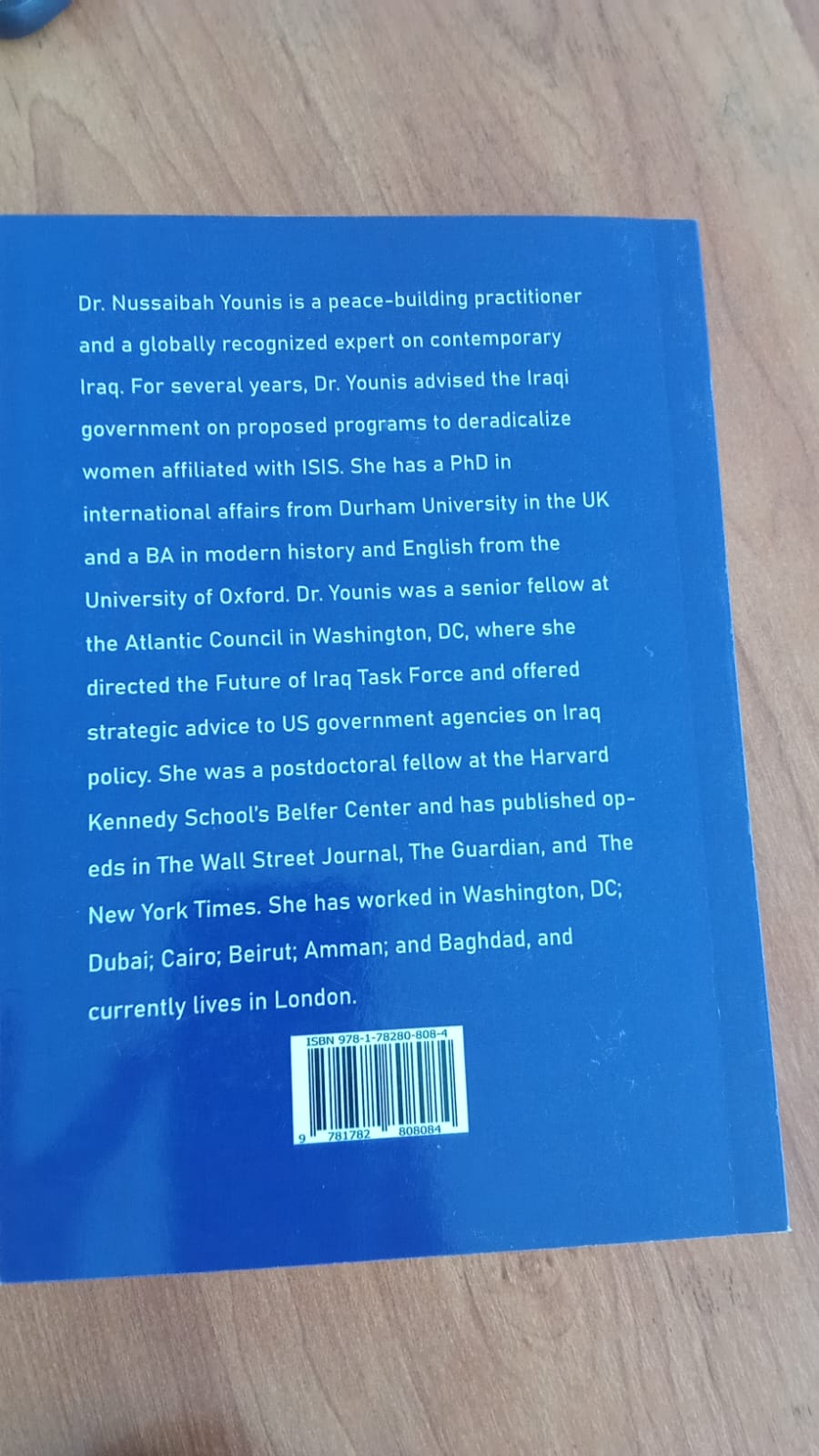
Nussaibah Younis is a writer and peace-building practitioner with professional expertise relating to contemporary Iraq.
Her background gives the novel a distinctive perspective on international policy and the region.
Fundamentally is her debut novel.
Her experience helps inform the institutional and political environment surrounding Nadia’s fictional story.
Who Should Read Fundamentally?
Fundamentally may appeal to readers who enjoy:
- Contemporary fiction
- Literary fiction
- Dark comedy
- Satirical fiction
- Character-driven novels
- Stories about identity
- Stories about friendship
- Political and social themes
- Morally complicated characters
- Debut fiction
It may particularly suit readers who enjoy novels that combine humour with difficult contemporary subjects.
More Than a Political Novel
Although the story involves radicalisation and international aid, Fundamentally is not only about politics.
It is also about people.
It is about heartbreak.
It is about mothers and daughters.
It is about friendship.
It is about loneliness.
It is about wanting to belong somewhere.
These personal themes help make the larger questions more accessible.
Why Choose Fundamentally?
Fundamentally combines an unusual premise with a memorable narrative voice.
Nussaibah Younis uses humour to explore subjects that are normally approached with complete seriousness.
The result is a novel that can entertain while also making readers reconsider their assumptions.
Its strongest moments come from the tension between certainty and complexity.
Characters believe they understand situations.
Then those situations change.
Relationships become complicated.
Moral decisions become harder.
For readers looking for contemporary fiction that is funny, challenging and emotionally engaging, Fundamentally is a compelling choice.
Product Details
Product title: Fundamentally
Author: Nussaibah Younis
Publisher: Orion Publishing Co
Imprint: Weidenfeld & Nicolson
Format: Paperback
Language: English
Page count: 336 pages
ISBN-13: 9781399623940
ISBN-10: 139962394X
Publication date: 12 February 2026
Dimensions: Approximately 196 × 126 × 30 mm
Weight: Approximately 236 grams
Categories: Contemporary Fiction, Literary Fiction and Humour
Key themes: Identity, belonging, family, friendship, religion, radicalisation and international aid
Explore our complete contemporary and literary fiction collection to discover more thought-provoking novels about identity, relationships, society and belonging.
View the official publication details for
Fundamentally by Nussaibah Younis
.


Reviews
There are no reviews yet.