
No products in the cart.
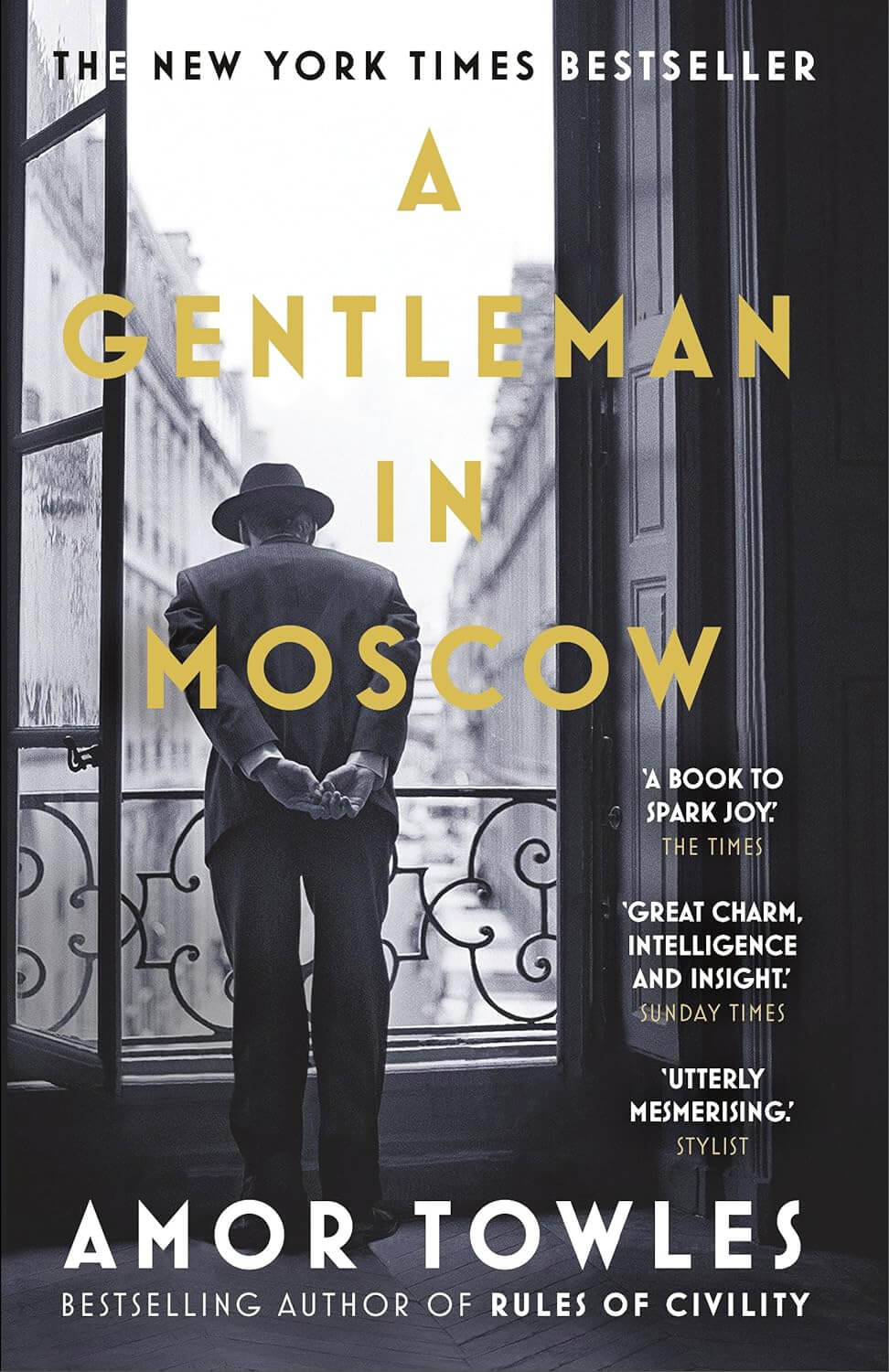
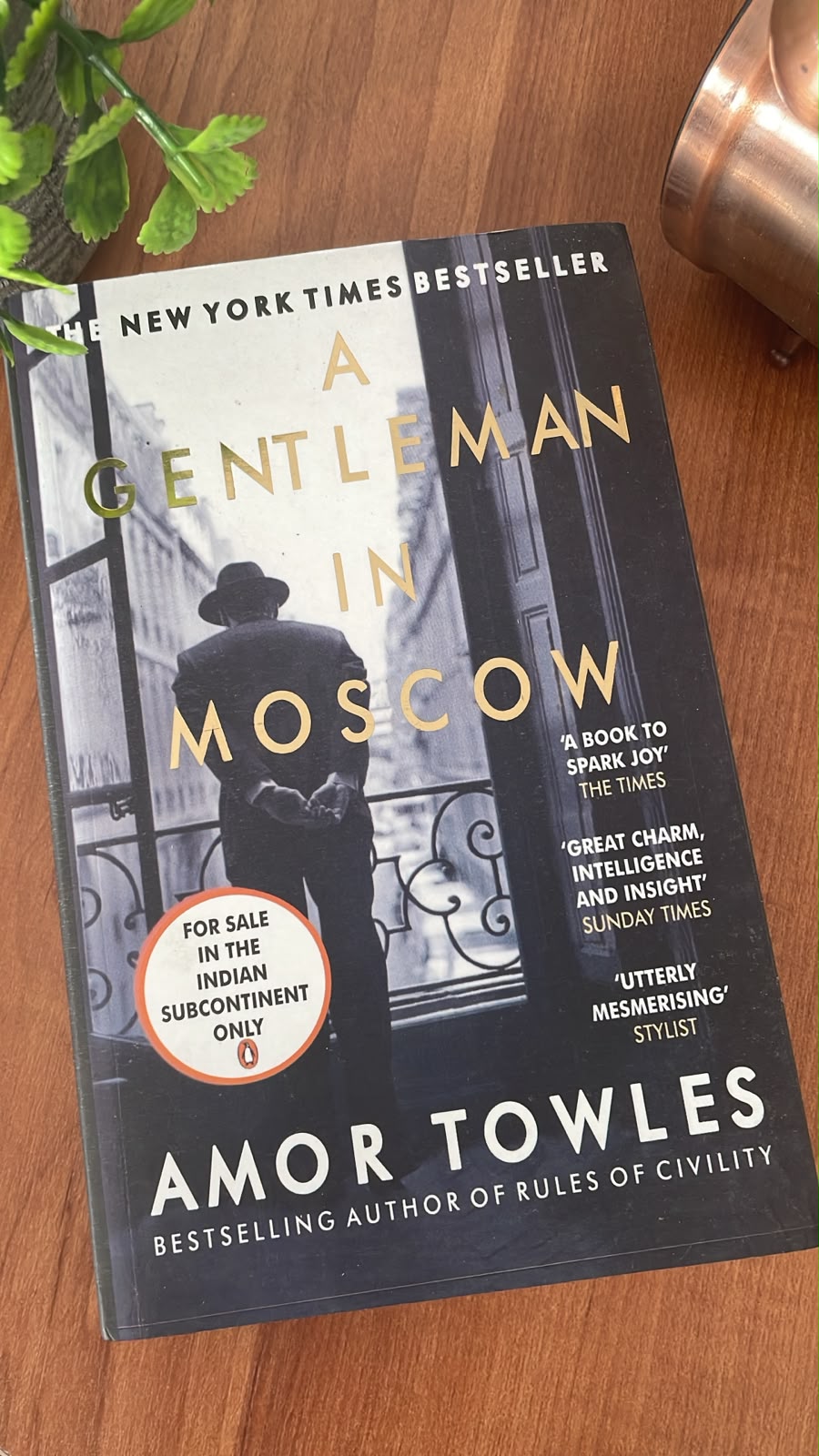
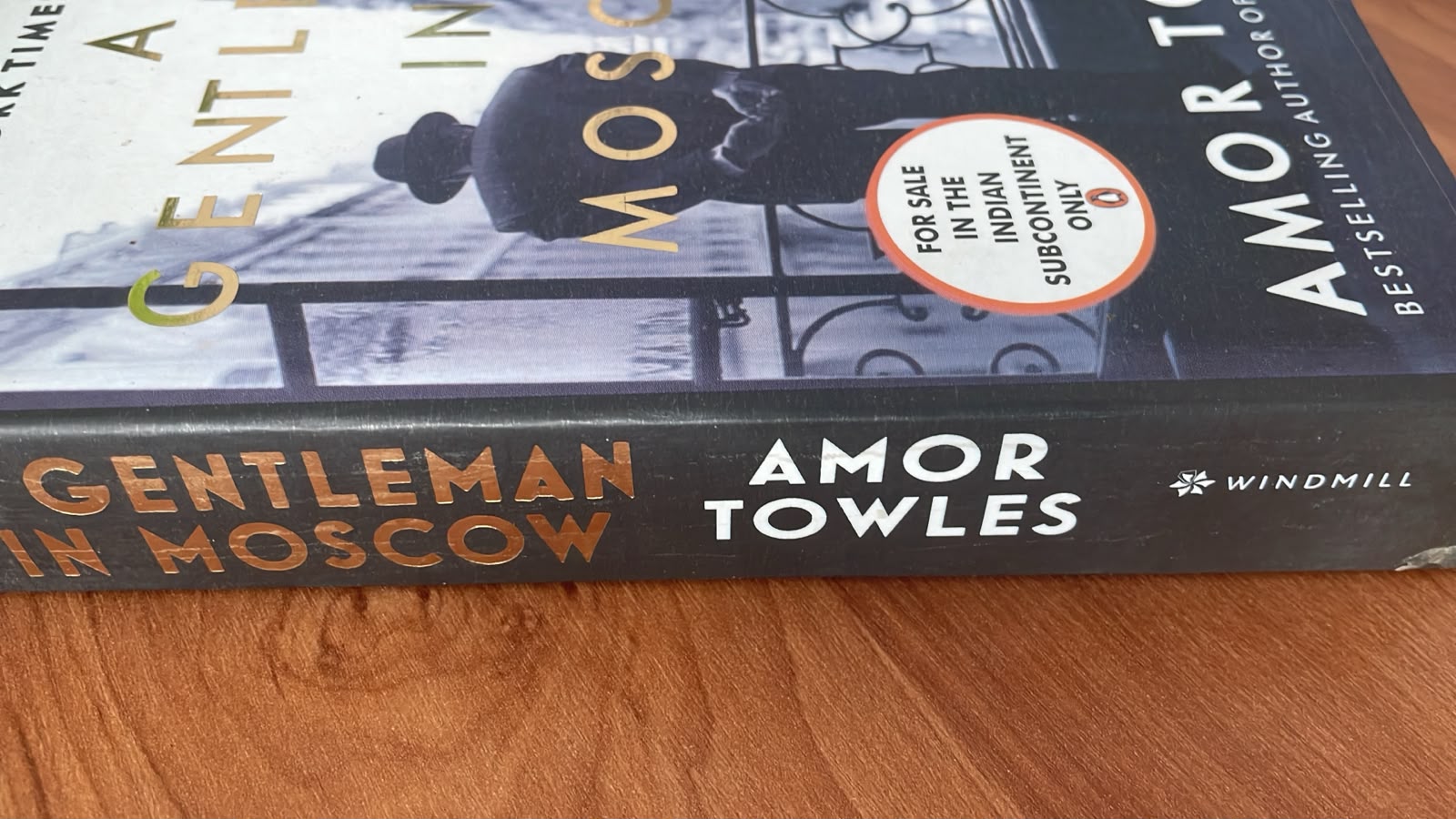






Gentleman In Moscow by Amor Towles


රු2,400.00
3 X Rs. 800.00 or 8% Cashback with


or 3 X රු800.00 with


or up to 4 X රු600.00 with


“Step into the elegant world of ‘A Gentleman in Moscow’ by Amor Towles. Set against the backdrop of post-revolutionary Russia, this novel is a rich tapestry of charm, wit, and historical intrigue. Follow the captivating journey of Count Alexander Rostov, confined to house arrest in the grand Metropol Hotel. A tale of resilience, love, and the enduring human spirit.”
1 in stock
A Gentleman in Moscow by Amor Towles is a beautifully written historical novel about freedom, friendship, resilience, purpose, and discovering how large a life can become even when the physical world around you becomes very small.
The year is 1922.
Russia has changed.
The Bolsheviks are in power.
The old aristocratic world is disappearing.
And Count Alexander Ilyich Rostov is brought before a tribunal.
His crime?
Being an aristocrat who refuses to repent for who he is.
But instead of being executed or sent away, Rostov receives an unusual punishment.
He is sentenced to house arrest for life.
His prison is not an ordinary prison.
It is the magnificent Hotel Metropol in Moscow.
Rostov had once enjoyed one of the hotel’s luxurious suites.
Now he is ordered to leave it.
His possessions are reduced.
His beautiful rooms disappear.
And he is moved into a tiny attic room.
He is warned that if he ever leaves the hotel, he may be killed.
A man accustomed to privilege, travel, elegance, and freedom suddenly finds his entire physical world reduced to one building.
Yet that is only the beginning of A Gentleman in Moscow.
Why Read A Gentleman in Moscow?
A Gentleman in Moscow is ideal for readers who enjoy historical fiction with unforgettable characters rather than nonstop battles or action.
Readers can expect:
- Count Alexander Rostov
- Hotel Metropol
- Moscow
- Soviet Russia
- Historical fiction
- Friendship
- Found family
- Food and wine
- Humour
- Philosophy
- Political change
- Love
- Resilience
- Fatherhood
- Purpose
- Elegant storytelling
The novel uses the confined setting of one hotel to tell a much larger story about Russia, time, relationships, and what makes a life meaningful.
A Gentleman in Moscow and Count Alexander Rostov
Count Rostov is the heart of the novel.
He is educated.
Charming.
Observant.
Witty.
Polite.
And deeply committed to maintaining his dignity.
When his circumstances change, he could spend the rest of his life bitter about everything he has lost.
Instead, Rostov gradually learns how to adapt.
That does not mean he accepts everything happening around him.
Nor does it mean imprisonment becomes easy.
But he refuses to allow his circumstances to completely define the quality of his life.
That makes him an unusual and memorable protagonist.
A Gentleman in Moscow and House Arrest
The central idea sounds restrictive.
One man.
One hotel.
Decades.
How can a novel remain interesting when its main character cannot leave the building?
Amor Towles turns that limitation into one of the book’s greatest strengths.
The Metropol contains an entire world.
Restaurants.
Ballrooms.
Kitchens.
Guest rooms.
Staff corridors.
Hidden spaces.
International visitors.
Politicians.
Artists.
Diplomats.
Workers.
Children.
And secrets.
People enter and leave.
The Count stays.
Through them, the outside world continually comes to him.
Hotel Metropol in A Gentleman in Moscow
The Hotel Metropol becomes almost a character itself.
It sits near the Kremlin.
Its rooms witness private conversations and historical changes.
Its restaurants become meeting places.
Its staff become family.
Its visitors bring news from outside.
For Rostov, the hotel begins as his prison.
Gradually, it becomes something much more complicated.
Home.
Community.
Workplace.
School.
Restaurant.
Stage.
And eventually a place filled with people he cannot imagine living without.
From Luxury Suite to Attic
Rostov’s physical decline in status is immediate.
He begins as a Count occupying luxurious rooms.
Then authorities force him into a tiny attic space.
Materially, this looks like an enormous loss.
But A Gentleman in Moscow repeatedly asks whether possessions and status truly determine the richness of a life.
Rostov loses space.
He loses property.
He loses social rank.
But he gradually gains relationships that become far more important.
A Gentleman in Moscow and Nina
One of the most important people Rostov meets is Nina.
She is a curious young girl fascinated by the hotel.
Where adults see walls and rules, Nina sees possibilities.
She explores.
Observes.
Asks questions.
And possesses knowledge of the Metropol that even Rostov does not have.
Her friendship changes his understanding of the building.
It also begins changing him emotionally.
Through Nina, the Count becomes involved in a life beyond his own circumstances.
A Gentleman in Moscow and Sofia
Later, Sofia becomes another central figure in Rostov’s life.
Her arrival dramatically changes his responsibilities.
Suddenly, the Count must think less about himself and more about another person’s future.
That relationship gives the novel some of its strongest emotional moments.
Rostov’s life may have been physically restricted.
But emotionally, it continues expanding.
This becomes one of the book’s most beautiful ideas.
A Gentleman in Moscow and Found Family
Family does not always arrive through blood.
Sometimes it is built.
Inside the Metropol, Rostov forms meaningful relationships with people from very different backgrounds.
Staff.
Friends.
Visitors.
Children.
Artists.
Workers.
Some stay.
Some disappear.
Some return years later.
These connections turn A Gentleman in Moscow into a powerful found-family story.
The Count’s world becomes smaller geographically but larger emotionally.
Andrey and Emile
Two particularly important figures are Andrey, the maître d’, and Emile, the chef.
Their friendships with Rostov create some of the novel’s warmest scenes.
Food matters.
Wine matters.
Conversation matters.
Small rituals matter.
A meal can become much more than something to eat.
It can represent friendship.
Culture.
Memory.
Resistance.
And connection.
This is one reason food lovers may particularly enjoy the novel.
A Gentleman in Moscow and Food
Food appears throughout the story.
Elegant meals.
Wine.
Restaurant service.
Recipes.
Kitchen work.
Dining traditions.
But food is never merely decorative.
Meals bring people together.
They preserve traditions.
They create memories.
And sometimes they quietly resist the idea that beauty and pleasure should disappear during difficult times.
This gives many restaurant scenes an emotional richness beyond the food itself.
A Gentleman in Moscow and Russian History
The Count remains inside the hotel while Russia changes outside.
This gives the novel a distinctive perspective on history.
Readers encounter the consequences of:
The Bolshevik Revolution.
The Soviet transformation.
Stalinism.
Political repression.
Social restructuring.
Economic change.
War.
And decades of political upheaval.
But these events are often experienced indirectly.
Through conversations.
Visitors.
Restrictions.
Missing people.
Changing menus.
New rules.
And the changing atmosphere inside the hotel.
The novel spans some of the most turbulent decades in twentieth-century Russian history.
History Through Ordinary Life
Large historical events are often described through leaders and battles.
A Gentleman in Moscow takes another approach.
What happens to restaurants?
Friendships?
Jobs?
Children?
Private conversations?
Music?
Food?
Daily routines?
This allows readers to experience political change at a human scale.
History does not only happen in government buildings.
It enters kitchens.
Bedrooms.
Restaurants.
Families.
And friendships.
A Gentleman in Moscow and Freedom
The Count is technically imprisoned.
That makes freedom one of the novel’s biggest themes.
What does it mean to be free?
Is freedom simply the ability to walk outside?
Certainly physical freedom matters.
Rostov has lost it.
But the novel explores other forms of freedom too.
Freedom of thought.
Freedom of friendship.
Freedom to love.
Freedom to choose how you respond.
Authorities can limit where Rostov goes.
Controlling who he becomes is much more difficult.
Circumstances Versus Character
Rostov cannot control his sentence.
He cannot control the Soviet government.
He cannot control history.
But he can control some things.
How he treats people.
How he responds to humiliation.
How he spends his time.
Whether he becomes bitter.
Whether he continues learning.
Whether he remains generous.
This becomes one of the most memorable messages of A Gentleman in Moscow.
Our circumstances matter enormously.
But our response to them matters too.
A Gentleman in Moscow and Purpose
The publisher describes the novel as ultimately exploring what it means to become a man of purpose.
Rostov begins as a gentleman of leisure.
He has money.
Education.
Status.
Taste.
But he has never really needed to work.
House arrest removes much of that old identity.
Then he must discover another source of purpose.
Relationships become important.
Responsibilities become important.
Work becomes important.
Helping others becomes important.
Purpose gradually replaces privilege.
A Gentleman in Moscow and Friendship
Friendship gives Rostov access to worlds he cannot physically enter.
Friends bring:
Information.
Stories.
Political developments.
Music.
Food.
Humour.
Problems.
And love.
Some friendships last decades.
Others are interrupted by the dangerous political environment.
Because Rostov cannot leave, every person who walks through the hotel’s doors has the potential to change his life.
Time Is an Important Character
The novel covers decades.
People age.
Children become adults.
Governments change.
Relationships deepen.
Others disappear.
What seems permanent changes.
What once seemed unimportant becomes precious.
The long timeline makes readers increasingly conscious of time itself.
Rostov may remain in the same building.
But he is never truly standing still.
A Gentleman in Moscow and Adaptability
Adaptability is one of Rostov’s greatest strengths.
His old life disappears.
He does not.
He learns new routines.
Builds new relationships.
Accepts responsibilities.
Discovers hidden spaces.
And eventually finds ways to make himself useful.
This does not mean he forgets the past.
He simply refuses to live entirely inside it.
That gives the novel a hopeful quality even during difficult historical periods.
Elegance Without Wealth
At the beginning, being a gentleman might seem connected with:
Money.
Fine clothing.
Luxury.
Education.
Status.
But Rostov gradually demonstrates another definition.
A gentleman can be defined by behaviour.
Courtesy.
Loyalty.
Generosity.
Patience.
Self-control.
Respect.
Those qualities can survive even when wealth disappears.
A Gentleman in Moscow and Humour
Despite the historical setting and serious political background, the book is often very funny.
Rostov’s observations are witty.
Characters have eccentric personalities.
Hotel life creates unexpected situations.
Conversations can be playful.
This humour prevents the novel from becoming relentlessly dark.
Penguin Random House specifically describes the book as filled with humour and a memorable cast while following Rostov’s emotional development.
Is A Gentleman in Moscow a Romance?
Romance is part of the novel.
But A Gentleman in Moscow is not primarily a conventional romance novel.
It is better described as:
Historical fiction.
Literary fiction.
Character-driven fiction.
Found-family fiction.
There are romantic relationships, but friendship, family, purpose, and history are equally important.
Is A Gentleman in Moscow Based on a True Story?
Count Alexander Rostov is fictional.
The Hotel Metropol is real.
The historical environment surrounding him is rooted in twentieth-century Russian history.
Amor Towles uses the fictional Count and hotel community to explore real periods of Soviet political and social change.
Readers should therefore treat the book as historical fiction, not biography.
Is A Gentleman in Moscow a Slow Book?
It is character-driven rather than action-driven.
Readers should not expect constant battles or cliffhangers.
Much of the pleasure comes from:
Conversation.
Character development.
Food.
Relationships.
Small details.
Long-term consequences.
And the gradual accumulation of seemingly minor events.
Readers who enjoy immersive literary fiction may love this pace.
7 Powerful Reasons to Read A Gentleman in Moscow
1. Count Rostov Is an Unforgettable Character
His wit, dignity, intelligence, and adaptability make him easy to spend hundreds of pages with.
2. An Extraordinary One-Building Setting
Most of the novel takes place inside Hotel Metropol, yet the story still manages to feel expansive.
3. Beautiful Found-Family Relationships
Rostov creates deep bonds with hotel staff, friends, and younger characters who transform his life.
4. Fascinating Russian Historical Background
Decades of Soviet transformation unfold outside and inside the hotel.
5. Wonderful Food and Wine Scenes
Meals and restaurants become important parts of friendship, memory, and culture.
6. A Powerful Message About Resilience
Rostov loses freedom, wealth, and status but refuses to surrender his identity or capacity for joy.
7. A Story About Living With Purpose
A Gentleman in Moscow asks whether a meaningful life depends on where you are—or on how you choose to live within the circumstances you have.
What You Can Expect From A Gentleman in Moscow
Readers can expect:
- Count Alexander Rostov
- Hotel Metropol
- Moscow
- Soviet Russia
- Historical fiction
- Literary fiction
- Found family
- Friendship
- Food and wine
- Humour
- Political change
- Love
- Fatherhood
- Personal growth
- Resilience
- Purpose
- Elegant prose
- Long-term character development
Who Should Read A Gentleman in Moscow?
A Gentleman in Moscow is ideal for readers who enjoy:
Historical fiction.
Literary fiction.
Russian history.
Character-driven novels.
Found family.
Beautiful writing.
Books about resilience.
Stories set in hotels.
Long novels with strong character development.
Books about friendship and purpose.
Fans of Amor Towles.
Readers who enjoyed The Lincoln Highway or Rules of Civility may especially want to explore this novel.
A Beautiful Story About Making a Life Within Limits
A Gentleman in Moscow begins with Count Alexander Rostov losing almost everything that once defined him.
Freedom.
Status.
Space.
Property.
The ability to walk outside whenever he chooses.
He expects his world to shrink.
Physically, it does.
But something unexpected happens.
People enter his life.
Friendships deepen.
Children change him.
Responsibilities appear.
Meals become celebrations.
A hotel becomes a community.
And a sentence designed to reduce his existence ultimately forces him to discover what makes existence meaningful.
While Russia transforms outside the Metropol, Rostov undergoes a quieter transformation within it.
The novel becomes less about imprisonment and more about purpose.
Less about what a person owns and more about whom they love.
Less about how much space someone has and more about what they do with the life available to them.
For readers who enjoy historical fiction, unforgettable characters, elegant writing, friendship, found family, humour, Russian history, and thoughtful stories about living well in difficult circumstances, A Gentleman in Moscow is a beautiful and rewarding novel.
Book Details
Title: A Gentleman in Moscow
Author: Amor Towles
Genre: Historical Fiction / Literary Fiction
Main Character: Count Alexander Rostov
Primary Setting: Hotel Metropol, Moscow
Story Begins: 1922
Original Publication Date: September 6, 2016
Original Publisher: Viking.
U.S. Hardcover Edition
ISBN-13: 9780670026197
Format: Hardcover
Publisher: Viking
Publication Date: September 6, 2016
Pages: 480
Dimensions: approximately 6 × 9 inches.
U.S. Paperback Edition
ISBN-13: 9780143110439
Format: Paperback
Publisher: Penguin Books
Pages: 496.
Common UK Paperback Edition
ISBN-13: 9780099558781
Format: Paperback
Publisher: Cornerstone
Pages: 512
Dimensions: approximately 19.9 × 13.0 × 3.3 cm
Weight: approximately 356 g.
Edition Note
Different editions of A Gentleman in Moscow range from around 480 to 512 pages, while large-print versions are considerably longer.
Use the ISBN printed on your physical copy before entering exact page count, dimensions, or weight on your website.
Learn more about A Gentleman in Moscow by Amor Towles on the official Penguin Random House website.
Explore more historical fiction books at Bargain Books.
| Weight | 0.35 kg |
|---|---|
| Dimensions | 19.8 × 12.9 × 2.87 cm |
| Author | Amor Towles |
| Type | Paperback Printed Book |
| ISBN/ISSN | 0099558785, 978-0099558781 |
| Language | English |
| Pages | 512 |
Be the first to review “Gentleman In Moscow by Amor Towles”
Related products

Out of stock
History & Criticism
රු1,950.00
3 X Rs. 650.00 or 8% Cashback with
or 3 X රු650.00 with
or up to 4 X රු487.50 with

Damaged & Imperfect Books
රු950.00
3 X Rs. 316.67 or 8% Cashback with
or 3 X රු316.67 with
or up to 4 X රු237.50 with

Out of stock
රු2,000.00
3 X Rs. 666.67 or 8% Cashback with
or 3 X රු666.67 with
or up to 4 X රු500.00 with

Out of stock
Classics & Literary Fiction
රු1,800.00
3 X Rs. 600.00 or 8% Cashback with
or 3 X රු600.00 with
or up to 4 X රු450.00 with
-7%

Contemporary Fiction
Original price was: රු2,700.00.රු2,500.00Current price is: රු2,500.00.
3 X Rs. 833.33 or 8% Cashback with
or 3 X රු833.33 with
or up to 4 X රු625.00 with

Damaged & Imperfect Books
රු950.00
3 X Rs. 316.67 or 8% Cashback with
or 3 X රු316.67 with
or up to 4 X රු237.50 with
Damaged & Imperfect Books
රු950.00
3 X Rs. 316.67 or 8% Cashback with
or 3 X රු316.67 with
or up to 4 X රු237.50 with
-14%

Out of stock
Contemporary romance
Original price was: රු1,800.00.රු1,550.00Current price is: රු1,550.00.
3 X Rs. 516.67 or 8% Cashback with
or 3 X රු516.67 with
or up to 4 X රු387.50 with
Reviews
There are no reviews yet.