
No products in the cart.
-16%
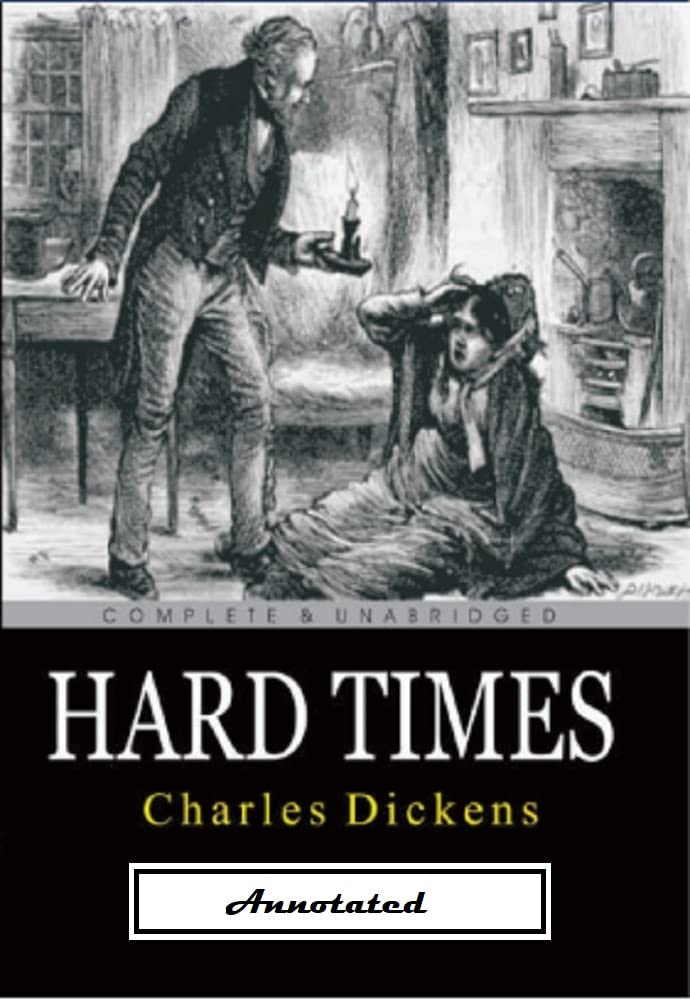


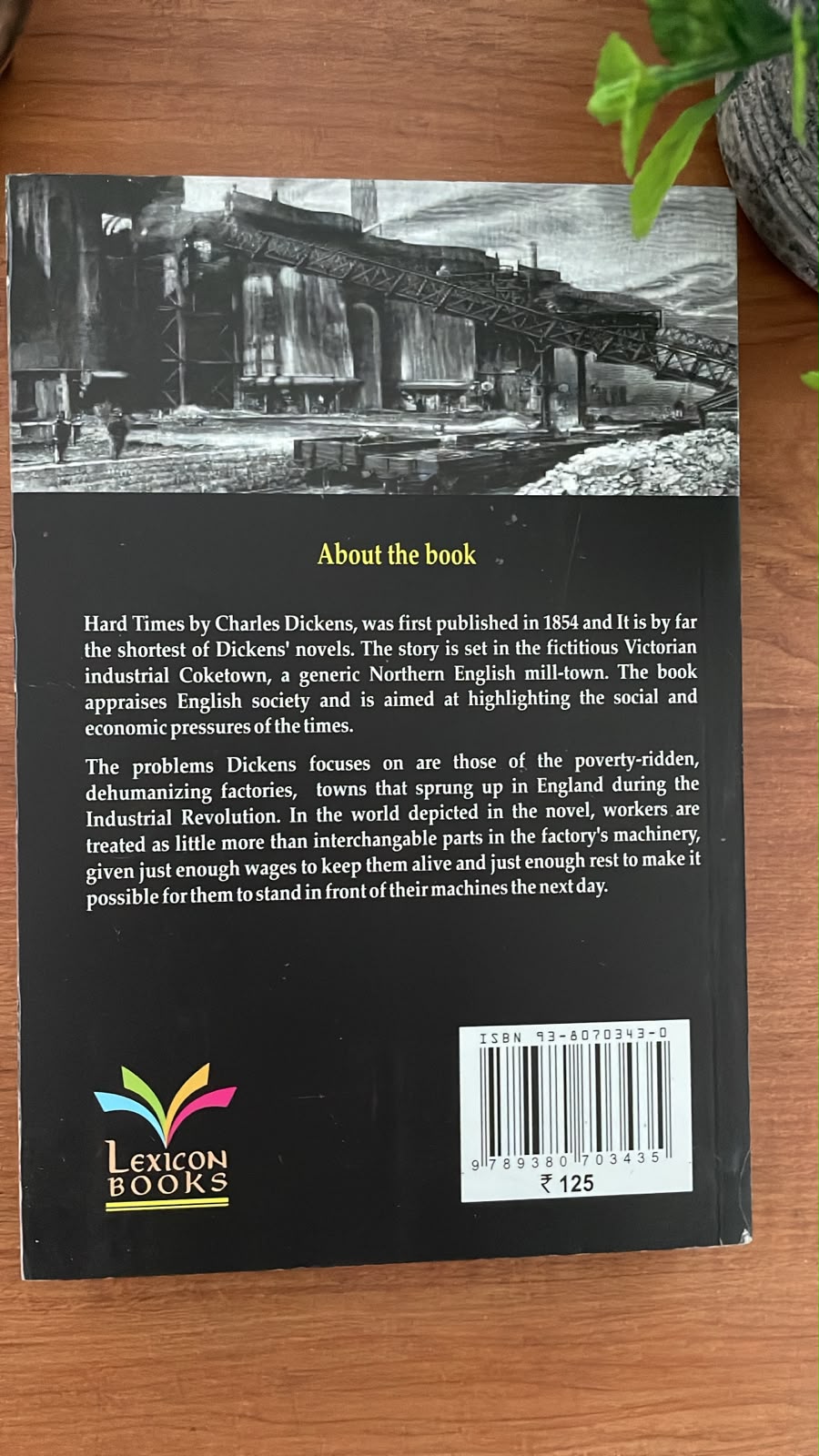
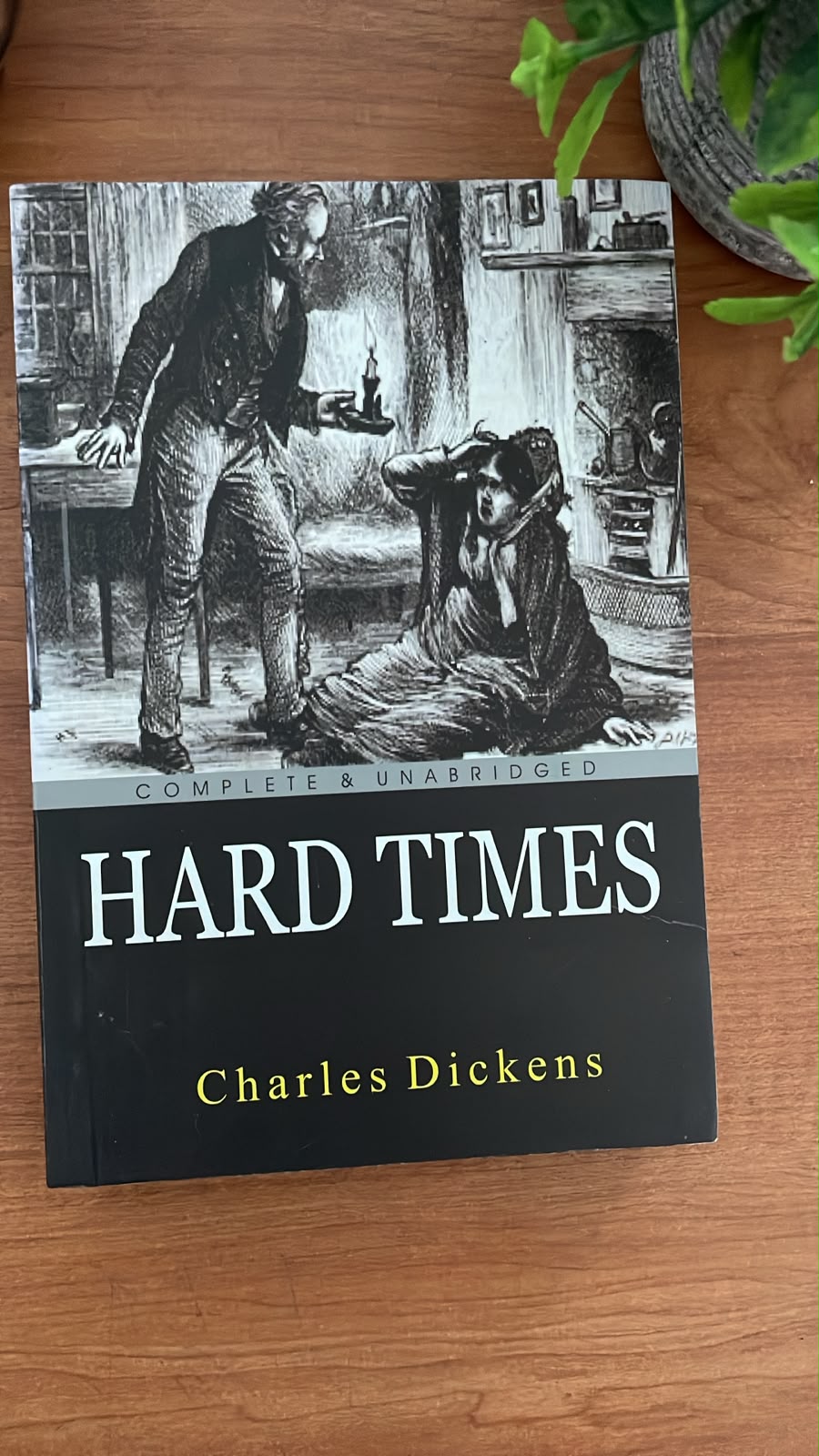
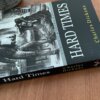


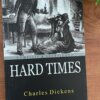
Hard Times by Charles Dickens

Original price was: රු3,100.00.රු2,600.00Current price is: රු2,600.00.
3 X Rs. 866.67 or 8% Cashback with


or 3 X රු866.67 with


or up to 4 X රු650.00 with


“Step into the world of industrial England with ‘Hard Times’ by Charles Dickens. This timeless classic exposes the harsh realities of the Victorian era, exploring themes of social injustice, industrialization, and the resilience of the human spirit. Dickens weaves a tale of hardship and hope that remains a powerful commentary on society.”
1 in stock
Hard Times by Charles Dickens is a powerful classic novel that explores industrial society, education, social class, poverty, family relationships, and the consequences of valuing facts above imagination and compassion. First published in the nineteenth century, the novel remains relevant for readers interested in literature that questions social systems and the way people are treated within them.
Set in the fictional industrial town of Coketown, the story presents a world dominated by factories, strict routines, hard work, and practical thinking. Through a memorable group of characters, Charles Dickens examines what can happen when people are expected to live according to numbers, rules, and productivity while their emotions, creativity, and individuality are ignored.
At the centre of the novel is Thomas Gradgrind, a man who strongly believes that education should be based entirely on facts. He raises his children, Louisa and Tom, according to this philosophy and discourages imagination, wonder, and emotional expression.
As the story develops, however, the limitations of this way of thinking become increasingly clear.
Hard Times by Charles Dickens – Book Overview
Hard Times by Charles Dickens follows several connected characters whose lives reveal different sides of industrial society.
Thomas Gradgrind is convinced that facts and logic are the most important foundations for a successful life. His children grow up in an environment where imagination and emotion are treated as unnecessary distractions. Although this system may appear disciplined and practical, it leaves them poorly prepared for complicated personal choices and emotional relationships.
Louisa Gradgrind becomes one of the novel’s most important characters. Intelligent but emotionally restricted, she struggles to understand her own desires and feelings because she has been taught to suppress them for much of her life.
Her experiences show the dangers of an education that develops the mind while neglecting the heart.
Alongside the Gradgrind family, Dickens introduces workers who face a very different kind of hardship. Through these characters, the novel examines class divisions, working conditions, poverty, and the imbalance of power between wealthy industrial owners and ordinary labourers.
The Industrial World of Coketown
The setting plays a major role in Hard Times by Charles Dickens.
Coketown is presented as a repetitive and heavily industrialized place filled with factories, smoke, machinery, and streets that seem almost identical to one another. Dickens uses the town to symbolize a society increasingly focused on production, efficiency, and economic success.
The people living there often appear trapped within systems that treat them as workers or statistics rather than individuals.
This setting allows Dickens to criticize the darker consequences of industrialization while asking readers to consider whether economic progress is truly successful when human well-being is ignored.
Why Read Hard Times by Charles Dickens?
One reason to read Hard Times by Charles Dickens is its exploration of the balance between logic and humanity.
Facts, discipline, and practical knowledge are important, but the novel argues that they are not enough on their own. People also need imagination, emotional understanding, kindness, relationships, and the freedom to think beyond rigid systems.
The novel also provides insight into social inequality during the Victorian era. Dickens draws attention to the difficult lives of workers and the attitudes of those who hold greater wealth and power.
Rather than presenting society as simple or fair, the story shows how different characters experience very different opportunities depending on their social position.
Major Themes in Hard Times
Hard Times by Charles Dickens explores several important themes that continue to make the novel worth studying today.
Education is one of the central themes. Dickens questions an educational approach that focuses exclusively on memorizing facts while ignoring creativity and emotional development.
Another major theme is industrialization. The novel looks at how factories and economic systems affect communities, workers, families, and individual identity.
Social class is also important. Dickens contrasts wealthy business owners with workers who have much less control over their circumstances.
The story also examines marriage, family expectations, personal responsibility, ambition, compassion, and the consequences of making life decisions without understanding human emotions.
Characters and Human Relationships
The characters in Hard Times by Charles Dickens help turn its social criticism into a personal story.
Louisa’s struggles demonstrate how emotional neglect can affect someone even when they receive a disciplined education. Tom shows how selfishness and poor choices can develop despite strict upbringing.
Other characters represent imagination, kindness, loyalty, hardship, ambition, and social power.
Dickens uses these different personalities to show that human beings cannot easily be reduced to numbers, economic roles, or simple rules.
Their relationships reveal how decisions made in the name of practicality can create emotional consequences that are far more complicated than expected.
Who Should Read Hard Times?
Hard Times by Charles Dickens is an excellent choice for readers who enjoy classic literature, Victorian novels, social criticism, historical fiction, and thought-provoking stories about society.
It is also especially useful for students studying English literature because the novel contains strong themes, symbolism, character development, social commentary, and historical context that can support literary analysis.
Readers interested in industrial history, education, inequality, economics, or the relationship between society and individual freedom may also find the book rewarding.
A Classic Novel That Still Raises Important Questions
Although Hard Times by Charles Dickens was written in a very different historical period, many of its questions remain surprisingly familiar.
How should education prepare people for life?
What happens when economic growth becomes more important than human well-being?
Can people truly succeed without emotional understanding?
And what responsibilities do individuals and institutions have toward those with less power?
By combining social criticism with memorable characters and dramatic personal conflicts, Hard Times by Charles Dickens encourages readers to think about the kind of society people create when efficiency is valued more highly than imagination and compassion.
It remains an important work of classic English literature and a meaningful choice for readers who enjoy novels that entertain while also challenging them to think deeply about education, work, class, and humanity.
Learn more about Hard Times by Charles Dickens on the official Penguin Classics website.
Explore more classic literature books at Bargain Books.
| Author | Charles Dickens |
|---|---|
| Type | Paperback Printed Book |
| ISBN/ISSN | 9386538342, 978-9386538345 |
| Language | English |
| Pages | 320 |
Be the first to review “Hard Times by Charles Dickens”
Related products
Out of stock
Classics & Literary Fiction
රු1,800.00
3 X Rs. 600.00 or 8% Cashback with
or 3 X රු600.00 with
or up to 4 X රු450.00 with
Classics & Literary Fiction
රු950.00
3 X Rs. 316.67 or 8% Cashback with
or 3 X රු316.67 with
or up to 4 X රු237.50 with
-29%
Classics & Literary Fiction
Original price was: රු2,100.00.රු1,500.00Current price is: රු1,500.00.
3 X Rs. 500.00 or 8% Cashback with
or 3 X රු500.00 with
or up to 4 X රු375.00 with
-22%

Out of stock
Classics & Literary Fiction
Original price was: රු2,250.00.රු1,750.00Current price is: රු1,750.00.
3 X Rs. 583.33 or 8% Cashback with
or 3 X රු583.33 with
or up to 4 X රු437.50 with
-18%

Out of stock
Fiction & Literature
Original price was: රු2,750.00.රු2,250.00Current price is: රු2,250.00.
3 X Rs. 750.00 or 8% Cashback with
or 3 X රු750.00 with
or up to 4 X රු562.50 with
-26%

Out of stock
Classics & Literary Fiction
Original price was: රු1,900.00.රු1,400.00Current price is: රු1,400.00.
3 X Rs. 466.67 or 8% Cashback with
or 3 X රු466.67 with
or up to 4 X රු350.00 with
-17%
Out of stock
Classics & Literary Fiction
Original price was: රු2,900.00.රු2,400.00Current price is: රු2,400.00.
3 X Rs. 800.00 or 8% Cashback with
or 3 X රු800.00 with
or up to 4 X රු600.00 with
-16%
Classics & Literary Fiction
Original price was: රු3,200.00.රු2,700.00Current price is: රු2,700.00.
3 X Rs. 900.00 or 8% Cashback with
or 3 X රු900.00 with
or up to 4 X රු675.00 with
Reviews
There are no reviews yet.