
No products in the cart.
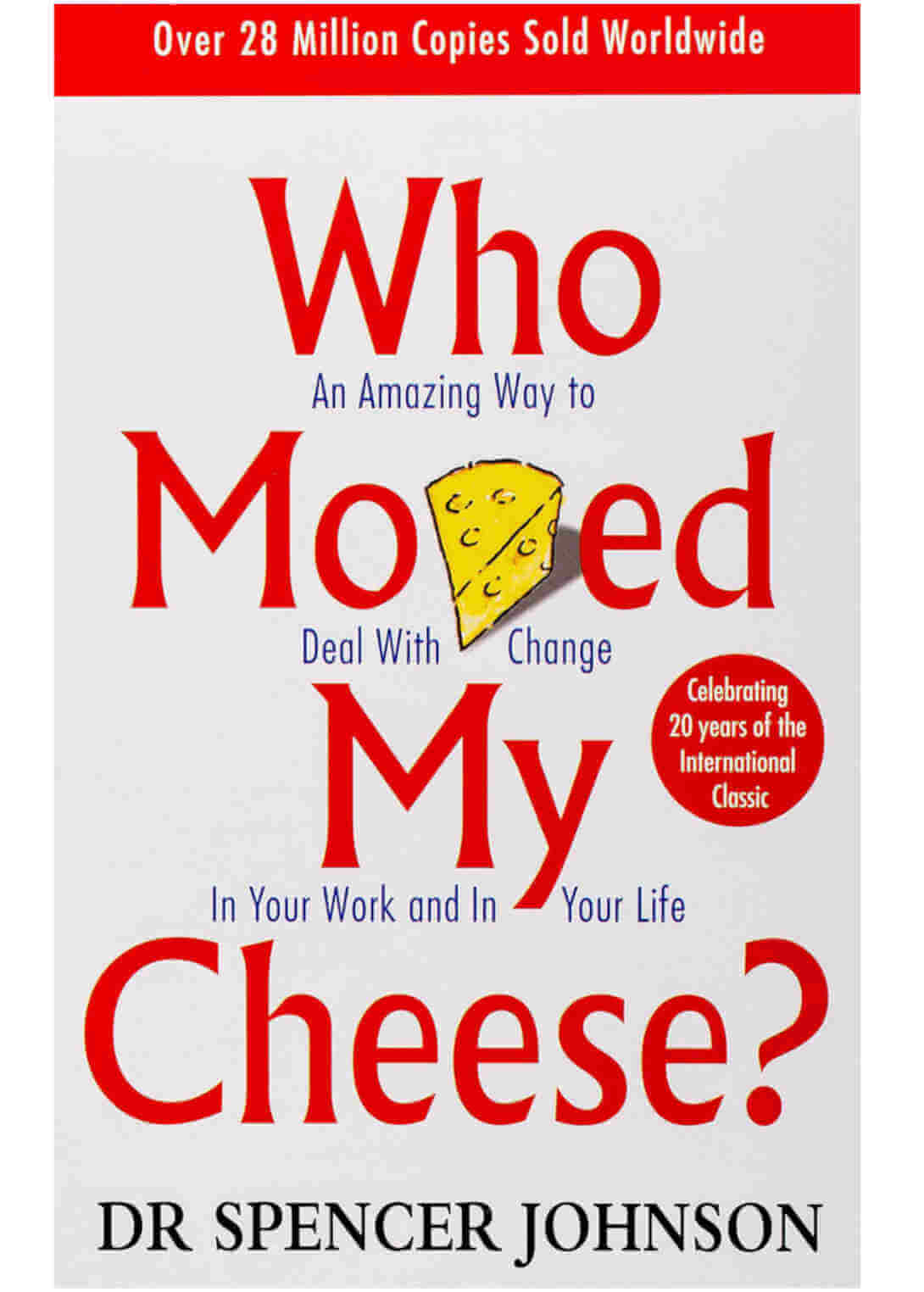
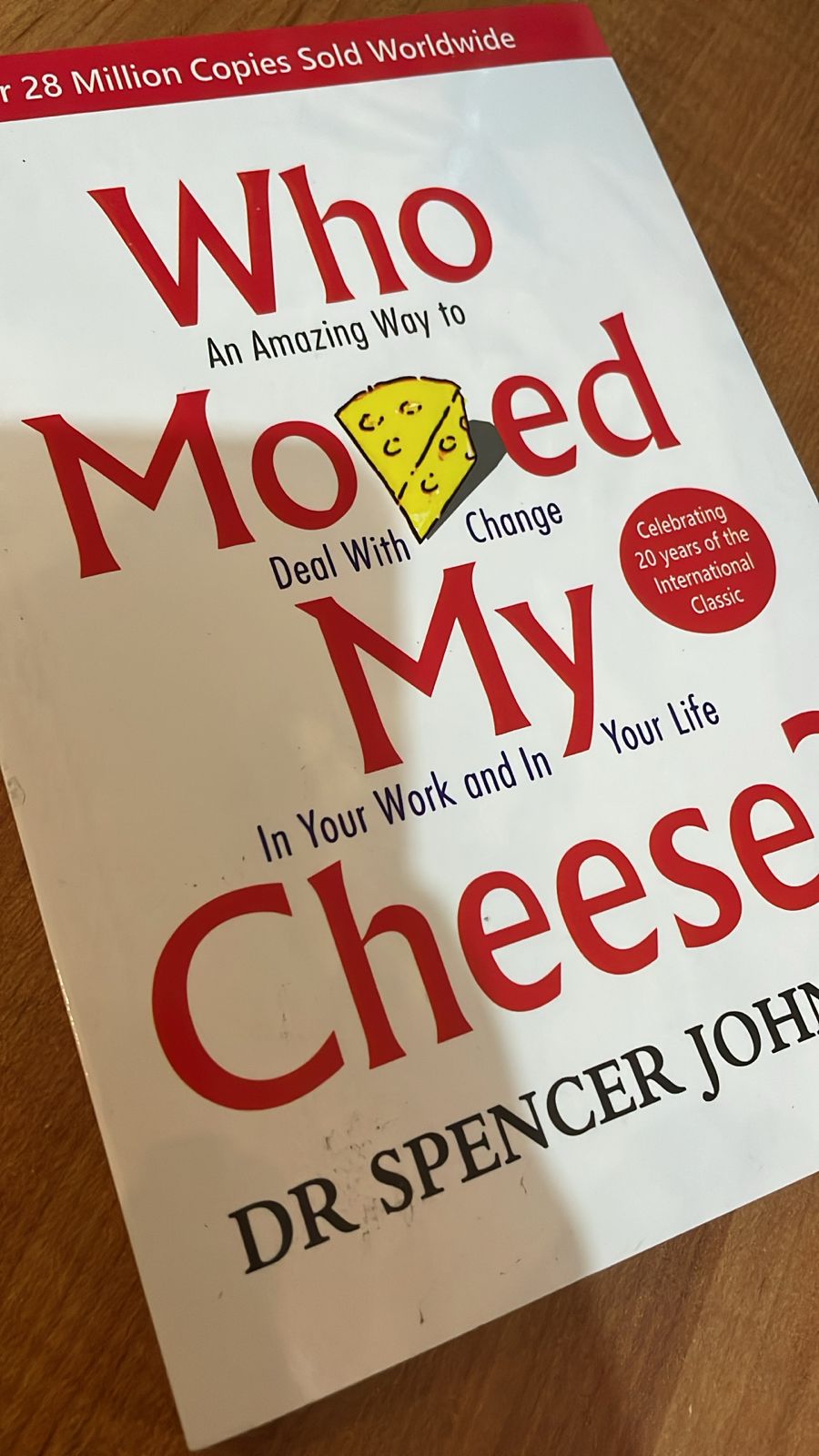
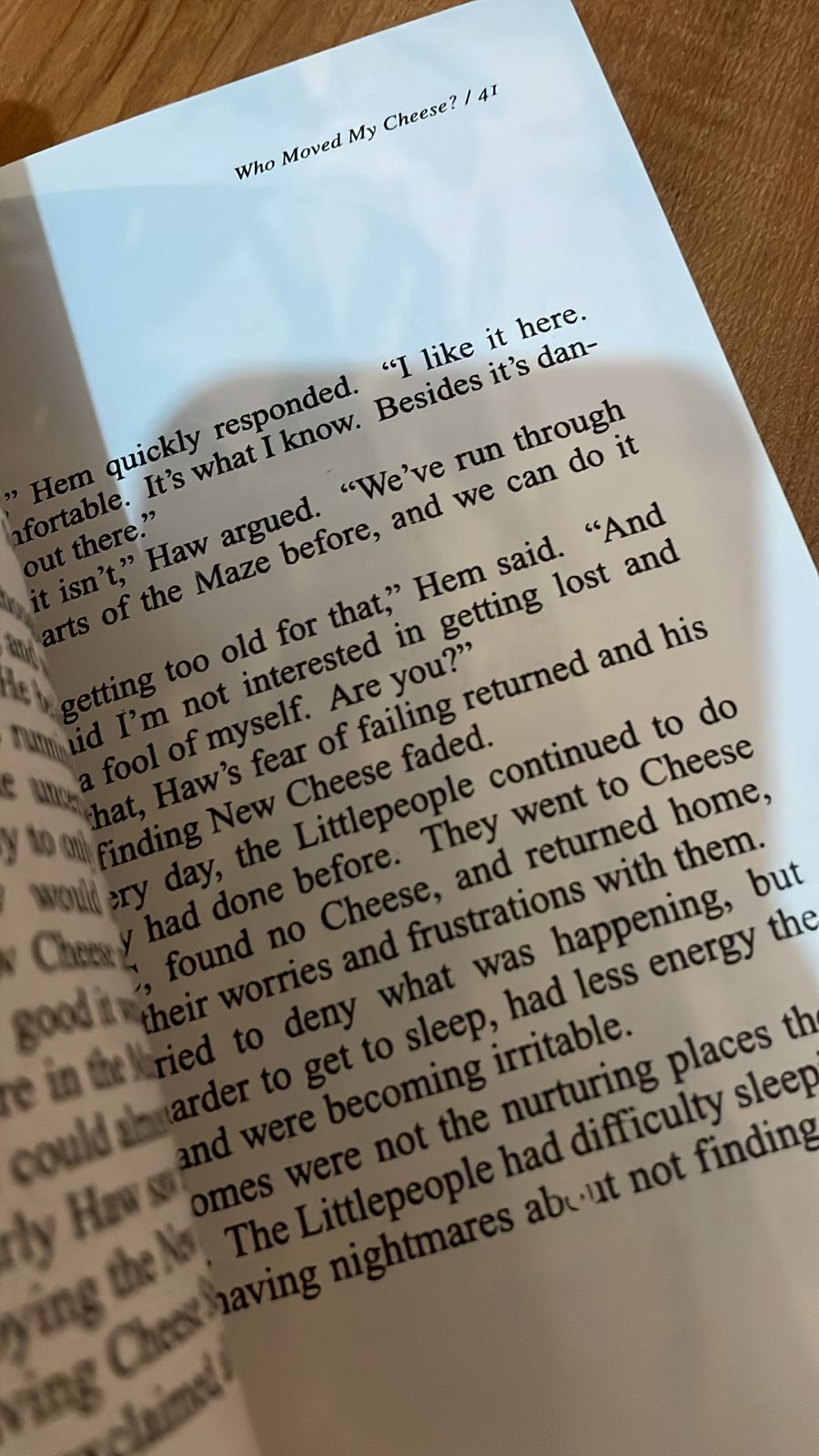
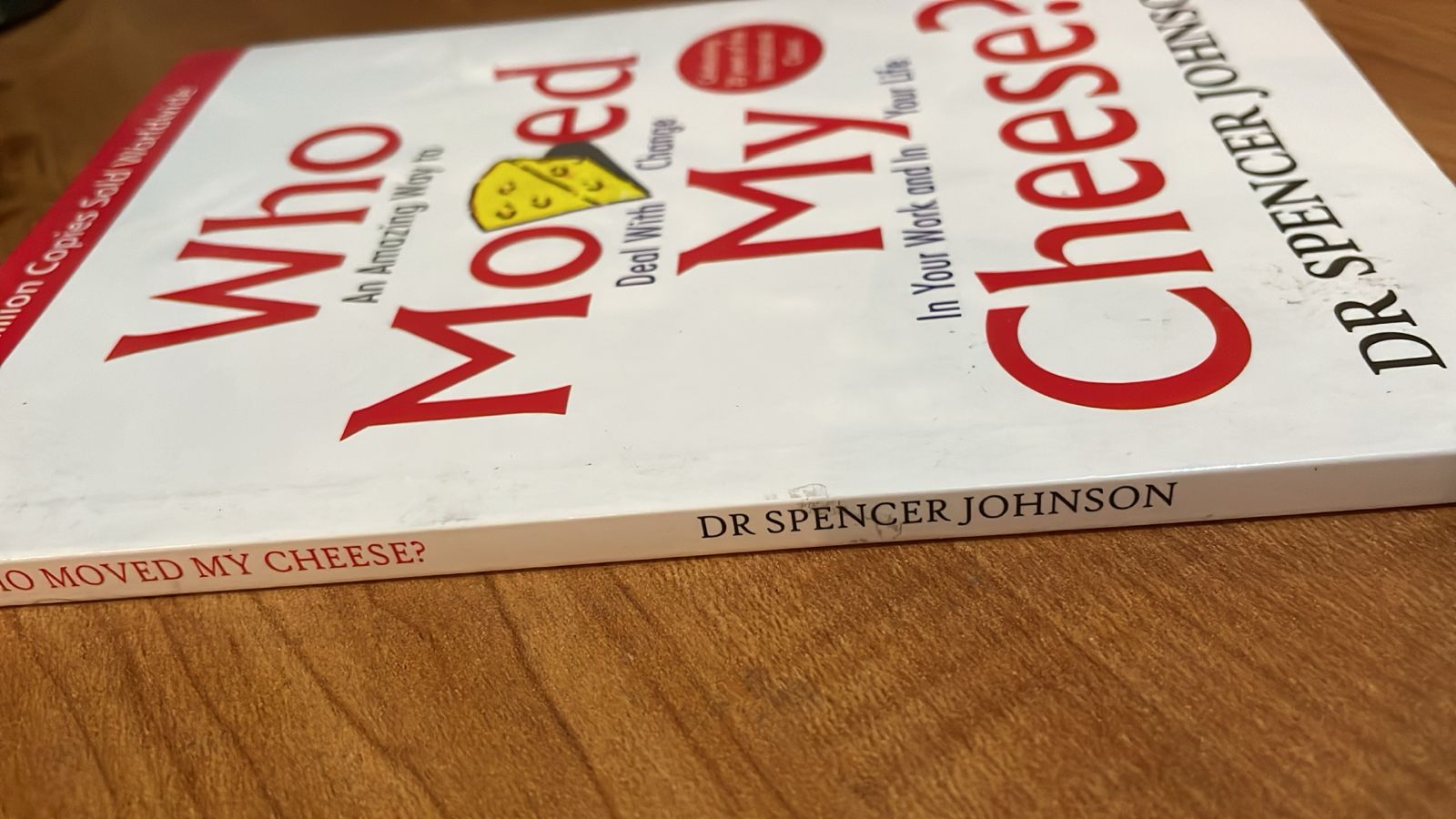
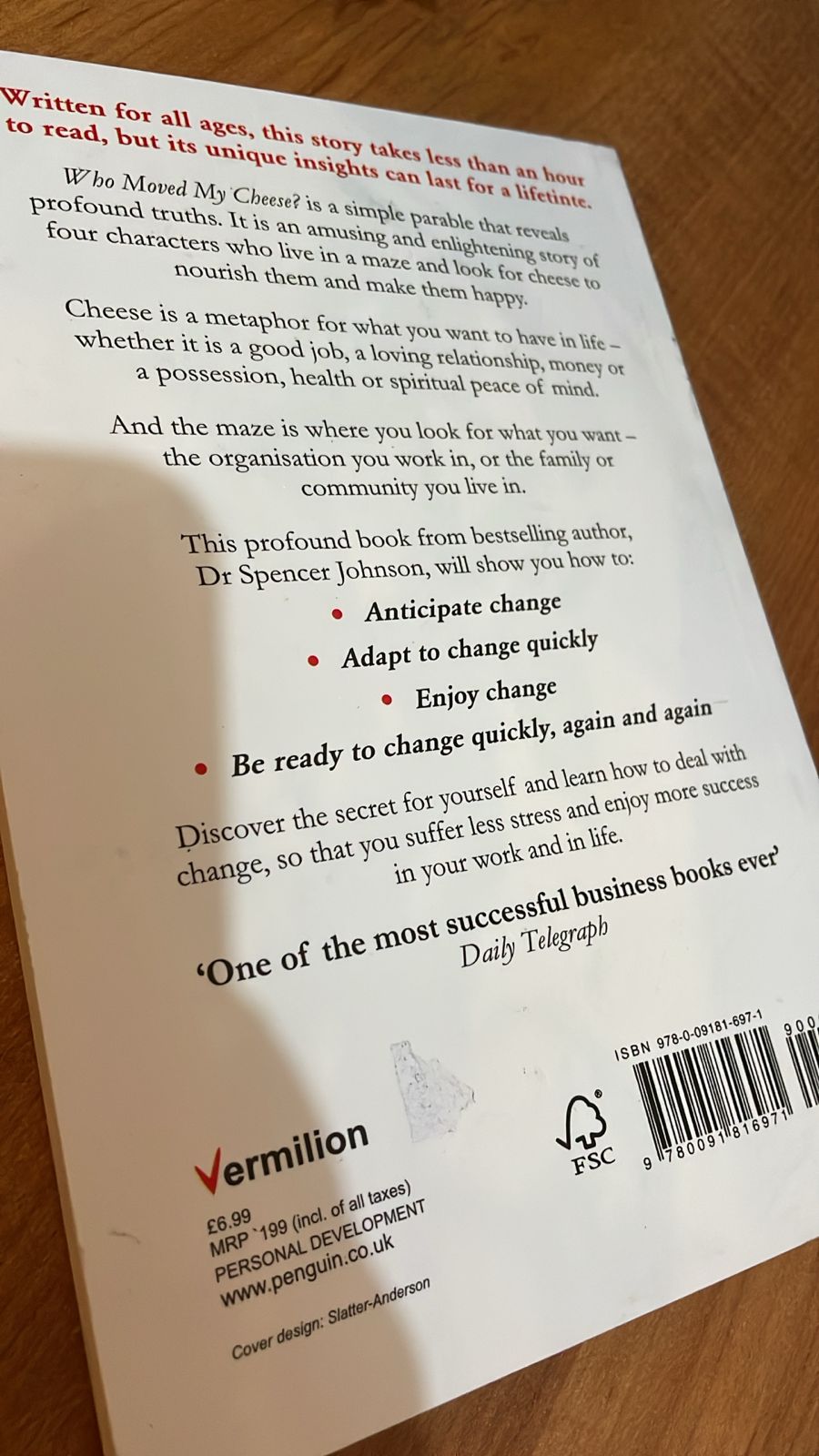
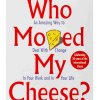




Who Moved My Cheese? by Spencer Johnson
Who Moved My Cheese by Spencer Johnson is a short and powerful business parable about change, fear, adaptability, and moving forward when life no longer goes according to plan.
The story follows four characters.
Two mice.
And two “Littlepeople.”
All four live inside a maze.
They are searching for cheese.
But the cheese represents much more than food.
About Who Moved My Cheese
Who Moved My Cheese uses cheese as a metaphor for the things people want in life.
That might mean a job.
Money.
Success.
A relationship.
Security.
Health.
Or happiness.
The maze represents the environment where we search for those things.
Then one day, the cheese disappears.
Each character reacts differently.
That simple situation becomes a lesson about how people respond to change.
Meet Sniff
Sniff notices change early.
He pays attention to what is happening around him.
He does not assume that yesterday’s situation will continue forever.
This makes him better prepared.
His lesson is simple.
Watch for change before it becomes impossible to ignore.
Meet Scurry
Scurry acts quickly.
He does not spend too much time analysing what went wrong.
When the cheese disappears, he starts looking for new cheese.
His approach shows the value of action.
Sometimes moving is better than waiting for certainty.
Meet Hem
Hem resists change.
He wants things to return to normal.
He believes the cheese should still be there.
He becomes angry.
Frustrated.
And afraid.
His reaction shows how refusing to accept reality can keep people trapped.
Meet Haw
Haw is afraid at first.
But eventually, he begins to change.
He learns that fear can become smaller once action begins.
His journey is one of the most important parts of the book.
7 Powerful Lessons from Who Moved My Cheese
1. Change Is Normal
One of the biggest lessons in Who Moved My Cheese is that change will happen.
Jobs change.
Markets change.
Businesses change.
Relationships change.
Technology changes.
Trying to stop all change is impossible.
The better approach is learning how to respond.
2. Notice Change Early
Small signs often appear before major change.
A business may lose customers.
A job role may begin shifting.
Technology may start replacing old processes.
Sniff represents the ability to notice these signals.
Early awareness gives people more time to prepare.
3. Do Not Hold Onto the Past
Hem wants the old cheese back.
That keeps him stuck.
People often do the same thing.
They compare everything to the past.
They wait for old conditions to return.
The book encourages readers to focus instead on what can be done now.
4. Fear Can Stop Progress
Fear is one of the strongest barriers to change.
What if the new situation is worse?
What if I fail?
What if I lose what I have?
These questions can create paralysis.
Haw eventually realizes that imagining success can help reduce fear.
5. Move Before You Feel Completely Ready
Waiting for perfect certainty can take forever.
Sometimes progress requires action before all the answers are available.
Scurry demonstrates this clearly.
He starts searching.
He learns while moving.
That approach can create new opportunities faster.
6. Adaptability Creates Opportunity
Change can feel negative at first.
But it may create something better.
A lost job can lead to a new career.
A failed business idea can lead to a better one.
A changed market can create new customer needs.
Adaptability makes these opportunities easier to see.
7. Enjoy the Journey
The goal is not only finding new cheese.
It is learning how to move through the maze.
People who become comfortable adapting are less afraid when the next change arrives.
That makes future uncertainty easier to handle.
What Does the Cheese Represent?
The cheese can represent almost anything you value.
Career success.
Money.
Status.
A relationship.
Health.
Recognition.
Comfort.
Security.
Different readers may interpret it differently.
That is one reason the story remains widely applicable.
What Does the Maze Represent?
The maze represents the place where people search for what they want.
It could be a company.
An industry.
A relationship.
A community.
Or life itself.
The maze changes.
That means old routes may stop working.
Readers are encouraged to keep exploring.
Fear of Change
Fear is natural.
The book does not suggest that people should never feel afraid.
Instead, it shows how fear can become dangerous when it prevents action.
Haw begins moving even though he is uncertain.
As he continues, his fear becomes smaller.
Anticipating Change
One of the book’s memorable ideas is to “smell the cheese often.”
In simple terms, this means checking whether circumstances are beginning to change.
Do not assume success will continue automatically.
Pay attention.
Stay curious.
Keep learning.
Adapting at Work
Who Moved My Cheese became especially popular in workplaces.
Companies change constantly.
New software appears.
Departments are reorganized.
Strategies change.
Competitors enter markets.
Employees who can learn and adapt often handle these situations more effectively.
Adapting in Business
The same idea applies to entrepreneurs.
Customer preferences change.
Prices change.
Advertising platforms change.
Technology changes.
A business that refuses to adapt can lose relevance.
Change does not always mean abandoning everything.
Sometimes it means adjusting early.
Letting Go
Letting go can be difficult.
People become emotionally attached to routines.
Titles.
Processes.
And expectations.
But holding onto something that no longer works can create more pain.
Haw’s journey shows that letting go can create room for something new.
The Writing on the Wall
As Haw travels through the maze, he writes lessons on the walls.
These observations help summarize what he learns.
They also act as reminders for anyone who follows.
The idea is simple.
Experience becomes more useful when we turn it into a lesson.
Why the Book Is So Short
Who Moved My Cheese is intentionally simple.
It does not provide complex management theory.
Instead, it uses a short story.
That makes the ideas easy to remember.
Readers can finish the book quickly.
But the questions it raises can stay relevant for years.
Who Should Read This Book?
Who Moved My Cheese is ideal for readers interested in business, leadership, personal development, workplace change, career growth, and motivation.
It may especially help people going through a major transition.
That could include changing jobs.
Starting a business.
Moving to a new role.
Or adapting to a new stage of life.
About Spencer Johnson
Spencer Johnson was a physician and bestselling author known for explaining complex ideas through simple parables.
His books include Who Moved My Cheese?, The Present, and The One Minute Manager, which he co-authored with Kenneth Blanchard.
Penguin Random House lists him as the author of several bestselling titles focused on work, life, and personal development.
Readers can learn more through the official Penguin Random House page for Who Moved My Cheese?.
Product Details
Title: Who Moved My Cheese?
Subtitle: An A-Mazing Way to Deal with Change in Your Work and in Your Life
Author: Spencer Johnson
Foreword: Kenneth Blanchard
Genre: Business / Self-Help / Leadership / Personal Development
Language: English
Standard Hardcover Edition
Publisher: G.P. Putnam’s Sons
ISBN-13: 9780399144462
Format: Hardcover
Pages: 96
Publication Date: September 8, 1998
Dimensions: Approximately 5¼ × 8¼ inches
Penguin Random House confirms these specifications for the standard edition.
Important Edition Note
The main U.S. edition is a hardcover.
There are also separate editions for children and teenagers.
Do not confuse these with the original adult edition.
Always check the ISBN printed on your physical copy before entering final WooCommerce specifications.
Explore More Self-Help and Business Books
Who Moved My Cheese teaches a simple idea.
Change happens.
You can resist it.
Or you can learn to move with it.
The faster you recognize reality, the faster you can start searching for new opportunities.
Readers can explore more Self-Help & Psychology Books at Bargain Books.
You can also explore Business, Finance & Economics Books at Bargain Books.
For readers who want a short, simple, and memorable lesson about adapting to change, Who Moved My Cheese remains an accessible business and personal-development classic.
| Author | Dr.Spencer Johnson |
|---|---|
| Language | English |
| ISBN/ISSN | 0-399-14446-3 |
| Type | Paperback Printed Book (Second Quality Copy) |
Be the first to review “Who Moved My Cheese? by Dr.Spencer Johnson”
Related products

Damaged & Imperfect Books
රු950.00
3 X Rs. 316.67 or 8% Cashback with


or 3 X රු316.67 with


or up to 4 X රු237.50 with

Out of stock
රු1,950.00
3 X Rs. 650.00 or 8% Cashback with
or 3 X රු650.00 with
or up to 4 X රු487.50 with

Damaged & Imperfect Books
රු950.00
3 X Rs. 316.67 or 8% Cashback with
or 3 X රු316.67 with
or up to 4 X රු237.50 with

Out of stock
Self-Help & Psychology
රු1,250.00
3 X Rs. 416.67 or 8% Cashback with
or 3 X රු416.67 with
or up to 4 X රු312.50 with

Damaged & Imperfect Books
රු950.00
3 X Rs. 316.67 or 8% Cashback with
or 3 X රු316.67 with
or up to 4 X රු237.50 with
-34%

Non-Fiction & Knowledge
Original price was: රු2,250.00.රු1,490.00Current price is: රු1,490.00.
3 X Rs. 496.67 or 8% Cashback with
or 3 X රු496.67 with
or up to 4 X රු372.50 with
-24%
Non-Fiction & Knowledge
Original price was: රු2,300.00.රු1,750.00Current price is: රු1,750.00.
3 X Rs. 583.33 or 8% Cashback with
or 3 X රු583.33 with
or up to 4 X රු437.50 with
-14%
Out of stock
Self-Help & Psychology
Original price was: රු2,900.00.රු2,500.00Current price is: රු2,500.00.
3 X Rs. 833.33 or 8% Cashback with
or 3 X රු833.33 with
or up to 4 X රු625.00 with
Reviews
There are no reviews yet.