
No products in the cart.
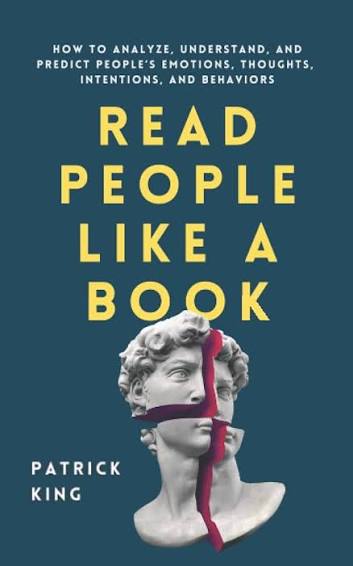
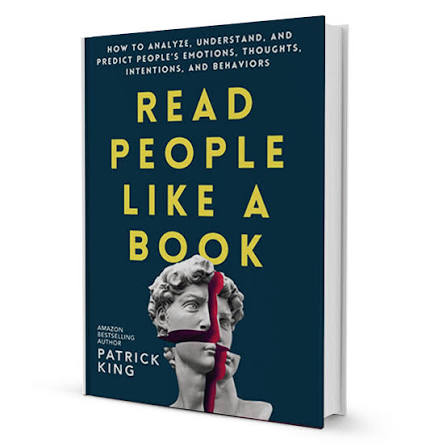
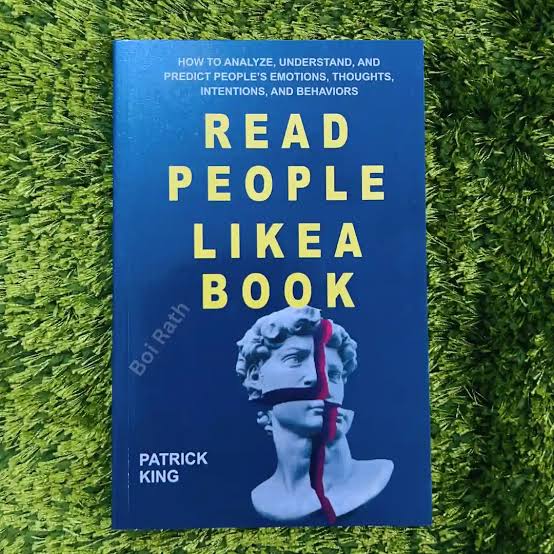

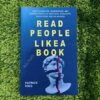
Read People Like a Book by Patrick King

රු1,700.00
3 X Rs. 566.67 or 8% Cashback with


or 3 X රු566.67 with


or up to 4 X රු425.00 with


Learn to understand people beyond their words with Read People Like a Book by Patrick King.
Explore body language, emotional intelligence, personality, motivation, social cues and behavioural patterns to improve your awareness and communication skills.
Ideal for readers interested in psychology, human behaviour, communication and personal development.
Author: Patrick King
Format: Paperback
Pages: 176
Genre: Psychology / Communication / Self-Help
17 in stock
Read People Like a Book by Patrick King
Understand People Beyond Their Words
Read People Like a Book by Patrick King is a practical guide to understanding human behaviour, body language, emotional signals and social interaction.
The book explores how people reveal information not only through what they say, but also through:
- Body language
- Facial expressions
- Behaviour patterns
- Tone and context
- Habits
- Emotional reactions
- Personality tendencies
Patrick King’s central idea is that understanding people requires looking at the whole person and the situation, rather than relying on a single gesture or expression.
The publisher description presents the book as a guide to understanding human psychology, body language, emotional intelligence and behavioural patterns.
Learn to Notice Behavioural Patterns
People constantly communicate information without deliberately saying it.
A person may claim to be relaxed while appearing physically tense.
Someone may say they agree while showing hesitation.
Another person may avoid a topic, change their posture or suddenly alter the way they speak.
Read People Like a Book encourages readers to pay attention to these patterns.
However, an important point is that one gesture does not automatically reveal a person’s thoughts.
Crossed arms, avoiding eye contact or nervous movement can have many explanations.
Context matters.
This is particularly important when interpreting body language.
Body Language
The book discusses different kinds of non-verbal behaviour and how they may relate to emotions or intentions.
Readers are encouraged to notice areas such as:
- Posture
- Hand movements
- Leg position
- Eye contact
- Facial expressions
- Personal space
- Changes in movement
The goal is not to memorise a simple formula such as:
“This gesture always means this emotion.”
Instead, useful interpretation requires looking at several signals together and considering the surrounding situation.
Emotional Intelligence
Understanding other people also requires emotional intelligence.
This includes recognising:
- Your own emotional reactions
- Other people’s emotional states
- How emotions influence behaviour
- How your behaviour affects others
The book encourages readers to become more aware of the signals they send during social interactions.
The Wisdom Tree edition specifically describes increasing emotional intelligence as one of the book’s core goals.
Understanding Motivation
People behave differently because they have different:
- Experiences
- Values
- Fears
- Goals
- Personal histories
- Personality traits
King argues that understanding someone’s behaviour requires thinking about what may be motivating it.
Instead of asking only:
“What is this person doing?”
you can also consider:
“Why might they be behaving this way?”
This approach can make social interactions easier to understand.
Personality and Behaviour
The book also discusses personality as one way to think about behavioural patterns.
Different people may react very differently to the same situation.
For example:
One person may enjoy being the centre of attention.
Another may prefer observing before speaking.
One person may make decisions quickly.
Another may need time to evaluate possibilities.
Understanding these differences can help readers communicate more effectively without expecting everyone to behave the same way.
Detecting Deception
One of the topics discussed in Read People Like a Book is deception and lying.
The book encourages readers to examine behaviour, inconsistencies and context.
Important Reality Check
There is no single body-language sign that reliably proves someone is lying.
Avoiding eye contact, appearing nervous or changing posture can happen for many innocent reasons.
Even the book’s own description notes that lie detection becomes unreliable when context is ignored.
Therefore, this book is best used to improve observation and questioning, not as a scientific method for proving deception.
Reading the Situation, Not Just the Person
One of the most useful principles when interpreting behaviour is to consider the environment.
For example, someone appearing uncomfortable might be:
- Nervous
- Cold
- Tired
- Distracted
- Worried
- Socially anxious
- Simply uncomfortable in the room
Without context, the same physical behaviour could be interpreted incorrectly.
The book encourages readers to combine observations instead of relying on isolated signals.
Making Better First Impressions
Understanding non-verbal communication is also useful because readers can become more aware of their own behaviour.
You may start noticing:
- How much eye contact you use
- Whether your posture appears confident
- Whether you interrupt
- How closely you stand to others
- Whether your expressions match your words
- How your tone changes during stressful situations
This can help improve social awareness and communication.
Improving Conversations
The practical value of reading social cues is not simply identifying what someone might be feeling.
It can also help you decide how to respond.
For example, noticing that someone appears uncomfortable might encourage you to:
- Slow down
- Ask a question
- Change the subject
- Give them more space
- Clarify what you meant
This makes observation useful for everyday communication rather than turning it into a guessing game.
Relationships and Social Skills
The ideas in the book may be applied to:
- Friendships
- Family relationships
- Dating
- Workplace conversations
- Meetings
- Networking
- Customer interactions
- Negotiations
Better observation can help people become more sensitive to how others are responding.
Major Topics
Body Language
Learn how non-verbal behaviour can provide additional information during conversations.
Human Psychology
Explore factors that influence how people think and behave.
Emotional Intelligence
Become more aware of your own emotions and the emotions of others.
Personality
Understand how personality differences can shape behaviour.
Motivation
Consider what goals, fears or experiences may be driving someone’s actions.
Deception
Learn to examine inconsistencies carefully while avoiding simplistic assumptions.
Social Skills
Use observation to improve communication and relationships.
Who Will Benefit From This Book?
This book may particularly appeal to:
- Students
- Managers
- Sales professionals
- Entrepreneurs
- Customer-service professionals
- HR professionals
- People interested in psychology
- Readers interested in body language
- Anyone wanting to improve social skills
- Readers interested in emotional intelligence
Important Psychology Note
Read People Like a Book is a popular self-development guide, not a clinical psychology textbook.
Claims about interpreting body language or predicting behaviour should be treated as practical heuristics rather than certainty.
Human behaviour is influenced by culture, personality, circumstances and individual differences.
The book can be useful for improving observation and communication, but it cannot literally allow someone to read another person’s thoughts.
About Patrick King
Patrick King is an author and social-interaction coach whose books focus on communication, social skills, emotional intelligence and interpersonal behaviour.
His work includes titles covering:
- Conversation skills
- Social confidence
- Emotional intelligence
- Human behaviour
- Communication
- Critical thinking
Google Books categorises Read People Like a Book under applied psychology, interpersonal relations and communication/social skills.
Be the first to review “Read People Like a Book by Patrick King”
Related products
Non-Fiction & Knowledge
රු1,550.00
3 X Rs. 516.67 or 8% Cashback with
or 3 X රු516.67 with
or up to 4 X රු387.50 with

Non-Fiction & Knowledge
රු1,750.00
3 X Rs. 583.33 or 8% Cashback with
or 3 X රු583.33 with
or up to 4 X රු437.50 with
Non-Fiction & Knowledge
රු1,550.00
3 X Rs. 516.67 or 8% Cashback with
or 3 X රු516.67 with
or up to 4 X රු387.50 with
Non-Fiction & Knowledge
රු2,250.00
3 X Rs. 750.00 or 8% Cashback with
or 3 X රු750.00 with
or up to 4 X රු562.50 with

Non-Fiction & Knowledge
රු1,500.00
3 X Rs. 500.00 or 8% Cashback with
or 3 X රු500.00 with
or up to 4 X රු375.00 with

Non-Fiction & Knowledge
රු1,950.00
3 X Rs. 650.00 or 8% Cashback with
or 3 X රු650.00 with
or up to 4 X රු487.50 with
-24%
Non-Fiction & Knowledge
Original price was: රු2,300.00.රු1,750.00Current price is: රු1,750.00.
3 X Rs. 583.33 or 8% Cashback with
or 3 X රු583.33 with
or up to 4 X රු437.50 with
-14%

Out of stock
Non-Fiction & Knowledge
Original price was: රු3,500.00.රු3,000.00Current price is: රු3,000.00.
3 X Rs. 1,000.00 or 8% Cashback with
or 3 X රු1,000.00 with
or up to 4 X රු750.00 with
Reviews
There are no reviews yet.