
No products in the cart.
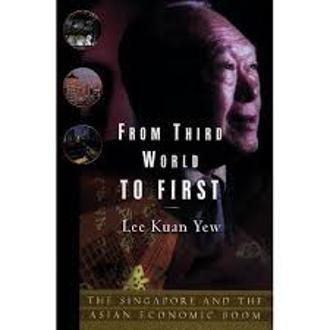


From Third World to First by Lee Kuan Yew is a remarkable political memoir about how a small and vulnerable nation attempted to transform itself into a prosperous, stable, and globally connected country.
Singapore became independent in 1965.
At the time, its future looked uncertain.
It had limited natural resources.
A small domestic market.
Serious security concerns.
Housing challenges.
Communal tensions.
And an economy that needed to create jobs quickly.
Lee Kuan Yew and his government faced an enormous question.
How do you build a successful country when almost nothing can be taken for granted?
That question sits at the heart of From Third World to First.
Lee recounts the decisions, strategies, political battles, international relationships, and institutional reforms involved in Singapore’s development from 1965 through 2000.
Why Read From Third World to First?
From Third World to First is ideal for readers interested in:
- Leadership
- Economic development
- Government
- Public policy
- Singapore
- Asian history
- Nation-building
- Anti-corruption
- Housing policy
- Education
- Foreign investment
- International relations
- Political strategy
- Infrastructure
- Economic growth
It is part memoir.
Part political history.
Part leadership case study.
And part explanation of how Lee Kuan Yew understood Singapore’s development.
From Third World to First and Singapore’s Independence
Singapore’s independence created both freedom and enormous uncertainty.
The country had separated from Malaysia.
It could not rely on a large domestic market.
Its security position was uncertain.
Employment had to grow.
The government needed to establish functioning institutions rapidly.
Lee describes how his administration approached these problems as practical challenges rather than abstract political debates.
Singapore needed to survive before it could prosper.
That sense of urgency runs throughout From Third World to First.
Building a Country From the Ground Up
Nation-building sounds impressive when described decades later.
In reality, it involves thousands of practical decisions.
How should people be housed?
How should the country defend itself?
How should corruption be controlled?
How can foreign companies be persuaded to invest?
What infrastructure should be built first?
How should education support economic development?
Lee’s memoir describes these issues as interconnected.
A successful economy needs stability.
Stability requires institutions.
Institutions require competent administration.
Investment requires confidence.
And confidence depends on whether businesses believe the country will continue functioning tomorrow.
From Third World to First and Economic Development
Economic development is one of the book’s biggest themes.
Singapore could not depend on abundant natural resources.
So it needed another strategy.
Trade.
Investment.
Manufacturing.
Services.
Infrastructure.
Human capital.
And global connections.
Lee describes efforts to attract multinational companies and make Singapore an attractive place for international business.
This required more than low taxes.
Companies needed:
Reliable electricity.
Ports.
Transport.
Skilled workers.
Political stability.
Predictable regulations.
And competent administration.
The memoir presents these factors as crucial to Singapore’s development.
From Third World to First and Foreign Investment
Attracting foreign investment became an important strategy.
The logic was practical.
Singapore needed jobs.
International companies needed reliable locations for production and regional operations.
If Singapore could offer infrastructure, stability, skilled workers, and predictable rules, both sides could benefit.
That approach helped connect the country with global markets.
Instead of trying to isolate Singapore economically, the government pursued deep participation in international trade.
From Third World to First and Corruption
Corruption can make economic development extremely difficult.
Businesses may need unofficial payments.
Government contracts can become political rewards.
Public money can disappear.
Citizens may lose trust.
Lee repeatedly emphasizes the importance his government placed on creating a public administration that was difficult to bribe and serious about enforcement.
Google Books’ description of the memoir specifically identifies efforts to stamp out corruption as one of the major nation-building initiatives covered in the book.
Why Anti-Corruption Matters
Reducing corruption is not only a moral issue.
It has economic consequences.
Investors want predictable decisions.
Citizens want fair treatment.
Government spending needs to produce actual infrastructure.
Businesses should compete based on value rather than political connections.
A government that can enforce rules consistently gains credibility.
From Third World to First presents clean administration as one of the foundations supporting Singapore’s development.
From Third World to First and Public Housing
Housing was another enormous challenge.
A growing population needed decent places to live.
Poor housing conditions can contribute to:
Health problems.
Social instability.
Crime.
Family stress.
And public dissatisfaction.
Singapore invested heavily in mass public housing.
Over time, housing became one of the most recognizable features of the Singapore development model.
Lee discusses housing not merely as construction but as part of building a stable society.
The memoir’s publisher descriptions specifically identify mass public housing as one of the major programs undertaken during Singapore’s early development.
Housing and Social Stability
Giving families secure housing can change more than their physical surroundings.
People become more connected to their neighbourhoods.
Living standards improve.
Children have more stable environments.
Communities become easier to organize.
Public services become easier to deliver.
This illustrates an important lesson from From Third World to First:
Infrastructure and social policy often work together.
Building Singapore’s Defence
Singapore also needed a defence system.
A newly independent small state could not assume that someone else would always protect it.
Lee describes the difficult process of creating military capability almost from scratch.
National service eventually became an important part of Singapore’s defence strategy.
The aim was not simply to create an army.
It was to make the country capable of protecting its independence.
From Third World to First and Education
Economic development requires people with useful skills.
Factories need technicians.
Businesses need managers.
Governments need administrators.
Hospitals need professionals.
Modern economies need engineers, scientists, teachers, and skilled workers.
Education therefore became closely connected with Singapore’s economic strategy.
A country with few natural resources had to invest heavily in human capability.
People became one of its most valuable resources.
English and Global Business
Singapore’s multilingual society created both opportunities and challenges.
English became especially important for international business and communication while other languages remained significant within communities.
This gave Singapore access to global commerce while maintaining connections to different cultural traditions.
Language policy therefore became part of economic strategy as well as social policy.
From Third World to First and Infrastructure
Infrastructure receives considerable attention in Singapore’s development story.
Ports.
Roads.
Airport facilities.
Telecommunications.
Utilities.
Public transport.
Industrial zones.
These investments made the country easier to live in and easier to do business with.
Lee’s memoir discusses major national projects including the creation of a national airline and the development of Singapore’s airport capabilities.
Singapore Airlines and Changi
A national airline and internationally connected airport offered more than prestige.
They connected Singapore to customers, investors, tourists, and trading partners.
For a small island economy, connectivity was essential.
The same logic applied to the port.
Singapore’s geographical position could become an advantage only if excellent infrastructure allowed businesses to use it efficiently.
From Third World to First and Long-Term Planning
One of the most recognizable ideas in the memoir is long-term thinking.
Governments often operate around short political cycles.
But infrastructure, education, defence, and economic restructuring can take decades.
Lee argues repeatedly for planning beyond immediate popularity.
That approach has supporters and critics.
Supporters see it as disciplined governance.
Critics have questioned the political restrictions and strong state control associated with Singapore’s model.
From Third World to First is valuable partly because readers encounter Lee’s own justification of those choices rather than a neutral academic history.
Leadership According to Lee Kuan Yew
Lee’s leadership philosophy was highly pragmatic.
He tended to focus on outcomes.
Does the policy work?
Does it improve security?
Does it create employment?
Will investors trust the system?
Will it improve living standards?
That mindset runs throughout From Third World to First.
Ideology mattered less, in his telling, than whether Singapore could survive and improve.
From Third World to First and Political Controversy
The memoir should not be read as if it were an entirely neutral account.
It is Lee Kuan Yew’s perspective.
He discusses political opponents, democracy, human rights, social policy, and state authority from his own point of view.
Some of his policies and arguments remain controversial.
The book itself acknowledges his forceful and sometimes unconventional political outlook. Publisher descriptions note that Lee writes openly about his approach to political opponents and views on democracy and human rights.
That makes the book particularly useful when read alongside independent histories of Singapore.
From Third World to First and Foreign Policy
A small country has limited room for mistakes in foreign policy.
Singapore needed working relationships with much larger powers.
China.
The United States.
Malaysia.
Indonesia.
Britain.
Japan.
And other Asian nations.
Lee writes extensively about international leaders and diplomatic relationships.
For readers interested in geopolitics, these sections provide insight into how the leader of a small state viewed major powers.
Survival Before Ideology
A recurring message is that small countries need to be realistic.
Singapore could not simply behave as if geography and economics did not matter.
It needed international trade.
Foreign investment.
Regional security.
Strong diplomatic relationships.
Lee’s thinking was shaped heavily by this need for survival.
From Third World to First and Discipline
Discipline is another recurring theme.
Financial discipline.
Administrative discipline.
Urban planning.
Public cleanliness.
Education.
Law enforcement.
Government performance.
Singapore became known for strict rules.
Supporters often connect those rules with safety and efficiency.
Critics point to restrictions on personal and political freedom.
The memoir gives readers Lee’s own explanation of why he believed strong institutions and strict standards were necessary.
Results Matter
A central leadership idea from the book can be summarized simply:
Policies should produce results.
A beautiful plan that fails is still a failure.
A government program needs measurable outcomes.
Are people getting jobs?
Are homes being built?
Is corruption falling?
Are businesses investing?
Is public safety improving?
That results-focused mindset is one reason From Third World to First is frequently read by entrepreneurs and business leaders as well as readers interested in politics.
From Third World to First for Entrepreneurs
Entrepreneurs can draw several lessons from the book.
Start with reality.
Understand your constraints.
Build strong systems.
Develop competent people.
Protect your reputation.
Think long term.
Stay connected with global opportunities.
Do not depend on a single advantage forever.
A company and a country are obviously very different.
But some strategic principles apply to both.
Adapt or Fall Behind
Singapore could not assume that one economic strategy would remain effective forever.
As wages increased, the country needed to move toward more sophisticated industries and services.
That required new skills.
New technology.
New infrastructure.
And continued investment.
This creates another major lesson:
Success is not a permanent condition.
What works today may become inadequate tomorrow.
7 Powerful Lessons From From Third World to First
1. Face Reality Before Making Plans
Singapore’s leaders had to understand the country’s weaknesses before they could build useful strategies.
Ignoring difficult facts would not make them disappear.
2. Strong Institutions Matter
Economic growth depends on more than individual leaders.
Government departments.
Courts.
Regulators.
Schools.
Infrastructure.
And public administration all matter.
3. Fight Corruption Seriously
Corruption reduces trust and makes business more expensive.
Clean administration can become an economic advantage.
4. Invest in People
When natural resources are limited, education and skills become even more important.
Human capital can become a national competitive advantage.
5. Think Globally
A small domestic market does not have to mean a small economy.
Singapore pursued trade, investment, and international connectivity.
6. Infrastructure Creates Opportunity
Ports, airports, housing, transportation, telecommunications, and reliable utilities make economic growth easier.
7. Think Beyond the Short Term
From Third World to First repeatedly demonstrates the importance Lee placed on decisions whose benefits might take years or decades to appear.
What You Can Expect From From Third World to First
Readers can expect:
- Lee Kuan Yew
- Singapore
- Political memoir
- Nation-building
- Economic development
- Leadership
- Public housing
- Anti-corruption
- Education
- Defence
- Foreign investment
- Infrastructure
- International relations
- Asian politics
- Government policy
- Economic strategy
- Political controversy
- Long-term planning
Who Should Read From Third World to First?
From Third World to First is ideal for:
Entrepreneurs.
Business leaders.
Government officials.
Students.
Economics readers.
Political science students.
History readers.
Policy professionals.
Readers interested in Singapore.
Readers interested in Asian development.
People studying leadership.
Anyone curious about how a small country can build competitive advantages.
A Powerful Story of Singapore’s Transformation
From Third World to First begins with a country facing an uncertain future.
Singapore was small.
Resource-constrained.
Newly independent.
And surrounded by much larger neighbours.
Its leaders had no guarantee that it would become wealthy or stable.
The memoir describes the long process of building institutions, attracting investment, improving housing, expanding education, strengthening defence, fighting corruption, developing infrastructure, and navigating international politics.
Decades later, Singapore looked radically different.
Lee Kuan Yew presents that transformation as the product of difficult choices, pragmatic leadership, competent institutions, global engagement, and relentless attention to implementation.
Readers do not have to agree with all of Lee’s political views to find the book valuable.
In fact, its strongest use may be as a firsthand account that can be examined, questioned, compared with other histories, and used to understand the thinking behind one of Asia’s most discussed development stories.
For readers interested in leadership, economic development, government, Singapore, public policy, Asian history, and nation-building, From Third World to First is an important and thought-provoking memoir.
Book Details
Title: From Third World to First
Full Title: From Third World to First: The Singapore Story, 1965–2000
Author: Lee Kuan Yew
Genre: Political Memoir / History / Politics / Economic Development
Main Subject: Singapore’s development and government after independence
Period Covered: 1965–2000
First Published: 2000.
HarperCollins Original Edition
One widely catalogued 2000 edition has:
ISBN-13: 9780060197766
ISBN-10: 0060197765
Publisher: HarperCollins
Publication Date: October 3, 2000
Pages: 752.
HarperCollins Paperback Edition
A widely available paperback edition has:
ISBN-13: 9780060957513
ISBN-10: 0060957514
Publisher: HarperCollins
Pages: approximately 768.
Marshall Cavendish Edition
Another common Asian edition has:
ISBN-13: 9789814328838
ISBN-10: 9814328839
Publisher: Marshall Cavendish Editions
Edition Year: 2015
Pages: 778.
Edition Note
From Third World to First has several international editions.
Page counts can vary significantly—approximately 680 to 830 pages depending on edition and formatting.
Use the ISBN printed on your physical copy before entering the exact page count, dimensions, or publisher details on your website.
Learn more about From Third World to First by Lee Kuan Yew on Google Books.
Explore more biography and business books at Bargain Books.
Be the first to review “From Third World to First by Lee Kuan Yew”
Related products
-24%
Original price was: රු2,100.00.රු1,600.00Current price is: රු1,600.00.
3 X Rs. 533.33 or 8% Cashback with


or 3 X රු533.33 with


or up to 4 X රු400.00 with

-7%
Out of stock
Autobiography
Original price was: රු2,700.00.රු2,500.00Current price is: රු2,500.00.
3 X Rs. 833.33 or 8% Cashback with
or 3 X රු833.33 with
or up to 4 X රු625.00 with
-12%
Biography
Original price was: රු3,400.00.රු3,000.00Current price is: රු3,000.00.
3 X Rs. 1,000.00 or 8% Cashback with
or 3 X රු1,000.00 with
or up to 4 X රු750.00 with

Out of stock
රු1,800.00
3 X Rs. 600.00 or 8% Cashback with
or 3 X රු600.00 with
or up to 4 X රු450.00 with
Autobiography
රු1,950.00
3 X Rs. 650.00 or 8% Cashback with
or 3 X රු650.00 with
or up to 4 X රු487.50 with
-7%
Out of stock
Original price was: රු4,500.00.රු4,200.00Current price is: රු4,200.00.
3 X Rs. 1,400.00 or 8% Cashback with
or 3 X රු1,400.00 with
or up to 4 X රු1,050.00 with
Analysis & Strategy
රු2,250.00
3 X Rs. 750.00 or 8% Cashback with
or 3 X රු750.00 with
or up to 4 X රු562.50 with
-15%

Out of stock
Biography
Original price was: රු3,300.00.රු2,800.00Current price is: රු2,800.00.
3 X Rs. 933.33 or 8% Cashback with
or 3 X රු933.33 with
or up to 4 X රු700.00 with
Reviews
There are no reviews yet.