
No products in the cart.

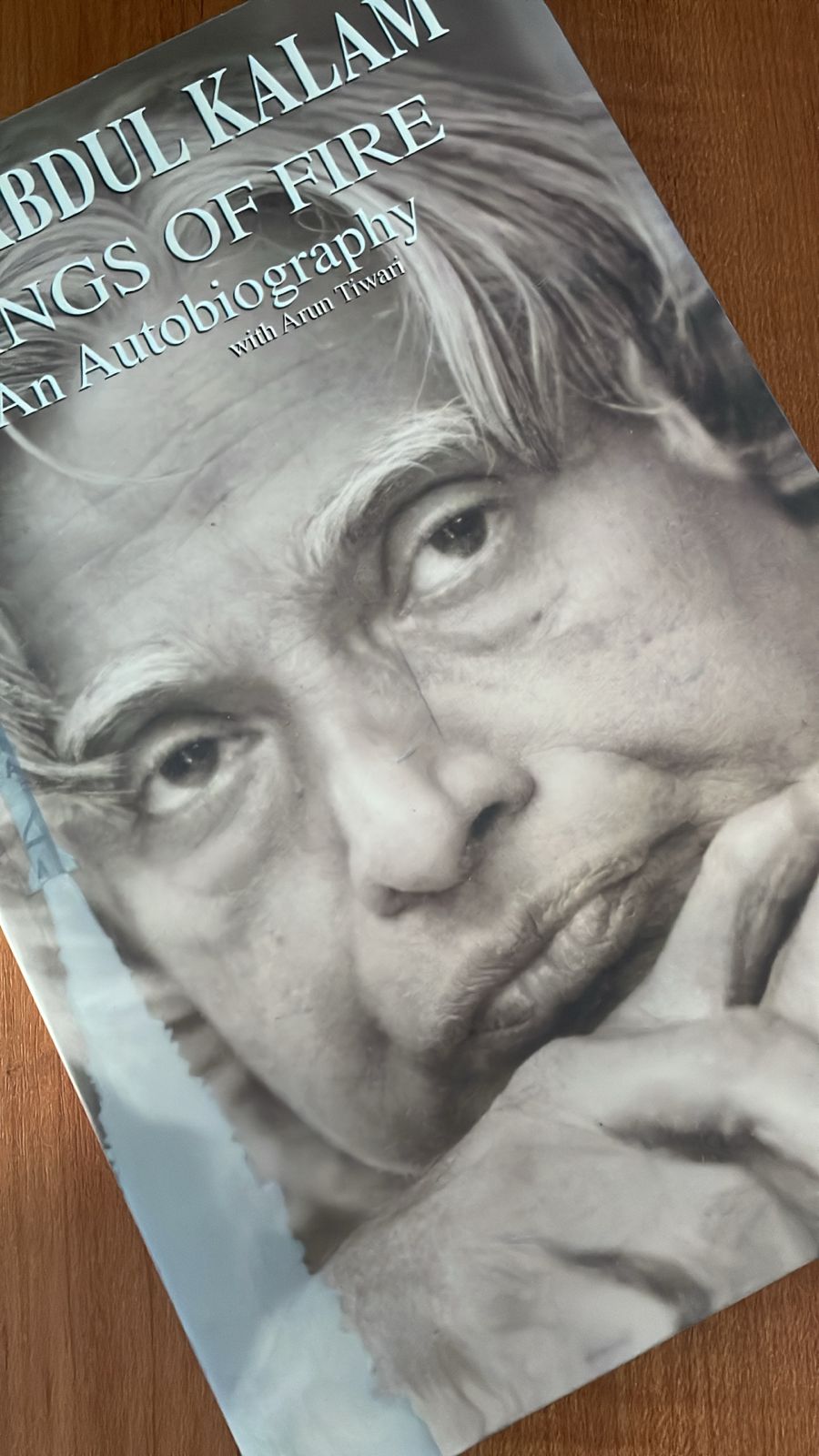








Wings of Fire by A. P. J. Abdul Kalam


රු1,900.00
3 X Rs. 633.33 or 8% Cashback with


or 3 X රු633.33 with


or up to 4 X රු475.00 with


When Things Don’t Go Your Way by Haemin Sunim
When Things Don’t Go Your Way by Haemin Sunim is a gentle self-help and mindfulness book about facing difficult moments with greater calm, courage, and understanding.
Life does not always follow our plans.
We experience rejection.
Loss.
Loneliness.
Conflict.
Uncertainty.
Burnout.
And disappointment.
This
18 in stock
Wings of Fire by A. P. J. Abdul Kalam
Wings of Fire by A. P. J. Abdul Kalam is an inspiring autobiography about ambition, education, science, leadership, perseverance, and service.
The book traces Kalam’s journey from a modest childhood in Rameswaram to becoming one of India’s most respected scientists.
It is a story about dreaming big.
It is also about discipline, failure, teamwork, and determination.
About Wings of Fire
Wings of Fire was written by A. P. J. Abdul Kalam with Arun Tiwari.
The autobiography follows Kalam’s early life, education, scientific career, and involvement in major Indian space and defence programmes.
The book also reflects on the people who influenced him.
Teachers.
Scientists.
Colleagues.
Family members.
And mentors.
7 Inspiring Lessons from Wings of Fire
1. Dream Before You Achieve
One of the strongest messages in Wings of Fire is the importance of dreams.
Kalam believed that meaningful achievement begins with vision.
A dream gives direction.
But a dream alone is not enough.
It must be supported by action.
2. Education Can Change a Life
Kalam grew up in a modest family.
Education gave him new possibilities.
Teachers played an important role in encouraging his curiosity.
The book shows how learning can expand what a person believes is possible.
3. Failure Is Part of Progress
Scientific work involves failure.
Experiments do not always work.
Launches may fail.
Plans may collapse.
Kalam repeatedly shows that failure should be studied rather than feared.
The lesson is to learn, improve, and try again.
4. Leadership Means Taking Responsibility
A strong leader does not take all the credit.
They also do not blame others when things go wrong.
The book includes powerful examples of leadership in scientific teams.
Responsibility becomes one of the most important qualities.
5. Teamwork Creates Bigger Results
Major scientific achievements are rarely created by one person.
Engineers contribute.
Scientists contribute.
Technicians contribute.
Leaders coordinate.
Kalam often emphasizes the value of teams.
6. Humility Matters
Despite major achievements, Kalam often presents himself simply.
He gives credit to teachers and colleagues.
This humility is one reason the autobiography feels personal rather than self-promotional.
7. Service Gives Success Meaning
For Kalam, success is not only about personal achievement.
It is also about contribution.
Science should help society.
Education should empower young people.
Knowledge should serve a larger purpose.
Childhood in Rameswaram
Kalam was born in Rameswaram, Tamil Nadu.
His family lived modestly.
His father was a boat owner.
The environment was simple.
But it was rich in community, discipline, and spirituality.
These early experiences shaped his character.
Family Influence
Family plays an important role in Wings of Fire.
Kalam writes with respect about his parents.
He describes values such as honesty, simplicity, faith, and responsibility.
These values remained important throughout his life.
School and Early Curiosity
Kalam was curious from a young age.
He became interested in science.
Teachers encouraged him to think beyond his immediate surroundings.
This support became very important.
The book shows how one teacher can change a student’s direction.
Studying Engineering
Kalam eventually studied aeronautical engineering.
This was a major turning point.
It connected his curiosity with a practical career.
Engineering gave him a path toward aviation, research, and technology.
Early Career
Kalam began his professional career in scientific and engineering roles.
He worked on projects connected to aviation and defence.
His early work helped develop the technical and leadership skills he would later need.
India’s Space Programme
One of the most important parts of Wings of Fire is Kalam’s work in India’s space programme.
He became involved in satellite launch vehicle development.
These projects required long-term planning.
Technical expertise.
Team coordination.
And patience.
Failure and SLV-3
The book discusses failures as well as successes.
This is important.
Kalam does not present scientific progress as a smooth journey.
Setbacks happen.
But they become opportunities to learn.
The experience around launch vehicle development becomes one of the clearest examples of this mindset.
Success Through Persistence
Eventually, years of effort produced important results.
Scientific success did not happen overnight.
The book shows the value of consistency.
Work.
Learn.
Correct mistakes.
Continue.
This simple pattern appears throughout Kalam’s career.
Missile Development
Kalam later became closely associated with India’s missile development programmes.
These projects brought together scientists and engineers from different institutions.
The work required coordination and long-term planning.
It also increased his public profile.
Science and National Development
Kalam believed science should support national development.
Technology should solve problems.
Research should create practical value.
This broader vision appears throughout the autobiography.
Leadership Lessons
Some of the most memorable sections focus on leadership.
A strong leader protects the team when things go wrong.
They share credit when things go well.
They create confidence.
They also help people grow.
These lessons are useful far beyond science.
Mentors
Kalam repeatedly acknowledges people who guided him.
Mentors helped him think more clearly.
They challenged him.
They encouraged him.
The book shows that success is often influenced by people who believe in you before results appear.
Simplicity
Despite major responsibilities, Kalam valued simplicity.
He avoided unnecessary luxury.
He remained focused on work.
This gives the memoir a distinctive tone.
Achievement is important.
But character is more important.
Young People
Kalam was especially interested in young people and education.
He believed students should dream.
He wanted them to think about what they could contribute.
That message became one of the most widely remembered parts of his public life.
Wings of Fire and Self-Belief
The title reflects transformation.
Wings represent possibility.
Fire represents energy and determination.
Together, they symbolize ambition supported by effort.
The book encourages readers to believe that background does not permanently limit potential.
Who Should Read This Book?
Wings of Fire is ideal for students, young adults, professionals, science enthusiasts, leaders, and readers interested in inspirational autobiographies.
It may be especially useful for readers who enjoy stories about education, discipline, failure, resilience, and scientific achievement.
The book is also suitable for readers interested in modern Indian history.
About A. P. J. Abdul Kalam
A. P. J. Abdul Kalam was an aerospace scientist, author, educator, and public figure.
Before later serving as President of India, he worked extensively in India’s scientific, space, and defence programmes.
Because this autobiography reflects Kalam’s own account of his life and career, readers interested in historical interpretation may also wish to compare it with independent biographies and public records.
About Arun Tiwari
Arun Tiwari worked with Kalam and helped shape the autobiography.
His contribution helped organize Kalam’s experiences into a readable narrative.
The collaboration gives the book both personal reflection and chronological structure.
Product Details
Title: Wings of Fire: An Autobiography
Authors: A. P. J. Abdul Kalam with Arun Tiwari
Genre: Autobiography / Biography / Science / Inspiration
Language: English
Original Publication: 1999
Common Universities Press Paperback
Publisher: Universities Press
ISBN-13: 9788173711466
ISBN-10: 8173711461
Format: Paperback
Pages: Around 180–192 depending on impression
The original paperback is widely catalogued under ISBN 9788173711466. Different impressions may show slightly different page counts.
New 2026 Edition
A new expanded edition was published in 2026.
Publisher / Imprint: Universities Press
ISBN-13: 9789349750494
Format: Paperback
Pages: 248
Dimensions: 158 × 240 mm
This edition extends the narrative beyond the earlier autobiography and includes material covering 1991 to 2015, including Kalam’s presidential and post-presidential years.
Important Edition Note
There is also an abridged student edition.
That version carries ISBN 9788173715488 and has 144 pages.
It is not the same as the full standard autobiography.
Always check the barcode on your physical copy before entering the final WooCommerce specifications.
Explore More Biography Books
Wings of Fire is ultimately a story about possibility.
A boy from a modest family develops an interest in science.
That interest becomes a career.
That career becomes a life of leadership, innovation, and service.
The book shows that progress is rarely perfect.
Failures happen.
Confidence disappears.
Plans change.
But persistence matters.
Readers can explore more Biography Books at Bargain Books.
You can also explore Non-Fiction & Knowledge Books at Bargain Books.
For readers interested in science, leadership, education, resilience, and personal growth, Wings of Fire remains an inspiring autobiography about turning ambition into meaningful work.
Learn more about Haemin Sunim and his books on the
official Penguin Random House author page
.
Explore more
Self-Help & Psychology Books at Bargain Books
.
| Author | A. P. J. Abdul Kalam |
|---|---|
| Type | Paperback Printed Book |
| ISBN/ISSN | 978-8173711466, 9788173711466 |
| Language | English |
| Pages | 180 |
Be the first to review “Wings of Fire by A. P. J. Abdul Kalam”
Related products

Out of stock
රු1,450.00
3 X Rs. 483.33 or 8% Cashback with
or 3 X රු483.33 with
or up to 4 X රු362.50 with
-17%

Out of stock
Biography
Original price was: රු3,000.00.රු2,500.00Current price is: රු2,500.00.
3 X Rs. 833.33 or 8% Cashback with
or 3 X රු833.33 with
or up to 4 X රු625.00 with
-18%

Out of stock
Original price was: රු2,800.00.රු2,300.00Current price is: රු2,300.00.
3 X Rs. 766.67 or 8% Cashback with
or 3 X රු766.67 with
or up to 4 X රු575.00 with
රු1,800.00
3 X Rs. 600.00 or 8% Cashback with
or 3 X රු600.00 with
or up to 4 X රු450.00 with
-7%

Out of stock
Autobiography
Original price was: රු2,700.00.රු2,500.00Current price is: රු2,500.00.
3 X Rs. 833.33 or 8% Cashback with
or 3 X රු833.33 with
or up to 4 X රු625.00 with
-12%

Out of stock
Biography
Original price was: රු2,600.00.රු2,300.00Current price is: රු2,300.00.
3 X Rs. 766.67 or 8% Cashback with
or 3 X රු766.67 with
or up to 4 X රු575.00 with
-15%

Out of stock
Biography
Original price was: රු3,300.00.රු2,800.00Current price is: රු2,800.00.
3 X Rs. 933.33 or 8% Cashback with
or 3 X රු933.33 with
or up to 4 X රු700.00 with

Out of stock
රු4,000.00
3 X Rs. 1,333.33 or 8% Cashback with
or 3 X රු1,333.33 with
or up to 4 X රු1,000.00 with
Reviews
There are no reviews yet.