
No products in the cart.

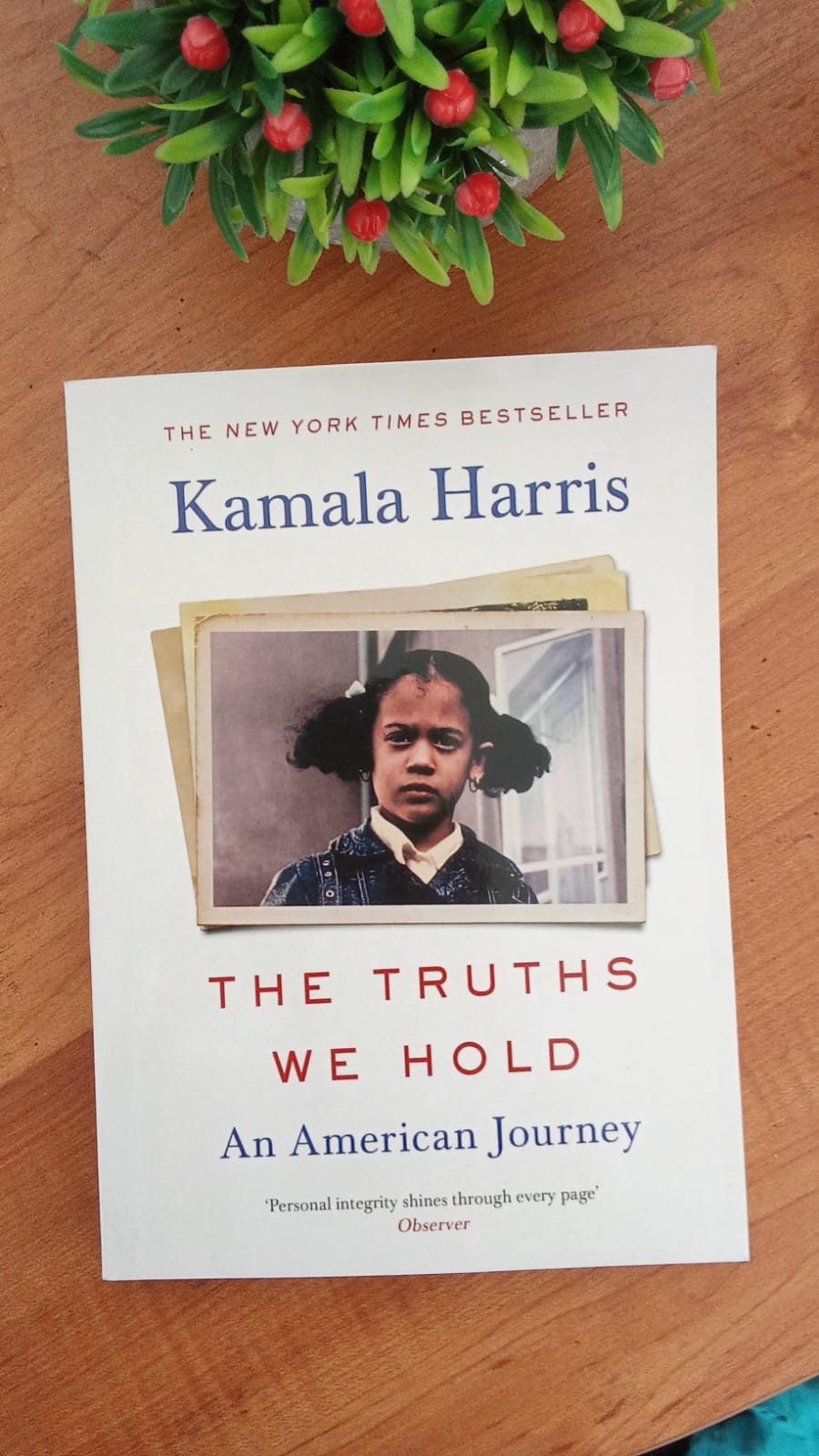
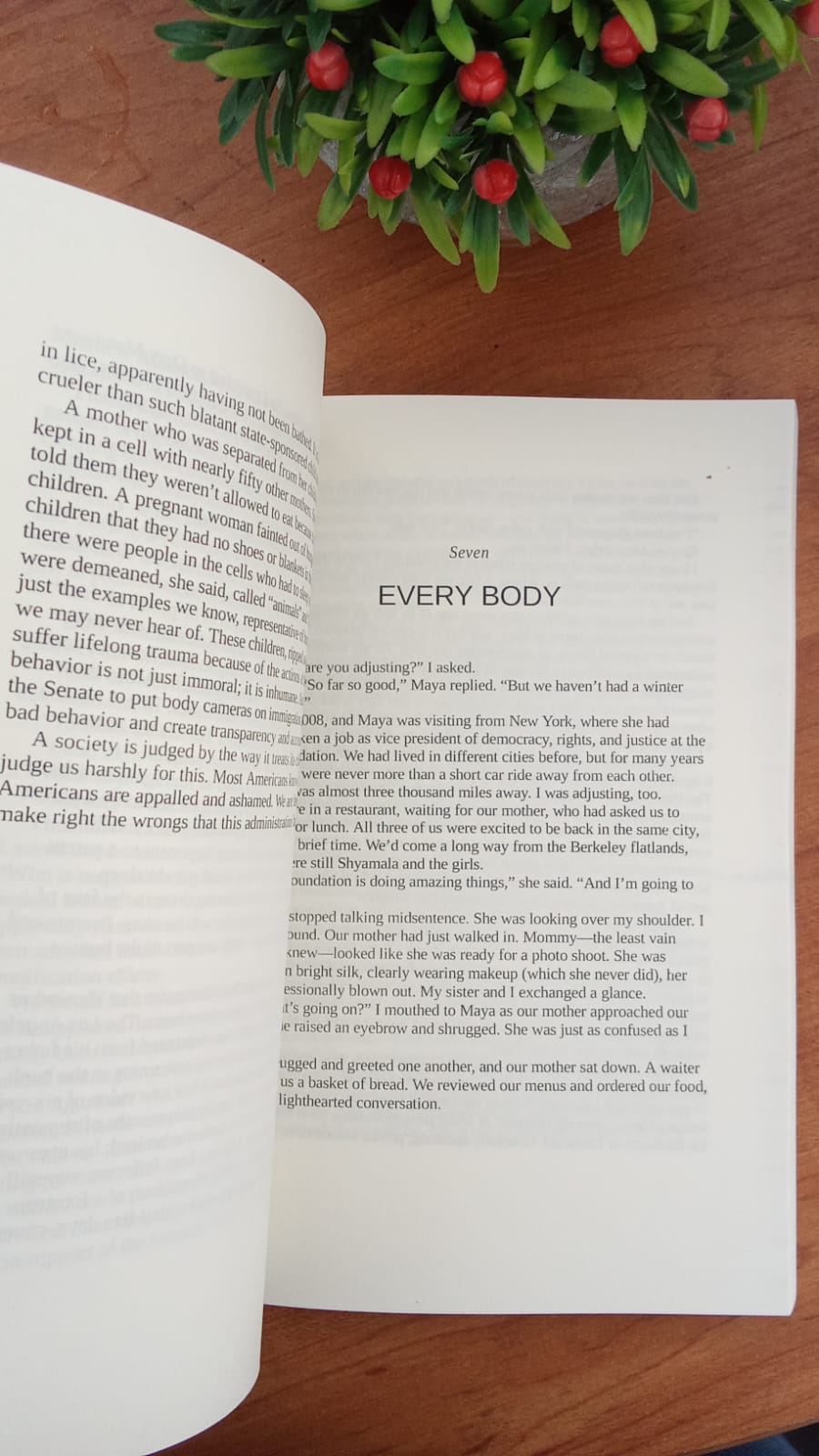
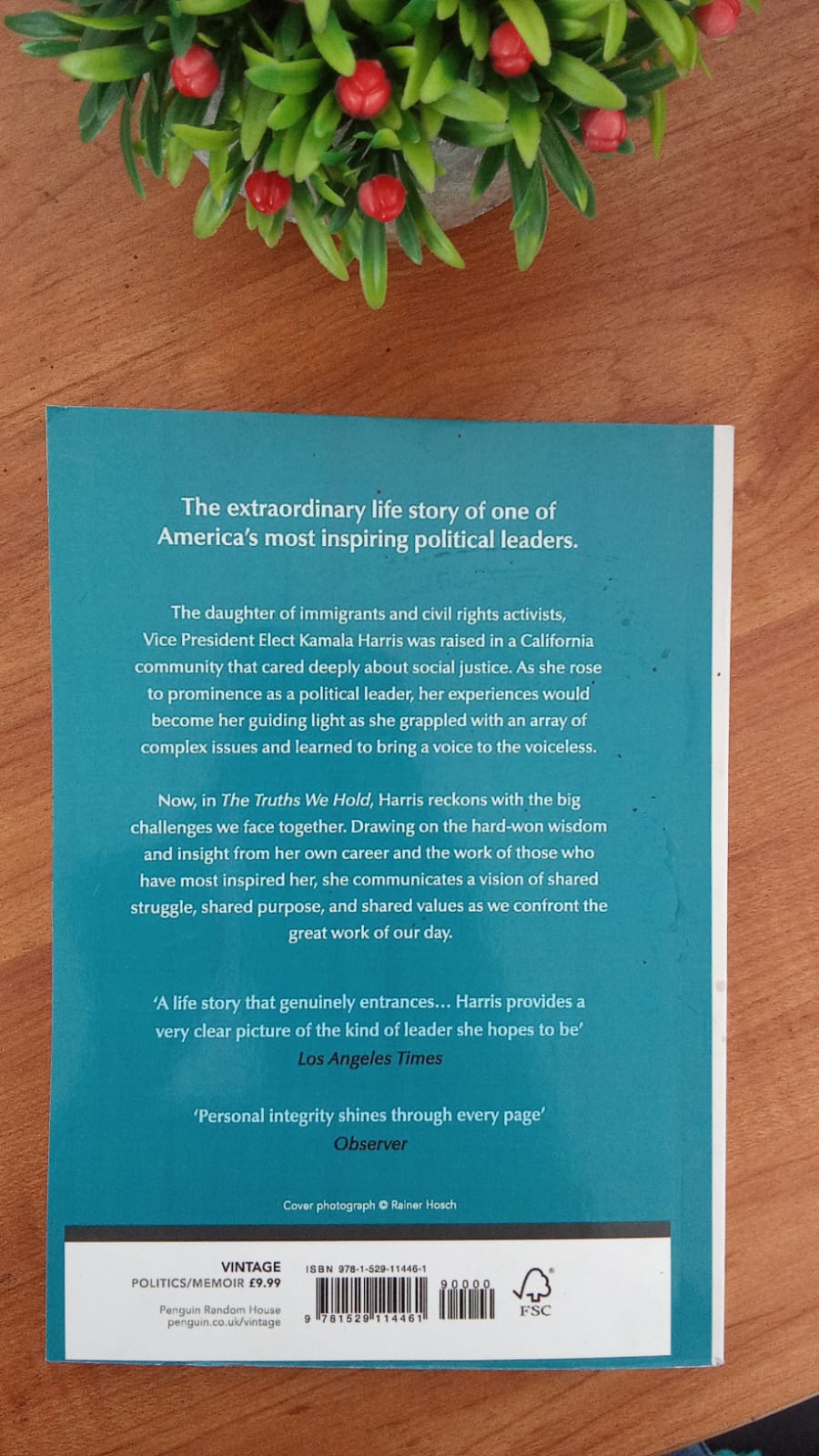




Truths we hold by kamala harris


රු1,950.00
3 X Rs. 650.00 or 8% Cashback with


or 3 X රු650.00 with


or up to 4 X රු487.50 with


The Truths We Hold is an inspiring memoir that shares the life journey, values, and leadership principles of Kamala Harris. Blending personal stories with insights on justice, equality, and public service, the book highlights the importance of truth, resilience, and community in creating meaningful change. It encourages readers to stand up for their beliefs and contribute to a more fair and compassionate society.
6 in stock
The Truths We Hold by Kamala Harris
The Truths We Hold by Kamala Harris is a memoir about family, identity, public service, law, politics, equality, justice, and the experiences that shaped her career.
The book combines personal memories with reflections on public policy and government.
Harris discusses her childhood, her parents, her education, her legal career, and her later work in elected office.
She also explains the principles she says guided many of her professional decisions.
About The Truths We Hold
The Truths We Hold was originally published in 2019.
The memoir begins with Harris’s family background and childhood.
She writes about being raised in Oakland, California, by parents who were involved in the civil rights movement.
Her mother, Shyamala Gopalan Harris, was a cancer researcher who had immigrated from India.
Harris describes her mother as one of the most important influences on her life.
The memoir then follows her education, legal work, and political career.
Rather than functioning only as a chronological autobiography, the book also includes discussions of criminal justice, healthcare, immigration, economic opportunity, and other public-policy subjects.
7 Key Themes in The Truths We Hold
1. Family and Upbringing
Family is one of the central themes of the memoir.
Harris writes about her mother, father, sister, relatives, friends, and wider community.
She explains how these relationships shaped her understanding of responsibility and public service.
Her childhood experiences appear throughout the book as context for later choices.
2. Community
Harris repeatedly discusses the importance of community.
She describes growing up around people who were engaged with questions of civil rights and social justice.
The memoir presents community involvement as an important influence on her later career.
3. Law and Criminal Justice
A significant part of The Truths We Hold covers Harris’s career as a prosecutor.
She worked in the Alameda County District Attorney’s Office before becoming District Attorney of San Francisco and later Attorney General of California.
The book discusses how she approached questions involving crime, punishment, rehabilitation, and public safety.
These sections also reflect her own interpretation of her record and priorities.
Readers interested in those subjects may want to compare the memoir with independent reporting and public records for additional perspectives.
4. Public Service
Public service is another recurring theme.
Harris describes why she chose careers in law and government.
She presents government institutions as tools that can be used to address public problems.
The memoir discusses the responsibilities she associates with prosecutors, elected officials, and other public servants.
5. Equality and Justice
Questions of equality appear throughout the book.
Harris discusses civil rights, racial inequality, gender, immigration, and access to opportunity.
These themes are often connected to her family history and professional experiences.
The book presents her own perspective on how institutions and public policy can respond to inequality.
6. Leadership and Decision-Making
The Truths We Hold also explores leadership.
Harris describes situations where she had to make difficult professional decisions.
She discusses preparation, evidence, teamwork, and accountability.
The memoir often connects leadership with responsibility to communities affected by government decisions.
7. Shared Values
The title reflects one of the book’s central ideas.
Harris argues that democratic societies depend on identifying values people can share even when they disagree politically.
The book discusses ideas such as fairness, dignity, equality, opportunity, and civic participation.
These arguments represent Harris’s own political and personal perspective.
Early Life
Kamala Harris was born in Oakland, California.
Her parents were immigrants who pursued academic and professional careers in the United States.
Her mother came from India and worked as a breast-cancer researcher.
Her father, Donald Harris, came from Jamaica and became an economist.
Harris writes extensively about the influence of her family and childhood community.
Her Mother’s Influence
Shyamala Gopalan Harris occupies a particularly important place in the memoir.
Harris describes her mother as intellectually demanding, independent, and strongly committed to her daughters.
She also connects many of her own ideas about resilience and responsibility to lessons learned from her mother.
Family memories give the book a more personal dimension than a conventional political-policy text.
Education and Law
Harris attended Howard University before earning a law degree.
She later began working as a prosecutor.
Her career eventually included service as San Francisco District Attorney and California Attorney General.
The memoir discusses cases and policy decisions from these stages of her career.
It also explains how Harris says her thinking about law enforcement developed over time.
Becoming a U.S. Senator
Harris later served as a United States senator from California.
The memoir discusses the transition from state-level legal work into national politics.
She writes about legislative priorities and the wider responsibilities of federal office.
Because The Truths We Hold was originally published in January 2019, it predates later events in her political career.
Later Political Career
After the original publication of the memoir, Harris served as Vice President of the United States from 2021 to 2025. Penguin Random House’s current author biography also notes that she became the first woman, first Black person, and first Indian American to hold the vice presidency.
These events happened after the book was written and therefore are not part of the memoir’s original narrative.
Criminal Justice
Criminal justice occupies a substantial part of the book.
Harris discusses prosecution, public safety, repeat offending, rehabilitation, and reform.
She presents arguments about how prosecutors can use discretion and data.
Because criminal-justice policy is politically contested, readers may encounter differing interpretations of her record from journalists, academics, advocacy groups, and political opponents.
The memoir itself presents Harris’s own account.
Healthcare
Healthcare is another policy area discussed in the book.
Harris connects access to healthcare with broader questions about economic security and public responsibility.
She also relates the subject to her mother’s work as a cancer researcher.
These sections combine personal experience with political argument.
Immigration
Harris discusses immigration through both personal and public-policy perspectives.
As the daughter of immigrants, she connects immigration to her own family history.
She also addresses legal protections, refugees, and the treatment of immigrant communities.
The positions described represent her own political perspective at the time of writing.
Economic Opportunity
Economic security appears throughout The Truths We Hold.
The book discusses wages, housing, education, and employment.
Harris argues that public institutions have a role in improving access to opportunity.
Readers may agree or disagree with individual policy proposals, but the memoir explains how she connects them to her broader political philosophy.
Personal Story and Political Argument
One feature of the book is the way it moves between autobiography and policy.
A family story may lead into a discussion of healthcare.
A courtroom experience may lead into criminal-justice policy.
A childhood memory may lead into a broader discussion of civil rights.
This structure makes the book partly memoir and partly political argument.
Why Read Political Memoirs?
Political memoirs can help readers understand how public figures describe their own experiences, motivations, and decisions.
They are also inherently first-person accounts.
That means they should not be treated as neutral histories.
Readers interested in a fuller understanding of a political career may benefit from comparing memoirs with independent biographies, reporting, official records, and perspectives from critics as well as supporters.
Who Should Read This Book?
The Truths We Hold may interest readers of political memoirs, biographies, American history, law, public policy, civil rights, and contemporary politics.
It may also appeal to readers interested in Harris’s family background and her path through prosecution and elected office.
The book is written for a general audience rather than specialists in law or political science.
About Kamala Harris
Kamala D. Harris is an American lawyer and politician.
Before entering national politics, she worked as a prosecutor and served as District Attorney of San Francisco and Attorney General of California.
She later represented California in the U.S. Senate and served as Vice President of the United States from 2021 to 2025.
Readers can find publisher information on the official Penguin Random House page for The Truths We Hold.
Product Details
Title: The Truths We Hold
Subtitle: An American Journey
Author: Kamala Harris
Genre: Memoir / Political Biography / Politics
Language: English
Original Publication: January 8, 2019
Common Penguin Paperback Edition
Publisher: Penguin Books
ISBN-13: 9780525560739
Format: Paperback
Pages: 336
Publication Date: August 4, 2020
Dimensions: Approximately 5½ × 8 7/16 inches
Penguin Random House confirms these specifications for the standard U.S. paperback edition.
Young Readers Edition
A separate young readers edition also exists.
ISBN-13: 9780593113172
Pages: 304
Recommended Age: 12+
This is an adapted edition and should not be confused with the standard adult memoir.
Always check the ISBN printed on your physical copy before entering final WooCommerce specifications.
Explore More Biography and Non-Fiction Books
The Truths We Hold combines Kamala Harris’s personal story with her account of her legal and political career.
It covers family, community, public service, criminal justice, equality, leadership, and public policy.
Because it is a political memoir, it is best understood as the author’s own account of her life and views rather than as an independent history.
Readers looking for more memoirs can explore Biography Books at Bargain Books.
You can also explore Non-Fiction & Knowledge Books at Bargain Books.
Be the first to review “Truths we hold by kamala harris”
Related products
-7%

Out of stock
Original price was: රු4,500.00.රු4,200.00Current price is: රු4,200.00.
3 X Rs. 1,400.00 or 8% Cashback with
or 3 X රු1,400.00 with
or up to 4 X රු1,050.00 with
රු1,800.00
3 X Rs. 600.00 or 8% Cashback with
or 3 X රු600.00 with
or up to 4 X රු450.00 with

Out of stock
Autobiography
රු2,750.00
3 X Rs. 916.67 or 8% Cashback with
or 3 X රු916.67 with
or up to 4 X රු687.50 with

Out of stock
රු1,450.00
3 X Rs. 483.33 or 8% Cashback with
or 3 X රු483.33 with
or up to 4 X රු362.50 with
-22%

Biography
Original price was: රු2,300.00.රු1,800.00Current price is: රු1,800.00.
3 X Rs. 600.00 or 8% Cashback with
or 3 X රු600.00 with
or up to 4 X රු450.00 with

Out of stock
රු1,800.00
3 X Rs. 600.00 or 8% Cashback with
or 3 X රු600.00 with
or up to 4 X රු450.00 with
-11%

Out of stock
Autobiography
Original price was: රු4,450.00.රු3,950.00Current price is: රු3,950.00.
3 X Rs. 1,316.67 or 8% Cashback with
or 3 X රු1,316.67 with
or up to 4 X රු987.50 with
-17%

Out of stock
Biography
Original price was: රු3,000.00.රු2,500.00Current price is: රු2,500.00.
3 X Rs. 833.33 or 8% Cashback with
or 3 X රු833.33 with
or up to 4 X රු625.00 with
Reviews
There are no reviews yet.