
No products in the cart.
-7%
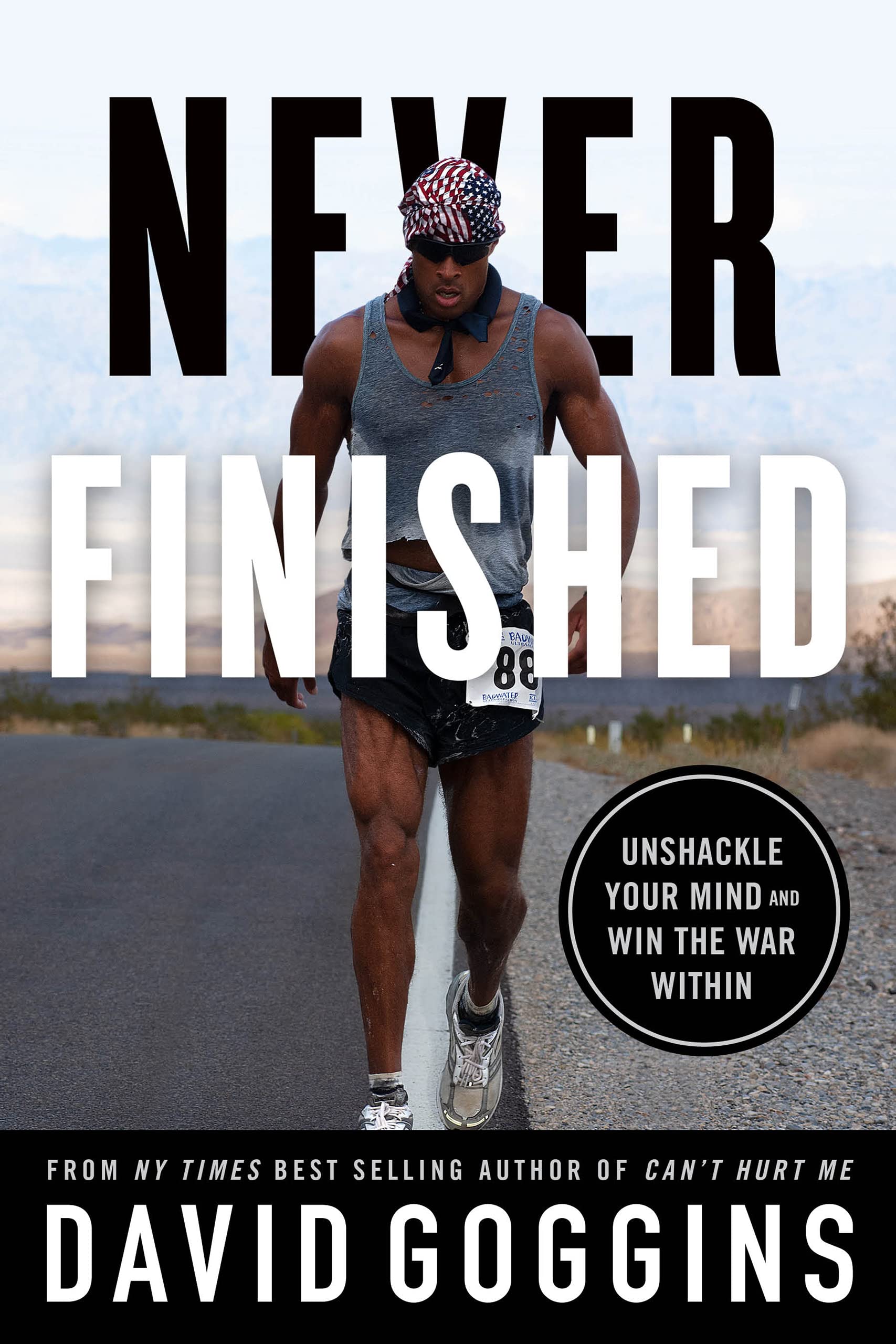





Never Finished by David Goggins


Original price was: රු2,700.00.රු2,500.00Current price is: රු2,500.00.
3 X Rs. 833.33 or 8% Cashback with


or 3 X රු833.33 with


or up to 4 X රු625.00 with


Order now and explore ‘Never Finished,’ where Goggins unveils his Mental Lab, the birthplace of his mindset, psychology, and strategies. Discover how he transformed perceived limits into a starting point, embracing an unending journey towards greatness.
Out of stock
Email when stock available
Never Finished by David Goggins is a raw, intense and deeply personal memoir about resilience, discipline, mental toughness and the uncomfortable truth that reaching one goal does not mean personal growth is complete.
After the extraordinary success of Can’t Hurt Me, David Goggins could easily have treated his transformation as a finished story.
He had already overcome an extremely difficult childhood.
He had transformed his physical condition.
He had served as a Navy SEAL.
He had completed brutal endurance events.
He had become known around the world for discipline and mental toughness.
But Never Finished by David Goggins begins from a different idea:
What if success itself becomes another comfort zone?
What if the person who once fought desperately to change eventually becomes satisfied with the person they have already become?
Goggins argues that growth does not end when:
You become successful.
You lose weight.
You build a career.
You reach a difficult goal.
You receive recognition.
You prove someone wrong.
Those achievements can matter enormously.
But they do not eliminate the need to continue understanding yourself.
In Never Finished by David Goggins, Goggins takes readers inside what he calls his Mental Lab—the internal process through which he studies his fears, weaknesses, habits, reactions and self-imposed limits.
The book combines:
Memoir.
Motivation.
Endurance stories.
Psychological reflection.
Discipline.
Self-examination.
Failure.
Recovery.
And the continuing pursuit of a stronger version of oneself.
It is especially suited to readers who feel stuck after reaching a certain level of progress and are asking:
What comes next?
Never Finished by David Goggins – Book Overview
Never Finished by David Goggins is not simply a repetition of Can’t Hurt Me.
Can’t Hurt Me introduced many readers to Goggins’ transformation from a deeply troubled and physically unhealthy young man into a Navy SEAL, endurance athlete and public figure.
Never Finished asks what happened afterward.
What happens when the person who became known for mental toughness still encounters:
Fear.
Insecurity.
Setbacks.
Injury.
Self-doubt.
Emotional difficulty.
Unexpected limitations.
The central idea is simple but demanding:
There is always another level of self-awareness and growth available.
The Meaning of Never Finished
The title Never Finished by David Goggins does not mean that nothing you achieve ever matters.
It means that personal development is not a project with one final completion date.
You may improve one area of life and later discover weakness somewhere else.
You may become disciplined professionally but neglect relationships.
You may become physically strong while still carrying unresolved emotional patterns.
You may become successful yet begin protecting your reputation instead of continuing to learn.
Growth continues.
Success Can Become Comfortable
Failure is an obvious obstacle.
Success can be more deceptive.
After a major achievement, people naturally want to enjoy it.
There is nothing wrong with that.
The danger appears when yesterday’s achievement becomes today’s excuse to stop developing.
You begin thinking:
I already proved myself.
I already worked hard.
I already succeeded.
Goggins challenges that mindset.
The Mental Lab
One of the central ideas in Never Finished by David Goggins is the Mental Lab.
The idea is to study yourself deliberately.
Not the version of yourself you present publicly.
The actual person underneath.
What scares you?
What makes you quit?
What triggers defensiveness?
Where do you make excuses?
What situations expose weakness?
Where are you still avoiding discomfort?
The goal is not endless self-criticism.
It is accurate self-awareness.
Self-Awareness Before Improvement
You cannot deliberately improve a weakness you refuse to acknowledge.
Suppose you repeatedly:
Procrastinate.
Avoid difficult conversations.
Give up when progress becomes slow.
Blame circumstances for every setback.
Knowing the pattern matters.
Otherwise, the same behavior keeps appearing under different circumstances.
Accountability
Accountability remains a major part of Goggins’ philosophy.
It means examining your own contribution to your current situation.
That does not mean every hardship is your fault.
People experience:
Trauma.
Illness.
Discrimination.
Financial problems.
Bad luck.
Unfair treatment.
Real external barriers exist.
But even when you did not create the problem, you may eventually need to decide how you will respond to it.
Responsibility Versus Blame
This distinction is important when reading Never Finished by David Goggins.
Blame asks:
“Whose fault is everything?”
Responsibility asks:
“What can I do from here?”
The second question usually creates more useful action.
Mental Toughness
Mental toughness is one of the ideas most strongly associated with David Goggins.
But toughness should not be confused with pretending nothing hurts.
Goggins repeatedly describes:
Pain.
Fear.
Self-doubt.
Physical limitation.
Difficulty.
Mental toughness is closer to continuing to make deliberate decisions even when discomfort is present.
You Can Be Afraid and Still Move
Many people wait for fear to disappear before acting.
But fear often disappears only after experience proves that you can survive the situation.
You may feel afraid before:
Public speaking.
A difficult exam.
Starting a business.
Changing careers.
Ending an unhealthy relationship.
Submitting your work.
Fear does not automatically mean stop.
The One More Step Mentality
Large challenges can become psychologically overwhelming.
Instead of thinking only about the entire distance, focus on the next actionable step.
One workout.
One page.
One application.
One difficult conversation.
One hour of focused work.
Progress becomes easier to manage when the next step is clear.
Building Evidence
Confidence is often misunderstood.
People think:
First I become confident.
Then I act.
But confidence frequently works in reverse.
You act.
You struggle.
You survive.
Then your brain receives evidence:
I can do difficult things.
That evidence creates more durable confidence.
Self-Belief
Never Finished by David Goggins is deeply concerned with self-belief.
But self-belief in Goggins’ framework is not simply repeating:
“I am amazing.”
It comes from proving something to yourself repeatedly.
Keeping commitments.
Completing difficult work.
Returning after setbacks.
Discipline
Motivation is unreliable.
Some mornings you feel ready.
Other mornings you do not.
If your entire routine depends on feeling inspired, consistency becomes difficult.
Discipline provides structure when emotion changes.
Motivation Versus Discipline
Motivation says:
“I feel like doing this.”
Discipline says:
“This matters, so I will work on it even when today’s mood is different.”
Both can help.
But discipline is generally more dependable.
Habits
Repeated behavior shapes identity.
If you repeatedly:
Study.
Train.
Save.
Read.
Work.
Keep promises.
your perception of yourself begins changing.
You stop merely saying:
“I want to become disciplined.”
You begin seeing evidence:
“I am someone who follows through.”
The Danger of Identity
However, identity can create another trap.
Suppose everyone knows you as:
The strong one.
The successful one.
The disciplined one.
Now admitting weakness may feel threatening.
Goggins’ approach emphasizes continually examining yourself instead of protecting an image.
Stop Protecting Your Reputation
Growth sometimes requires saying:
I was wrong.
I am weak here.
I need help.
I need to learn this again.
A person obsessed with appearing strong may actually become less adaptable.
Humility
Real confidence can coexist with humility.
You can know you are capable while still understanding:
There is more to learn.
Other people know things you do not.
You can fail.
You can improve.
Failure
Failure plays an important role in Never Finished by David Goggins.
Failure is not romantic.
It can:
Embarrass you.
Cost money.
Waste time.
Create disappointment.
But failure also provides information.
Study the Failure
After failing, ask:
What happened?
What could I control?
What did I underestimate?
What preparation was missing?
Did I quit because the goal was wrong or because discomfort appeared?
This turns failure into analysis.
Setbacks
A setback does not always mean the entire plan was wrong.
Sometimes it means:
The strategy needs changing.
The timeline was unrealistic.
You need more preparation.
You need recovery.
You need help.
Injury and Physical Limits
Goggins’ story contains intense physical challenges and endurance experiences.
This makes one caution especially important.
A reader should not interpret the book as medical advice or assume that ignoring injury is always evidence of toughness.
Pain can sometimes signal real damage.
Training intelligently matters.
Extreme Training Is Not Required
You do not need to become an ultramarathon runner or Navy SEAL to apply the useful ideas in Never Finished by David Goggins.
Your difficult challenge might be:
Studying consistently.
Building a business.
Learning English.
Managing money.
Completing a degree.
Improving health.
Writing a book.
Developing confidence.
The principle is personal challenge, not copying someone else’s exact physical routine.
Compete With Yourself
Comparing yourself endlessly with others can become destructive.
Someone will always appear:
Richer.
Stronger.
More successful.
More attractive.
More advanced.
A better comparison is:
Am I stronger than the version of myself who began?
Raise Your Own Standard
Improvement becomes more sustainable when the competition is internal.
Can you:
Focus longer?
React more calmly?
Prepare better?
Follow through more often?
Take better responsibility?
These measures can be more useful than social comparison.
Comfort Zones
Comfort zones are not always comfortable.
Sometimes they are simply familiar.
You may stay in:
A job you dislike.
A bad routine.
An unhealthy relationship.
A stagnant environment.
because you know how that situation works.
Change introduces uncertainty.
Discomfort
Goggins deliberately uses discomfort as a tool.
But productive discomfort and reckless harm are different.
Productive discomfort might include:
Having the conversation you avoid.
Studying instead of scrolling.
Exercising appropriately.
Starting before you feel ready.
Taking constructive criticism.
Reckless harm involves ignoring serious physical or psychological warning signs simply to prove toughness.
Voluntary Difficulty
Choosing manageable challenges can strengthen confidence.
For example:
Wake up earlier for a planned task.
Finish the workout you safely planned.
Read difficult material.
Practice public speaking.
Take responsibility for a mistake.
Small deliberate challenges build resilience.
Fear of Failure
Fear of failure stops many people before they begin.
If you never attempt the difficult goal, you can preserve the comforting thought:
“I probably could have done it.”
Trying removes that illusion.
Now you may discover your actual level.
That can be uncomfortable.
It is also useful.
Fear of Success
Success creates new responsibilities too.
A business grows.
Now you need systems.
You become a manager.
Now other people depend on you.
You gain recognition.
Now expectations rise.
Some people unconsciously sabotage progress because they fear those new responsibilities.
Growth Changes Problems
Reaching the next level does not remove problems.
It changes them.
No customers becomes too many customers.
No responsibility becomes leadership pressure.
No opportunities becomes difficult choices.
Growth requires becoming capable of handling different problems.
The Next Level
One of the strongest messages in Never Finished by David Goggins is that reaching a new level often exposes a new weakness.
That is normal.
You do not need to feel ashamed because today’s challenge was invisible yesterday.
Growth reveals new territory.
Resilience
Resilience means adapting after difficulty.
It does not mean never struggling.
A resilient person can experience:
Fear.
Grief.
Frustration.
Exhaustion.
Disappointment.
The difference is whether they eventually recover enough to continue.
Emotional Resilience
Physical endurance is only one form of resilience.
Emotional resilience may involve:
Accepting criticism.
Handling rejection.
Recovering after a breakup.
Starting again after failure.
Living through grief.
Asking for help.
Asking for Help
Extreme independence can become another weakness.
Some problems are improved through:
Professional guidance.
Medical treatment.
Therapy.
Mentorship.
Teamwork.
Support.
Strength does not require solving every problem alone.
Internal Dialogue
The way you speak to yourself influences behavior.
Constant thoughts such as:
“I cannot.”
“I always fail.”
“I am just lazy.”
can become self-reinforcing.
But false positivity is not the solution either.
Accurate Self-Talk
Useful self-talk sounds more like:
“This is difficult.”
“I am afraid.”
“I have failed before.”
“But I can still take the next step.”
That combines honesty with agency.
Excuses
Some excuses are completely real constraints.
You may have:
Limited money.
Limited time.
Family responsibilities.
Health issues.
The useful question is not whether constraints exist.
It is whether you are doing everything realistically possible within them.
The Difference Between Reason and Excuse
A reason explains the situation.
An excuse ends the conversation.
For example:
“I only have thirty minutes today.”
That may be real.
The next question is:
“What can I do with those thirty minutes?”
Time
People often underestimate what repeated small amounts of time can produce.
Thirty focused minutes each day becomes:
More than 180 hours in a year.
Small consistent effort accumulates.
Consistency
Occasional heroic effort can feel impressive.
Consistency is usually less exciting.
But:
One workout every three weeks
is less useful than
regular sustainable training.
The same applies to:
Studying.
Saving.
Reading.
Business.
Skill development.
The Boring Work
Many goals contain a boring middle.
At first, motivation is high.
Later, novelty disappears.
Results may still be far away.
This is where discipline becomes particularly important.
No Finish Line
The metaphorical finish line is one of the central challenges in Never Finished by David Goggins.
A race may have a finish line.
Life does not operate the same way.
You complete one stage.
Then another begins.
Achievement and Fulfillment
Achievement can be satisfying.
But it may not permanently solve:
Insecurity.
Identity problems.
Relationship issues.
Emotional wounds.
That is why external achievement and internal growth should not be treated as identical.
Never Being Satisfied?
The book’s title can be misunderstood.
“Never finished” does not need to mean:
Never enjoy success.
Never rest.
Never celebrate.
Never be grateful.
A healthier interpretation is:
Do not assume yesterday’s growth eliminates tomorrow’s need to learn.
Rest and Recovery
Recovery matters.
Athletes need recovery.
Brains need sleep.
People need relationships and time away from work.
Sustainable discipline should include recovery rather than treating exhaustion as a permanent achievement.
Burnout
If productivity becomes an identity, people may feel guilty whenever they rest.
That can become counterproductive.
Exhaustion reduces:
Focus.
Judgment.
Performance.
Mood.
Long-term consistency.
Pushing yourself intelligently is different from destroying yourself.
Physical Health
Exercise can support:
Mood.
Confidence.
Energy.
Health.
But training intensity should fit the individual.
Someone beginning exercise should not copy an elite endurance athlete’s volume.
Start appropriately.
Progress gradually.
Mental Health
Never Finished by David Goggins is motivational memoir and personal-development material.
It is not a substitute for:
Psychological treatment.
Trauma therapy.
Medical care.
Crisis support.
Someone experiencing severe depression, trauma-related symptoms, self-harm thoughts or another serious mental-health concern should seek appropriate professional support.
Trauma
Goggins has spoken openly about painful experiences from his earlier life.
His response to trauma is deeply personal.
Different people heal differently.
What helped one person should not automatically be treated as a universal clinical method.
Post-Traumatic Growth
Some people eventually develop strength or purpose after difficult experiences.
But suffering is not automatically good.
Trauma should not be romanticized.
The meaningful question is:
Given what happened, how can I build a healthier future?
Standards
Goggins often challenges people to raise their standards.
A standard is different from a wish.
Wish:
“I want to become fit.”
Standard:
“I train according to my plan consistently.”
Wish:
“I want better grades.”
Standard:
“I complete focused study every day.”
Evidence Over Intention
People judge themselves by intentions.
Results often depend on behavior.
You may sincerely intend to:
Study.
Save.
Exercise.
Write.
But consistent action is what creates evidence.
Taking Inventory
A practical exercise inspired by Never Finished by David Goggins is to take inventory of your life.
Ask:
What am I proud of?
Where am I avoiding responsibility?
What habit keeps repeating?
What weakness am I hiding?
What goal have I delayed?
What uncomfortable action would improve my situation?
Choose One Area
Do not attempt to transform everything in one week.
Choose:
Health.
Study.
Career.
Money.
Relationships.
Confidence.
Then identify one behavior worth improving.
Build a Challenge
Make the challenge specific.
Instead of:
“I will become disciplined.”
Try:
“I will study from 7:00 to 8:00 PM five days per week.”
Specific behavior is measurable.
Track Reality
Tracking removes vague self-perception.
You think:
“I study a lot.”
Track it.
You may discover:
Two hours.
Or twenty.
Data reveals reality.
Accountability Without Self-Hatred
Accountability works best when it leads to better action.
If every mistake produces:
Shame.
Self-hatred.
Hopelessness.
then accountability becomes destructive.
A useful response is:
“I did not meet the standard. Why? What changes now?”
Excellence
Excellence is not one spectacular performance.
It is repeatedly doing important things well.
This requires:
Attention.
Practice.
Feedback.
Consistency.
Potential
One of Goggins’ central obsessions is untapped potential.
Nobody knows their exact maximum potential in advance.
You discover capacity partly by testing yourself.
A person may think:
“I cannot run.”
“I cannot study.”
“I cannot speak confidently.”
until enough deliberate practice changes the evidence.
Your Current Limit May Be Temporary
A current limitation may reflect:
Skill level.
Fitness.
Experience.
Confidence.
Resources.
Some limits are real and permanent.
Others are temporary.
The challenge is discovering which is which without pretending reality does not exist.
Building Capacity
Capacity grows gradually.
A beginner does not need to perform like an expert.
Improvement may follow:
10 minutes.
Then 20.
One chapter.
Then two.
One client.
Then five.
Process Over Ego
If your ego requires constant proof that you are exceptional, learning becomes difficult.
Improvement requires being willing to be:
A beginner.
Wrong.
Slow.
Unskilled.
Temporary incompetence is often the price of future competence.
Criticism
Useful criticism can hurt.
The question is:
Is it true?
If yes, use it.
If no, discard it.
The emotional discomfort of hearing criticism does not determine its accuracy.
The Inner War
The subtitle of Never Finished by David Goggins is Unshackle Your Mind and Win the War Within.
The “war within” refers to internal conflict.
One part wants growth.
Another wants comfort.
One part wants to begin.
Another fears failure.
One wants discipline.
Another wants immediate relief.
Personal development often involves negotiating these competing impulses.
Immediate Comfort Versus Future Goals
Many decisions have two rewards.
One now.
One later.
Scrolling instead of studying gives immediate entertainment.
Studying gives future benefit.
Spending everything gives immediate pleasure.
Saving creates future security.
The ability to tolerate delayed reward is important for long-term goals.
Identity Through Action
Instead of asking:
“What kind of person do I want to be?”
also ask:
“What would that person repeatedly do?”
A disciplined person keeps commitments.
A healthy person protects sleep and exercise.
A reliable person follows through.
Identity becomes behavior.
Leadership
The ideas in Never Finished by David Goggins can also apply to leadership.
A leader who believes they are already finished learning becomes dangerous.
Strong leaders continue asking:
What am I missing?
Where did I fail the team?
What needs improvement?
Entrepreneurship
Entrepreneurs may especially relate to the book’s emphasis on resilience.
Business includes:
Rejection.
Uncertainty.
Slow growth.
Customer complaints.
Financial pressure.
Failed ideas.
The ability to recover and adapt matters enormously.
Students
Students can apply the book without extreme physical challenges.
Your battlefield may simply be:
Procrastination.
Phone distraction.
Fear of exams.
Inconsistent study.
Low confidence.
Building discipline in those areas can create major results.
Career Development
Professional growth also has no obvious final stage.
You learn one technology.
Another appears.
You earn a promotion.
Now you need leadership skills.
You become experienced.
Now you must avoid becoming complacent.
Is Never Finished a Sequel to Can’t Hurt Me?
It is best described as a follow-up to Can’t Hurt Me.
David Goggins’ own website describes Can’t Hurt Me as an introduction and Never Finished by David Goggins as taking readers further into his Mental Lab and philosophy.
Do You Need to Read Can’t Hurt Me First?
No.
You can read Never Finished by David Goggins independently.
However, reading Can’t Hurt Me first can provide more context about:
Goggins’ childhood.
Military career.
Earlier transformation.
Endurance background.
That can make some later reflections more meaningful.
Suggested Reading Order
For readers who want both books:
1. Can’t Hurt Me
2. Never Finished
This gives the clearest progression from Goggins’ earlier transformation to his later reflections.
Is Never Finished a Self-Help Book?
It blends:
Memoir.
Motivational writing.
Personal-development ideas.
The official description deliberately calls it more of a “wake-up call” than a conventional self-help manual.
The lessons come primarily through Goggins’ experiences rather than a traditional step-by-step textbook structure.
Is Never Finished Motivational?
Yes.
But it is a demanding style of motivation.
Goggins does not focus mainly on:
Comfort.
Affirmations.
Positive thinking.
His approach emphasizes:
Responsibility.
Work.
Discomfort.
Honesty.
Persistence.
Is It Good for Beginners?
Readers new to personal development can still understand it.
However, Goggins’ intense personality may feel extreme compared with gentler books on:
Habit building.
Mindfulness.
Self-compassion.
Different readers respond to different motivational styles.
Is It Only About Fitness?
No.
Physical endurance is important to Goggins’ life, but the broader themes involve:
Mental resilience.
Discipline.
Identity.
Fear.
Growth.
Accountability.
Personal standards.
David Goggins
David Goggins is known as:
A retired U.S. Navy SEAL.
Endurance athlete.
Ultramarathon competitor.
Motivational speaker.
Author.
His personal story has made him especially well known for messages about mental toughness and testing perceived limits.
Official Edition Details
For the edition matching your inventory:
Title: Never Finished: Unshackle Your Mind and Win the War Within
Author: David Goggins
Publisher: Lioncrest Publishing
Publication Year: 2022
ISBN-13: 9781544534077
Format: Paperback
Bibliographic sources list the edition at approximately 310–312 pages, depending on catalog conventions.
Your inventory ISBN matches this paperback edition.
Content Considerations
Never Finished by David Goggins contains intense and potentially sensitive material, including:
- Childhood trauma
- Abuse-related experiences
- Strong language in the standard edition
- Physical pain and injury
- Extreme endurance challenges
- Military experiences
- Mental and emotional distress
- Discussions of fear, insecurity and past hardship
David Goggins also offers a separate clean / curse-word-free edition, so verify the exact physical edition before advertising language content.
Important Themes
Never Finished by David Goggins explores:
- Mental toughness
- Resilience
- Discipline
- Self-awareness
- Accountability
- Fear
- Failure
- Self-belief
- Identity
- Physical endurance
- Personal standards
- Growth
- Recovery
- Confidence
- Consistency
- Potential
- Motivation
- Responsibility
- Comfort zones
- Continuous improvement
7 Powerful Lessons From Never Finished by David Goggins
- Growth does not end when you become successful – Previous achievements can become another comfort zone if they convince you that you no longer need to improve.
- Study yourself honestly – Goggins’ Mental Lab concept encourages examining fears, habits, weaknesses and reactions instead of maintaining a comfortable public image.
- Confidence is built through evidence – Keeping difficult commitments gives you proof that you can rely on yourself when conditions become uncomfortable.
- Failure should become information – Instead of allowing one setback to define your identity, analyze what happened and use it to improve preparation and strategy.
- Discomfort can be a training ground – Intentionally facing appropriate challenges can expand confidence and resilience, although discomfort should not be confused with ignoring serious injury or health risks.
- Your current limit may not be your permanent limit – Skill, fitness, confidence and capacity can develop when they are trained consistently.
- There is always another level of self-awareness – The meaning behind “never finished” is not endless punishment; it is remaining willing to learn, adapt and evolve throughout life.
Why Read Never Finished by David Goggins?
Never Finished by David Goggins is an excellent choice for readers interested in:
David Goggins.
Mental toughness.
Self-discipline.
Motivation.
Resilience.
Personal development.
Endurance.
Fitness mindset.
Accountability.
Self-belief.
Goal setting.
Productivity.
Breaking comfort zones.
High performance.
Overcoming setbacks.
Continuous improvement.
It may especially appeal to readers who have already achieved something meaningful but feel they have become:
Stagnant.
Complacent.
Unfocused.
Comfortable.
Or unsure what their next challenge should be.
Who Should Read This Book?
Never Finished by David Goggins may especially appeal to:
- David Goggins fans
- Readers of Can’t Hurt Me
- Athletes
- Students
- Entrepreneurs
- Professionals
- People working on discipline
- Readers interested in resilience
- People rebuilding after setbacks
- Readers interested in high-performance mindset
- Anyone who feels stuck below their potential
- Readers who prefer direct, intense motivational writing
Readers should remember that Goggins’ extreme endurance experiences are personal examples, not universal prescriptions for physical or psychological health.
Never Finished by David Goggins – There Is Always Another Level
Never Finished by David Goggins asks a difficult question:
What happens after you become the person you once desperately wanted to become?
Most motivational stories end at the transformation.
The struggling person becomes successful.
The unhealthy person becomes fit.
The unknown person earns recognition.
The story ends.
But real life does not.
You wake up the next morning.
There is another decision.
Another weakness.
Another challenge.
Another version of comfort waiting to trap you.
That is why the phrase Never Finished matters.
It does not mean nothing is ever enough.
It means growth remains available.
The person you are today may once have seemed impossible to become.
But the person you could become next may be equally difficult to imagine.
Getting there does not require copying David Goggins’ exact life.
You do not need to run ultramarathons.
You do not need military training.
You do not need to deliberately destroy your body.
Your next level might simply require:
Studying when you usually procrastinate.
Finishing the project you keep postponing.
Applying for the job that scares you.
Saving money consistently.
Taking responsibility for a repeated mistake.
Having a difficult conversation.
Improving your health safely.
Asking for help.
Keeping one promise to yourself.
Then another.
The deepest value of Never Finished by David Goggins is not the idea that everyone should become David Goggins.
It is the challenge to stop assuming your current identity is final.
You can still learn.
Still adapt.
Still strengthen weaknesses.
Still reconsider old beliefs.
Still become more capable.
That process has no perfect endpoint.
And that is precisely the point.
Learn more about Never Finished by David Goggins on David Goggins’ official website.
Explore more personal development and motivational books at Bargain Books.
| Author | David Goggins |
|---|---|
| Type | Paperback Printed Book |
| ISBN/ISSN | 1544536828, 978-1544536828 |
| Language | English |
| Pages | 312 |
Be the first to review “Never Finished by David Goggins”
Related products
-24%

Biography
Original price was: රු2,500.00.රු1,900.00Current price is: රු1,900.00.
3 X Rs. 633.33 or 8% Cashback with
or 3 X රු633.33 with
or up to 4 X රු475.00 with
-23%

Biography
Original price was: රු3,100.00.රු2,400.00Current price is: රු2,400.00.
3 X Rs. 800.00 or 8% Cashback with
or 3 X රු800.00 with
or up to 4 X රු600.00 with

Analysis & Strategy
රු2,250.00
3 X Rs. 750.00 or 8% Cashback with
or 3 X රු750.00 with
or up to 4 X රු562.50 with

Out of stock
රු1,800.00
3 X Rs. 600.00 or 8% Cashback with
or 3 X රු600.00 with
or up to 4 X රු450.00 with

රු1,800.00
3 X Rs. 600.00 or 8% Cashback with
or 3 X රු600.00 with
or up to 4 X රු450.00 with
-17%

Biography
Original price was: රු3,000.00.රු2,500.00Current price is: රු2,500.00.
3 X Rs. 833.33 or 8% Cashback with
or 3 X රු833.33 with
or up to 4 X රු625.00 with

Biography
රු1,950.00
3 X Rs. 650.00 or 8% Cashback with
or 3 X රු650.00 with
or up to 4 X රු487.50 with
-15%

Out of stock
Biography
Original price was: රු3,300.00.රු2,800.00Current price is: රු2,800.00.
3 X Rs. 933.33 or 8% Cashback with
or 3 X රු933.33 with
or up to 4 X රු700.00 with
Reviews
There are no reviews yet.