
No products in the cart.
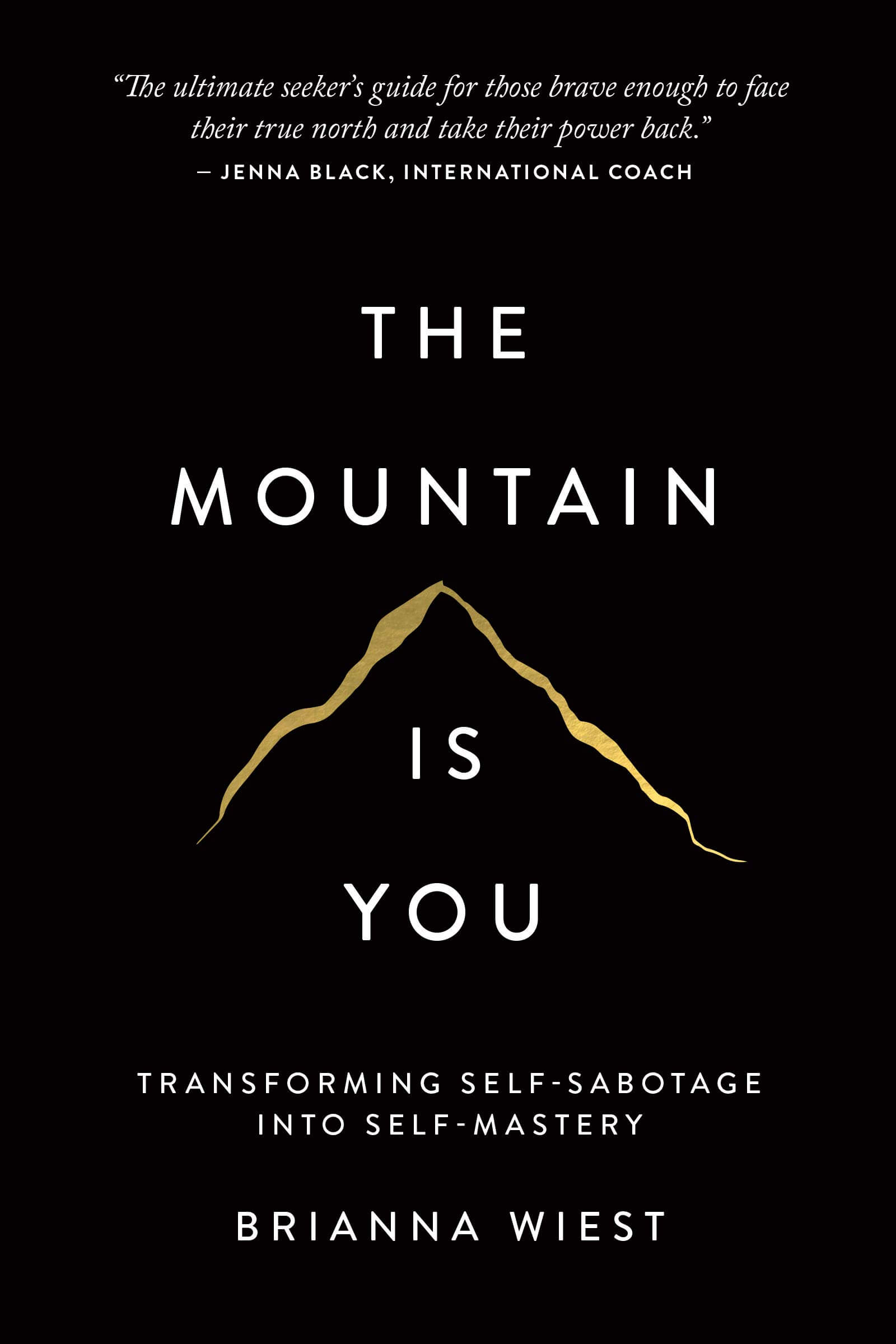
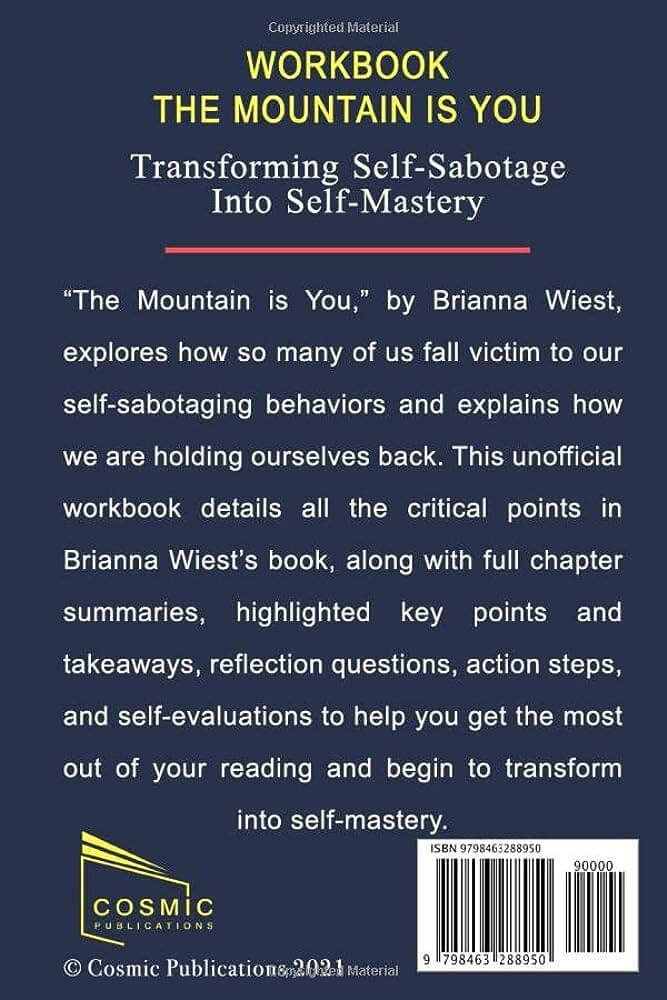
The Mountain Is You by Brianna Wiest

රු1,400.00
3 X Rs. 466.67 or 8% Cashback with


or 3 X රු466.67 with


or up to 4 X රු350.00 with


The Mountain Is You by Brianna Wiest is a bestselling personal-development book about transforming self-sabotage into self-mastery. Using the mountain as a metaphor for life’s internal challenges, Wiest explores emotional intelligence, fear, healing, self-awareness, resilience, boundaries, self-trust and the habits that can keep people stuck. Ideal for readers interested in personal growth, mindset, emotional healing and understanding how to stop standing in their own way.
63 in stock
The Mountain Is You by Brianna Wiest is a powerful personal-development book about self-sabotage, emotional intelligence, healing, resilience and learning how to become the person capable of creating the life you truly want.
Why do people sometimes destroy the very things they say they want?
You want a better career.
But procrastinate.
You want a healthy relationship.
But push people away.
You want confidence.
But constantly criticize yourself.
You want financial stability.
But repeat unhealthy spending habits.
You want change.
But keep returning to familiar patterns.
Brianna Wiest argues that these behaviors are rarely completely random.
Self-sabotage often has a deeper purpose.
A behavior that appears destructive may once have helped you:
Feel safe.
Avoid rejection.
Escape discomfort.
Protect yourself emotionally.
Maintain familiarity.
The problem begins when an old coping mechanism continues long after it is useful.
The Mountain Is You uses the image of a mountain as a metaphor for the internal challenges standing between who you are now and the person you want to become.
Sometimes the mountain appears to be:
A difficult relationship.
A career problem.
A lack of confidence.
A repeated failure.
But the deeper obstacle may involve:
Fear.
Unprocessed emotion.
Self-doubt.
Avoidance.
Attachment.
Old beliefs.
The book’s central message is that transformation requires more than forcing yourself to work harder.
You need to understand why you resist change.
Then you can begin replacing self-defeating patterns with:
Awareness.
Emotional regulation.
Better habits.
Resilience.
Self-trust.
And intentional action.
The Mountain Is You – Book Overview
The Mountain Is You focuses on one of the most frustrating human experiences:
Knowing what you should do while repeatedly doing something else.
You know the relationship is unhealthy.
Yet you return.
You know procrastination is damaging your goals.
Yet you delay.
You know comparison makes you unhappy.
Yet you keep comparing yourself.
Why?
Because behavior is often driven by more than conscious intention.
One part of you may want progress.
Another part may fear what progress requires.
Transformation begins when you understand that conflict.
What Is Self-Sabotage?
Self-sabotage is behavior that interferes with your own goals, well-being or long-term interests.
Examples may include:
Procrastination.
Avoiding important conversations.
Staying in unhealthy relationships.
Constant perfectionism.
Giving up when progress begins.
Negative self-talk.
Impulsive behavior.
Refusing opportunities.
Overthinking every decision.
The behavior may look irrational from the outside.
But internally, it may be connected to a need.
Self-Sabotage Is Often Protection
One of the most useful ideas in The Mountain Is You is looking beneath a behavior instead of only attacking the behavior itself.
Suppose you procrastinate.
The obvious conclusion is:
“I am lazy.”
But perhaps starting the task creates fear.
What if you fail?
What if you succeed and expectations become higher?
What if people judge you?
Procrastination may temporarily protect you from those emotions.
Understanding that does not mean allowing procrastination forever.
It means you now know what actually needs attention.
Ask What the Behavior Is Doing for You
When a harmful pattern repeats, ask:
What emotion am I avoiding?
What does this behavior temporarily give me?
Safety?
Comfort?
Control?
Predictability?
Relief?
The answer may reveal why simple willpower has not worked.
The Mountain as a Metaphor
The title itself is a metaphor.
The mountain represents the challenge that appears too large to overcome.
But Wiest turns the metaphor inward.
Sometimes the biggest mountain is not outside us.
It is:
Our habits.
Our fears.
Our beliefs.
Our emotional patterns.
The goal is not to eliminate every external difficulty.
It is to become strong enough internally to meet difficulty differently.
You Cannot Change What You Refuse to See
Awareness comes before transformation.
If you continually explain every problem as:
Bad luck.
Other people.
The economy.
Your boss.
Your partner.
you may miss patterns you actually have the power to change.
This does not mean every difficulty is your fault.
Real external problems exist.
The useful question is:
What part of this situation can I influence?
Responsibility Is Not Self-Blame
This distinction matters.
Responsibility means:
“What can I do next?”
Self-blame means:
“Everything bad is because I am defective.”
Those are very different ideas.
Healthy responsibility creates action.
Chronic self-blame creates shame.
Emotional Intelligence
Emotional intelligence is one of the major themes in The Mountain Is You.
Emotions contain information.
Anger.
Fear.
Jealousy.
Sadness.
Anxiety.
They may reveal:
Needs.
Boundaries.
Insecurity.
Uncertainty.
Loss.
The goal is not to obey every emotion automatically.
It is to understand what the emotion may be communicating.
Feelings Are Not Always Instructions
You may feel afraid.
That does not automatically mean:
Stop.
You may feel uncomfortable.
That does not automatically mean:
Something is wrong.
Sometimes discomfort appears because you are:
Learning.
Changing.
Setting boundaries.
Trying something unfamiliar.
Growth often includes discomfort.
Emotional Avoidance
People sometimes try to escape emotions through:
Overworking.
Scrolling.
Food.
Shopping.
Relationships.
Entertainment.
Constant busyness.
The temporary relief can make the behavior repeat.
But the original emotion remains.
Learn to Sit With Discomfort
Emotional maturity involves increasing your ability to tolerate uncomfortable feelings without immediately reacting.
For example:
You feel rejected.
Instead of sending an angry message immediately, pause.
Feel the discomfort.
Let the emotional intensity decrease.
Then decide what response reflects your values.
That small delay can change many outcomes.
Triggers
A trigger is something that creates a strong emotional response.
Sometimes the present event is relatively small.
But it connects to an older:
Fear.
Memory.
Insecurity.
Pattern.
This can make the emotional reaction feel much larger than the current event alone would suggest.
Study Your Reactions
Instead of thinking:
“Why am I like this?”
try:
“Why did this affect me so strongly?”
That question is more curious and useful.
Patterns
The Mountain Is You repeatedly encourages readers to recognize patterns.
One mistake is an event.
Repeated similar problems may indicate a pattern.
For example:
Every relationship ends in the same type of conflict.
Every new project is abandoned near completion.
Every opportunity produces intense self-doubt.
Patterns contain information.
Familiar Does Not Mean Healthy
Human beings often return to what feels familiar.
Even when familiar is painful.
Why?
Because predictability can feel safer than uncertainty.
A healthier future may initially feel uncomfortable simply because it is unfamiliar.
Comfort Zones
Comfort zones are not always comfortable.
Sometimes they are simply known.
You know how to survive there.
Change introduces uncertainty.
That is why leaving a bad situation can sometimes feel harder than staying.
Fear of the Unknown
People may remain in:
Unsatisfying jobs.
Unhealthy relationships.
Unhelpful habits.
because the alternative is unknown.
The known pain feels predictable.
The unknown future does not.
Growth requires accepting some uncertainty.
Change
People often say:
“I want my life to change.”
But meaningful change usually requires changing something about:
Habits.
Choices.
Boundaries.
Identity.
Environment.
You cannot always create a new life while maintaining every old pattern.
Identity
Identity is important because behavior often follows self-image.
If you continually think:
“I am bad with money.”
“I am not disciplined.”
“I am not confident.”
these statements can become expectations.
Try separating:
Current behavior
from
Permanent identity.
You may currently struggle with discipline.
That does not mean discipline can never improve.
Stop Making Temporary States Permanent
A difficult period does not necessarily define your entire future.
You may be:
Confused now.
Struggling now.
Healing now.
Learning now.
The word now matters.
Your Future Self
The Mountain Is You encourages readers to think about the person they are becoming.
Instead of only asking:
“What do I want?”
ask:
“Who would I need to become to sustain what I want?”
Want a successful business?
You may need to become:
More disciplined.
Better at communication.
More financially aware.
Want a healthy relationship?
You may need:
Boundaries.
Emotional regulation.
Honest communication.
Want better health?
You may need:
Consistency.
Planning.
Patience.
Becoming Before Having
People often want the result without the transformation required to maintain it.
But long-term change often involves becoming someone with different habits.
That process may be slower than simply setting a goal.
Self-Trust
One of the most important forms of confidence is self-trust.
Can you rely on yourself?
When you say:
“I will do this,”
do you attempt to follow through?
Repeatedly breaking promises to yourself can reduce self-trust.
Rebuild Self-Trust Slowly
Do not begin with enormous promises.
Instead:
Make a small commitment.
Keep it.
Then another.
For example:
Read ten pages.
Walk twenty minutes.
Save a fixed amount.
Complete one important task.
Small evidence creates confidence.
Confidence Comes From Evidence
People often wait to feel confident before acting.
But confidence frequently arrives after action.
You do something difficult.
You survive.
You learn.
Your brain receives evidence:
“I can handle more than I thought.”
Action Before Motivation
Motivation changes constantly.
If you only act when you feel inspired, progress becomes inconsistent.
Systems can help.
Decide:
When.
Where.
What.
Then reduce the number of decisions required.
Habits
Habits turn repeated actions into patterns.
A better life is not built only through dramatic decisions.
It is also built through small routines.
Wake up.
Exercise.
Read.
Plan.
Work.
Rest.
Repeat.
Small Choices Compound
One choice rarely changes everything.
But repeated choices can.
One unhealthy meal?
Small effect.
Years of unhealthy eating?
Different story.
One day of procrastination?
Small.
Repeated avoidance?
Major consequences.
This works in the positive direction too.
Perfectionism
Perfectionism is often disguised as ambition.
“I just want to do it properly.”
But perfectionism can become avoidance.
If the work must be flawless, starting becomes frightening.
Finishing becomes difficult.
Publishing becomes terrifying.
Done Creates Feedback
An imperfect finished project can teach you something.
A perfect project that exists only in your imagination cannot.
Progress requires allowing early versions to be imperfect.
Fear of Failure
Failure can threaten identity.
If you believe:
“My success proves my worth,”
then failure feels like:
“I am worthless.”
That makes risk difficult.
A healthier interpretation is:
“This attempt failed.”
That is different from:
“I am a failure.”
Failure Is Data
After something fails, ask:
What worked?
What did not?
What assumption was wrong?
What needs improvement?
This turns failure into information.
Fear of Success
People can also fear success.
Success may create:
More responsibility.
More visibility.
Higher expectations.
Lifestyle changes.
Loss of familiar relationships.
These possibilities can create unconscious resistance.
What Would Success Require?
Suppose your business doubles.
Now you may need:
Employees.
Systems.
Financial management.
Leadership.
Success changes problems.
Recognizing those fears can help you prepare rather than sabotage progress.
Overthinking
Overthinking often feels productive.
You consider:
Every possible outcome.
Every possible mistake.
Every possible future.
But thinking can eventually become avoidance.
At some point, information is sufficient.
A decision is required.
Clarity Often Follows Action
People frequently wait for perfect clarity before beginning.
But some clarity can only come from experience.
You try.
Observe.
Adjust.
That is how understanding grows.
Intuition
The book discusses listening to internal signals, but intuition should not be treated as magical certainty.
Sometimes your instinct reflects:
Experience.
Pattern recognition.
Emotion.
Fear.
Past trauma.
Wisdom requires distinguishing among them.
Anxiety and Intuition Are Not Always the Same
Fear may say:
“Something bad will happen.”
That does not automatically make the prediction true.
Anxiety can create strong physical certainty around imagined outcomes.
Pause before treating every feeling as evidence.
Boundaries
Personal transformation often requires boundaries.
Boundaries communicate:
What you accept.
What you do not accept.
What you can give.
What you cannot give.
Without boundaries, resentment can grow.
Saying No
A healthy no can protect:
Time.
Energy.
Money.
Relationships.
Values.
Saying no is not always selfish.
Sometimes it is necessary for keeping meaningful commitments.
Relationships
The Mountain Is You applies many of its ideas to relationships.
People can repeat unhealthy dynamics because those dynamics feel familiar.
They may chase emotionally unavailable people.
Fear healthy intimacy.
Avoid vulnerability.
Stay where they are not respected.
Understanding patterns can help create different choices.
Attachment
Relationships often reveal our deepest insecurities.
Fear of:
Abandonment.
Rejection.
Being controlled.
Being unseen.
Being unworthy.
These fears can shape behavior without conscious awareness.
You Cannot Heal Through Another Person Alone
A partner can provide:
Love.
Support.
Safety.
But another person cannot perform all of your inner work for you.
Healthy relationships involve two people taking responsibility for themselves while also caring for each other.
Do Not Confuse Intensity With Love
Some relationships feel intensely emotional because they repeatedly move between:
Closeness.
Conflict.
Distance.
Reconciliation.
Intensity can feel powerful.
But intensity is not automatically evidence of healthy love.
Healing
Healing is one of the central ideas in The Mountain Is You.
Healing does not mean:
Forgetting everything.
Never feeling sadness.
Never being triggered.
It can mean developing different responses.
An old memory appears.
But it no longer controls your entire day.
A difficult emotion appears.
But you know how to regulate it.
Healing Is Not Linear
Progress can look like:
Better week.
Difficult day.
Another good week.
Old emotion returns.
This does not necessarily mean you have lost all progress.
Human change is rarely perfectly linear.
Grief
Some forms of personal growth require grieving.
Grieving:
Who you thought you would become.
A relationship that ended.
A version of life you expected.
An identity you have outgrown.
Moving forward sometimes requires accepting that something is truly over.
Letting Go
Letting go does not mean pretending something never mattered.
It means recognizing that something can matter deeply and still no longer belong in your future.
Resilience
Resilience is the ability to recover and adapt.
It does not mean becoming emotionally invulnerable.
Strong people still:
Cry.
Feel fear.
Become discouraged.
Need help.
Resilience means finding a way to continue.
Difficult Experiences Can Teach Without Being Good
A painful experience does not need to be called a blessing.
Something harmful can remain harmful.
The useful question is:
“Given that this happened, what do I need now?”
That keeps growth from becoming toxic positivity.
Toxic Positivity
Personal-development books can sometimes be misread as:
Think positively and everything will work out.
The Mountain Is You is more useful when interpreted through self-awareness rather than denial.
Real life includes:
Loss.
Trauma.
Economic difficulty.
Illness.
Unfairness.
Positive thinking alone cannot solve everything.
Acceptance
Acceptance means recognizing reality as it currently exists.
It does not mean approving of it.
For example:
“This relationship has ended.”
Acceptance allows movement.
Denial keeps energy tied to fighting a reality that has already occurred.
Radical Honesty With Yourself
Sometimes the truth is uncomfortable.
You may realize:
You do not actually want the career you worked toward.
A relationship has ended emotionally.
A habit is harming you.
You have been avoiding an important decision.
Honesty creates the possibility of change.
The Life You Want Requires Decisions
Dreaming is useful.
But transformation requires choices.
What will you stop doing?
What will you begin?
What boundary will you set?
What conversation will you have?
What task will you finally complete?
Emotional Regulation
Emotional regulation means learning how to experience emotion without allowing every feeling to dictate immediate behavior.
Strategies may include:
Pausing.
Breathing.
Journaling.
Walking.
Talking with someone trusted.
Professional support.
Time.
The appropriate method depends on the person and situation.
The Body and Emotion
Strong emotions also appear physically.
Tight chest.
Fast heartbeat.
Muscle tension.
Shallow breathing.
Learning to notice physical signs can help identify emotional activation earlier.
Pause Before Reacting
One of the simplest practices is creating a gap.
Trigger.
Pause.
Response.
Without the pause:
Trigger.
Reaction.
That small gap can improve:
Relationships.
Work.
Decision-making.
Inner Peace
Inner peace does not mean a life without problems.
It may mean becoming less controlled by every problem.
You can experience uncertainty while still knowing:
“I will deal with the next step.”
That is a form of self-trust.
Purpose
People often search for one dramatic life purpose.
But purpose may be built through:
Work.
Relationships.
Contribution.
Creativity.
Learning.
Community.
Your purpose can evolve.
Stop Waiting for One Perfect Calling
You do not need to know exactly what you will do for the next forty years.
You need enough direction to take the next meaningful step.
Your Life Is Built in the Present
Future goals matter.
But everything used to reach them happens now.
Today’s:
Habits.
Choices.
Boundaries.
Conversations.
Actions.
become tomorrow’s life.
The Past Is Information, Not a Prison
Your past influences you.
But it does not need to permanently define you.
You can examine:
What happened.
What you learned.
What patterns began.
Then decide what should continue.
Self-Awareness
Self-awareness means noticing yourself with enough honesty to recognize patterns.
What triggers you?
What do you avoid?
Where do you become defensive?
When do you procrastinate?
Which relationships repeatedly create the same problem?
These questions can be uncomfortable.
They can also be transformative.
Journaling
Writing is one practical way to increase self-awareness.
You can ask:
What am I feeling?
What happened before this feeling?
What am I afraid will happen?
What do I actually need?
What action would I respect myself for taking?
Writing slows thinking enough to observe it.
Becoming Your Future Self
The Mountain Is You encourages readers to make decisions based not only on immediate comfort but on the person they want to become.
Ask:
What would my healthier self do?
What would my more disciplined self do?
What would my financially responsible self do?
Then take one action consistent with that identity.
Delayed Gratification
Many meaningful goals require giving up a smaller immediate reward for a larger future benefit.
Study now.
Benefit later.
Save now.
Have security later.
Train now.
Become stronger later.
This does not mean never enjoying the present.
It means balancing present comfort with future priorities.
Self-Respect
Self-respect is built partly through behavior.
If you repeatedly tolerate situations that violate your values, self-respect can suffer.
If you protect your:
Boundaries.
Health.
Goals.
Time.
you create evidence that your needs matter.
Self-Love Is Not Only a Feeling
Self-love is often presented as:
Baths.
Treats.
Comfort.
Those can be enjoyable.
But sometimes self-love is:
Going to bed.
Leaving an unhealthy relationship.
Saving money.
Finishing the difficult task.
Saying no.
Doing what your future self needs.
Discipline and Self-Care
Discipline and self-care are not opposites.
Sometimes the caring action is rest.
Sometimes it is effort.
Wisdom involves knowing which one you need.
Burnout
Constant productivity can become destructive.
If your body and mind are exhausted, pushing harder may not be the solution.
Sustainable growth includes recovery.
Rest
Rest is not necessarily wasted time.
Sleep.
Quiet.
Leisure.
Time with people.
These can restore the energy required for meaningful work.
Comparison
Comparison often creates unnecessary suffering.
You see someone else’s:
Career.
Relationship.
Body.
Money.
Success.
But you do not see the entire reality of their life.
Comparison uses incomplete information.
Compare Yourself With Your Own Direction
A more useful question is:
Am I moving closer to the person I want to become?
Progress can be personal.
Social Media
Modern social media makes comparison constant.
You see:
Highlights.
Achievements.
Beautiful moments.
Not always:
Fear.
Debt.
Arguments.
Failures.
Editing.
Remember that you are comparing your full life with someone else’s selected presentation.
Success
Success needs a personal definition.
If you do not define it yourself, society may define it for you.
Money.
Status.
Job title.
House.
Followers.
Maybe some of those genuinely matter to you.
Maybe others do not.
Ask before chasing.
What Is Enough?
This is a powerful question.
Enough money?
Enough recognition?
Enough achievement?
Without a definition of enough, growth can become endless dissatisfaction.
The Mountain Changes
You may climb one mountain.
Then encounter another.
That does not mean you failed.
Growth creates new challenges.
The goal is not reaching a life where nothing is difficult.
It is becoming more capable of meeting difficulty.
Self-Mastery
This brings us to the subtitle:
Transforming Self-Sabotage Into Self-Mastery.
Self-mastery does not mean perfect control over everything.
It means becoming increasingly able to:
Understand yourself.
Regulate your responses.
Choose intentional behavior.
Keep commitments.
Adapt.
Grow.
You Are Both the Obstacle and the Way Forward
The metaphor at the heart of The Mountain Is You is powerful because it changes the location of control.
If every obstacle is external, you may feel powerless.
If some obstacles exist in your own habits and beliefs, that can be uncomfortable.
But it also means some change is possible.
The Mountain Is Not Proof You Cannot Continue
A mountain looks large because it is.
Meaningful transformation is difficult.
But mountains are climbed:
Step.
By step.
Not all at once.
Practical Ways to Apply The Mountain Is You
You do not need to transform everything immediately.
Try beginning with one repeated pattern.
Identify it.
Ask what emotion or need sits beneath it.
Choose one different response.
Repeat.
For example:
If You Procrastinate
Break the task into a smaller first step.
If You Overthink
Set a time for making the decision.
If You Struggle With Boundaries
Practice one clear no.
If You Constantly Compare Yourself
Reduce exposure to unnecessary comparison triggers.
If You Break Promises to Yourself
Make smaller promises and keep them consistently.
Mental Health Considerations
The Mountain Is You is a personal-development book, not a clinical psychology textbook or substitute for professional mental-health treatment.
Readers experiencing:
Severe depression.
Trauma-related symptoms.
Panic.
Self-harm thoughts.
Suicidal thoughts.
Serious anxiety.
may need qualified professional support in addition to any self-help reading.
Self-help can complement appropriate care, but it should not replace it when professional treatment is needed.
Is The Mountain Is You a Self-Help Book?
Yes.
It fits within:
Self-help.
Personal development.
Emotional growth.
Mindset.
Healing.
The book primarily focuses on understanding internal patterns and creating personal change.
Is The Mountain Is You About Trauma?
Trauma and difficult past experiences appear within its discussion of emotional patterns and self-sabotage.
However, it is not a clinical trauma-treatment manual.
Readers looking for specialized trauma therapy should seek appropriate professional resources.
Is The Mountain Is You About Relationships?
Relationships are part of the discussion, especially where:
Attachment.
Boundaries.
Fear.
Self-worth.
Patterns.
influence interpersonal behavior.
But the book is broader than relationship advice.
Is The Mountain Is You Good for Beginners?
Yes.
Brianna Wiest writes in an accessible, reflective style.
Readers do not need formal psychology training.
The concepts are designed for general personal-development readers.
Is It a Motivational Book?
Yes, but it also focuses heavily on introspection.
The message is not simply:
“Work harder.”
Readers are encouraged to understand why they behave as they do before attempting sustainable change.
Do You Need to Read Brianna Wiest’s Other Books First?
No.
The Mountain Is You stands on its own.
You do not need to read another Brianna Wiest book beforehand.
Readers who enjoy it may later explore:
101 Essays That Will Change the Way You Think
This Is How You Heal
The Pivot Year
and her other personal-development work.
Brianna Wiest
Brianna Wiest is an author known for reflective personal-development writing focused on:
Emotional growth.
Self-awareness.
Healing.
Change.
Purpose.
Relationships.
Her work has reached a large international audience and has been translated into many languages.
Important Themes
The Mountain Is You explores:
- Self-sabotage
- Self-mastery
- Emotional intelligence
- Healing
- Resilience
- Self-awareness
- Fear
- Change
- Identity
- Habits
- Boundaries
- Relationships
- Self-trust
- Confidence
- Personal growth
- Emotional regulation
- Letting go
- Purpose
- Self-respect
- Future self
7 Powerful Lessons From The Mountain Is You
There are many ideas in The Mountain Is You, but seven stand out:
- Self-sabotage often serves an underlying emotional need – Instead of only fighting the behavior, understand what safety, comfort or protection it may be providing.
- Awareness must come before lasting change – Repeated patterns become easier to interrupt once you can recognize the triggers, beliefs and emotions behind them.
- Discomfort does not always mean you are moving in the wrong direction – Growth, boundaries and unfamiliar healthy choices can initially feel uncomfortable simply because they are new.
- Build self-trust through small promises you actually keep – Confidence becomes stronger when you repeatedly give yourself evidence that you can rely on your own actions.
- Emotions should be understood rather than automatically obeyed – Feelings contain information, but emotional intensity does not always mean immediate reaction is wise.
- Your future life requires becoming a different version of yourself – Achieving new results often requires new habits, boundaries, skills and ways of responding.
- Self-mastery is not perfection – It is the ongoing ability to understand yourself, take responsibility for what you can control and choose increasingly intentional actions.
Why Read The Mountain Is You?
The Mountain Is You is an excellent choice for readers interested in:
- Brianna Wiest
- Self-help
- Personal development
- Self-sabotage
- Emotional intelligence
- Healing
- Self-mastery
- Mindset
- Confidence
- Self-awareness
- Emotional growth
- Resilience
- Boundaries
- Relationships
- Overthinking
- Procrastination
- Self-trust
- Letting go
- Personal transformation
- Becoming your best self
It is particularly relevant for people who know what they want to change but repeatedly find themselves returning to the same habits.
Who Should Read This Book?
The Mountain Is You may especially appeal to:
- Personal-development readers
- Young adults
- Professionals
- Entrepreneurs
- Students
- People struggling with procrastination
- Readers interested in emotional intelligence
- People trying to develop healthier boundaries
- Readers working through life transitions
- People rebuilding confidence
- Readers interested in understanding repeated patterns
- People trying to become more disciplined
- Anyone who feels they are standing in their own way
The Mountain Is You – Turn Self-Sabotage Into Self-Mastery
The Mountain Is You begins with a difficult possibility:
What if some of the barriers in your life are not simply things happening to you?
What if some are patterns you keep repeating?
That idea can initially feel uncomfortable.
But it can also be empowering.
Because if a pattern was learned, it may be possible to change it.
You begin by looking honestly.
Why do I avoid this?
Why do I repeat this relationship?
Why do I procrastinate?
Why do I become defensive?
Why am I afraid of the thing I claim to want?
Then you look beneath the obvious answer.
Perhaps you are protecting yourself from:
Failure.
Rejection.
Uncertainty.
Vulnerability.
Change.
Once you recognize the deeper fear, the problem becomes clearer.
You no longer need to fight only the visible behavior.
You can begin working with the need underneath it.
Then comes practice.
New habits.
Different boundaries.
Better emotional regulation.
Small acts of self-trust.
Choices made for your future self rather than temporary comfort.
This does not happen instantly.
A mountain is not climbed in one step.
But every intentional step changes your position.
Eventually, the person facing the mountain is no longer exactly the same person who began.
Stronger.
More aware.
More capable.
That is the central transformation behind The Mountain Is You.
The goal is not to become someone who never struggles.
It is to become someone who understands themselves well enough to stop allowing every fear, old wound or automatic pattern to make important decisions for them.
For readers interested in self-sabotage, emotional intelligence, healing, resilience and personal transformation, The Mountain Is You offers a reflective guide to understanding the inner obstacles that can keep us stuck—and gradually turning those obstacles into opportunities for deeper self-knowledge and self-mastery.
Learn more about The Mountain Is You by Brianna Wiest on Brianna Wiest’s official website.
Explore more personal development and self-help books at Bargain Books.

| Author | Brianna Wiest |
|---|---|
| Type | Paperback Printed Book |
| ISBN/ISSN | 1949759229, 978-1949759228 |
| Language | English |
| Pages | 400 |
Be the first to review “The Mountain Is You by Brianna Wiest”
Related products
-14%

Self-Help & Psychology
Original price was: රු2,900.00.රු2,500.00Current price is: රු2,500.00.
3 X Rs. 833.33 or 8% Cashback with
or 3 X රු833.33 with
or up to 4 X රු625.00 with
-34%

Self-Help & Psychology
Original price was: රු2,350.00.රු1,550.00Current price is: රු1,550.00.
3 X Rs. 516.67 or 8% Cashback with
or 3 X රු516.67 with
or up to 4 X රු387.50 with
Self-Help & Psychology
රු2,200.00
3 X Rs. 733.33 or 8% Cashback with
or 3 X රු733.33 with
or up to 4 X රු550.00 with
-24%
Non-Fiction & Knowledge
Original price was: රු2,300.00.රු1,750.00Current price is: රු1,750.00.
3 X Rs. 583.33 or 8% Cashback with
or 3 X රු583.33 with
or up to 4 X රු437.50 with
-26%

Non-Fiction & Knowledge
Original price was: රු2,000.00.රු1,490.00Current price is: රු1,490.00.
3 X Rs. 496.67 or 8% Cashback with
or 3 X රු496.67 with
or up to 4 X රු372.50 with
Non-Fiction & Knowledge
රු1,550.00
3 X Rs. 516.67 or 8% Cashback with
or 3 X රු516.67 with
or up to 4 X රු387.50 with
-17%

Non-Fiction & Knowledge
Original price was: රු2,900.00.රු2,400.00Current price is: රු2,400.00.
3 X Rs. 800.00 or 8% Cashback with
or 3 X රු800.00 with
or up to 4 X රු600.00 with

Out of stock
Autobiography
රු2,750.00
3 X Rs. 916.67 or 8% Cashback with
or 3 X රු916.67 with
or up to 4 X රු687.50 with
Reviews
There are no reviews yet.