
No products in the cart.
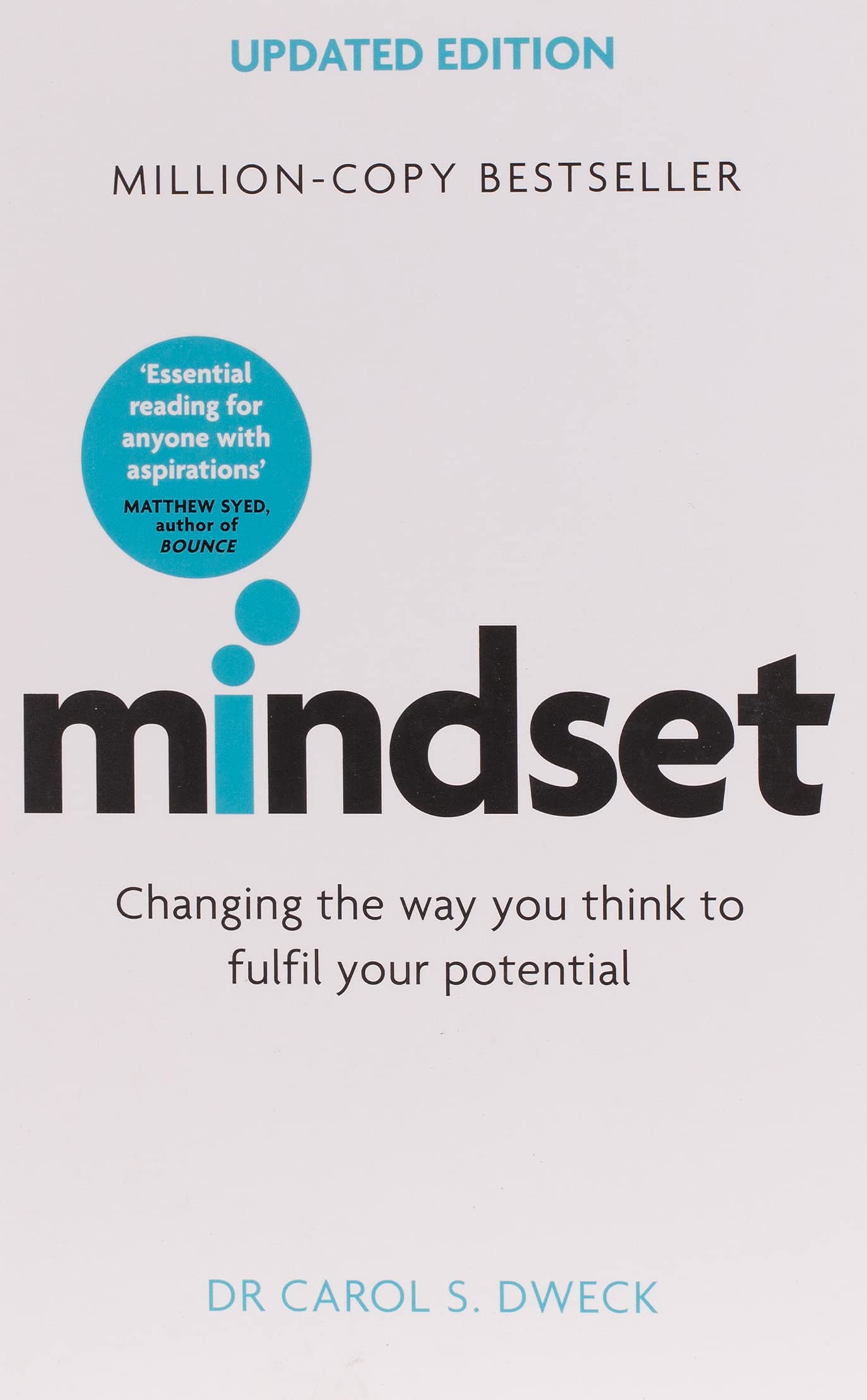
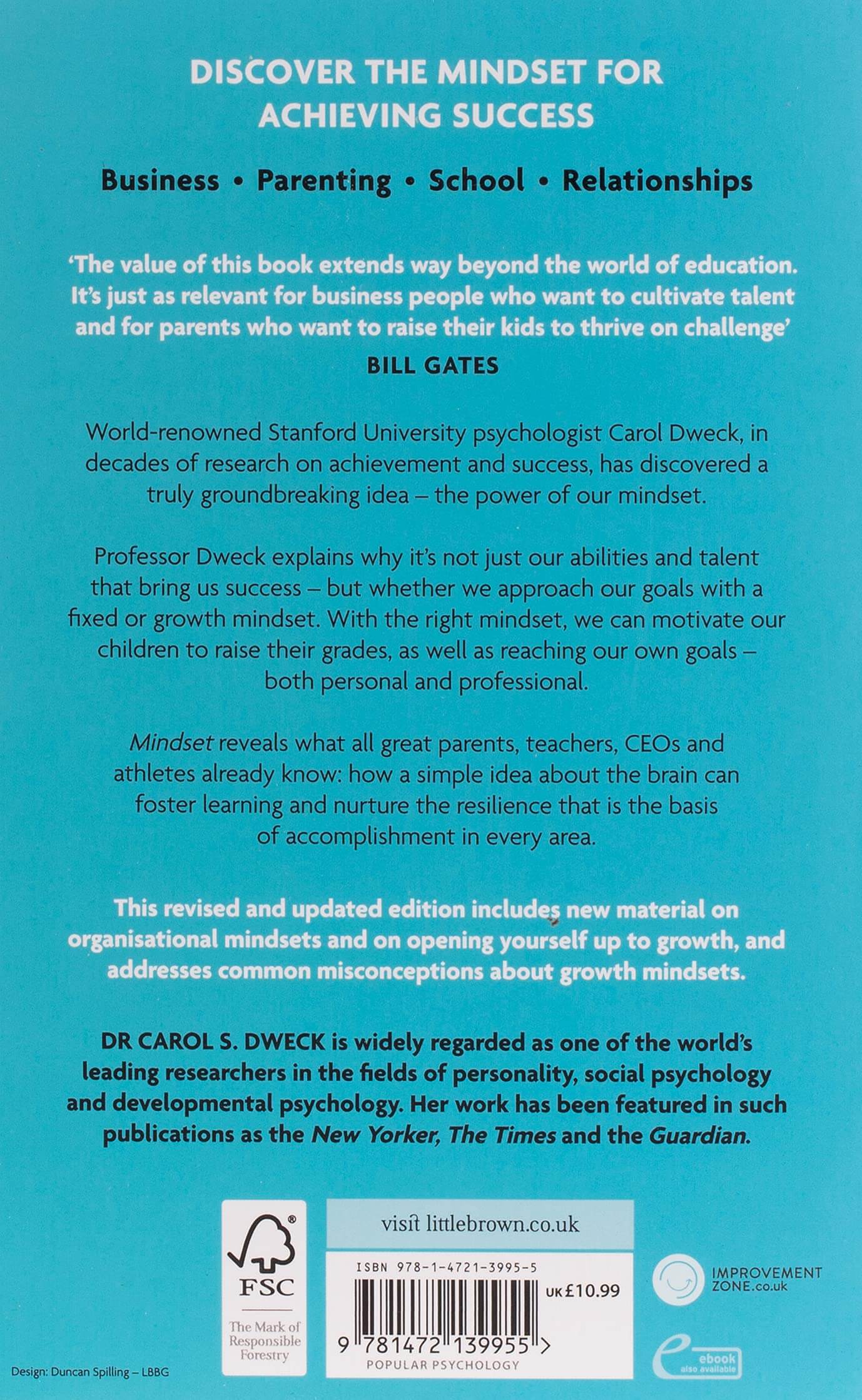

Mindset by Carol S. Dweck


රු1,750.00
3 X Rs. 583.33 or 8% Cashback with


or 3 X රු583.33 with


or up to 4 X රු437.50 with


Unlock your potential with “Mindset” by Carol S. Dweck. This transformative paperback explores the power of your beliefs and offers practical strategies to foster a growth mindset. Order now to embrace challenges, overcome obstacles, and thrive in every aspect of life.
52 in stock
Mindset by Carol Dweck is an influential psychology and personal-development book exploring how our beliefs about intelligence, talent and ability can shape the way we approach learning, failure, achievement, relationships and personal growth.
Why do some people give up quickly when something becomes difficult while others keep trying?
Why can one bad grade make a student think:
“I am not smart enough”
while another student thinks:
“I need to find a better way to learn this”?
Why do some talented people avoid challenges that might expose their weaknesses?
And why can someone with less natural ability sometimes become more successful through practice, feedback and persistence?
Psychologist Carol S. Dweck explores these questions through the idea of two broad ways of thinking:
The fixed mindset
and
The growth mindset.
A fixed mindset assumes that important abilities are largely fixed qualities.
You are smart or you are not.
Talented or untalented.
Good at mathematics or bad at mathematics.
A growth mindset takes a different approach.
Abilities can often be developed through:
Learning.
Practice.
Effective strategies.
Feedback.
Persistence.
Support.
This does not mean everyone can become anything they want simply by thinking positively.
Nor does it mean talent, circumstances or individual differences do not matter.
Instead, Mindset by Carol Dweck emphasizes that believing improvement is possible can influence whether people seek challenges, learn from mistakes and continue developing their skills.
The book applies the mindset concept to:
Education.
Parenting.
Sports.
Business.
Leadership.
Relationships.
Personal development.
Achievement.
For students, teachers, parents, professionals, entrepreneurs and anyone interested in understanding how beliefs can influence behavior, Mindset offers an accessible framework for thinking differently about success and failure.
Mindset by Carol Dweck – Book Overview
Mindset by Carol Dweck is built around a simple but powerful question:
What do you believe about your abilities?
Imagine two students receive a difficult assignment.
Student A thinks:
“If I struggle with this, it proves I am not intelligent.”
Student B thinks:
“If I struggle with this, I have something new to learn.”
Both students experience difficulty.
The difference lies partly in what the difficulty means to them.
For Student A, difficulty threatens identity.
For Student B, difficulty becomes part of learning.
That distinction influences:
Effort.
Persistence.
Response to criticism.
Willingness to ask for help.
Choice of challenges.
What Is a Fixed Mindset?
A fixed mindset is the belief that qualities such as intelligence or talent are relatively fixed and that success primarily proves whether you possess those qualities.
Someone with a fixed mindset may think:
“I am naturally good at this.”
Or:
“I am simply bad at this.”
This can create pressure to constantly prove ability.
The Need to Look Smart
If intelligence feels fixed, mistakes become threatening.
A mistake may seem to mean:
“I am not intelligent.”
So a person may avoid difficult tasks.
Not because they are lazy.
But because failure threatens how they see themselves.
Choosing Safety Over Growth
Imagine being offered two tasks.
Task A:
Easy.
You know you will perform well.
Task B:
Difficult.
You might fail.
A fixed mindset can make Task A feel safer.
Success protects the identity:
“I am good at this.”
But repeatedly choosing only easy tasks can restrict development.
What Is a Growth Mindset?
A growth mindset is the belief that abilities can often be developed.
This does not imply unlimited potential in every field.
It means your current ability is not necessarily your final ability.
You may improve through:
Practice.
Instruction.
Better strategies.
Feedback.
Experience.
Yet
One small word captures much of the growth mindset:
Yet.
“I can’t do this.”
becomes:
“I can’t do this yet.”
“I don’t understand.”
becomes:
“I don’t understand yet.”
The difficulty still exists.
But the statement no longer assumes the situation is permanent.
Growth Mindset Is Not Positive Thinking
This distinction is important.
A growth mindset is not simply saying:
“I can do anything!”
Real growth requires:
Work.
Strategy.
Feedback.
Resources.
Support.
Opportunity.
Sometimes progress is slow.
Sometimes a particular strategy fails.
Growth mindset means remaining open to development rather than assuming current limitations are permanent.
Effort
Effort is one of the most discussed ideas in Mindset by Carol Dweck.
In a fixed mindset, effort can feel embarrassing.
“If I were really talented, this would be easy.”
But difficult achievements often require effort even from highly capable people.
Effort Is Part of Learning
A musician practices.
An athlete trains.
A programmer debugs.
A writer rewrites.
A student reviews.
Expertise usually requires repeated engagement with difficulty.
Effort is not proof that you lack ability.
Often, it is part of developing ability.
But Effort Alone Is Not Enough
Modern discussions of growth mindset sometimes oversimplify the concept into:
“Just try harder.”
That is not enough.
If one strategy repeatedly fails, doing the same thing harder may not help.
Effective growth requires:
Effort.
Better strategies.
Feedback.
Help.
Reflection.
Change the Strategy
Imagine a student studying for an exam by rereading notes repeatedly.
The result is poor.
Simply rereading for twice as long may not solve the problem.
They may need:
Practice questions.
Spaced repetition.
Active recall.
A teacher’s explanation.
Group study.
Growth means improving the method, not only increasing effort.
Failure
Failure is central to Mindset by Carol Dweck.
People often treat failure as a verdict.
“I failed, therefore I am a failure.”
But an event and an identity are different things.
A failed attempt provides information.
What Can Failure Teach?
After failure, ask:
What went wrong?
What did I misunderstand?
What skill is missing?
What should I change?
Who can help?
What will I do differently next time?
These questions turn failure into feedback.
Failure Can Still Hurt
Growth mindset does not mean pretending failure feels wonderful.
Rejection hurts.
A poor grade hurts.
Losing hurts.
A failed business hurts.
The point is not to eliminate disappointment.
It is to prevent disappointment from becoming:
“This proves I can never improve.”
Challenges
Challenge reveals weaknesses.
That can be uncomfortable.
But challenge is also where development often occurs.
If everything you do is already easy, there may be less opportunity to build new capability.
Leave the Comfort Zone Carefully
Growth does not require constantly choosing impossible tasks.
The best challenge is often slightly beyond current ability.
Difficult enough to require effort.
But achievable enough that learning can occur.
Feedback
Feedback is another major issue.
Fixed mindset thinking can interpret criticism as:
“You are not good enough.”
Growth mindset thinking asks:
“What information here could make me better?”
Separate Feedback From Identity
Someone may criticize your:
Presentation.
Writing.
Code.
Design.
Leadership.
That does not necessarily mean they are rejecting you as a human being.
Useful feedback addresses the work.
Not All Feedback Is Good Feedback
Growth mindset does not mean accepting every criticism.
Some feedback may be:
Incorrect.
Uninformed.
Malicious.
Irrelevant.
The skill is learning how to evaluate feedback rather than becoming defensive automatically.
Praise
Dweck’s work became especially influential in discussions about how adults praise children.
Imagine a child performs well.
You could say:
“You are so smart.”
Or:
“You worked hard and found an effective strategy.”
These messages may encourage different interpretations.
Praising Intelligence
If children repeatedly hear:
“You are brilliant.”
they may become concerned with protecting that label.
A difficult task creates risk.
What if they fail?
Will they still be considered brilliant?
Praising Process
Process-focused praise can recognize:
Strategy.
Persistence.
Improvement.
Attention.
Problem-solving.
For example:
“I noticed you tried several different approaches until one worked.”
This connects success with behaviors the learner can continue developing.
Praise Should Be Honest
Process praise should not become empty praise.
Telling someone:
“Great effort!”
after ineffective work without helping them improve can be unhelpful.
Useful encouragement combines recognition with guidance.
Students
Mindset by Carol Dweck became especially influential in education.
Students frequently form identities around subjects.
“I am a maths person.”
“I am not good at languages.”
“I can’t write.”
These identities can influence what they attempt.
Mathematics
A student struggles with algebra.
Fixed interpretation:
“I don’t have a maths brain.”
Growth interpretation:
“I haven’t understood this concept yet.”
The second interpretation creates more room for:
Practice.
Teaching.
Questions.
Different strategies.
Asking for Help
A fixed mindset may make asking for help feel embarrassing.
“If I ask, people will know I don’t understand.”
Growth mindset reframes it.
Asking for help is one method of learning.
Grades
Grades provide information about performance under particular conditions.
They should not become permanent labels of human potential.
A poor result should ideally lead to:
Diagnosis.
Practice.
Adjustment.
Rather than:
“I am stupid.”
Teachers
Teachers can help create environments where mistakes are treated as part of learning.
If students are humiliated every time they answer incorrectly, they may stop participating.
Psychological safety encourages experimentation.
The Classroom
A growth-oriented classroom values:
Questions.
Improvement.
Practice.
Revision.
Constructive feedback.
Effort combined with strategy.
The goal is not lowering standards.
It is helping more students develop toward them.
Parenting
Parents also shape children’s beliefs about ability.
Children notice how adults respond to:
Mistakes.
Grades.
Competition.
Failure.
Do Not Rescue Every Struggle
Parents naturally want to protect children.
But removing every difficulty may unintentionally teach:
“Difficulty is dangerous.”
Appropriate struggle can help children develop:
Problem-solving.
Persistence.
Confidence.
Ask About Learning
Instead of only asking:
“What grade did you get?”
parents can ask:
“What did you learn?”
“What was difficult?”
“What strategy worked?”
“What will you try next?”
This shifts attention from performance alone toward development.
Sports
Sports provide clear examples of mindset.
Some athletes are praised for natural talent early.
But talent alone may not be enough at higher competitive levels.
Training
Successful athletes often develop through:
Repetition.
Coaching.
Review.
Conditioning.
Technical improvement.
Mental preparation.
Natural ability can provide an advantage.
Development determines what happens to that advantage.
Losing
A loss can produce two reactions.
“This proves I am not good enough.”
Or:
“What can this match teach me?”
The second reaction does not remove disappointment.
It makes the disappointment useful.
Coaches
A strong coach does more than praise talent.
They identify:
Weaknesses.
Skills to develop.
Specific improvements.
Training priorities.
Growth requires accurate feedback.
Business
Mindset by Carol Dweck also applies the framework to organizations and leadership.
Companies can develop cultures that value:
Learning.
Experimentation.
Collaboration.
Development.
Or cultures focused heavily on proving who is smartest.
The Genius Culture
Some organizations become obsessed with hiring “geniuses.”
The danger is creating environments where employees feel they must constantly demonstrate brilliance.
That can discourage:
Questions.
Experimentation.
Admitting mistakes.
Collaboration.
Learning Organizations
A growth-oriented organization asks:
What did we learn?
What needs improvement?
What assumptions were wrong?
How do we build better capabilities?
This is especially important in rapidly changing industries.
Innovation
Innovation requires failure.
A company that punishes every failed experiment may eventually stop experimenting.
But accepting failure does not mean accepting carelessness.
The important distinction is between:
Intelligent experiments that fail.
And preventable mistakes caused by negligence.
Leadership
Leaders with a fixed mindset may become overly concerned with proving they are the smartest person in the organization.
That can create problems.
They may:
Ignore criticism.
Hire people who never challenge them.
Take disagreement personally.
Hide mistakes.
Growth-Oriented Leaders
A growth-oriented leader can say:
“I was wrong.”
“I don’t know.”
“Explain your reasoning.”
“What can we learn?”
These statements can strengthen rather than weaken leadership.
Hiring
Hiring should not focus only on what a person can do today.
Potential also matters.
Can they learn?
Adapt?
Accept feedback?
Develop new skills?
In a changing organization, learning ability can be extremely valuable.
Employee Development
Employees improve when organizations provide:
Feedback.
Training.
Opportunity.
Coaching.
Challenging work.
A company cannot simply tell people to have a growth mindset while providing no resources for growth.
Entrepreneurship
Entrepreneurs may find Mindset by Carol Dweck especially relevant because business involves repeated uncertainty.
Products fail.
Marketing fails.
Customers reject offers.
Employees leave.
Competitors appear.
A founder who interprets each setback as proof of personal inadequacy may struggle to continue.
Business Experiments
Instead of:
“The campaign failed.”
becoming:
“I am terrible at business,”
ask:
Why did it fail?
Wrong audience?
Wrong message?
Wrong price?
Wrong product?
Poor timing?
That converts disappointment into data.
Startups
Startups depend on learning.
The original business model may change.
The customer may change.
The product may change.
Flexibility is therefore valuable.
Learning Faster
In entrepreneurship, the goal is not avoiding every mistake.
It is often learning faster than competitors.
Test.
Measure.
Learn.
Improve.
Career Development
Many adults also develop fixed identities around careers.
“I am not leadership material.”
“I am not technical.”
“I am bad at public speaking.”
These statements may describe current skill levels.
They do not necessarily predict final capability.
Skills Can Be Trained
Public speaking improves through:
Practice.
Feedback.
Repetition.
Preparation.
Technical skills improve through study and application.
Leadership improves through experience, reflection and coaching.
Career Change
A growth mindset can also help people approach career transitions.
Starting again feels uncomfortable because beginners make mistakes.
But becoming a beginner is often necessary to learn something new.
Relationships
Dweck also explores mindset in relationships.
People can hold fixed beliefs about:
Compatibility.
Personality.
Conflict.
The Perfect Partner Myth
A fixed relationship mindset may assume:
“If this relationship were right, everything would be easy.”
But real relationships involve:
Communication.
Adjustment.
Compromise.
Learning.
Growth.
Difficulty does not automatically mean a relationship is wrong.
But Growth Does Not Mean Tolerating Harm
This is important.
A growth mindset should never be used to justify staying in:
Abusive.
Controlling.
Violent.
Or seriously harmful relationships.
Some situations require boundaries or leaving.
Personal growth does not require tolerating mistreatment.
Conflict
During conflict, fixed thinking may say:
“That is simply who you are.”
Growth-oriented thinking can ask:
“What behavior needs to change?”
Focusing on behavior creates more possibility than permanently labeling the person.
Personality
People can change in important ways.
But personality is not infinitely flexible.
Biology.
Environment.
Experience.
Opportunity.
Mental health.
Culture.
all influence development.
A responsible reading of Mindset by Carol Dweck avoids claiming that belief alone can transform everything.
Talent
The book does not require pretending talent does not exist.
Some people begin with advantages.
Natural aptitude.
Resources.
Experience.
Physical characteristics.
But talent is a starting condition, not necessarily the entire story.
Talent Without Development
A naturally talented person who never practices may eventually be surpassed by someone who:
Practices.
Studies.
Seeks coaching.
Learns from mistakes.
The Danger of Being Called Gifted
Being labelled gifted can sometimes create pressure.
The person may begin protecting the identity:
“I must always look talented.”
Then difficult tasks become threatening.
Beginner’s Mind
One useful growth-oriented habit is becoming comfortable with not knowing.
Experts who stop learning can become outdated.
Beginners who remain curious can progress quickly.
Curiosity
Instead of trying to prove:
“I know.”
ask:
“What am I missing?”
Curiosity keeps learning active.
Comparing Yourself With Others
Comparison can trigger fixed mindset thinking.
“They are better than me.”
But another person’s achievement can also become evidence:
“This skill can be developed.”
Learn From Better People
Being surrounded by highly capable people can feel threatening.
Or it can become a learning opportunity.
Ask:
What are they doing differently?
What can I learn?
Envy
Envy can contain information.
If someone’s success bothers you, ask:
What exactly do I want?
Their recognition?
Skill?
Freedom?
Income?
Understanding the desire can guide your own goals.
Perfectionism
Perfectionism often overlaps with fixed mindset thinking.
If mistakes mean:
“I am not good enough,”
then everything must be perfect.
That creates:
Procrastination.
Anxiety.
Avoidance.
Progress Over Perfection
Growth focuses on improvement.
Version one does not need to be version ten.
Write.
Review.
Improve.
Launch.
Learn.
Creativity
Creative people must tolerate imperfect first attempts.
A writer’s first draft may be poor.
A designer’s first concept may fail.
A musician may play badly while learning.
Creation requires accepting temporary imperfection.
The Power of Practice
Practice becomes useful when it is purposeful.
Repeating something mindlessly is less effective than identifying weaknesses and working on them.
Deliberate Improvement
Ask:
What specific skill needs work?
What feedback can I get?
How can I measure improvement?
What exercise targets the weakness?
This makes effort more productive.
Persistence
Persistence matters.
But persistence should remain intelligent.
If one approach repeatedly fails, change the approach.
Growth mindset means commitment to learning, not stubborn attachment to one method.
Resilience
Resilience is the ability to recover after difficulty.
It does not mean never feeling upset.
A resilient person can experience:
Disappointment.
Fear.
Frustration.
Then gradually re-engage.
Identity
One of the deepest lessons in Mindset by Carol Dweck is separating identity from performance.
You performed badly.
That is an event.
It does not automatically mean:
You are bad.
You made a mistake.
That is different from:
You are a mistake.
Language Matters
Notice statements such as:
“I am terrible at this.”
Try changing them to:
“I am still learning this.”
Small language changes can influence how a problem is approached.
Catch the Fixed Mindset Voice
Everyone can experience fixed mindset reactions.
Even people who understand growth mindset.
A difficult moment appears.
The inner voice says:
Do not try.
You might fail.
You will look stupid.
The goal is to notice that voice.
Everyone Has Both
People are not permanently divided into:
Fixed mindset people.
Growth mindset people.
The same person can show growth thinking in one area and fixed thinking in another.
For example:
Growth mindset at work.
Fixed mindset in relationships.
Or the reverse.
Mindset Can Change With Context
Stress can also influence mindset.
When confident, someone may welcome challenges.
When exhausted or threatened, they may become defensive.
Mindset is therefore better understood as a tendency or pattern than a permanent personality label.
False Growth Mindset
Dweck has also discussed the danger of what is sometimes called false growth mindset.
This occurs when people claim to have a growth mindset without applying the deeper principles.
For example:
“Just work harder.”
But no:
Better strategy.
Feedback.
Teaching.
Resources.
Support.
That is not enough.
Don’t Praise Effort That Produces Nothing
Effort deserves recognition when it is part of learning.
But if effort is ineffective, help improve the strategy.
Ask:
What can we change?
Who can help?
What information are we missing?
Research Nuance
Growth mindset has become extremely influential in psychology and education.
However, modern research suggests its effects are more nuanced than some popular summaries imply.
A growth mindset is not a magic intervention that automatically produces large improvements for everyone.
Context matters.
Teaching quality matters.
Resources matter.
Social environment matters.
Opportunity matters.
The most useful interpretation is practical rather than magical:
Believing improvement is possible can encourage behaviors that support learning, but belief alone does not guarantee success.
Ability and Opportunity
Someone can have an excellent mindset and still face:
Financial barriers.
Disability.
Discrimination.
Lack of educational access.
Poor working conditions.
Limited resources.
A mindset framework should not be used to blame people for circumstances outside their control.
Growth Requires Environment Too
Organizations and schools cannot tell individuals:
“Have a growth mindset”
while refusing to provide:
Training.
Feedback.
Tools.
Time.
Opportunity.
Growth is supported by both individual behavior and environment.
Success
Mindset by Carol Dweck encourages a healthier definition of success.
Success is not only:
Proving you are talented.
It can also mean:
Learning.
Improving.
Taking on difficult challenges.
Recovering from mistakes.
Goals
Some people focus heavily on performance goals:
Get the highest grade.
Beat everyone.
Appear talented.
Growth-oriented goals can include:
Understand the concept.
Improve the skill.
Master the technique.
Both performance and learning goals can matter, but learning goals can make challenges less threatening.
Learning Goals
Instead of:
“I need to look smart in this meeting,”
try:
“I want to understand this problem and contribute something useful.”
The focus changes from reputation to development.
Long-Term Growth
Improvement compounds.
A person who gets slightly better repeatedly can change dramatically over several years.
Small improvement today may not look impressive.
But long time horizons matter.
Reading Mindset as an Adult
Adults may find themselves recognizing old labels.
“Not creative.”
“Not athletic.”
“Bad with numbers.”
Ask:
Who gave me that label?
Was it based on one experience?
Is it still true?
Could this skill improve?
Sometimes an old identity survives long after the evidence should have changed.
How to Apply Mindset by Carol Dweck
A practical way to apply Mindset by Carol Dweck is to notice fixed-mindset triggers.
These may include:
Failure.
Criticism.
Being compared with someone stronger.
Trying something unfamiliar.
Making mistakes publicly.
Then observe your response.
Step 1 – Notice the Trigger
What happened?
A poor result?
Negative feedback?
Someone else succeeded?
Step 2 – Notice the Story
What did you tell yourself?
“I am not good enough.”
“I will never understand.”
“I should quit.”
Step 3 – Challenge Permanence
Ask:
Is this difficulty permanent?
Or is it describing my current level?
Step 4 – Choose a Learning Action
What next?
Practice.
Ask.
Research.
Get feedback.
Change strategy.
Try again.
Step 5 – Review
Afterward, ask:
What improved?
What still needs work?
Growth is iterative.
Mindset at Work
Professionals can apply these ideas when:
Learning new software.
Taking leadership responsibilities.
Receiving performance reviews.
Changing roles.
Presenting publicly.
A mistake can become either a reason to hide or an opportunity to improve.
Mindset in Technology
Technology changes rapidly.
A developer who believes:
“I already know enough”
can fall behind.
One who expects continuous learning is better prepared for:
New frameworks.
AI tools.
Security practices.
Languages.
Systems.
Mindset in Business Ownership
Business owners constantly encounter things they do not know.
Finance.
Marketing.
People management.
Technology.
Operations.
No founder begins as an expert in everything.
The ability to learn may matter more than pretending to know everything.
Mindset for Students
Students can practice growth thinking by changing questions.
Instead of:
“Am I smart?”
ask:
“What am I learning?”
Instead of:
“What if I fail?”
ask:
“What will I do if my first method does not work?”
Mindset for Parents
Parents can help by praising:
Specific effort.
Good strategies.
Curiosity.
Persistence.
Improvement.
And by helping children understand that mistakes are part of learning.
Mindset for Teachers
Teachers can create classrooms where students are encouraged to:
Ask questions.
Revise work.
Learn from errors.
Attempt challenging tasks.
Standards remain important.
The difference is believing more students can progress toward them.
Mindset for Leaders
Leaders can encourage learning by creating environments where employees can say:
“I don’t know.”
“I made a mistake.”
“I need help.”
without unnecessary humiliation.
This can improve both learning and organizational safety.
Carol S. Dweck
Carol S. Dweck is a psychologist known internationally for her research on motivation, personality and beliefs about ability.
Her work on fixed and growth mindsets became widely influential in:
Education.
Business.
Sports.
Parenting.
Personal development.
Is Mindset a Psychology Book?
Yes.
Mindset by Carol Dweck combines psychological research with accessible examples from:
Education.
Sport.
Business.
Relationships.
Parenting.
It is written for general readers rather than only academic psychologists.
Is Mindset a Self-Help Book?
It can also be categorized as personal development because the book encourages readers to recognize and change patterns of thinking.
However, its central framework comes from psychological research rather than purely motivational storytelling.
Is Mindset Good for Students?
Yes.
Students may find the ideas particularly useful for understanding:
Difficulty.
Grades.
Learning.
Practice.
Feedback.
Fear of failure.
The book encourages focusing on development rather than using one result to define ability permanently.
Is Mindset Good for Entrepreneurs?
Yes.
Entrepreneurs frequently face:
Rejection.
Experiments that fail.
Changing markets.
Customer criticism.
A learning-oriented response can help founders adapt more effectively.
Is Mindset Good for Parents?
Yes.
The sections on praise, learning and children’s beliefs can help parents think carefully about the messages they communicate around:
Intelligence.
Talent.
Effort.
Failure.
Is Growth Mindset Scientifically Proven?
Growth mindset is a real and widely studied psychological concept, but its practical effects should not be exaggerated.
Research does not support the simplistic claim that merely telling someone to “think positively” guarantees success.
Results depend on context, implementation and many other factors.
The strongest practical takeaway is that beliefs about whether improvement is possible can affect learning behaviors such as:
Seeking challenges.
Using strategies.
Persisting.
Responding to feedback.
Fixed Mindset Is Not a Disease
Everyone experiences fixed-mindset thinking.
It is not useful to shame someone by saying:
“You have a fixed mindset.”
That itself can turn mindset into another label.
The more useful question is:
Where am I becoming defensive or avoiding growth?
Important Themes
Mindset by Carol Dweck explores:
- Fixed mindset
- Growth mindset
- Learning
- Intelligence
- Talent
- Effort
- Practice
- Failure
- Success
- Feedback
- Education
- Parenting
- Sports
- Business
- Leadership
- Relationships
- Motivation
- Resilience
- Personal development
- Lifelong learning
7 Powerful Lessons From Mindset by Carol Dweck
There are many ideas in Mindset by Carol Dweck, but seven stand out:
- Your current ability is not necessarily your final ability – Skills can often develop through practice, good strategies, instruction, experience and feedback.
- Difficulty does not automatically mean you lack talent – Struggle is often a normal part of learning something that exceeds your present skill level.
- Failure should provide information, not become an identity – A failed attempt can reveal what needs to change without defining your permanent potential.
- Effort works best when combined with effective strategies – Growth mindset is not simply trying harder; it also requires changing methods, getting help and learning from feedback.
- Praise the process, not only labels such as intelligence or talent – Recognizing persistence, strategy and improvement can encourage continued learning without making people afraid to protect a “smart” identity.
- Feedback becomes more useful when it is separated from self-worth – Criticism of a piece of work can become information for improvement rather than proof that the person is incapable.
- A growth mindset is a practice, not a permanent personality type – Everyone experiences both fixed and growth-oriented reactions, and the goal is to recognize moments when fear of failure prevents learning.
Why Read Mindset by Carol Dweck?
Mindset by Carol Dweck is an excellent choice for readers interested in:
- Growth mindset
- Fixed mindset
- Carol Dweck
- Psychology
- Personal development
- Motivation
- Learning
- Success
- Failure
- Resilience
- Student development
- Parenting
- Education
- Leadership
- Business psychology
- Entrepreneurship
- Sports psychology
- Self-improvement
- Lifelong learning
- Developing potential
It is particularly valuable for readers who want to understand why beliefs about talent and intelligence can influence the choices people make when they face difficulty.
Who Should Read This Book?
Mindset by Carol Dweck may especially appeal to:
- Students
- Teachers
- Parents
- Entrepreneurs
- Business owners
- Managers
- Leaders
- Coaches
- Athletes
- Professionals
- Personal-development readers
- Psychology readers
- People afraid of failure
- People learning new skills
- Anyone interested in improving how they respond to challenges
Mindset by Carol Dweck – Change the Meaning of Difficulty
Mindset by Carol Dweck does not promise that believing differently will make everything easy.
The deeper message is more useful.
Difficulty can mean different things.
A fixed mindset may interpret difficulty as:
“Stop. This proves you do not have the ability.”
A growth mindset can interpret the same moment as:
“Something here still needs to be learned.”
That shift changes what happens next.
You may:
Ask for help.
Practice differently.
Study longer.
Seek feedback.
Try another strategy.
Return tomorrow.
Not every attempt will succeed.
Not every ability can be developed without limit.
And mindset does not erase real differences in circumstances, resources or opportunity.
But treating your current performance as the final verdict can close possibilities before you have properly explored them.
The person who believes improvement is possible is more likely to behave in ways that make improvement possible.
They attempt the harder problem.
They survive being a beginner.
They listen to feedback.
They recover after mistakes.
They continue learning.
That is where the practical power of the growth mindset lies.
Not in pretending failure does not matter.
Not in endlessly repeating “I can do anything.”
But in replacing:
“I cannot do this.”
with a more productive question:
“What would help me get better at this?”
For students, professionals, parents, teachers, athletes, leaders and entrepreneurs, Mindset by Carol Dweck provides an accessible framework for approaching intelligence, talent, achievement and failure as part of an ongoing process of learning rather than a permanent judgment of personal worth.
Learn more about Mindset by Carol S. Dweck on the official Penguin Random House website.
Explore more personal development and psychology books at Bargain Books.

| Author | Carol S. Dweck |
|---|---|
| Type | Paperback Printed Book |
| ISBN/ISSN | 1780332009, 978-1780332000 |
| Language | English |
| Pages | 288 |
Be the first to review “Mindset by Carol S. Dweck”
Related products

Non-Fiction & Knowledge
රු1,950.00
3 X Rs. 650.00 or 8% Cashback with
or 3 X රු650.00 with
or up to 4 X රු487.50 with

රු2,000.00
3 X Rs. 666.67 or 8% Cashback with
or 3 X රු666.67 with
or up to 4 X රු500.00 with
-34%

Self-Help & Psychology
Original price was: රු2,350.00.රු1,550.00Current price is: රු1,550.00.
3 X Rs. 516.67 or 8% Cashback with
or 3 X රු516.67 with
or up to 4 X රු387.50 with
-24%

Out of stock
Non-Fiction & Knowledge
Original price was: රු2,500.00.රු1,900.00Current price is: රු1,900.00.
3 X Rs. 633.33 or 8% Cashback with
or 3 X රු633.33 with
or up to 4 X රු475.00 with
-17%

Non-Fiction & Knowledge
Original price was: රු2,900.00.රු2,400.00Current price is: රු2,400.00.
3 X Rs. 800.00 or 8% Cashback with
or 3 X රු800.00 with
or up to 4 X රු600.00 with

Non-Fiction & Knowledge
රු1,700.00
3 X Rs. 566.67 or 8% Cashback with
or 3 X රු566.67 with
or up to 4 X රු425.00 with
-34%

Non-Fiction & Knowledge
Original price was: රු2,250.00.රු1,490.00Current price is: රු1,490.00.
3 X Rs. 496.67 or 8% Cashback with
or 3 X රු496.67 with
or up to 4 X රු372.50 with
-26%

Non-Fiction & Knowledge
Original price was: රු2,000.00.රු1,490.00Current price is: රු1,490.00.
3 X Rs. 496.67 or 8% Cashback with
or 3 X රු496.67 with
or up to 4 X රු372.50 with
Reviews
There are no reviews yet.