
No products in the cart.
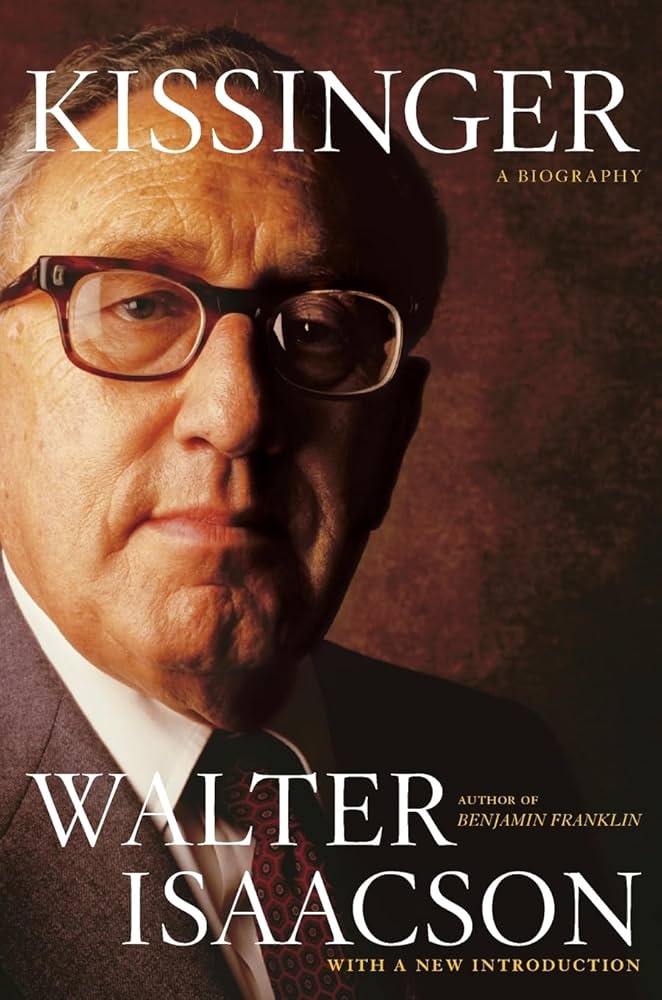
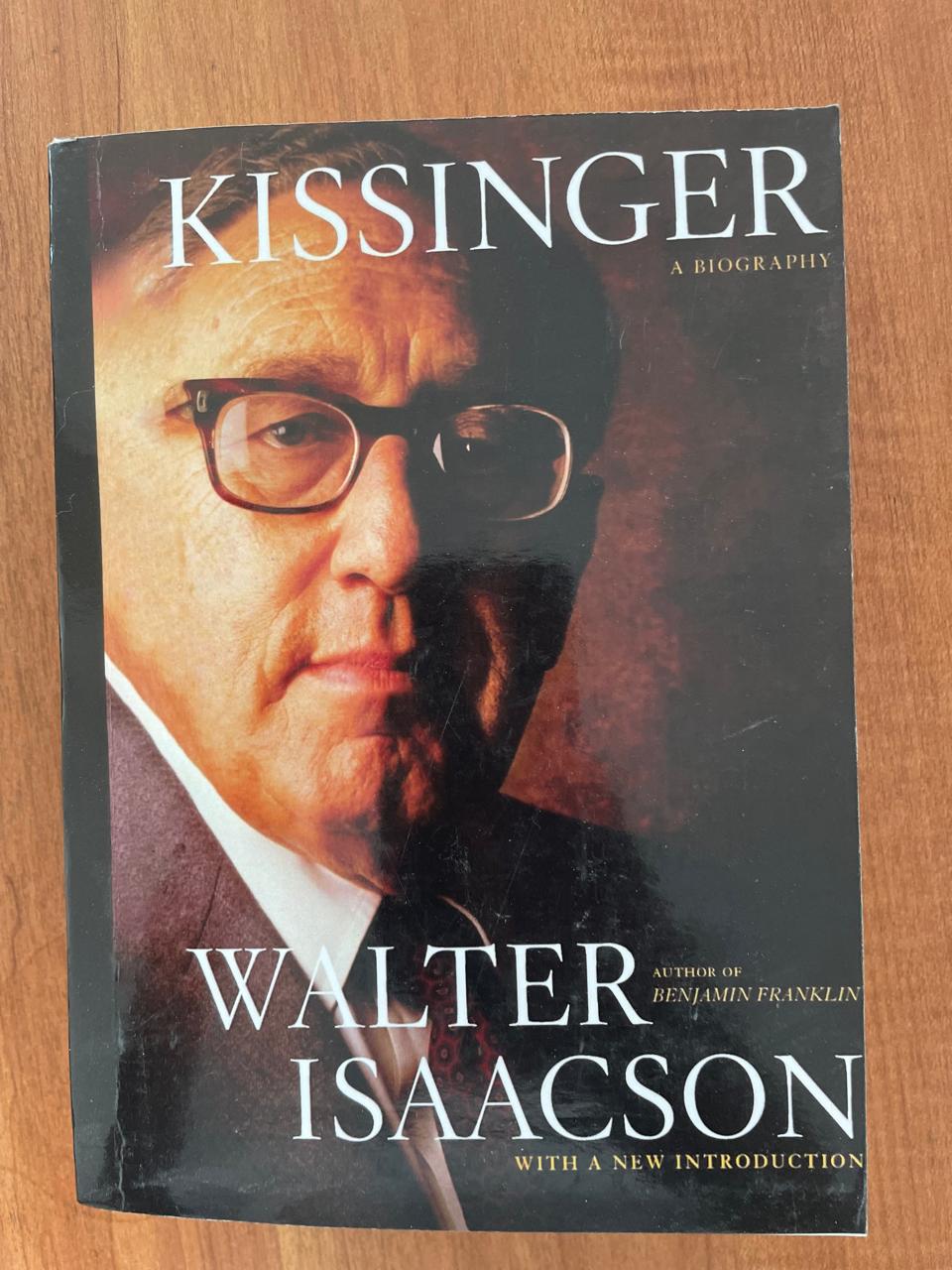
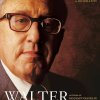
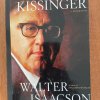

Kissinger by Walter Isaacson
රු3,500.00
3 X Rs. 1,166.67 or 8% Cashback with


or 3 X රු1,166.67 with


or up to 4 X රු875.00 with


Kissinger by Walter Isaacson is a deeply researched biography of Henry Kissinger, tracing his journey from a Jewish childhood in Nazi Germany to Harvard, the Nixon White House and the position of U.S. Secretary of State. Exploring diplomacy with China and the Soviet Union, Vietnam, Middle East negotiations, political power and major controversies surrounding his foreign-policy decisions, this compelling biography presents a complex portrait of a strategist whose influence and legacy continue to inspire both admiration and criticism.
6 in stock
Purchase & earn 35 points!
Category: Biography & Memoir
Kissinger by Walter Isaacson is an expansive political biography of Henry Kissinger, one of the most influential, intellectually formidable and controversial figures in twentieth-century American foreign policy.
Written by acclaimed biographer Walter Isaacson, the book follows Kissinger from his childhood in Germany through his rise as a Harvard scholar, national security strategist, presidential adviser, Secretary of State and internationally recognized diplomat.
But this is not simply a story of political achievement.
It is also a study of:
Power.
Ambition.
Diplomacy.
Personality.
Strategy.
War.
Political morality.
Relationships.
And the difficult compromises made by people who influence world events.
Henry Kissinger played a central role in American foreign policy during the presidencies of Richard Nixon and Gerald Ford.
He participated in major diplomatic developments involving:
The Soviet Union.
China.
Vietnam.
The Middle East.
Europe.
Latin America.
The Cold War balance of power.
His supporters viewed him as a brilliant strategist who understood diplomacy, negotiation and geopolitical reality.
His critics accused him of placing strategic interests above democracy, human rights and humanitarian concerns.
Kissinger by Walter Isaacson explores these contradictions rather than reducing Kissinger to either hero or villain.
That complexity makes the biography especially valuable for readers interested in politics, international relations, leadership and modern history.
Kissinger by Walter Isaacson – Book Overview
Kissinger by Walter Isaacson examines the life and career of Henry Alfred Kissinger.
Kissinger’s story begins far from Washington.
He was born in Germany into a Jewish family.
As Nazi persecution intensified, his family left Germany and moved to the United States.
That experience became an important part of the background of a man who would later spend much of his career thinking about:
Power.
Security.
War.
Order.
National survival.
International conflict.
Kissinger eventually served in the U.S. Army during World War II before studying at Harvard University.
His academic work focused heavily on history, diplomacy and international relations.
Over time, he moved from the academic world toward political influence.
Eventually, he entered the highest levels of American government.
Henry Kissinger
Few modern diplomats have attracted as much admiration and criticism as Henry Kissinger.
To some observers, he was a master strategist.
To others, he represented the dangers of secretive and highly centralized foreign policy.
He advised presidents.
Negotiated with world leaders.
Influenced war and peace.
Helped reshape relationships between major powers.
And became a global political celebrity.
But the deeper question explored by Kissinger by Walter Isaacson is:
What kind of person seeks and exercises that level of influence?
Isaacson examines not only what Kissinger did but how his personality influenced his decisions.
Walter Isaacson
Walter Isaacson is known for detailed biographies of highly influential figures.
His later subjects have included:
Steve Jobs.
Albert Einstein.
Benjamin Franklin.
Leonardo da Vinci.
Elon Musk.
In Kissinger by Walter Isaacson, he applies the same interest in personality, ambition, intellect and power to a political figure whose decisions affected international affairs.
Rather than treating Kissinger only as a list of political achievements, Isaacson examines the man behind the policies.
From Germany to America
Kissinger’s early life was shaped by the rise of Nazi Germany.
His Jewish family experienced discrimination and persecution before leaving the country.
They eventually settled in the United States.
This transition from persecuted child in Europe to senior American statesman is one of the most dramatic elements of his life story.
It also provides important background for understanding his later obsession with:
Political order.
Security.
National power.
The dangers of instability.
World War II
Kissinger later served in the U.S. Army during World War II.
His German language skills and knowledge of Europe became valuable.
The experience placed him directly inside the historical struggle that had forced his family to leave Germany.
After the war, he returned to education.
Harvard University
Harvard became central to Kissinger’s intellectual development.
He studied history and political thought.
He eventually earned a doctorate and became part of Harvard’s academic community.
His scholarship focused heavily on diplomacy and international order.
This academic background distinguished him from many political figures.
Kissinger approached foreign policy not simply as daily politics but as a historical problem.
He constantly looked backward.
What caused wars?
How did alliances work?
Why did political systems collapse?
How could great powers maintain stability?
These questions later shaped his approach to government.
Realpolitik
Kissinger is often associated with realpolitik.
In simple terms, realpolitik emphasizes practical national interests and power rather than expecting international politics to operate mainly according to ideals.
From this perspective, nations must think about:
Security.
Power.
Strategic interests.
Military strength.
Alliances.
Balance.
Negotiation.
Critics argue that this way of thinking can push moral concerns into the background.
Supporters argue that foreign policy must deal with the world as it actually exists.
Kissinger by Walter Isaacson gives readers an opportunity to examine this tension.
National Security Adviser
Kissinger became National Security Adviser under President Richard Nixon.
This position placed him close to the centre of presidential decision-making.
National security advisers help presidents think about:
Wars.
Diplomacy.
Intelligence.
Military strategy.
Relations with foreign governments.
Global crises.
Kissinger quickly became one of Nixon’s most influential advisers.
Their relationship was productive but complicated.
Richard Nixon and Henry Kissinger
The relationship between Nixon and Kissinger is one of the most fascinating parts of the biography.
Both men were:
Ambitious.
Intelligent.
Suspicious.
Highly political.
Interested in secrecy.
Determined to shape history.
They needed each other.
But they did not always trust each other completely.
The relationship included:
Cooperation.
Competition.
Flattery.
Frustration.
Dependence.
Strategic partnership.
Isaacson examines how this unusual relationship influenced American foreign policy.
Secretary of State
Kissinger eventually became Secretary of State while still serving as National Security Adviser for part of that period.
This gave him extraordinary influence over American foreign policy.
He became one of the most recognizable diplomats in the world.
Foreign leaders knew him.
Journalists followed him.
Presidents relied on him.
His personality became inseparable from American diplomacy during the period.
The Cold War
The Cold War forms the background to much of Kissinger by Walter Isaacson.
The United States and Soviet Union were global rivals.
Both possessed nuclear weapons.
Both competed for political influence.
Wars and political crises around the world were often interpreted through this rivalry.
Kissinger believed foreign policy needed to prevent uncontrolled confrontation between major powers.
This made balance and negotiation essential parts of his thinking.
Détente
One of the major policies associated with Kissinger was détente.
Détente involved attempting to reduce tensions between the United States and Soviet Union.
The goal was not friendship.
The countries remained rivals.
Instead, the idea was to manage competition more carefully.
Negotiation could reduce the risk of catastrophic conflict.
This approach reflected Kissinger’s broader belief that diplomacy is often about managing differences rather than eliminating them.
China
The opening of relations between the United States and the People’s Republic of China became one of the most significant diplomatic developments of the Nixon era.
Kissinger played an important role in preparing the diplomatic breakthrough.
At the time, relations between the two countries had been extremely limited.
Improving those relations changed the strategic balance of the Cold War.
This episode demonstrates one of Kissinger’s greatest strengths:
He was willing to negotiate with governments whose political systems were completely different from America’s when he believed doing so served strategic interests.
Diplomacy and Strategy
Diplomacy requires more than simply talking.
It requires understanding:
What the other side wants.
What they fear.
What they can accept.
What they cannot accept.
Where compromise is possible.
Where pressure may work.
Kissinger became famous for thinking strategically about negotiations.
For students of international relations, this makes his career particularly interesting.
Vietnam War
Vietnam remains one of the most controversial parts of Kissinger’s legacy.
Kissinger participated in negotiations intended to bring American involvement in the war toward an end.
The eventual Paris agreement contributed to the withdrawal of U.S. forces.
For these negotiations, Kissinger and North Vietnamese negotiator Le Duc Tho were jointly awarded the 1973 Nobel Peace Prize.
But the award itself became deeply controversial.
Le Duc Tho declined it.
The war and violence had not truly ended.
This contradiction reflects the complexity surrounding Kissinger’s legacy.
Cambodia
Kissinger’s role in U.S. policy toward Cambodia remains another major source of criticism.
Military operations and decisions connected to the wider Vietnam conflict caused enormous political and humanitarian controversy.
Critics argue that Kissinger’s strategic approach sometimes accepted devastating human consequences in pursuit of broader geopolitical goals.
Supporters have argued that policymakers were facing an extremely difficult regional war and security situation.
Understanding both perspectives is essential when studying the period.
Nobel Peace Prize
The 1973 Nobel Peace Prize remains one of the most unusual chapters in Kissinger’s career.
Receiving a peace prize might seem like a clear achievement.
But the circumstances made it controversial.
The award itself became part of the debate over whether Kissinger should be remembered primarily as:
A peacemaker.
A strategist.
A wartime policymaker.
Or some complicated combination of all three.
Middle East Diplomacy
Kissinger also became known for diplomacy in the Middle East.
Following the 1973 Arab-Israeli war, he travelled repeatedly between regional capitals.
This style became known as:
Shuttle diplomacy.
Rather than expecting all sides to sit together immediately, Kissinger moved between governments and attempted to negotiate agreements step by step.
This approach became one of the most famous examples of his diplomatic style.
Shuttle Diplomacy
Shuttle diplomacy demonstrates an important principle.
Diplomacy does not always produce one perfect agreement immediately.
Sometimes progress happens gradually.
One commitment.
One compromise.
One agreement.
Then another.
Kissinger believed that limited agreements could create conditions for greater stability.
Chile and Latin America
Kissinger’s legacy in Latin America is heavily debated.
U.S. policy toward Chile during the Cold War has been particularly controversial.
Critics argue that Washington placed anti-communist geopolitical interests above democratic principles and human rights.
This area of Kissinger’s career remains central to historical debates about the moral limits of realpolitik.
Human Rights Versus National Interest
This leads to one of the biggest questions surrounding Kissinger.
Should foreign policy prioritize:
National security?
Strategic advantage?
Democracy?
Human rights?
Stability?
Ideals?
Real-world diplomacy often creates conflicts between these goals.
Kissinger frequently emphasized national interest and strategic balance.
Critics believe this approach sometimes went far too far.
That debate remains relevant today.
Power
Power is perhaps the most important theme in Kissinger by Walter Isaacson.
Kissinger studied power.
Advised powerful people.
Accumulated influence.
Negotiated with powerful governments.
But power is not simply about having authority.
It also involves understanding how other people use authority.
Kissinger believed international politics required constant attention to changing balances of power.
Personality and Politics
Isaacson is especially interested in the relationship between personality and policy.
Could Kissinger’s insecurities influence his behaviour?
Did ambition affect decisions?
How did his need for approval interact with his desire for control?
How did relationships with presidents influence diplomatic strategy?
These questions transform the book from simple political history into psychological biography.
Ambition
Kissinger was enormously ambitious.
He wanted:
Influence.
Access.
Intellectual recognition.
Political relevance.
Historical importance.
Ambition helped propel him from academic life into global diplomacy.
But ambition can also complicate relationships.
The biography explores both sides.
Secrecy
Kissinger became associated with secret diplomacy.
Some negotiations benefited from confidentiality.
Sensitive discussions sometimes require privacy.
But secrecy also creates problems in democratic government.
Who should know what?
How much authority should unelected advisers have?
When does confidentiality become excessive?
These questions appear repeatedly when examining the Nixon-Kissinger foreign-policy system.
Diplomacy Behind Closed Doors
Kissinger often believed difficult negotiations could move more effectively away from public pressure.
This approach produced some major breakthroughs.
But it also generated criticism because decisions affecting millions of people could be shaped by a small number of individuals.
That tension remains relevant in modern diplomacy.
Watergate
The Watergate scandal destroyed Richard Nixon’s presidency.
Nixon resigned in 1974.
But Kissinger remained Secretary of State under President Gerald Ford.
This demonstrated how central he had become to American foreign policy.
While Nixon’s domestic political authority collapsed, Kissinger maintained substantial international influence.
Gerald Ford
Under Gerald Ford, Kissinger continued major diplomatic efforts.
His role during two different presidencies shows that his influence extended beyond one political partnership.
He had become an institution in American foreign policy.
Leadership
Kissinger by Walter Isaacson is also a book about leadership.
Kissinger demonstrates several leadership strengths:
Preparation.
Strategic thinking.
Historical knowledge.
Negotiation.
Communication.
Persistence.
But the biography also encourages readers to consider the dangers of:
Excessive secrecy.
Concentrated power.
Ambition.
Overconfidence.
Treating human consequences as strategic calculations.
Strategy
Strategic thinking involves understanding long-term consequences.
Kissinger frequently thought in terms of:
Decades.
Power relationships.
Historical patterns.
Future alliances.
Potential threats.
This long-range thinking helped make him influential.
But long-term strategy can also become dangerous when immediate human suffering is treated as secondary.
Morality and Foreign Policy
One of the most important questions raised by Kissinger’s life is whether foreign policy can ever be purely moral.
Governments sometimes face choices where every option has costs.
But saying that decisions are difficult does not remove moral responsibility.
Readers may come away agreeing or disagreeing strongly with Kissinger.
That is part of the book’s value.
It gives readers material to think about rather than offering simple answers.
Supporters and Critics
Supporters of Kissinger often emphasize:
Opening relations with China.
Détente with the Soviet Union.
Arms-control negotiations.
Middle East diplomacy.
Strategic sophistication.
His ability to negotiate with adversaries.
Critics often emphasize:
Vietnam and Cambodia.
Chile.
Support for authoritarian governments.
Secrecy.
Human-rights concerns.
The concentration of foreign-policy power.
A serious biography has to address both.
A Controversial Legacy
Calling Kissinger controversial is not an exaggeration.
Few American officials of his era inspire such sharply different judgments.
One reader may see:
A brilliant diplomat.
Another may see:
A symbol of morally troubling Cold War policy.
Another may see both at once.
Kissinger by Walter Isaacson is valuable because Kissinger’s life does not fit easily into a simple category.
Interviews and Research
One of the strengths of Walter Isaacson’s biography is the depth of research behind it.
The book draws on extensive interviews, private papers, government material and conversations with people who knew or worked with Kissinger.
This allows Isaacson to examine not only public events but also relationships and private behaviour.
Richard Nixon’s Inner Circle
The Nixon administration contained powerful personalities.
Competition for presidential access could shape policy.
Kissinger’s ability to navigate this environment became one of his greatest political skills.
He understood that having good ideas was not enough.
To influence policy, a person also needed access.
Political Intelligence
Kissinger was not only academically intelligent.
He also developed strong political instincts.
He understood:
Status.
Influence.
Media.
Personal relationships.
Institutional competition.
Presidential psychology.
This combination of intellectual and political intelligence helped explain his rise.
Media and Celebrity
Kissinger became something unusual for a diplomat:
A celebrity.
He appeared frequently in the media.
His personality attracted attention.
He became internationally recognizable.
This public image added another dimension to his influence.
History and Decision-Making
Kissinger constantly used historical analogies.
History was not simply something to study.
He believed it could help policymakers understand current events.
But historical analogies can be both useful and dangerous.
No two situations are exactly identical.
Still, learning how earlier leaders managed crises can provide valuable insight.
International Relations
Students of international relations may find Kissinger by Walter Isaacson particularly useful.
The biography touches on concepts such as:
Balance of power.
Realpolitik.
Détente.
Diplomacy.
Strategic competition.
Alliance systems.
National interest.
Negotiation.
Nuclear deterrence.
These ideas become easier to understand when seen through real historical events.
Cold War History
The book also works as an introduction to important parts of Cold War history.
Readers encounter:
The U.S.-Soviet rivalry.
China’s changing international role.
Vietnam.
Middle East conflict.
European diplomacy.
Nuclear strategy.
Political upheaval.
Understanding Kissinger means understanding much of the international politics of the 1960s and 1970s.
A Biography of Contradictions
Perhaps the most interesting thing about Kissinger is contradiction.
A Jewish refugee from Nazi Germany became one of America’s most powerful officials.
A scholar became a political operator.
A diplomat associated with peace negotiations became closely linked with controversial military policies.
A man praised for strategic brilliance became condemned by critics for the human consequences of some of those strategies.
These contradictions make Kissinger by Walter Isaacson such a compelling biography.
7 Powerful Reasons to Read Kissinger by Walter Isaacson
There are many reasons readers may find Kissinger by Walter Isaacson valuable, but seven stand out:
- It examines one of the most influential diplomats of the twentieth century – Henry Kissinger played a major role in American foreign policy during a crucial Cold War period.
- Walter Isaacson explores both personality and politics – The biography looks beyond official events to examine ambition, insecurity, relationships and power.
- It provides insight into Richard Nixon’s presidency – Kissinger’s relationship with Nixon reveals how major foreign-policy decisions were shaped inside the White House.
- It covers major global events – China, the Soviet Union, Vietnam, the Middle East and Cold War diplomacy all form important parts of the story.
- It does not avoid controversy – Cambodia, Chile, Vietnam, secrecy and human-rights debates are essential to understanding Kissinger’s legacy.
- It teaches valuable lessons about diplomacy and power – Readers can study negotiation, strategic thinking, leadership and the dangers of concentrated influence.
- It encourages readers to form their own judgment – Kissinger’s legacy remains deeply divided, making the biography especially thought-provoking.
Why Read Kissinger by Walter Isaacson?
Kissinger by Walter Isaacson is an excellent choice for readers interested in:
- Henry Kissinger
- Walter Isaacson
- Political biography
- American history
- Cold War history
- International relations
- Foreign policy
- Diplomacy
- Richard Nixon
- Gerald Ford
- China
- Soviet Union
- Vietnam War
- Middle East politics
- Leadership
- Strategy
- Realpolitik
- Political power
- Modern history
The book is especially suitable for readers who want to understand not only what powerful political leaders do, but how personality, ambition and ideology can influence decisions affecting entire nations.
Who Should Read This Book?
Kissinger by Walter Isaacson may especially appeal to:
- Walter Isaacson readers
- Political-history readers
- Biography fans
- International-relations students
- Diplomacy students
- History students
- Political-science readers
- Leadership readers
- Cold War enthusiasts
- Readers interested in Richard Nixon
- Readers studying American foreign policy
- Readers interested in geopolitical strategy
- Readers who enjoy complex historical biographies
- Readers looking for serious nonfiction
A Powerful Study of Diplomacy, Ambition and Political Power
Kissinger by Walter Isaacson tells the story of a man who moved from persecution in Nazi Germany to the highest levels of American political power.
Henry Kissinger became:
A soldier.
A scholar.
A strategist.
A presidential adviser.
A Secretary of State.
A negotiator.
A global political figure.
His career included diplomatic breakthroughs.
It also included decisions that remain intensely debated.
That combination is exactly what makes his life worth studying.
Readers do not need to admire Kissinger to find the biography valuable.
They do not need to condemn every decision either.
The value comes from understanding how a person with extraordinary intelligence, ambition and access helped shape international events—and what happened when geopolitical strategy collided with questions of morality and human consequences.
For readers interested in history, diplomacy, international relations, political leadership, the Cold War, Richard Nixon, strategy and the complicated nature of power, Kissinger by Walter Isaacson offers a detailed and thought-provoking portrait of one of the most consequential figures in modern American foreign policy.
Learn more about Kissinger: A Biography by Walter Isaacson on the official Simon & Schuster website.
Explore more biography and history books at Bargain Books.
Be the first to review “Kissinger by Walter Isaacson” Cancel reply
Related products

Out of stock
රු1,800.00
Purchase & earn 18 points!
3 X Rs. 600.00 or 8% Cashback with
or 3 X රු600.00 with
or up to 4 X රු450.00 with
Out of stock
රු1,800.00
Purchase & earn 18 points!
3 X Rs. 600.00 or 8% Cashback with
or 3 X රු600.00 with
or up to 4 X රු450.00 with
-11%

Out of stock
Autobiography
3 X Rs. 1,316.67 or 8% Cashback with
or 3 X රු1,316.67 with
or up to 4 X රු987.50 with
-23%

Biography
3 X Rs. 800.00 or 8% Cashback with
or 3 X රු800.00 with
or up to 4 X රු600.00 with
-21%

Out of stock
3 X Rs. 633.33 or 8% Cashback with
or 3 X රු633.33 with
or up to 4 X රු475.00 with
-22%
Biography
3 X Rs. 600.00 or 8% Cashback with
or 3 X රු600.00 with
or up to 4 X රු450.00 with
-7%

Out of stock
Autobiography
3 X Rs. 833.33 or 8% Cashback with
or 3 X රු833.33 with
or up to 4 X රු625.00 with
-15%

Out of stock
Biography
3 X Rs. 933.33 or 8% Cashback with
or 3 X රු933.33 with
or up to 4 X රු700.00 with
Reviews
There are no reviews yet.