
No products in the cart.
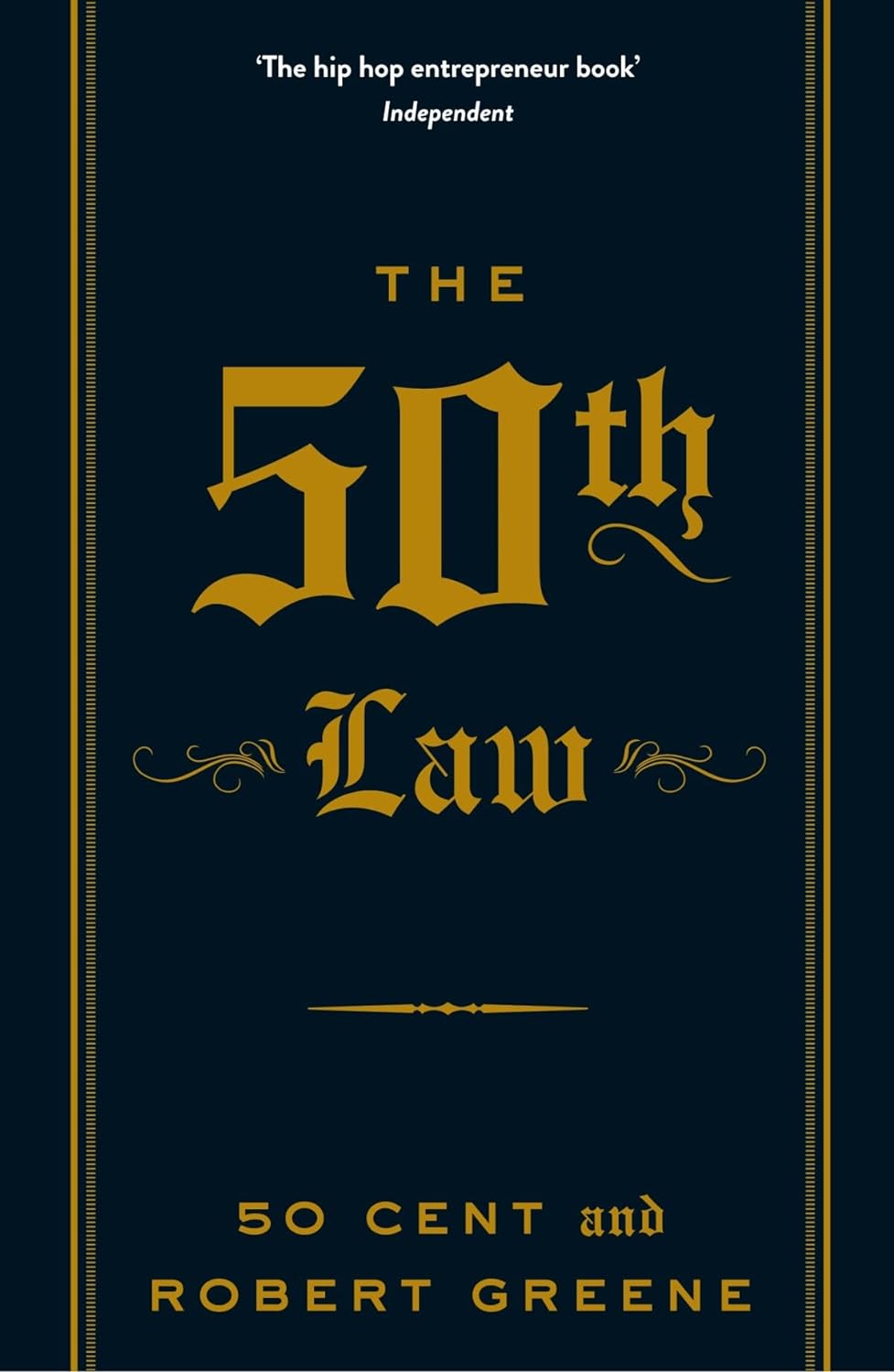











The 50th Law by Robert Greene and 50 Cent


රු2,100.00
3 X Rs. 700.00 or 8% Cashback with


or 3 X රු700.00 with


or up to 4 X රු525.00 with


50th Law by Robert Greene and 50 Cent is a powerful personal-development and strategy book built around one central principle: fear should not control the way you think, act or respond to challenges.
Robert Greene combines historical and strategic analysis with experiences from the life and career of Curtis “50 Cent” Jackson. Together, they explore how realism, self-reliance, adaptability, persistence and bold action can help people respond more effectively to uncertainty.
The book is organised around ten major themes, including Intense Realism, Self-Reliance, Opportunism, Calculated Momentum, Aggression, Authority, Connection, Mastery, Self-Belief and confronting mortality.
It is especially suitable for entrepreneurs, leaders, professionals and readers interested in Robert Greene’s books on strategy and human behaviour.
Product details:
- Title: The 50th Law
- Authors: Robert Greene and 50 Cent
- Publisher: Profile Books
- Format: Paperback
- Pages: 304
- Language: English
- ISBN-13: 9781846680793
- ISBN-10: 1846680794
- Publication date: 18 July 2013
- Dimensions: 19.8 × 12.8 × 2.5 cm
- Weight: 252 g
- Categories: Personal Development, Business, Strategy and Leadership
- Key themes: Fearlessness, realism, self-reliance, opportunity, mastery and leadership
5 in stock
The 50th Law by Robert Greene and 50 Cent
50th Law by Robert Greene and 50 Cent is a powerful exploration of fearlessness, strategic thinking, self-reliance and the ability to respond effectively to difficult circumstances.
The book combines Robert Greene’s historical and psychological approach with experiences from Curtis “50 Cent” Jackson’s life, career and business journey.
Rather than presenting fearlessness as the absence of danger, the book encourages readers to see situations clearly and act without allowing fear to control every decision.
50th Law
50th Law is structured around ten major principles.
Each chapter explores a different quality connected with fearlessness, independence and strategic action.
The ten central themes are:
- Intense Realism
- Self-Reliance
- Opportunism
- Calculated Momentum
- Aggression
- Authority
- Connection
- Mastery
- Self-Belief
- Confronting Mortality
Together, these principles form a framework for becoming more adaptable and deliberate when facing uncertainty.
Intense Realism
The first principle is about seeing circumstances as they actually are.
People sometimes make decisions based on what they hope is true rather than what available evidence suggests.
Realism requires observation.
Ask:
- What is really happening?
- What information am I ignoring?
- What assumptions am I making?
- What does the other person actually want?
- Which facts make me uncomfortable?
Clearer observation can lead to stronger decisions.
Avoid Wishful Thinking
Optimism can be useful.
However, optimism without evidence can become dangerous.
A business owner may continue investing in an unsuccessful idea because admitting failure feels painful.
A professional may ignore problems until they become much larger.
50th Law encourages readers to face reality early.
Once the situation is understood, it becomes easier to adapt.
Self-Reliance
Another major theme is self-reliance.
Depending completely on other people can create vulnerability.
This does not mean refusing help or attempting to do everything alone.
It means developing enough skills, knowledge and independence that your progress does not collapse whenever someone else changes their mind.
Useful areas of self-reliance include:
- Professional skills
- Financial understanding
- Decision-making
- Communication
- Problem-solving
- Learning ability
Greater capability creates more options.
Take Ownership
Self-reliance also involves responsibility.
When something goes wrong, blaming circumstances may explain the problem without solving it.
A more useful question is:
What can I do next?
This shifts attention toward action.
People cannot control every event.
They can still control how they respond to many events.
Turn Problems into Opportunities
The third major theme is opportunism.
A setback can sometimes create possibilities that did not exist before.
This requires flexibility.
When a plan fails, ask:
- What has changed?
- What opportunity has appeared?
- Which resource is still available?
- What can I learn?
- How could this situation be used differently?
The goal is not to pretend that every setback is positive.
It is to look for useful possibilities inside difficult circumstances.
Calculated Momentum
50th Law also emphasizes movement.
Overthinking can create paralysis.
People may continue analysing because action feels risky.
The book encourages calculated momentum: taking informed action and adjusting as new information appears.
This approach combines movement with awareness.
It is different from acting impulsively.
Learn by Moving
Some information becomes available only after action begins.
A business may not know how customers will respond until a product is tested.
A professional may not know whether a new strategy works until it is applied.
Action creates feedback.
Feedback allows improvement.
This makes momentum valuable.
Know When to Act Firmly
One chapter discusses aggression.
In this context, the broader strategic lesson is about knowing when firmness and direct action are required.
Some situations cannot be solved by endless hesitation.
A leader may need to make a difficult decision.
An entrepreneur may need to defend an important position.
A negotiator may need to establish clear boundaries.
The important distinction is between deliberate firmness and uncontrolled anger.
Control Emotion
Emotion can easily weaken strategy.
Anger may cause someone to escalate an unnecessary conflict.
Fear may prevent action.
Pride may make it difficult to admit an error.
50th Law encourages readers to maintain enough emotional distance to choose responses deliberately.
Self-control strengthens strategic thinking.
Lead from the Front
Authority is another major theme.
Strong leaders do not depend only on titles.
They influence others through competence, behaviour and example.
Leading from the front means demonstrating the standards you expect.
If discipline matters, show discipline.
If preparation matters, prepare.
If responsibility matters, accept responsibility.
People often pay more attention to what leaders do than what they say.
Build Credibility
Credibility develops gradually.
Useful behaviours include:
- Keeping commitments
- Communicating clearly
- Remaining consistent
- Taking responsibility
- Demonstrating competence
- Supporting the team
- Making difficult decisions when necessary
Authority becomes stronger when people trust the person exercising it.
Know Your Environment
Connection is another important principle in 50th Law.
Good decisions require understanding the environment.
Business leaders need to understand customers.
Managers need to understand employees.
Entrepreneurs need to understand markets.
Writers need to understand audiences.
Distance from reality can create poor assumptions.
Direct observation provides better information.
Stay Close to Customers
For business readers, this principle is especially practical.
Senior leaders sometimes become separated from everyday customer experiences.
Reports provide useful data.
Direct conversations can reveal problems that reports may not show.
Ask customers:
- Why did you buy?
- What nearly stopped you?
- What needs improvement?
- What alternative did you consider?
- What problem were you trying to solve?
Understanding the environment makes strategy stronger.
Respect the Process
Mastery is one of the book’s most valuable themes.
People often want results faster than skill development allows.
Real expertise takes repetition.
A person must move through periods where progress feels slow.
This applies to:
- Leadership
- Sales
- Programming
- Writing
- Business
- Sport
- Design
- Communication
The process cannot always be shortened dramatically.
Mastery Requires Repetition
Learning often becomes boring before it becomes rewarding.
Beginners may initially improve quickly.
Later, progress becomes less obvious.
That is when many people quit.
50th Law encourages persistence through these slower periods.
Consistent practice builds depth.
Push Beyond Your Limits
Self-belief is another central theme.
People often create limits based on previous experiences.
They may decide:
“I am not good at this.”
“I cannot lead.”
“I could never build a business.”
“I am not confident enough.”
These statements can become self-fulfilling.
A stronger approach is to test the assumption.
Build Confidence Through Evidence
Confidence does not need to come from repeating positive statements.
It can come from action.
Complete one difficult task.
Learn one skill.
Solve one problem.
Take one additional responsibility.
Each successful experience creates evidence that capability can grow.
Confront Mortality
The final major theme is mortality.
Remembering that time is limited can change priorities.
People sometimes postpone important decisions indefinitely because they assume there will always be another opportunity.
Awareness of limited time can create urgency.
Readers may ask:
- What am I postponing?
- What matters most?
- Which fear is controlling me?
- What would I regret not attempting?
- Where am I wasting time?
These questions can create perspective.
Fearlessness Does Not Mean Recklessness
One of the most important ways to interpret 50th Law is that fearlessness should not mean ignoring risk.
Risk should be understood.
Preparation still matters.
Information still matters.
The goal is to prevent fear from becoming the only reason for avoiding action.
Calculated action is very different from careless action.
Strategy in Business
The book can be particularly useful for entrepreneurs and business readers.
Its principles can be applied to:
- Competition
- Leadership
- Marketing
- Negotiation
- Career development
- Problem-solving
- Product launches
- Crisis management
- Personal development
The examples are often dramatic, but the underlying principles can be adapted to ordinary professional situations.
Adapt When Conditions Change
Rigid thinking can create weakness.
Markets change.
Technology changes.
Competitors change.
Customer expectations change.
A strategy that worked previously may eventually stop working.
Strong decision-makers keep observing and adjusting.
Adaptability is therefore closely connected with fearlessness.
Learn from Robert Greene’s Strategic Approach
Readers familiar with Robert Greene will recognise his use of historical examples and strategic interpretation.
His books often examine patterns in power, leadership and human behaviour.
50th Law differs because it combines that style with the personal and business experiences of 50 Cent.
This gives the book a contemporary entrepreneurial dimension.
About Robert Greene
Robert Greene is the bestselling author of books on strategy, power, mastery and human behaviour.
His works include:
- The 48 Laws of Power
- The Art of Seduction
- The 33 Strategies of War
- Mastery
- The Laws of Human Nature
- The Daily Laws
His writing frequently draws lessons from history, psychology and strategic behaviour.
About 50 Cent
Curtis “50 Cent” Jackson is a rapper, entrepreneur, producer and businessman.
His career extends beyond music into entertainment and business ventures.
The book uses experiences from his rise, setbacks and business decisions as modern examples of adaptability and strategic behaviour.
Who Should Read This Book?
50th Law may appeal to:
- Entrepreneurs
- Business owners
- Managers
- Leaders
- Sales professionals
- Students
- Personal-development readers
- Robert Greene fans
- Readers interested in strategy
- People working through uncertainty or setbacks
It may particularly suit readers who enjoy business lessons supported by both historical analysis and modern personal stories.
Product Details
Product title: The 50th Law
Authors: Robert Greene and 50 Cent
Publisher: Profile Books
Format: Paperback
Language: English
Page count: 304 pages
ISBN-13: 9781846680793
ISBN-10: 1846680794
Publication date: 18 July 2013
Dimensions: 198 × 128 × 25 mm
Weight: 252 grams
Categories: Personal Development, Business, Strategy and Leadership
Key themes: Fearlessness, realism, self-reliance, opportunity, momentum, leadership and mastery
Why Choose 50th Law?
50th Law offers a different perspective on personal development by connecting fearlessness with realism, strategy and responsibility.
Robert Greene and 50 Cent explore how people can become more self-reliant, adapt to setbacks, maintain momentum and develop mastery.
The book also challenges readers to examine the fears that influence their decisions.
For entrepreneurs, leaders and readers interested in Robert Greene’s approach to power and strategy, 50th Law is a compelling addition to a business and personal-development bookshelf.
Explore our complete strategy and personal development books collection to discover more titles about leadership, power, confidence and human behaviour.
resilient figures and the insights of a master strategist, readers can gain valuable tools and inspiration to conquer their own challenges and reach their highest potential.
View the official publication details for
The 50th Law by Robert Greene and 50 Cent
.
| Author | Robert Greene, 50 Cent |
|---|---|
| Type | Paperback Brand new Printed (Indian Locally published) |
| ISBN/ISSN | 1846680794 |
| Language | English |
| Pages | 320 |
Be the first to review “The 50th Law by Robert Greene and 50 Cent”
Related products
Out of stock
Analysis & Strategy
රු1,800.00
3 X Rs. 600.00 or 8% Cashback with
or 3 X රු600.00 with
or up to 4 X රු450.00 with
-26%

Out of stock
Analysis & Strategy
Original price was: රු1,900.00.රු1,400.00Current price is: රු1,400.00.
3 X Rs. 466.67 or 8% Cashback with
or 3 X රු466.67 with
or up to 4 X රු350.00 with
Out of stock
Analysis & Strategy
රු1,700.00
3 X Rs. 566.67 or 8% Cashback with
or 3 X රු566.67 with
or up to 4 X රු425.00 with

Analysis & Strategy
රු2,250.00
3 X Rs. 750.00 or 8% Cashback with
or 3 X රු750.00 with
or up to 4 X රු562.50 with
-12%
Out of stock
Analysis & Strategy
Original price was: රු1,700.00.රු1,500.00Current price is: රු1,500.00.
3 X Rs. 500.00 or 8% Cashback with
or 3 X රු500.00 with
or up to 4 X රු375.00 with
-14%
Out of stock
Analysis & Strategy
Original price was: රු3,700.00.රු3,200.00Current price is: රු3,200.00.
3 X Rs. 1,066.67 or 8% Cashback with
or 3 X රු1,066.67 with
or up to 4 X රු800.00 with
-10%
Out of stock
Analysis & Strategy
Original price was: රු5,200.00.රු4,700.00Current price is: රු4,700.00.
3 X Rs. 1,566.67 or 8% Cashback with
or 3 X රු1,566.67 with
or up to 4 X රු1,175.00 with
Out of stock
Damaged & Imperfect Books
රු550.00
3 X Rs. 183.33 or 8% Cashback with
or 3 X රු183.33 with
or up to 4 X රු137.50 with
Reviews
There are no reviews yet.