No products in the cart.
-44%
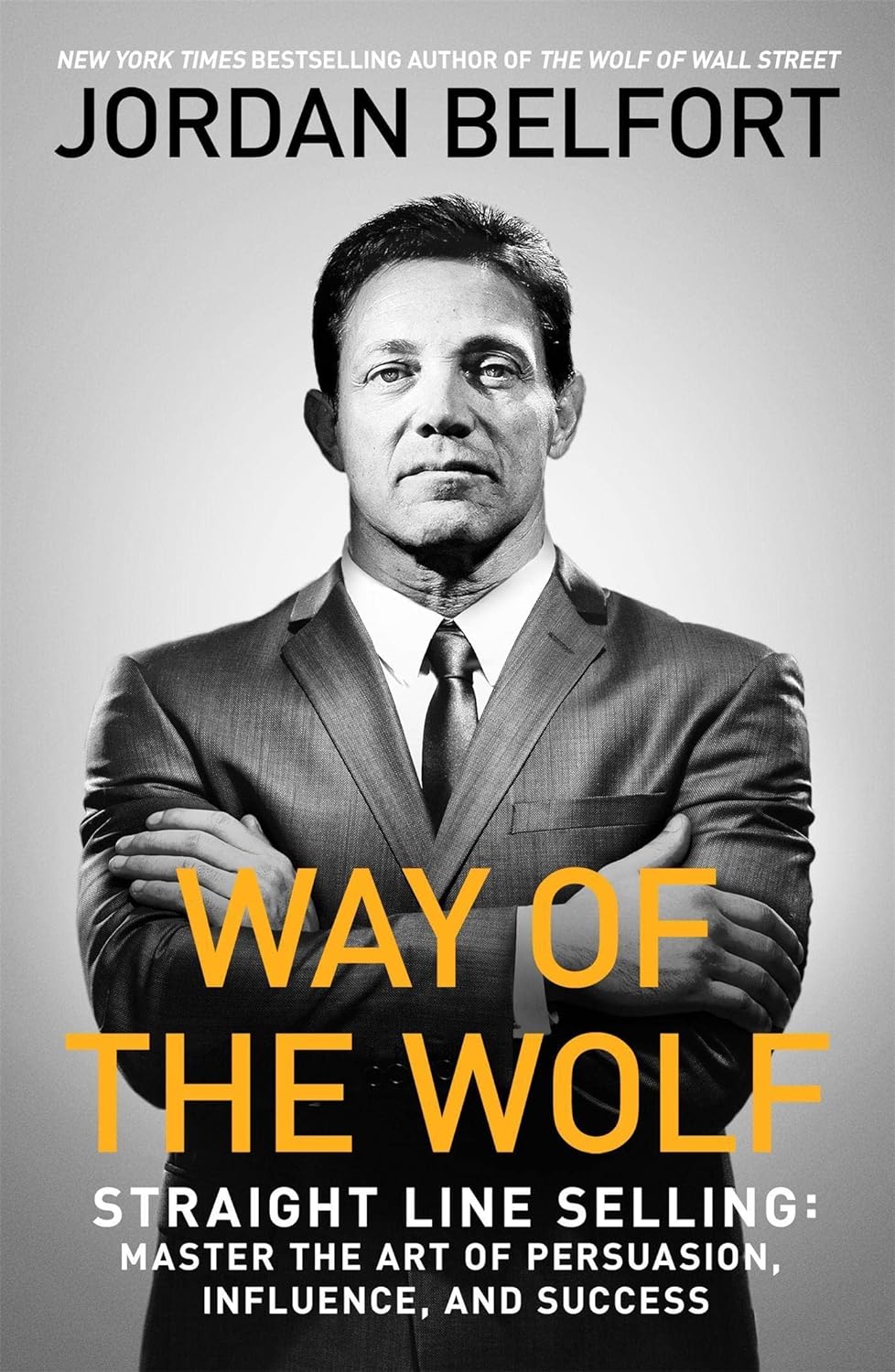
Way Of the Wolf by Jordan Belfort


Original price was: රු2,750.00.රු1,550.00Current price is: රු1,550.00.
3 X Rs. 516.67 or 8% Cashback with


or 3 X රු516.67 with


or up to 4 X රු387.50 with


Master the art of persuasion and sales with ‘Way of the Wolf’ by Jordan Belfort. In this gripping guide, Belfort, the real-life ‘Wolf of Wall Street,’ shares his proven strategies for influencing others and closing deals. Packed with actionable insights and dynamic storytelling, this book is a must-read for anyone looking to elevate their salesmanship and negotiation skills.
Out of stock
Email when stock available
Way of the Wolf by Jordan Belfort
Way of the Wolf by Jordan Belfort is a practical sales and persuasion book about confidence, communication, influence, negotiation, and closing.
The book explains Belfort’s Straight Line Selling system.
It is designed to help readers become more structured and persuasive during sales conversations.
About Way of the Wolf
Way of the Wolf focuses on how successful sales conversations move from introduction to close.
Belfort argues that sales should not feel random.
Instead, the salesperson should guide the conversation clearly.
This is where the Straight Line system comes in.
The goal is to build trust, understand the customer, communicate value, and move toward a decision.
7 Powerful Lessons from Way of the Wolf
1. Control the Sales Conversation
A good sales conversation needs direction.
The customer should feel heard.
But the salesperson should still guide the discussion.
Belfort calls this staying on the Straight Line.
The conversation may move slightly away from the main goal.
But it should eventually return.
2. Build Trust Quickly
Trust is one of the most important parts of selling.
A customer must believe in the salesperson.
They must believe in the product.
They must also believe in the company.
If one of these areas is weak, the sale becomes harder.
3. Tonality Matters
Words are important.
But the way those words are spoken matters too.
Confidence can be communicated through tone.
So can uncertainty.
Belfort places a strong emphasis on voice control and tonality.
This includes pacing, emphasis, and emotional energy.
4. Body Language Matters
Communication is not only verbal.
Eye contact matters.
Posture matters.
Facial expressions matter.
Energy matters.
These signals can influence how confident and trustworthy a salesperson appears.
5. Understand the Customer
Good selling should not begin with a long product speech.
It should begin with questions.
What does the customer need?
What problem are they trying to solve?
What is stopping them from making a decision?
The better the salesperson understands the customer, the easier it becomes to present the right solution.
6. Handle Objections Properly
Customers often say things like:
“I need to think about it.”
“It is too expensive.”
“I need to ask someone.”
“I am not sure.”
Belfort argues that objections should not automatically end the conversation.
Instead, the salesperson should understand what is really creating uncertainty.
7. Confidence Can Be Developed
Not everyone is naturally confident.
That does not mean they cannot become good at sales.
Way of the Wolf treats selling as a skill.
Skills can be practised.
Scripts can be improved.
Tone can be improved.
Product knowledge can be improved.
Confidence often grows through preparation.
The Straight Line System
The Straight Line system is the central framework in the book.
Imagine a straight line.
At the beginning is the first contact with the customer.
At the end is the final decision.
The salesperson’s job is to guide the customer from one side to the other.
The conversation may move away from the line.
The customer may ask unrelated questions.
They may raise objections.
The salesperson should answer them and then guide the discussion back toward the main objective.
The Three Tens
A major idea in the system is certainty.
Belfort explains that customers should feel highly confident in three areas.
The product.
The salesperson.
The company.
If a customer believes strongly in the product but does not trust the salesperson, the sale may fail.
The same can happen if they trust the salesperson but doubt the company.
The goal is to strengthen all three areas.
Asking Better Questions
Questions are essential.
Good questions reveal what the customer wants.
They also reveal concerns.
A salesperson should not simply wait for a chance to speak.
They should listen.
This helps the conversation become more relevant.
It also reduces the need for unnecessary persuasion.
Rapport
Rapport means creating a comfortable connection.
People are often more open with someone they trust.
That does not mean pretending to be their best friend.
It means communicating naturally.
Listening.
Showing respect.
And demonstrating that you understand their needs.
Product Knowledge
Confidence becomes easier when you understand what you sell.
A salesperson should know the product thoroughly.
Benefits.
Limitations.
Pricing.
Competitors.
Customer use cases.
Strong product knowledge reduces hesitation during important questions.
Selling Benefits Instead of Features
Features describe what something has.
Benefits explain why those features matter.
A customer may not care that a product contains a particular technical feature.
They may care that it saves time.
Reduces costs.
Improves comfort.
Or solves a specific problem.
Good selling connects features to real benefits.
Creating Certainty
Belfort believes certainty is one of the strongest forces in sales.
Customers hesitate when they are uncertain.
They may be unsure about quality.
Price.
Risk.
Timing.
The salesperson’s job is to reduce unnecessary uncertainty through information and trust.
Objections
An objection is not always a rejection.
Sometimes it means the customer still has unanswered questions.
The price objection may actually be about value.
The timing objection may actually be about trust.
Good salespeople try to understand the real concern before responding.
Looping
One of the techniques in Way of the Wolf is called looping.
When a customer raises an objection, the salesperson addresses it.
Then the conversation returns to the product’s value.
The goal is to strengthen certainty rather than immediately push harder for the sale.
Tonality
Tonality is one of the book’s most distinctive topics.
The same sentence can communicate different meanings depending on delivery.
A salesperson can sound:
Confident.
Curious.
Concerned.
Excited.
Calm.
Professional.
Belfort argues that learning to control these tones can improve communication.
Ethical Persuasion
Persuasion should not mean lying.
Customers need accurate information.
Long-term business depends on trust.
A sale created through deception may create refunds, complaints, reputational damage, or legal problems.
The most useful parts of the Straight Line approach are therefore best applied with honest product claims and respect for customer choice.
Sales Scripts
Belfort strongly supports preparation.
Scripts can help salespeople organize conversations.
A script should not sound robotic.
It should create structure.
The salesperson can then speak naturally within that structure.
This can be especially useful for beginners.
Confidence and Preparation
Confidence is easier when you prepare.
Know the product.
Know the likely objections.
Know the customer.
Know the next step.
Preparation removes uncertainty.
That often improves both voice and body language.
Closing
Closing is the point where the customer makes a decision.
Belfort argues that the close should not feel disconnected from the rest of the conversation.
If trust and value have already been established, the final decision becomes easier.
A strong close is often the result of everything that happened earlier.
Sales and Psychology
Sales involves psychology.
People make decisions based on emotion and logic.
They consider risk.
Trust.
Social proof.
Price.
Convenience.
Urgency.
A good salesperson understands these factors without using them irresponsibly.
Negotiation
Many lessons in Way of the Wolf also apply to negotiation.
Listen carefully.
Understand the other person.
Communicate value.
Control emotions.
Know your objective.
These principles can help in business conversations beyond direct sales.
Entrepreneurship
Entrepreneurs often need to sell.
They sell products.
Ideas.
Partnerships.
Their company.
Sometimes even themselves.
That makes communication and persuasion especially important for founders.
Who Should Read This Book?
Way of the Wolf is ideal for salespeople, entrepreneurs, business owners, managers, negotiators, and anyone interested in persuasion.
It may be especially useful for beginners who want a structured sales framework.
Experienced sales professionals may also find useful ideas around tonality, objections, and conversation control.
Important Note on Sales Techniques
Sales techniques should be used responsibly.
Persuasion is most effective when the customer actually benefits from the product.
Do not make false claims.
Do not hide important information.
Do not pressure vulnerable customers.
Strong sales relationships depend on trust.
About Jordan Belfort
Jordan Belfort is an author, speaker, and former stockbroker.
He is best known for the memoir The Wolf of Wall Street.
His other books include Catching the Wolf of Wall Street, Way of the Wolf, and The Wolf of Investing.
Simon & Schuster describes Way of the Wolf as Belfort’s guide to his step-by-step Straight Line sales system.
Readers can learn more through the official Simon & Schuster page for Way of the Wolf.
Product Details
Title: Way of the Wolf
Subtitle: Straight Line Selling: Master the Art of Persuasion, Influence, and Success
Author: Jordan Belfort
Genre: Sales / Business / Persuasion / Entrepreneurship
Language: English
Publisher: Gallery Books
Common Trade Paperback Edition
ISBN-13: 9781501164309
Format: Trade Paperback
Pages: 256
Publication Date: September 25, 2018
Simon & Schuster confirms these specifications for the trade paperback edition.
Important Edition Note
The ebook has a different ISBN.
eBook ISBN: 9781501164293
Do not use the ebook ISBN for a physical paperback product.
Always check the barcode on your physical copy before entering the final WooCommerce information.
Explore More Business Books
Way of the Wolf presents selling as a skill that can be learned.
The system focuses on structure.
Trust.
Questions.
Tonality.
Confidence.
Objection handling.
And closing.
Readers can explore more Business, Finance & Economics Books at Bargain Books.
For readers who want to improve sales conversations, persuasion, negotiation, and confidence, Way of the Wolf offers a direct and structured introduction to Jordan Belfort’s Straight Line system.
| Author | Jordan Belfort |
|---|---|
| Type | Paperback Printed Book |
| ISBN/ISSN | 1473674816, 978-1473674813 |
| Language | English |
| Pages | 256 |
Be the first to review “Way Of the Wolf by Jordan Belfort”
Related products
-33%

Self-Help & Psychology
Original price was: රු2,300.00.රු1,550.00Current price is: රු1,550.00.
3 X Rs. 516.67 or 8% Cashback with
or 3 X රු516.67 with
or up to 4 X රු387.50 with
-24%

Out of stock
Non-Fiction & Knowledge
Original price was: රු2,100.00.රු1,600.00Current price is: රු1,600.00.
3 X Rs. 533.33 or 8% Cashback with
or 3 X රු533.33 with
or up to 4 X රු400.00 with
-13%

Out of stock
Non-Fiction & Knowledge
Original price was: රු3,900.00.රු3,400.00Current price is: රු3,400.00.
3 X Rs. 1,133.33 or 8% Cashback with
or 3 X රු1,133.33 with
or up to 4 X රු850.00 with

රු2,000.00
3 X Rs. 666.67 or 8% Cashback with
or 3 X රු666.67 with
or up to 4 X රු500.00 with
-34%

Self-Help & Psychology
Original price was: රු2,350.00.රු1,550.00Current price is: රු1,550.00.
3 X Rs. 516.67 or 8% Cashback with
or 3 X රු516.67 with
or up to 4 X රු387.50 with
-24%

Out of stock
Non-Fiction & Knowledge
Original price was: රු2,100.00.රු1,600.00Current price is: රු1,600.00.
3 X Rs. 533.33 or 8% Cashback with
or 3 X රු533.33 with
or up to 4 X රු400.00 with

Out of stock
Non-Fiction & Knowledge
රු1,600.00
3 X Rs. 533.33 or 8% Cashback with
or 3 X රු533.33 with
or up to 4 X රු400.00 with

Out of stock
Non-Fiction & Knowledge
රු1,500.00
3 X Rs. 500.00 or 8% Cashback with
or 3 X රු500.00 with
or up to 4 X රු375.00 with
Reviews
There are no reviews yet.