
No products in the cart.
-22%
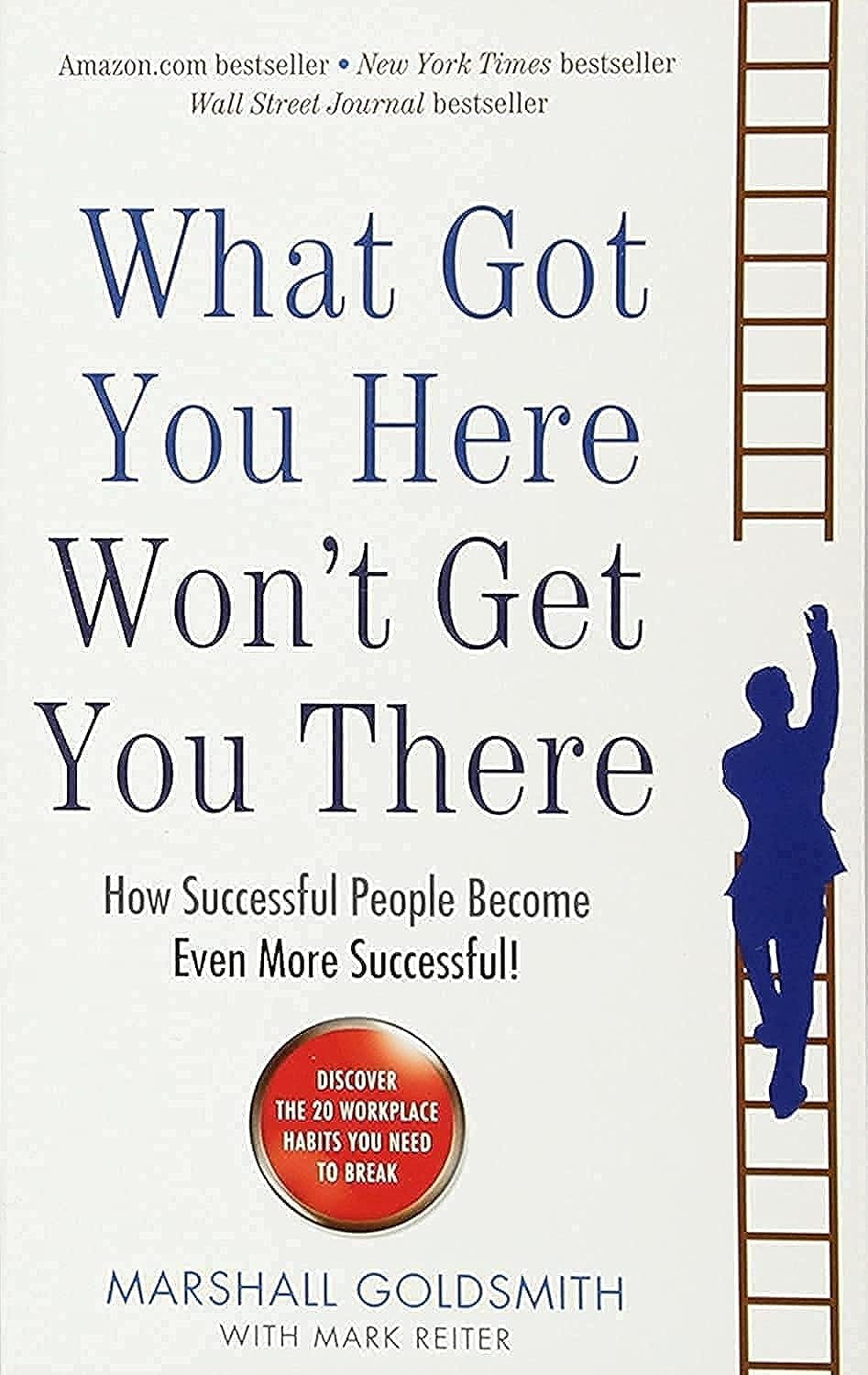
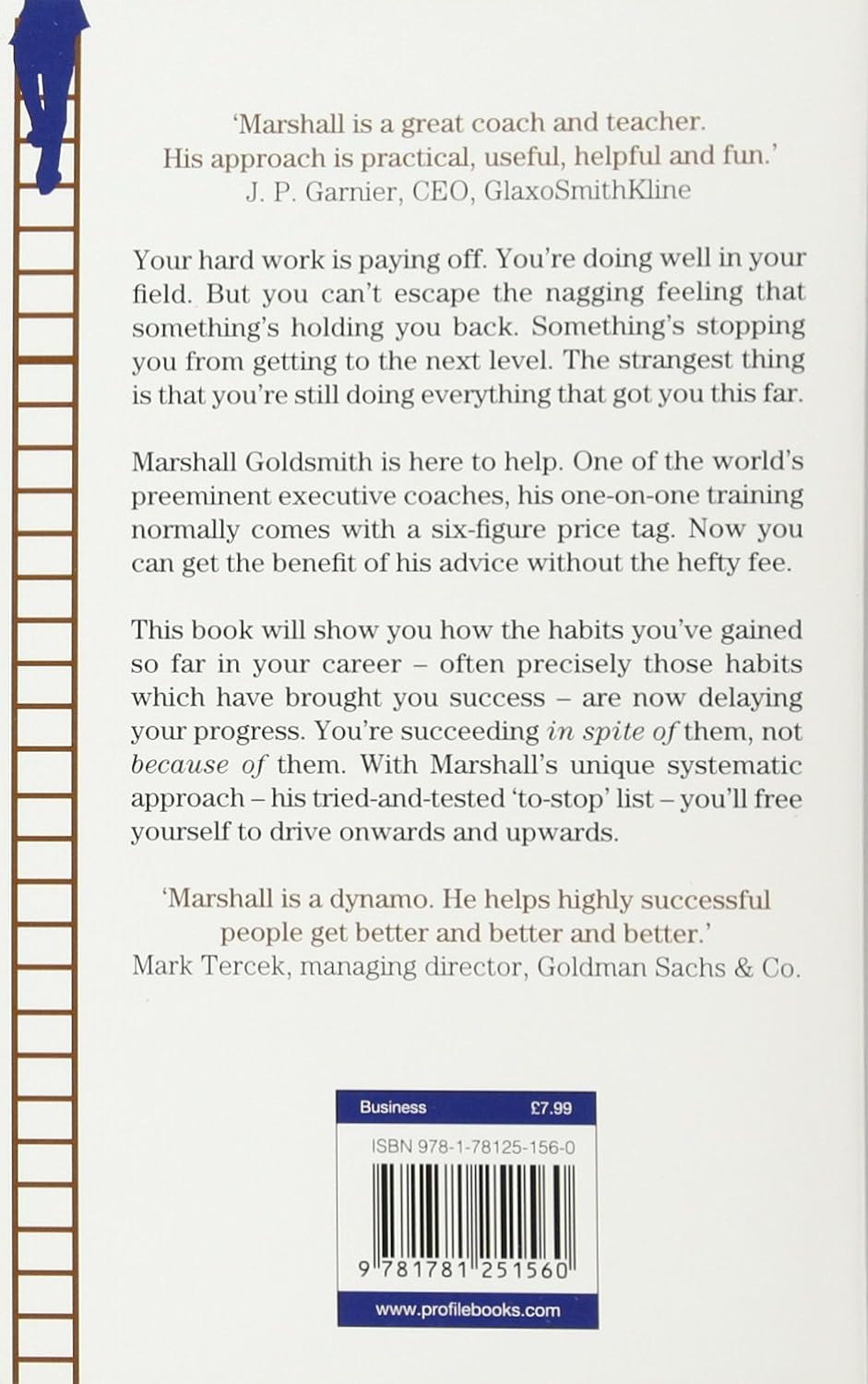




What Got You Here Won’t Get You There by Marshall Goldsmith


Original price was: රු2,250.00.රු1,750.00Current price is: රු1,750.00.
3 X Rs. 583.33 or 8% Cashback with


or 3 X රු583.33 with


or up to 4 X රු437.50 with


Navigate the path to professional and personal growth with ‘What Got You Here Won’t Get You There’ by Marshall Goldsmith. In this insightful book, Goldsmith, a renowned executive coach, explores the behaviors that may hinder success and offers practical advice on how to overcome them. This edition is a must-read for leaders and individuals looking to propel themselves to new levels of achievement
Out of stock
Email when stock available
What Got You Here Won’t Get You There by Marshall Goldsmith
What Got You Here Won’t Get You There by Marshall Goldsmith is a practical leadership and personal-development book about the small habits that can stop successful people from reaching the next level.
The central idea is simple.
The behaviors that helped you succeed earlier may eventually become the behaviors holding you back.
About What Got You Here Won’t Get You There
Marshall Goldsmith focuses on successful professionals.
These are not people who lack ambition.
They are often intelligent, hardworking, confident, and already doing well.
The problem is that success can hide weaknesses.
A habit may seem harmless.
But other people may experience it very differently.
7 Powerful Lessons from What Got You Here Won’t Get You There
1. Success Can Hide Bad Habits
Success can make people believe everything they do must be working.
That is dangerous.
A person may succeed despite certain habits, not because of them.
This distinction is one of the book’s most important ideas.
2. Stop Trying to Win Every Conversation
Competitive people often want to win.
That can help in business.
But it can damage relationships.
Not every discussion needs a winner.
Sometimes listening is more valuable than proving you are right.
3. Stop Adding Too Much Value
Leaders often want to improve every idea.
Someone makes a suggestion.
The leader immediately adds another thought.
That may seem helpful.
But it can reduce the other person’s ownership.
Goldsmith argues that sometimes the best response is simply to support a good idea.
4. Listen Properly
Many people wait for their turn to speak.
That is not the same as listening.
Real listening means paying attention.
It means resisting the urge to interrupt.
It also means showing the other person that their contribution matters.
5. Learn to Apologize
Successful people may find apologies uncomfortable.
They may explain.
Defend.
Justify.
Goldsmith recommends a simpler approach.
Recognize the mistake.
Apologize.
Then improve the behavior.
6. Ask for Feedback
People rarely see themselves exactly as others do.
Feedback can reveal patterns you do not notice.
Colleagues may see habits that you believe are insignificant.
That makes outside perspective essential.
7. Focus on Behavior You Can Change
Personality can feel difficult to change.
Behavior is more practical.
Instead of trying to become a completely different person, Goldsmith encourages specific improvement.
Interrupt less.
Listen more.
Say thank you.
Stop making unnecessary negative comments.
Small changes can create large improvements.
The 20 Habits That Hold Successful People Back
One of the most famous parts of the book is Goldsmith’s list of common leadership habits.
These are behaviors that often appear among already successful people.
They include:
Winning too much.
Adding too much value.
Passing judgment.
Making destructive comments.
Starting with “no,” “but,” or “however.”
Telling the world how smart you are.
Speaking when angry.
Negativity.
Withholding information.
Failing to give recognition.
Claiming credit you do not deserve.
Making excuses.
Clinging to the past.
Playing favorites.
Refusing to apologize.
Not listening.
Failing to express gratitude.
Punishing the messenger.
Passing the buck.
And an excessive need to be yourself.
Winning Too Much
Winning is often rewarded.
It can create ambition.
It can push people to work harder.
But wanting to win every small disagreement creates unnecessary conflict.
A good leader should know when the outcome actually matters.
Adding Too Much Value
Imagine an employee brings a good idea.
The manager says:
“That’s great, but you should also do this.”
The manager may think they improved the idea.
The employee may feel the idea is no longer theirs.
Goldsmith argues that leaders should recognize when their contribution is unnecessary.
Passing Judgment
People become less open when they feel constantly judged.
That damages communication.
A leader does not need to evaluate every statement.
Sometimes the best response is curiosity.
Destructive Comments
A clever remark can damage a relationship quickly.
Sarcasm may feel harmless to the speaker.
The listener may remember it for years.
Goldsmith encourages leaders to think about whether a comment actually helps.
If it does not, there may be no reason to say it.
“No,” “But,” and “However”
These words can create resistance.
Someone shares an idea.
You say:
“Yes, but…”
The word “but” can make everything before it feel meaningless.
The book encourages more constructive responses.
The Need to Show Intelligence
Successful people are often intelligent.
They may want others to recognize that.
But constantly demonstrating intelligence can become exhausting.
A strong leader does not need to prove they are the smartest person in every room.
Speaking When Angry
Anger reduces judgment.
Comments made during anger can cause lasting damage.
Goldsmith recommends greater emotional control.
The goal is not to eliminate emotion.
It is to avoid allowing emotion to control communication.
Negativity
Some people instinctively explain why an idea will not work.
That may appear analytical.
But constant negativity discourages others.
A strong leader should still identify risks.
The difference is doing so constructively.
Withholding Information
Information is power.
That can tempt people to keep it.
But withholding necessary information damages trust.
Teams work better when people have what they need to succeed.
Failing to Give Recognition
People want their contributions to be noticed.
Recognition costs very little.
Yet leaders often forget it.
A sincere thank-you can strengthen relationships and motivation.
Making Excuses
Excuses protect the ego.
They also block improvement.
If every mistake has an explanation, nothing changes.
Goldsmith encourages responsibility.
Acknowledge the behavior.
Then work on changing it.
Clinging to the Past
Past success can become a trap.
A strategy worked before.
A leadership style worked before.
A habit worked before.
That does not mean it will always work.
This connects directly to the title What Got You Here Won’t Get You There.
Apologizing
An effective apology does not need to be complicated.
Acknowledge what happened.
Say you are sorry.
Avoid long explanations.
Then demonstrate change.
Behavior after the apology matters most.
Feedforward
One of Goldsmith’s best-known techniques is called feedforward.
Traditional feedback looks backward.
It asks what went wrong.
Feedforward looks ahead.
It asks:
“What can I do better next time?”
This makes improvement feel more practical.
Ask, Listen, Thank
The process can be simple.
Ask someone for advice.
Listen carefully.
Do not argue.
Do not explain.
Then say thank you.
This creates a healthier way to receive input.
Why Successful People Resist Change
Success creates confidence.
Usually that is useful.
But too much confidence can make people dismiss criticism.
They may believe:
“I am successful, so my way must work.”
The problem is that the same behavior may eventually become limiting.
Leadership Is About Other People
Leadership is not only about personal performance.
It is about how other people experience you.
A brilliant manager can still create a difficult workplace.
A talented executive can still damage morale.
That means interpersonal behavior matters.
Create a “To Stop” List
Many productivity systems focus on what to start doing.
Goldsmith offers another idea.
Create a list of things to stop.
Stop interrupting.
Stop correcting small details.
Stop complaining.
Stop making unnecessary comments.
Removing one bad habit can sometimes have more impact than adding five new habits.
Profile Books specifically highlights this “to stop” approach as a core part of the book.
Who Should Read This Book?
What Got You Here Won’t Get You There is ideal for managers, executives, team leaders, entrepreneurs, professionals, and anyone interested in career growth.
It is especially useful for people who are already successful.
The book is not mainly about starting from zero.
It is about removing the behaviors preventing the next level of growth.
About Marshall Goldsmith
Marshall Goldsmith is an executive coach and leadership author.
His work focuses on behavioral change, leadership development, and professional growth.
Google Books lists him as the author of this revised 2007 edition alongside Mark Reiter and describes his long career coaching senior executives and CEOs.
Readers can learn more through the official Profile Books page for What Got You Here Won’t Get You There.
Product Details
Title: What Got You Here Won’t Get You There
Subtitle: How Successful People Become Even More Successful
Author: Marshall Goldsmith
With: Mark Reiter
Genre: Leadership / Business / Management / Personal Development
Language: English
Original Publication: 2007
Common Profile Books Paperback Edition
Publisher: Profile Books
ISBN-13: 9781846681370
Format: Paperback
Pages: 256
Publication Date: June 1, 2008
Allen & Unwin confirms this Profile Books paperback edition, including the ISBN and 256-page extent.
Export Paperback Edition
Another common edition is:
ISBN-13: 9781781251560
Format: Paperback
Pages: Approximately 300–304
Publication Date: February 2013
This edition is commonly sold in South Asian markets, so check your physical barcode before entering the final WooCommerce details.
Explore More Leadership Books
What Got You Here Won’t Get You There teaches that career growth is not always about learning more.
Sometimes it is about stopping behaviors that no longer serve you.
Listen better.
Judge less.
Apologize faster.
Give recognition.
Ask for feedback.
And be willing to change.
Readers can explore more Business, Finance & Economics Books at Bargain Books.
You can also explore Self-Help & Psychology Books at Bargain Books.
For readers who want to become better leaders, improve workplace relationships, and eliminate the habits limiting their progress, What Got You Here Won’t Get You There offers a practical framework for lasting behavioral change.
| Author | Marshall Goldsmith |
|---|---|
| Type | Paperback Printed Book |
| ISBN/ISSN | 1781251568, 978-1781251560 |
| Language | English |
| Pages | 304 |
Be the first to review “What Got You Here Won’t Get You There by Marshall Goldsmith”
Related products
-24%
Non-Fiction & Knowledge
Original price was: රු2,300.00.රු1,750.00Current price is: රු1,750.00.
3 X Rs. 583.33 or 8% Cashback with
or 3 X රු583.33 with
or up to 4 X රු437.50 with
-24%
Out of stock
Non-Fiction & Knowledge
Original price was: රු2,100.00.රු1,600.00Current price is: රු1,600.00.
3 X Rs. 533.33 or 8% Cashback with
or 3 X රු533.33 with
or up to 4 X රු400.00 with
-14%
Out of stock
Self-Help & Psychology
Original price was: රු2,900.00.රු2,500.00Current price is: රු2,500.00.
3 X Rs. 833.33 or 8% Cashback with
or 3 X රු833.33 with
or up to 4 X රු625.00 with

Out of stock
Autobiography
රු2,750.00
3 X Rs. 916.67 or 8% Cashback with
or 3 X රු916.67 with
or up to 4 X රු687.50 with
-24%

Out of stock
Non-Fiction & Knowledge
Original price was: රු2,500.00.රු1,900.00Current price is: රු1,900.00.
3 X Rs. 633.33 or 8% Cashback with
or 3 X රු633.33 with
or up to 4 X රු475.00 with
-34%

Non-Fiction & Knowledge
Original price was: රු2,250.00.රු1,490.00Current price is: රු1,490.00.
3 X Rs. 496.67 or 8% Cashback with
or 3 X රු496.67 with
or up to 4 X රු372.50 with
-26%

Out of stock
Non-Fiction & Knowledge
Original price was: රු2,000.00.රු1,490.00Current price is: රු1,490.00.
3 X Rs. 496.67 or 8% Cashback with
or 3 X රු496.67 with
or up to 4 X රු372.50 with
-24%

Out of stock
Non-Fiction & Knowledge
Original price was: රු2,100.00.රු1,600.00Current price is: රු1,600.00.
3 X Rs. 533.33 or 8% Cashback with
or 3 X රු533.33 with
or up to 4 X රු400.00 with
Reviews
There are no reviews yet.