
No products in the cart.
-16%
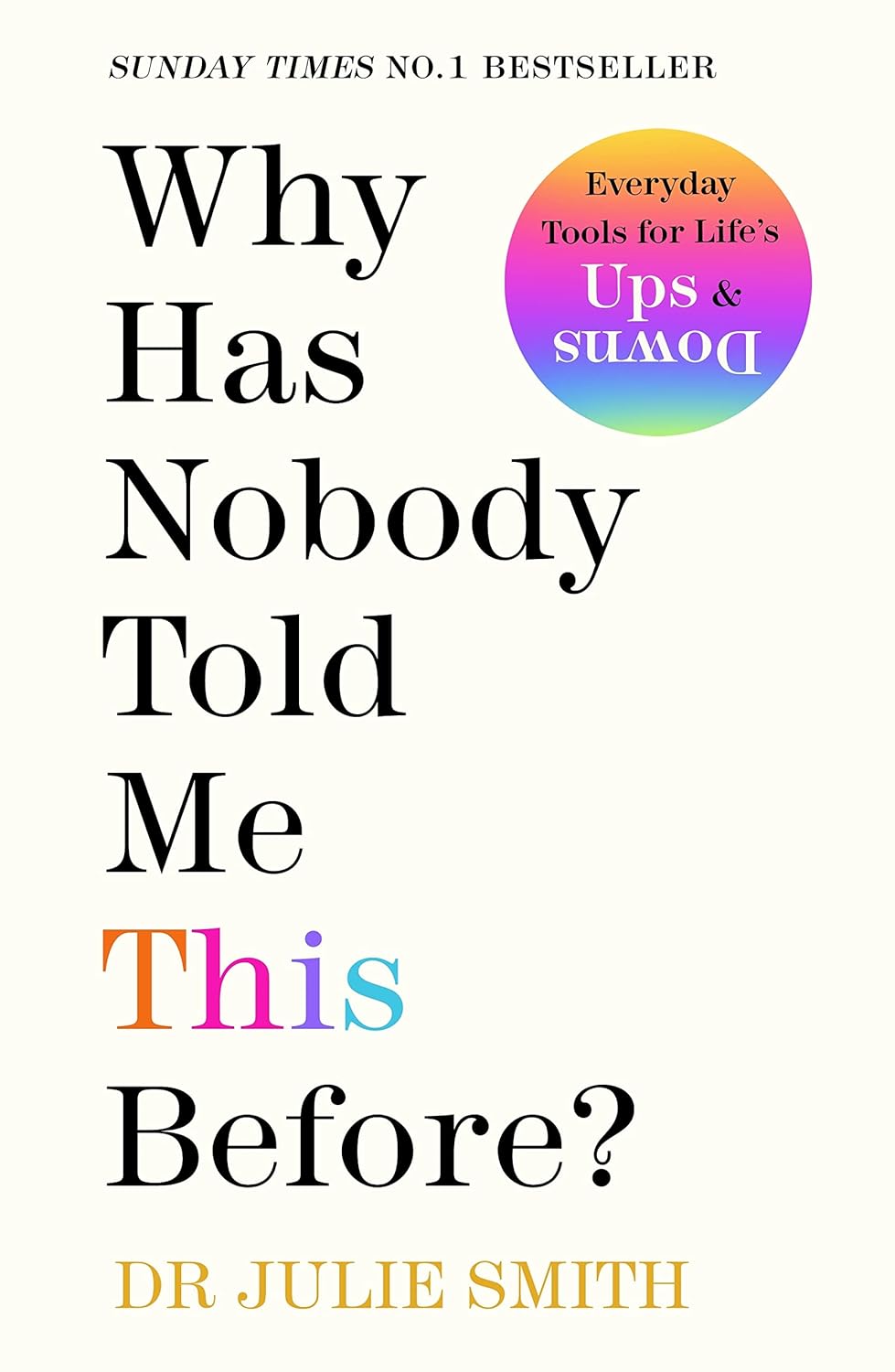
Why Has Nobody Told Me This Before by Dr Julie Smith

Original price was: රු3,150.00.රු2,650.00Current price is: රු2,650.00.
3 X Rs. 883.33 or 8% Cashback with


or 3 X රු883.33 with


or up to 4 X රු662.50 with


Drawing on years of experience as a clinical psychologist, online sensation Dr Julie Smith shares all the tools you need to get through life’s ups and downs.
Out of stock
Email when stock available
Why Has Nobody Told Me This Before by Dr Julie Smith
Why Has Nobody Told Me This Before by Dr Julie Smith is a practical self-help book filled with simple tools for managing emotions, building confidence, improving resilience, and handling everyday mental-health challenges.
The book is designed to be easy to dip into.
You do not have to read it like a traditional textbook.
Instead, you can turn to the section that matches what you are dealing with.
About Why Has Nobody Told Me This Before
Why Has Nobody Told Me This Before is written by clinical psychologist Dr Julie Smith.
The book brings together ideas and tools drawn from psychology and therapy.
Its aim is to make useful mental-health strategies easier to understand.
The advice is practical.
The language is simple.
And the chapters are short enough to revisit when needed.
7 Powerful Lessons from Why Has Nobody Told Me This Before
1. Low Mood Can Be Managed
Low mood can make everything feel harder.
Simple tasks can feel overwhelming.
Motivation can disappear.
The book explains how small actions can help interrupt that cycle.
You do not always have to wait until you feel motivated.
Sometimes action comes first.
Motivation can follow.
2. Thoughts Are Not Always Facts
One difficult thought can quickly feel true.
But thoughts are not always accurate.
The book encourages readers to notice patterns in their thinking.
This can help create distance from self-criticism, fear, and negative assumptions.
3. Anxiety Needs Understanding
Anxiety can make the body and mind feel as though something dangerous is happening.
Even when there is no immediate threat.
The book explains how anxiety can affect breathing, attention, thoughts, and behaviour.
Understanding what is happening can make the experience feel less confusing.
4. Motivation Is Not Reliable
Many people wait until they feel motivated before taking action.
But motivation changes.
It comes and goes.
The book encourages readers to rely more on habits, structure, and small steps.
That approach can be more dependable.
5. Confidence Can Be Built
Confidence is not something only certain people have.
It can develop through action.
Trying something difficult.
Learning from mistakes.
Repeating the process.
The book encourages readers to stop waiting until they feel completely ready.
6. Emotional Resilience Can Improve
Resilience does not mean never struggling.
It means learning how to recover.
The book offers tools for difficult emotions, criticism, uncertainty, stress, and setbacks.
These skills can become stronger with practice.
7. Small Tools Can Make a Big Difference
Not every improvement requires a dramatic life change.
Sometimes small habits are more useful.
Sleep.
Movement.
Breathing.
Reflection.
Better boundaries.
Healthier routines.
These simple actions can support emotional wellbeing over time.
Understanding Low Mood
Low mood can affect energy.
It can affect concentration.
It can affect sleep.
It can also affect the way you think about yourself.
When mood drops, people may withdraw.
That can make the situation worse.
The book encourages small, realistic actions.
Not perfection.
Just movement in a healthier direction.
Anxiety and the Body
Anxiety is not only a thought.
It can also appear physically.
Fast heartbeat.
Tight chest.
Sweating.
Restlessness.
Difficulty concentrating.
Understanding these symptoms can reduce fear.
The body may be reacting to stress even when the situation is not dangerous.
Dealing With Criticism
Criticism can feel personal.
Especially when confidence is already low.
The book encourages readers to separate useful feedback from unnecessary negativity.
Not every opinion deserves the same weight.
That is an important lesson.
Building Confidence
Confidence often grows after action.
Not before it.
This means waiting until fear disappears may keep you stuck.
Trying something small can create evidence that you are capable.
That evidence builds confidence gradually.
Self-Doubt
Self-doubt affects many people.
It can appear before exams.
Work.
Relationships.
Public speaking.
Or major decisions.
The book encourages readers to challenge extreme thinking.
You do not have to feel completely certain to move forward.
Motivation
Motivation is one of the most useful sections in Why Has Nobody Told Me This Before.
The book explains that low motivation does not always mean laziness.
Energy.
Mood.
Habits.
Stress.
Environment.
All of these can affect behaviour.
Breaking tasks into smaller steps can help.
Emotional Regulation
Emotions can feel intense.
Anger.
Fear.
Sadness.
Embarrassment.
Shame.
The goal is not to eliminate emotion.
The goal is to understand it.
That makes it easier to respond rather than react.
Stress
Stress is not always bad.
A small amount can help with focus.
Too much can become exhausting.
The book encourages readers to notice warning signs early.
That can make it easier to adjust before stress becomes overwhelming.
Boundaries
Healthy boundaries protect time and energy.
They help people communicate what they are comfortable with.
The book encourages readers to understand that saying no is not automatically selfish.
Boundaries can support healthier relationships.
Relationships
Relationships affect mental wellbeing.
Communication matters.
Listening matters.
Boundaries matter.
So does the ability to discuss difficult emotions.
The book gives readers practical ways to think about connection.
Self-Compassion
People often speak to themselves more harshly than they would speak to a friend.
That can make difficult situations even worse.
The book encourages a more balanced internal voice.
This does not mean ignoring mistakes.
It means responding to them in a useful way.
Difficult Days
Not every day can be productive.
Not every day can feel positive.
The book does not demand constant happiness.
Instead, it helps readers develop tools for harder moments.
That makes the advice feel more realistic.
Mental Health Is Not Static
Mental wellbeing can change.
Stress changes.
Relationships change.
Sleep changes.
Life changes.
That means mental health also requires ongoing attention.
The tools in the book are designed to be reused.
Bite-Sized Format
One of the strongest features of Why Has Nobody Told Me This Before is its structure.
The chapters are relatively short.
Readers can jump directly to a topic.
That makes the book useful as a reference.
You can return to a chapter when a specific problem appears.
Who Should Read This Book?
Why Has Nobody Told Me This Before is ideal for readers interested in self-help, psychology, emotional wellbeing, confidence, resilience, anxiety management, and personal growth.
It may be especially useful for readers who want practical tools rather than heavy theory.
It is also approachable for people who have never read a self-help book before.
Important Health Note
This book provides general mental-health education.
It is not a replacement for diagnosis, therapy, medical care, or emergency support.
If someone is experiencing severe distress, self-harm thoughts, or another mental-health crisis, professional support is important.
About Dr Julie Smith
Dr Julie Smith is a clinical psychologist, bestselling author, and mental-health educator.
Penguin says she worked in the NHS and private practice before expanding into online mental-health education.
Her work focuses on making psychological tools easier to access and understand.
Readers can learn more through the official Penguin page for Why Has Nobody Told Me This Before.
Product Details
Title: Why Has Nobody Told Me This Before?
Author: Dr Julie Smith
Genre: Self-Help / Psychology / Mental Health / Personal Development
Language: English
Original Publication: 2022
Common UK Edition
Publisher / Imprint: Michael Joseph
ISBN-13: 9780241529737
Pages: 432
Publication Date: January 6, 2022
Penguin lists this edition at 432 pages.
Other Common Edition
Another Michael Joseph edition is listed with:
ISBN-13: 9780241529720
Pages: 432
Publication: January 2022
Penguin Random House South Africa confirms these details for its paperback listing.
2026 India Paperback
Penguin Random House India also lists a 2026 paperback edition.
ISBN-13: 9781405993814
Pages: 432
Publication: January 2026
This is a different edition, so always match your WooCommerce listing to the barcode on your physical copy.
Important Edition Note
A newer UK paperback with ISBN 9780241529744 is scheduled for late December 2026 in the UK.
It includes two bonus chapters focused on anxiety and panic attacks.
Since that edition is still upcoming as of September 18, 2026, do not use that ISBN for older stock unless you are creating a preorder product.
Explore More Self-Help Books
Why Has Nobody Told Me This Before is useful because it turns psychological ideas into practical tools.
The book focuses on everyday situations.
Low mood.
Anxiety.
Confidence.
Motivation.
Stress.
Criticism.
Resilience.
Readers can explore more Self-Help & Psychology Books at Bargain Books.
For readers who want practical guidance for emotional wellbeing and everyday mental-health challenges, Why Has Nobody Told Me This Before is an accessible and useful guide.
| Author | Dr Julie Smith |
|---|---|
| Type | Paperback Printed Book |
| ISBN/ISSN | 0241529727, 978-0241529720 |
| Language | English |
| Pages | 368 |
Be the first to review “Why Has Nobody Told Me This Before by Dr Julie Smith”
Related products
-17%

Out of stock
Non-Fiction & Knowledge
Original price was: රු2,900.00.රු2,400.00Current price is: රු2,400.00.
3 X Rs. 800.00 or 8% Cashback with
or 3 X රු800.00 with
or up to 4 X රු600.00 with

Non-Fiction & Knowledge
රු1,950.00
3 X Rs. 650.00 or 8% Cashback with
or 3 X රු650.00 with
or up to 4 X රු487.50 with

Out of stock
Autobiography
රු2,750.00
3 X Rs. 916.67 or 8% Cashback with
or 3 X රු916.67 with
or up to 4 X රු687.50 with
-14%

Out of stock
Self-Help & Psychology
Original price was: රු2,900.00.රු2,500.00Current price is: රු2,500.00.
3 X Rs. 833.33 or 8% Cashback with
or 3 X රු833.33 with
or up to 4 X රු625.00 with

Non-Fiction & Knowledge
රු2,450.00
3 X Rs. 816.67 or 8% Cashback with
or 3 X රු816.67 with
or up to 4 X රු612.50 with
-26%
Out of stock
Non-Fiction & Knowledge
Original price was: රු2,000.00.රු1,490.00Current price is: රු1,490.00.
3 X Rs. 496.67 or 8% Cashback with
or 3 X රු496.67 with
or up to 4 X රු372.50 with
-24%
Out of stock
Non-Fiction & Knowledge
Original price was: රු2,100.00.රු1,600.00Current price is: රු1,600.00.
3 X Rs. 533.33 or 8% Cashback with
or 3 X රු533.33 with
or up to 4 X රු400.00 with
Out of stock
Self-Help & Psychology
රු2,200.00
3 X Rs. 733.33 or 8% Cashback with
or 3 X රු733.33 with
or up to 4 X රු550.00 with
Reviews
There are no reviews yet.