
No products in the cart.
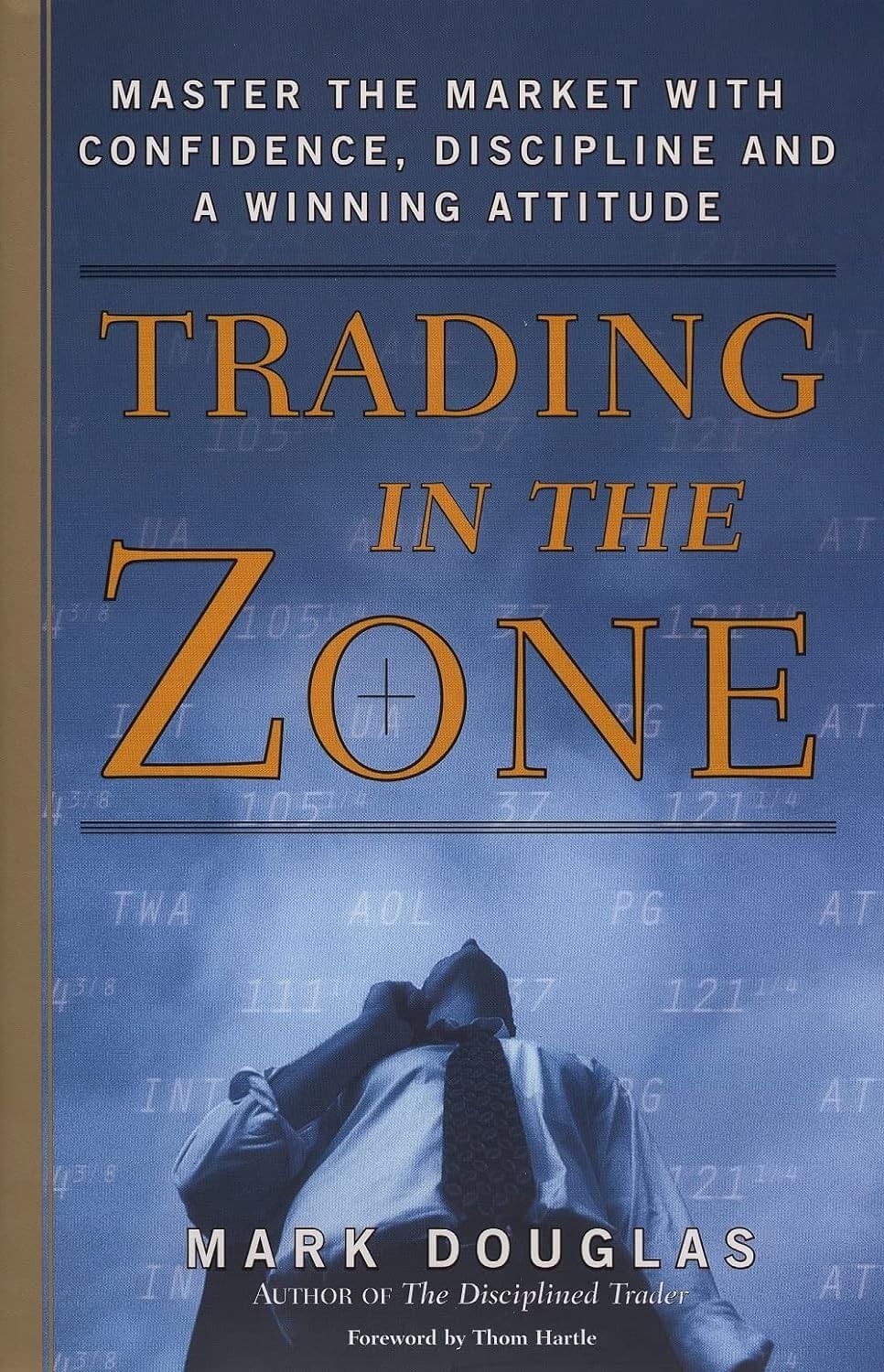
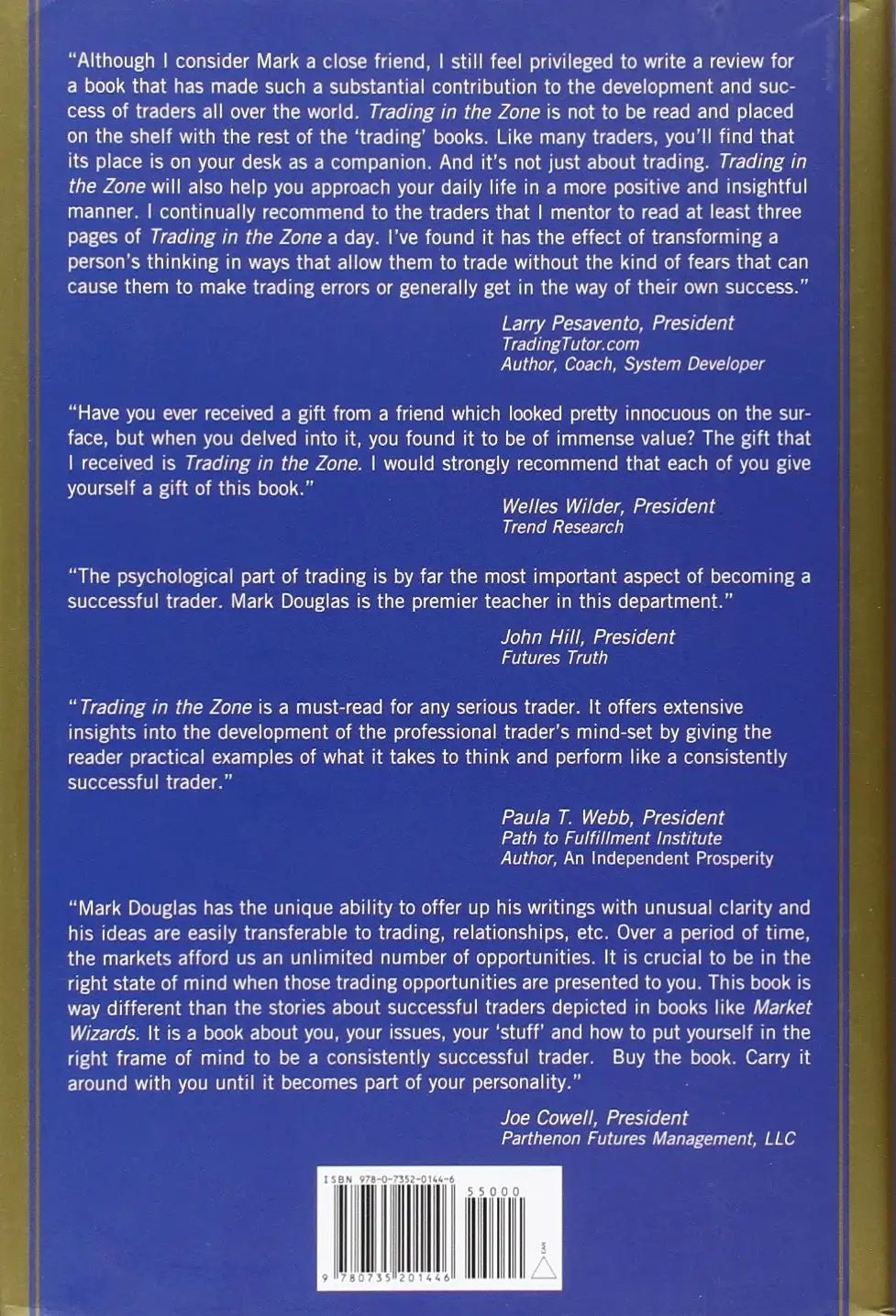

Trading in the Zone by Mark Douglas
රු1,800.00
3 X Rs. 600.00 or 8% Cashback with


or 3 X රු600.00 with


or up to 4 X රු450.00 with


“Trading in the Zone: Master the Market with Confidence, Discipline, and a Winning Attitude” by Mark Douglas is an essential guide for traders looking to enhance their psychological edge in the market. This book delves into the mental and emotional aspects of trading, providing readers with the tools to develop confidence, discipline, and a winning attitude.
Out of stock
Email when stock available
Trading in the Zone by Mark Douglas
Trading in the Zone by Mark Douglas is a classic book about trading psychology, discipline, probability, risk, confidence, and the mental habits that influence trading decisions.
Many traders spend most of their time studying charts.
They learn indicators.
They study price action.
They search for strategies.
But even a good strategy can fail when emotions take control.
Fear can make a trader exit too early.
Greed can encourage excessive risk.
Overconfidence can lead to poor decisions.
Mark Douglas argues that consistent trading requires more than technical knowledge.
It requires the right mindset.
About Trading in the Zone
Trading in the Zone focuses on the psychological challenges that make trading difficult.
The market is uncertain.
No individual trade is guaranteed.
Even a strong trading setup can lose.
Douglas explains why traders need to become comfortable with this uncertainty instead of constantly trying to eliminate it.
The book explores how beliefs, expectations, fear, and previous experiences influence decision-making.
Its central message is that successful trading depends on learning to think in probabilities.
Why Trading Psychology Matters
Two traders can use the same strategy.
They can see the same chart.
They can enter at approximately the same price.
But their results may still be completely different.
Why?
Psychology.
One trader may follow the plan.
The other may panic.
One may respect the stop-loss.
The other may move it because they do not want to accept a loss.
One may wait patiently for the next opportunity.
The other may immediately enter another trade to recover money.
This is why trading psychology matters.
7 Powerful Lessons from Trading in the Zone
1. Accept That Anything Can Happen
One of the central ideas in Trading in the Zone is that no single trade is certain.
A perfect-looking setup can fail.
A weak-looking setup can sometimes succeed.
Markets contain too many variables for complete certainty.
The goal is therefore not to know exactly what will happen next.
The goal is to manage risk while taking trades that offer an edge.
2. Think in Probabilities
Professional traders do not need every trade to win.
They think across a series of trades.
A trading strategy may have an advantage over many repetitions.
But any individual outcome can still be unpredictable.
This is similar to how a casino operates.
The casino does not know who will win one particular game.
It relies on probabilities over many games.
Douglas encourages traders to approach markets with a similar mindset.
3. Accept Risk Before Entering
A trader should know how much can be lost before entering a position.
More importantly, the trader should genuinely accept that loss.
If the possible loss feels emotionally unbearable, the position may be too large.
When risk is fully accepted beforehand, traders are less likely to panic when price moves against them.
4. Do Not Become Emotionally Attached to One Trade
A trade is only one event.
It should not determine a trader’s self-worth.
Winning does not automatically mean the decision was brilliant.
Losing does not automatically mean the decision was foolish.
The quality of a trading decision should be judged by whether the trader followed a sound process.
5. Consistency Comes From Discipline
Many traders know what they should do.
The challenge is doing it repeatedly.
Following entry rules once is easy.
Following them after three losses is harder.
Taking profits according to a plan is easy until greed appears.
Consistency requires discipline.
Douglas emphasizes building habits that reduce emotional decision-making.
6. Avoid Fear-Based Trading
Fear can appear in several forms.
Fear of losing.
Fear of missing out.
Fear of being wrong.
Fear of giving profits back.
Each one can interfere with decision-making.
A trader who is afraid of losing may avoid a valid setup.
A trader suffering from FOMO may enter too late.
The book encourages traders to recognize these emotional patterns.
7. Develop a Professional Trading Mindset
A professional mindset focuses on execution rather than prediction.
The trader defines the setup.
The trader defines the risk.
The trader follows the plan.
Then the trader accepts the outcome.
This reduces the need to be right on every trade.
The Problem With Needing to Be Right
Many traders connect winning with intelligence.
If the trade wins, they feel smart.
If it loses, they feel wrong.
This creates emotional pressure.
A trader may refuse to close a losing position because closing it would mean admitting a mistake.
The position then becomes larger and more dangerous.
Trading in the Zone encourages readers to separate trading outcomes from ego.
Losses are part of trading.
The goal is not to avoid every loss.
The goal is to control losses and execute consistently.
Understanding Random Outcomes
A strategy can have a statistical edge while producing unpredictable individual results.
Imagine a strategy that wins six trades out of ten over a large sample.
That does not mean the first six trades will win.
There could be several losses in a row.
Then several wins.
The sequence is uncertain.
This is one reason traders often abandon good systems too early.
They mistake short-term randomness for failure.
Risk Management and Psychology
Risk management is usually discussed mathematically.
Position size.
Stop-loss distance.
Risk-to-reward ratios.
But psychology is equally important.
If a trader risks too much, emotions become stronger.
Small price movements feel threatening.
Decision-making becomes harder.
Reducing risk can therefore improve both financial protection and emotional control.
Fear of Missing Out
FOMO is one of the most common trading problems.
A market suddenly moves.
The trader sees price accelerating.
They feel they are missing an opportunity.
Instead of waiting for the setup, they chase the move.
This often leads to poor entries.
The lesson is simple.
There will always be another opportunity.
Missing one trade is usually less damaging than forcing a bad trade.
Revenge Trading
After a loss, some traders immediately want the money back.
They increase position size.
They lower their standards.
They take trades that do not match their strategy.
This behaviour is often called revenge trading.
It can quickly turn a small loss into a serious one.
A probabilistic mindset helps prevent this.
One losing trade does not need to be recovered immediately.
It is simply one outcome within a larger sample.
Confidence Without Overconfidence
Confidence is important.
But overconfidence can be dangerous.
Winning several trades in a row can make traders believe they have suddenly mastered the market.
They may increase risk.
They may stop following rules.
Then one large loss erases several previous wins.
Healthy confidence comes from trusting the process.
It does not come from believing that losses are impossible.
Creating Consistency
Consistency comes from repeated behaviour.
A trader needs clear rules.
What qualifies as an entry?
Where is the stop?
How much capital is being risked?
When should profits be taken?
When should no trade be taken?
The clearer these rules become, the less room there is for emotional improvisation.
The Five Fundamental Truths
One of the best-known sections of Trading in the Zone discusses five fundamental ideas.
Anything can happen.
You do not need to know what will happen next to make money.
Wins and losses can appear randomly within a series of trades defined by an edge.
An edge only indicates that one outcome has a higher probability than another.
Every moment in the market is unique.
These principles encourage traders to stop demanding certainty from an uncertain environment.
Trading as a Business
Trading should be approached like a business rather than entertainment.
A business has rules.
It has costs.
It accepts that not every transaction is profitable.
Trading works similarly.
Losses are part of operating expenses.
The goal is for profitable outcomes to exceed losses over time.
Thinking this way can make individual losses easier to accept.
Who Should Read This Book?
Trading in the Zone is ideal for traders who understand basic market concepts but struggle with discipline or consistency.
It may particularly help readers dealing with:
- Fear of losing
- FOMO
- Revenge trading
- Overtrading
- Moving stop-losses
- Taking profits too early
- Holding losses too long
- Breaking trading rules
- Emotional reactions after wins or losses
The book is relevant to stock traders, forex traders, futures traders, options traders, and others involved in speculative markets.
About Mark Douglas
Mark Douglas was a trading psychology author and coach.
He also wrote The Disciplined Trader: Developing Winning Attitudes.
Penguin Random House notes that he began coaching traders in 1982 and developed seminars and training programs focused on trading psychology.
His work became influential because it focused less on predicting markets and more on understanding the trader making the decisions.
Readers can learn more through the official Penguin Random House page for Trading in the Zone.
Product Details
Title: Trading in the Zone
Subtitle: Master the Market with Confidence, Discipline and a Winning Attitude
Author: Mark Douglas
Genre: Trading / Investing / Personal Finance / Trading Psychology
Language: English
Publisher: Prentice Hall Press
ISBN-13: 9780735201446
Pages: 240
Dimensions: approximately 6 × 9 inches
Penguin Random House lists this edition as a 240-page Prentice Hall Press hardcover published January 1, 2001.
Different international, paperback, translated, or digital editions may have different ISBNs and page counts.
Always check the ISBN printed on your physical copy before entering final WooCommerce specifications.
Important Note About Trading Books
Trading in the Zone focuses primarily on trading psychology.
It does not guarantee profitable trades.
It also does not replace proper risk management, market education, or a tested trading strategy.
Markets involve financial risk, and even disciplined traders can experience losses.
The value of the book lies in helping readers understand how their own beliefs and emotions may influence their decisions.
Explore More Business and Finance Books
Trading in the Zone teaches traders to stop searching for certainty and become comfortable with probability.
A trader cannot control what the market does next.
But they can control position size.
They can control risk.
They can control whether they follow their strategy.
And they can control how they respond to a loss.
Readers looking for more books about trading, investing, finance, and market psychology can explore Business, Finance & Economics Books at Bargain Books.
For traders who already understand strategies but struggle to execute them consistently, Trading in the Zone remains one of the best-known books focused specifically on the mental side of trading.
| Author | Mark Douglas |
|---|---|
| Type | Paperback Brand new Printed (Indian Locally published) |
| ISBN/ISSN | 0593538447 |
| Language | English |
| Pages | 240 |
Be the first to review “Trading in the Zone by Mark Douglas”
Related products

Analysis & Strategy
රු1,750.00
3 X Rs. 583.33 or 8% Cashback with
or 3 X රු583.33 with
or up to 4 X රු437.50 with
-10%
Out of stock
Analysis & Strategy
Original price was: රු5,200.00.රු4,700.00Current price is: රු4,700.00.
3 X Rs. 1,566.67 or 8% Cashback with
or 3 X රු1,566.67 with
or up to 4 X රු1,175.00 with
-44%
Out of stock
Analysis & Strategy
Original price was: රු2,750.00.රු1,550.00Current price is: රු1,550.00.
3 X Rs. 516.67 or 8% Cashback with
or 3 X රු516.67 with
or up to 4 X රු387.50 with

Damaged & Imperfect Books
රු1,200.00
3 X Rs. 400.00 or 8% Cashback with
or 3 X රු400.00 with
or up to 4 X රු300.00 with

Analysis & Strategy
රු2,200.00
3 X Rs. 733.33 or 8% Cashback with
or 3 X රු733.33 with
or up to 4 X රු550.00 with
-46%
Analysis & Strategy
Original price was: රු2,950.00.රු1,600.00Current price is: රු1,600.00.
3 X Rs. 533.33 or 8% Cashback with
or 3 X රු533.33 with
or up to 4 X රු400.00 with

Damaged & Imperfect Books
රු1,200.00
3 X Rs. 400.00 or 8% Cashback with
or 3 X රු400.00 with
or up to 4 X රු300.00 with
-26%

Out of stock
Analysis & Strategy
Original price was: රු1,900.00.රු1,400.00Current price is: රු1,400.00.
3 X Rs. 466.67 or 8% Cashback with
or 3 X රු466.67 with
or up to 4 X රු350.00 with
Reviews
There are no reviews yet.