
No products in the cart.

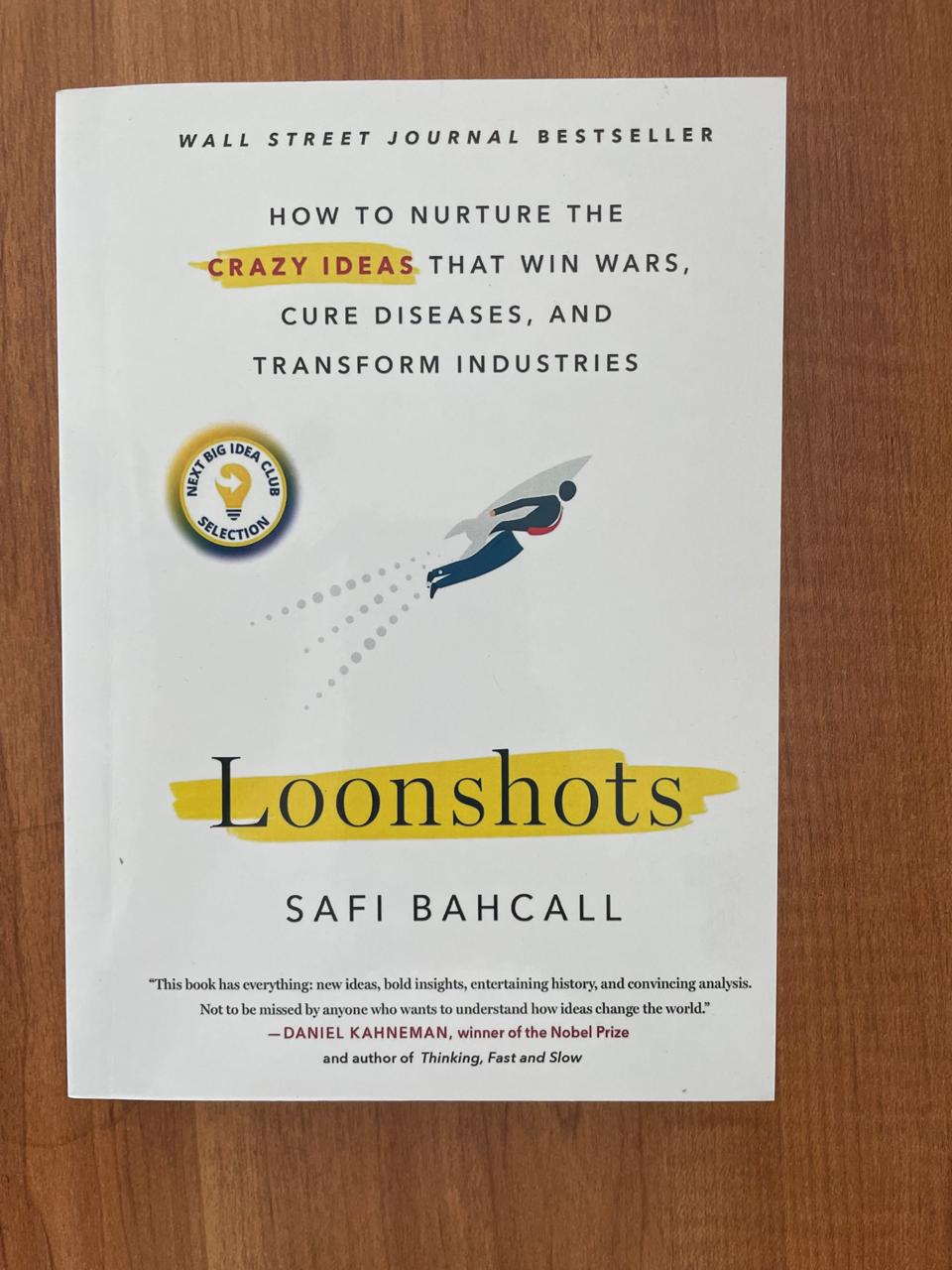

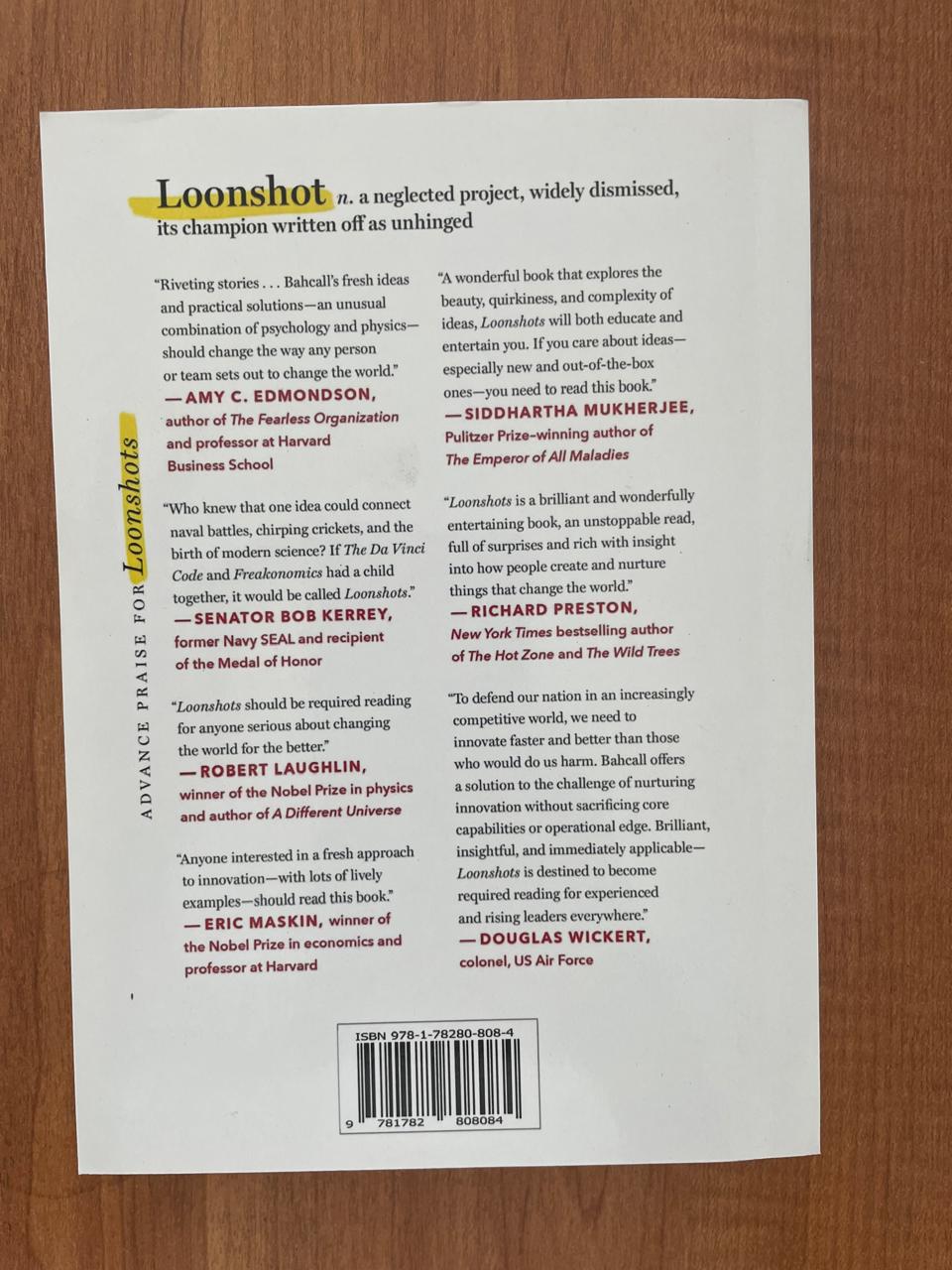




Loonshots by Safi Bahcall


රු1,950.00
3 X Rs. 650.00 or 8% Cashback with


or 3 X රු650.00 with


or up to 4 X රු487.50 with


Loonshots by Safi Bahcall is a fascinating business and innovation book explaining how organizations can nurture radical ideas without sacrificing reliable execution. Using concepts from physics, business history, medicine and technology, Safi Bahcall explores P-type and S-type loonshots, the False Fail, artists and soldiers, the Moses Trap and the structural changes that determine whether innovation survives. Ideal for entrepreneurs, managers, founders, product leaders and anyone interested in business strategy, innovation and breakthrough thinking.
6 in stock
Loonshots by Safi Bahcall is a fascinating business, innovation and leadership book about why some seemingly crazy ideas become world-changing breakthroughs while others are rejected before they have a chance to succeed.
Every major innovation begins as something uncertain.
A strange idea.
An experiment.
A proposal that may sound unrealistic.
A product nobody believes customers want.
A strategy that looks completely different from what successful companies are already doing.
Some of these ideas fail.
But others eventually:
Create industries.
Transform businesses.
Save lives.
Change technology.
Influence history.
The problem is that nobody can always tell which idea is which at the beginning.
That is the challenge at the heart of Loonshots by Safi Bahcall.
Safi Bahcall asks:
Why do smart organizations sometimes reject brilliant ideas?
Why do companies that were once innovative suddenly become rigid?
Why do teams stop experimenting as they grow?
And what can leaders do to protect unusual ideas long enough to discover whether they actually work?
Instead of focusing only on company culture, Bahcall introduces another way of thinking about innovation.
He argues that structure can be just as important as culture.
A team may contain:
Brilliant employees.
Talented engineers.
Creative leaders.
Strong values.
Yet its organizational structure may still push people toward safe projects and away from risky breakthroughs.
The solution is not simply telling employees:
“Be innovative.”
The deeper challenge is creating an environment where unusual ideas can survive long enough to develop.
Loonshots by Safi Bahcall – Book Overview
Loonshots by Safi Bahcall combines:
Business history.
Science.
Leadership.
Innovation.
Organizational behavior.
Physics.
Entrepreneurship.
Historical case studies.
Bahcall uses the science of phase transitions as a metaphor and analytical model for understanding organizations.
Water can exist as liquid.
Then a small temperature change can suddenly transform it into ice.
The molecules are mostly the same.
But their collective behavior becomes completely different.
Bahcall argues that organizations can behave similarly.
A company may once encourage:
Experimentation.
Creativity.
Risk.
New ideas.
Then, as it grows, relatively small structural changes may cause the organization to become much more:
Political.
Conservative.
Rigid.
Focused on promotion.
Focused on existing products.
The people may not suddenly become less intelligent.
The structure has changed the incentives around them.
What Is a Loonshot?
A loonshot is an idea that initially appears so unusual, uncertain or unrealistic that many people dismiss it.
It may sound:
Crazy.
Impractical.
Too risky.
Unprofitable.
Technically impossible.
Yet if nurtured correctly, some of these ideas can become breakthroughs.
The term deliberately contrasts with the idea of a moonshot.
A moonshot usually refers to an ambitious goal.
A loonshot is closer to the fragile, strange idea that might eventually make an ambitious goal possible.
Why Radical Ideas Are Fragile
A promising idea is often weakest at the beginning.
Early versions may be:
Slow.
Expensive.
Ugly.
Unreliable.
Incomplete.
Difficult to explain.
This makes them easy to reject.
Imagine judging a revolutionary technology only by its first prototype.
It may look terrible compared with a mature existing product.
But that comparison may miss its potential.
The False Fail
One important concept in Loonshots by Safi Bahcall is the danger of the False Fail.
A project fails.
Everyone says:
“We knew it wouldn’t work.”
The project is killed.
But sometimes the failure was not proof that the underlying idea was wrong.
Maybe:
The experiment was poorly designed.
The timing was wrong.
The product needed another iteration.
The market was not ready.
One technical problem needed solving.
A potentially valuable idea can disappear because the first attempt failed.
Failure Versus False Failure
Not every failed project deserves unlimited investment.
Some ideas genuinely do not work.
The challenge is learning to distinguish between:
A bad idea.
and
A good idea with a bad first attempt.
That distinction is one of the most valuable innovation lessons in the book.
Learn From Failure
Instead of asking only:
“Did it fail?”
ask:
Why did it fail?
Was the core assumption wrong?
Or was one part of execution wrong?
The answer determines whether the team should:
Stop.
Modify.
Retest.
Continue.
P-Type Loonshots
Bahcall distinguishes between two major types of loonshots.
The first is the P-type loonshot.
P stands for product.
These are radical ideas involving:
Products.
Technologies.
Scientific discoveries.
New technical capabilities.
Examples might include a technology that experts initially believe cannot work.
Product Breakthroughs
P-type loonshots are often what people imagine when they hear the word innovation.
A new:
Device.
Drug.
Software system.
Engine.
Scientific method.
But focusing only on products can create a blind spot.
S-Type Loonshots
The second category is the S-type loonshot.
S stands for strategy.
These involve a surprising:
Business model.
Pricing strategy.
Distribution system.
Customer strategy.
Operating model.
Market approach.
Sometimes a company does not win because it has the best technology.
It wins because it discovers a better way to use, sell or distribute technology.
Product Versus Strategy
Loonshots by Safi Bahcall shows that organizations should pay attention to both.
A company can become excellent at product innovation and still lose because it misses a strategic shift.
Likewise, a brilliant strategy cannot survive forever without good products.
Strong organizations learn to nurture both.
Pan Am and American Airlines
One of the book’s examples involves the airline industry.
Bahcall contrasts companies that emphasized technological advances with those that developed innovative strategies.
Pan Am became closely associated with major aviation advances.
American Airlines, meanwhile, developed important strategy innovations, including its frequent-flyer program.
The lesson is not that product innovation is bad.
It is that a company can become so focused on one type of innovation that it misses another.
Watch Your Blind Side
Organizations often become strongest in one area.
That strength can create overconfidence.
A technology company may believe:
Technology always wins.
A marketing company may believe:
Brand always wins.
A retailer may believe:
Location always wins.
But competitors may attack from an entirely different direction.
Artists and Soldiers
One of the most practical ideas in Loonshots by Safi Bahcall is the distinction between artists and soldiers.
Artists explore uncertain ideas.
Soldiers execute proven systems.
Both are essential.
Artists
Artists focus on:
Experimentation.
Invention.
Exploration.
New ideas.
Uncertain opportunities.
They need space to test something that may fail.
Soldiers
Soldiers focus on:
Execution.
Reliability.
Efficiency.
Scale.
Existing products.
Customer delivery.
They help the organization successfully operate what already works.
Both Sides Matter
A company made entirely of artists may produce endless ideas without execution.
A company made entirely of soldiers may execute perfectly while becoming obsolete.
The strongest organizations need both.
Separate Them Without Isolating Them
A major leadership lesson is to create enough separation that experimental teams are not crushed by the demands of daily operations.
But separation should not become isolation.
The two groups still need communication.
The innovation team needs to understand practical realities.
The operating team needs access to useful breakthroughs.
The Transfer
A breakthrough only creates value when it can move from experimental development into large-scale execution.
That transfer can be difficult.
Artists may complain:
“They don’t understand our idea.”
Soldiers may complain:
“This thing isn’t ready.”
Good leaders help both groups communicate.
Build Bridges
Innovation requires more than protecting inventors.
It also requires building bridges between:
Research and operations.
Product and sales.
Experimentation and execution.
Technology and customer needs.
Without that bridge, even a great breakthrough can die.
Structure Versus Culture
One of the most important arguments in Loonshots by Safi Bahcall is that leaders often focus too much on culture.
They say:
We need a culture of innovation.
We need employees to think differently.
We need more creativity.
Bahcall argues that structure may matter even more.
Incentives Shape Behavior
Imagine employees must choose between two projects.
Project A:
Reliable.
Low risk.
Visible to senior management.
Likely to succeed.
Project B:
Experimental.
High risk.
May take years.
Could fail publicly.
If promotion depends on short-term success, which project will most people choose?
Probably Project A.
That does not mean employees lack creativity.
The incentive system encourages safe behavior.
Changing Structure
To improve innovation, leaders may need to examine:
Team organization.
Compensation.
Promotion systems.
Management layers.
Project ownership.
Resource allocation.
Not just motivational speeches.
Phase Transitions
Bahcall’s background in physics gives Loonshots by Safi Bahcall its distinctive framework.
A phase transition occurs when a system suddenly changes state.
Water becomes ice.
A magnet changes behavior.
The individual components may remain largely the same.
But the system behaves differently.
Organizations Can Change Suddenly
A startup with 20 employees may feel highly innovative.
The same company with 2,000 employees may become bureaucratic.
People often blame:
Bad culture.
Weak leadership.
Lazy employees.
Bahcall asks whether structural changes may explain some of this transformation.
The Magic Number
The book explores how organizational size can influence behavior.
As organizations grow, incentives may gradually shift.
People may spend more energy on:
Promotion.
Status.
Internal competition.
Politics.
instead of:
Innovation.
Customer problems.
Experimentation.
Internal Politics
Politics become more attractive when career success depends heavily on:
Who manages whom.
Who receives recognition.
Who gets promoted.
Who controls resources.
People rationally respond to incentives.
Project-Skill Fit
Another useful idea is aligning people with work that fits their abilities.
A talented employee placed in the wrong project may appear ineffective.
Instead of immediately concluding:
“This person isn’t good enough.”
leaders should ask:
“Is this the right person for this project?”
Talent Is Contextual
Someone may perform poorly in one environment and brilliantly in another.
A researcher may struggle in operations.
An operations expert may dislike open-ended experimentation.
Good leadership involves matching people with suitable work.
The Moses Trap
Loonshots by Safi Bahcall introduces the idea of the Moses Trap.
This occurs when a powerful leader becomes too attached to one personal idea.
The leader effectively announces:
“This is the future.”
Because of their authority, the organization begins supporting that idea even when evidence suggests problems.
Vision Can Become Dangerous
Visionary leadership can be valuable.
But there is a risk.
A powerful founder may fall in love with:
One technology.
One product.
One strategy.
Then employees become afraid to challenge it.
Innovation turns into obedience.
Do Not Worship the Idea
A leader should nurture many possibilities.
Not declare one project sacred.
The goal should be:
Protect promising experiments.
Test them honestly.
Learn from evidence.
Not:
Prove the CEO was right.
Edwin Land
The book examines Edwin Land, the influential founder of Polaroid, in connection with this problem.
Land was a brilliant innovator.
But even brilliant leaders can become overly attached to their own ideas.
Past success can create future blindness.
Success Can Create Failure
The qualities that create success at one stage may become dangerous later.
Confidence can become arrogance.
Focus can become tunnel vision.
Vision can become obsession.
A successful leader must continue questioning assumptions.
System Mindset
Bahcall contrasts individual product obsession with a broader system mindset.
Instead of asking:
Which idea do I personally love?
ask:
How do I build a system where many good ideas can emerge?
That is a much more scalable leadership question.
Be a Gardener
A useful way to understand the leader’s role is as a gardener.
A gardener does not command plants to grow.
They create conditions that support growth.
Likewise, innovation leaders create:
Resources.
Protection.
Feedback.
Time.
Clear processes.
Connections.
Do Not Try to Be the Genius
Organizations can become dangerously dependent on a founder who wants to personally approve every important idea.
That slows growth.
Better leadership builds a system that produces innovation beyond one person’s imagination.
Vannevar Bush
One of the important historical figures discussed in Loonshots by Safi Bahcall is Vannevar Bush.
During World War II, he helped create structures that connected scientific research with military needs.
Bahcall uses this history to explore how organizations can protect unusual ideas while still supporting disciplined execution.
World War II Innovation
War created urgent technical problems.
Radar and other scientific advances became strategically important.
The challenge was not simply inventing technology.
It was moving scientific breakthroughs into practical use quickly enough to matter.
Science and Execution
Scientists and military operators often think differently.
Scientists may ask:
What is possible?
Operators ask:
Will it work reliably in the field?
Both questions are necessary.
Theodore Vail
Bahcall also discusses Theodore Vail and the development of systems associated with AT&T.
These examples contribute to what Bahcall calls the Bush-Vail rules for nurturing innovation.
The Bush-Vail Rules
The broader idea behind these rules is that leaders should create structures where:
Experimental ideas are protected.
Core operations remain strong.
Both sides receive respect.
Information can move between them.
The organization can continue innovating even as it becomes large.
Balance Exploration and Execution
Innovation is not about replacing execution.
It is about balancing two different needs.
Explore new possibilities.
And
Deliver what already works.
Too much exploration produces chaos.
Too much execution produces stagnation.
The Innovation Nursery
A strong organization creates an environment where early ideas can mature.
Think of it as a nursery.
A young idea may not yet survive direct competition with established products.
It needs:
Time.
Testing.
Support.
Feedback.
Protection.
Do Not Judge Too Early
The first version of an idea may look weak.
Compare a mature product with a prototype and the mature product will probably win.
That comparison is unfair.
Ask instead:
What could this prototype become?
Innovation Requires Patience
Some breakthroughs take years.
Quarterly financial pressure can make this difficult.
Leaders must decide how much time to allow an experiment before judging it.
There is no perfect answer.
But killing everything quickly guarantees that slow-developing breakthroughs never survive.
“Fail Fast” Has Limits
Fail fast is popular business advice.
It can be useful.
Test assumptions quickly.
Do not waste years blindly pursuing something that clearly does not work.
But Loonshots by Safi Bahcall adds an important warning.
Sometimes a breakthrough fails several times before succeeding.
The goal should not be:
Fail once and quit.
The goal should be:
Learn quickly.
Persistence Versus Stubbornness
How do you know whether to continue?
Look at what the experiment taught you.
If every failure reveals a solvable problem, continuing may make sense.
If the core assumption repeatedly collapses, stopping may be better.
Akira Endo and Statins
Bahcall uses the history of Akira Endo and cholesterol-lowering drugs to illustrate how fragile important scientific ideas can be.
Drug development often involves:
Failed experiments.
Unexpected results.
Safety concerns.
Years of work.
Breakthroughs can easily disappear when early results look disappointing.
Innovation Is Messy
The final success story often looks simple.
But reality may involve:
False starts.
Failed prototypes.
Rejected proposals.
Unexpected discoveries.
Changing strategies.
The clean story usually appears only afterward.
Avoid Hindsight Bias
After a successful invention becomes famous, people say:
“Of course it was a great idea.”
But before success, the same idea may have looked ridiculous.
That is why leaders should be careful when evaluating new projects.
Historical Stories
One reason Loonshots by Safi Bahcall is engaging is the wide range of historical examples.
The book connects innovation with:
War.
Medicine.
Aviation.
Technology.
Retail.
Telecommunications.
Scientific discovery.
Organizational behavior.
This makes the lessons easier to remember.
James Bond and Innovation
The book uses unexpected historical connections, including stories related to wartime technology and popular culture, to make innovation lessons entertaining.
Bahcall frequently asks seemingly strange questions and then connects them to larger principles.
Science Meets Business
This combination makes the book different from many conventional management books.
It is not only:
Business advice.
And not only:
Physics.
Instead, it asks whether scientific models can help explain organizational behavior.
Entrepreneurs
Loonshots by Safi Bahcall is especially useful for entrepreneurs.
Startups often begin with one unusual idea.
But as the company grows, founders must manage a new challenge.
How do we preserve innovation while building reliable operations?
Startup to Scale-Up
A startup may survive through:
Speed.
Improvisation.
Risk.
Founder intuition.
But a larger organization needs:
Processes.
Management.
Reliability.
Those systems are necessary.
The danger comes when they accidentally kill experimentation.
Growing Without Becoming Bureaucratic
The challenge is not:
Avoid all process.
Process is necessary.
The challenge is:
Build enough process for scale without eliminating curiosity.
Corporate Innovation
Large organizations often create innovation labs.
But simply creating a separate team is not enough.
The innovation group needs:
Resources.
Protection.
Access to decision-makers.
Ways to transfer successful ideas into the main organization.
Otherwise the lab becomes disconnected.
Leadership
Leaders who want innovation should ask:
How are ideas evaluated?
Who controls funding?
What happens after a failed experiment?
Do people feel safe presenting unusual ideas?
Are innovators rewarded?
Are operators respected?
The answers reveal the real system.
Respect Both Artists and Soldiers
A common mistake is glorifying innovators while treating operations as boring.
That is dangerous.
Innovation without execution produces nothing.
Operations turns ideas into reality.
Both groups deserve status and recognition.
Reduce Internal Competition
If employees spend most of their energy competing with one another for promotion, innovation may suffer.
The organization’s incentives should encourage people to solve external problems, not only internal political ones.
Reward Results and Learning
Experimental teams cannot be evaluated exactly like mature businesses.
A mature product may be judged by:
Profit.
Growth.
Reliability.
An experimental project may need different measures:
What did we learn?
Which assumption did we test?
What evidence did we collect?
Innovation Accounting
The larger principle is that uncertain projects should not always be judged using the same metrics as established products.
Otherwise, established businesses almost always look better.
Protect Early Ideas
Imagine a new idea earns:
Rs. 0 today.
Existing business earns:
Millions.
If every budget decision uses current revenue only, the new idea will always lose.
Leaders must deliberately protect future opportunities.
Listen to Frontline Employees
Great ideas do not always come from senior executives.
Employees close to:
Customers.
Products.
Operations.
Technology.
may notice problems leaders cannot see.
Organizations should create ways for those ideas to travel upward.
Psychological Safety
Although Bahcall focuses heavily on structure, people still need enough safety to say:
This isn’t working.
I have another idea.
I disagree.
A team that punishes disagreement can miss important information.
Beware of Experts
Experts are valuable.
But expertise can also create blind spots.
An expert may confidently say:
“That will never work.”
because it contradicts established knowledge.
Sometimes the expert is right.
Sometimes the outsider sees something new.
Evidence Over Status
A strong innovation system allows evidence to challenge hierarchy.
An idea should not automatically win because:
The CEO suggested it.
Nor automatically lose because:
A junior employee suggested it.
Test the idea.
Curiosity
Curiosity is essential.
Ask:
Why?
Why not?
What are we assuming?
What changed?
What would need to be true?
These questions create opportunities for breakthrough thinking.
Innovation and Competition
Companies usually focus on competitors they already understand.
But disruption can come from unexpected directions.
A strategic loonshot may change the rules rather than simply improve the existing product.
Business Model Innovation
Consider a company with an excellent product.
A competitor may not build a better product.
Instead, it might change:
Pricing.
Distribution.
Subscriptions.
Customer acquisition.
Delivery.
That strategic shift can be more powerful than technical superiority.
Avoid Copying Competitors Blindly
If every company watches the same competitor, they may all miss the same opportunity.
Loonshots often come from questioning assumptions everybody else accepts.
Ask What Everyone Believes
Then ask:
What if it is wrong?
This is a useful innovation exercise.
What does everyone in our industry believe must be true?
Could something change?
Small Structural Changes
One of Bahcall’s most interesting arguments is that dramatic cultural transformation may not always be necessary.
Sometimes relatively small structural changes can significantly affect behavior.
For example:
Promotion incentives.
Team size.
Reporting relationships.
Compensation.
Project assignment.
People Respond to Systems
If a company rewards political success, people become political.
If it rewards learning and intelligent experimentation, more people will experiment.
Design the system carefully.
Innovation Is a Management Problem
Organizations often treat innovation as a personality trait.
“We need creative people.”
But Loonshots by Safi Bahcall suggests innovation is also a management problem.
How are creative people organized?
How are they funded?
How are they protected?
How do ideas move into execution?
Research and Development
R&D teams often operate under uncertainty.
They need freedom.
But unlimited freedom without feedback can waste resources.
Good management creates disciplined experimentation.
Disciplined Creativity
Creativity and discipline are not opposites.
Strong innovation requires both.
Creative question:
What could work?
Disciplined question:
What evidence proves it?
Run Experiments
Rather than debating endlessly:
Test.
Build a prototype.
Collect data.
Talk to customers.
Run a pilot.
Evidence can resolve arguments that meetings cannot.
False Certainty
Nobody knows the future perfectly.
Even experienced leaders can make incorrect predictions.
That makes a portfolio of experiments more resilient than betting everything on one prediction.
Multiple Loonshots
Instead of searching for one magical idea, leaders should create conditions where many possibilities can develop.
Most will not become world-changing.
That is expected.
The few that do may justify the process.
Portfolio Thinking
Innovation can be viewed like a portfolio.
Some ideas:
Fail.
Some become small improvements.
Some become major breakthroughs.
Leaders should manage the collection, not emotionally depend on one project.
The Future of Innovation
In industries changing rapidly because of:
AI.
Automation.
Biotechnology.
Digital platforms.
New business models.
the ability to nurture uncertain ideas may become increasingly valuable.
AI and Loonshots
AI makes experimentation faster in many industries.
But the same organizational challenge remains.
A tool can generate ideas.
A company still needs people capable of deciding:
Which ideas deserve attention?
What should be tested?
What risks matter?
How should successful experiments scale?
Healthcare
The book’s examples from medicine show why innovation processes matter enormously in healthcare.
A discarded scientific idea may represent more than lost revenue.
It could represent a treatment that patients never receive.
Technology Companies
Technology companies can use the book’s ideas when balancing:
Core products.
Experimental research.
New platforms.
Long-term bets.
Incremental improvements.
Small Businesses
The principles are not limited to giant corporations.
A small business can test loonshots too.
For example:
A new sales channel.
Unusual marketing idea.
New pricing model.
Subscription service.
Delivery system.
Customer experience.
The scale may be smaller, but the learning principle is similar.
Retail Businesses
A retailer might test:
A new loyalty model.
Different store experience.
Personalized recommendations.
Corporate sales.
Subscription boxes.
Alternative delivery.
Not every idea should become permanent.
But low-cost experiments can reveal opportunities.
Employees
You do not need to be CEO to learn from Loonshots by Safi Bahcall.
Employees can use the ideas to:
Develop proposals.
Test assumptions.
Document learning.
Avoid giving up after one failure.
Understand organizational politics.
Communicate better with operations teams.
Managers
Managers can ask:
Am I protecting new ideas?
Or killing them too early?
Am I rewarding experimentation?
Or only safe results?
Do team members know how to transfer good experiments into normal operations?
CEOs and Founders
Founders should pay particular attention to the Moses Trap.
Your first idea may have built the company.
That does not mean your next idea is automatically correct.
Past success can become dangerous when it eliminates disagreement.
Humility
Great innovation leadership requires humility.
A leader needs enough confidence to support unusual ideas.
But enough humility to admit:
My favorite idea may be wrong.
Someone else may know more.
The evidence may change my mind.
Collaboration
Breakthroughs often come from combinations.
Science + engineering.
Product + strategy.
Artists + soldiers.
Research + operations.
The ability to connect different groups becomes a competitive advantage.
Learning Organizations
The strongest organizations continually learn.
They do not ask only:
Did we succeed?
They ask:
What did we learn?
Why did this work?
Why did this fail?
How does this change our next decision?
Loonshots Versus Disruption
The book also distinguishes its framework from the popular idea of disruption.
Disruption focuses heavily on how new technologies or business models challenge established players.
Loonshots focuses more on the fragile ideas themselves and the organizational structures needed to nurture them.
Different Questions
Disruption asks:
How do industries change?
Loonshot thinking asks:
How do organizations create and protect ideas capable of producing that change?
The two perspectives can complement one another.
Long-Term Thinking
Breakthroughs may not fit perfectly into quarterly planning.
Leaders who want long-term innovation need to protect some resources from constant short-term pressure.
This does not mean ignoring financial discipline.
It means balancing:
Today.
And tomorrow.
Creating an Innovation System
A strong innovation system may include:
Separate experimental teams.
Clear transfer processes.
Different evaluation criteria.
Protection for early projects.
Strong operational teams.
Regular testing.
Leadership support.
7 Powerful Innovation Lessons From Loonshots
There are many valuable ideas in Loonshots by Safi Bahcall, but seven stand out:
- Protect fragile ideas before judging them too quickly – Early versions of breakthrough ideas often look weak, expensive or unrealistic compared with mature existing solutions.
- Distinguish product loonshots from strategy loonshots – P-type breakthroughs involve products or technologies, while S-type breakthroughs involve strategies or business models; strong organizations pay attention to both.
- Separate artists and soldiers while keeping them connected – Experimental teams need different conditions from operational teams, but successful ideas must eventually transfer between the two.
- Structure can matter more than motivational speeches about culture – Incentives, team organization, promotion systems and project ownership can quietly determine whether people take risks or play safe.
- Beware the False Fail – An unsuccessful first attempt does not always mean the core idea is wrong; understand why something failed before killing the project.
- Avoid the Moses Trap – Leaders should not become so attached to one personal idea that the entire organization stops questioning it.
- Build a system that repeatedly nurtures innovation – The goal is not to discover one genius idea but to create an organization capable of continuously developing and testing many promising ideas.
Why Read Loonshots by Safi Bahcall?
Loonshots by Safi Bahcall is an excellent choice for readers interested in:
- Innovation
- Safi Bahcall
- Business strategy
- Leadership
- Entrepreneurship
- Organizational behavior
- Creative thinking
- Product innovation
- Business model innovation
- Management
- Startup growth
- Corporate innovation
- Scientific thinking
- Technology
- Strategic planning
- Team management
- Research and development
- Future of business
- Problem-solving
- Breakthrough ideas
It is particularly useful for people who want to understand why good organizations sometimes become resistant to innovation as they grow.
Who Should Read This Book?
Loonshots by Safi Bahcall may especially appeal to:
- Entrepreneurs
- Startup founders
- CEOs
- Business owners
- Managers
- Team leaders
- Product managers
- Innovation managers
- Engineers
- Scientists
- Researchers
- Strategy professionals
- Consultants
- Technology professionals
- Students
- Corporate leaders
- Anyone responsible for developing new ideas
- Readers interested in business history
- Readers interested in innovation science
Nurture the Ideas That Look Crazy Today
Loonshots by Safi Bahcall challenges one of the biggest myths about innovation.
The myth is that breakthrough companies succeed because one visionary genius has a brilliant idea.
Bahcall presents a different perspective.
Great innovation requires a system.
A system that can:
Protect unusual ideas.
Test them honestly.
Learn from failure.
Support both product and strategy experiments.
Separate exploration from execution.
Transfer successful ideas into operations.
Prevent powerful leaders from becoming too attached to one vision.
And adjust organizational structures as the company grows.
The lesson is especially important because radical ideas rarely arrive looking perfect.
At first they may be:
Incomplete.
Expensive.
Slow.
Strange.
Unpopular.
Easy to reject.
Years later, after success, everyone may say the breakthrough was obvious.
But before success, it was a loonshot.
The challenge for leaders is not predicting every winning idea.
Nobody can.
The challenge is creating an organization where promising ideas have enough protection, discipline and opportunity to reveal what they can become.
For readers interested in innovation, entrepreneurship, leadership, organizational behavior, business strategy and understanding why breakthrough ideas live or die inside companies, Loonshots by Safi Bahcall is an insightful and highly practical guide to building organizations capable of nurturing ideas that can transform industries.
Learn more about Loonshots by Safi Bahcall on Safi Bahcall’s official website.
Explore more business and innovation books at Bargain Books.
Be the first to review “Loonshots by Safi Bahcall”
Related products
-19%
Out of stock
Non-Fiction & Knowledge
Original price was: රු2,650.00.රු2,150.00Current price is: රු2,150.00.
3 X Rs. 716.67 or 8% Cashback with
or 3 X රු716.67 with
or up to 4 X රු537.50 with

Non-Fiction & Knowledge
රු1,550.00
3 X Rs. 516.67 or 8% Cashback with
or 3 X රු516.67 with
or up to 4 X රු387.50 with
-29%

Self-Help & Psychology
Original price was: රු1,750.00.රු1,250.00Current price is: රු1,250.00.
3 X Rs. 416.67 or 8% Cashback with
or 3 X රු416.67 with
or up to 4 X රු312.50 with

Out of stock
Autobiography
රු2,750.00
3 X Rs. 916.67 or 8% Cashback with
or 3 X රු916.67 with
or up to 4 X රු687.50 with
-34%

Non-Fiction & Knowledge
Original price was: රු2,250.00.රු1,490.00Current price is: රු1,490.00.
3 X Rs. 496.67 or 8% Cashback with
or 3 X රු496.67 with
or up to 4 X රු372.50 with

Non-Fiction & Knowledge
රු1,950.00
3 X Rs. 650.00 or 8% Cashback with
or 3 X රු650.00 with
or up to 4 X රු487.50 with
-26%
Non-Fiction & Knowledge
The 7 Habits of Highly Effective People by Stephen R. Covey – Blue Cover
Original price was: රු2,300.00.රු1,700.00Current price is: රු1,700.00.
3 X Rs. 566.67 or 8% Cashback with
or 3 X රු566.67 with
or up to 4 X රු425.00 with
-24%

Out of stock
Non-Fiction & Knowledge
Original price was: රු2,500.00.රු1,900.00Current price is: රු1,900.00.
3 X Rs. 633.33 or 8% Cashback with
or 3 X රු633.33 with
or up to 4 X රු475.00 with
Reviews
There are no reviews yet.