
No products in the cart.
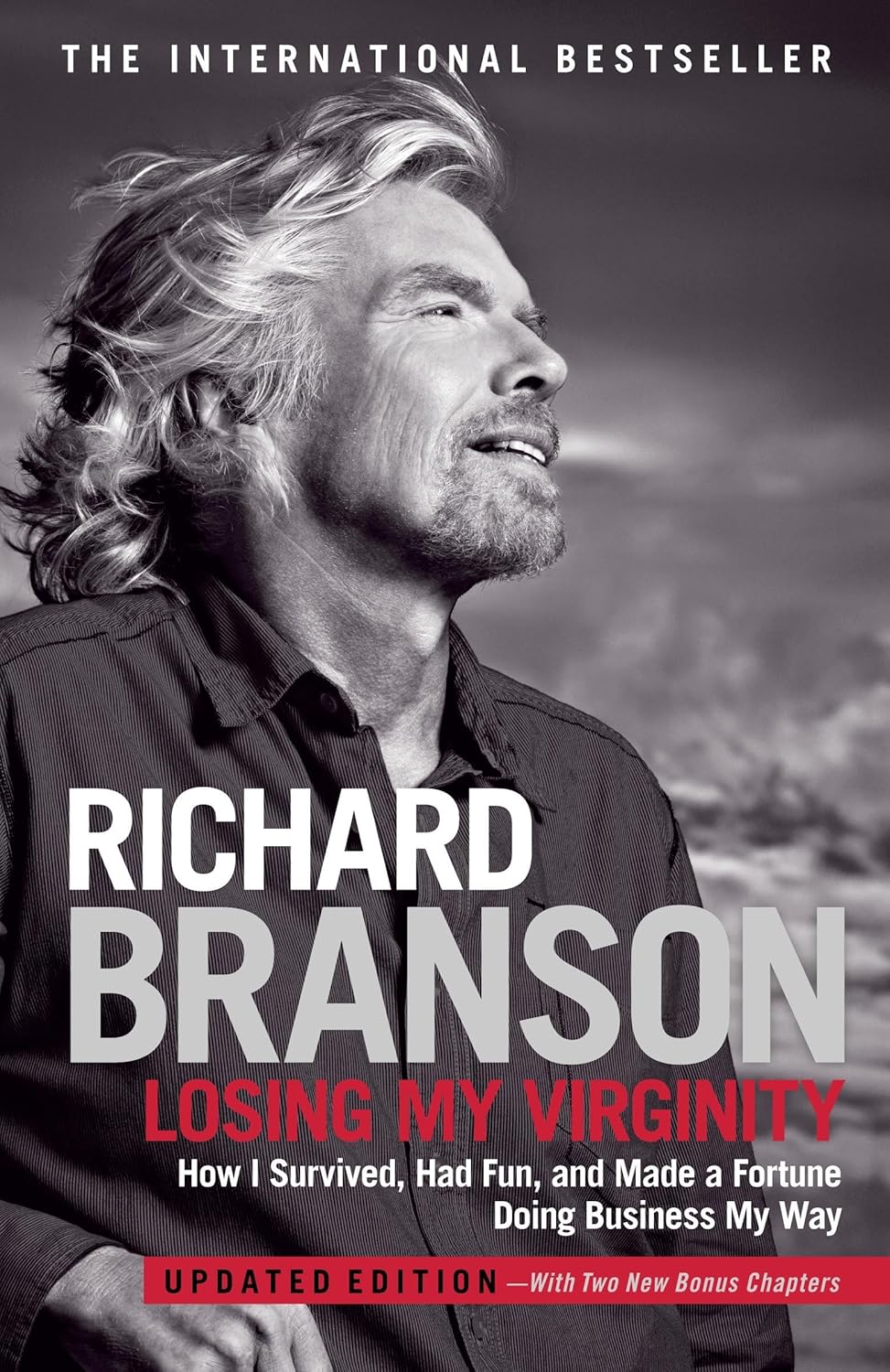
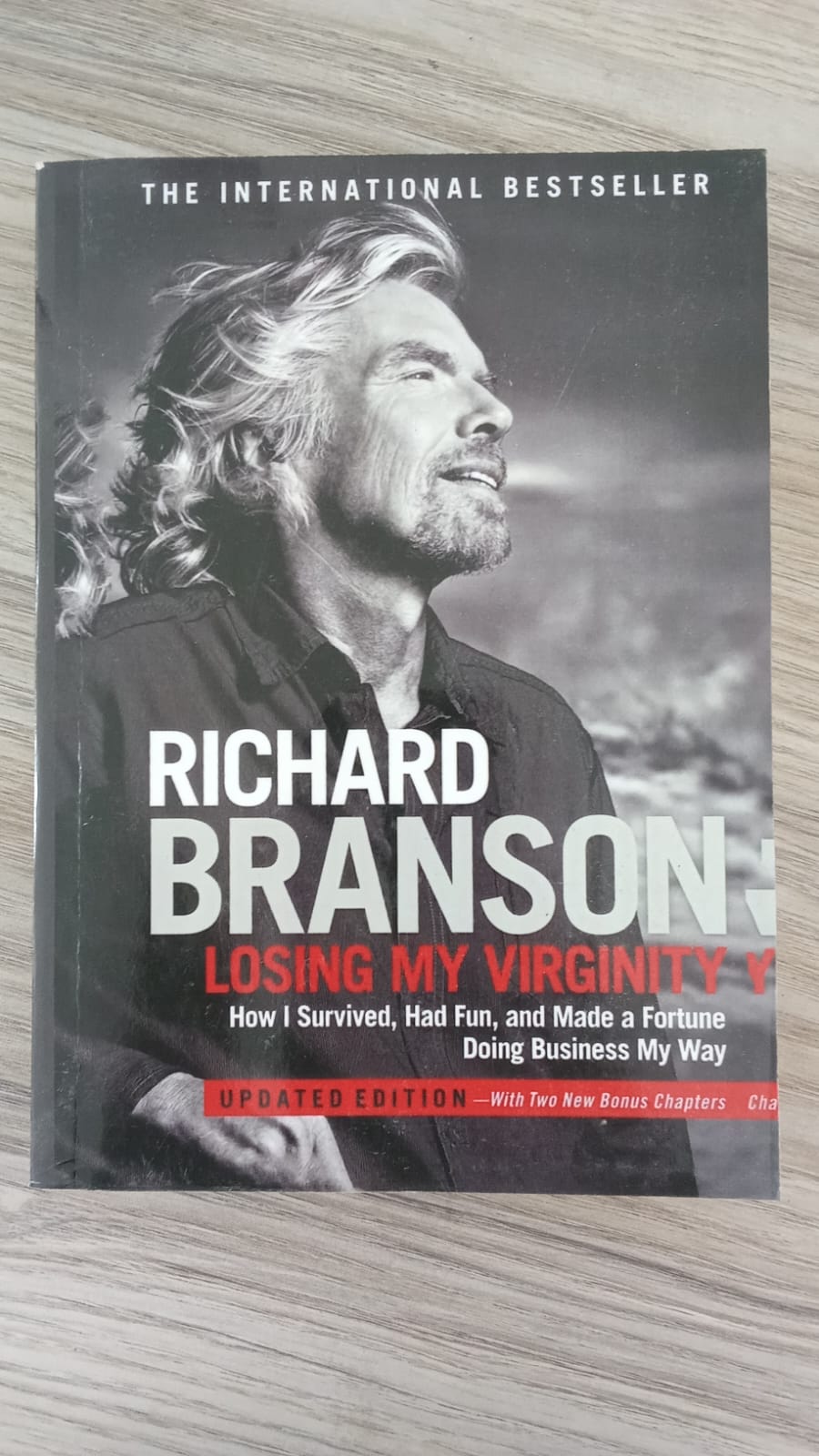
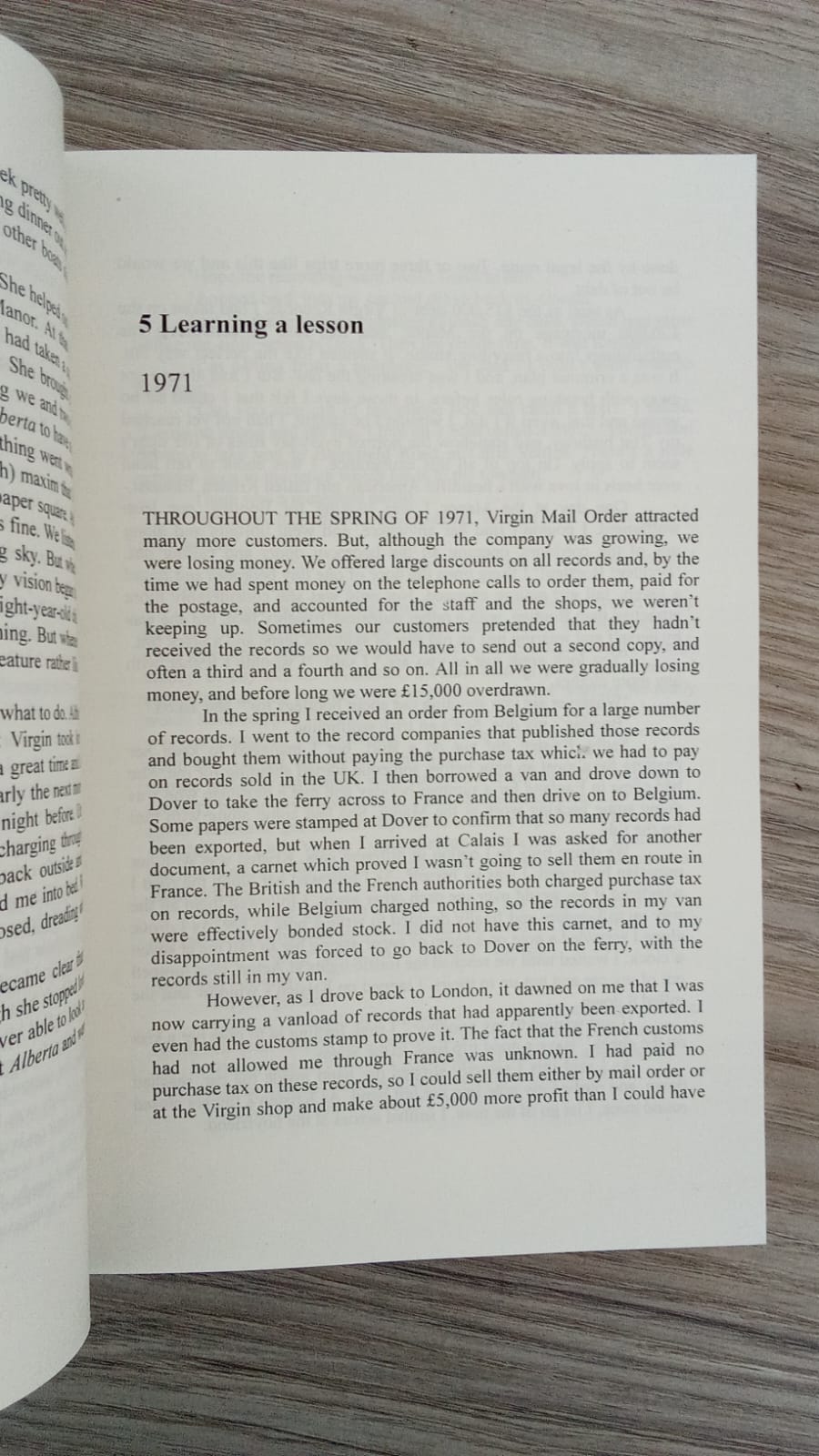




Losing My Virginity by Richard Branson


රු2,500.00
3 X Rs. 833.33 or 8% Cashback with


or 3 X රු833.33 with


or up to 4 X රු625.00 with


Losing My Virginity by Richard Branson is the bestselling autobiography of the entrepreneur behind the Virgin brand. From his early ventures and the growth of Virgin Records to Virgin Atlantic, business battles, adventurous challenges and major risks, Branson shares the experiences that shaped his unconventional approach to entrepreneurship. Filled with lessons on leadership, branding, customer experience, resilience, innovation and calculated risk-taking, this is an inspiring read for entrepreneurs, business owners, students and anyone interested in building something differently.
1 in stock
Losing My Virginity – by Richard Branson

Losing My Virginity by Richard Branson is an inspiring autobiography and business memoir about entrepreneurship, risk-taking, leadership, failure, innovation and the unconventional journey behind one of the world’s most recognizable business brands.
Richard Branson did not build his career by following a traditional business formula.
He challenged established industries.
Took enormous risks.
Started businesses without always having perfect experience.
Made mistakes.
Entered markets dominated by much larger competitors.
And repeatedly asked a simple question:
Can this be done better?
That mindset eventually helped turn the Virgin name from a small entrepreneurial venture into an international brand associated with music, airlines and numerous other businesses.
But Losing My Virginity by Richard Branson is not simply a list of business achievements.
It is a personal story.
Branson writes about:
His childhood.
Education.
Early entrepreneurial experiments.
Building Virgin.
Business battles.
Financial pressure.
Adventure.
Family.
Success.
Failure.
And the decisions that shaped his career.
The result is a book that combines autobiography with practical lessons for entrepreneurs, managers and anyone interested in thinking differently about business.
Losing My Virginity by Richard Branson – Book Overview
Losing My Virginity by Richard Branson follows Branson’s journey from a young entrepreneur into the founder of the Virgin Group.
His path was unusual from the beginning.
Rather than waiting until he had:
Perfect qualifications.
Large amounts of capital.
Decades of experience.
He began experimenting with business at a young age.
One project led to another.
A student magazine helped lead toward a mail-order record business.
The music business expanded.
The Virgin name grew.
Then Branson began entering industries that seemed completely unrelated.
This willingness to move into new areas became one of the defining characteristics of his entrepreneurial career.
Richard Branson
Richard Branson is one of Britain’s best-known entrepreneurs.
He became internationally associated with the Virgin brand and with a business style emphasizing:
Boldness.
Customer experience.
Publicity.
Adventure.
Experimentation.
Branson’s approach is often less formal than traditional corporate leadership.
That personality shapes the storytelling throughout the book.
An Entrepreneur From a Young Age
Branson was interested in creating things from an early age.
His education did not follow the path normally associated with major corporate leaders.
Rather than treating that as a permanent limitation, he focused on strengths such as:
Communication.
Ideas.
People.
Opportunity.
Persistence.
This becomes one of the first lessons of Losing My Virginity by Richard Branson.
Success does not always require following the same path as everyone else.
Starting Before You Feel Ready
Many people wait.
They think:
I need more experience.
I need more money.
I need another qualification.
I need the perfect plan.
Sometimes preparation is necessary.
But endless preparation can also become a reason never to begin.
Branson’s story repeatedly demonstrates the value of starting, learning and adapting.
Virgin Records
The music business became one of the foundations of the Virgin story.
Virgin grew through activities connected with:
Record retail.
Music distribution.
Recording.
Artists.
The brand became increasingly recognized.
But Branson did not remain satisfied with one successful business.
Opportunity
One major entrepreneurial theme in Losing My Virginity by Richard Branson is recognizing opportunity.
Opportunities often appear as problems.
Customers complain.
An industry provides poor service.
Prices seem unreasonable.
Existing companies have become comfortable.
An entrepreneur asks:
Why does it have to work this way?
That question can become the beginning of a business.
Challenge Established Industries
Branson became known for entering industries already dominated by powerful companies.
This seems irrational from a traditional perspective.
Why compete with businesses that have:
More money?
More employees?
More experience?
More infrastructure?
The answer is that large competitors can have weaknesses too.
They may become:
Slow.
Complacent.
Bureaucratic.
Disconnected from customers.
A smaller challenger may compete differently.
Virgin Atlantic
The launch and development of Virgin Atlantic became one of the most famous parts of Branson’s business career.
Entering aviation was extremely risky.
Airlines require:
Large capital.
Aircraft.
Staff.
Licenses.
Complex operations.
Marketing.
Customer trust.
Branson was entering an industry very different from music.
Yet the challenge illustrates one of his central beliefs:
You do not always have to know everything personally.
You need to build a team that collectively knows what is required.
Customer Experience
Customer experience is a recurring business lesson.
Customers do not only buy:
A seat.
A record.
A service.
They also experience:
Communication.
Design.
Staff behavior.
Convenience.
Emotion.
A company that makes the experience better can differentiate itself even when competitors offer something technically similar.
Look for What Customers Hate
A useful entrepreneurial exercise inspired by Losing My Virginity by Richard Branson is asking:
What do customers dislike about this industry?
Long waiting?
Poor service?
Confusing pricing?
Boring branding?
Weak communication?
Those frustrations may reveal opportunities.
Branding
The Virgin brand became one of Branson’s most important business assets.
A strong brand can communicate:
Personality.
Trust.
Expectation.
Values.
Difference.
Virgin often positioned itself as a challenger to traditional corporate behavior.
Brand Personality
Many companies communicate formally.
Branson often preferred something more:
Human.
Playful.
Bold.
Memorable.
A distinctive personality can help a business stand out.
Take Calculated Risks
Risk-taking is perhaps the theme most strongly associated with Richard Branson.
But good entrepreneurship does not mean taking random risks.
There is a difference between:
Risk.
And recklessness.
Successful entrepreneurs try to understand:
Potential downside.
Possible upside.
Ways to reduce exposure.
Alternative plans.
Protect the Downside
One practical lesson is to ask:
If this fails, what happens?
Can I survive?
Can the company survive?
Is there a way to structure the decision so that failure is painful but not fatal?
This turns risk management into part of entrepreneurship.
Failure
Losing My Virginity by Richard Branson does not present business as a straight line upward.
Not every idea works.
Not every negotiation succeeds.
Not every venture becomes profitable.
Failure is part of entrepreneurship.
Failure Is Information
When something fails, there are two possible reactions.
Reaction one:
I failed, therefore I should stop trying.
Reaction two:
What did this teach me?
The second approach turns mistakes into information.
Learn Quickly
A failed experiment can reveal:
Wrong pricing.
Weak demand.
Poor execution.
Bad timing.
Wrong assumptions.
The lesson may help the next venture succeed.
Resilience
Entrepreneurs need resilience because businesses constantly experience uncertainty.
Cash flow problems.
Competitors.
Staff challenges.
Economic changes.
Customer complaints.
Unexpected crises.
A person who gives up after every setback will struggle to build anything long-term.
Persistence
Persistence is one of the clearest lessons in Losing My Virginity by Richard Branson.
Many successful projects survive difficult moments because someone refuses to quit too quickly.
However, persistence should not mean blindly repeating the same mistake.
Useful persistence involves:
Trying.
Learning.
Adjusting.
Trying again.
Business Is About People
Companies are ultimately made of people.
Employees.
Customers.
Partners.
Suppliers.
Managers.
Investors.
Relationships matter.
Branson’s business philosophy often emphasizes surrounding yourself with strong people.
Hire People Better Than You
A founder does not need to be the smartest person in every area.
A strong leader can hire people with expertise in:
Finance.
Marketing.
Operations.
Technology.
Sales.
Legal matters.
Then give those people room to perform.
Delegation
Entrepreneurs sometimes struggle to delegate.
They think:
Nobody can do this as well as I can.
That creates a problem.
If everything requires the founder, the company cannot scale effectively.
Delegation allows the organization to grow beyond one person.
Leadership
Leadership is not only about giving instructions.
It also involves:
Listening.
Trusting.
Motivating.
Communicating.
Taking responsibility.
Creating direction.
Losing My Virginity by Richard Branson provides many examples of leadership developed through experience rather than formal theory.
Listen to People
One of the simplest leadership skills is listening.
Employees close to customers may understand problems executives cannot see.
A good leader asks:
What are customers saying?
What is slowing the team down?
What could we improve?
Listening creates information.
Employees Matter
Happy and engaged employees often create better customer experiences.
If employees feel:
Ignored.
Disrespected.
Overcontrolled.
their frustration can eventually reach customers.
Building a strong company therefore begins internally.
Company Culture
Culture is created through repeated behavior.
How do managers treat employees?
How are mistakes handled?
Can people suggest ideas?
Does leadership communicate honestly?
These everyday behaviors become the real culture.
Have Fun
One unusual element of Branson’s approach is the importance he places on enjoyment.
Business can be serious.
Money matters.
Jobs matter.
Customers matter.
But that does not mean work has to become emotionally lifeless.
Energy and enthusiasm can strengthen teams.
Work and Adventure
Branson is famous not only for business but also for adventurous challenges.
His adventures became part of his personal identity and public brand.
These experiences also demonstrate:
Risk assessment.
Teamwork.
Preparation.
Courage.
Resilience.
Adventure as Mindset
Adventure does not necessarily mean everyone should attempt extreme physical challenges.
The larger lesson is being willing to enter unfamiliar territory.
A new business.
New market.
New career.
New skill.
All involve uncertainty.
Publicity
Branson became exceptionally skilled at attracting media attention.
Rather than relying only on expensive traditional advertising, he often created:
Stories.
Events.
Stunts.
Memorable moments.
This generated publicity.
Make the Brand Interesting
People talk about things that are interesting.
If a company behaves exactly like every competitor, it may struggle to attract attention.
A distinctive personality can make marketing easier.
Storytelling
Strong brands have stories.
Where did the company begin?
What problem is it solving?
What does it believe?
Who is behind it?
Customers often remember stories more easily than corporate statements.
Competition
Competition can be useful.
A competitor reveals:
Customer expectations.
Market opportunities.
Weaknesses.
Industry standards.
Rather than simply fearing competitors, entrepreneurs can study them.
Do Not Copy Blindly
Being different matters.
If you copy the market leader exactly, customers may ask:
Why shouldn’t I simply buy from the original?
A challenger needs a reason to exist.
Find the Gap
That reason might be:
Better service.
Lower price.
Higher quality.
Convenience.
Personality.
Specialization.
Customer experience.
Finding that gap is one of the foundations of entrepreneurship.
Negotiation
Branson’s business career required constant negotiation.
With:
Partners.
Investors.
Banks.
Suppliers.
Competitors.
Governments.
Negotiation is therefore another important theme.
Know What Matters
Not every point in a negotiation has equal importance.
Ask:
What do I absolutely need?
What can I compromise on?
What does the other side value?
Understanding priorities can create better deals.
Reputation
Business relationships depend heavily on reputation.
A person known for:
Keeping promises.
Paying fairly.
Treating people respectfully.
can build stronger long-term partnerships.
Reputation compounds over time.
Integrity
Short-term advantage may not be worth long-term reputational damage.
Customers and business partners remember how companies behave during difficult moments.
Innovation
Innovation does not always mean inventing new technology.
It can mean improving:
Service.
Branding.
Pricing.
Delivery.
Experience.
Business model.
Branson’s story repeatedly demonstrates this broader definition.
Ask Simple Questions
Some of the best innovation questions are simple:
Why is this so difficult?
Why is this expensive?
Why does everyone do it this way?
What would customers prefer?
Simple questions can reveal assumptions nobody is questioning.
Speed
Large organizations often move slowly.
Smaller companies may compete through speed.
Test.
Launch.
Learn.
Adjust.
Waiting for complete certainty can allow opportunities to disappear.
Decision-Making
Entrepreneurs often make decisions without complete information.
No spreadsheet can perfectly predict:
Customer behavior.
Competitor reactions.
Economic changes.
Leaders eventually need to decide.
Use Judgment
Data matters.
Research matters.
But judgment also matters.
Experience helps people recognize patterns that numbers may not fully explain.
Simplicity
Complicated businesses can become difficult to manage.
Clear communication helps.
Employees should understand:
What are we trying to do?
Who is the customer?
Why should they choose us?
If the answer requires twenty minutes, the strategy may need clarification.
Money
Money is necessary for business survival.
But Losing My Virginity by Richard Branson presents business as something larger than simply accumulating money.
Money allows businesses to:
Grow.
Hire.
Invest.
Experiment.
But many entrepreneurs are also motivated by:
Challenge.
Creation.
Competition.
Impact.
Cash Flow
A growing business can still fail if it runs out of cash.
Expansion creates costs.
Entrepreneurs must balance ambition with financial discipline.
A brilliant idea does not remove the need for responsible numbers.
Think Big, Start Small
Many large companies began with modest experiments.
You do not always need to launch the final global version immediately.
Start.
Test.
Learn.
Then expand.
Entrepreneurship
Losing My Virginity by Richard Branson is particularly valuable for aspiring entrepreneurs because it shows entrepreneurship in practice.
Not as a perfect classroom formula.
But as a messy combination of:
Ideas.
People.
Money.
Timing.
Luck.
Mistakes.
Courage.
There Is No Perfect Entrepreneur
Entrepreneurs do not need to be perfect at everything.
One may be strong in:
Sales.
Another in:
Technology.
Another in:
Operations.
The important thing is understanding your strengths and building around your weaknesses.
Dyslexia and Learning Differently
Branson has spoken publicly about dyslexia and the difficulties he experienced with traditional education.
His career became an example of how academic difficulty does not automatically determine someone’s future potential.
Different people learn and think differently.
Play to Your Strengths
If you struggle in one area, do not automatically assume you are incapable of success.
Instead ask:
What am I good at?
What can I improve?
Who can complement my weaknesses?
This is useful both in business and personal development.
Build Teams Around Weaknesses
Self-awareness is a leadership advantage.
A founder who knows:
“I am not strong at finance”
can hire someone who is.
Pretending to know everything is more dangerous.
Challenge Yourself
Branson repeatedly sought new challenges.
That willingness helped prevent success from becoming complacency.
After achieving something, the question became:
What next?
Avoid Complacency
Past success does not guarantee future success.
Markets change.
Customers change.
Technology changes.
Competitors improve.
Companies need to continue adapting.
Reputation of the Virgin Brand
The Virgin brand expanded into multiple industries.
That expansion became possible partly because customers already recognized the name.
Strong branding can therefore create opportunities beyond one product category.
But Expansion Creates Risk
Entering too many markets can also create complexity.
Entrepreneurs need to understand:
Where does the brand have credibility?
Where can we create real value?
Where are we simply chasing opportunity?
Expansion should still have logic.
Responsible Business
Later editions of Losing My Virginity by Richard Branson also discuss Branson’s growing interest in using business to address broader social and environmental challenges.
This reflects an important question:
Can business create profit and positive impact?
These goals do not always have to be opposites.
Business as a Force for Good
Companies influence:
Employees.
Communities.
Customers.
Environment.
Supply chains.
Responsible leadership considers those effects.
Success
What does success actually mean?
Money?
Recognition?
Freedom?
Adventure?
Family?
Impact?
The book encourages readers to think about success more broadly.
Personal Life
Branson’s story also includes relationships and family.
This prevents the book from becoming only a business manual.
Entrepreneurs remain human beings with responsibilities beyond companies.
Work-Life Balance
Building a business can consume enormous time and energy.
There is no perfect formula for balance.
But long-term success should include attention to:
Health.
Family.
Relationships.
Personal meaning.
The Value of Experience
Some lessons cannot be fully learned from theory.
Business books can help.
Courses can help.
But experience teaches different lessons.
Actually:
Selling.
Hiring.
Negotiating.
Launching.
Failing.
creates knowledge that theory alone cannot provide.
Learn by Doing
This philosophy appears repeatedly in Losing My Virginity by Richard Branson.
Begin.
Pay attention.
Learn.
Improve.
Action creates feedback.
Richard Branson’s Writing Style
The book is written as an autobiography rather than a formal business textbook.
That means lessons emerge through:
Stories.
Adventures.
Business decisions.
Failures.
Personal experiences.
This makes complex business ideas easier to remember.
A Business Book That Reads Like an Adventure
Readers who dislike dry management textbooks may find this style especially appealing.
The business lessons are connected to real situations.
This gives the book energy.
Finding My Virginity
Readers who enjoy Losing My Virginity by Richard Branson can continue with Branson’s later autobiography:
Finding My Virginity
That book continues his story into later decades of business and personal life.
Recommended Reading Order
For Branson’s autobiographical story:
1. Losing My Virginity
2. Finding My Virginity
Readers interested in more of his business philosophy may also explore:
The Virgin Way
Screw It, Let’s Do It
Who Is This Book For?
The book is not only for CEOs.
Its lessons can apply to:
Students.
Employees.
Entrepreneurs.
Managers.
Salespeople.
Marketers.
Small-business owners.
People considering a career change.
Anyone interested in building something.
Lessons for Small Businesses
A small company may not have the resources of Virgin.
But many principles still apply.
Listen to customers.
Differentiate.
Build a memorable brand.
Treat employees well.
Experiment.
Protect cash flow.
Learn from mistakes.
Lessons for Startups
Startups can particularly benefit from:
Speed.
Customer focus.
Creative marketing.
Calculated risk.
Strong teams.
These themes run throughout the book.
Lessons for Leaders
Managers can learn from Branson’s emphasis on:
Delegation.
People.
Communication.
Trust.
Leadership does not require controlling every detail.
7 Powerful Business Lessons From Losing My Virginity
There are many lessons in Losing My Virginity by Richard Branson, but seven stand out:
- Start before everything is perfect – Waiting for complete certainty can prevent action. Begin intelligently, learn from reality and improve.
- Look for industries where customers are frustrated – Poor service, complicated processes and complacent competitors can create opportunities for challengers.
- Take calculated risks, not blind risks – Understand the downside, protect yourself where possible and make sure one failure will not destroy everything.
- Build great teams and delegate – No founder can master every area. Hire talented people, trust them and allow the company to grow beyond one individual.
- Treat failure as information – A mistake can become valuable when you understand what went wrong and apply that lesson to your next decision.
- Make your brand memorable – Personality, storytelling and great customer experiences can help a smaller company compete with larger organizations.
- Business should remain an adventure – Curiosity, experimentation, enthusiasm and the willingness to challenge conventional thinking can create extraordinary opportunities.
Why Read Losing My Virginity by Richard Branson?
Losing My Virginity by Richard Branson is an excellent choice for readers interested in:
- Richard Branson
- Entrepreneurship
- Business
- Autobiographies
- Business memoirs
- Virgin Group
- Virgin Records
- Virgin Atlantic
- Leadership
- Risk-taking
- Innovation
- Branding
- Marketing
- Business strategy
- Customer experience
- Startups
- Personal development
- Resilience
- Business success
- Inspirational true stories
The combination of autobiography and entrepreneurship makes it especially useful for people who prefer learning business through real stories rather than theory alone.
Who Should Read Losing My Virginity by Richard Branson?
Losing My Virginity by Richard Branson may especially appeal to:
- Entrepreneurs
- Startup founders
- Business owners
- Business students
- Managers
- Leaders
- Marketing professionals
- Sales professionals
- Young professionals
- Richard Branson fans
- Biography readers
- Readers interested in entrepreneurship
- People planning to start a business
- Anyone interested in unconventional leadership
- Readers who enjoy inspiring success stories
Losing My Virginity by Richard Branson – Build Differently, Learn Quickly and Keep Moving
Losing My Virginity by Richard Branson is ultimately a story about refusing to believe there is only one correct way to build a successful life or business.
Branson’s journey did not follow a perfect corporate plan.
It involved:
Experiments.
Risks.
Mistakes.
Negotiations.
Competitors.
Financial pressure.
Adventure.
And constant change.
Some ideas succeeded.
Others did not.
What mattered was the willingness to keep learning.
The book’s strongest message may therefore be surprisingly simple:
You do not need to know everything before you begin.
You need enough courage to start.
Enough humility to learn.
Enough resilience to recover.
Enough curiosity to notice opportunities.
And enough good people around you to build something larger than yourself.
For readers interested in entrepreneurship, leadership, branding, business strategy, risk-taking and real-world stories of building companies, Losing My Virginity by Richard Branson offers an energetic and memorable look inside the life and thinking of one of the world’s most recognizable entrepreneurs.
Learn more about Losing My Virginity by Richard Branson on Virgin’s official website.
Explore more biography and business books at Bargain Books.
Be the first to review “Losing My Virginity by Richard Branson”
Related products
-19%
Out of stock
Non-Fiction & Knowledge
Original price was: රු2,650.00.රු2,150.00Current price is: රු2,150.00.
3 X Rs. 716.67 or 8% Cashback with
or 3 X රු716.67 with
or up to 4 X රු537.50 with
රු2,000.00
3 X Rs. 666.67 or 8% Cashback with
or 3 X රු666.67 with
or up to 4 X රු500.00 with
Non-Fiction & Knowledge
රු2,450.00
3 X Rs. 816.67 or 8% Cashback with
or 3 X රු816.67 with
or up to 4 X රු612.50 with
-14%
Out of stock
Self-Help & Psychology
Original price was: රු2,900.00.රු2,500.00Current price is: රු2,500.00.
3 X Rs. 833.33 or 8% Cashback with
or 3 X රු833.33 with
or up to 4 X රු625.00 with
-23%
Non-Fiction & Knowledge
Original price was: රු2,200.00.රු1,700.00Current price is: රු1,700.00.
3 X Rs. 566.67 or 8% Cashback with
or 3 X රු566.67 with
or up to 4 X රු425.00 with
-24%
Non-Fiction & Knowledge
Original price was: රු2,300.00.රු1,750.00Current price is: රු1,750.00.
3 X Rs. 583.33 or 8% Cashback with
or 3 X රු583.33 with
or up to 4 X රු437.50 with
Out of stock
Self-Help & Psychology
රු1,900.00
3 X Rs. 633.33 or 8% Cashback with
or 3 X රු633.33 with
or up to 4 X රු475.00 with
Out of stock
Non-Fiction & Knowledge
රු1,900.00
3 X Rs. 633.33 or 8% Cashback with
or 3 X රු633.33 with
or up to 4 X රු475.00 with
Reviews
There are no reviews yet.