
No products in the cart.
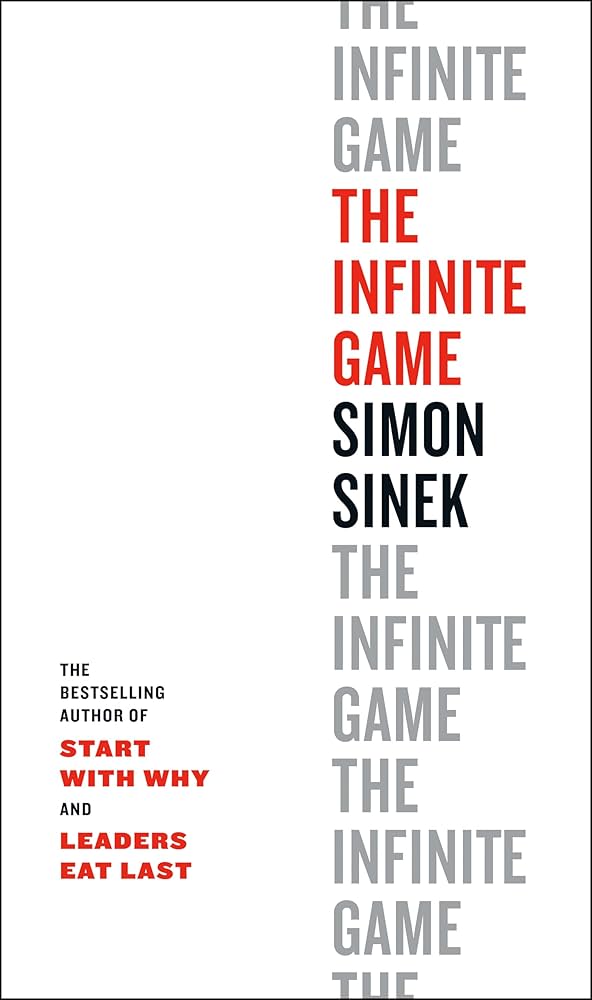
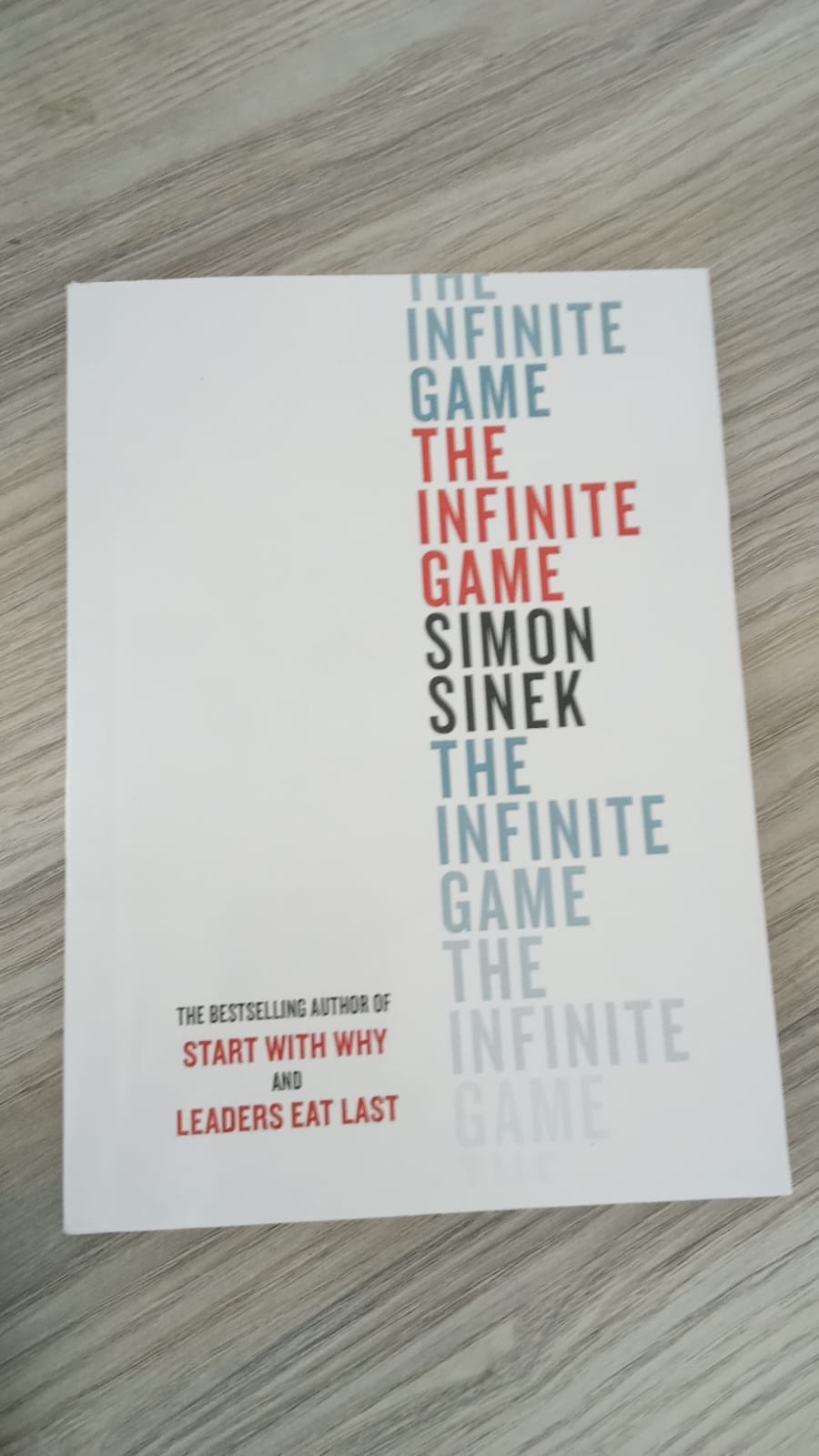
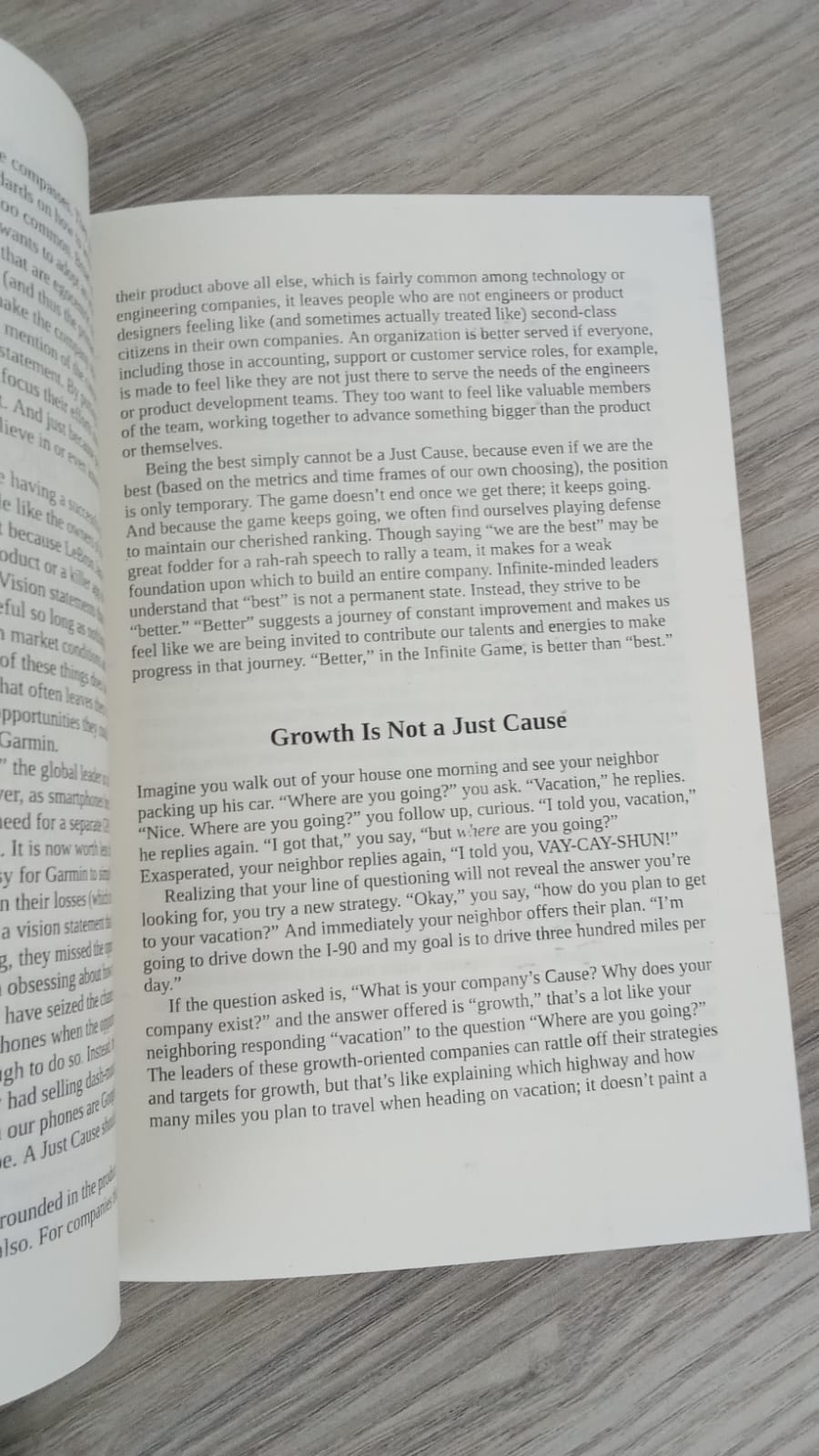
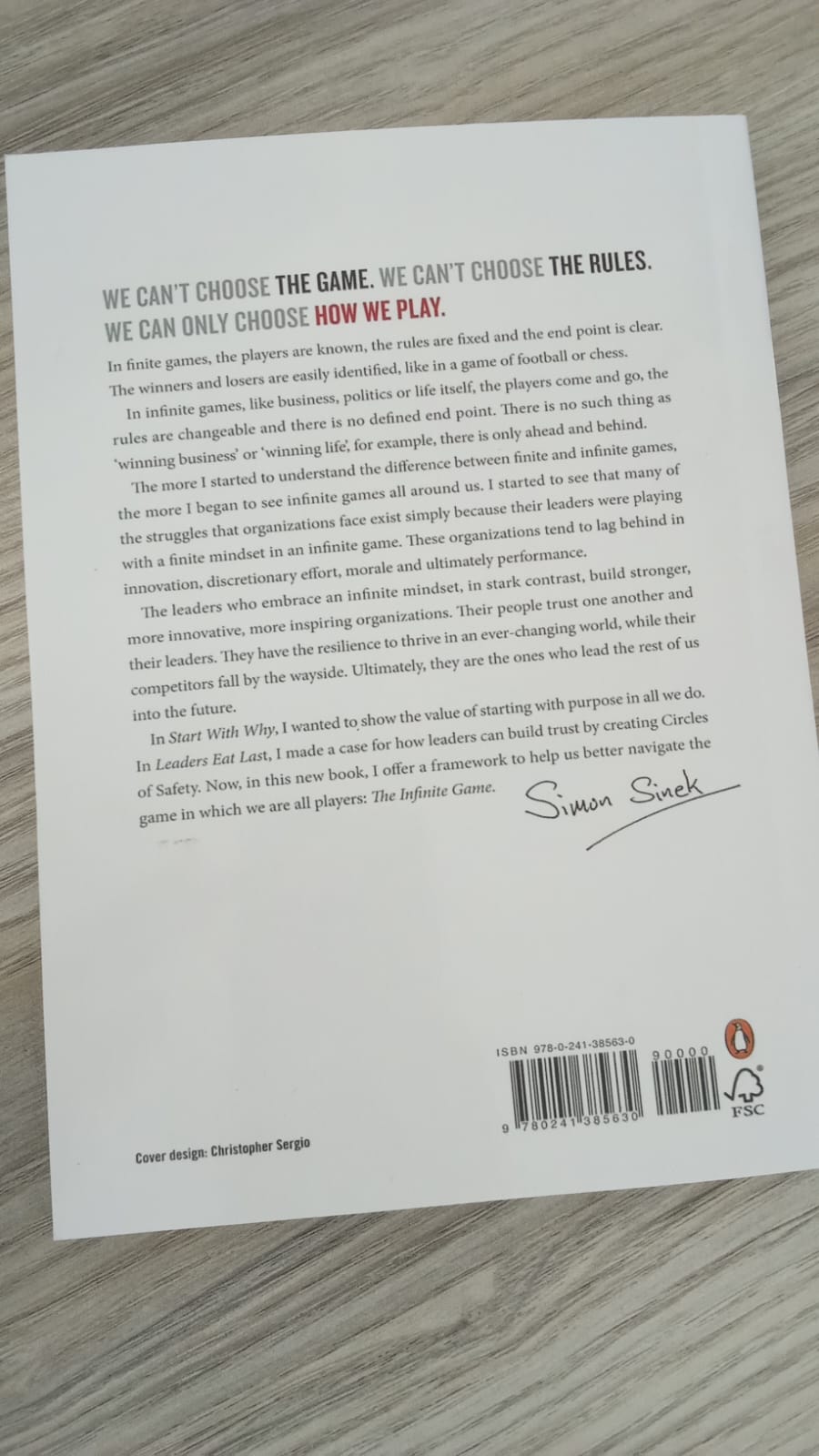
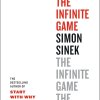

Infinite Game by Simon Sinek and Penguin


රු1,650.00
3 X Rs. 550.00 or 8% Cashback with


or 3 X රු550.00 with


or up to 4 X රු412.50 with


A New Way to Think About Success – The Infinite Game by Simon Sinek
The Infinite Game by Simon Sinek is a powerful leadership and business book that challenges how we define success in today’s competitive world. Instead of focusing on short-term wins, the book explains that great leaders and organizations think in terms of long-term sustainability. Inspired by game theory, Simon Sinek introduces the idea that business and life are not “finite games” with clear winners and losers, but “infinite games” that continue over time.
The central idea of The Infinite Game is that lasting success comes from purpose, resilience, and the ability to keep playing—not just winning.
6 in stock
The Infinite Game by Simon Sinek is a powerful leadership and business book about long-term thinking, trust, purpose, competition, courage, innovation, and building organizations designed to succeed beyond short-term targets.
Most people are taught to think about business as a competition.
Beat the competition.
Become number one.
Gain more market share.
Hit this quarter’s target.
Win.
But Simon Sinek asks an important question:
What does winning actually mean in a game that never ends?
A football match ends.
A chess game ends.
A race ends.
Someone wins.
Someone loses.
Business is different.
Companies enter the market.
Companies disappear.
Competitors change.
Customers change.
Technology changes.
Rules change.
But business itself continues.
This is why The Infinite Game by Simon Sinek argues that business should be approached with an infinite mindset.
The goal is not simply to defeat another company.
The goal is to build an organization strong enough to continue playing, adapting, improving, and contributing for generations.
Sinek develops this idea through practical leadership principles including a Just Cause, trusting teams, worthy rivals, existential flexibility, and the courage to lead.
The Infinite Game by Simon Sinek – Book Overview
The central idea behind The Infinite Game by Simon Sinek is surprisingly simple.
There are two kinds of games.
Finite games have:
- Known players
- Fixed rules
- An agreed objective
- A clear beginning
- A clear ending
- Winners and losers
Football is a finite game.
So is chess.
Everyone understands the rules and knows when the game ends.
An infinite game works differently.
The players can change.
Rules can change.
New players can enter.
Some players leave.
And there is no final victory.
Business is an infinite game.
Politics can be an infinite game.
Leadership is an infinite game.
Life itself can be viewed this way.
The problem occurs when people use a finite mindset inside an infinite game.
Stop Trying to “Win” Business
One of the most important lessons in The Infinite Game by Simon Sinek is that a company cannot permanently “win” business.
A company may become the largest in an industry.
For now.
It may have the highest revenue.
For now.
It may have the largest customer base.
For now.
But markets continue changing.
A competitor develops a better product.
Technology changes customer behaviour.
A new business model appears.
A financial crisis occurs.
A new generation of consumers enters the market.
There is always another challenge.
An infinite-minded organization therefore asks a different question.
Not:
How do we beat everyone?
But:
How do we remain strong, relevant, and valuable for the long term?
Finite Thinking Creates Short-Term Decisions
Short-term targets are not automatically bad.
Companies need goals.
Sales targets matter.
Profit matters.
Deadlines matter.
Performance matters.
But problems arise when short-term numbers become more important than the health of the organization.
The Infinite Game by Simon Sinek explores how leaders can damage companies when they focus too heavily on temporary victories.
For example, a company might:
Cut training.
Reduce product quality.
Ignore employee well-being.
Lay off experienced employees purely to improve short-term financial results.
Stop investing in research.
Pressure sales teams into unethical behaviour.
These actions may improve a number today.
But they can weaken the company tomorrow.
Infinite-minded leadership requires balancing present performance with future strength.
Principle 1 – Advance a Just Cause
A major concept in The Infinite Game by Simon Sinek is the Just Cause.
A Just Cause is a vision of a future that does not yet exist but is meaningful enough that people are willing to work toward it.
It should be bigger than money.
“Become the biggest company in the industry” is not necessarily a Just Cause.
“Make more profit” is not a Just Cause.
Those are outcomes.
A Just Cause describes the difference an organization hopes to make.
Why should this company exist?
What future are we trying to create?
Why should employees care?
Why should customers care?
A meaningful cause gives people something larger than a quarterly target.
Purpose Creates Long-Term Motivation
Financial rewards can motivate people.
Promotions can motivate people.
Bonuses can motivate people.
But those forms of motivation usually have limits.
The Infinite Game by Simon Sinek argues that people often become more committed when they believe their work contributes to something meaningful.
Consider two employees.
One thinks:
“I process orders.”
Another thinks:
“I help customers receive the products they need quickly and reliably.”
Same job.
Different meaning.
The second employee sees a larger purpose behind the work.
Purpose can create emotional commitment that salary alone may not produce.
A Just Cause Must Be More Than Marketing
Many companies have attractive mission statements.
The problem is whether leadership actually uses them.
The Infinite Game by Simon Sinek encourages leaders to ask:
Does our purpose affect decisions?
Would we sacrifice short-term profit to protect it?
Do employees understand it?
Do leaders behave consistently with it?
A purpose displayed on a website but ignored in daily decisions is simply marketing.
A real Just Cause influences strategy.
Hiring.
Investment.
Culture.
Product development.
Customer relationships.
And leadership decisions.
Principle 2 – Build Trusting Teams
The second major practice explored in The Infinite Game by Simon Sinek is building trusting teams.
People perform differently when they feel psychologically safe.
Employees should be able to say:
“I made a mistake.”
“I don’t know.”
“I need help.”
“I disagree.”
“I think there is a problem.”
without immediately fearing humiliation or punishment.
Trust does not mean everyone always agrees.
It means people feel safe enough to be honest.
That honesty matters enormously.
Why Trust Improves Organizations
Imagine an employee discovers a serious mistake.
In a low-trust organization, they may hide it.
Why?
Because admitting the mistake could damage their career.
The problem then becomes larger.
In a high-trust organization, the employee can say:
“I made a mistake. Here’s what happened. Can we fix it?”
The organization can respond faster.
The Infinite Game by Simon Sinek shows why trust can improve:
- Communication
- Collaboration
- Innovation
- Problem-solving
- Employee retention
- Leadership
- Learning
People work better when they are not spending enormous emotional energy protecting themselves from their own workplace.
Leaders Must Create Safety
Trust does not appear automatically.
Leaders help create it.
How?
By listening.
Admitting mistakes.
Keeping promises.
Treating employees fairly.
Encouraging questions.
Responding constructively to bad news.
Protecting people who raise genuine concerns.
The Infinite Game by Simon Sinek argues that leadership is not primarily about being in charge.
Leadership is about taking responsibility for the people in your charge.
That requires consistency.
Employees watch what leaders do more carefully than what they say.
Principle 3 – Find Worthy Rivals
Traditional business language often talks about defeating competitors.
Simon Sinek recommends another approach.
Find a Worthy Rival.
A worthy rival is another person or organization that does something better than you.
Instead of becoming angry or insecure, study them.
Ask:
What do they do better?
Why does it work?
What can we learn?
The Infinite Game by Simon Sinek transforms competition from an obsession with beating others into an opportunity for self-improvement.
Competitors Can Make You Better
Imagine another company has:
Better customer service.
Faster delivery.
Better design.
Stronger employee culture.
A more efficient website.
Instead of saying:
“We need to destroy them.”
ask:
“What are they showing us about our weaknesses?”
That question is much more useful.
A worthy rival reveals where improvement is possible.
The goal is not copying everything they do.
The goal is allowing their strengths to challenge your assumptions.
Competition Is Not the Enemy
The Infinite Game by Simon Sinek does not suggest businesses should ignore competitors.
Competition can be healthy.
The difference is mindset.
Finite thinking asks:
“How can I beat them?”
Infinite thinking asks:
“How can their strengths make me better?”
This reduces unnecessary obsession with rankings.
Another company’s success does not automatically mean your failure.
Both businesses may continue existing.
Both may serve different customers.
Both may improve because the other exists.
Principle 4 – Existential Flexibility
One of the more challenging ideas in The Infinite Game by Simon Sinek is existential flexibility.
Sometimes an organization must make a major strategic change in order to continue advancing its Just Cause.
That change may be expensive.
Difficult.
Uncomfortable.
And confusing.
But protecting the long-term purpose may require abandoning an old strategy.
This is different from randomly changing direction.
The cause stays consistent.
The method changes.
Adapt or Become Irrelevant
History contains many companies that struggled because they could not adapt.
Technology changed.
Customers changed.
The market changed.
But leadership continued protecting the old business model.
The Infinite Game by Simon Sinek argues that infinite-minded leaders must accept that today’s successful strategy may not work forever.
A company may need to change:
Products.
Technology.
Distribution.
Pricing.
Customer experience.
Internal systems.
Organizational structure.
Adaptability is essential because infinite games never stop changing.
Protect the Cause, Not the Method
This distinction is important.
A company should not change its purpose every month.
But it should be willing to change how it pursues that purpose.
For example:
A company whose purpose is helping people access knowledge may begin with physical books.
Later it may use ebooks.
Audiobooks.
Online courses.
Digital libraries.
The method changes.
The larger purpose remains.
The Infinite Game by Simon Sinek encourages organizations to remain loyal to their mission without becoming trapped by their existing methods.
Principle 5 – Have the Courage to Lead
Infinite-minded leadership is not always easy.
Sometimes the correct long-term decision creates short-term criticism.
A leader may need to:
Reject an unethical opportunity.
Invest in employees instead of maximizing immediate profit.
Admit a mistake.
Change a successful but outdated strategy.
Protect company values under pressure.
This requires what Sinek calls the courage to lead.
Courage Means Accepting Short-Term Discomfort
Imagine shareholders want immediate profit.
But leadership believes the company needs to invest heavily in technology.
The investment may reduce profit temporarily.
Finite-minded leadership might avoid the investment to protect quarterly numbers.
Infinite-minded leadership may accept short-term discomfort because the future requires it.
The Infinite Game by Simon Sinek encourages leaders to make decisions that protect the organization’s ability to continue rather than simply making today’s report look impressive.
Leadership Is Responsibility
The book repeatedly challenges traditional ideas about leadership.
Leadership is not simply:
Having the highest title.
Being the smartest person.
Giving instructions.
Making every decision.
True leadership involves responsibility.
Leaders influence:
Culture.
Trust.
Motivation.
Behaviour.
Priorities.
How people treat one another.
The Infinite Game by Simon Sinek argues that leaders should think beyond personal success.
Their responsibility includes strengthening the organization for the people who will eventually lead after them.
Build Companies That Outlast Their Leaders
A finite-minded executive may focus heavily on personal performance.
Revenue during my leadership.
Profit during my leadership.
Awards during my leadership.
Share price during my leadership.
An infinite-minded leader asks:
Will this organization remain strong after I leave?
That question changes decision-making.
Leadership becomes stewardship.
The company does not belong only to the current leader.
They are temporarily responsible for protecting and improving it.
Trust Is More Important Than Performance Alone
A high-performing employee who destroys team trust can create enormous problems.
Imagine someone generates impressive sales but:
Lies.
Blames others.
Creates conflict.
Withholds information.
Treats colleagues badly.
A finite-minded leader may tolerate the behaviour because the numbers look good.
The Infinite Game by Simon Sinek encourages leaders to consider both performance and trust.
Long-term organizations require people who can work together.
Individual results do not automatically justify destructive behaviour.
Innovation Needs Psychological Safety
Innovation requires experimentation.
Experimentation creates failure.
If employees are punished every time an idea fails, they eventually stop experimenting.
That means innovation disappears.
The Infinite Game by Simon Sinek shows why trust and innovation are connected.
Employees need enough safety to try something new.
Some ideas will fail.
That is normal.
Infinite-minded organizations treat intelligent failure as information.
What did we learn?
What should we improve?
What should we try next?
Employees Are Not Just Resources
Businesses often use the term “human resources.”
But people are not machines.
They experience:
Stress.
Fear.
Motivation.
Purpose.
Pride.
Burnout.
Trust.
The Infinite Game by Simon Sinek argues that long-term organizations need to care about human beings, not only output.
Employees who feel valued are more likely to contribute ideas.
Help colleagues.
Stay longer.
Solve problems.
Represent the organization positively.
A company that continuously sacrifices people for short-term numbers may eventually damage its own ability to compete.
Short-Term Success Can Hide Long-Term Failure
One of the most important warnings in The Infinite Game by Simon Sinek is that strong numbers today do not guarantee a healthy organization.
A company can report excellent profits while:
Employees are leaving.
Customers are losing trust.
Innovation is slowing.
Product quality is declining.
Leadership credibility is disappearing.
Those problems may not immediately appear on a financial statement.
But eventually they matter.
Infinite thinking encourages leaders to look beyond today’s measurable results.
Infinite Thinking and Entrepreneurship
Entrepreneurs can gain enormous value from The Infinite Game by Simon Sinek.
Starting a business often creates pressure to compare constantly.
Who has more followers?
Who has more customers?
Who is growing faster?
Who makes more money?
Comparison can become exhausting.
Infinite thinking changes the question.
Instead of asking:
“Am I beating them?”
ask:
“Is my business stronger than last year?”
“Are customers receiving more value?”
“Is my team improving?”
“Are we building something sustainable?”
This creates a healthier and often more useful definition of progress.
Infinite Thinking and Career Development
The ideas are also useful for individuals.
A career is rarely one simple competition.
You may change jobs.
Industries.
Roles.
Skills.
A finite mindset might ask:
“How do I become number one?”
An infinite mindset asks:
“How do I keep improving?”
That means:
Learning continuously.
Building relationships.
Developing skills.
Protecting your reputation.
Remaining adaptable.
The Infinite Game by Simon Sinek encourages readers to build careers capable of evolving rather than focusing only on one promotion.
Leadership Without a Management Title
You do not need to be a CEO to use these ideas.
Leadership can happen anywhere.
A team member who helps others can lead.
Someone who admits a mistake can build trust.
Someone who protects the team during difficulty can lead.
The Infinite Game by Simon Sinek presents leadership as behaviour rather than simply position.
That makes the lessons relevant to students, employees, managers, entrepreneurs, and executives.
Purpose Beyond Profit
Profit is necessary for most businesses.
Without profit, a company cannot continue.
But Sinek argues that profit should be treated more like fuel than destination.
A car needs fuel.
But the purpose of driving is not simply to buy more fuel.
Similarly, a business needs money to survive.
But the most inspiring organizations usually exist for something beyond simply generating more money.
The Infinite Game by Simon Sinek encourages leaders to identify that larger purpose.
Constant Improvement
Infinite-minded organizations never assume the work is finished.
There is always something to improve.
Customer service.
Products.
Culture.
Technology.
Leadership.
Processes.
Relationships.
This does not mean employees should live under constant pressure.
It means the organization maintains curiosity.
What can we learn?
What changed?
What could work better?
That mindset keeps businesses adaptable.
7 Powerful Leadership Lessons From The Infinite Game
The Infinite Game by Simon Sinek contains many useful ideas, but seven lessons stand out:
- Business has no final winner – Organizations should focus on continuing and improving rather than permanently defeating competitors.
- Advance a Just Cause – Give people a meaningful future worth working toward.
- Build trusting teams – Psychological safety allows honesty, collaboration, learning, and innovation.
- Learn from worthy rivals – Competitors can reveal your weaknesses and inspire improvement.
- Remain flexible – Strategies must change when the environment changes.
- Have the courage to lead – Long-term decisions sometimes require accepting short-term discomfort.
- Build something that can outlast you – Strong leadership prepares the organization to succeed even after current leaders leave.
Why Read The Infinite Game by Simon Sinek?
The Infinite Game by Simon Sinek is an excellent choice for readers interested in:
- Leadership
- Business
- Entrepreneurship
- Management
- Organizational culture
- Strategy
- Employee engagement
- Team building
- Trust
- Long-term thinking
- Innovation
- Purpose
- Competition
- Personal development
- Simon Sinek books
It is particularly valuable for people who want to build businesses and teams that remain strong beyond one quarter, one project, or one leader.
Who Should Read This Book?
The Infinite Game by Simon Sinek may especially appeal to:
- Business owners
- Entrepreneurs
- CEOs
- Managers
- Team leaders
- Startup founders
- HR professionals
- Management students
- MBA students
- Employees developing leadership skills
- Consultants
- Coaches
- People interested in organizational culture
- Fans of Start With Why
- Readers interested in long-term success
Its lessons can be applied to organizations of many sizes, from small teams to large companies.
A Powerful Guide to Long-Term Leadership
The Infinite Game by Simon Sinek challenges one of the most common assumptions in business:
That success means winning.
But business has no final whistle.
No permanent championship.
No moment when every competitor disappears and the game ends.
Customers change.
Technology changes.
Competitors change.
Employees change.
Leaders change.
The game continues.
This means the most important question is not:
How do we win?
It is:
How do we build an organization capable of continuing?
Sinek’s answer involves purpose, trust, learning, adaptability, and courage.
Advance a Just Cause.
Build trusting teams.
Study worthy rivals.
Remain flexible enough to change.
Have the courage to make decisions that protect the future.
For entrepreneurs, leaders, managers, students, business owners, and anyone interested in building organizations that can remain strong through change, The Infinite Game by Simon Sinek offers a practical and thought-provoking framework for replacing short-term obsession with long-term leadership.
Learn more about The Infinite Game by Simon Sinek on Simon Sinek’s official website.
Explore more business and leadership books at Bargain Books.
Be the first to review “Infinite Game by Simon Sinek and Penguin”
Related products
රු2,000.00
3 X Rs. 666.67 or 8% Cashback with
or 3 X රු666.67 with
or up to 4 X රු500.00 with
-21%
Non-Fiction & Knowledge
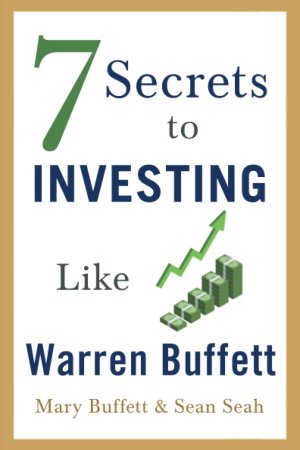
7 Secrets to Investing Like Warren Buffett by Mary Buffett & Sean Seah
Original price was: රු1,900.00.රු1,500.00Current price is: රු1,500.00.
3 X Rs. 500.00 or 8% Cashback with
or 3 X රු500.00 with
or up to 4 X රු375.00 with
-33%

Self-Help & Psychology
Original price was: රු2,300.00.රු1,550.00Current price is: රු1,550.00.
3 X Rs. 516.67 or 8% Cashback with
or 3 X රු516.67 with
or up to 4 X රු387.50 with
Non-Fiction & Knowledge
රු2,450.00
3 X Rs. 816.67 or 8% Cashback with
or 3 X රු816.67 with
or up to 4 X රු612.50 with

Out of stock
Non-Fiction & Knowledge
රු1,900.00
3 X Rs. 633.33 or 8% Cashback with
or 3 X රු633.33 with
or up to 4 X රු475.00 with
-23%
Non-Fiction & Knowledge
Original price was: රු2,200.00.රු1,700.00Current price is: රු1,700.00.
3 X Rs. 566.67 or 8% Cashback with
or 3 X රු566.67 with
or up to 4 X රු425.00 with
-28%
Self-Help & Psychology
Original price was: රු1,800.00.රු1,300.00Current price is: රු1,300.00.
3 X Rs. 433.33 or 8% Cashback with
or 3 X රු433.33 with
or up to 4 X රු325.00 with
Out of stock
Non-Fiction & Knowledge
රු1,500.00
3 X Rs. 500.00 or 8% Cashback with
or 3 X රු500.00 with
or up to 4 X රු375.00 with
Reviews
There are no reviews yet.