
No products in the cart.

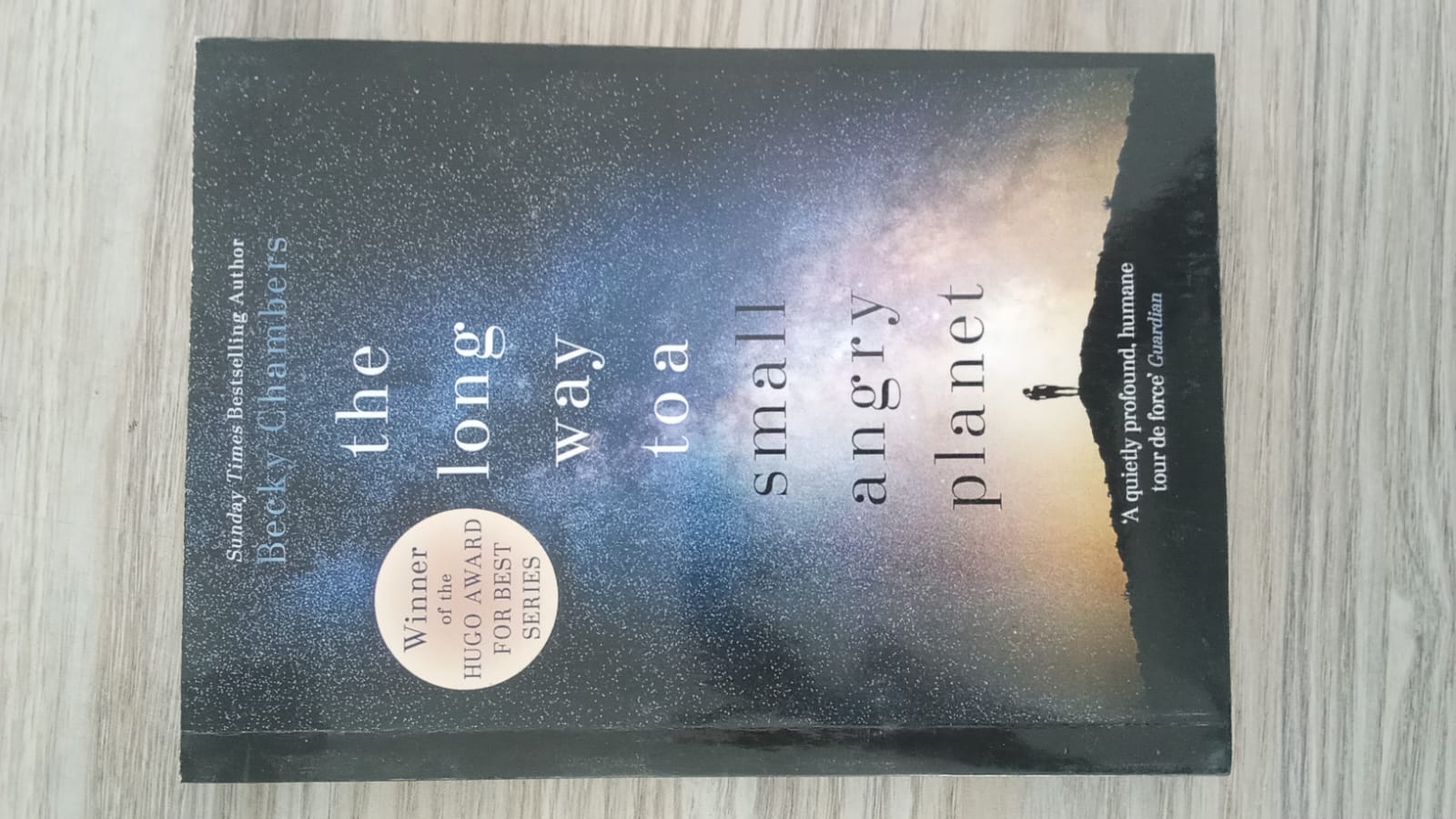




The Long Way To A Small Angry Planet by Becky Chambers


රු1,990.00
3 X Rs. 663.33 or 8% Cashback with


or 3 X රු663.33 with


or up to 4 X රු497.50 with


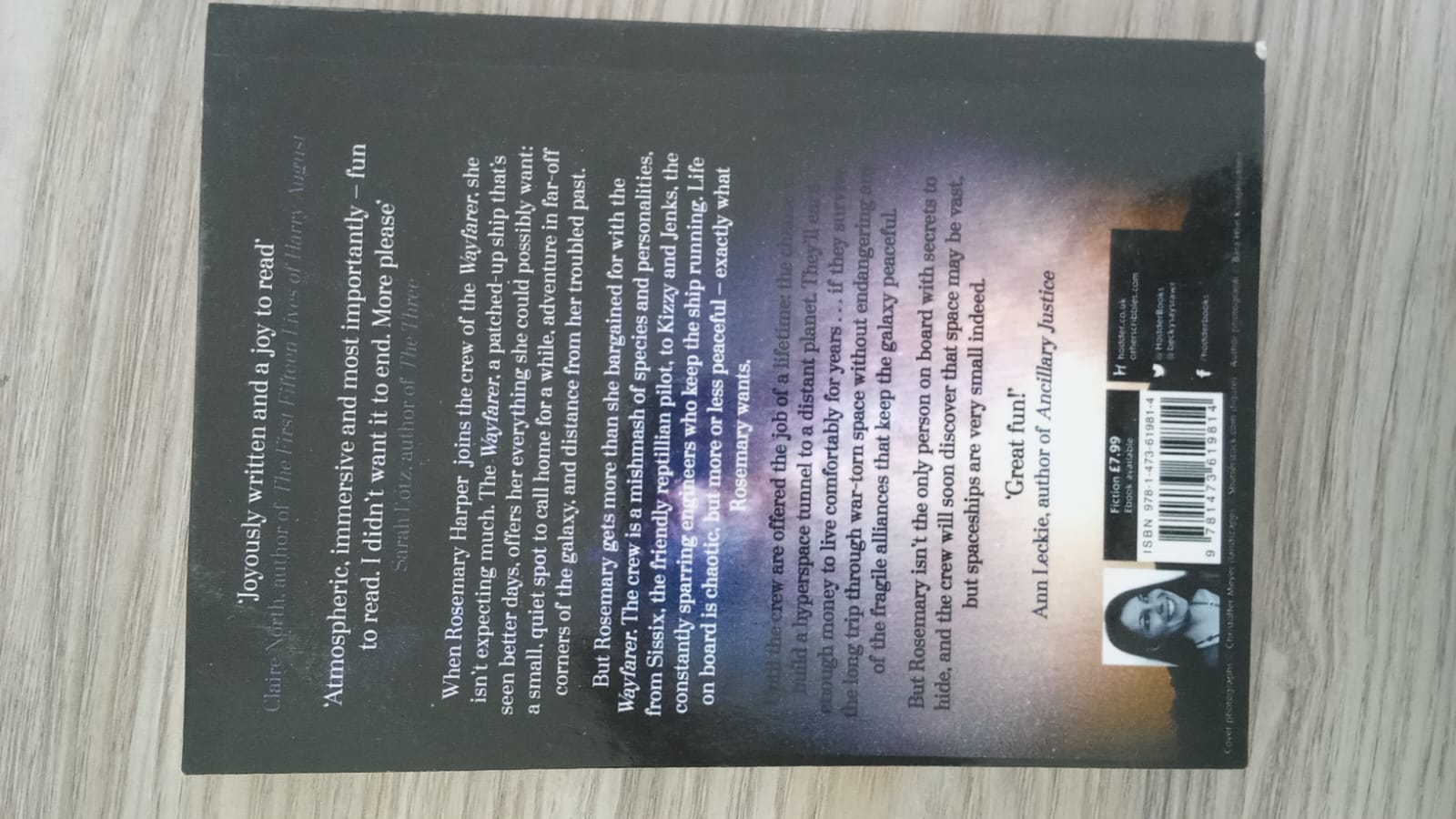
The Long Way to a Small Angry Planet by Becky Chambers is the first book in the Wayfarers series, following Rosemary Harper as she joins the diverse crew of the tunneling ship Wayfarer on a long journey across the galaxy. Filled with alien cultures, artificial intelligence, friendship, found family, LGBTQ+ representation, humor and thoughtful questions about identity and personhood, this warm character-driven space adventure is perfect for readers who enjoy hopeful and inclusive science fiction.
4 in stock
The Long Way to a Small, Angry Planet – by Becky Chambers
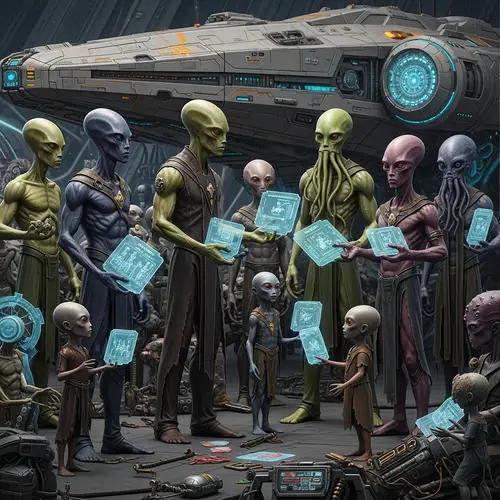
The Long Way to a Small Angry Planet by Becky Chambers is a warm, imaginative and deeply character-driven science-fiction novel about space travel, friendship, found family, identity, cultural differences and learning how to live alongside people who may be completely different from you.
At the beginning of the story, Rosemary Harper wants a new life.
She has a past she would rather leave behind.
So she accepts a job aboard a tunneling ship called the Wayfarer.
The Wayfarer is not a luxurious starship.
It is a working vessel.
Its crew creates tunnels through space that make interstellar travel possible.
Living aboard the ship means sharing a relatively small environment with a group of humans and aliens who have:
Different cultures.
Different bodies.
Different languages.
Different beliefs.
Different relationships.
Different ideas about family.
For Rosemary, joining the Wayfarer means entering a community unlike anything she has known before.
Then the crew receives an extraordinary opportunity.
They are offered a major tunneling assignment that will take them on a long journey across space.
The destination promises money and opportunity.
But the journey will also test the crew’s relationships and force them to confront questions about politics, prejudice, technology, love and survival.
The Long Way to a Small Angry Planet by Becky Chambers is therefore much more than a traditional space adventure.
It is a story about people.
People who happen to live among the stars.
The Long Way to a Small Angry Planet by Becky Chambers – Book Overview
The Long Way to a Small Angry Planet by Becky Chambers follows the crew of the Wayfarer as they travel toward a distant destination to complete a new hyperspace tunnel.
Rosemary joins as a clerk.
She expects work.
She does not expect to become emotionally attached to the people around her.
The crew includes individuals from several species, each with their own histories, habits and perspectives.
Living together requires:
Patience.
Communication.
Respect.
Humor.
Compromise.
The journey becomes an opportunity for Rosemary to learn about the crew while also deciding how much of herself she is ready to reveal.
Rosemary Harper
Rosemary is one of the main viewpoints through which readers enter the world.
She joins the Wayfarer because she wants distance from her previous life.
She is intelligent.
Careful.
Private.
At first, she mainly wants to perform her job and avoid attracting attention.
But life aboard the ship makes emotional distance difficult.
The crew gradually becomes important to her.
Starting Again
One of the central themes in The Long Way to a Small Angry Planet by Becky Chambers is the possibility of beginning again.
People sometimes leave places because they want:
Opportunity.
Freedom.
Distance.
A new identity.
Rosemary is searching for something similar.
But starting again does not always mean completely escaping the past.
Eventually, people have to decide what parts of themselves they are willing to share.
The Wayfarer
The Wayfarer is a tunneling ship.
Its job is essential to interstellar transportation.
Rather than being a military vessel, it is a working ship.
That gives the novel a different science-fiction atmosphere.
The crew is not primarily trying to save the universe.
They are doing their jobs.
Eating meals.
Maintaining equipment.
Arguing.
Celebrating.
Building relationships.
This everyday quality makes the story distinctive.
Space as a Workplace
Space fiction often focuses on:
War.
Empires.
Heroes.
Huge political conflicts.
Becky Chambers also asks:
What would ordinary work in space look like?
Someone still needs to:
Repair equipment.
Prepare food.
Handle paperwork.
Navigate.
Maintain computers.
Manage communications.
This makes the futuristic world feel lived-in.
Ashby Santoso
Ashby Santoso is the captain of the Wayfarer.
He is responsible for both:
The ship.
The people aboard it.
Leadership in such a diverse environment requires more than giving orders.
He must understand:
Personalities.
Cultures.
Conflict.
Safety.
The needs of his crew.
Leadership
Leadership becomes an important supporting theme.
A good captain does not simply control people.
A good leader creates an environment where different people can work together.
Ashby’s leadership is therefore strongly connected with:
Trust.
Communication.
Responsibility.
Sissix
Sissix is one of the most memorable members of the crew.
She belongs to an alien species with social customs very different from human traditions.
Her character allows the novel to explore questions about:
Family.
Relationships.
Physical affection.
Culture.
Assumptions.
Readers are repeatedly reminded that something considered normal in one culture may appear strange in another.
Cultural Difference
One of the greatest strengths of The Long Way to a Small Angry Planet by Becky Chambers is its exploration of cultural differences.
The novel does not assume:
Human = normal.
Alien = strange.
Instead, every culture has its own logic.
Humans can appear strange too.
This creates a much richer science-fiction universe.
Respect Before Judgment
When we encounter something unfamiliar, our first reaction may be:
That’s weird.
But another question is more useful:
Why does this make sense within their culture?
That attitude appears throughout the novel.
Dr. Chef
Dr. Chef is another beloved crew member.
He serves as both doctor and cook.
His unusual combination of responsibilities reflects the close-knit nature of the Wayfarer.
He cares for the crew physically in more than one way.
Through medicine.
And through food.
Food
Food becomes surprisingly important.
Meals bring people together.
Different species have different biological needs and cultural traditions.
Eating is therefore not simply practical.
It becomes connected to:
Community.
Identity.
Comfort.
Conversation.
Kizzy Shao
Kizzy is one of the ship’s technical crew members.
She brings enormous personality and humor to the story.
Her enthusiasm helps create the warm atmosphere many readers associate with the novel.
Science fiction does not need to be emotionally cold.
Kizzy is evidence of that.
Jenks
Jenks also works with the ship’s systems.
His story becomes particularly important in the novel’s exploration of artificial intelligence.
His relationship with the Wayfarer’s AI raises questions about:
Love.
Personhood.
Technology.
Consciousness.
Lovelace
The Wayfarer’s artificial intelligence is known as Lovelace, or Lovey.
She is more than a simple computer interface.
Her presence raises one of the most interesting philosophical questions in the book:
If an artificial intelligence can:
Think.
Communicate.
Develop relationships.
Express preferences.
then how should society treat it?
Artificial Intelligence
The Long Way to a Small Angry Planet by Becky Chambers approaches AI from a deeply human perspective.
The question is not simply:
How intelligent is this machine?
It is also:
What makes someone a person?
Memory?
Emotion?
Consciousness?
Relationships?
A body?
These questions make the book especially relevant to readers interested in technology and philosophy.
Personhood
Science fiction often allows readers to examine human questions through non-human characters.
If an AI appears self-aware, does it deserve rights?
If an alien has completely different biology, does that make its emotions less meaningful?
The novel continually challenges readers to expand their definition of personhood.
Ohan
Ohan is another crew member whose species and beliefs differ significantly from those of humans.
Ohan’s story explores:
Identity.
Culture.
Belief.
Individual choice.
Health.
The relationship between personal autonomy and social expectation.
Identity
Identity is one of the strongest themes in the novel.
Who are you?
Are you defined by:
Species?
Family?
Culture?
Job?
Body?
Past?
Relationships?
The characters answer these questions differently.
Found Family
Perhaps the most important emotional theme in The Long Way to a Small Angry Planet by Becky Chambers is found family.
The Wayfarer crew is not biologically related.
But they live together.
Work together.
Protect each other.
Celebrate together.
Argue.
Forgive.
Over time, they become a kind of family.
Family Is Not Only Biology
Family can be created through:
Friendship.
Trust.
Shared experiences.
Care.
Loyalty.
The novel strongly celebrates this idea.
People who feel different or disconnected from their biological families may particularly connect with this theme.
Belonging
Rosemary’s journey is partly about belonging.
At first, she is the new person.
She does not fully understand everyone.
She feels cautious.
But belonging develops slowly.
Through:
Meals.
Work.
Conversations.
Shared danger.
Small acts of kindness.
Eventually, a place can become home because of the people inside it.
Diversity
The crew is extremely diverse.
Different species.
Different personalities.
Different sexualities.
Different cultural backgrounds.
Different beliefs.
But diversity is not treated simply as decoration.
Those differences affect how characters:
Communicate.
Love.
Eat.
Work.
Think.
Build families.
This gives the world depth.
Prejudice
Where difference exists, prejudice can also exist.
Characters encounter assumptions about:
Species.
Culture.
Artificial intelligence.
Relationships.
The novel explores how prejudice can become normalized through social systems.
Stereotypes
A stereotype takes something complicated and reduces it to one assumption.
All members of this species are dangerous.
All humans behave this way.
All AIs are only machines.
The characters repeatedly discover that individuals are more complicated than stereotypes.
Empathy
Empathy becomes essential when people from different backgrounds live together.
You do not need to become identical to another person.
You need to recognize that their experience is real.
That principle makes The Long Way to a Small Angry Planet by Becky Chambers unusually compassionate science fiction.
Relationships
Relationships appear in many forms.
Romantic.
Platonic.
Professional.
Familial.
Inter-species.
Human-AI.
The novel does not treat one type as automatically more meaningful than every other.
Love
Love is not simple in this universe.
Different species have different approaches to:
Partnership.
Sexuality.
Family.
Commitment.
This allows Becky Chambers to question assumptions readers may normally take for granted.
Queer Representation
The novel includes LGBTQ+ and nontraditional relationships as ordinary parts of its universe.
These relationships are integrated naturally into the wider story.
This contributes to the book’s reputation as inclusive, character-centered science fiction.
Friendship
Friendship may be more important than romance in the overall emotional structure.
The Wayfarer crew survives because people care about one another.
Friendship creates:
Trust.
Humor.
Emotional support.
Belonging.
Everyday Kindness
Not every important moment involves a major battle.
Sometimes what matters is:
Cooking for someone.
Listening.
Helping.
Making space.
Learning another person’s customs.
The novel celebrates these small forms of kindness.
Communication
Communication is essential aboard a ship containing multiple species.
Misunderstanding can happen easily.
People need to:
Ask.
Listen.
Explain.
Clarify.
The same lesson applies outside science fiction.
Curiosity Instead of Judgment
When someone is different, curiosity can be more useful than judgment.
Ask:
Why do you do that?
What does this mean to you?
What should I understand?
That approach can build stronger relationships.
The Galactic Commons
The wider setting includes a large interspecies political community.
Humanity is relatively new within this larger galactic civilization.
This creates an interesting reversal.
Humans are not automatically the centre of the universe.
They are newcomers.
Humanity Is Not the Most Important Species
Many science-fiction stories place humanity at the centre of galactic history.
The Long Way to a Small Angry Planet by Becky Chambers takes a different approach.
Humans are simply one species among many.
This helps readers see human customs from an outside perspective.
Politics
Although the novel is highly character-driven, politics influences the crew’s journey.
Interstellar alliances have consequences.
Economic opportunities have consequences.
Political decisions made far away can affect ordinary workers.
The Wayfarer’s mission is connected to these larger systems.
War
The galaxy is not completely peaceful.
Some regions and species have histories of violence and conflict.
But the novel does not turn every political issue into a huge battle sequence.
Instead, it focuses on how larger conflicts affect individuals.
Ordinary People and Political Decisions
Governments make agreements.
Workers carry out the consequences.
This is true in real life too.
A political decision may change:
Jobs.
Travel.
Safety.
Families.
The novel connects large-scale politics with small-scale lives.
Space Travel
The journey itself provides opportunities to visit different places and encounter different cultures.
This gives the novel the feel of a road trip through space.
The destination matters.
But the experiences along the way matter even more.
The Journey Matters
The title emphasizes the long way.
That is significant.
Sometimes the journey changes people more than the destination.
Rosemary does not simply travel through space.
She changes through the relationships she develops.
A Cozy Side of Science Fiction
The novel is often associated with warm or cozy science fiction.
That does not mean nothing dangerous happens.
There are serious moments.
But the emotional core focuses strongly on:
Community.
Friendship.
Conversation.
Daily life.
Food.
Relationships.
Hope.
Hopeful Science Fiction
Some science fiction imagines futures where everything has become terrible.
Becky Chambers acknowledges problems but still imagines that:
People can learn.
Cultures can cooperate.
Kindness can matter.
Relationships can cross enormous differences.
That hopeful perspective is one of the novel’s greatest appeals.
Character-Driven Science Fiction
Readers expecting constant:
Space battles.
Explosions.
Military action.
may find this story different.
The main attraction is the characters.
Readers spend time learning:
Who they are.
What they believe.
Who they love.
What they fear.
That makes the novel especially suitable for readers who prefer character development over nonstop action.
Science Fiction for Non-Sci-Fi Readers
The Long Way to a Small Angry Planet by Becky Chambers can be a good entry point for people who do not normally read science fiction.
The technology and alien civilizations are important.
But the emotional questions are familiar.
How do I belong?
Can I trust these people?
What makes a family?
How do I respect someone different from me?
What kind of person do I want to become?
Technology
Technology shapes the world.
Spaceships.
Artificial intelligence.
Interstellar travel.
Tunneling.
But technology does not replace human—or alien—relationships.
The novel suggests that a more technologically advanced society can still face very familiar emotional problems.
Progress
Technological progress does not automatically eliminate:
Prejudice.
Fear.
Political conflict.
Loneliness.
People still have to develop socially and emotionally.
That makes the future feel believable.
Home
What does home mean when you travel between planets?
Home may not be a specific world.
It can be:
A ship.
A room.
A group of people.
A feeling of safety.
For many characters, home is something they actively create.
Leaving Home
Leaving home can be exciting.
It can also be painful.
People may leave because of:
Opportunity.
Conflict.
Family.
Work.
Personal freedom.
But carrying memories of home is unavoidable.
Secrets
Rosemary arrives with secrets.
Secrets can feel protective.
But they can also prevent intimacy.
The closer she becomes to the crew, the more difficult it becomes to keep parts of herself separate.
Trust
Trust takes time.
You do not immediately become family simply because you work together.
Trust develops through repeated experiences.
Someone keeps a promise.
Someone helps during a difficult moment.
Someone listens without judging.
Those moments accumulate.
Acceptance
Acceptance does not mean agreeing with every choice someone makes.
It means recognizing their dignity.
Many of the characters simply want to be accepted for who they are.
That universal desire connects readers to alien characters.
Autonomy
Several storylines explore the question of personal choice.
Who has the right to decide what happens to:
Your body?
Your identity?
Your mind?
Your relationships?
Autonomy becomes especially important when cultural expectations conflict with individual desires.
Ethics
The novel quietly asks ethical questions throughout.
Do artificial intelligences deserve rights?
How should societies treat species they distrust?
When does cultural respect become pressure to accept harmful traditions?
What responsibilities do governments have when forming alliances?
These questions add intellectual depth.
Moral Complexity
The story does not always divide everything into:
Good.
Evil.
Different societies have complicated histories.
Characters make imperfect choices.
This creates a more realistic universe.
Humor
Despite serious themes, The Long Way to a Small Angry Planet by Becky Chambers contains plenty of humor.
The crew jokes.
Teases.
Makes mistakes.
Gets annoyed.
The humor helps make the characters feel like real friends.
Warmth
Warmth is perhaps the novel’s defining quality.
Many readers finish the book feeling that they have spent time with people they know.
That emotional connection explains why the Wayfarers series developed such a loyal readership.
Becky Chambers
Becky Chambers is known for thoughtful, optimistic and character-focused science fiction.
Her work frequently explores:
Community.
Identity.
Technology.
Personhood.
Relationships.
Different cultures.
Meaningful everyday life.
She has become particularly associated with compassionate and hopeful speculative fiction.
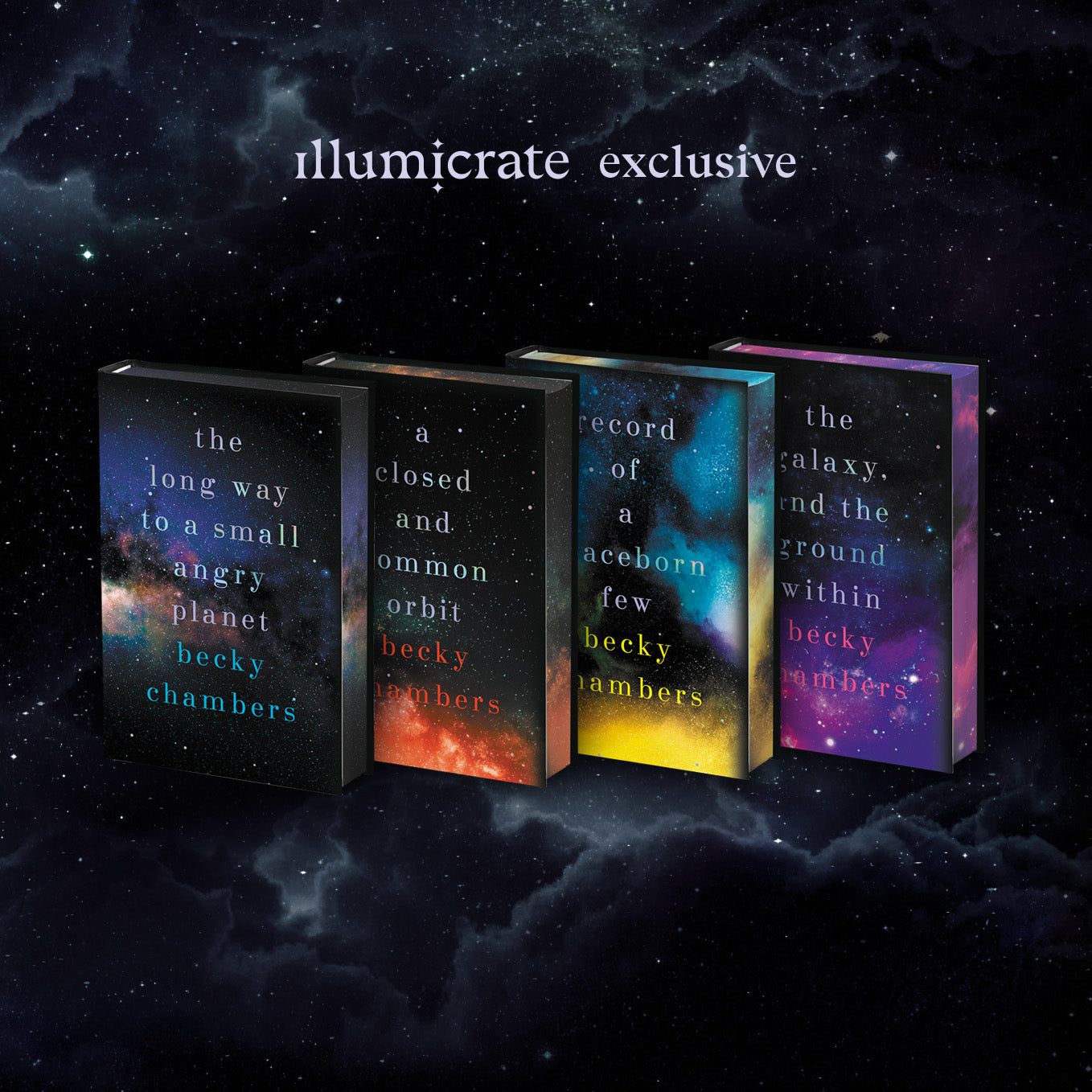
Wayfarers Series
The Long Way to a Small Angry Planet by Becky Chambers is Book 1 in the Wayfarers series.
The reading order is:
1. The Long Way to a Small, Angry Planet
2. A Closed and Common Orbit
3. Record of a Spaceborn Few
4. The Galaxy, and the Ground Within
The books take place in the same universe.
Are the Wayfarers Books Direct Sequels?
Not exactly.
The series is interconnected rather than one continuous story following exactly the same protagonists.
Later books focus on different characters and perspectives within the same universe.
Some characters and events connect across the books.
A Closed and Common Orbit
The second book follows characters connected with events in the first novel but shifts the focus significantly.
Readers who enjoy the AI themes in The Long Way to a Small Angry Planet by Becky Chambers may especially appreciate the second book.
Record of a Spaceborn Few
The third book explores human communities living aboard generation ships and looks more deeply at:
Home.
Tradition.
Identity.
Community.
The Galaxy, and the Ground Within
The fourth Wayfarers novel brings together several different alien characters in another character-driven story about connection, misunderstanding and shared experience.
Do You Need to Read Anything First?
No.
The Long Way to a Small Angry Planet by Becky Chambers is the beginning of the Wayfarers series.
No previous book is required.
Award Recognition
The novel received significant recognition within modern science fiction and helped establish Becky Chambers as an important voice in character-focused speculative fiction.
The wider Wayfarers series became especially well known for its compassionate approach to science fiction.
Why Readers Love It
Many readers love the novel not because they need to know:
Who wins the largest battle?
But because they care about the crew.
They want to spend more time with:
Rosemary.
Sissix.
Kizzy.
Jenks.
Dr. Chef.
Ashby.
Ohan.
The emotional attachment to the characters becomes the real engine of the story.
Content Considerations
The Long Way to a Small Angry Planet by Becky Chambers contains some mature and potentially sensitive material, including:
- Violence and dangerous situations
- Death and grief
- War-related themes
- Prejudice and discrimination
- Discussions of sexuality and relationships
- Inter-species relationships
- Mental and physical health themes
- Political conflict
- Some strong language
- Adult themes
However, the overall tone is generally warm, hopeful and compassionate rather than relentlessly dark.
7 Powerful Reasons to Read The Long Way to a Small Angry Planet
There are many reasons readers may enjoy The Long Way to a Small Angry Planet by Becky Chambers, but seven stand out:
- The Wayfarer crew feels like a real found family – Their friendships, arguments, meals, jokes and loyalty create one of the warmest crews in modern science fiction.
- The alien cultures are genuinely different – Becky Chambers explores how species might have completely different ideas about family, relationships, biology and social behavior.
- The book asks fascinating questions about artificial intelligence – Lovelace and other AI-related storylines explore consciousness, personhood, bodies and whether artificial beings deserve rights.
- It celebrates diversity without making everyone identical – The characters learn to respect differences rather than demanding that every culture follow the same rules.
- It offers hopeful science fiction – The universe contains conflict and prejudice, but kindness, cooperation and understanding remain powerful forces.
- The story focuses on characters rather than endless action – Readers who love relationships, found family and emotional growth will find plenty to enjoy.
- It begins the acclaimed Wayfarers series – Readers can continue exploring Becky Chambers’ rich universe through three additional interconnected novels.
Why Read The Long Way to a Small Angry Planet by Becky Chambers?
The Long Way to a Small Angry Planet by Becky Chambers is an excellent choice for readers interested in:
- Becky Chambers books
- Science fiction
- Space adventure
- Found family
- Cozy science fiction
- Hopeful science fiction
- Alien cultures
- Artificial intelligence
- LGBTQ+ science fiction
- Character-driven novels
- Space travel
- Interstellar civilizations
- Diverse characters
- Friendship
- Identity
- Personhood
- Wayfarers series
- Philosophical science fiction
- Inclusive fiction
- Books about belonging
It is particularly suitable for readers who want science fiction that focuses as much on relationships and culture as it does on technology and space travel.
Who Should Read This Book?
The Long Way to a Small Angry Planet by Becky Chambers may especially appeal to:
- Science-fiction readers
- Becky Chambers fans
- Readers who love found-family stories
- Fans of character-driven fiction
- Readers interested in artificial intelligence
- Readers interested in alien cultures
- LGBTQ+ fiction readers
- Fans of hopeful or cozy science fiction
- Readers who prefer relationships over constant battles
- Readers looking for inclusive speculative fiction
- Book club readers
- Readers new to science fiction
- Fans of space adventures
- Readers interested in philosophy and personhood
- Anyone who enjoys stories about belonging
A Long Journey Toward Belonging
The Long Way to a Small Angry Planet by Becky Chambers begins with Rosemary Harper trying to leave part of her life behind.
She joins a ship.
Accepts a job.
Plans to keep her distance.
But the Wayfarer changes her.
Not because it is the most powerful ship in the galaxy.
Not because its crew are legendary heroes.
But because ordinary daily experiences create connection.
Meals.
Arguments.
Work.
Jokes.
Danger.
Trust.
The crew members are different from one another in almost every imaginable way.
Different species.
Cultures.
Bodies.
Relationships.
Beliefs.
Yet they learn how to live together.
That becomes the novel’s most hopeful idea.
A community does not require everyone to become the same.
It requires people to make the effort to understand one another.
By the time the Wayfarer reaches the end of its long journey, the real destination is not simply another point in space.
For Rosemary, the journey has also been toward:
Belonging.
Trust.
Friendship.
Acceptance.
Home.
For readers interested in science fiction, found family, alien cultures, artificial intelligence, LGBTQ+ representation, friendship and deeply human stories set among the stars, The Long Way to a Small Angry Planet by Becky Chambers is a warm and memorable beginning to the Wayfarers series.
Learn more about The Long Way to a Small, Angry Planet by Becky Chambers on Becky Chambers’ official website.
Explore more science fiction books at Bargain Books.
Be the first to review “The Long Way To A Small Angry Planet by Becky Chambers”
Related products

රු2,000.00
3 X Rs. 666.67 or 8% Cashback with
or 3 X රු666.67 with
or up to 4 X රු500.00 with
-24%

Out of stock
Non-Fiction & Knowledge
Original price was: රු2,500.00.රු1,900.00Current price is: රු1,900.00.
3 X Rs. 633.33 or 8% Cashback with
or 3 X රු633.33 with
or up to 4 X රු475.00 with
-28%

Self-Help & Psychology
Original price was: රු1,800.00.රු1,300.00Current price is: රු1,300.00.
3 X Rs. 433.33 or 8% Cashback with
or 3 X රු433.33 with
or up to 4 X රු325.00 with
-33%

Self-Help & Psychology
Original price was: රු2,300.00.රු1,550.00Current price is: රු1,550.00.
3 X Rs. 516.67 or 8% Cashback with
or 3 X රු516.67 with
or up to 4 X රු387.50 with

Non-Fiction & Knowledge
රු1,550.00
3 X Rs. 516.67 or 8% Cashback with
or 3 X රු516.67 with
or up to 4 X රු387.50 with
-21%

Non-Fiction & Knowledge
7 Secrets to Investing Like Warren Buffett by Mary Buffett & Sean Seah
Original price was: රු1,900.00.රු1,500.00Current price is: රු1,500.00.
3 X Rs. 500.00 or 8% Cashback with
or 3 X රු500.00 with
or up to 4 X රු375.00 with

Out of stock
Self-Help & Psychology
රු1,900.00
3 X Rs. 633.33 or 8% Cashback with
or 3 X රු633.33 with
or up to 4 X රු475.00 with

Out of stock
Non-Fiction & Knowledge
රු1,500.00
3 X Rs. 500.00 or 8% Cashback with
or 3 X රු500.00 with
or up to 4 X රු375.00 with
Reviews
There are no reviews yet.