
No products in the cart.
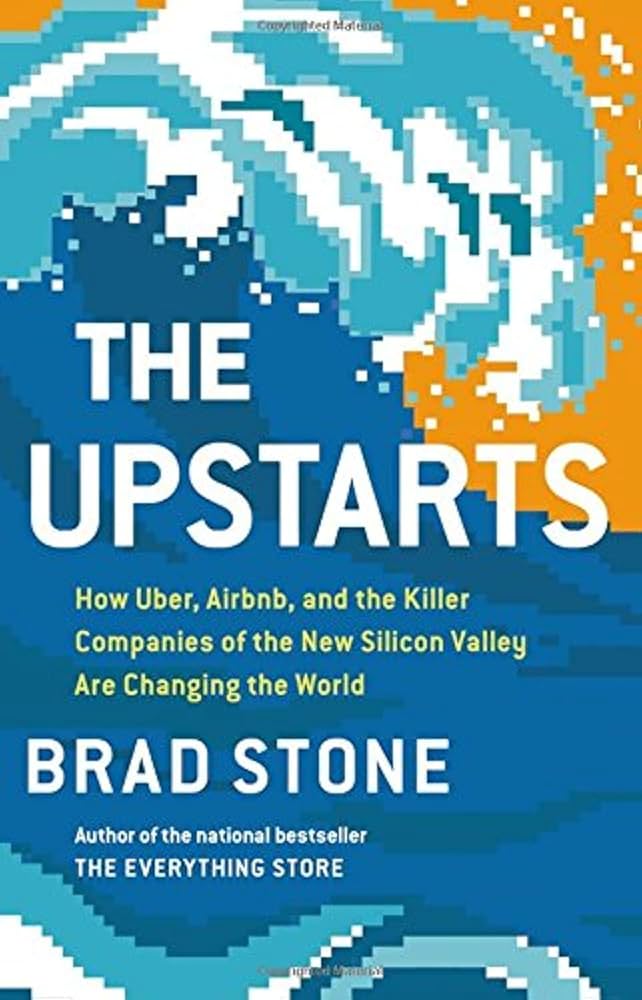
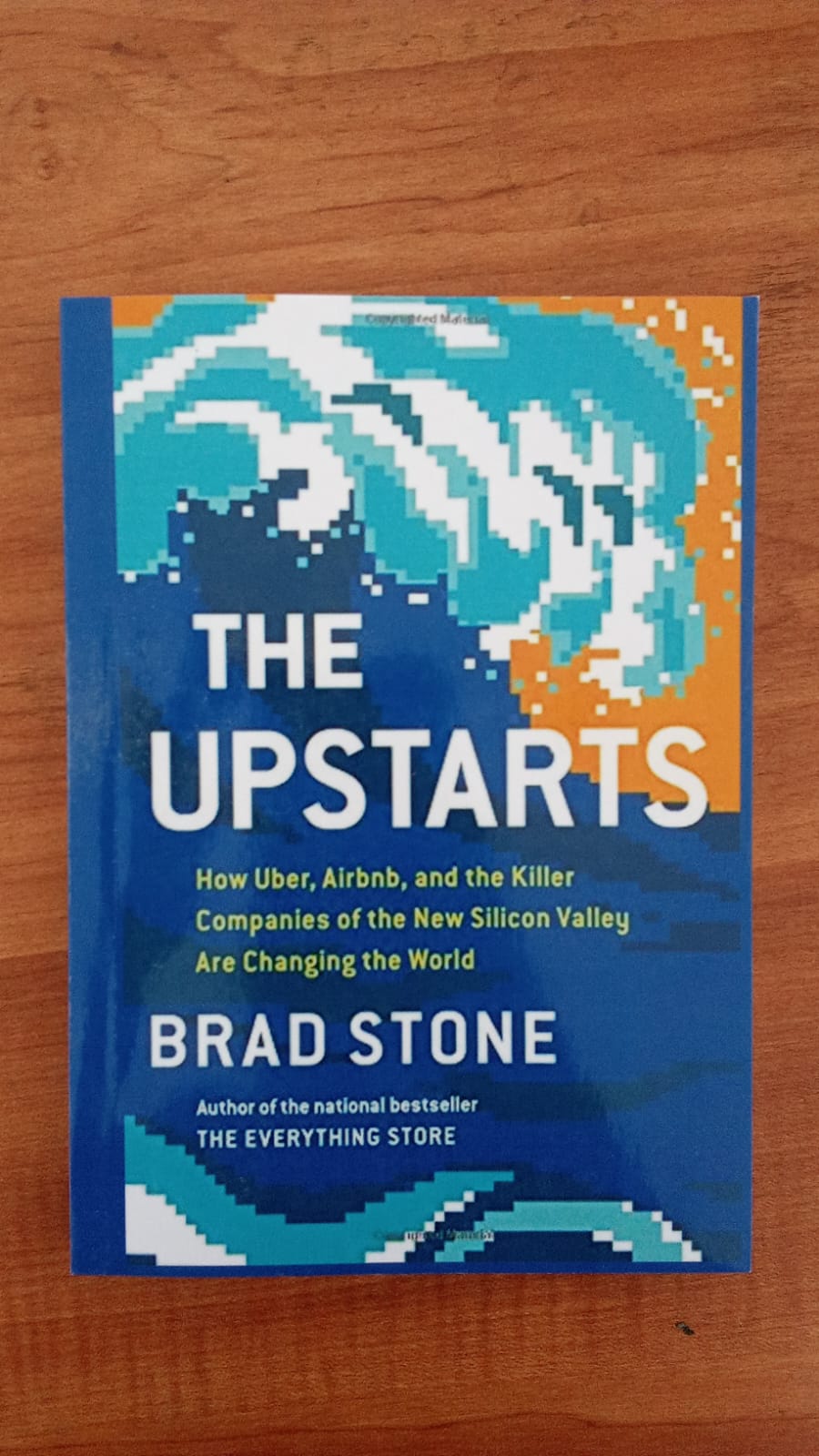
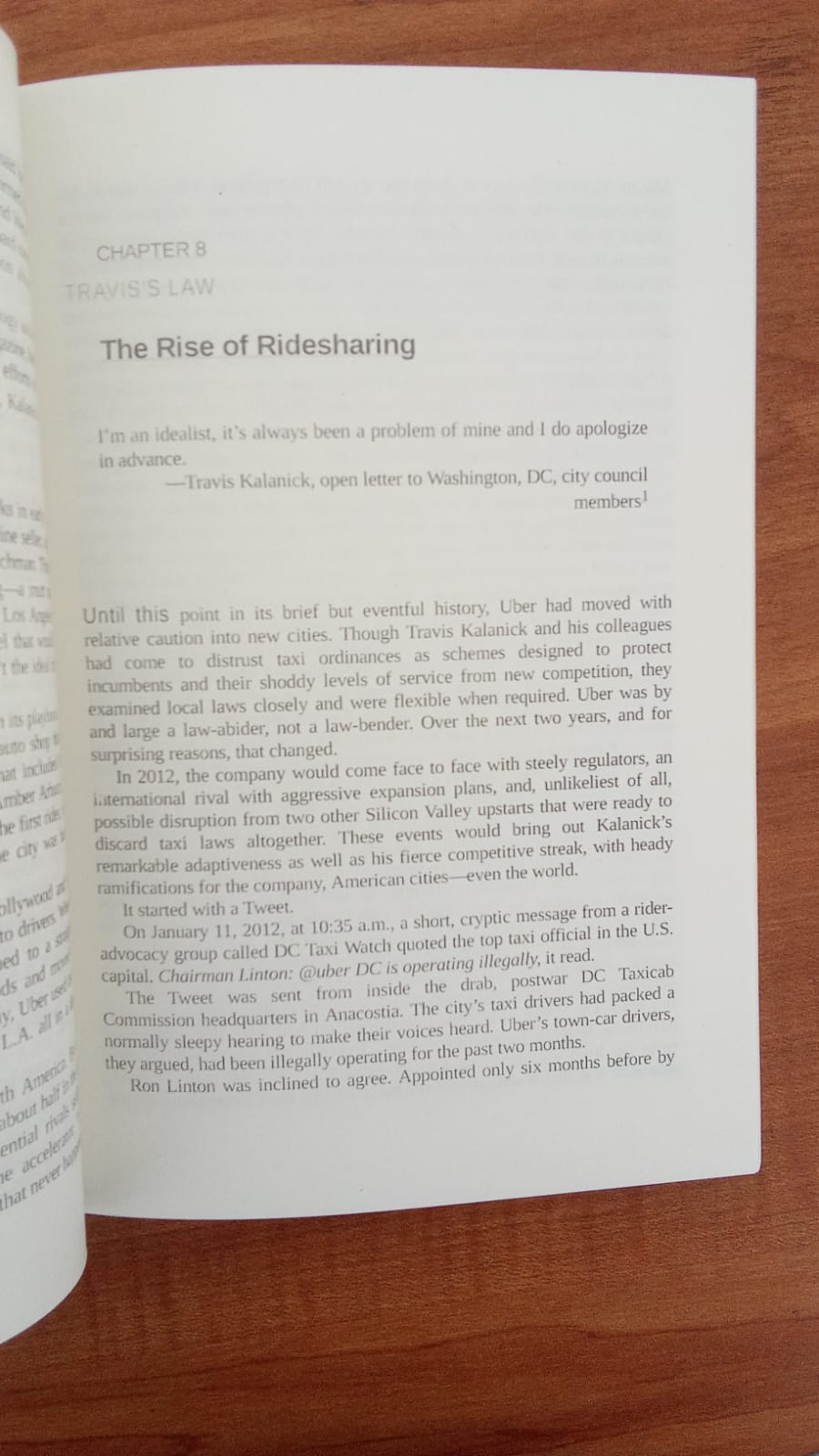





Upstarts by Brad Stone


රු1,950.00
3 X Rs. 650.00 or 8% Cashback with


or 3 X රු650.00 with


or up to 4 X රු487.50 with


Upstarts by Brad Stone is a compelling business and technology book that explores how companies like Uber and Airbnb disrupted traditional industries and reshaped the modern economy. Through real stories of ambitious founders, the book reveals the risks, innovation, and fierce competition behind some of the world’s fastest-growing startups. Perfect for readers interested in entrepreneurship, innovation, and the rise of the sharing economy.
5 in stock
The Upstarts by Brad Stone
The Upstarts by Brad Stone is a gripping business book about the rise of Uber and Airbnb and the founders who turned two unusual ideas into global companies.
The book follows the early journeys of entrepreneurs including Brian Chesky, Joe Gebbia, Nathan Blecharczyk, Travis Kalanick, and Garrett Camp.
Their companies challenged traditional industries.
Airbnb changed how people thought about accommodation.
Uber changed how people moved through cities.
Both companies also created serious debates about regulation, competition, labor, local communities, and the power of technology platforms.
About The Upstarts
The Upstarts explores a period when Silicon Valley startups were beginning to change everyday life through smartphones and online marketplaces.
Airbnb began with a simple idea.
Could ordinary people rent spare space in their homes to travelers?
Uber began with another idea.
Could technology make getting a ride easier?
At first, both concepts seemed strange.
Many investors were skeptical.
Potential customers had trust concerns.
Governments were not prepared for the regulatory questions these businesses created.
Yet both companies expanded rapidly.
Brad Stone uses reporting and interviews to explain how that happened.
7 Powerful Lessons from The Upstarts
1. Strange Ideas Can Become Huge Businesses
Many successful companies begin with ideas that initially sound unrealistic.
Sleeping in a stranger’s home did not sound like an obvious global business.
Getting into a stranger’s privately owned car also raised questions.
But the founders saw possibilities that others ignored.
The Upstarts shows that unconventional ideas can become valuable when technology, timing, and customer behavior align.
2. Growth Requires Persistence
Neither Airbnb nor Uber became successful immediately.
The founders faced rejection.
They struggled to raise money.
They encountered technical problems.
Customers did not always understand the product.
Investors sometimes dismissed the idea.
Persistence played a major role in keeping the companies alive during their early stages.
3. Timing Matters
An idea can be good and still fail if the timing is wrong.
Uber and Airbnb grew during a period when smartphones, online payments, mapping technology, and social networks were becoming widespread.
These technologies made the businesses more practical.
The lesson is that successful startups often depend on several trends coming together at the right time.
4. Founders Shape Company Culture
The personalities of founders matter.
They influence hiring.
Strategy.
Risk tolerance.
Communication.
Decision-making.
Uber and Airbnb developed very different cultures partly because their founders approached business differently.
The Upstarts shows how founder behavior can affect the entire organization.
5. Disruption Creates Conflict
A company that changes an industry often creates winners and losers.
Hotels faced new competition from Airbnb.
Taxi companies faced new competition from Uber.
Local governments had to decide how existing rules should apply.
The book shows that disruption is rarely peaceful.
Innovation can create new value while also creating legitimate concerns.
6. Regulation Cannot Be Ignored
Startups sometimes move faster than regulation.
That can create opportunities.
It can also create serious problems.
Both Uber and Airbnb had conflicts with cities and governments.
The companies had to decide whether to negotiate, challenge rules, or continue operating while legal questions remained unresolved.
This tension between innovation and regulation is one of the book’s major themes.
7. Hypergrowth Has a Cost
Rapid growth looks exciting from the outside.
Inside a company, it can create enormous pressure.
Hiring becomes difficult.
Management systems may fall behind.
Culture can change.
Mistakes become larger.
Public criticism increases.
The Upstarts makes clear that fast growth can create wealth and opportunity, but it can also create serious operational and ethical challenges.
The Birth of Airbnb
Brian Chesky and Joe Gebbia were struggling financially when they experimented with renting space in their apartment.
The concept eventually became Airbed & Breakfast.
Nathan Blecharczyk later joined as a technical co-founder.
The team had difficulty convincing investors.
The idea seemed too strange.
Why would people trust strangers enough to sleep in their homes?
That trust problem became one of Airbnb’s biggest challenges.
The company eventually improved photography, payments, reviews, and platform design to make the experience feel safer and easier.
The Birth of Uber
Uber developed from conversations involving Garrett Camp and Travis Kalanick.
The basic idea was to make transportation more convenient through technology.
A user could request a ride from a phone.
The application could identify location.
Payment could happen digitally.
The experience was designed to feel smoother than traditional taxi services.
As smartphones became more powerful, the model became much easier to scale.
Brian Chesky and Airbnb Culture
Brian Chesky played a central role in Airbnb’s identity.
He focused heavily on design, branding, user experience, and company culture.
Airbnb wanted to present itself as more than a booking service.
The company promoted the idea of belonging.
That positioning helped differentiate the platform from traditional accommodation businesses.
Travis Kalanick and Uber Culture
Travis Kalanick became strongly associated with Uber’s aggressive growth strategy.
The company expanded quickly into new markets.
It often entered cities before regulatory questions were completely resolved.
This approach helped Uber grow rapidly.
It also created major controversy.
Stone’s book examines both the business advantages and the consequences of that strategy.
Competition
Startups rarely grow without competitors.
Uber faced rival ride-hailing companies.
Airbnb faced other accommodation platforms.
Competition forced each company to move faster.
It also encouraged aggressive tactics.
The Upstarts shows how startup competition can become extremely intense when investors believe one company may eventually dominate the market.
Venture Capital
Funding played a major role in both stories.
Venture capital allowed the companies to expand quickly.
They could hire employees.
Enter new markets.
Develop technology.
Spend heavily on marketing.
But outside funding also created pressure.
Investors expected rapid growth.
That can push companies toward decisions they might not make if they were growing more slowly.
Network Effects
Both businesses benefited from network effects.
More Airbnb hosts attracted more guests.
More guests encouraged more hosts.
More Uber drivers reduced waiting times.
Shorter waiting times attracted more riders.
More riders gave drivers more reasons to join.
Once a marketplace reaches enough scale, it can become increasingly difficult for smaller competitors to match.
Trust as a Business Problem
Both companies depended on trust between strangers.
That was unusual.
Airbnb needed homeowners to let unknown guests into their homes.
Guests needed confidence that listings were real.
Uber needed passengers to trust unfamiliar drivers.
Drivers also needed protection from unsafe riders.
Reviews, identity systems, payment tools, and platform rules became essential.
Technology and Everyday Behavior
One of the reasons The Upstarts remains interesting is that it shows technology changing behavior.
Before companies like Airbnb, many travelers automatically thought about hotels.
Before ride-hailing apps, people thought about taxis or rental cars.
Technology introduced new habits.
Once those habits became normal, entire industries had to respond.
Regulation and Cities
Cities faced difficult questions.
Should Airbnb hosts follow hotel regulations?
How should short-term rentals affect housing markets?
Should Uber drivers follow taxi licensing rules?
How should insurance work?
Different governments responded differently.
These conflicts show that technological change often moves faster than existing law.
Growth vs. Responsibility
A startup may measure success through user growth, revenue, market share, and valuation.
But companies also affect communities.
Airbnb influenced neighborhoods and local housing debates.
Uber influenced transportation, employment, and city regulation.
The book highlights how difficult it can be to balance rapid expansion with broader social responsibilities.
Leadership Under Pressure
Running a rapidly growing startup creates unusual leadership problems.
A small decision can suddenly affect thousands of employees or millions of users.
Founders who were once managing tiny teams become global executives.
Not every founder adapts easily.
The book provides useful examples of how leadership style can become more important as a company grows.
Why Entrepreneurs May Enjoy This Book
The Upstarts is valuable because it does not present entrepreneurship as a simple success story.
Readers see ambition.
Creativity.
Risk.
Mistakes.
Conflict.
Funding.
Competition.
Regulatory pressure.
And the emotional strain of building a large company.
That makes it useful for readers who want a more realistic picture of startup growth.
Who Should Read This Book?
The Upstarts is ideal for entrepreneurs, startup founders, business students, managers, investors, technology professionals, and readers interested in Silicon Valley.
It may especially appeal to readers who enjoy company histories.
Fans of Brad Stone’s The Everything Store may also appreciate his detailed reporting style.
Readers interested in Uber, Airbnb, platform businesses, startup culture, and disruptive innovation will find plenty to explore.
About Brad Stone
Brad Stone is a journalist and author who has covered technology companies and Silicon Valley for many years.
His books include The Everything Store, The Upstarts, and Amazon Unbound.
His official biography says he is Senior Executive Editor for Global Technology at Bloomberg News and has extensively covered companies including Amazon, Apple, Google, Facebook, and other major technology firms.
Readers can learn more through the official Brad Stone page for The Upstarts.
Product Details
Title: The Upstarts
Subtitle: Uber, Airbnb and the Battle for the New Silicon Valley
Author: Brad Stone
Genre: Business / Entrepreneurship / Technology / Company History
Language: English
Original Publication: 2017
Main Companies: Uber and Airbnb
Common UK Paperback Edition
Publisher / Imprint: Corgi
ISBN-13: 9780552172585
Format: Paperback
Pages: 464
Publication Date: April 5, 2018
Dimensions: 199 × 127 × 28 mm
Weight: Approximately 316 g
Penguin confirms these specifications for the UK paperback edition.
US Trade Paperback Edition
Publisher: Little, Brown Paperbacks
ISBN-13: 9780316388412
Format: Trade Paperback
Pages: 400
Publication Date: May 15, 2018
Different editions contain different page counts and may include updated material.
Always check the ISBN printed on your physical copy before entering final WooCommerce specifications.
Explore More Business Books
The Upstarts tells the story of companies that began with ideas many people considered strange.
Those ideas eventually changed how millions of people travel and move around cities.
But their growth also created conflicts involving competitors, regulators, workers, neighborhoods, and company culture.
That combination of innovation and controversy makes the book more than a simple startup success story.
Readers looking for more entrepreneurship and technology books can explore Business, Finance & Economics Books at Bargain Books.
For readers interested in startups, Silicon Valley, Uber, Airbnb, entrepreneurship, disruptive innovation, and the realities of hypergrowth, The Upstarts offers a detailed inside look at how two influential technology companies were built.
Be the first to review “Upstarts by Brad Stone”
Related products

Non-Fiction & Knowledge
රු1,950.00
3 X Rs. 650.00 or 8% Cashback with
or 3 X රු650.00 with
or up to 4 X රු487.50 with

Out of stock
Non-Fiction & Knowledge
රු1,600.00
3 X Rs. 533.33 or 8% Cashback with
or 3 X රු533.33 with
or up to 4 X රු400.00 with
-28%

Self-Help & Psychology
Original price was: රු1,800.00.රු1,300.00Current price is: රු1,300.00.
3 X Rs. 433.33 or 8% Cashback with
or 3 X රු433.33 with
or up to 4 X රු325.00 with
-17%
Out of stock
Non-Fiction & Knowledge
Original price was: රු2,900.00.රු2,400.00Current price is: රු2,400.00.
3 X Rs. 800.00 or 8% Cashback with
or 3 X රු800.00 with
or up to 4 X රු600.00 with
-24%

Out of stock
Non-Fiction & Knowledge
Original price was: රු2,500.00.රු1,900.00Current price is: රු1,900.00.
3 X Rs. 633.33 or 8% Cashback with
or 3 X රු633.33 with
or up to 4 X රු475.00 with
-24%

Out of stock
Non-Fiction & Knowledge
Original price was: රු2,100.00.රු1,600.00Current price is: රු1,600.00.
3 X Rs. 533.33 or 8% Cashback with
or 3 X රු533.33 with
or up to 4 X රු400.00 with
-23%

Non-Fiction & Knowledge
Original price was: රු2,200.00.රු1,700.00Current price is: රු1,700.00.
3 X Rs. 566.67 or 8% Cashback with
or 3 X රු566.67 with
or up to 4 X රු425.00 with

Out of stock
Self-Help & Psychology
රු1,900.00
3 X Rs. 633.33 or 8% Cashback with
or 3 X රු633.33 with
or up to 4 X රු475.00 with
Reviews
There are no reviews yet.