
No products in the cart.
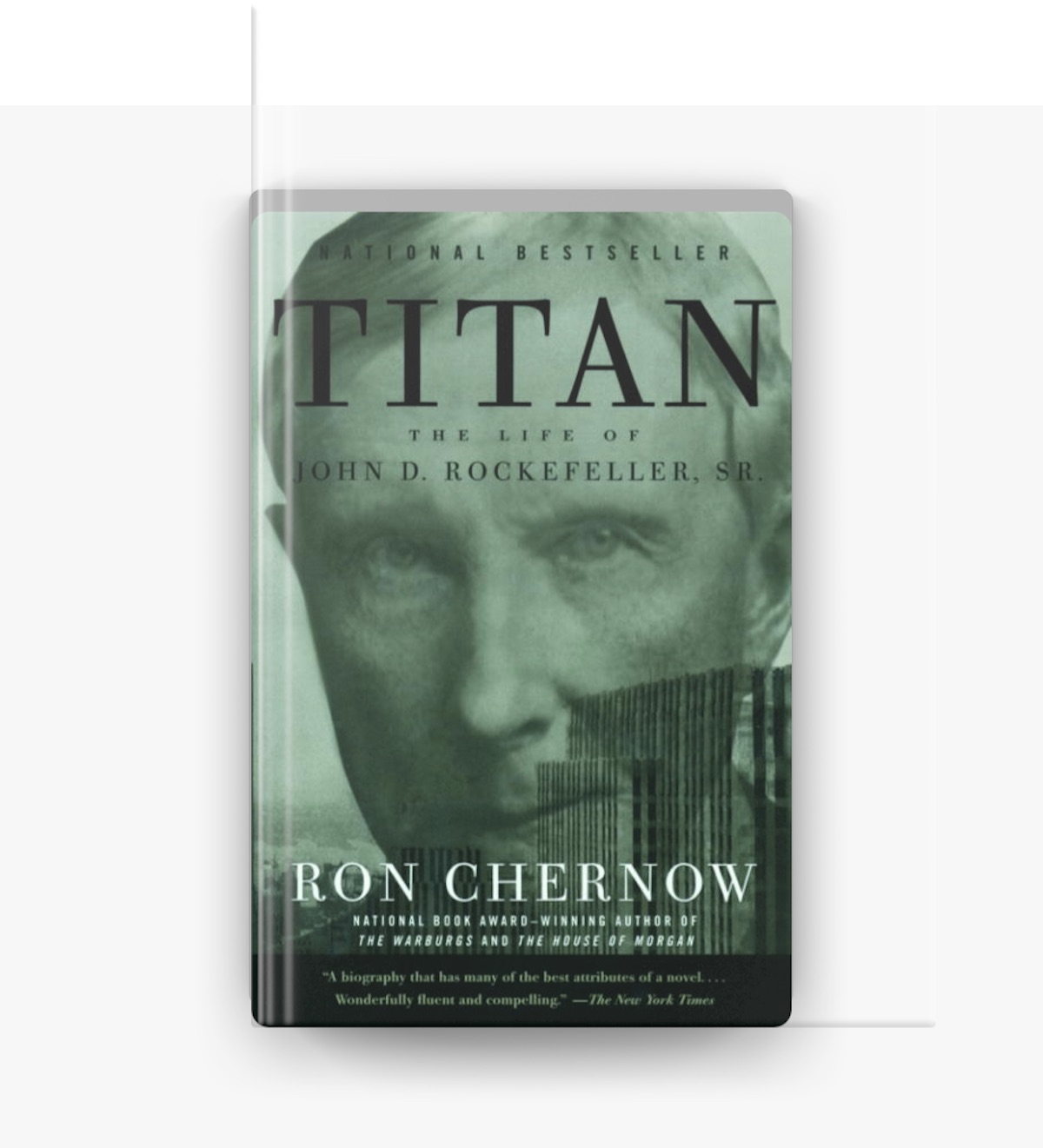
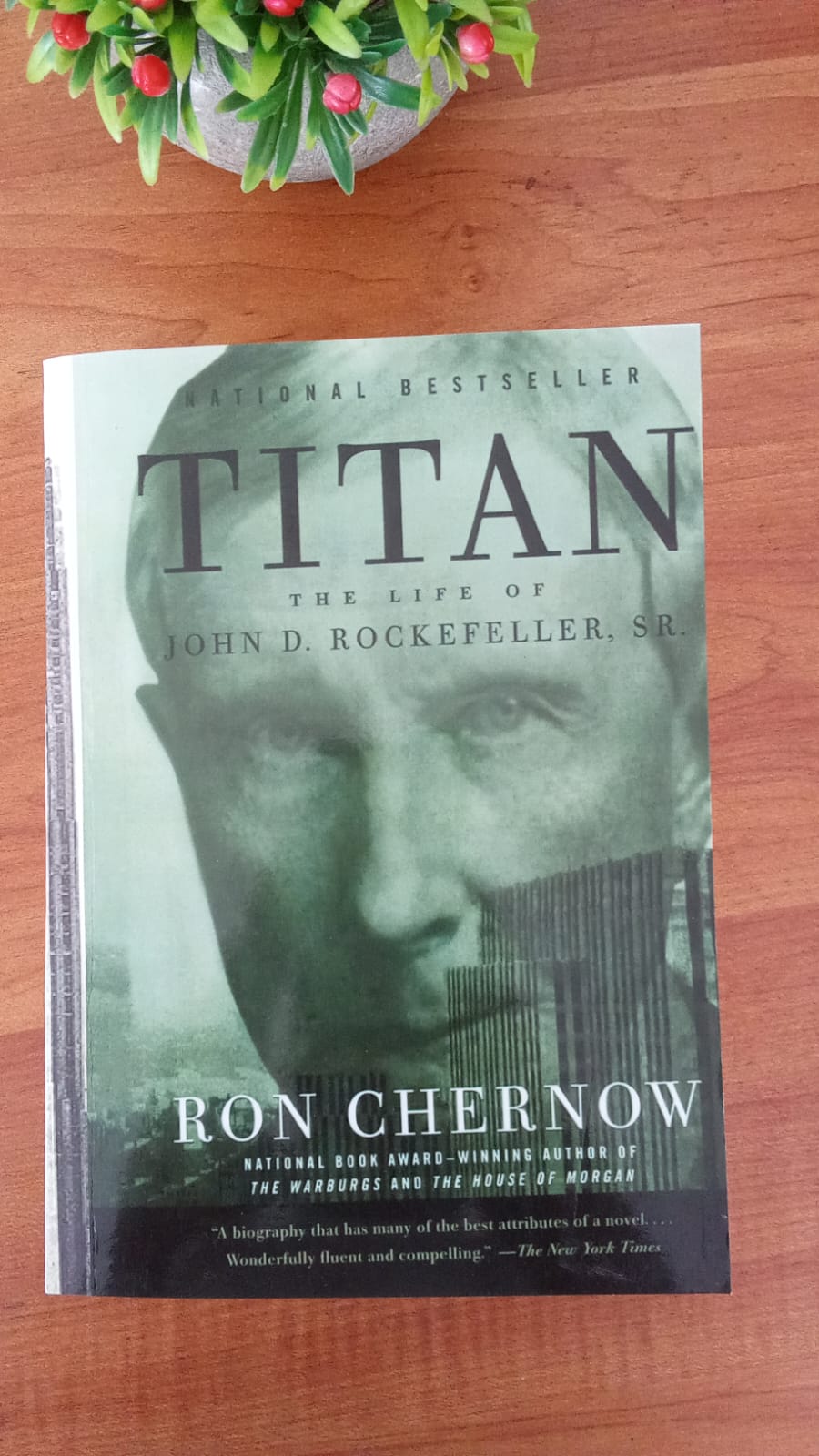
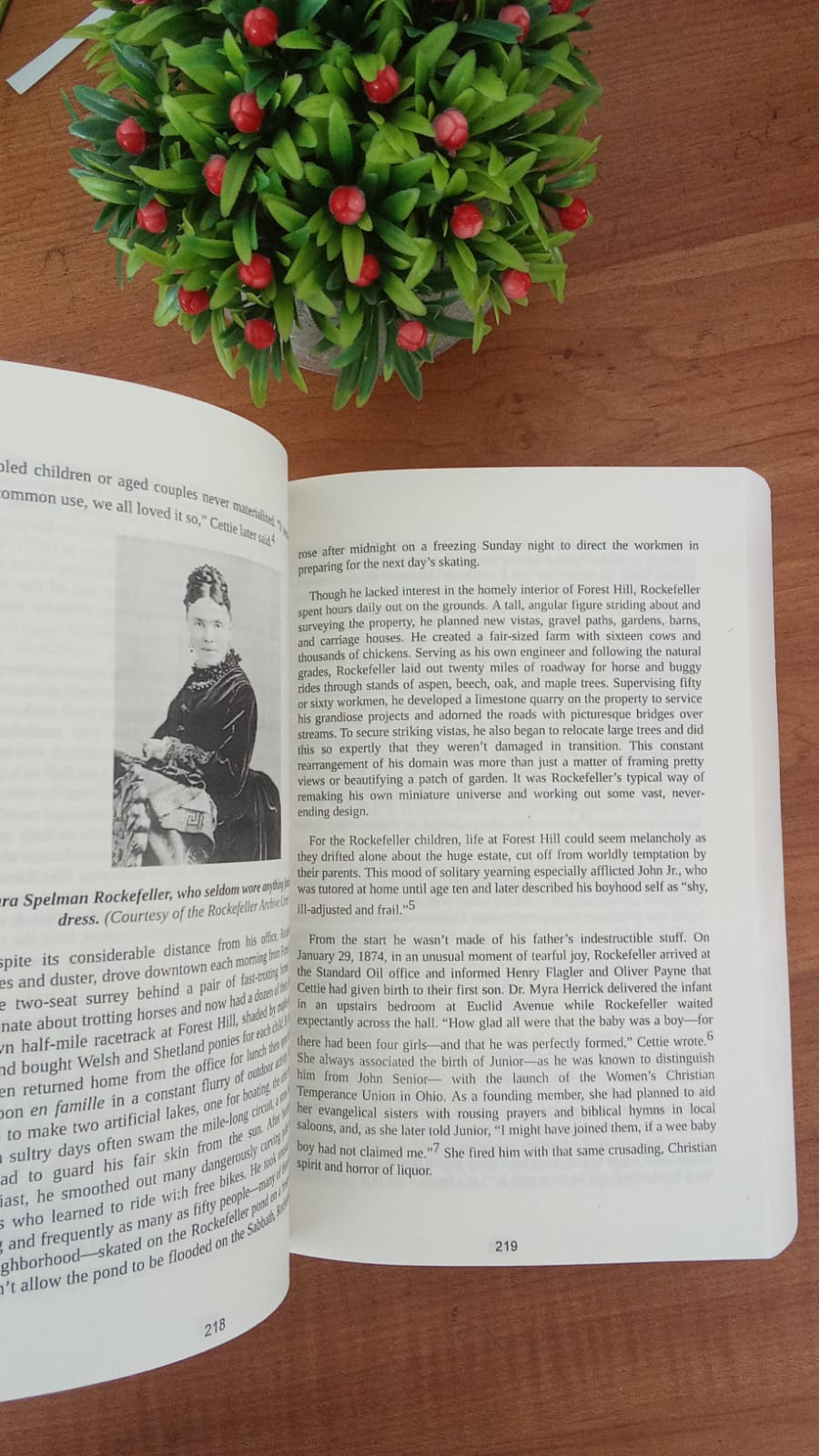
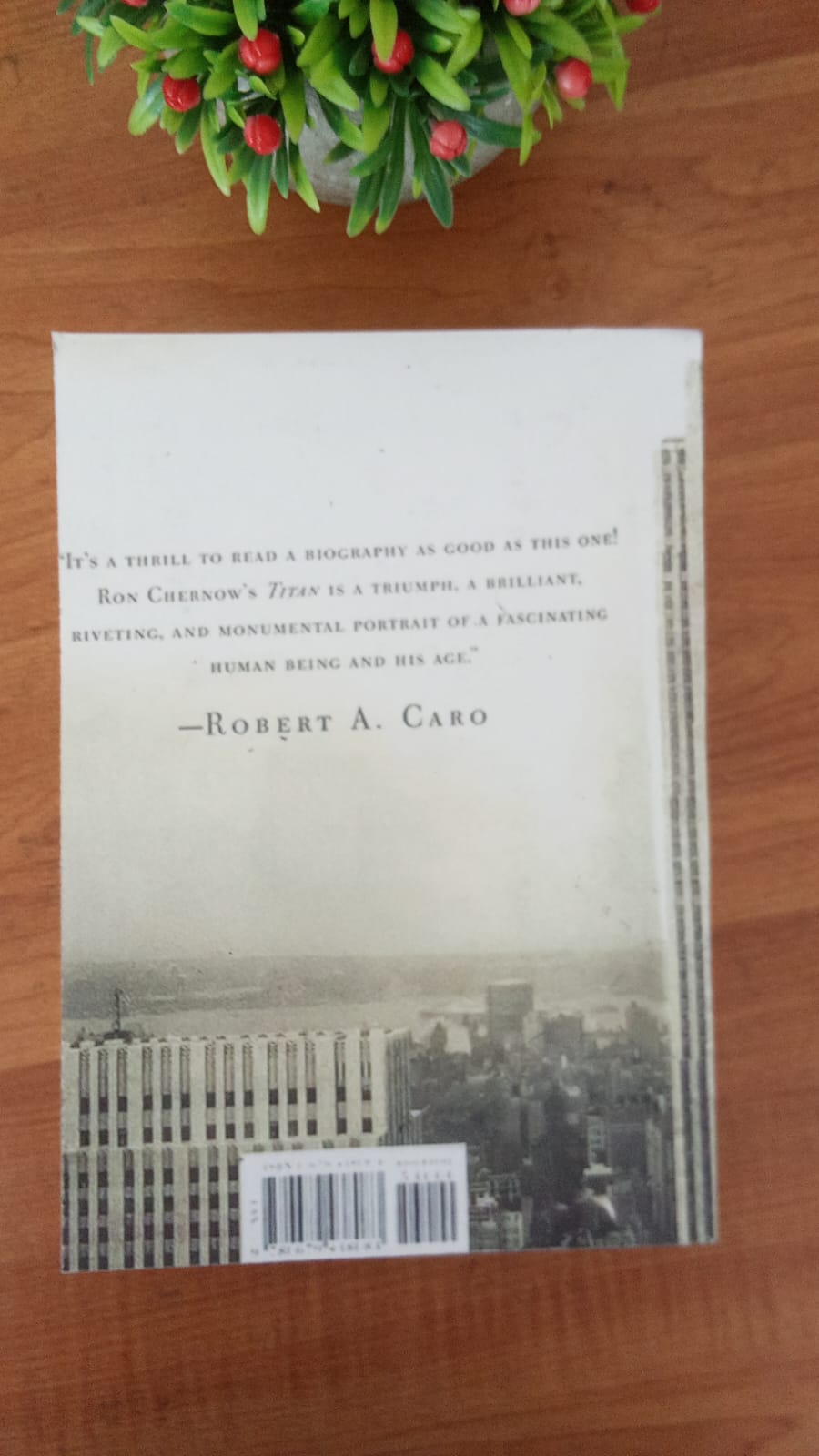

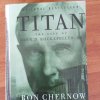


Titan by Ron Chernow


රු3,250.00
3 X Rs. 1,083.33 or 8% Cashback with


or 3 X රු1,083.33 with


or up to 4 X රු812.50 with


Product Short Description:
Titan: The Life of John D. Rockefeller, Sr. by Ron Chernow is a compelling biography that explores the rise of one of the most powerful businessmen in history. It reveals how Rockefeller built Standard Oil through strategy, discipline, and ambition, while also examining the controversies and philanthropy that shaped his legacy. A must-read for anyone interested in business, leadership, and real-life success stories.
4 in stock
Titan by Ron Chernow
Titan by Ron Chernow is a sweeping biography of John D. Rockefeller, one of the most influential businessmen in American history and the founder of Standard Oil.
The book explores Rockefeller’s rise from modest beginnings to extraordinary wealth.
It also examines the business empire that made him famous, the criticism he faced, his family life, his religious beliefs, and the enormous philanthropic projects that shaped his later years.
Ron Chernow presents Rockefeller as a complex figure rather than a simple hero or villain.
About Titan by Ron Chernow
Titan by Ron Chernow follows John D. Rockefeller across nearly a century of American history.
Rockefeller was born in 1839.
His family life was complicated from the beginning.
His father was frequently absent and lived an unconventional life.
His mother, by contrast, was deeply religious and disciplined.
These very different influences helped shape Rockefeller’s personality.
He became careful with money at a young age.
He also developed a strong belief in discipline, work, and religious duty.
From Bookkeeper to Businessman
Rockefeller did not begin his career as an oil tycoon.
He began as a young bookkeeper.
Numbers fascinated him.
He paid close attention to costs, margins, and efficiency.
These skills became extremely important later.
As the American oil industry began expanding, Rockefeller recognized an opportunity.
He moved into oil refining.
That decision eventually transformed his life.
The Rise of Standard Oil
The company that made Rockefeller famous was Standard Oil.
Rockefeller and his partners focused heavily on efficiency.
They reduced waste.
They negotiated transportation costs.
They expanded operations.
They also attempted to control increasingly large parts of the oil-refining industry.
Standard Oil eventually became one of the most powerful corporations in America.
Its size brought enormous profits.
It also created enormous controversy.
7 Powerful Lessons from Titan by Ron Chernow
1. Discipline Can Compound Over Time
One of the clearest lessons in Titan by Ron Chernow is Rockefeller’s extraordinary discipline.
He monitored expenses closely.
He avoided unnecessary spending.
He preferred systematic decision-making.
Small habits repeated over decades produced enormous results.
His success was not based on one dramatic decision.
It developed gradually.
2. Efficiency Can Become a Competitive Advantage
Rockefeller constantly searched for ways to reduce costs.
Refining oil more efficiently allowed Standard Oil to compete aggressively.
The company also found uses for by-products that competitors often discarded.
This helped increase profitability.
Efficiency became part of the company’s competitive advantage.
3. Scale Changes Business
Rockefeller understood the power of scale.
A larger company could negotiate better deals.
It could invest more heavily in infrastructure.
It could spread costs across a larger operation.
But scale also created power.
That power raised important questions about competition and monopoly.
4. Reputation Matters
Rockefeller became one of the most controversial businessmen of his era.
Supporters viewed him as a brilliant organizer.
Critics saw Standard Oil as an oppressive monopoly.
Both views influenced his public reputation.
Titan by Ron Chernow shows how difficult it can be to separate business achievement from public perception.
5. Wealth Creates Responsibility
Rockefeller eventually gave away enormous amounts of money.
He funded universities.
He supported medical research.
He contributed to public health initiatives.
His philanthropy became one of the defining parts of his later life.
The book explores how he believed wealth carried obligations.
6. Family Shapes Ambition
Rockefeller’s complicated relationship with his father influenced him deeply.
His mother’s religious discipline also had a major impact.
These influences helped shape his attitudes toward money, morality, and responsibility.
Chernow spends considerable time exploring the family behind the businessman.
7. Success Can Create New Problems
Rockefeller’s business success created legal and political challenges.
Standard Oil became so dominant that regulators and reformers increasingly targeted it.
The company eventually faced antitrust action.
This illustrates an important business lesson.
Growth can solve some problems while creating entirely new ones.
Rockefeller and Standard Oil
Standard Oil became central to the development of the American petroleum industry.
Rockefeller wanted stability.
The oil business at the time was unpredictable.
Prices fluctuated.
Companies frequently failed.
Rockefeller believed consolidation could bring order.
His critics saw the same consolidation as a threat to competition.
Chernow explores both sides.
That balance is one of the book’s strengths.
Business Strategy
Rockefeller’s strategy involved far more than simply producing oil.
Transportation mattered.
Refining mattered.
Distribution mattered.
Costs mattered.
He paid attention to the entire system.
This helped Standard Oil gain advantages that smaller competitors struggled to match.
The company became highly integrated.
That structure helped it dominate large parts of the industry.
Railroads and Negotiation
Railroads played a major role in the oil industry.
Transporting oil efficiently was critical.
Rockefeller negotiated aggressively with railroad companies.
These negotiations gave Standard Oil significant advantages.
They also generated criticism.
Competitors argued that special rates made fair competition difficult.
This became one of the most controversial parts of Standard Oil’s rise.
Monopoly and Antitrust
As Standard Oil expanded, public concern increased.
Journalists investigated the company.
Politicians began questioning its power.
Reformers argued that monopolies threatened competition.
Eventually, the U.S. government took legal action.
In 1911, the Supreme Court ordered Standard Oil to be broken into multiple companies.
Ironically, Rockefeller’s wealth continued growing afterward.
Ida Tarbell and Public Criticism
Journalist Ida Tarbell became one of Standard Oil’s most influential critics.
Her reporting documented the company’s competitive practices.
Her work shaped public opinion.
Chernow examines the conflict between Rockefeller’s self-image and the way reformers viewed him.
This adds another layer to Titan by Ron Chernow.
It shows how history can be shaped by competing narratives.
Rockefeller the Philanthropist
Rockefeller’s later life became increasingly focused on philanthropy.
He supported education.
He funded medical science.
He contributed to institutions designed to improve public health.
His charitable giving eventually reached extraordinary levels.
This creates one of the central contradictions in his life.
The businessman criticized for concentrating enormous economic power also became one of history’s most influential philanthropists.
Religion and Wealth
Religion was central to Rockefeller’s identity.
He was raised in a deeply religious household.
He gave money to his church from a young age.
As his wealth grew, he increasingly viewed philanthropy as a duty.
Chernow explores how Rockefeller attempted to reconcile wealth with religious morality.
This makes his story more psychologically complex.
Rockefeller and Family
The biography also explores Rockefeller as a husband and father.
His family relationships reveal a quieter side of his personality.
He valued order.
He valued privacy.
He also expected discipline.
The Rockefeller family later became one of the most influential dynasties in American history.
Understanding that family helps explain Rockefeller beyond business.
American Capitalism
Titan by Ron Chernow is not only a biography.
It is also a history of American capitalism.
Rockefeller’s life coincided with enormous industrial growth.
Railroads expanded.
Cities grew.
Corporations became larger.
New industries transformed the economy.
His career illustrates both the opportunities and controversies of that period.
Business Ethics
Rockefeller’s story raises difficult questions.
How aggressive should competition be?
When does business efficiency become monopoly power?
Should large corporations receive special advantages?
How should society respond when one company becomes extremely dominant?
Chernow does not reduce these questions to simple answers.
That makes the book valuable for readers interested in business ethics.
Wealth and Power
Money gave Rockefeller influence.
But influence also brought scrutiny.
As his fortune grew, every decision attracted attention.
His life demonstrates how wealth can create freedom while also creating responsibility and public pressure.
This tension appears throughout the biography.
Who Should Read This Book?
Titan by Ron Chernow is ideal for readers interested in business, entrepreneurship, biography, economic history, and American history.
Entrepreneurs may appreciate the sections on efficiency and organization.
Business students may find the rise of Standard Oil especially useful.
Readers interested in wealth and philanthropy will also find plenty to explore.
Fans of long-form biographies may appreciate Chernow’s detailed research.
About Ron Chernow
Ron Chernow is an award-winning American historian and biographer.
His books include Alexander Hamilton, Washington: A Life, Grant, The House of Morgan, and Titan.
His work is known for combining detailed historical research with strong narrative storytelling.
Readers can learn more through the official Ron Chernow page for Titan.
Product Details
Title: Titan
Subtitle: The Life of John D. Rockefeller, Sr.
Author: Ron Chernow
Genre: Biography / Business History / Economic History
Language: English
Original Publication: 1998
Subject: John D. Rockefeller
A widely available Vintage paperback edition carries ISBN 9781400077304.
Penguin Random House lists that edition at 832 pages and published on March 30, 2004.
Older editions may contain around 774 pages and use different ISBNs.
Always check the ISBN and page count printed on your physical copy before entering final WooCommerce specifications.
Explore More Business and Biography Books
Titan by Ron Chernow tells the story of a man who transformed an industry and became one of the wealthiest people in history.
His life demonstrates discipline, ambition, efficiency, power, controversy, and philanthropy.
It also reveals the costs and consequences of building a company large enough to influence an entire economy.
Readers interested in business history can explore more Business, Finance & Economics Books at Bargain Books.
Readers interested in influential historical figures can also explore Biography Books at Bargain Books.
For readers interested in John D. Rockefeller, Standard Oil, American capitalism, entrepreneurship, and the history of extraordinary wealth, Titan by Ron Chernow is a detailed and rewarding biography.
Be the first to review “Titan by Ron Chernow”
Related products
-26%
Non-Fiction & Knowledge
The 7 Habits of Highly Effective People by Stephen R. Covey – Blue Cover
Original price was: රු2,300.00.රු1,700.00Current price is: රු1,700.00.
3 X Rs. 566.67 or 8% Cashback with
or 3 X රු566.67 with
or up to 4 X රු425.00 with
Non-Fiction & Knowledge
රු2,250.00
3 X Rs. 750.00 or 8% Cashback with
or 3 X රු750.00 with
or up to 4 X රු562.50 with
-14%
Out of stock
Non-Fiction & Knowledge
Original price was: රු3,500.00.රු3,000.00Current price is: රු3,000.00.
3 X Rs. 1,000.00 or 8% Cashback with
or 3 X රු1,000.00 with
or up to 4 X රු750.00 with

Non-Fiction & Knowledge
රු1,700.00
3 X Rs. 566.67 or 8% Cashback with
or 3 X රු566.67 with
or up to 4 X රු425.00 with

Out of stock
Non-Fiction & Knowledge
රු1,800.00
3 X Rs. 600.00 or 8% Cashback with
or 3 X රු600.00 with
or up to 4 X රු450.00 with

Out of stock
Non-Fiction & Knowledge
රු1,900.00
3 X Rs. 633.33 or 8% Cashback with
or 3 X රු633.33 with
or up to 4 X රු475.00 with

රු2,000.00
3 X Rs. 666.67 or 8% Cashback with
or 3 X රු666.67 with
or up to 4 X රු500.00 with
-24%

Out of stock
Non-Fiction & Knowledge
Original price was: රු2,100.00.රු1,600.00Current price is: රු1,600.00.
3 X Rs. 533.33 or 8% Cashback with
or 3 X රු533.33 with
or up to 4 X රු400.00 with
Reviews
There are no reviews yet.