
No products in the cart.
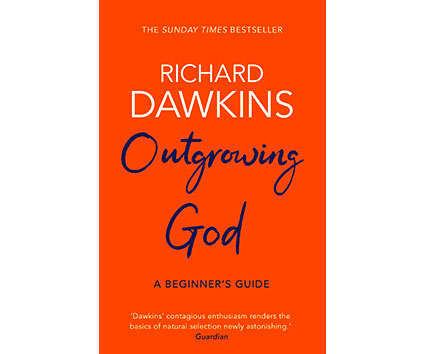
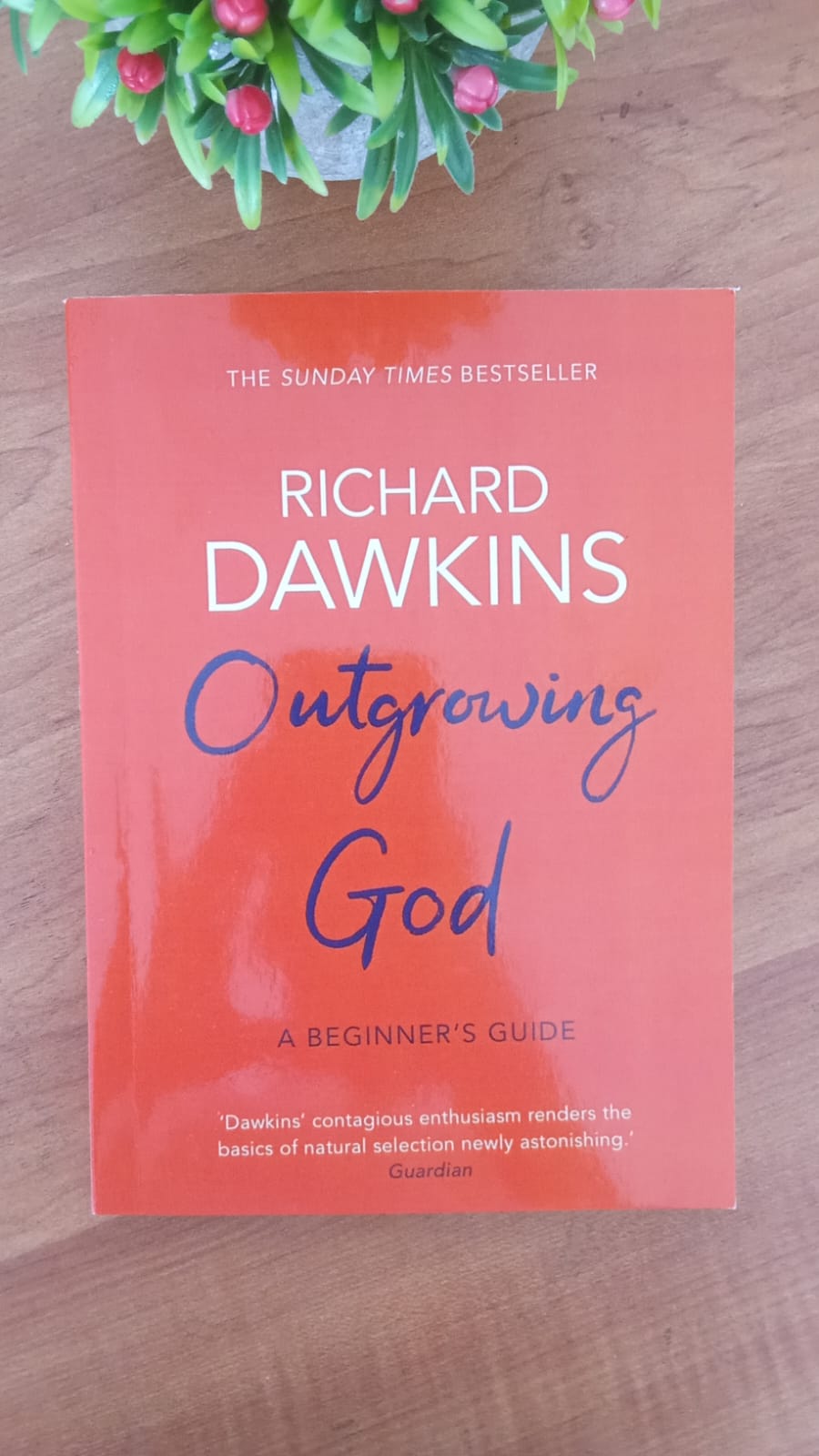

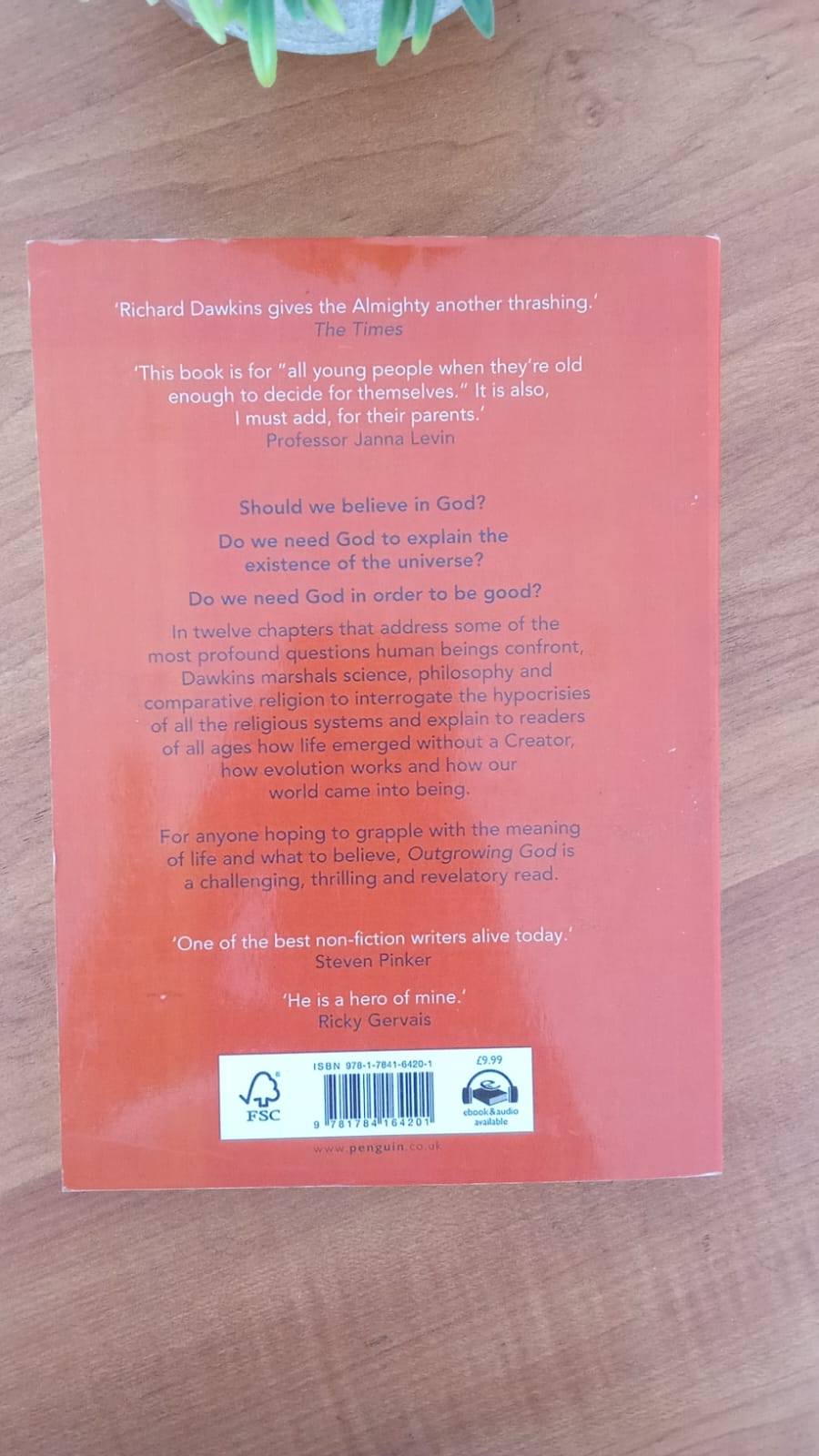
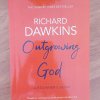


Outgrowing God by Richard Dawkins


රු1,750.00
3 X Rs. 583.33 or 8% Cashback with


or 3 X රු583.33 with


or up to 4 X රු437.50 with


Product Short Description:
Outgrowing God: A Beginner’s Guide by Richard Dawkins is a thought-provoking book that introduces readers to science, evolution, and critical thinking. Written in a clear and engaging style, it encourages questioning beliefs, understanding evidence, and exploring the world through logic and curiosity. Ideal for young readers and anyone interested in science and independent thinking.
5 in stock
Outgrowing God by Richard Dawkins is a provocative and accessible exploration of religion, atheism, evolution, morality and scientific thinking from one of the world’s best-known evolutionary biologists and science writers.
Do we need God to explain life?
Does morality require religion?
Why do different cultures believe in different gods?
How reliable are ancient religious texts as historical or moral authorities?
And if the complexity of living organisms appears designed, can evolution explain how that complexity emerged without a supernatural designer?
These are some of the questions Richard Dawkins examines in Outgrowing God by Richard Dawkins.
Written as a more approachable introduction than some of his longer works, the book is aimed especially at readers beginning to question religious claims or trying to understand the arguments commonly made by modern atheists.
Dawkins explains why learning about evolution by natural selection changed his own beliefs when he was young.
He then explores religion, scripture, morality and the natural world through a strongly skeptical and scientific perspective.
The result is not a neutral survey of religion.
Dawkins openly argues against belief in God.
Readers should therefore approach the book as a clearly stated atheist argument, while remaining free to agree, disagree, compare his claims with religious scholars and reach their own conclusions.
Outgrowing God by Richard Dawkins – Book Overview
Outgrowing God by Richard Dawkins is structured around some of humanity’s oldest questions.
Where did life come from?
Why are living things so complex?
Why do humans create religions?
Can people behave morally without believing in God?
What should we make of miracles and sacred texts?
Dawkins approaches these questions from the perspective of:
Science.
Evolution.
Evidence.
Logic.
Comparative religion.
Skepticism.
The book is deliberately written for readers who may not already have advanced scientific or philosophical knowledge.
A Beginner’s Guide
The subtitle is important:
A Beginner’s Guide.
This is not primarily an academic textbook on philosophy of religion.
It is designed as an accessible introduction.
Dawkins uses examples, stories and scientific explanations rather than requiring readers to understand advanced biology or formal philosophy.
Penguin describes it as a book for readers of different ages who want to think seriously about what they believe and why.
Richard Dawkins
Richard Dawkins is an evolutionary biologist and science writer known internationally for books including:
The Selfish Gene
The Blind Watchmaker
The God Delusion
The Greatest Show on Earth
The Magic of Reality
His work often focuses on evolution, natural selection, scientific reasoning and criticism of religion. Penguin Random House identifies him as a Fellow of the Royal Society and former holder of the Simonyi Chair for the Public Understanding of Science at Oxford University.
Dawkins and Religion
Readers should understand from the beginning that Dawkins is not attempting to defend or balance religious belief.
His position is openly atheistic.
He argues that natural explanations are sufficient for understanding the development of life and that supernatural explanations are unnecessary.
That makes Outgrowing God by Richard Dawkins especially useful for readers who want to understand a prominent atheist position directly from one of its best-known advocates.
Questioning Belief
One of the book’s central messages is that beliefs should be open to examination.
Dawkins encourages readers to ask:
Why do I believe this?
What evidence supports it?
Would I believe something different if I had been born in another country?
Could this claim be tested?
What would make me change my mind?
These questions are useful beyond religion.
They are basic tools of critical thinking.
Many Religions, Many Gods
Dawkins draws attention to the enormous variety of religious traditions humans have created.
Different societies have believed in different:
Gods.
Creation stories.
Sacred texts.
Rituals.
Afterlives.
Moral systems.
This creates an important question.
If people inherit different religious beliefs largely depending on where and when they are born, how should we evaluate which claims are true?
Inherited Beliefs
Most people do not choose a worldview from every possible religion at birth.
They usually first encounter the beliefs of:
Parents.
Family.
Community.
Culture.
School.
Country.
Dawkins encourages readers to examine inherited ideas rather than accepting them solely because they are familiar.
Critical Thinking Does Not Mean Automatic Rejection
A useful distinction is important here.
Critical thinking does not mean:
Everything traditional is false.
It means:
Claims should be examined.
A person can examine an idea carefully and still accept it.
Another person may reject it.
The process matters.
Religious Scripture
Outgrowing God by Richard Dawkins discusses stories from religious scripture and questions whether sacred texts should automatically be treated as reliable moral guides.
He examines passages from the Bible and other religious traditions from a skeptical perspective.
Some readers may find his treatment:
Challenging.
Provocative.
Humorous.
Confrontational.
Religious readers may strongly disagree with his interpretations.
That disagreement is part of the wider debate the book enters.
Historical Context
Ancient texts were created in societies very different from modern ones.
Therefore, when reading scripture historically, readers can ask:
Who produced the text?
When?
For what audience?
How was it transmitted?
How has interpretation changed?
These questions belong not only to atheistic criticism but also to serious historical and theological scholarship.
Morality
One of the major questions in Outgrowing God by Richard Dawkins is whether humans need religion in order to behave morally.
Some religious arguments suggest objective morality requires a divine foundation.
Dawkins challenges that conclusion.
He argues that humans can develop cooperation, compassion and moral reasoning without supernatural belief.
Can Atheists Be Good?
Dawkins rejects the idea that atheism automatically produces immorality.
People who do not believe in God can still care about:
Suffering.
Fairness.
Honesty.
Compassion.
Justice.
Human wellbeing.
Similarly, identifying with a religion does not automatically guarantee good behavior.
Actual behavior depends on many factors.
Where Does Morality Come From?
Dawkins connects morality partly with:
Evolution.
Social cooperation.
Empathy.
Culture.
Reason.
Human beings are social animals.
Groups benefit from cooperation.
Parents protect children.
People form friendships.
Communities develop rules.
But philosophers continue debating deeper questions about whether evolutionary explanations fully explain moral obligation.
Readers interested in this topic may therefore want to compare Dawkins with philosophers and theologians offering competing views.
Evolution
The scientific heart of Outgrowing God by Richard Dawkins concerns evolution by natural selection.
Dawkins describes how biological complexity can emerge gradually without requiring each organism to be designed individually.
This is central to his personal intellectual journey.
He explains that the apparent design of living creatures once contributed to his own religious belief.
Understanding evolution changed that.
Natural Selection
Natural selection works when:
Organisms vary.
Some variations affect survival or reproduction.
Traits can be inherited.
Over many generations, certain traits become more common.
No organism needs to understand the process.
No future design needs to be planned.
Complex adaptation can emerge gradually through repeated selection.
Complexity Without a Designer
A human eye appears extraordinarily complicated.
A bird wing appears designed for flight.
A spider web looks engineered.
Before evolutionary biology, such complexity was frequently used as evidence for direct design.
Dawkins argues that natural selection explains how apparently designed biological structures can emerge through cumulative evolutionary change.
Bottom-Up Processes
One of the themes emphasized by the publisher is the ability of simple processes to generate complex outcomes. Dawkins uses examples from biological development and nature to illustrate how impressive patterns can form without a central designer controlling every detail.
This general idea appears in:
Evolution.
Embryonic development.
Animal behavior.
Physical patterns.
Snowflakes
A snowflake can be intricate and beautiful.
Yet its shape does not require a tiny artist constructing every branch.
Physical processes generate the pattern.
Dawkins uses examples like this to challenge the assumption that complexity automatically proves intentional design.
Starlings and Emergent Behavior
Large flocks of birds can produce astonishing coordinated patterns.
No single bird needs to possess a blueprint for the entire formation.
Complex group behavior can emerge from simpler local interactions.
This idea of emergence helps readers understand how order can arise without centralized control.
Science and Wonder
Dawkins strongly rejects the idea that scientific explanation removes beauty from the world.
For him, understanding evolution can make life more extraordinary.
Knowing how something works does not necessarily destroy wonder.
A rainbow remains beautiful after understanding optics.
A star remains magnificent after learning astrophysics.
A living organism can become even more fascinating after understanding evolution.
Science Does Not Know Everything
Scientific thinking does not require claiming that every question has already been answered.
Science progresses partly by admitting uncertainty.
A scientist can say:
We do not know yet.
That is different from filling a gap in knowledge with an unsupported explanation.
Evidence
Evidence is one of the central values behind Outgrowing God by Richard Dawkins.
When evaluating a factual claim, Dawkins encourages readers to ask:
What evidence supports it?
Is there another explanation?
Can the claim be tested?
Is the source reliable?
Would we accept the same standard of evidence for a different belief?
Extraordinary Claims
The more extraordinary a claim, the stronger the evidence readers may reasonably expect.
This principle is especially relevant when examining:
Miracles.
Supernatural events.
Divine intervention.
Claims about the afterlife.
But it also applies to:
Health misinformation.
Conspiracy theories.
Online rumours.
Scientific claims.
Authority Is Not Evidence
A claim does not become true simply because:
A famous person says it.
A teacher says it.
A religious leader says it.
A scientist says it.
Evidence matters independently of status.
Science works best when claims can be challenged, even when they come from respected experts.
Religious Experience
Many believers describe powerful personal religious experiences.
From their perspective, such experiences can be deeply meaningful.
A skeptical approach asks whether personal experience alone can establish an objective supernatural claim.
Different religions contain people reporting equally sincere but contradictory experiences.
That makes interpretation complicated.
Faith and Evidence
The relationship between faith and evidence is one of the major philosophical disagreements surrounding religion.
Some believers understand faith as compatible with reason and evidence.
Others see faith as involving trust beyond what can be scientifically demonstrated.
Dawkins is highly critical of accepting factual claims without sufficient evidence.
Religious philosophers may answer that this characterization does not capture every sophisticated form of belief.
Readers can use the disagreement as a starting point for deeper study.
Religion and Science
Religion and science are sometimes presented as total opposites.
Reality is more complicated.
Many scientists are religious.
Many religious traditions accept evolution.
Other believers reject particular scientific theories.
Dawkins represents a strongly naturalistic position:
Scientific explanations reduce the need for supernatural explanations of the natural world.
Readers should recognize that this is a major position in the debate, but not the only philosophical interpretation.
Evolution Is Not a Theory About How the Universe Began
A useful distinction:
Evolution explains how populations of living organisms change across generations.
It does not, by itself, explain why the universe exists.
Questions about:
Cosmology.
The origin of matter.
Why physical laws exist.
are related but distinct.
This distinction is important when discussing religion and science accurately.
Evolution Is Not “Just Random”
A common misunderstanding is that evolution claims complex life appeared through pure randomness.
Mutation includes random elements relative to fitness.
Natural selection is not random in the same sense.
Environmental conditions influence which variations reproduce successfully.
This cumulative process can generate complex adaptation over enormous spans of time.
Humans Are Part of Nature
Evolutionary biology places humans inside the natural history of life.
We are not biologically separate from other organisms.
We share ancestry.
Genetics.
Cellular processes.
Evolutionary history.
That perspective can profoundly change how someone sees humanity’s relationship with the rest of life.
Meaning Without Religion
If there is no divine plan, does life become meaningless?
Dawkins does not think so.
People can create meaning through:
Relationships.
Discovery.
Love.
Science.
Art.
Family.
Curiosity.
Helping others.
Understanding nature.
This is an important distinction between:
Cosmic purpose
and
personal meaning.
A person can reject the first while strongly experiencing the second.
Atheism Does Not Answer Every Question
Atheism is essentially a position concerning belief in gods.
It does not automatically provide a complete philosophy of:
Morality.
Politics.
Meaning.
Relationships.
Happiness.
Two atheists can disagree about nearly everything else.
This is worth remembering when reading Outgrowing God by Richard Dawkins.
Skepticism Should Apply to Everyone
If a skeptical reader demands strong evidence from religious claims, the same intellectual standard should also apply to claims made by:
Scientists.
Atheist writers.
Political leaders.
Media.
Social platforms.
Your preferred side.
Critical thinking becomes much less useful when it is applied only to people we already disagree with.
Science and Humility
One of science’s strengths is its ability to revise itself.
Scientific understanding changes when better evidence becomes available.
This does not mean science is unreliable.
It means correction is built into the method.
That intellectual humility is one of the strongest habits readers can take from scientific thinking.
Is Outgrowing God Anti-Religion?
It is explicitly critical of religious belief and organized religion.
Dawkins argues against belief in God rather than presenting equal arguments for and against religion.
So customers should know what kind of book they are buying.
Someone looking for a neutral comparative-religion textbook should choose another book.
Someone wanting a clear, accessible presentation of Dawkins’s skeptical position may find it ideal.
Is It the Same as The God Delusion?
No.
Both books challenge religious belief, but Outgrowing God by Richard Dawkins is shorter and intentionally written as a more accessible introduction.
Penguin described it as a book for a new generation and a more introductory treatment of ideas Dawkins has explored elsewhere.
You do not need to read The God Delusion first.
Do You Need a Science Background?
No.
The book is intended for general readers.
It introduces concepts such as evolution without assuming specialist training in biology.
Readers with a stronger scientific background may find parts introductory, while beginners may find that accessibility helpful.
Is It Suitable for Young Readers?
Dawkins explicitly wrote the book partly with younger readers in mind, especially those old enough to begin examining beliefs independently.
However, because it directly challenges religious beliefs and discusses potentially sensitive scriptural material, parents may want to consider the individual reader’s maturity and family context.
Is It a Religion Book or a Science Book?
It crosses several categories:
Religion & Atheism
Philosophy
Science
Evolution
Critical Thinking
For your BookLounge taxonomy, Non-Fiction > Psychology & Philosophy would be a reasonable primary category if you do not have a dedicated Religion & Belief category.
A secondary Science category could also be relevant because evolutionary explanation forms a significant part of the book.
Content Considerations
Outgrowing God by Richard Dawkins includes direct criticism of religious belief and sacred texts. It discusses atheism, God, Christianity and other religious traditions, morality, evolution, death, biblical violence and controversial questions about faith.
Religious readers may find some arguments confrontational or offensive.
The best product description should therefore present the book accurately rather than marketing Dawkins’s conclusions as uncontested facts.
Edition Details
For the UK Black Swan paperback:
Title: Outgrowing God
Subtitle: A Beginner’s Guide
Author: Richard Dawkins
Publisher/Imprint: Black Swan
ISBN-13: 9781784164201
Pages: 304
Paperback Publication: 17 September 2020
Dimensions: 196 × 127 × 21 mm
Weight: 222 g
A U.S. Random House edition uses different edition details, so check the barcode on your physical copy before entering the ISBN, dimensions or format into WooCommerce.
Important Themes
Outgrowing God by Richard Dawkins explores:
- Atheism
- Religion
- God
- Evolution
- Natural selection
- Science
- Evidence
- Critical thinking
- Morality
- Scripture
- Religious belief
- Skepticism
- Human origins
- Complexity
- Design
- Meaning
- Rationalism
- Comparative religion
- Scientific discovery
- Independent thinking
7 Powerful Ideas From Outgrowing God by Richard Dawkins
- Question inherited beliefs. Dawkins encourages readers to examine why they believe something rather than accepting an idea solely because it came from family, culture or tradition.
- Information and authority are not substitutes for evidence. Claims about reality deserve evaluation based on evidence rather than the status of the person or institution making them.
- Complexity does not automatically prove design. Evolution by natural selection demonstrates how highly complex biological adaptations can emerge gradually through natural processes.
- Morality and religious belief are not identical. Dawkins argues that compassion, cooperation and ethical behavior can exist without belief in supernatural authority.
- Scientific explanation can increase wonder. Understanding how evolution, development and physical processes work need not make nature less beautiful; it can make that beauty more extraordinary.
- Admitting uncertainty is intellectually valuable. Saying “I don’t know” is often more rational than accepting an explanation for which sufficient evidence is unavailable.
- Think for yourself—even about the author. The deeper value of Outgrowing God by Richard Dawkins is not that every reader must accept Dawkins’s conclusions, but that serious beliefs should be examined, compared with evidence and open to challenge.
Why Read Outgrowing God by Richard Dawkins?
Outgrowing God by Richard Dawkins is an excellent choice for readers interested in atheism, science, evolution, religion, philosophy and critical thinking.
It may be particularly valuable for readers who:
Are beginning to question religious beliefs.
Want to understand a prominent atheist argument.
Enjoy science writing.
Want an accessible explanation of evolution.
Are interested in the relationship between science and religion.
Enjoy philosophical questions about morality and meaning.
Want to compare religious and secular worldviews.
Already know The God Delusion but want a shorter introduction to similar themes.
The book works best when read thoughtfully rather than simply as ammunition for an argument.
A religious reader can use it to understand objections to faith.
An atheist reader can use it to examine arguments supporting their worldview.
An undecided reader can compare Dawkins’s position with religious philosophers and scientists holding different views.
That makes reading more intellectually useful than treating the book as the final word on a complex subject.
Who Should Read This Book?
Outgrowing God by Richard Dawkins may especially appeal to:
- Richard Dawkins readers
- Science enthusiasts
- Students
- Young adults interested in philosophy
- Readers exploring atheism
- Readers questioning religion
- Evolution enthusiasts
- Critical-thinking readers
- Fans of popular science
- Readers interested in comparative religion
- People exploring morality without religion
- Readers who enjoyed The God Delusion
- Anyone interested in debates about science, faith and evidence
Outgrowing God by Richard Dawkins – What Do You Believe, and Why?
Outgrowing God by Richard Dawkins ultimately revolves around one habit:
Ask questions.
Not because every inherited belief must be false.
Not because every scientific claim must automatically be right.
But because important beliefs deserve examination.
Dawkins begins from a personal experience.
As a young person, he looked at the complexity of life and believed that such complexity required a designer.
Then he learned about evolution.
Natural selection offered a mechanism capable of producing extraordinary adaptation without planning the final result in advance.
That discovery changed his worldview.
From there, he began examining other assumptions.
Why this God?
Why this scripture?
Why this moral system?
Why should ancient claims receive different standards of evidence from modern claims?
Those questions form the intellectual engine of the book.
Readers may agree with Dawkins.
They may strongly disagree.
They may agree with his evolutionary science while rejecting his philosophical conclusions about religion.
Those are all possible responses.
The important distinction is between understanding an argument and automatically accepting it.
A thoughtful reader asks:
What is Dawkins claiming?
What evidence supports it?
What are the strongest objections?
How would a theologian respond?
How would another philosopher respond?
Where does science provide evidence?
Where does the discussion become philosophical?
Those questions make Outgrowing God by Richard Dawkins more valuable than simply treating it as a book telling readers what to believe.
Its real challenge is to examine belief itself.
For readers interested in evolution, atheism, religion, morality, scientific thinking and the question of how we decide what is true, Outgrowing God by Richard Dawkins provides an accessible and deliberately provocative starting point.
Learn more about Outgrowing God by Richard Dawkins on the official Penguin Random House website.
Explore more science, philosophy, and religion books at Bargain Books.
Be the first to review “Outgrowing God by Richard Dawkins”
Related products
-17%

Out of stock
Non-Fiction & Knowledge
Original price was: රු2,900.00.රු2,400.00Current price is: රු2,400.00.
3 X Rs. 800.00 or 8% Cashback with
or 3 X රු800.00 with
or up to 4 X රු600.00 with

Out of stock
Non-Fiction & Knowledge
රු1,900.00
3 X Rs. 633.33 or 8% Cashback with
or 3 X රු633.33 with
or up to 4 X රු475.00 with

රු2,000.00
3 X Rs. 666.67 or 8% Cashback with
or 3 X රු666.67 with
or up to 4 X රු500.00 with
-24%
Non-Fiction & Knowledge
Original price was: රු2,300.00.රු1,750.00Current price is: රු1,750.00.
3 X Rs. 583.33 or 8% Cashback with
or 3 X රු583.33 with
or up to 4 X රු437.50 with

Out of stock
Autobiography
රු2,750.00
3 X Rs. 916.67 or 8% Cashback with
or 3 X රු916.67 with
or up to 4 X රු687.50 with
Out of stock
Non-Fiction & Knowledge
රු1,800.00
3 X Rs. 600.00 or 8% Cashback with
or 3 X රු600.00 with
or up to 4 X රු450.00 with
Non-Fiction & Knowledge
රු1,550.00
3 X Rs. 516.67 or 8% Cashback with
or 3 X රු516.67 with
or up to 4 X රු387.50 with
Out of stock
Non-Fiction & Knowledge
රු1,500.00
3 X Rs. 500.00 or 8% Cashback with
or 3 X රු500.00 with
or up to 4 X රු375.00 with
Reviews
There are no reviews yet.