
No products in the cart.
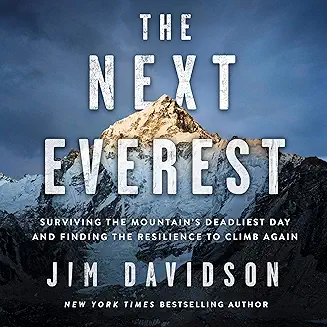
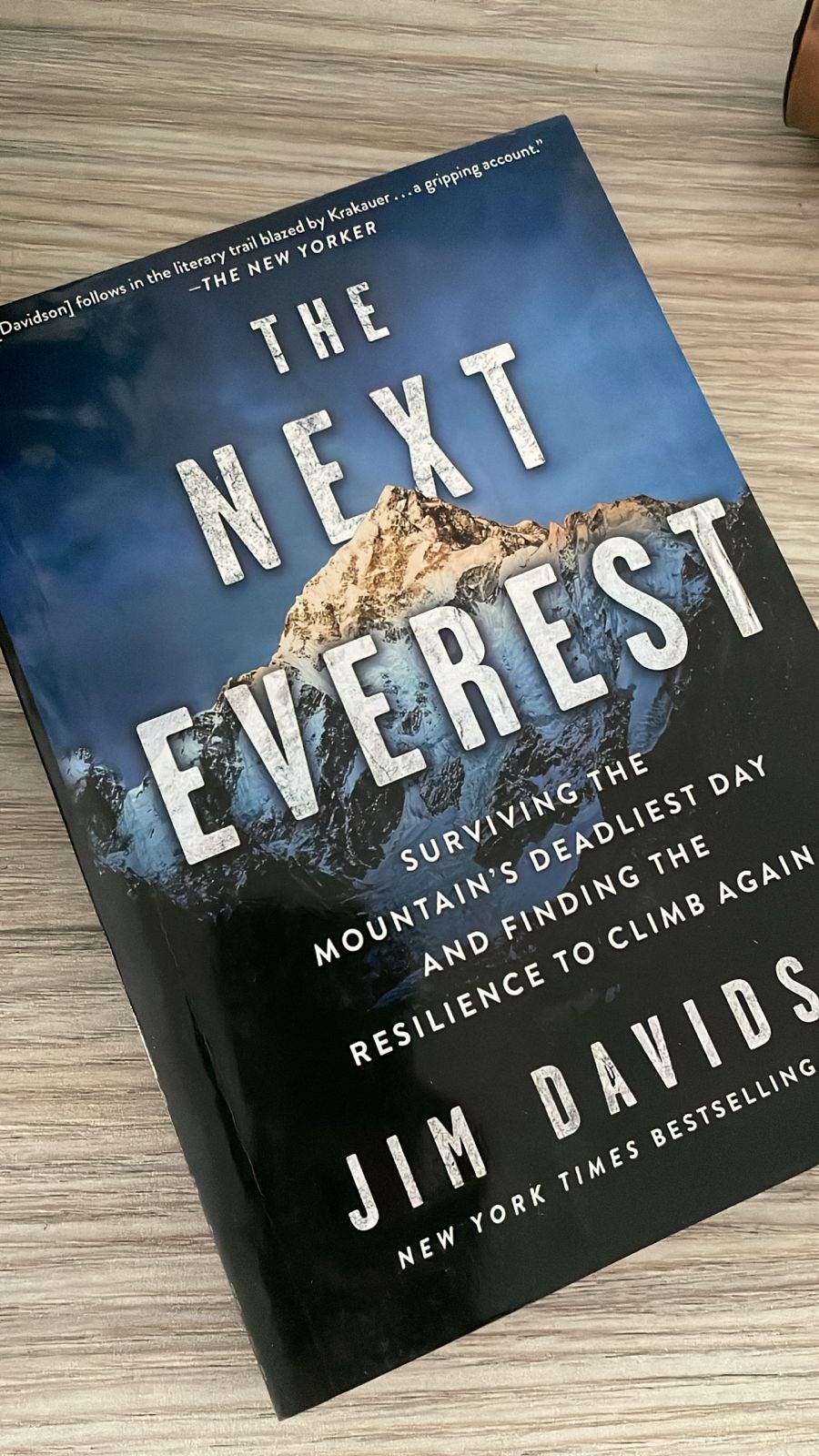
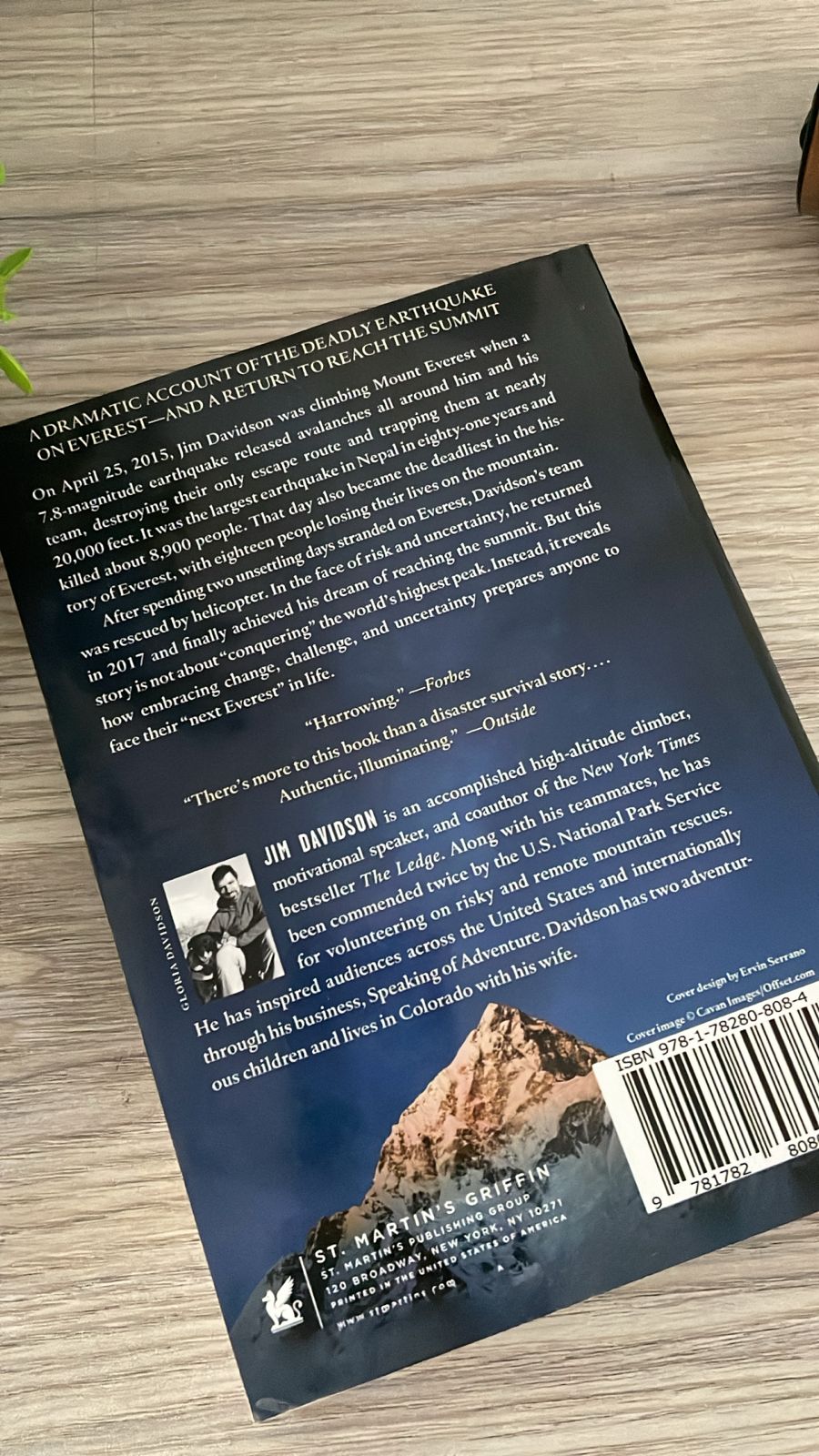






Next Everest by Jim Davidson


රු2,500.00
3 X Rs. 833.33 or 8% Cashback with


or 3 X රු833.33 with


or up to 4 X රු625.00 with


Next Everest: Surviving the Mountain’s Deadliest Day and Finding the Resilience to Climb Again by Jim Davidson is a powerful true-story memoir that combines high-altitude adventure, survival, and personal transformation.
This gripping book takes readers to the slopes of Mount Everest during one of the most tragic days in its history. In April 2015, while attempting to summit Everest, Davidson was caught in a devastating 7.8 magnitude earthquake that triggered massive avalanches, trapping climbers high on the mountain with no clear escape.
6 in stock
The Next Everest by Jim Davidson is a gripping true adventure story about surviving one of Mount Everest’s darkest days, confronting fear after disaster and finding the courage to return to the mountain that nearly ended a lifelong dream.
On April 25, 2015, experienced climber Jim Davidson was on Mount Everest when a devastating 7.8-magnitude earthquake struck Nepal.
The earthquake triggered avalanches across the mountain.
Routes were destroyed.
Climbers were trapped.
Communication became difficult.
And Everest Base Camp was struck by a deadly avalanche.
Davidson and his team found themselves stranded at nearly 20,000 feet with their normal route of escape destroyed.
Across Nepal, the earthquake killed almost 8,900 people. On Everest, 18 people lost their lives, making April 25, 2015 the mountain’s deadliest single day.
Davidson survived.
After two disturbing days stranded high on Everest, he and his team were eventually evacuated by helicopter.
But physical survival was only the beginning.
The experience left him shaken.
After decades of climbing and expedition leadership, Davidson had to confront a question far more difficult than simply choosing another route up a mountain:
Could he ever return to Everest?
Two years later, in 2017, he did.
And this time, he reached the summit.
The Next Everest by Jim Davidson tells the story of those two very different expeditions—one defined by catastrophe and survival, the other by fear, determination and the decision to try again.
Yet the book is not simply about standing on the highest point on Earth.
Davidson uses Everest to explore a larger idea:
Everyone eventually faces an “Everest.”
A challenge that feels enormous.
A setback that changes the plan.
A failure.
An injury.
A loss.
An uncertain future.
The real question is not whether difficulties will appear.
It is how we respond when they do.
The Next Everest by Jim Davidson – Book Overview
The Next Everest by Jim Davidson combines mountaineering memoir, survival story, geology, adventure and personal-development lessons.
Davidson had already spent decades climbing before the 2015 Everest expedition.
He was not entering the Himalayas as an inexperienced adventurer.
He understood:
Altitude.
Weather.
Avalanche danger.
Expedition planning.
Teamwork.
Risk.
Mountain rescue.
Yet experience could not prevent the Nepal earthquake.
That becomes one of the book’s central lessons.
Preparation can reduce risk.
It cannot eliminate uncertainty.
Jim Davidson
Jim Davidson is a high-altitude climber, expedition leader, motivational speaker and co-author of The Ledge.
Macmillan notes that he has climbed for decades and has twice been commended by the U.S. National Park Service for participating in difficult mountain rescues.
He also has a professional background in geology and environmental science.
That makes his account especially interesting because he can discuss the Everest disaster from two perspectives:
As a climber who lived through it.
And as someone trained to understand the geological forces that caused it.
The Dream of Everest
For many climbers, Mount Everest represents the ultimate goal.
At 8,848.86 metres, Everest is the highest mountain above sea level.
But reaching the summit requires much more than wanting it badly enough.
A successful Everest expedition involves:
Years of climbing experience.
Physical conditioning.
Acclimatization.
Technical ability.
Weather forecasting.
Equipment.
Logistics.
Sherpa expertise.
Teamwork.
Financial resources.
And an acceptance that the mountain may still say no.
Everest Is Not Simply a Fitness Challenge
A physically strong athlete cannot simply arrive at Everest and walk to the summit.
The altitude creates enormous physiological stress.
Above high elevations, the human body receives far less oxygen than at sea level.
Climbers become slower.
Thinking becomes more difficult.
Recovery becomes harder.
Small mistakes become more dangerous.
The Khumbu Icefall
One of the most dangerous sections on the traditional South Col route is the Khumbu Icefall.
The glacier is constantly moving.
Huge blocks of ice can shift.
Crevasses can open.
Seracs can collapse.
Climbers often move through the icefall during colder nighttime or early-morning conditions when movement may be somewhat slower.
Davidson’s story places readers inside this environment rather than presenting Everest as a simple tourist destination.
The 2015 Nepal Earthquake
On April 25, 2015, a massive earthquake struck Nepal.
Its effects extended far beyond Mount Everest.
Communities were destroyed.
Historic buildings collapsed.
Thousands of people died.
Millions were affected.
The Everest disaster was only one part of a much larger national tragedy.
This context matters.
The book acknowledges that the climbers’ ordeal occurred inside a catastrophe affecting an entire country.
The Avalanche
The earthquake triggered avalanches across Everest.
At Base Camp, an avalanche struck with devastating force.
Higher on the mountain, Davidson and other climbers faced another problem:
The route they had used to climb upward was no longer safely available.
They were effectively trapped.
Suddenly the Goal Changes
Before the earthquake, the goal was:
Climb Everest.
After the earthquake, the goal became:
Survive and get home.
This is an important lesson in The Next Everest by Jim Davidson.
A strong goal matters.
But circumstances can change instantly.
When reality changes, intelligent people change priorities.
Adaptability
In difficult situations, refusing to change the original plan can become dangerous.
Adaptability means asking:
What is happening now?
What matters most now?
What resources remain?
What is the safest next action?
The ability to adapt may matter more than the ability to follow a perfect plan.
Two Days Stranded
Davidson and his team spent roughly two unsettling days stranded high on Everest before being evacuated by helicopter.
Those hours contained uncertainty.
Could helicopters reach them?
Was the route safe?
Would another earthquake strike?
What had happened below?
They could not simply walk back into normal life.
Survival After the Immediate Danger
People often think survival ends when someone reaches safety.
Psychologically, that may not be true.
After a traumatic experience, a person may continue carrying:
Fear.
Memories.
Uncertainty.
Guilt.
Questions.
Davidson had survived the disaster.
But he now had to decide what that experience meant for his future.
Should He Return?
This becomes the emotional center of The Next Everest by Jim Davidson.
Returning to Everest was not an obvious decision.
He knew the risks more clearly than before.
He had already seen how quickly circumstances could become catastrophic.
A person who has never experienced such danger can easily say:
“Just go back.”
For the survivor, the decision is far more complicated.
Fear After Trauma
Fear after a dangerous event is not weakness.
Sometimes it reflects experience.
Davidson now knew exactly what could happen.
That knowledge made returning more psychologically difficult.
Courage therefore did not mean forgetting the danger.
It meant understanding it and deciding how to respond.
Courage Is Not the Absence of Fear
One of the strongest lessons in The Next Everest by Jim Davidson is that courageous people still feel afraid.
Courage may look like:
Preparing despite fear.
Taking another step.
Admitting uncertainty.
Asking for help.
Returning after failure.
Fear and courage can exist simultaneously.
Returning in 2017
Davidson eventually chose to return to Everest in 2017.
This was not simply another expedition.
Psychologically, he was returning to the place associated with the 2015 disaster.
That made the climb deeply personal.
The Summit
In 2017, Davidson finally reached the summit of Mount Everest.
From the outside, that can sound like the perfect ending.
He failed in 2015.
Returned.
Succeeded.
But the book’s message is more thoughtful than:
Never quit and you will always win.
The summit mattered.
But so did everything learned through uncertainty.
Success Does Not Erase the Past
Reaching the summit in 2017 did not undo the 2015 earthquake.
It did not bring back the people who died.
It did not transform tragedy into something good.
This distinction is important.
Resilience does not require pretending terrible experiences were secretly positive.
It means finding a way to continue living meaningfully afterward.
Resilience
Resilience is one of the central themes in The Next Everest by Jim Davidson.
Resilience does not mean:
Never becoming afraid.
Never failing.
Never feeling grief.
Never questioning yourself.
It means recovering enough to continue.
Sometimes slowly.
Sometimes differently.
Your Next Everest
The title works as a metaphor.
Most readers will never climb Mount Everest.
But everyone may encounter a personal mountain.
Your next Everest might be:
Recovering after illness.
Finishing university.
Starting a business.
Rebuilding after financial loss.
Changing careers.
Recovering from injury.
Caring for family.
Facing grief.
Learning something difficult.
The scale may be different.
The psychological experience can still feel enormous.
Break Huge Problems Into Smaller Ones
Imagine standing at the bottom of Everest thinking:
I must climb 8,848 metres.
The scale is overwhelming.
Climbing works through smaller objectives.
Base Camp.
Camp One.
Camp Two.
Acclimatize.
Rest.
Move again.
Life goals often work similarly.
Focus on the Next Useful Step
When overwhelmed, ask:
What is the next useful action?
Not:
How will I solve everything today?
The next step may be:
Make one phone call.
Study one chapter.
Walk ten minutes.
Create a budget.
Speak to a doctor.
Send one application.
Progress begins with something manageable.
Preparation
Davidson’s decades of experience did not prevent the earthquake.
But preparation still mattered.
Because when the unexpected happened, he had:
Climbing skills.
Equipment.
Team experience.
Decision-making ability.
Knowledge of the environment.
Preparation does not guarantee a good outcome.
It increases the range of problems you may be capable of handling.
Risk Management
Mountaineering is sometimes romanticized as reckless adventure.
Experienced climbers understand that survival depends heavily on risk management.
Questions include:
What is the weather doing?
What is avalanche risk?
How is the team performing?
Is someone developing altitude illness?
How much oxygen remains?
When is the turnaround time?
Great adventurers are not necessarily people who ignore risk.
They learn to evaluate it.
Turning Around Can Be Courageous
Summit fever can become dangerous.
When someone has spent:
Years training.
Thousands of dollars.
Weeks climbing.
it becomes emotionally difficult to turn around.
But mountains do not care how much effort you have already invested.
Sometimes going down is the strongest decision.
Sunk Cost
This connects with a principle useful far beyond climbing.
Past investment should not automatically justify continuing a dangerous or failing plan.
In business:
“We already spent so much.”
In relationships:
“We have been together for years.”
In projects:
“We worked on it for months.”
Those facts matter emotionally.
But the better question is:
What is the best decision from this point forward?
Teamwork
Nobody climbs Everest entirely alone.
Even the most famous mountaineer depends on:
Sherpa climbers.
Expedition leaders.
Doctors.
Weather teams.
Base Camp staff.
Other climbers.
Logistics coordinators.
Family support.
This challenges the popular image of the solitary hero.
Sherpa Expertise
Any responsible Everest story should acknowledge the central role of Nepalese Sherpa climbers and high-altitude workers.
They contribute enormous experience and accept substantial risk supporting expeditions.
Everest achievements are rarely purely individual achievements.
Ask for Help
One broader lesson from The Next Everest by Jim Davidson is that resilience is not the same as isolation.
Strong people ask for:
Advice.
Medical care.
Information.
Emotional support.
Expertise.
Help does not make achievement less real.
Leadership
A crisis reveals leadership quickly.
When plans collapse, teams need people who can:
Communicate.
Think clearly.
Prioritize.
Listen.
Manage fear.
Make decisions with incomplete information.
Leadership is not simply giving confident speeches.
It is remaining useful when uncertainty increases.
Uncertainty
Humans naturally want certainty.
We want to know:
What will happen?
Will this work?
Will I succeed?
Will I be safe?
Everest offers very little certainty.
Weather changes.
Bodies respond differently.
Ice moves.
Earthquakes happen.
This makes Davidson’s story a powerful study in functioning without complete control.
Control What You Can
You cannot control:
Earthquakes.
Weather.
Every accident.
Other people.
You can often influence:
Preparation.
Equipment.
Fitness.
Knowledge.
Communication.
Decision-making.
Your next response.
Recognizing the difference prevents enormous wasted energy.
Geology
Davidson’s geology background gives the book another dimension.
The Himalayan mountains exist because of enormous tectonic forces.
The Indian Plate continues pushing into the Eurasian Plate.
The same geological process that created the Himalayas also generates earthquake risk.
So the beautiful mountains and the hazards beneath them are connected.
Nature Is Not an Enemy
Climbers sometimes speak about “conquering” mountains.
Davidson’s book deliberately moves away from that idea.
Macmillan emphasizes that the story is not about conquering Everest; it is about learning from change, challenge and uncertainty.
The mountain does not lose when someone reaches the summit.
Nature is simply there.
Humility
Extreme environments teach humility quickly.
Money.
Job titles.
Followers.
Social status.
None matters very much when weather deteriorates at altitude.
Nature reduces life to fundamentals.
Can you breathe?
Are you warm?
Can you move?
Is your team safe?
That perspective can be psychologically powerful.
Failure
Davidson’s 2015 expedition did not reach the summit.
If measured only by the original goal, it failed.
But calling the entire expedition a failure misses what actually happened.
The mountain became a disaster zone.
Survival became the correct objective.
This illustrates why success metrics sometimes need to change when circumstances fundamentally change.
Not Every Unfinished Goal Is Failure
Sometimes a project stops because:
The market changed.
Health changed.
Funding disappeared.
Family circumstances changed.
The environment became unsafe.
Wisdom involves distinguishing between:
Quitting because something is difficult
and
changing direction because reality changed.
Trauma and Recovery
The aftermath of dangerous events deserves respect.
Readers should not take motivational messages from the book to mean that trauma can always be overcome simply by “being strong.”
People experiencing significant post-traumatic symptoms may benefit from qualified professional mental-health care.
Personal resilience and professional support can coexist.
Confidence After Failure
How do you rebuild confidence?
Not always through thinking.
Often through evidence.
Train again.
Take one manageable risk.
Complete one step.
Then another.
Confidence gradually returns as your brain receives evidence that you can function again.
Progressive Challenge
Athletes rarely begin with the hardest task.
They gradually increase difficulty.
Resilience can work similarly.
Small successful experiences prepare us for larger ones.
Physical Preparation
Everest climbing requires months or years of physical conditioning.
Climbers need:
Cardiovascular endurance.
Strength.
Movement efficiency.
Recovery.
Altitude experience.
But physical fitness is only one part of the equation.
Mental Preparation
At altitude, motivation may disappear.
You may feel:
Cold.
Exhausted.
Slow.
Scared.
Mental preparation helps people continue making rational decisions even when conditions are uncomfortable.
Discipline
Adventure stories often focus on dramatic moments.
But major achievements are usually built during boring days.
Training.
Packing.
Checking equipment.
Repeating skills.
Eating properly.
Sleeping.
Planning.
Discipline creates the foundation that courage later depends upon.
The Glamour Versus Reality of Everest
Images of Everest often show:
Blue skies.
Beautiful summits.
Flags.
Victorious climbers.
They do not always show:
Weeks of waiting.
Cold tents.
Illness.
Fear.
Waste management.
Crowds.
Danger.
Exhaustion.
Real adventure contains much more discomfort than the final photograph suggests.
Summit Photos Hide the Process
This applies to ordinary success too.
Social media shows:
Graduation.
Business launch.
Promotion.
Fitness transformation.
It rarely shows every failed attempt that came first.
The result becomes visible.
The process remains hidden.
Comparison
Comparing your beginning with another person’s summit is unfair.
You do not know:
How long they trained.
What help they had.
What failures came first.
What advantages existed.
A better comparison is:
Am I making progress relative to where I began?
Environmental Responsibility
Everest also raises questions about environmental impact.
High-altitude tourism brings:
Waste.
Human traffic.
Infrastructure pressure.
Risk to local workers.
Responsible adventure requires recognizing that spectacular environments should not simply be consumed as personal achievement arenas.
Respect Nepal
A book centered on the 2015 earthquake also reminds readers that Everest belongs within Nepal’s broader geographical and cultural reality.
The catastrophe affected entire communities, not merely foreign climbers.
Adventure stories become more responsible when local lives are treated as central rather than background scenery.
Grief
Disasters involve real loss.
Statistics can become abstract.
“18 climbers.”
“Nearly 8,900 people.”
Every number represents a person.
A family.
A future interrupted.
That gives the story emotional seriousness beyond ordinary adventure writing.
Survivor Perspective
Someone who survives a disaster may experience complicated emotions.
Relief.
Grief.
Fear.
Gratitude.
Confusion.
The fact that someone survived does not mean the experience becomes simple afterward.
Gratitude
Survival can also sharpen appreciation.
Ordinary life may suddenly feel extraordinary.
Home.
Family.
Food.
Warmth.
Safety.
Normal routines.
Things we often ignore become more visible after danger.
Family
Behind ambitious adventures are relationships affected by those decisions.
Families live with uncertainty too.
Adventure is rarely experienced only by the person climbing.
Spouses.
Children.
Parents.
Friends.
wait for news.
This is another reason risk should never be treated casually.
Why People Return to Dangerous Places
From outside mountaineering, returning can seem irrational.
Why go back?
For serious climbers, mountains may represent:
Purpose.
Challenge.
Identity.
Beauty.
Community.
Personal growth.
Understanding that does not eliminate risk.
It helps explain why the decision is more complicated than simply choosing danger.
Passion and Risk
Passion can enrich a life.
But passion does not remove responsibility.
A mature relationship with risk involves asking:
What does this mean for me?
For my family?
For my team?
For local workers?
That question is more useful than romanticizing danger.
Achievement
Reaching Everest’s summit is extraordinary.
But The Next Everest by Jim Davidson ultimately asks readers to think beyond the summit itself.
What kind of person did the process require you to become?
What did you learn?
How do you use that learning afterward?
Goals Versus Growth
Goals are measurable.
Summit Everest.
Graduate.
Launch company.
Lose weight.
But growth may be harder to measure.
Become:
More patient.
More resilient.
More thoughtful.
More adaptable.
Sometimes the growth remains valuable even if the original goal changes.
Your Next Everest May Be Invisible
Other people may not understand your challenge.
Someone’s Everest may be:
Getting out of bed during depression.
Learning to walk after injury.
Escaping debt.
Returning to education at forty.
Starting again after divorce.
Caring for a sick parent.
Difficulty cannot always be measured from the outside.
Don’t Compare Mountains
What feels manageable to one person may feel enormous to another.
Resilience is not a competition.
You do not need an Everest expedition to prove that your struggle matters.
Is The Next Everest a True Story?
Yes.
The Next Everest by Jim Davidson is a nonfiction adventure memoir based on Davidson’s real Everest expeditions and his experience during the 2015 Nepal earthquake.
Is It a Biography or Memoir?
It fits best under:
Biography & Memoir > Adventure Memoir
Your existing BookLounge classification under Non-Fiction > Biography & Memoir is appropriate.
Is It a Mountaineering Book?
Yes.
Readers interested in:
Mount Everest.
Himalayan climbing.
Mountaineering.
Survival.
Expedition leadership.
will find substantial material.
But the book is accessible to readers who have never climbed a mountain.
Is It a Motivational Book?
Partly.
It is primarily a true adventure memoir, but resilience and personal growth are central to Davidson’s interpretation of the experience.
The motivational lessons come from actual events rather than a conventional self-help formula.
Do You Need Climbing Knowledge?
No.
Davidson explains enough context for general readers to understand the danger and decisions involved.
His background in geology also helps him explain the earthquake and environmental hazards.
Is The Next Everest a Sequel?
It is not part of a conventional fictional series.
However, Davidson previously co-authored The Ledge, another true mountaineering survival story.
Readers interested in his climbing experiences may want to explore that book as well.
Tim Campbell Is Not the Author
This is important for your current listing.
Your website/catalogue currently identifies the product as:
Next Everest by Jim Davidson, Tim Campbell.
The book itself is authored by Jim Davidson.
Tim Campbell is associated with the audiobook narration.
For your physical-book WooCommerce listing, use:
Author: Jim Davidson
not:
Jim Davidson, Tim Campbell
Edition Details
There are multiple editions.
Macmillan lists a St. Martin’s Griffin trade paperback with:
Title: The Next Everest
Subtitle: Surviving the Mountain’s Deadliest Day and Finding the Resilience to Climb Again
Author: Jim Davidson
ISBN-13: 9781250836755
Pages: 416
Pan Macmillan India also lists a paperback edition with ISBN 9789389104554, published August 5, 2021.
Therefore, check the ISBN printed on your physical BookLounge copy before filling the WooCommerce ISBN field.
Content Considerations
The Next Everest by Jim Davidson contains serious real-world material including:
- Earthquake and natural disaster
- Avalanches
- Death
- Mountaineering fatalities
- Grief
- Trauma
- Extreme altitude
- Life-threatening situations
- Crevasses and falls
- Physical injury
- Frostbite and environmental hazards
- Anxiety and fear
- Discussion of bodies/deceased climbers
- Disaster survival
The material is presented as nonfiction adventure rather than graphic horror, but readers sensitive to real-life disaster or death should be aware of these themes.
Important Themes
The Next Everest by Jim Davidson explores:
- Mount Everest
- Resilience
- Survival
- Mountaineering
- Courage
- Fear
- Earthquakes
- Avalanches
- Trauma
- Recovery
- Adventure
- Leadership
- Risk management
- Adaptability
- Teamwork
- Failure
- Perseverance
- Goal setting
- Humility
- Personal growth
7 Powerful Lessons From The Next Everest by Jim Davidson
- Preparation cannot eliminate uncertainty, but it makes you more capable when uncertainty arrives. Davidson’s climbing experience could not prevent the earthquake, but skill and preparation mattered enormously once the crisis began.
- A changing reality may require a changing goal. On April 25, 2015, reaching Everest’s summit stopped mattering. Survival became the correct objective.
- Courage can exist alongside fear. Returning to Everest did not require Davidson to forget the disaster or become fearless. It required acting while fully understanding what could go wrong.
- Break enormous challenges into manageable steps. Whether climbing a mountain, finishing a degree or rebuilding after failure, focusing on the next useful step can make overwhelming goals more manageable.
- Resilience is not the same as stubbornness. Strong people adapt. They change strategies, seek help, rest and even turn around when conditions require it.
- Big achievements are rarely individual. Everest climbing depends on teams, guides, Sherpa expertise, logistics, families and many people whose work may never appear in the summit photograph.
- Everyone eventually faces a personal Everest. The mountain becomes a metaphor for life’s difficult challenges. What matters is not whether your struggle looks dramatic to someone else, but how you prepare, adapt and continue through it.
Why Read The Next Everest by Jim Davidson?
The Next Everest by Jim Davidson is an excellent choice for readers interested in:
- Mount Everest
- Jim Davidson
- Adventure memoirs
- Survival stories
- Mountaineering
- Himalayan climbing
- True stories
- Resilience
- Courage
- Leadership
- Personal growth
- Earthquake survival
- Extreme adventure
- Motivational nonfiction
- Risk management
- Perseverance
- Environmental science
- Geology
- Recovery after trauma
- Inspirational biographies
It is especially suitable for readers who enjoy real-life stories where the motivational lesson comes from genuine danger, uncertainty and difficult decisions rather than abstract advice.
Who Should Read This Book?
The Next Everest by Jim Davidson may especially appeal to:
- Adventure readers
- Mountaineering enthusiasts
- Everest readers
- Hikers and climbers
- Athletes
- Students
- Entrepreneurs
- Leaders and managers
- Readers interested in resilience
- Readers who enjoy survival memoirs
- People recovering after setbacks
- Fans of outdoor nonfiction
- Readers interested in the 2015 Nepal earthquake
- Anyone facing a difficult personal “Everest”
The Next Everest by Jim Davidson – What Will You Do When the Route Disappears?
The Next Everest by Jim Davidson begins with a dream.
Climb the highest mountain on Earth.
Train.
Prepare.
Travel to Nepal.
Climb higher.
Move toward the summit.
Then the earth itself moves.
In seconds, the plan becomes irrelevant.
That is what makes Davidson’s story more than an Everest memoir.
Life often works the same way on a smaller scale.
We build plans.
Five-year plans.
Career plans.
Business plans.
Relationship plans.
Financial plans.
Then something happens that was not included.
Illness.
Failure.
Loss.
Economic change.
Family crisis.
One unexpected event can destroy the route we expected to follow.
At that moment, the question becomes:
Do we stop living because the original route disappeared?
Or do we find another way forward?
Davidson survived the earthquake.
He returned home.
He had every understandable reason never to return to Everest.
Instead, he eventually decided that fear would not make the entire decision for him.
In 2017, he returned.
And he reached the summit.
But the real achievement was not simply standing at the top of Everest.
It was learning that resilience does not mean being unchanged by adversity.
It means being changed—and still discovering that another step is possible.
Sometimes your next Everest is a mountain.
Sometimes it is recovery.
A new career.
An examination.
A business.
A loss.
A difficult conversation.
Whatever form it takes, The Next Everest by Jim Davidson offers a powerful true story about preparation, uncertainty, humility and the courage required to try again after life completely changes the route.
Learn more about The Next Everest by Jim Davidson on the official Macmillan website.
Explore more biography and adventure books at Bargain Books.
Be the first to review “Next Everest by Jim Davidson”
Related products
-34%

Non-Fiction & Knowledge
Original price was: රු2,250.00.රු1,490.00Current price is: රු1,490.00.
3 X Rs. 496.67 or 8% Cashback with
or 3 X රු496.67 with
or up to 4 X රු372.50 with

Out of stock
Non-Fiction & Knowledge
රු1,900.00
3 X Rs. 633.33 or 8% Cashback with
or 3 X රු633.33 with
or up to 4 X රු475.00 with
-17%

Out of stock
Non-Fiction & Knowledge
Original price was: රු2,900.00.රු2,400.00Current price is: රු2,400.00.
3 X Rs. 800.00 or 8% Cashback with
or 3 X රු800.00 with
or up to 4 X රු600.00 with

Out of stock
Autobiography
රු2,750.00
3 X Rs. 916.67 or 8% Cashback with
or 3 X රු916.67 with
or up to 4 X රු687.50 with

රු2,000.00
3 X Rs. 666.67 or 8% Cashback with
or 3 X රු666.67 with
or up to 4 X රු500.00 with

Non-Fiction & Knowledge
රු1,700.00
3 X Rs. 566.67 or 8% Cashback with
or 3 X රු566.67 with
or up to 4 X රු425.00 with
-33%

Non-Fiction & Knowledge
Original price was: රු2,850.00.රු1,900.00Current price is: රු1,900.00.
3 X Rs. 633.33 or 8% Cashback with
or 3 X රු633.33 with
or up to 4 X රු475.00 with
-24%

Non-Fiction & Knowledge
Original price was: රු2,300.00.රු1,750.00Current price is: රු1,750.00.
3 X Rs. 583.33 or 8% Cashback with
or 3 X රු583.33 with
or up to 4 X රු437.50 with
Reviews
There are no reviews yet.