
No products in the cart.
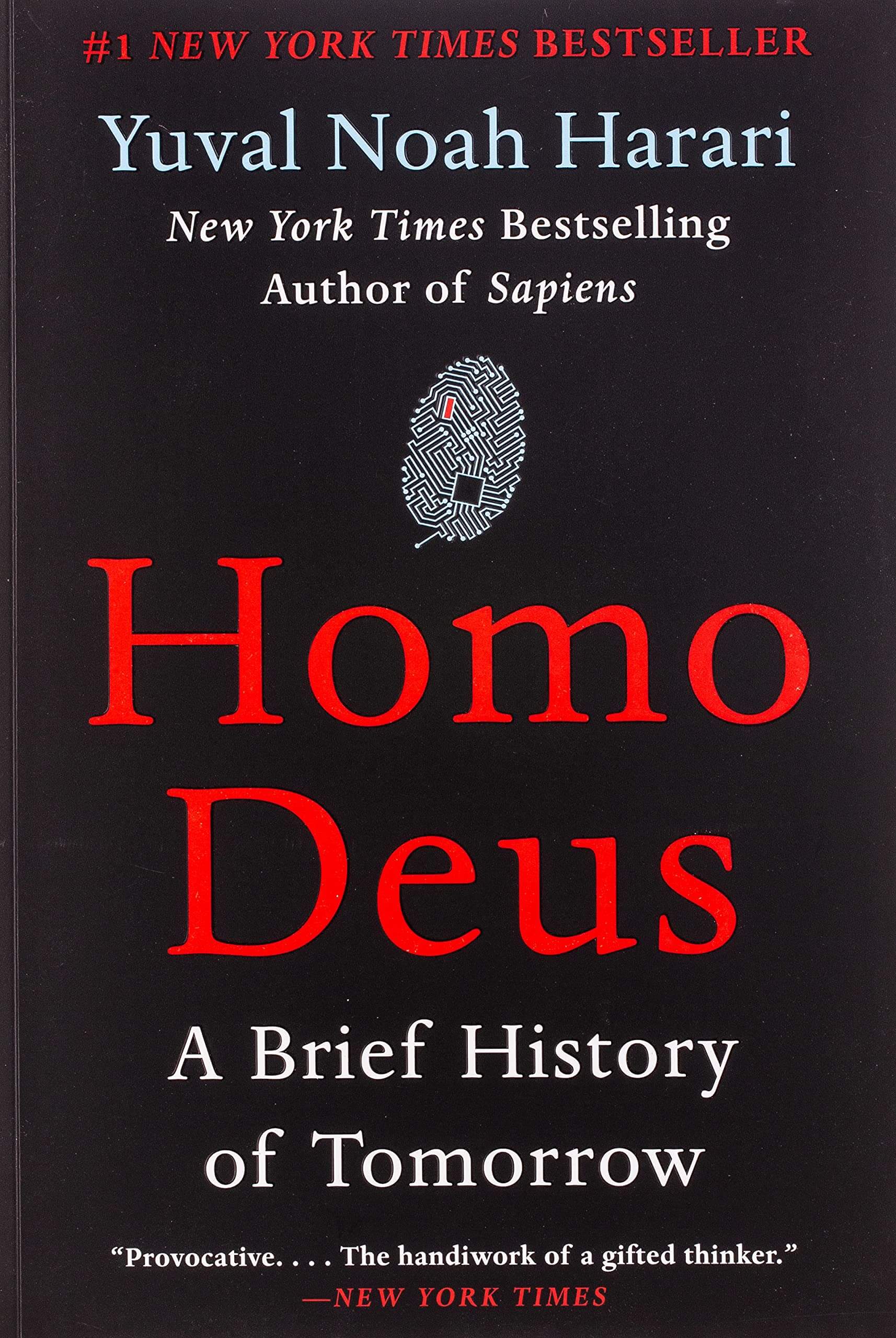
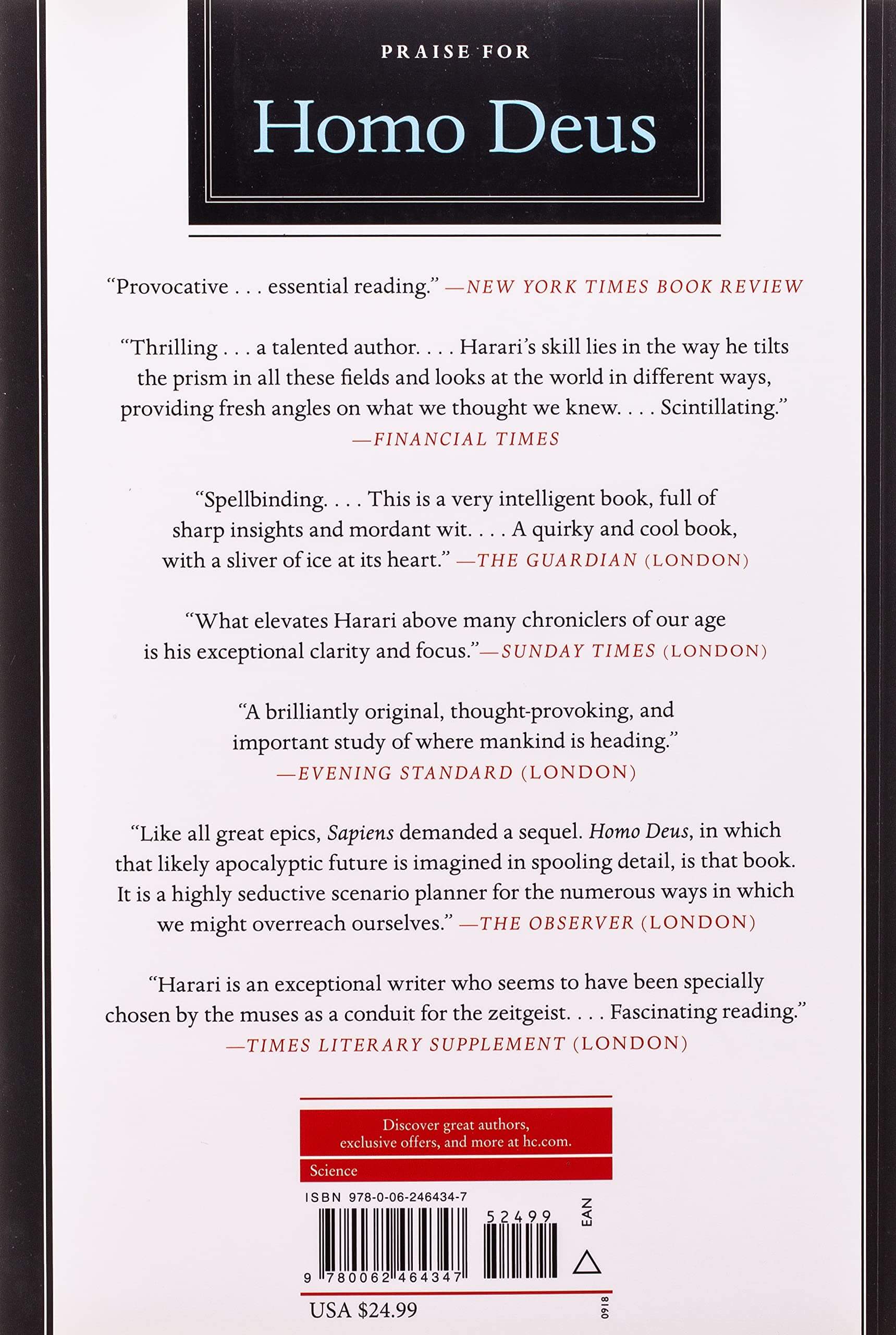




Homo Deus by Yuval Noah Harari is a provocative exploration of the possible future of humanity. After examining how Homo sapiens came to dominate the planet in Sapiens, Harari turns his attention toward what humans may try to become next.
The book asks ambitious questions.
What happens when humans gain greater control over biology?
Could artificial intelligence become better than people at important decisions?
Will technology allow humans to overcome disease, aging, and other biological limitations?
What happens to ideas such as free will and individual choice when algorithms understand human behaviour better than humans understand themselves?
Through history, philosophy, science, technology, and social analysis, Harari examines how humanity’s ambitions may reshape the twenty-first century.
Homo Deus by Yuval Noah Harari – Book Overview
Homo Deus by Yuval Noah Harari begins with the idea that many of humanity’s traditional struggles have changed dramatically.
For much of history, societies were heavily shaped by famine, disease, and war.
Modern science, medicine, agriculture, technology, and political institutions have given humanity greater ability to manage many of these threats.
Harari then asks what goals humans may pursue if survival becomes less dominant.
One possibility is that societies will increasingly focus on extending life, increasing happiness, and upgrading human abilities.
These ambitions could lead to extraordinary advances.
They could also create serious ethical, political, and social challenges.
From Homo Sapiens to Homo Deus
The title Homo Deus by Yuval Noah Harari refers to the possibility of humans attempting to acquire abilities that earlier generations might have considered godlike.
Modern technology allows people to manipulate biological systems, analyse enormous amounts of data, and build machines capable of performing increasingly complex tasks.
Future technologies may allow humans to alter bodies, influence cognition, extend lifespans, or redesign biological characteristics.
Harari does not simply present these possibilities as guaranteed predictions.
Instead, he uses them to explore how technological power could change society.
The central question is not only what humans will be able to do.
It is what humans will choose to do with those abilities.
Artificial Intelligence and Algorithms
Artificial intelligence is one of the most important themes in Homo Deus by Yuval Noah Harari.
Algorithms are already capable of analysing huge amounts of information.
As these systems become more sophisticated, they may be able to make decisions that previously required human judgment.
This raises difficult questions.
What happens when an algorithm can predict someone’s preferences better than they can?
What happens when computers become more effective at diagnosing illness, managing investments, recommending careers, or choosing information?
If people increasingly rely on algorithms, traditional ideas about individual decision-making may begin to change.
Harari encourages readers to consider how technological systems could influence personal freedom and social power.
Biotechnology and Human Enhancement
Biotechnology is another major subject in Homo Deus by Yuval Noah Harari.
Humans have already developed technologies capable of changing biological processes.
Future advances could make those abilities far more powerful.
Scientists may become better at treating disease, modifying genes, repairing damaged organs, or changing physical and cognitive abilities.
These developments could produce enormous benefits.
But they may also create inequality.
If advanced enhancement technologies are expensive, wealthy individuals or countries may gain access first.
This could create new differences between groups of people.
The book therefore asks whether technological progress will benefit everyone equally.
The Search for Immortality
Humans have feared death throughout history.
Homo Deus by Yuval Noah Harari explores the possibility that future societies may increasingly treat aging and death as technical problems rather than unavoidable facts of life.
Medical research already attempts to extend healthy lifespans.
Future technologies may push this ambition further.
Even if true immortality remains impossible, significant life extension could create major changes.
Retirement systems might need to change.
Family structures could change.
Careers might last much longer.
Political leadership could be affected.
Population growth could become more difficult to manage.
Harari uses these possibilities to show that solving one problem can create many new questions.
Happiness as a Human Goal
Another major idea in Homo Deus by Yuval Noah Harari is humanity’s pursuit of happiness.
Economic growth and technological development are often justified because they are expected to improve human life.
But increased wealth does not automatically create permanent happiness.
People adapt.
New desires appear.
Social comparison continues.
Harari explores how future technologies may attempt to influence happiness more directly through medicine, biology, neuroscience, or behavioural systems.
This raises another difficult question.
If happiness can be chemically or technologically manipulated, what does genuine happiness mean?
Humanism and Individual Choice
Modern societies often place enormous value on the individual.
People are encouraged to follow their feelings, make personal choices, and develop individual identities.
Homo Deus by Yuval Noah Harari examines the historical development of these humanist ideas.
But technological change may challenge them.
If algorithms can understand patterns in human behaviour better than individuals can, people may increasingly depend on external systems when making decisions.
A person may ask technology what to buy, where to travel, whom to date, what career to choose, or how to manage their health.
The more accurate these systems become, the more authority people may give them.
This could transform the relationship between humans and technology.
Dataism and the Power of Information
Data is central to Homo Deus by Yuval Noah Harari.
Modern societies generate enormous amounts of information every day.
Searches, purchases, locations, communication, health information, financial activity, and online behaviour can all become data.
Harari explores the possibility that societies may increasingly value information flow and data processing.
Organizations capable of collecting and analysing enormous amounts of data may gain significant power.
This creates questions about privacy.
Who owns personal information?
Who controls the algorithms?
Who decides how information is used?
These questions have become increasingly important as digital technology becomes more deeply integrated into everyday life.
Technology and Inequality
Technology can create opportunity, but Homo Deus by Yuval Noah Harari also examines how technological change may increase inequality.
New technologies are rarely distributed equally at the beginning.
Wealthy individuals, corporations, or countries may gain access before everyone else.
If future technologies improve intelligence, health, lifespan, or physical capabilities, inequality could become biological as well as economic.
Harari encourages readers to think about who benefits from technological progress.
Innovation alone does not guarantee fairness.
Political systems, economic structures, laws, and social values will influence how new technologies are distributed.
The Future of Work
Automation and artificial intelligence may transform employment.
Homo Deus by Yuval Noah Harari considers what might happen when computers become capable of performing tasks that once required human workers.
Some jobs may disappear.
Other jobs may change.
Entirely new professions may emerge.
But technological disruption could also make certain skills less valuable.
This creates important questions for education.
Should schools focus on memorizing information when machines can retrieve information instantly?
What skills will remain valuable?
How can people continue learning throughout long careers?
The book encourages readers to think beyond today’s job market and consider how rapidly technology may reshape work.
Free Will and Decision-Making
Free will is one of the most philosophical subjects in Homo Deus by Yuval Noah Harari.
People often believe that their decisions originate independently within themselves.
But biology and psychology suggest that behaviour is influenced by genetics, hormones, emotions, habits, environment, and unconscious processes.
If technology becomes capable of measuring those processes accurately, algorithms may become better at predicting behaviour.
This creates tension between traditional ideas of personal freedom and modern scientific understanding.
Harari uses this tension to ask what happens to political and moral systems built around individual choice.
Science, Religion and Meaning
Homo Deus by Yuval Noah Harari also examines how humans create meaning.
Throughout history, religions and political ideologies have provided explanations about the world and humanity’s place within it.
Modern science has changed many traditional explanations.
Technology may transform them further.
Harari explores whether new belief systems could emerge around technology, data, and human enhancement.
People may increasingly trust systems that promise measurable results instead of traditional religious authority.
This does not mean that religion will simply disappear.
Rather, the sources from which societies derive meaning may continue changing.
Power in the Twenty-First Century
Power is a recurring theme throughout Homo Deus by Yuval Noah Harari.
In earlier societies, power often depended on land, armies, or natural resources.
In the digital era, information may become equally important.
Companies capable of collecting enormous amounts of data may gain influence over consumers and governments.
Governments capable of monitoring citizens could develop powerful surveillance systems.
Individuals who understand new technologies may gain advantages over those who do not.
The book therefore asks who will control the technologies shaping the future.
Why Read Homo Deus by Yuval Noah Harari?
Homo Deus by Yuval Noah Harari is a strong choice for readers interested in:
- Artificial intelligence
- Future technology
- Human evolution
- Biotechnology
- History
- Philosophy
- Algorithms
- Data and privacy
- Human enhancement
- Future of work
- Society and politics
- Science
- Ethics
- Technology and inequality
The book combines ideas from many disciplines to create a broad discussion about possible futures.
Who Should Read This Book?
Homo Deus by Yuval Noah Harari may especially appeal to:
- Readers of Sapiens
- Technology enthusiasts
- History readers
- Philosophy readers
- Business leaders
- Entrepreneurs
- Students
- Futurists
- AI enthusiasts
- Social science readers
- Readers interested in biotechnology
- Readers interested in global trends
It is particularly suitable for people who enjoy books that challenge assumptions and encourage discussion about where society may be heading.
A Powerful Exploration of Humanity’s Future
Homo Deus by Yuval Noah Harari asks readers to think beyond current technological trends and consider the larger consequences of humanity’s growing power.
Artificial intelligence may change how decisions are made.
Biotechnology may change what humans are capable of becoming.
Data may become a major source of political and economic influence.
Medical science may extend life.
Automation may reshape employment.
These developments could bring extraordinary opportunities, but they could also create new forms of inequality, surveillance, and social disruption.
Harari does not provide a simple prediction of exactly what will happen.
Instead, he presents questions that help readers consider how technology, power, biology, and human ambition may interact.
For readers interested in history, artificial intelligence, science, philosophy, future technology, and the long-term direction of humanity, Homo Deus by Yuval Noah Harari offers a fascinating and thought-provoking exploration of the possibilities ahead.
Learn more about Homo Deus by Yuval Noah Harari on Yuval Noah Harari’s official website.
Explore more history and thought-provoking books at Bargain Books.
| Weight | 1 kg |
|---|---|
| Author | Yuval Noah Harari |
| Language | English |
| Type | Paperback Printed Book (Second Quality Copy) |
Be the first to review “Homo Deus by Yuval Noah Harari”
Related products
-26%

Out of stock
Non-Fiction & Knowledge
Original price was: රු2,000.00.රු1,490.00Current price is: රු1,490.00.
3 X Rs. 496.67 or 8% Cashback with


or 3 X රු496.67 with


or up to 4 X රු372.50 with


Non-Fiction & Knowledge
රු2,450.00
3 X Rs. 816.67 or 8% Cashback with
or 3 X රු816.67 with
or up to 4 X රු612.50 with

Non-Fiction & Knowledge
රු1,550.00
3 X Rs. 516.67 or 8% Cashback with
or 3 X රු516.67 with
or up to 4 X රු387.50 with

Non-Fiction & Knowledge
රු2,250.00
3 X Rs. 750.00 or 8% Cashback with
or 3 X රු750.00 with
or up to 4 X රු562.50 with
-14%

Out of stock
Self-Help & Psychology
Original price was: රු2,900.00.රු2,500.00Current price is: රු2,500.00.
3 X Rs. 833.33 or 8% Cashback with
or 3 X රු833.33 with
or up to 4 X රු625.00 with
-19%
Out of stock
Non-Fiction & Knowledge
Original price was: රු2,650.00.රු2,150.00Current price is: රු2,150.00.
3 X Rs. 716.67 or 8% Cashback with
or 3 X රු716.67 with
or up to 4 X රු537.50 with
-19%
Out of stock
Biography
Original price was: රු2,400.00.රු1,950.00Current price is: රු1,950.00.
3 X Rs. 650.00 or 8% Cashback with
or 3 X රු650.00 with
or up to 4 X රු487.50 with

රු2,000.00
3 X Rs. 666.67 or 8% Cashback with
or 3 X රු666.67 with
or up to 4 X රු500.00 with
Reviews
There are no reviews yet.