
No products in the cart.
-24%
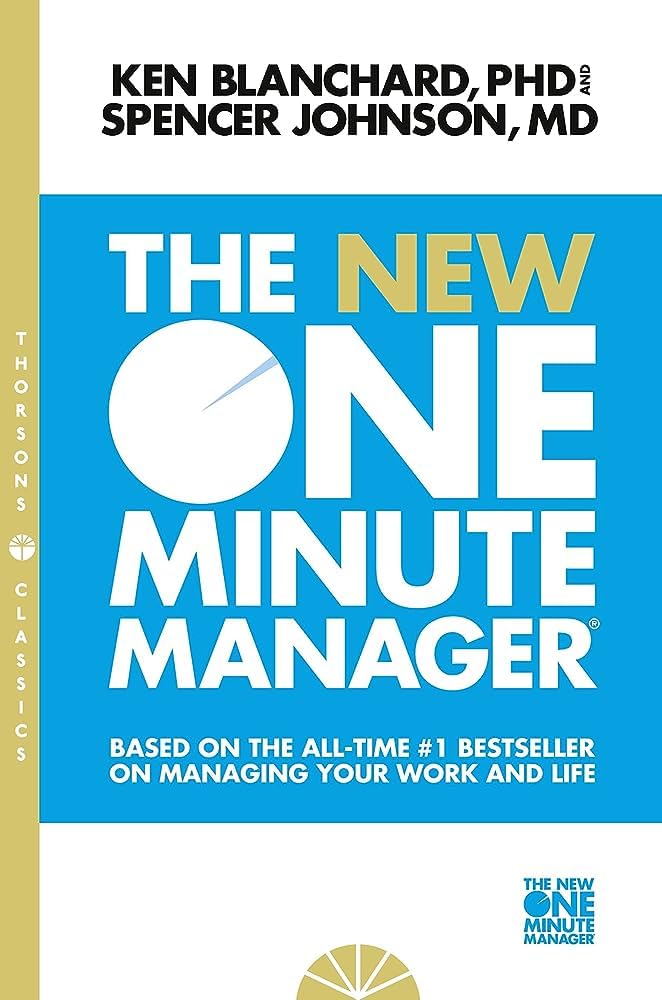
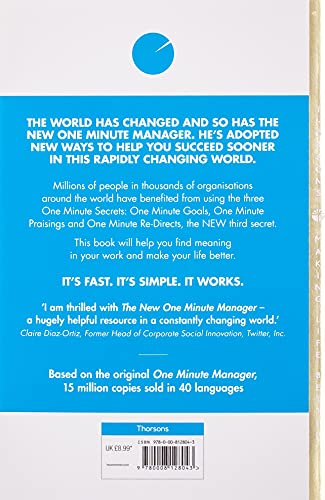

One minute manager by Ken Blanchard & Spencer Johnson


Original price was: රු2,100.00.රු1,600.00Current price is: රු1,600.00.
3 X Rs. 533.33 or 8% Cashback with


or 3 X රු533.33 with


or up to 4 X රු400.00 with


The One Minute Manager by Ken Blanchard and Spencer Johnson is a classic business and leadership book that teaches three simple management techniques: One Minute Goals, One Minute Praisings and One Minute Reprimands. Told through an easy-to-read business parable, it explains how clear expectations, timely recognition and immediate feedback can help managers improve performance while maintaining respect for their people. Ideal for new managers, entrepreneurs, team leaders, supervisors and anyone interested in practical leadership and workplace productivity.
Out of stock
Email when stock available
The One Minute Manager by Ken Blanchard and Spencer Johnson is a short, practical business classic that explains how managers can improve performance by setting clear expectations, recognizing good work quickly and addressing poor performance without waiting for problems to become larger.
Instead of presenting management theory through hundreds of pages of academic explanation, the authors use a simple business parable.
A young man is searching for an effective manager.
He has already encountered different leadership styles.
Some managers seem highly focused on results but make employees miserable.
Others keep employees happy but fail to produce strong results.
The young man wants to know whether a manager can achieve both.
Can people perform well while still being treated with respect?
His search eventually leads him to the One Minute Manager.
What appears to be a very simple management style is built around three memorable practices:
One Minute Goals.
One Minute Praisings.
One Minute Reprimands.
The central philosophy of The One Minute Manager by Ken Blanchard and Spencer Johnson is that effective management does not always require endless meetings, complicated systems or annual reviews that arrive months after the behaviour being discussed.
Instead, people perform better when they understand what is expected, know quickly when they are doing something well and receive timely feedback when something goes wrong.
The One Minute Manager by Ken Blanchard and Spencer Johnson – Book Overview
The One Minute Manager by Ken Blanchard and Spencer Johnson presents management lessons through a fictional search for an effective leader.
The young man at the centre of the story wants to understand why some managers produce good business results but poor relationships, while others create friendly environments without achieving enough.
The One Minute Manager represents a different possibility.
He cares about:
People
and
results.
The authors argue that these goals do not need to compete with each other.
Helping people perform well can also improve organizational results.
The First Secret – One Minute Goals
The first major technique is One Minute Goals.
A common management problem is surprisingly simple:
Employees sometimes do not know exactly what their manager expects.
The manager thinks the goal is obvious.
The employee thinks something else is important.
Then performance is reviewed later and both sides are frustrated.
The One Minute Manager tries to prevent this problem before it begins.
Make Expectations Clear
A useful goal should answer:
What needs to happen?
What does good performance look like?
How will success be recognized?
The clearer the goal, the easier it becomes for the employee to evaluate their own progress.
Ken Blanchard has continued to emphasize clear goals as the first of the One Minute principles, including the idea of keeping important goals short enough to review quickly.
Goals Should Be Easy to Review
The “one minute” idea should not necessarily be interpreted as an exact stopwatch rule.
The deeper principle is simplicity.
A person should not need to read a fifteen-page document every morning just to remember what matters most.
Good goals should be concise enough that people can regularly ask:
What am I trying to achieve?
Am I moving toward it?
Do I need to change something?
Clarity Before Accountability
This creates an important management principle.
It is unfair to hold someone accountable for expectations that were never clearly communicated.
Before asking:
“Why did you fail?”
a manager should also ask:
“Did we clearly agree on what success meant?”
Accountability works best after clarity.
Goal Setting for Modern Teams
The same idea applies today in:
Software teams.
Sales departments.
Retail stores.
Marketing teams.
Operations.
Customer service.
Finance.
Warehousing.
For example, “Improve customer service” is vague.
A clearer target might specify:
Response time.
Customer satisfaction.
Order accuracy.
Complaint resolution.
Now the employee understands what good performance looks like.
The Second Secret – One Minute Praisings
The second technique is One Minute Praisings.
The idea is straightforward:
Do not wait until the annual performance review to tell someone they are doing good work.
Recognize effective behaviour while it is happening.
Blanchard still describes this philosophy as “catching people doing things right.”
Why Immediate Praise Matters
Suppose an employee handles a difficult customer extremely well.
Six months later, the manager says:
“You’ve been doing good work this year.”
That is pleasant.
But it is vague.
Compare it with:
“You handled that complaint calmly, explained the solution clearly and kept the customer from leaving frustrated. That was excellent.”
Now the employee knows exactly what behaviour should be repeated.
Praise the Behaviour
Effective praise should ideally identify what went well.
Not merely:
“Good job.”
But:
What was good?
Why did it matter?
Specific feedback teaches.
Generic praise only encourages.
Recognition Builds Confidence
People often perform better when they know they are improving.
This is particularly important for:
New employees.
Junior staff.
Interns.
People learning a difficult skill.
Managers sometimes believe employees should simply know whether they are doing well.
That assumption can create unnecessary uncertainty.
Do Not Save Praise for Perfect Performance
A person does not need to become the best employee in the company before receiving recognition.
Managers can notice progress.
An employee who previously made ten mistakes and now makes two has improved significantly.
Recognizing progress can encourage further improvement.
Praise Should Be Genuine
Artificial praise can quickly become meaningless.
Employees can tell when every action receives the same exaggerated reaction.
Recognition works better when it is:
Specific.
Earned.
Timely.
Relevant.
The purpose is not to manipulate people with compliments.
It is to make effective performance visible.
The Third Secret – One Minute Reprimands
In the original version of The One Minute Manager by Ken Blanchard and Spencer Johnson, the third technique is One Minute Reprimands.
This is important because the later New One Minute Manager changes the approach.
In the original book, poor performance should be addressed quickly rather than being ignored until resentment grows.
Correct Problems Early
Imagine an employee repeatedly making the same inventory mistake.
The manager says nothing for three months.
Then suddenly becomes furious.
The employee may reasonably wonder:
If this was so serious, why did nobody tell me earlier?
Timely feedback prevents small issues from becoming established habits.
Focus on Behaviour, Not Personal Worth
A useful principle behind corrective feedback is separating:
What the person did
from
who the person is.
A manager can say:
“This specific action was not acceptable.”
without communicating:
“You are worthless.”
Correct the behaviour while maintaining respect for the person.
Feedback Should Be Specific
Poor feedback:
“You need to improve.”
Better feedback:
“The report was submitted two days late, which delayed the finance review. Next time, tell me before the deadline if there is a problem.”
Specific feedback provides a path forward.
The Updated Version Changed This Technique
Modern readers should know that Blanchard and Johnson revisited their original approach decades later.
In The New One Minute Manager, released in 2015, they replaced the old One Minute Reprimand with a more collaborative One Minute Re-Direct. Blanchard explains that the change reflected a shift away from traditional command-and-control management toward managers working more as partners with employees.
This means the original book remains historically influential, but readers should not assume every phrase reflects current best practice unchanged.
People and Results
One of the core ideas in The One Minute Manager by Ken Blanchard and Spencer Johnson is that managers should not choose between caring about people and caring about performance.
Organizations need results.
Employees are people.
Effective leadership must work with both realities.
If managers care only about results, they may create:
Burnout.
Fear.
High turnover.
Poor morale.
If managers care only about keeping everyone comfortable, standards may disappear.
Good management balances support with accountability.
Leadership Does Not Need to Be Complicated
One reason the book became popular is its simplicity.
Management literature can become filled with:
Frameworks.
Charts.
Models.
Terminology.
The One Minute approach reduces leadership to a few behaviours that managers can remember easily.
Set clear goals.
Notice good performance.
Correct mistakes quickly.
These ideas are simple.
Consistently applying them is harder.
Simple Does Not Mean Easy
Knowing that clear goals are useful does not automatically mean managers set clear goals.
Knowing praise matters does not mean leaders remember to give it.
Knowing feedback should be timely does not mean difficult conversations become comfortable.
The challenge is turning principles into habits.
Feedback Should Not Be an Annual Event
Many organizations traditionally rely on annual performance reviews.
The problem is timing.
If something happens in January and is discussed the following December, the learning value is limited.
Regular feedback allows employees to adjust while the event is still fresh.
Modern performance management increasingly emphasizes ongoing conversations for exactly this reason.
Managers Should Not Disappear
Once goals are assigned, a poor manager may vanish until something goes wrong.
That creates an unhealthy pattern:
Silence means acceptable.
Manager appears means trouble.
Instead, good managers remain involved enough to recognize progress.
This is one of the enduring ideas behind One Minute Praisings.
Catch People Doing Things Right
Managers naturally notice problems.
A wrong invoice.
A missed target.
A customer complaint.
A late employee.
Mistakes attract attention.
Good performance can become invisible because it is expected.
The book asks managers to deliberately reverse some of that attention.
Notice success too.
Leadership and Trust
Feedback works only when some level of trust exists.
If employees believe their manager is constantly searching for reasons to punish them, even useful feedback can feel threatening.
A manager who regularly:
Clarifies expectations.
Recognizes effort.
Listens.
Helps.
Corrects fairly.
is more likely to build credibility.
Respect
Management authority does not require humiliation.
Someone can have a lower position in an organizational hierarchy and still deserve dignity.
Corrective conversations can be direct without becoming cruel.
This distinction is particularly important when applying older management books to modern workplaces.
Accountability
Respect does not mean eliminating standards.
If someone consistently fails to perform, the issue needs attention.
Good leaders avoid both extremes:
Ignoring problems.
and
attacking people.
The goal is improvement.
Self-Management
The ideas in The One Minute Manager by Ken Blanchard and Spencer Johnson can also be adapted for personal productivity.
Set a clear goal.
Monitor progress.
Recognize improvement.
Correct mistakes.
For example, a student could create a simple target:
Complete two cloud-computing chapters by 8 PM.
Then review whether it happened.
If yes, recognize the progress.
If not, identify why and adjust the next session.
Management for Small Businesses
The book can be particularly useful for small-business owners who became managers without formal management education.
Someone may be excellent at:
Selling books.
Making coffee.
Writing software.
Designing products.
Then the business grows.
Suddenly they are managing employees.
Technical skill does not automatically create management skill.
Simple leadership principles can provide a starting framework.
Management for Retail
In a retail environment, One Minute Goals could include clear expectations around:
Customer service.
Stock accuracy.
Order processing.
Checkout procedures.
Sales targets.
Merchandising.
Rather than saying:
“Do better today,”
the manager explains exactly what good performance looks like.
Management for Software Teams
Software managers can use the same principle.
Instead of saying:
“Finish the feature soon,”
clarify:
Scope.
Acceptance criteria.
Deadline.
Testing requirements.
Dependencies.
Then feedback becomes based on an agreed expectation rather than vague impressions.
Management for Sales Teams
Sales staff benefit particularly from measurable goals.
But leaders should avoid focusing only on revenue.
Useful goals may also include:
Lead follow-up.
Conversion rates.
Customer retention.
Order accuracy.
Relationship quality.
What gets measured influences behaviour.
Praise Effort or Results?
A useful modern refinement is to praise effective behaviour, progress and thoughtful effort, not just outcomes.
Someone may make an excellent sales presentation and still lose the customer for reasons outside their control.
Managers should distinguish controllable behaviour from uncontrollable outcomes.
Avoid Micromanagement
Clear goals should increase independence, not reduce it.
If employees know:
What outcome matters.
What boundaries exist.
When the deadline is.
they should often have room to decide how to perform the work.
Goal clarity can reduce the need for managers to constantly supervise every small step.
Empowerment
The strongest version of the One Minute philosophy is not:
Manager controls everything efficiently.
It is:
People understand expectations well enough to increasingly manage their own performance.
That creates more time for both the employee and manager.
Why the Book Is So Short
Blanchard has described the original work as deliberately unusual for its era: a very short business book written as a parable when most management books were longer and more conventional.
Its brevity became part of its appeal.
Readers can understand the core framework quickly.
A Business Parable
The One Minute Manager by Ken Blanchard and Spencer Johnson is not written like a university textbook.
It uses fictional characters and conversations to communicate ideas.
Readers who prefer detailed academic evidence may find the style simplified.
Readers who prefer memorable practical principles may appreciate it.
Is The One Minute Manager Still Relevant?
Many underlying ideas remain relevant:
Clear expectations.
Timely praise.
Fast feedback.
Respect for employees.
But management culture has evolved since the original 1982 publication.
The authors themselves acknowledged this by creating The New One Minute Manager in 2015.
Therefore, the classic is best read as both:
A practical introduction to simple management habits.
And an influential piece of management history.
The One Minute Manager vs The New One Minute Manager
Do not confuse these products.
Your inventory contains both titles. One record identifies the classic One minute manager by Ken Blanchard and Spencer Johnson with ISBN 9788172234997, while another catalogued item explicitly identifies The New One Minute Manager with ISBN 9780062389152.
The main conceptual difference is:
Original: Goals, Praisings, Reprimands.
Updated: Goals, Praisings, Re-Directs.
If the cover of the physical book says The New One Minute Manager, use a separate WooCommerce listing and SEO description.
Who Are Ken Blanchard and Spencer Johnson?
Ken Blanchard is a leadership author and management consultant whose work has influenced leadership training for decades.
Spencer Johnson was an author known for simplifying business and life lessons into short parables; his later books included Who Moved My Cheese?
Their collaboration created a management book designed to make leadership concepts easy to remember rather than academically complex.
Important Themes
The One Minute Manager by Ken Blanchard and Spencer Johnson explores management, leadership, goal setting, employee motivation, performance, praise, accountability, feedback, communication, productivity, workplace relationships, delegation, expectations and people-centered leadership.
7 Powerful Lessons From The One Minute Manager by Ken Blanchard and Spencer Johnson
- Make expectations clear before judging performance. Employees need to know what success looks like before managers can reasonably hold them accountable for reaching it.
- Keep important goals simple enough to review frequently. Goals hidden inside long documents are easy to forget. Clear priorities allow people to check their own performance.
- Recognize good work quickly. Specific, timely praise helps people understand which behaviours should be repeated.
- Do not wait months to discuss mistakes. Fast feedback gives people a chance to correct behaviour before a small issue becomes a repeated pattern.
- Separate the person’s value from the mistake. Correcting a specific action does not require attacking someone’s character.
- Balance results with respect for people. Strong management is not simply about producing numbers or keeping everyone comfortable—it requires both performance and healthy working relationships.
- Good management should eventually create more self-management. The goal is not to make employees permanently dependent on the manager, but to help people understand expectations, evaluate their own work and become increasingly capable.
Why Read The One Minute Manager by Ken Blanchard and Spencer Johnson?
The One Minute Manager by Ken Blanchard and Spencer Johnson is particularly useful for readers who want a simple introduction to leadership without beginning with a long academic management textbook.
It can be valuable for:
New managers.
Supervisors.
Entrepreneurs.
Small-business owners.
Team leaders.
Retail managers.
Sales managers.
Project managers.
Students studying management.
Professionals preparing for their first leadership role.
Its biggest strength is memorability.
You may forget dozens of complicated management frameworks.
It is difficult to forget:
Goals.
Praise.
Feedback.
Who Should Read This Book?
Readers managing people for the first time may benefit the most.
Someone promoted because they were excellent at the technical part of their job can suddenly discover that management requires completely different skills.
The book provides a short introduction to the human side of performance.
Experienced managers may also use it as a reminder that leadership sometimes becomes unnecessarily complicated.
Before adding another dashboard, meeting or policy, ask:
Does everyone know the goal?
Do people know when they are succeeding?
Do they receive useful feedback when something needs to change?
Those three questions alone can reveal many management problems.
The One Minute Manager by Ken Blanchard and Spencer Johnson – Simple Leadership That People Can Understand
The One Minute Manager by Ken Blanchard and Spencer Johnson is built around a surprisingly important management principle:
People perform better when management is understandable.
An employee should not need to guess what the manager wants.
They should not need to wait a year to discover whether they are doing well.
They should not discover months later that a mistake was supposedly serious.
Clear goals create direction.
Timely praise reinforces effective behaviour.
Timely correction prevents problems from growing.
The framework is deliberately simple.
That simplicity is why the book became so influential.
It does not claim that every leadership challenge can literally be solved in sixty seconds.
Real management involves difficult issues:
Conflict.
Hiring.
Training.
Compensation.
Culture.
Strategy.
Performance problems.
Different personalities.
But simple principles can still create a strong foundation.
The book’s age also makes critical reading important.
The workplace of the early 1980s was more command-and-control than many modern organizations aim to be. Blanchard later acknowledged that shift when the authors updated the model for The New One Minute Manager.
That means modern readers can take the strongest enduring ideas from the classic—clarity, recognition, immediate feedback and respect—while applying them through a more collaborative management style.
For anyone beginning to manage employees, lead a team or build a business, The One Minute Manager by Ken Blanchard and Spencer Johnson remains a quick and memorable introduction to one central truth:
Good leadership becomes easier when people clearly understand what is expected, know when they are succeeding and receive useful guidance when they are not.
Learn more about The One Minute Manager by Ken Blanchard and Spencer Johnson on the official Ken Blanchard Companies website.
Explore more business and leadership books at Bargain Books.
| Author | Ken Blanchard & Spencer Johnson |
|---|---|
| Language | English |
| Type | Paperback Printed Book (Second Quality Copy) |
Be the first to review “One minute manager by Ken Blanchard & Spencer Johnson”
Related products
Non-Fiction & Knowledge
රු2,250.00
3 X Rs. 750.00 or 8% Cashback with
or 3 X රු750.00 with
or up to 4 X රු562.50 with
-13%
Out of stock
Non-Fiction & Knowledge
Original price was: රු3,900.00.රු3,400.00Current price is: රු3,400.00.
3 X Rs. 1,133.33 or 8% Cashback with
or 3 X රු1,133.33 with
or up to 4 X රු850.00 with

Non-Fiction & Knowledge
රු1,700.00
3 X Rs. 566.67 or 8% Cashback with
or 3 X රු566.67 with
or up to 4 X රු425.00 with
-24%

Out of stock
Non-Fiction & Knowledge
Original price was: රු2,500.00.රු1,900.00Current price is: රු1,900.00.
3 X Rs. 633.33 or 8% Cashback with
or 3 X රු633.33 with
or up to 4 X රු475.00 with

Out of stock
Autobiography
රු2,750.00
3 X Rs. 916.67 or 8% Cashback with
or 3 X රු916.67 with
or up to 4 X රු687.50 with
Out of stock
Self-Help & Psychology
රු1,900.00
3 X Rs. 633.33 or 8% Cashback with
or 3 X රු633.33 with
or up to 4 X රු475.00 with
-26%
Non-Fiction & Knowledge
The 7 Habits of Highly Effective People by Stephen R. Covey – Blue Cover
Original price was: රු2,300.00.රු1,700.00Current price is: රු1,700.00.
3 X Rs. 566.67 or 8% Cashback with
or 3 X රු566.67 with
or up to 4 X රු425.00 with
-19%

Out of stock
Biography
Original price was: රු2,400.00.රු1,950.00Current price is: රු1,950.00.
3 X Rs. 650.00 or 8% Cashback with
or 3 X රු650.00 with
or up to 4 X රු487.50 with
Reviews
There are no reviews yet.