
No products in the cart.
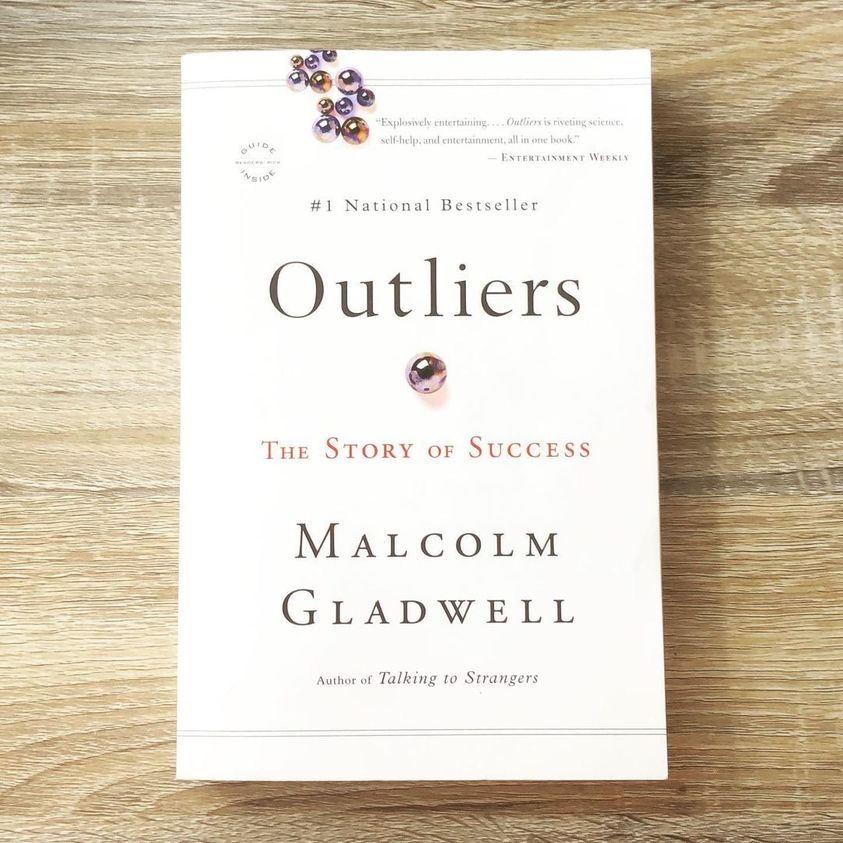
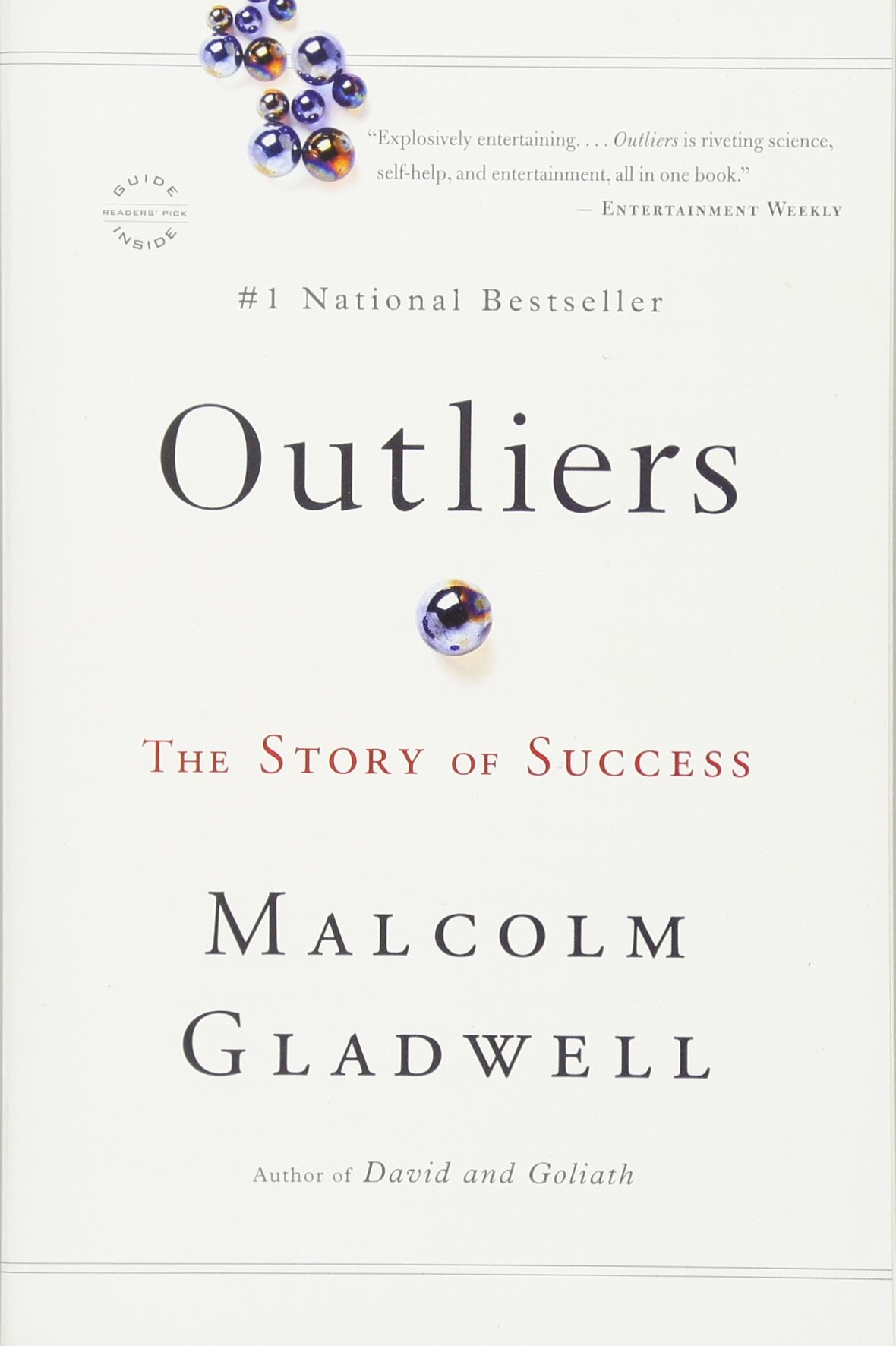



Outliers by Malcolm Gladwell is a fascinating exploration of success that challenges the familiar idea that extraordinary people reach the top simply because they are more talented, intelligent or hardworking than everyone else.
Why do some people become enormously successful?
Why do certain athletes rise above thousands of equally ambitious competitors?
Why did Bill Gates have the opportunity to become one of the world’s most influential software entrepreneurs?
What helped the Beatles develop into an extraordinary live band?
Why do people born at particular times sometimes gain advantages that have nothing to do with natural talent?
Malcolm Gladwell argues that the usual success story is incomplete.
We often focus on the individual.
Their intelligence.
Their ambition.
Their personality.
Their discipline.
But we pay less attention to the world surrounding them.
Family.
Culture.
Generation.
Timing.
Education.
Opportunity.
Access.
Community.
Historical circumstances.
Outliers by Malcolm Gladwell explores how these less visible factors can combine with ability and effort to produce extraordinary outcomes.
This is not a book claiming that hard work is irrelevant.
Quite the opposite.
Practice matters enormously.
But Gladwell argues that people also need the opportunity to practice, the circumstances that allow their skills to develop, and a world in which those skills can become valuable.
That makes Outliers an engaging read for students, entrepreneurs, professionals, teachers, managers and anyone interested in understanding success beyond motivational slogans.
Outliers by Malcolm Gladwell – Book Overview
Outliers by Malcolm Gladwell begins by questioning a story society loves to tell.
The self-made genius.
Someone starts with nothing.
Works harder than everyone else.
Becomes successful entirely because of individual excellence.
Gladwell asks readers to look closer.
When we examine successful people carefully, we often discover that their achievements developed inside a much larger system of opportunities and circumstances.
That does not make the achievement fake.
It makes the explanation more complete.
What Is an Outlier?
In statistics, an outlier is something that lies unusually far from the normal pattern.
Gladwell uses the term for people whose accomplishments place them far beyond ordinary levels of achievement.
Elite athletes.
Billionaire entrepreneurs.
Musicians.
Scientists.
Lawyers.
People whose success makes us ask:
Why them?
The obvious answer is often:
Because they were exceptional.
Gladwell’s question is:
What allowed them to become exceptional?
Success Is Not Just About Who You Are
One of the central arguments in Outliers by Malcolm Gladwell is that success cannot be explained only by personal characteristics.
We naturally want to know:
How intelligent was this person?
How ambitious?
How disciplined?
But Gladwell argues that we should also ask:
When were they born?
Where did they grow up?
What opportunities did they receive?
Who supported them?
What resources were available?
What cultural habits influenced them?
These questions change the success story.
The Matthew Effect
One of the first major ideas in the book is the Matthew Effect.
The basic principle is that small early advantages can accumulate into much larger advantages over time.
Someone receives an opportunity.
That opportunity helps them improve.
Improvement leads to another opportunity.
That opportunity creates even greater improvement.
Eventually, what looks like enormous natural superiority may partly reflect years of accumulated advantage.
Canadian Hockey Players
Gladwell uses youth hockey to illustrate this.
In systems where children are grouped according to an age cutoff, those born shortly after the cutoff can be noticeably older than children born near the end of the eligibility year.
For young children, several months can make a meaningful difference in:
Size.
Strength.
Coordination.
Development.
Coaches may identify the slightly older children as more talented.
Then those children receive:
Better coaching.
More practice.
More competitive games.
More attention.
The initial advantage becomes amplified.
Small Advantages Can Compound
This concept extends beyond sports.
Imagine two students with similar ability.
One receives early encouragement.
Extra lessons.
Better equipment.
Mentorship.
A good internship.
Each opportunity creates another.
Years later, the gap between the two may appear to be purely about talent.
But their opportunities were never identical.
Opportunity Matters
Outliers by Malcolm Gladwell does not say success is random.
Instead, it argues that effort operates inside opportunity structures.
You may be capable of extraordinary work.
But first you need some way to:
Learn.
Practice.
Experiment.
Fail safely.
Access equipment.
Meet mentors.
Find customers.
Get noticed.
Opportunity changes what effort can produce.
The 10,000-Hour Rule
The most famous concept associated with Outliers is the 10,000-Hour Rule.
Gladwell popularized the idea that reaching extremely high levels of performance in demanding fields often requires an enormous amount of focused practice.
The lesson is attractive:
Expertise takes time.
There are no magical shortcuts.
But this idea needs some nuance.
10,000 Hours Is Not a Magic Number
A common misunderstanding is:
Do anything for exactly 10,000 hours and you will become world-class.
That is not what readers should take from the book.
The amount of practice needed varies significantly by:
Skill.
Field.
Starting ability.
Quality of instruction.
Type of practice.
Competition.
Opportunity.
Individual differences.
Later research has also shown that practice explains only part of the variation in performance.
So the useful lesson is not the precise number.
It is that high-level expertise normally requires a great deal of sustained, high-quality practice.
Practice Requires Opportunity
This is actually one of Gladwell’s more important points.
Imagine that becoming highly skilled requires thousands of hours of practice.
Who gets access to those hours?
Someone may need:
A computer.
A piano.
A sports facility.
A coach.
Free time.
Financial support.
A safe place to practice.
A family willing to help.
Practice itself may depend on privilege and circumstance.
Bill Gates
Gladwell uses Bill Gates as one of his major examples.
Gates was unquestionably talented and hardworking.
But he also had unusually early access to computers at a time when computer access was extremely rare.
That opportunity allowed him to spend enormous amounts of time programming before personal computers became common.
By the time the software industry began exploding, Gates had accumulated unusual experience.
Talent Plus Opportunity
The lesson should not be:
Bill Gates succeeded only because he was lucky.
Nor should it be:
Bill Gates succeeded only because he was brilliant.
The more complete explanation combines:
Talent.
Curiosity.
Work.
Opportunity.
Timing.
Access.
That combination is central to Outliers by Malcolm Gladwell.
The Beatles
Gladwell also discusses The Beatles.
Before they became internationally famous, the band spent long periods performing in Hamburg, Germany.
They played extremely long sets.
Night after night.
This demanded enormous amounts of live practice.
They learned:
How to perform together.
How to hold an audience.
How to adapt.
How to play for hours.
How to recover from mistakes.
By the time fame arrived, they had already accumulated unusual performance experience.
Success Can Look Sudden From the Outside
This creates an important lesson.
The public often sees the breakthrough.
The hit song.
The successful startup.
The promotion.
The championship.
But the breakthrough may sit on top of years of invisible preparation.
The result is visible.
The process is not.
Overnight Success
A person can appear to become successful overnight.
But that night may have taken ten years to arrive.
This applies to:
Authors.
Entrepreneurs.
Athletes.
Musicians.
Developers.
Content creators.
Researchers.
The public sees the moment when attention arrives.
The individual remembers all the years before it.
Timing
Timing is another major theme in Outliers by Malcolm Gladwell.
Being born in the right period can create access to an emerging industry.
Someone born too early may encounter technology that is not ready.
Someone born too late may enter after the most important opportunities have already been claimed.
Historical Timing
The computer revolution provides an excellent example.
The people positioned to take advantage of a major technological change often need to be:
Old enough to have developed useful skills.
Young enough to take risks.
Available at the moment the industry changes.
That narrow timing window may influence who becomes an industry leader.
Success Is Contextual
This challenges the idea that success can always be reproduced through a simple formula.
You cannot perfectly recreate:
Someone else’s decade.
Their family.
Their city.
Their opportunities.
Their industry timing.
You can learn from successful people.
But copying their habits does not guarantee their results.
Intelligence
Outliers by Malcolm Gladwell also examines intelligence.
People often assume:
Higher IQ = greater success.
Gladwell argues that intelligence matters, but beyond certain thresholds, additional intelligence may not automatically produce proportionally greater achievement.
Other factors begin mattering strongly.
Communication.
Opportunity.
Social skills.
Practical intelligence.
Persistence.
Environment.
Practical Intelligence
Academic intelligence helps someone solve intellectual problems.
Practical intelligence involves understanding how to navigate real situations.
How do you:
Ask for help?
Negotiate?
Speak with authority?
Challenge a decision?
Communicate with institutions?
People can be intellectually brilliant while lacking these abilities.
Chris Langan
Gladwell discusses Christopher Langan, a man known for extraordinary intellectual ability.
Yet raw intelligence did not automatically translate into conventional academic or professional success.
Gladwell uses his story to explore how social background and practical knowledge can influence whether talent finds a productive path.
Family Background
Families teach children more than facts.
They also teach assumptions about how the world works.
A child may learn:
Adults can be questioned respectfully.
Authorities will listen.
Institutions can be negotiated with.
Or they may learn:
Do not challenge authority.
Accept what you are told.
Those differences can affect how people navigate schools and workplaces.
Cultural Legacy
Another major section of Outliers by Malcolm Gladwell looks at cultural inheritance.
Cultures can pass down habits, expectations and communication styles across generations.
Some patterns may continue affecting behavior even after the original circumstances that created them have disappeared.
Culture Is Not Destiny
This part of the book should be read carefully.
Cultural patterns can influence behavior.
But they should not be turned into rigid stereotypes about entire populations.
People within any culture differ enormously.
Culture is one influence among many.
It is not a perfect predictor of any individual person’s ability or behavior.
The Culture of Honor
Gladwell explores historical patterns associated with communities where personal reputation and displays of toughness carried particular importance.
He uses this to show how social norms can remain influential across generations.
The broader lesson is that behavior can have historical roots people no longer consciously recognize.
Plane Crashes and Communication
One of the book’s memorable sections examines aviation accidents.
Gladwell explores how communication styles and hierarchy can influence cockpit decision-making.
If junior crew members are reluctant to speak directly to a senior captain, an important warning may be expressed too cautiously.
In high-risk environments, communication must be clear.
Power Distance
The concept of power distance describes how comfortable people are with unequal authority relationships.
In high-power-distance environments, questioning a superior may feel inappropriate.
That can become dangerous when the person in authority makes a mistake.
Speak Up When Safety Is at Risk
This lesson applies beyond aviation.
Hospitals.
Engineering.
Cybersecurity.
Construction.
Finance.
Software deployment.
If junior employees are afraid to say:
“I think something is wrong,”
the organization becomes more vulnerable.
Good leadership therefore requires creating conditions where people can raise concerns safely.
Psychological Safety
Although Outliers does not center on the modern term psychological safety, the aviation discussion connects naturally to it.
Strong teams need people who can:
Question.
Clarify.
Report mistakes.
Challenge assumptions.
without fearing humiliation or punishment.
Cultural Differences and Mathematics
Gladwell also examines cultural and historical explanations for differences in mathematical achievement.
Part of his discussion focuses on agricultural traditions and attitudes toward persistent effort.
This is an interesting argument, but readers should avoid reducing it to simplistic claims about entire ethnic groups being naturally better at mathematics.
Educational results emerge from complicated combinations of:
Schooling.
Language.
Practice.
Expectations.
Culture.
Resources.
Policy.
Socioeconomic conditions.
Effort Matters
The valuable takeaway is that attitudes toward persistence can influence learning.
Students who interpret difficulty as:
“I haven’t solved it yet”
may persist longer than students who interpret difficulty as:
“I am simply bad at this.”
Persistence increases opportunities to learn.
School Time
Outliers by Malcolm Gladwell also discusses educational opportunity.
Students do not all have equal learning environments outside school.
Some have:
Books.
Tutors.
Quiet rooms.
Educational trips.
Technology.
Parents with time to help.
Others do not.
These differences can accumulate.
Summer Learning
Gladwell examines the idea that learning gaps may grow when children have unequal access to educational enrichment outside formal school periods.
The larger point is that school performance does not emerge only from what happens inside the classroom.
The surrounding environment matters too.
Marita’s Bargain
Gladwell discusses a student named Marita and the demanding schedule associated with the KIPP educational model.
Her story illustrates a trade-off.
Extraordinary academic opportunity can require extraordinary commitment.
More study time can create educational gains.
But it may also reduce:
Free time.
Social time.
Family time.
Success frequently has costs.
Success Requires Sacrifice
Motivational books sometimes make success sound enjoyable at every stage.
Often it is not.
Improvement can involve:
Repetition.
Boredom.
Missed entertainment.
Delayed gratification.
Failure.
Long periods without visible reward.
The question is whether the sacrifice is worth the goal.
Meaningful Work
Gladwell also explores characteristics that make work satisfying.
Work often feels meaningful when there is:
Autonomy.
Complexity.
A visible connection between effort and reward.
People can tolerate demanding work more easily when they believe their actions matter.
Autonomy
Having some control over how you work can increase motivation.
Being told exactly what to do every minute can make even technically easy work exhausting.
Autonomy creates ownership.
Complexity
Challenging work can also be satisfying when it allows someone to learn and improve.
A task that requires no thinking may become boring.
A task far beyond someone’s ability may become overwhelming.
Meaningful challenge often exists somewhere between those extremes.
Effort and Reward
People are more likely to work hard when they can see how effort contributes to progress.
If greater effort seems completely disconnected from outcomes, motivation can collapse.
Family and Generational Opportunity
Success is rarely created in one generation alone.
Parents influence children.
Grandparents influence family circumstances.
A family’s:
Education.
Money.
Location.
Networks.
Cultural expectations.
can affect opportunities years later.
This does not mean successful people did not earn their achievements.
It means their story began before their own conscious effort.
No One Is Truly Self-Made
This is perhaps the deepest lesson in Outliers by Malcolm Gladwell.
Every successful person depends on something beyond themselves.
Teachers.
Parents.
Customers.
Infrastructure.
Institutions.
Technology.
Mentors.
Historical circumstances.
Even the most hardworking individual operates inside a social system.
Luck
Luck can be uncomfortable to discuss because successful people may feel it diminishes their work.
But acknowledging luck does not erase effort.
Two things can be true simultaneously:
You worked extremely hard.
You also encountered opportunities that others did not.
Maturity allows both facts to coexist.
The Danger of Survivorship Bias
Success stories can become misleading because we usually study the people who succeeded.
Suppose 10,000 entrepreneurs work extremely hard.
Ten become billionaires.
If we study only those ten, we may mistakenly conclude:
Their habits guarantee billionaire success.
But thousands of people may have shared similar habits without achieving the same result.
This is why success stories need context.
Correlation Is Not Always Causation
Readers should also remember that compelling stories do not automatically prove universal scientific laws.
Gladwell is exceptionally good at:
Finding memorable examples.
Connecting research with storytelling.
Making complex ideas accessible.
That is one reason Outliers became so influential.
But some of its broad conclusions have been debated by researchers and critics.
A Book That Starts Conversations
The best way to read Outliers by Malcolm Gladwell is not as an unquestionable mathematical formula for success.
Read it as a powerful challenge to simplistic explanations.
Instead of asking only:
“What did this successful person do?”
also ask:
“What circumstances made those actions possible?”
That question is extremely valuable.
Lessons for Students
Students can take several practical ideas from the book.
Practice matters.
Opportunity matters.
Mentors matter.
Environment matters.
A poor result does not automatically mean a lack of ability.
Sometimes performance improves dramatically when:
Teaching improves.
Practice time increases.
Resources improve.
Confidence develops.
Lessons for Entrepreneurs
Entrepreneurs can use Outliers by Malcolm Gladwell to think more carefully about timing.
A good idea can fail because the market is not ready.
A similar idea can succeed later because:
Technology changed.
Customer behavior changed.
Infrastructure improved.
Costs fell.
Timing is part of strategy.
Lessons for Managers
Managers should ask:
Who is getting the best opportunities?
Who gets assigned important projects?
Who receives mentorship?
Who gets training?
Small advantages inside an organization can compound.
A manager who always gives the best projects to the people already considered strongest may unintentionally widen performance gaps.
Lessons for Parents
Parents may also find the book useful.
Children develop through:
Opportunity.
Encouragement.
Practice.
Exposure.
Support.
The goal should not be manufacturing a genius.
It should be creating environments where children have opportunities to discover and develop strengths.
Lessons for Teachers
Teachers can question assumptions about “natural talent.”
A student struggling today may simply have had:
Less practice.
Less support.
Less exposure.
Different prior opportunities.
Expectations can influence opportunity.
Opportunity can influence performance.
Is Outliers a Self-Help Book?
Not exactly.
Outliers by Malcolm Gladwell is better described as popular psychology, sociology and success-focused nonfiction.
It contains useful lessons, but it is not structured as:
Step 1.
Step 2.
Step 3.
Instead, Gladwell uses stories and research to challenge how readers think about achievement.
Is Outliers a Business Book?
It can be extremely useful for business readers.
Its ideas apply to:
Hiring.
Talent development.
Leadership.
Career growth.
Opportunity.
Organizational culture.
Entrepreneurship.
But it is broader than a conventional management book.
Is Outliers About the 10,000-Hour Rule?
Only partly.
The 10,000-hour concept became the book’s most famous idea, but Outliers is actually much broader.
It examines:
Accumulated advantage.
Timing.
Family background.
Culture.
Communication.
Education.
Historical circumstances.
Opportunity.
The real argument is not merely:
Practice more.
It is:
Success develops within systems.
Is Outliers Still Worth Reading?
Yes, especially if read critically.
Some examples and interpretations have generated debate since the book appeared, and the 10,000-hour rule should not be treated as a universal scientific law.
But the central challenge remains useful:
Do not explain success purely through individual talent.
Context matters.
Malcolm Gladwell
Malcolm Gladwell is a journalist, author and podcaster known for books including:
The Tipping Point
Blink
What the Dog Saw
David and Goliath
Talking to Strangers
The Bomber Mafia
and Revenge of the Tipping Point.
His writing is known for combining social-science ideas with memorable stories and accessible explanations. Hachette describes Outliers as his exploration of what sets high achievers apart, using examples ranging from Bill Gates to the Beatles.
Official Edition Details
Your current procurement record identifies:
Title: Outliers
Author: Malcolm Gladwell
ISBN: 9780141036250
Penguin confirms this edition as:
Full Title: Outliers: The Story of Success
Author: Malcolm Gladwell
ISBN-13: 9780141036250
Format: Paperback
Pages: 320
Imprint: Penguin
Your BookLounge catalogue currently lists it as product code 2194 at Rs. 3,950.
One older inventory sheet also contains ISBN 9780316040341, so if you are editing the ISBN field, use the barcode printed on the exact physical copy you are currently selling rather than assuming all editions share the same ISBN.
Important Themes
Outliers by Malcolm Gladwell explores success, opportunity, talent, practice, timing, culture, family background, education, intelligence, privilege, hard work, accumulated advantage, social systems, communication, meaningful work, historical circumstances and the hidden factors behind exceptional achievement.
7 Powerful Success Lessons From Outliers by Malcolm Gladwell
- Success is rarely created by talent alone. Exceptional performers usually combine ability with opportunity, training, timing and supportive circumstances.
- Small advantages can become enormous over time. The Matthew Effect shows how an early opportunity can lead to better training, which creates another opportunity and gradually widens the gap.
- Expertise requires serious practice. The famous 10,000-hour idea should not be treated as an exact universal rule, but the broader lesson remains valuable: excellence usually requires sustained, high-quality practice over long periods.
- Opportunity determines who gets enough practice. Access to computers helped Bill Gates accumulate unusual programming experience, while the Beatles’ demanding Hamburg performances gave them extraordinary live experience before worldwide fame.
- Timing can change everything. Being born or entering an industry at the right historical moment can create opportunities that identical talent in another period might never receive.
- Culture and environment influence performance. Communication styles, family expectations, educational systems and cultural habits can shape how people respond to challenges—but these influences should never be reduced to rigid stereotypes.
- No successful person truly succeeds alone. Behind individual achievement are teachers, families, institutions, technologies, communities and opportunities. Recognizing them gives us a more accurate understanding of success.
Why Read Outliers by Malcolm Gladwell?
Outliers by Malcolm Gladwell is an excellent choice for readers interested in:
- Success
- Malcolm Gladwell
- Psychology
- Human behavior
- Business
- Entrepreneurship
- Career development
- Talent
- Expertise
- The 10,000-hour rule
- Bill Gates
- The Beatles
- Education
- Opportunity
- Culture
- Leadership
- Personal development
- High performance
- Social science
- Popular psychology
It is particularly valuable for readers who have heard simple explanations such as:
“Successful people just work harder.”
“Geniuses are born different.”
“Anyone can achieve exactly the same result if they follow the same habits.”
Gladwell shows why reality is more complicated.
Who Should Read This Book?
Outliers by Malcolm Gladwell may especially appeal to students, entrepreneurs, teachers, managers, business owners, parents, coaches, professionals, psychology readers and anyone interested in understanding why some people achieve extraordinary results.
It can also be useful for people who feel discouraged by comparing themselves with highly successful individuals.
You usually see another person’s result.
You do not see every advantage, sacrifice, opportunity and historical circumstance that helped create it.
Understanding that does not mean abandoning ambition.
It means understanding success more intelligently.
Outliers by Malcolm Gladwell – Success Has a Backstory
Outliers by Malcolm Gladwell asks readers to look behind the success story.
We love simple explanations.
He was a genius.
She worked harder.
They wanted it more.
But extraordinary achievement rarely has such a simple origin.
Behind the billionaire may be early access to technology.
Behind the legendary band may be thousands of hours performing before fame arrived.
Behind the elite athlete may be an age-group system that produced an early advantage.
Behind the successful professional may be parents who taught them how to navigate institutions.
None of this means the successful person did nothing.
Bill Gates still had to program.
The Beatles still had to perform.
Athletes still had to train.
Work matters.
Talent matters.
Discipline matters.
But context matters too.
And that is the central insight of Outliers.
A better question is not simply:
“Why is this person successful?”
Ask:
What opportunities were available?
What timing helped?
Who supported them?
What did their culture teach?
How much meaningful practice could they access?
What obstacles did they avoid that others faced?
Once you begin asking those questions, success looks different.
More complicated.
More human.
And perhaps more useful.
Because if opportunity helps create achievement, societies, schools and companies can think about creating more opportunities for more people instead of waiting for exceptional talent to reveal itself.
For readers interested in psychology, success, business, education and human potential, Outliers by Malcolm Gladwell remains an engaging and thought-provoking exploration of the hidden circumstances behind extraordinary achievement.
Learn more about Outliers by Malcolm Gladwell on the official Malcolm Gladwell website.
Explore more psychology and personal development books at Bargain Books.
| Author | Malcolm Gladwell |
|---|---|
| Language | English |
| Type | Paperback Printed Book (Second Quality Copy) |
Be the first to review “Outliers by Malcolm Gladwell”
Related products
-24%

Out of stock
Non-Fiction & Knowledge
Original price was: රු2,500.00.රු1,900.00Current price is: රු1,900.00.
3 X Rs. 633.33 or 8% Cashback with


or 3 X රු633.33 with


or up to 4 X රු475.00 with

Out of stock
Self-Help & Psychology
රු2,200.00
3 X Rs. 733.33 or 8% Cashback with
or 3 X රු733.33 with
or up to 4 X රු550.00 with
-34%

Non-Fiction & Knowledge
Original price was: රු2,250.00.රු1,490.00Current price is: රු1,490.00.
3 X Rs. 496.67 or 8% Cashback with
or 3 X රු496.67 with
or up to 4 X රු372.50 with
-24%
Non-Fiction & Knowledge
Original price was: රු2,300.00.රු1,750.00Current price is: රු1,750.00.
3 X Rs. 583.33 or 8% Cashback with
or 3 X රු583.33 with
or up to 4 X රු437.50 with
-24%
Out of stock
Non-Fiction & Knowledge
Original price was: රු2,100.00.රු1,600.00Current price is: රු1,600.00.
3 X Rs. 533.33 or 8% Cashback with
or 3 X රු533.33 with
or up to 4 X රු400.00 with

Non-Fiction & Knowledge
රු2,450.00
3 X Rs. 816.67 or 8% Cashback with
or 3 X රු816.67 with
or up to 4 X රු612.50 with
-33%

Self-Help & Psychology
Original price was: රු2,300.00.රු1,550.00Current price is: රු1,550.00.
3 X Rs. 516.67 or 8% Cashback with
or 3 X රු516.67 with
or up to 4 X රු387.50 with
-34%

Self-Help & Psychology
Original price was: රු2,350.00.රු1,550.00Current price is: රු1,550.00.
3 X Rs. 516.67 or 8% Cashback with
or 3 X රු516.67 with
or up to 4 X රු387.50 with
Reviews
There are no reviews yet.