
No products in the cart.
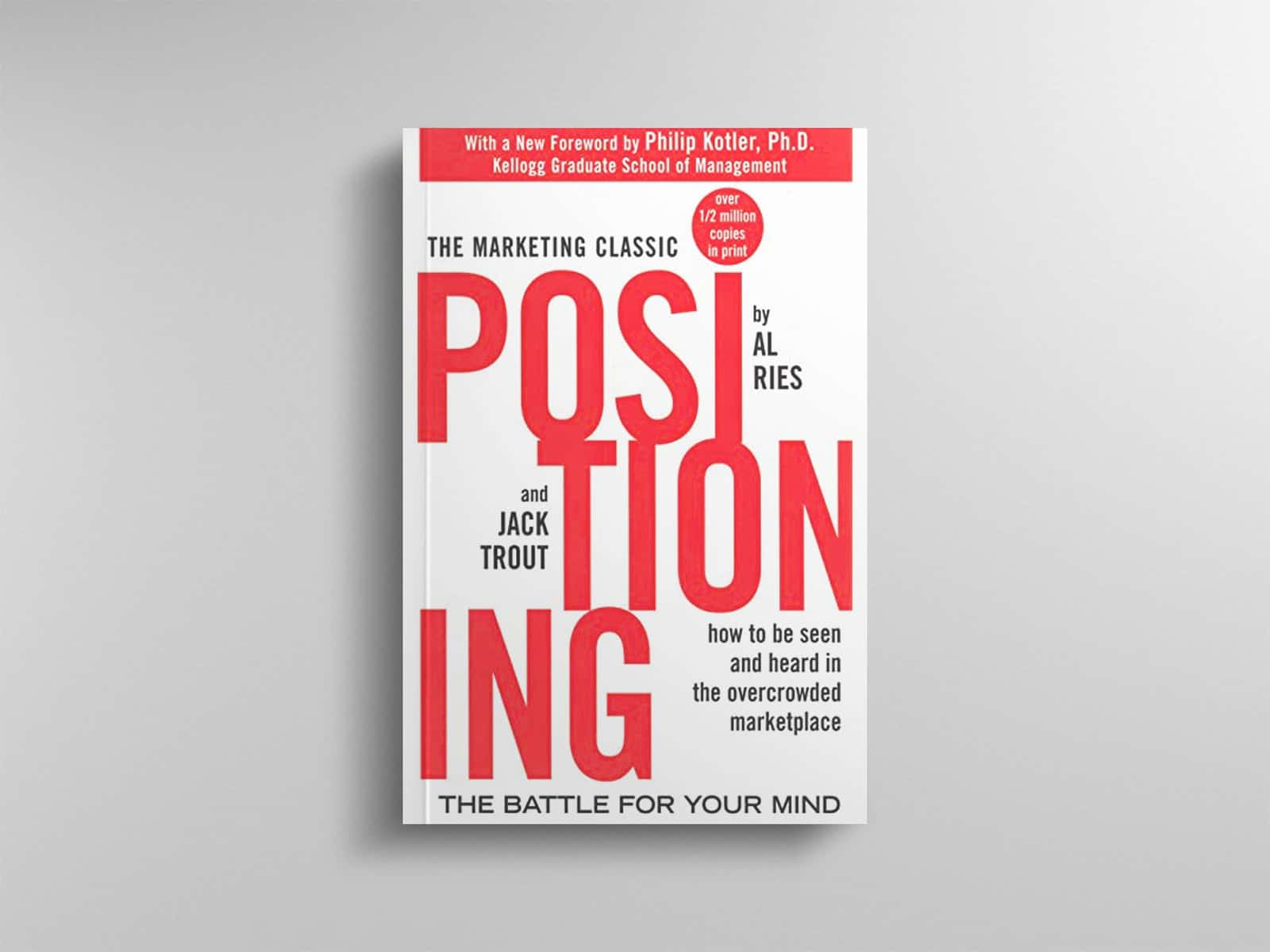
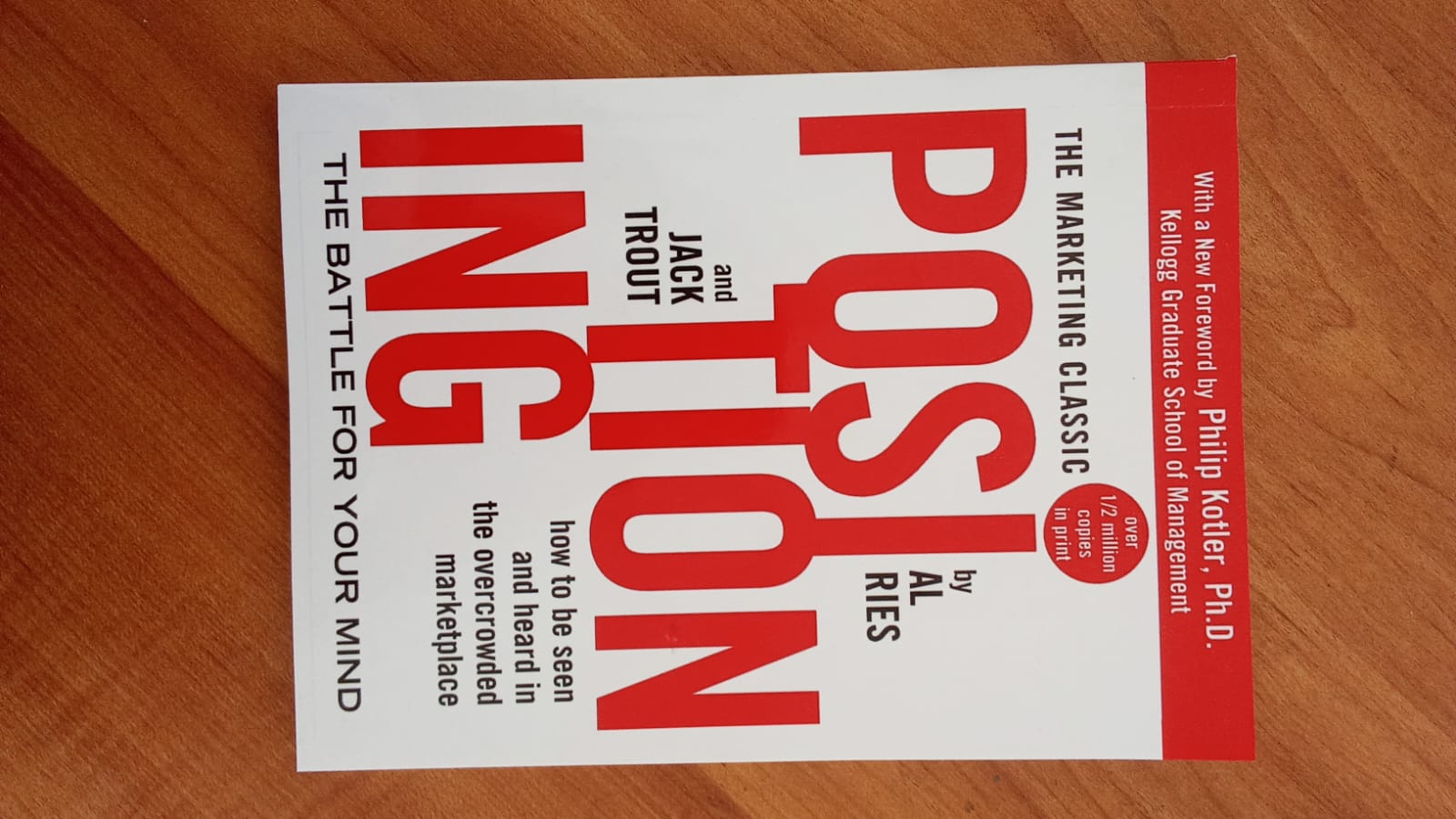





Position by Al Ries and Jack Trout


රු1,650.00
3 X Rs. 550.00 or 8% Cashback with


or 3 X රු550.00 with


or up to 4 X රු412.50 with


Here is the product short description for Positioning: The Battle for Your Mind by Al Ries and Jack Trout
Short Description
Positioning: The Battle for Your Mind is a classic marketing guide that explains how brands succeed by owning a clear and simple place in the customer’s mind. The book teaches how to cut through market noise, communicate effectively, and build strong brand identity through focus and clarity. Ideal for marketers, entrepreneurs, and business owners, it provides practical strategies to stand out in competitive markets and influence customer perception.
4 in stock
Positioning by Al Ries and Jack Trout is one of the most influential marketing books ever written, introducing the idea that successful marketing is not simply about changing a product—it is about creating a clear and memorable position in the customer’s mind.
Businesses often assume that the best product should automatically win.
Better quality.
More features.
Better engineering.
Lower price.
But customers do not compare every product objectively.
They simplify.
They remember categories.
Names.
Leaders.
Differences.
Associations.
That is where positioning becomes important.
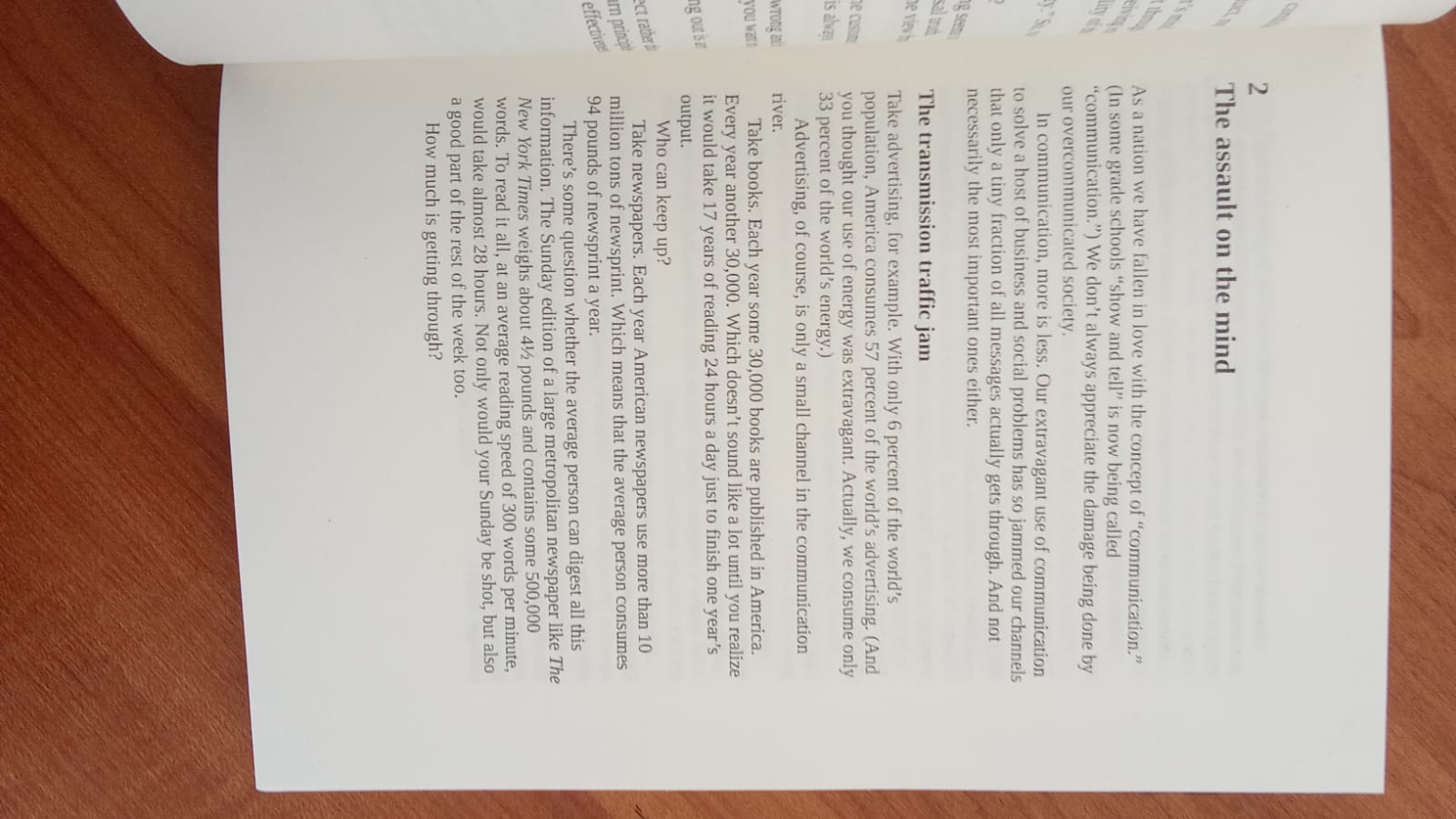
Al Ries and Jack Trout argue that modern customers live in an overcommunicated society. They are exposed to far more messages than they can possibly remember.
Businesses therefore face a difficult problem.
How do you become memorable when hundreds of competitors are also asking for attention?
The answer is not necessarily to communicate more.
It is to communicate something clearer.
A strong brand should occupy a simple, distinctive place in the prospect’s mind.
That position may be based on:
Leadership.
Specialization.
Price.
Quality.
Speed.
A particular audience.
A specific problem.
Or a contrast with an established competitor.
Positioning by Al Ries and Jack Trout explains how leaders defend their mental territory, how smaller brands can find unoccupied positions, why names matter, how line extensions can weaken brands, and why companies sometimes need to reposition competition rather than talk only about themselves.
The examples come from an earlier era of advertising, but the underlying problem may be even more relevant today.
Customers now face:
Google search results.
Instagram posts.
TikTok videos.
YouTube advertisements.
Marketplace listings.
Email campaigns.
Influencers.
Apps.
Thousands of brands.
More information has made attention even harder to earn.
That is why the central question remains powerful:
What does your brand stand for in the customer’s mind?
Positioning by Al Ries and Jack Trout – Book Overview
Positioning by Al Ries and Jack Trout is fundamentally a book about perception.
A company may believe its product is excellent.
That is not enough.
What does the customer believe?
Marketing takes place in the market, but positioning takes place in the mind.
That difference is the foundation of the entire book.
What Is Positioning?
Positioning means deliberately creating a distinctive perception of a:
Brand.
Product.
Service.
Company.
Organization.
Or even yourself.
The goal is to help the audience place you inside a simple mental category.
For example, a customer may think:
The affordable option.
The premium option.
The safest option.
The fastest option.
The specialist.
The original.
The convenient one.
The business that focuses only on one particular audience.
That association becomes the position.
Positioning Happens in the Customer’s Mind
This is one of the most important ideas in Positioning by Al Ries and Jack Trout.
Companies often describe themselves using internal language.
“We are innovative.”
“We are customer-focused.”
“We provide quality.”
“We have excellent service.”
The problem is that almost every competitor can say the same thing.
Those claims do not necessarily create a distinctive mental position.
Positioning asks a different question:
When the customer hears our name, what is the first thing we want them to think?
If the answer is unclear, the brand may lack positioning.
The Overcommunicated Society
Ries and Trout developed their ideas in a world already becoming overloaded with advertising.
Today the problem is much larger.
Consumers constantly receive messages from:
Brands.
News outlets.
Friends.
Influencers.
Apps.
Streaming platforms.
Social media.
Search engines.
Attention has become scarce.
Because customers cannot deeply evaluate every message, they simplify.
That means clarity becomes a competitive advantage.
Simplicity Wins
One of the strongest lessons from Positioning by Al Ries and Jack Trout is that marketing communication often becomes weaker when a company tries to say too much.
Imagine a bookstore advertising itself as:
Affordable.
Premium.
Luxury.
Academic.
Fun.
Family-oriented.
Specialist.
General.
Exclusive.
Budget-friendly.
The customer may remember none of it.
A sharper position is easier to understand.
Own One Idea
Strong brands often become associated with one primary idea.
This does not mean the company literally does only one thing.
It means the market remembers one central reason to choose it.
The simpler the association, the easier it is to retain.
The Mental Ladder
One famous concept in the book is that customers organize brands mentally into categories or “ladders.”
For a particular category, someone may remember only a few brands.
Number one.
Number two.
Perhaps number three.
After that, recall often becomes much weaker.
This explains why category leadership can become extremely powerful.
Being First Matters
Ries and Trout emphasize the advantage of getting into the customer’s mind first.
People often remember the first widely recognized brand associated with a category more easily than later entrants.
This does not mean the first company in history always wins.
The important issue is often being first in the mind of the market.
Category Leadership
Once a brand becomes mentally associated with category leadership, later competitors face a difficult challenge.
Simply saying:
“We are better”
may not be enough.
Customers already have a mental position for the leader.
A challenger may need a different strategy.
Do Not Attack the Leader on the Leader’s Strongest Ground
If the leading competitor already owns a particular idea, copying the same idea may strengthen the leader.
Suppose the market thinks:
Brand A = traditional leader.
If Brand B constantly compares itself using Brand A’s terms, customers may simply remember Brand A more strongly.
A challenger may need another position.
Find the Hole
One of the practical strategies in Positioning by Al Ries and Jack Trout is finding an unoccupied position.
If the leader owns:
Big,
perhaps the opportunity is:
Small.
If competitors focus on:
Everyone,
perhaps your opportunity is:
A specific niche.
If others are:
Complicated,
perhaps your position becomes:
Simple.
The goal is not always to defeat competitors directly.
Sometimes the smarter move is to occupy territory they have ignored.
Niches Matter
This idea is particularly relevant for smaller businesses.
A small company often cannot outspend a giant competitor.
But it may be able to become more relevant to a narrower audience.
For example, instead of being:
A bookstore for everyone,
a business might become strongly known for:
Affordable imported English books.
Rare business books.
Children’s collections.
Manga.
Academic titles.
Collector editions.
A smaller market position can sometimes be easier to own.
Customer Perception Versus Company Reality
Businesses often make decisions based on how they see themselves.
Customers make decisions based on how they see the business.
Those perspectives may differ.
Management might think:
We are the premium option.
Customers might think:
You are expensive.
Management might think:
We offer everything.
Customers might think:
I am not sure what you specialize in.
Positioning therefore requires listening to the market rather than relying only on internal opinions.
Research Before Repositioning
Before changing a brand, businesses should understand the position they already occupy.
Ask customers:
Why did you choose us?
What do you think we are best known for?
Which competitors do you compare us with?
What word would you use to describe us?
The answers may reveal a stronger position than management expected.
Repositioning the Competition
Another important idea in Positioning by Al Ries and Jack Trout is repositioning.
Instead of simply saying:
“Our product is excellent,”
a company may change how customers interpret an established competitor.
The goal is not necessarily to attack unfairly.
It is to introduce a new frame of comparison.
If customers begin using a different criterion to evaluate the category, competitive positions may shift.
The Power of Contrast
People understand differences more easily when there is contrast.
Old versus new.
Complex versus simple.
Mass-market versus specialist.
Traditional versus modern.
Premium versus affordable.
Positioning often becomes clearer when customers can understand what the brand is not.
Brand Names Matter
The authors devote significant attention to naming.
A name is one of the most frequently repeated pieces of brand communication.
It appears on:
Products.
Websites.
Packaging.
Advertisements.
Search results.
Invoices.
Social media.
If the name creates confusion, the business may spend enormous amounts of money explaining something that a better name could have communicated more naturally.
A Name Should Support the Position
A useful name can reinforce what a business wants customers to remember.
This becomes especially important in digital marketing.
Search engines.
Social handles.
Domains.
Marketplace listings.
All make the name part of discoverability.
The No-Name Trap
A name that is too generic or unclear may struggle to create a distinctive identity.
Customers need something they can:
Remember.
Search.
Recommend.
Repeat.
Brand recognition becomes difficult if people cannot easily recall the name.
Line Extension
One of the more controversial arguments in Positioning by Al Ries and Jack Trout concerns line extension.
A successful company often wants to place the same brand name on additional products.
This appears logical.
The brand is already trusted.
Why not use it everywhere?
Ries and Trout warn that excessive expansion can weaken the meaning of the brand.
What Does the Brand Stand For?
Imagine a brand originally strongly associated with one product.
Then the same name begins appearing across many unrelated categories.
Eventually customers may no longer know what the name represents.
A strong position can become diluted.
Modern Brand Architecture
Modern companies frequently use successful line extensions, so this principle should not be interpreted as an absolute law.
Some brands successfully expand because:
The categories are related.
The master brand is strong.
Customers understand the relationship.
The new product fits the existing promise.
The useful lesson is not “never extend.”
It is:
Protect clarity.
Positioning a Leader
Market leaders face a different problem from challengers.
A leader may need to reinforce category leadership instead of constantly introducing completely new identities.
The brand should protect the position that made it strong.
Leaders Should Avoid Confusion
When a successful company repeatedly changes:
Taglines.
Visual identity.
Target audiences.
Brand promises.
it risks weakening accumulated recognition.
Innovation matters.
But unnecessary repositioning can destroy mental availability already built over years.
Positioning a Follower
A smaller competitor should usually avoid pretending to be the leader.
If customers already know which brand leads the market, claiming superiority without a believable difference may fail.
Instead, a follower can search for a valuable position the leader does not own.
This can be particularly powerful for startups.
Positioning for Startups
Startups frequently describe themselves using technology.
“AI-powered.”
“Cloud-based.”
“Blockchain-enabled.”
But customers usually care more about the outcome.
A stronger positioning statement may communicate:
Who it is for.
Which problem it solves.
Why it is different.
Technology supports the position.
It should not automatically become the position.
Positioning for Ecommerce
An online store also needs a position.
Customers can compare alternatives within seconds.
If every store sells similar products, positioning can depend on:
Price.
Delivery.
Selection.
Specialization.
Trust.
Convenience.
Customer experience.
The store needs a reason to remain memorable after the customer closes the browser.
Positioning for Bookstores
For a bookstore, potential positions might involve:
Affordable books.
Hard-to-find books.
Fast delivery.
Curated recommendations.
Academic expertise.
Manga specialization.
Children’s books.
Premium editions.
A bookstore does not necessarily need to own every position.
Trying to own everything can make the message weaker.
Positioning and SEO
Positioning also influences search engine strategy.
If your business clearly specializes in something, your website can build:
Category pages.
Author pages.
Guides.
Product content.
Internal links.
Around that subject.
A clear market position can therefore support clearer SEO architecture.
Positioning and Social Media
Social-media content should reinforce the brand’s position.
If every post communicates a completely different identity, audiences may struggle to understand the account.
Consistency does not mean posting identical content.
It means different content can still reinforce the same underlying brand promise.
Positioning and Advertising
Advertising becomes much easier once positioning is clear.
Without positioning, a company asks:
What should this advertisement say?
With positioning, the answer becomes:
Reinforce the idea we want to own.
Creative execution can change.
The strategic position should remain recognizable.
Positioning Versus Branding
These concepts overlap but are not identical.
Positioning is the place you aim to occupy in the customer’s mind relative to alternatives.
Branding includes the wider system of:
Name.
Identity.
Design.
Voice.
Reputation.
Experience.
A brand can look beautiful while having weak positioning.
Positioning Versus Differentiation
Differentiation asks:
How are we different?
Positioning asks:
Which difference should customers remember?
Not every difference deserves attention.
A company may have fifty features.
Only one or two may create a memorable market position.
Positioning Versus Marketing Strategy
Positioning is one part of broader marketing strategy.
Pricing.
Distribution.
Product.
Promotion.
Customer experience.
All should ideally support the chosen position.
If a brand claims:
Premium quality
but uses poor packaging and inconsistent service, the position becomes difficult to believe.
Positioning Must Be Credible
You cannot simply choose any position you want.
A company cannot claim:
Fastest delivery
while consistently shipping late.
Positioning requires evidence.
The customer experience must support the promise.
Marketing Is Not Only Communication
Advertising can create expectations.
Operations must deliver them.
If marketing promises one thing and customers experience another, reputation eventually overrides the advertisement.
The Battle for the Mind
The subtitle The Battle for Your Mind captures the authors’ main argument.
Businesses are competing not only for:
Sales.
Shelf space.
Search rankings.
Advertising impressions.
They are competing for memory.
If customers cannot remember you, they are unlikely to choose you later.
Mental Availability
Modern marketing language often discusses mental availability—the likelihood that a brand comes to mind in a buying situation.
Although terminology and later research differ, this connects strongly with the positioning problem Ries and Trout identified:
Can the customer quickly place your brand in a meaningful mental category?
Be Easy to Understand
Customers usually do not spend hours decoding marketing messages.
A brand that requires a long explanation may struggle.
Strong positioning can often be expressed simply.
“We help X do Y.”
“We are the specialist in Z.”
“We are the affordable alternative to A.”
Clarity has commercial value.
Positioning Yourself
The book also applies positioning to careers. McGraw Hill’s table of contents includes a chapter specifically on positioning yourself and your career.
Professionals can ask:
What am I particularly good at?
What problem do people come to me to solve?
What skill do I want my name associated with?
This does not mean pretending to be something you are not.
It means communicating genuine strengths clearly.
Career Positioning
“Software developer” is broad.
A more distinctive professional position might become:
Backend engineer specializing in scalable ecommerce systems.
Frontend developer known for accessibility.
Cloud engineer focused on cost optimization.
The narrower description makes expertise easier to remember.
Positioning Requires Sacrifice
One of the hardest parts of positioning is deciding what not to emphasize.
Companies often fear narrowing the message because they worry about losing customers.
But if a brand tries to appeal equally to everyone, it can become less memorable to anyone.
Focus requires sacrifice.
Being Specific Can Make You Stronger
A specialist may initially serve a smaller audience.
But within that audience, the specialist can become the obvious choice.
Once the position is strong, expansion may become easier.
Competition Defines Context
Your position does not exist in isolation.
If every competitor claims:
Premium quality,
that message loses power.
Positioning therefore requires understanding the competitive environment.
Ask:
What does each competitor already own?
Which customer needs remain poorly served?
Which claims have become generic?
Where is there room for contrast?
Marketing Strategy Begins With the Mind
Product teams often begin with:
What can we build?
Positioning begins with:
What can customers understand and remember?
Both questions matter.
A brilliant product without a clear mental position may remain invisible.
The Importance of Consistency
A position grows through repetition.
Customers may need to encounter the same fundamental idea many times before remembering it.
Constantly changing the message can reset that learning.
Consistency therefore helps build memory.
But Positioning Can Change
Consistency does not mean a brand can never evolve.
Markets change.
Competitors change.
Technology changes.
Customer behavior changes.
A position that worked twenty years ago may lose relevance.
Repositioning can be necessary.
The challenge is changing deliberately rather than randomly.
Historical Examples
Readers should know that many examples in Positioning by Al Ries and Jack Trout come from twentieth-century brands and advertising campaigns.
Some companies, media channels and competitive situations have changed dramatically.
That does not automatically make the central concepts useless.
It simply means modern readers should separate:
The strategic principle
from
the historical example.
A Classic, Not a Modern Digital-Marketing Manual
This is important.
The book will not teach you:
Meta Ads Manager.
Google Ads configuration.
TikTok algorithms.
GA4.
Email automation.
Modern SEO tools.
Its value is strategic rather than technical.
Platforms change quickly.
Positioning addresses a more durable question:
Why should a customer remember and choose you?
Original and Later Editions
Positioning: The Battle for Your Mind was originally published in 1981. Google Books lists that original McGraw-Hill edition at 246 pages.
McGraw Hill later published a 20th Anniversary Edition in 2001, with commentary from Ries and Trout reflecting on campaigns and positioning lessons over the preceding decades.
Different editions therefore have different ISBNs and page counts.
For WooCommerce, use the ISBN printed on the exact physical copy you are selling rather than copying one from another edition.
Useful Edition Reference
McGraw Hill lists the 20th Anniversary Edition with:
Authors: Al Ries and Jack Trout
Publisher: McGraw Hill
Publication: 2001
ISBN-13: 9780071359160
Edition: 20th Anniversary / 3rd edition in McGraw Hill’s current listing.
Google Books also records a 2001 McGraw-Hill edition with ISBN 9780071373586, demonstrating why checking your specific physical edition is important.
Is Positioning Still Relevant?
Yes, particularly at the strategic level.
Modern audiences face even more communication than the readers of the original edition.
Search engines.
Social media.
Streaming.
Mobile notifications.
Influencer marketing.
Marketplace advertising.
AI-generated content.
The challenge of becoming mentally distinctive has arguably become harder, not easier.
Some tactics and examples are dated.
The core question remains highly relevant.
Is Positioning a Branding Book?
Yes, but it is broader than logo or visual-branding advice.
It is primarily about:
Market perception.
Competitive strategy.
Communication.
Brand meaning.
Customer memory.
Is It Good for Beginners?
Yes.
The concepts are explained through recognizable examples rather than complex mathematical models.
Business students and new marketers can learn important strategic vocabulary from the book.
Experienced marketers can use it as a framework for reviewing whether their brand message has become too complicated.
Is It Useful for Entrepreneurs?
Yes.
Entrepreneurs often focus heavily on product development and only later ask how customers should understand the product.
Reading Positioning by Al Ries and Jack Trout can help founders think earlier about:
Category.
Target customer.
Competition.
Differentiation.
Naming.
Messaging.
Is It Useful for Sales Teams?
Yes.
Sales becomes easier when the product already has a clear position.
Instead of explaining twenty unrelated benefits, the salesperson can begin from a simple strategic idea.
The detailed benefits then support that position.
Important Themes
Positioning by Al Ries and Jack Trout explores brand positioning, customer perception, competition, market leadership, naming, category creation, communication, differentiation, repositioning, advertising, line extension, focus, specialization, brand memory, marketing strategy, customer psychology, career positioning and competitive advantage.
7 Powerful Lessons From Positioning by Al Ries and Jack Trout
- Marketing happens in the customer’s mind. Your internal opinion of the product matters less than the position customers actually associate with your brand.
- Clarity beats complexity. In an overloaded information environment, a simple, memorable position is often stronger than a long list of benefits.
- Being first in the mind creates enormous advantage. Category leaders can become mentally linked with the category itself, making direct imitation difficult for competitors.
- Smaller brands should find an open position instead of copying the leader. A focused niche can be more valuable than trying to appear identical to the biggest company.
- Names help shape perception. A clear, memorable name can support positioning, while a confusing one forces marketing to work harder.
- Expansion can weaken meaning if the brand stretches too far. Line extensions should be evaluated carefully so that customers still understand what the brand represents.
- Positioning requires focus and sacrifice. A brand cannot realistically own every benefit in the customer’s mind. Strong strategy means choosing what matters most and reinforcing it consistently.
Why Read Positioning by Al Ries and Jack Trout?
Positioning by Al Ries and Jack Trout is an excellent choice for entrepreneurs, marketers, business owners, advertising professionals, brand managers, sales teams, business students and anyone responsible for communicating why a product or organization deserves attention.
The book is especially valuable if your business struggles with questions such as:
Why do customers choose competitors even when our product is better?
What should our brand be known for?
How can a small company compete against an established leader?
Should we target everyone or specialize?
Does our name help or hurt us?
Are we communicating too many benefits?
What position does our brand already occupy?
These are strategy questions rather than platform questions.
That is why a marketing book from the early positioning era can remain useful even when advertising technology changes.
Who Should Read This Book?
Positioning by Al Ries and Jack Trout may especially appeal to business owners, startup founders, marketing students, advertising professionals, ecommerce managers, sales professionals, brand strategists, content marketers, product managers and professionals developing their personal brand.
It is particularly useful before launching:
A new brand.
A new product.
A marketing campaign.
A website redesign.
A rebranding project.
Because messaging becomes much easier once you know the mental position you want to reinforce.
Positioning by Al Ries and Jack Trout – Win a Place in the Customer’s Mind
Positioning by Al Ries and Jack Trout begins with a problem that has only grown more difficult.
Too much information.
Too many products.
Too many advertisements.
Too many competitors.
Customers cannot remember everything.
So they simplify.
This means the marketing battle is not won merely by producing another advertisement.
It is won when the customer can quickly answer:
What does this brand mean to me?
That is positioning.
Maybe your brand becomes:
The affordable choice.
The specialist.
The premium choice.
The simple choice.
The original.
The fastest.
The brand for a specific type of customer.
Once that association becomes strong, marketing becomes easier because each message reinforces something the customer already understands.
Without that clarity, advertising can become expensive noise.
A company may spend more and more simply to explain what it is.
That is why positioning comes before promotion.
You first decide the place you want to occupy.
Then your:
Product.
Price.
Name.
Website.
Advertising.
Packaging.
Content.
Customer experience.
should support that place.
The historical campaigns in the book belong to another era.
The strategic problem does not.
If anything, the internet has made positioning more important.
Customers can compare ten businesses in seconds.
AI can generate thousands of marketing messages.
Social platforms overflow with content.
The brands that survive this competition for attention are often the ones that are easiest to understand and remember.
For anyone responsible for building a business, product, brand or professional reputation, Positioning by Al Ries and Jack Trout remains a foundational guide to one of marketing’s most important questions:
What do you want to own in the mind of the customer?
Learn more about Positioning: The Battle for Your Mind by Al Ries and Jack Trout on Google Books.
Explore more business and marketing books at Bargain Books.
Be the first to review “Position by Al Ries and Jack Trout”
Related products

Non-Fiction & Knowledge
රු2,250.00
3 X Rs. 750.00 or 8% Cashback with
or 3 X රු750.00 with
or up to 4 X රු562.50 with
-39%

Out of stock
Self-Help & Psychology
Original price was: රු2,450.00.රු1,500.00Current price is: රු1,500.00.
3 X Rs. 500.00 or 8% Cashback with
or 3 X රු500.00 with
or up to 4 X රු375.00 with

Non-Fiction & Knowledge
රු2,450.00
3 X Rs. 816.67 or 8% Cashback with
or 3 X රු816.67 with
or up to 4 X රු612.50 with
-21%

Non-Fiction & Knowledge
7 Secrets to Investing Like Warren Buffett by Mary Buffett & Sean Seah
Original price was: රු1,900.00.රු1,500.00Current price is: රු1,500.00.
3 X Rs. 500.00 or 8% Cashback with
or 3 X රු500.00 with
or up to 4 X රු375.00 with
-26%

Non-Fiction & Knowledge
The 7 Habits of Highly Effective People by Stephen R. Covey – Blue Cover
Original price was: රු2,300.00.රු1,700.00Current price is: රු1,700.00.
3 X Rs. 566.67 or 8% Cashback with
or 3 X රු566.67 with
or up to 4 X රු425.00 with

Out of stock
Autobiography
රු2,750.00
3 X Rs. 916.67 or 8% Cashback with
or 3 X රු916.67 with
or up to 4 X රු687.50 with

Non-Fiction & Knowledge
රු1,550.00
3 X Rs. 516.67 or 8% Cashback with
or 3 X රු516.67 with
or up to 4 X රු387.50 with

Out of stock
Self-Help & Psychology
රු1,500.00
3 X Rs. 500.00 or 8% Cashback with
or 3 X රු500.00 with
or up to 4 X රු375.00 with
Reviews
There are no reviews yet.