
No products in the cart.
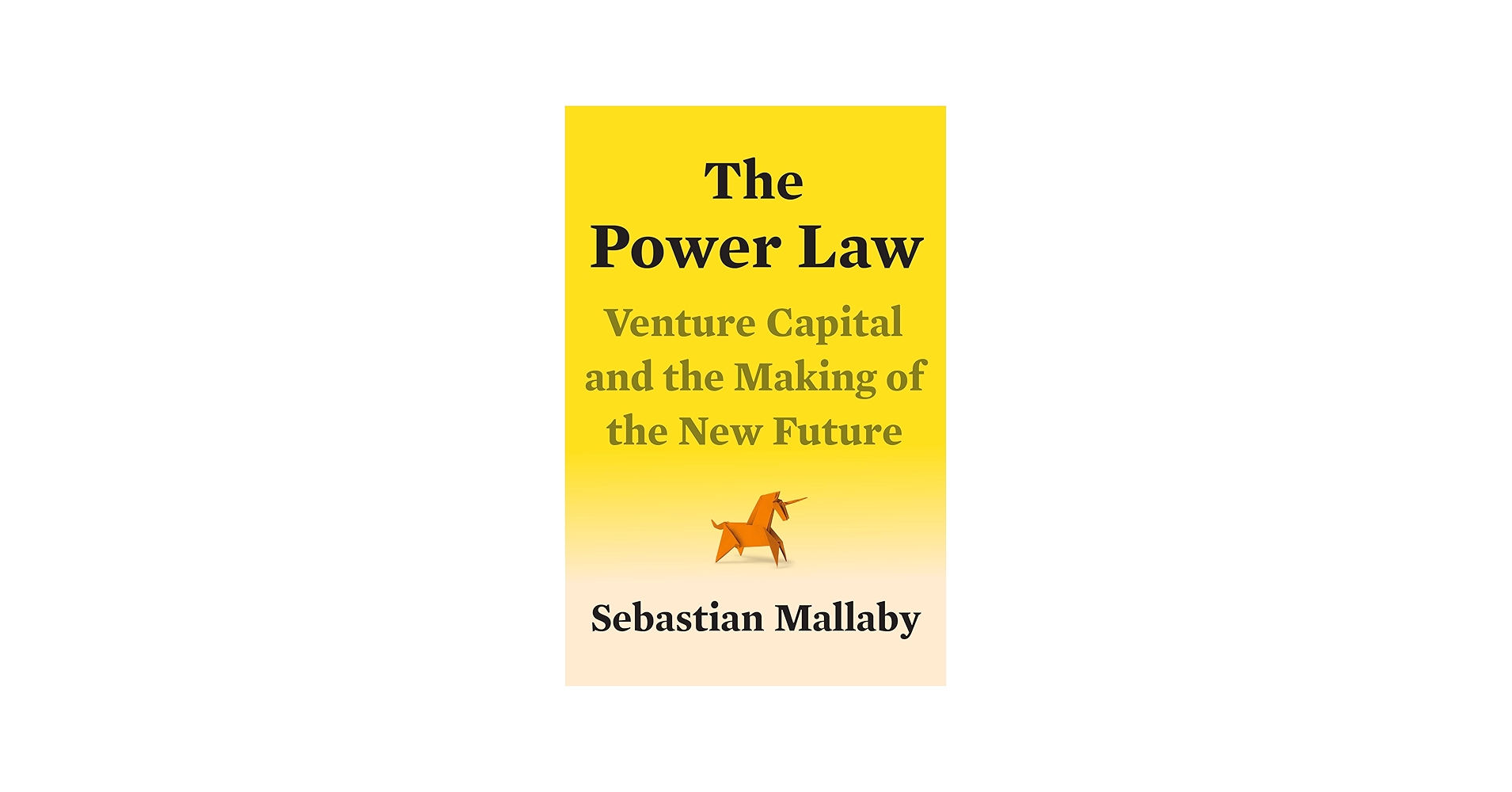
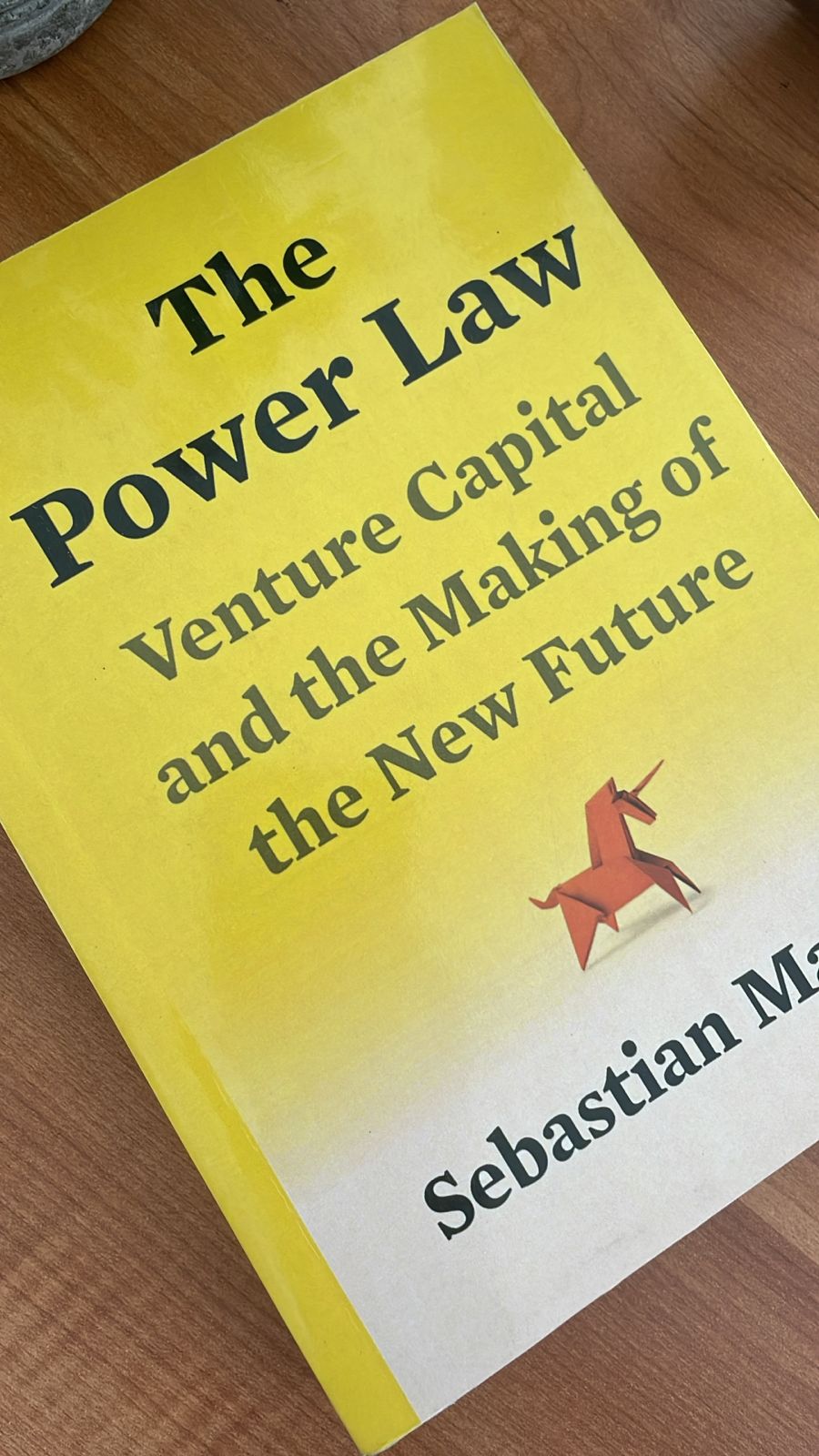







Power Of Low by Sebastian Mallaby


රු2,750.00
3 X Rs. 916.67 or 8% Cashback with


or 3 X රු916.67 with


or up to 4 X රු687.50 with


Power Of Low by Sebastian Mallaby
Venture Capital and the Art of Disruption: The Power Law
The Power Law by Sebastian Mallaby is a definitive history of the venture capital (VC) industry, exploring how a small group of financiers in Silicon Valley and beyond have shaped the modern global economy. Rather than seeing innovation as a predictable science, Mallaby argues that the future is “discovered” through high-risk bets where a single massive success ( a “home run”) outweighs hundreds of failures. This mathematical phenomenon—where the majority of returns come from a tiny fraction of investments—is the “Power Law” itself.
6 in stock
The Power Law by Sebastian Mallaby is a fascinating inside history of venture capital, Silicon Valley and the investors whose high-risk bets helped create some of the most influential technology companies in the world.
Why would an investor put money into a startup when there is a strong chance the business will fail?
Why would a venture capitalist accept ten failed investments if one extraordinary company could return the entire fund many times over?
And why have relatively small groups of investors had such enormous influence over the technologies that shape modern life?
The answer lies in the power law.
Traditional investing often emphasizes diversification, predictability and avoiding catastrophic losses.
Venture capital works differently.
Most startups do not become enormous successes.
Some fail completely.
Others survive but produce modest returns.
But occasionally one company becomes so successful that its value overwhelms the losses from many unsuccessful investments.
That extreme distribution of outcomes is the central idea behind The Power Law by Sebastian Mallaby.
Through extensive interviews and historical research, Mallaby examines firms such as Sequoia Capital, Kleiner Perkins, Accel, Benchmark and Andreessen Horowitz, while also exploring the development of venture capital outside Silicon Valley, including China. He uses companies such as Apple, Google, Facebook, Uber, WeWork, Alibaba and SpaceX to show how investors, founders, networks and timing helped shape the modern technology economy.
The Power Law by Sebastian Mallaby – Book Overview
The Power Law by Sebastian Mallaby is not simply a book about becoming a venture capitalist.
It is a history of how venture capital developed into one of the most influential financial systems behind modern technology.
Mallaby asks readers to look beyond the famous founders.
When people think about technology history, they often remember:
Steve Jobs.
Mark Zuckerberg.
Elon Musk.
Jeff Bezos.
But behind many startup stories were investors who provided money, advice, introductions, recruiting help and credibility at moments when the companies were still extremely uncertain.
Mallaby shifts much of the attention toward these investors.
What Is the Power Law?
A power-law distribution is highly uneven.
In venture capital, this means a tiny number of investments can produce an enormous percentage of total returns.
Imagine a VC makes ten startup investments.
Several fail completely.
A few produce small returns.
One becomes a moderately successful company.
Then one becomes a global technology giant.
That final investment might produce more value than all the others combined.
This changes how venture capitalists think.
The goal is not necessarily:
Avoid every failure.
The goal may instead be:
Do not miss the extraordinary winner.
Penguin describes this extreme ratio between failure and a handful of enormous successes as the power law driving venture capital and much of the technology industry.
Failure Works Differently in Venture Capital
In many industries, frequent failure indicates a broken strategy.
In venture capital, failure can be expected.
A startup is attempting something uncertain.
The market may not exist yet.
Technology may not work.
Customers may not care.
Competitors may move faster.
The founder may make mistakes.
But if an investor avoids every risky company, they may also avoid the companies capable of producing extraordinary returns.
That creates a strange logic.
Sometimes the safest-looking investment is not the most attractive VC investment.
Venture Capital Is About Outliers
One of the biggest lessons from The Power Law by Sebastian Mallaby is that venture investors are hunting for outliers.
They are not primarily searching for businesses that become 20 percent better.
They are searching for companies that could become:
Ten times bigger.
One hundred times bigger.
Or create an entirely new market.
That is why venture capital became closely associated with disruptive technology.
The Future Cannot Always Be Predicted
Mallaby highlights a recurring idea from venture investors:
The future cannot always be predicted from existing expertise.
It has to be discovered.
Jeff Bezos did not come from traditional bookselling.
Elon Musk did not begin as an automotive-industry veteran.
Many important technology companies were built by outsiders challenging assumptions established industries considered obvious.
Founders and Outsiders
Established experts understand existing industries extremely well.
That is valuable.
But expertise can also create assumptions.
“This is how customers behave.”
“This technology cannot work.”
“This market is too small.”
“This is how the industry has always operated.”
Founders sometimes create breakthroughs because they do not fully accept those assumptions.
Venture Capital and Apple
The early history of Apple demonstrates the uncertainty surrounding revolutionary companies.
Today, Apple appears almost inevitable.
Looking backward creates that illusion.
At the beginning, there was no guarantee that a small computer company would become one of the world’s most valuable businesses.
This is one of the book’s recurring themes:
Successful companies look much more obvious after they succeed.
Hindsight Bias
Once a startup becomes enormous, people tell stories like:
“Anyone could see it was going to win.”
Usually that is false.
At the beginning, investors are choosing among many companies.
Several may look promising.
Information is incomplete.
Markets are uncertain.
The famous company may have looked almost as strange as the failures.
Google became one of the defining companies of the internet era.
But search was already a crowded field.
Existing search engines existed.
The idea that another search company would dominate the internet was not guaranteed.
The venture-capital system gave investors an incentive to back companies whose possible upside appeared enormous even when the outcome remained uncertain.
Facebook provides another illustration of power-law thinking.
Social networking companies already existed.
Yet a company beginning within a university environment eventually became a global platform.
Venture investors needed to evaluate not simply what Facebook was at the moment of investment, but what it could become.
Network Effects
Many technology businesses become dramatically more valuable as more people use them.
A social network with ten users has limited value.
A social network with hundreds of millions may become extremely powerful.
This is known as a network effect.
Venture investors often search for companies where growth makes the product itself stronger.
Silicon Valley as a Network
One of Mallaby’s larger arguments is that Silicon Valley succeeded not merely because of individual geniuses.
It developed a network.
Founders knew investors.
Investors knew engineers.
Engineers moved between startups.
Successful founders became investors.
Employees left established companies to create new ones.
Knowledge and capital circulated through the ecosystem.
The Importance of Connections
This means startup success is not only about having an idea.
A founder may also need:
Capital.
Technical talent.
Customers.
Mentors.
Recruiters.
Partners.
The venture-capital network can help connect these pieces.
Venture Capital Versus Bank Lending
A bank normally wants confidence that money can be repaid.
A startup may have:
No profit.
No collateral.
No established market.
No predictable cash flow.
That makes conventional lending difficult.
VC solves a different problem.
Instead of lending money and expecting repayment with interest, investors purchase ownership in the company.
If the company fails, they may lose the investment.
If it becomes enormous, their equity can become extremely valuable.
Equity Changes Incentives
This creates aligned upside.
Founder wins if the company grows.
Investor wins if the company grows.
Employees holding equity may also benefit.
But equity can also create conflicts over:
Control.
Valuation.
Board seats.
Growth strategy.
Exit timing.
The relationship between founders and investors is therefore both cooperative and potentially adversarial.
Founder Control
An important tension in The Power Law by Sebastian Mallaby concerns how much control founders should retain.
Some venture firms became increasingly willing to give successful founders extraordinary authority.
This could allow bold long-term decisions.
But it could also weaken accountability.
Uber
Uber represents both the power and danger of aggressive venture-backed growth.
The company demonstrated how quickly technology combined with enormous financing could disrupt an established industry.
But the story also raised questions about:
Leadership.
Culture.
Governance.
Regulation.
How much behavior investors should tolerate from a successful founder.
WeWork
WeWork became another example of what happens when enthusiasm, large amounts of venture money and charismatic leadership combine without enough discipline.
Rapid growth can create the impression that a business is stronger than it really is.
A high valuation is not the same thing as a sustainable business.
Growth Is Not the Same as Profit
This distinction is essential for entrepreneurs.
Revenue growth can look impressive.
User growth can look impressive.
A huge valuation can look impressive.
But ultimately a business must create sustainable economic value.
Venture funding can allow companies to delay that moment for years.
Sometimes that strategy creates Amazon-like long-term success.
Sometimes it reveals that the underlying economics never worked.
Unicorns
A private startup valued above one billion dollars is commonly described as a unicorn.
The search for unicorns reflects power-law economics.
One billion-dollar success can compensate investors for many smaller failures.
But the obsession with unicorn status can also encourage unhealthy behavior.
Valuation can become a status symbol rather than a useful estimate of business value.
Valuation Is Not Cash
A founder might own shares in a company valued at billions.
That does not necessarily mean billions of dollars are available in a bank account.
Private-company valuations are based on investment transactions and expectations about future value.
They can increase dramatically.
They can also collapse dramatically.
Risk and Reward
The Power Law helps explain why venture investors appear comfortable with risks that ordinary investors may consider unacceptable.
The portfolio model changes the calculation.
Losing 100 percent on one investment can be tolerable.
Missing the next Google may be far more damaging.
Why Venture Capital Is Different From Normal Personal Investing
This distinction is important.
The power-law strategy described in the book should not automatically be copied by ordinary investors managing retirement savings or household wealth.
VC firms operate with:
Diversified startup portfolios.
Professional research.
Long investment horizons.
Access to private companies.
Specialized expertise.
The book explains the venture-capital model; it does not mean everyone should make extremely concentrated speculative investments.
Sequoia Capital
Sequoia became one of Silicon Valley’s most famous venture firms.
Its history illustrates how reputation compounds.
A successful investment helps attract better founders.
Better founders create more opportunities.
More successful companies strengthen the firm’s reputation.
The result becomes a network advantage.
Kleiner Perkins
Kleiner Perkins played a major role in earlier waves of Silicon Valley investment.
Firms like it helped establish many of the traditions that later became standard VC practice.
Mallaby uses these firms to show how the industry evolved rather than appearing fully formed.
Accel and Facebook
Accel’s investment in Facebook became one of the most famous venture bets.
The lesson is not simply:
Invest in social media.
The deeper lesson is that investors sometimes need to recognize when a company showing unusual momentum may have far larger potential than its current size suggests.
Benchmark
Benchmark became known for a different organizational style from some traditional venture firms.
Mallaby examines how differences in:
Firm structure.
Decision-making.
Partnership culture.
can affect investment behavior.
Andreessen Horowitz
Andreessen Horowitz helped popularize a more service-heavy VC model.
Instead of only providing money and occasional board guidance, venture firms increasingly built teams to help portfolio companies with:
Recruiting.
Marketing.
Executive relationships.
Business development.
The competition between VC firms therefore became partly a competition to provide founders with better support.
Venture Capital Became Competitive
A common misconception is that startups must beg investors for money.
For weak companies, that may be true.
For exceptionally attractive companies, the situation can reverse.
Multiple venture firms may compete intensely for the opportunity to invest.
The best founders can choose their investors.
Reputation Matters
A founder may ask:
Which investor will help recruit executives?
Who has useful industry connections?
Who behaves well when the company struggles?
Who has helped other founders?
Capital itself is increasingly available from many sources.
The quality of the investor becomes part of the product.
Picking Founders
Because early-stage startups have limited financial history, VCs often spend enormous effort evaluating founders.
They may look for:
Ambition.
Intelligence.
Persistence.
Adaptability.
Technical insight.
Market understanding.
But this creates a problem.
Judging people is highly subjective.
Bias in Venture Capital
Mallaby examines one of the industry’s major weaknesses: venture capital historically underrepresented women and minority founders and investors.
If investment decisions depend heavily on networks and intuitive judgments about people, existing social networks can reproduce themselves.
Investors may unconsciously prefer founders who resemble previous successful founders.
Pattern Recognition Can Become Pattern Matching
VCs often praise pattern recognition.
They have seen hundreds of companies.
They recognize characteristics associated with success.
But there is a danger.
Pattern recognition can become:
“This founder reminds me of the last successful founder.”
That can exclude unconventional entrepreneurs who do not fit the established image.
Networks Can Be Powerful and Exclusive
The same network that makes Silicon Valley efficient can also make it difficult for outsiders to enter.
If the best deals circulate through personal introductions, people outside those networks receive fewer opportunities.
This creates a tension between:
Efficiency
and
access.
China and Venture Capital
The Power Law by Sebastian Mallaby extends beyond the United States.
Mallaby examines how venture capital spread internationally, including China’s rapidly developing technology ecosystem.
Silicon Valley’s model could be exported.
But it changed as it entered different:
Political systems.
Markets.
Cultures.
Regulatory environments.
Alibaba and Global Technology
Alibaba demonstrates that transformative technology companies do not belong exclusively to the United States.
As capital, knowledge and entrepreneurship spread, competition for technological leadership becomes global.
SpaceX and Extreme Ambition
SpaceX represents exactly the type of company traditional financial analysis can struggle to evaluate.
Space exploration requires:
Huge investment.
Technical breakthroughs.
Long timelines.
High probability of failure.
Yet success can create enormous strategic and economic value.
This is precisely the environment where power-law thinking becomes relevant.
Big Markets Matter
If the potential market is small, even complete success may not generate the enormous return a VC fund requires.
Therefore venture investors often ask:
If this works, how large can it become?
This explains the obsession with:
Market size.
Scalability.
Global growth.
Scalable Businesses
Software became particularly attractive to venture investors because successful software can often be distributed to millions of users at relatively low incremental cost.
A restaurant must open another location to serve significantly more customers.
A software platform can sometimes add huge numbers of users without equivalent physical expansion.
That creates the possibility of extraordinary growth.
Venture Capital and Innovation
Mallaby’s overall assessment is nuanced.
VC has funded extraordinary innovations.
It helped transform technologies into companies capable of operating at global scale.
But the system also produces:
Failures.
Governance problems.
Inequality.
Bias.
Overconfidence.
The point is not that venture capital is purely good or purely bad.
It is that understanding it matters because it has become extraordinarily influential.
Money Alone Does Not Create Innovation
A billion dollars cannot force a bad idea to become good.
Capital provides:
Time.
Talent.
Infrastructure.
Growth.
But the company still needs to create genuine value for users.
Funding is an accelerator.
If the underlying direction is wrong, acceleration can simply make the failure larger.
Founders Need More Than Funding
For entrepreneurs, The Power Law by Sebastian Mallaby demonstrates that raising venture capital should not automatically be considered the goal.
The real goal is usually building a valuable company.
Funding may help.
But raising money creates expectations.
Investors will expect growth.
Equity will be diluted.
Governance may change.
VC is a tool, not a definition of entrepreneurial success.
Bootstrapping Versus Venture Capital
Many businesses should never raise venture capital.
A profitable local business can be an excellent business.
A specialized software company can remain small and highly profitable.
VC makes the most sense when a business has the potential and intention to scale extremely quickly.
Understanding this distinction can prevent founders from chasing funding simply because startup culture treats fundraising as success.
The Power Law and Entrepreneurship
Entrepreneurs can learn several useful ideas from the book.
Think bigger about market potential.
Understand asymmetric outcomes.
Build strong networks.
Choose investors carefully.
Accept that experiments can fail.
Protect governance as the company grows.
But founders should not copy every behavior celebrated in Silicon Valley.
Context matters.
Is The Power Law a Startup Guide?
Not exactly.
It is closer to:
Business history.
Financial history.
Technology history.
Venture-capital analysis.
Readers looking for a step-by-step guide to raising their first seed round may need a more tactical book.
The Power Law by Sebastian Mallaby explains why the venture-capital system developed and how it operates, rather than functioning mainly as a startup workbook.
Is It Good for Entrepreneurs?
Yes.
Founders can gain valuable insight into how investors think.
Understanding the investor’s incentives helps explain:
Why VCs want large markets.
Why extreme growth matters.
Why some failures are acceptable.
Why ownership matters.
Why investors compete intensely for certain startups.
Is It Good for Investors?
Yes, particularly readers interested in:
Venture capital.
Private markets.
Technology investing.
Startup finance.
However, it is historical and analytical rather than a personal-investment manual.
Is It Good for Business Students?
Yes.
The book provides useful case studies involving:
Strategy.
Finance.
Leadership.
Corporate governance.
Innovation.
Entrepreneurship.
Technology.
It helps connect financial theory with real-world company histories.
Is It Difficult to Read?
The subject involves finance, but Mallaby writes primarily through stories about companies, founders and investors.
Readers do not need advanced mathematical knowledge.
The “power law” concept can be understood intuitively:
A very small number of winners create most of the value.
Sebastian Mallaby
Sebastian Mallaby is a financial historian and author whose previous books include More Money Than God and The Man Who Knew. He previously worked with the Financial Times and is a senior fellow at the Council on Foreign Relations. Penguin describes The Power Law as a character-driven history based on unusually deep access to major venture capitalists.
Official Paperback Edition Details
Penguin lists the UK paperback edition as The Power Law: Venture Capital and the Art of Disruption, published March 23, 2023, ISBN 9780141988948, with 496 pages.
The U.S. Penguin Press hardcover uses the subtitle Venture Capital and the Making of the New Future, ISBN 9780525559993, also at 496 pages.
So for WooCommerce, check the barcode on your actual physical copy before entering the ISBN because UK and U.S. editions use different subtitles and ISBNs.
7 Powerful Lessons From The Power Law by Sebastian Mallaby
- A few extraordinary winners can outweigh many failures. Venture capital works because the return from one exceptional company may exceed the losses created by numerous unsuccessful investments.
- Avoiding every failure can mean missing transformative opportunities. Investors seeking revolutionary companies must tolerate uncertainty because genuine breakthroughs often look risky at the beginning.
- Networks create competitive advantages. Silicon Valley’s strength comes partly from the movement of talent, information, capital and introductions between founders, engineers and investors.
- The best investor is not always the one offering the most money. Founders should consider reputation, expertise, connections, governance style and long-term support when choosing capital partners.
- Growth without governance can become dangerous. Cases such as Uber and WeWork demonstrate that extraordinary funding and founder power require equally serious accountability.
- Pattern recognition can create both insight and bias. Experience helps investors identify promising founders, but relying too heavily on familiar patterns can exclude talented people who do not resemble previous winners.
- Venture capital is a tool for a particular kind of company. Not every successful business needs VC. The model is best suited to companies capable of producing extremely large, scalable outcomes.
Why Read The Power Law by Sebastian Mallaby?
The Power Law by Sebastian Mallaby is an excellent choice for entrepreneurs, investors, business students, startup founders, finance professionals, technology professionals and readers interested in Silicon Valley.
It explains why venture capital behaves so differently from conventional finance.
It also helps readers understand why modern technology history contains so many stories of companies that appeared:
Impossible.
Overvalued.
Strange.
Unprofitable.
Then suddenly became enormously important.
At the same time, Mallaby does not ignore the problems created by the system.
Huge bets can produce extraordinary innovation.
They can also create:
Founder hubris.
Weak governance.
Bias.
Financial excess.
The power law can reward boldness.
It does not guarantee wisdom.
Who Should Read This Book?
The Power Law by Sebastian Mallaby is particularly suitable for startup founders, entrepreneurs, MBA and business students, venture-capital professionals, angel investors, technology enthusiasts, finance readers and anyone who wants to understand why Silicon Valley developed such an unusual approach to funding innovation.
It is also valuable for readers who follow companies such as Apple, Google, Facebook, Uber, WeWork, SpaceX and Alibaba and want to understand the investors and financial system behind their growth.
The Power Law by Sebastian Mallaby – Why One Winner Can Change Everything
The Power Law by Sebastian Mallaby explains a world in which failure is common but one extraordinary success can reshape an entire portfolio.
That sounds strange at first.
Most of us are taught to avoid failure.
Get the answer correct.
Protect the money.
Choose the safe option.
Venture capital reverses part of that logic.
If an investment can lose only the money invested but potentially return fifty or one hundred times that amount, the outcomes are asymmetric.
The downside is limited.
The upside can be enormous.
That changes decision-making.
VCs therefore search for companies capable of becoming much larger than ordinary businesses.
Most will not.
Some will fail spectacularly.
But one exceptional company can change everything.
This helps explain why Silicon Valley developed its distinctive culture of:
Experimentation.
Risk.
Ambition.
Failure.
Reinvention.
And massive scale.
Yet Mallaby also demonstrates the danger of taking the power-law mindset too far.
When investors become convinced that a founder might create the next world-changing company, they may tolerate behavior they would reject elsewhere.
When enormous amounts of money chase growth, discipline can disappear.
When investment decisions depend heavily on personal networks, talented outsiders may never receive access.
The system therefore contains both extraordinary strengths and serious weaknesses.
That balance is what makes The Power Law by Sebastian Mallaby valuable.
It is not simply a celebration of billionaires.
It is not simply an attack on Silicon Valley.
It is an investigation into the financial machine that helped create the modern technology economy.
For anyone interested in startups, venture capital, entrepreneurship, innovation, investing or understanding why a handful of companies become enormously more valuable than thousands of competitors, The Power Law by Sebastian Mallaby provides an engaging and insightful history of the people making some of the biggest bets in business.
Learn more about The Power Law by Sebastian Mallaby on the official Penguin Random House website.
Explore more business, investing, and entrepreneurship books at Bargain Books.
Be the first to review “Power Of Low by Sebastian Mallaby”
Related products

Non-Fiction & Knowledge
රු1,950.00
3 X Rs. 650.00 or 8% Cashback with
or 3 X රු650.00 with
or up to 4 X රු487.50 with
-24%

Out of stock
Non-Fiction & Knowledge
Original price was: රු2,100.00.රු1,600.00Current price is: රු1,600.00.
3 X Rs. 533.33 or 8% Cashback with
or 3 X රු533.33 with
or up to 4 X රු400.00 with
-23%

Non-Fiction & Knowledge
Original price was: රු2,200.00.රු1,700.00Current price is: රු1,700.00.
3 X Rs. 566.67 or 8% Cashback with
or 3 X රු566.67 with
or up to 4 X රු425.00 with

Out of stock
Non-Fiction & Knowledge
රු1,500.00
3 X Rs. 500.00 or 8% Cashback with
or 3 X රු500.00 with
or up to 4 X රු375.00 with
-24%

Non-Fiction & Knowledge
Original price was: රු2,300.00.රු1,750.00Current price is: රු1,750.00.
3 X Rs. 583.33 or 8% Cashback with
or 3 X රු583.33 with
or up to 4 X රු437.50 with
-21%
Non-Fiction & Knowledge
7 Secrets to Investing Like Warren Buffett by Mary Buffett & Sean Seah
Original price was: රු1,900.00.රු1,500.00Current price is: රු1,500.00.
3 X Rs. 500.00 or 8% Cashback with
or 3 X රු500.00 with
or up to 4 X රු375.00 with

Out of stock
Autobiography
රු2,750.00
3 X Rs. 916.67 or 8% Cashback with
or 3 X රු916.67 with
or up to 4 X රු687.50 with
-17%
Out of stock
Non-Fiction & Knowledge
Original price was: රු2,900.00.රු2,400.00Current price is: රු2,400.00.
3 X Rs. 800.00 or 8% Cashback with
or 3 X රු800.00 with
or up to 4 X රු600.00 with
Reviews
There are no reviews yet.