
No products in the cart.
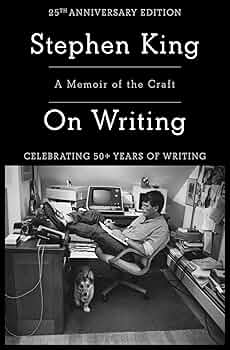
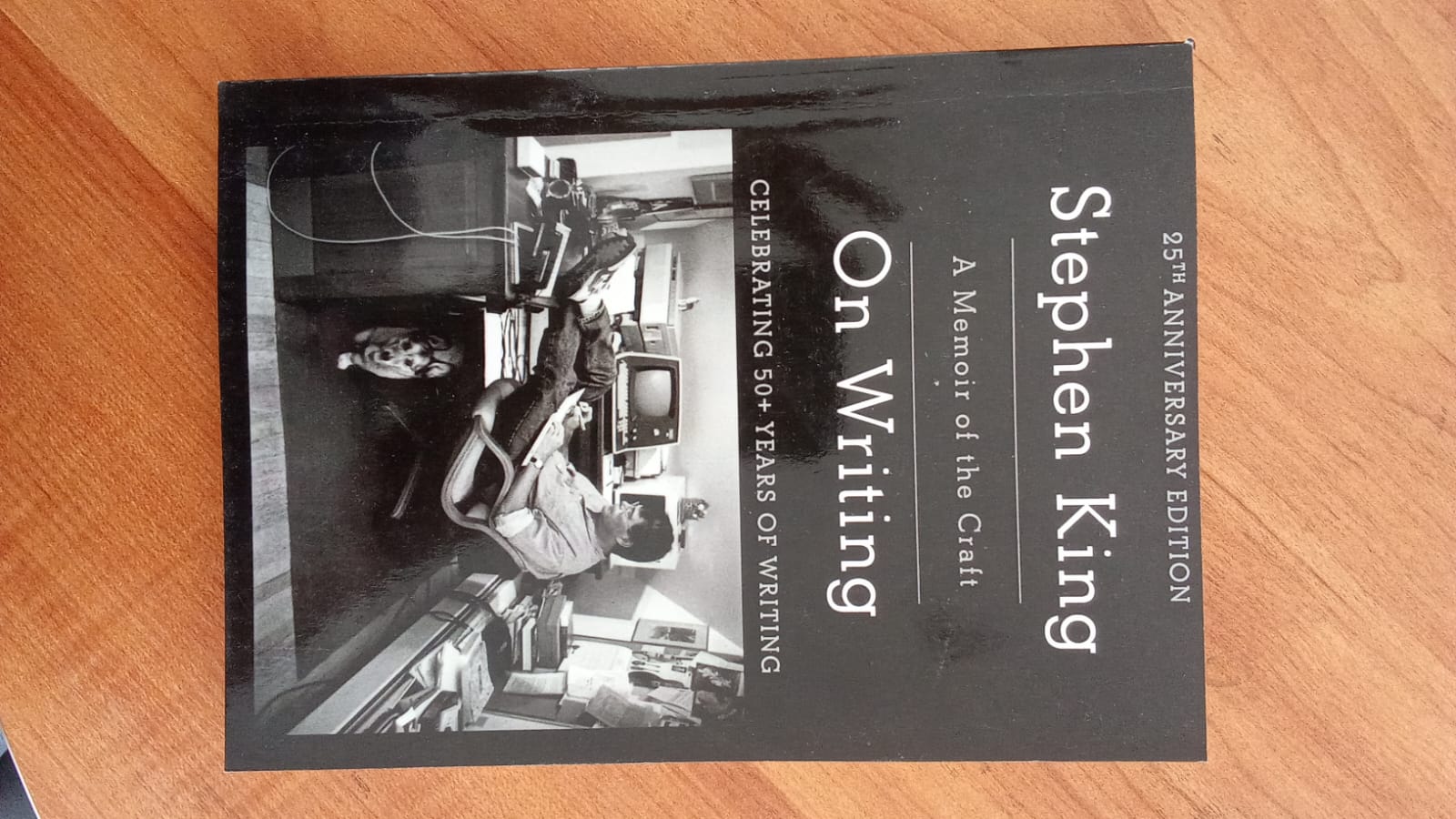
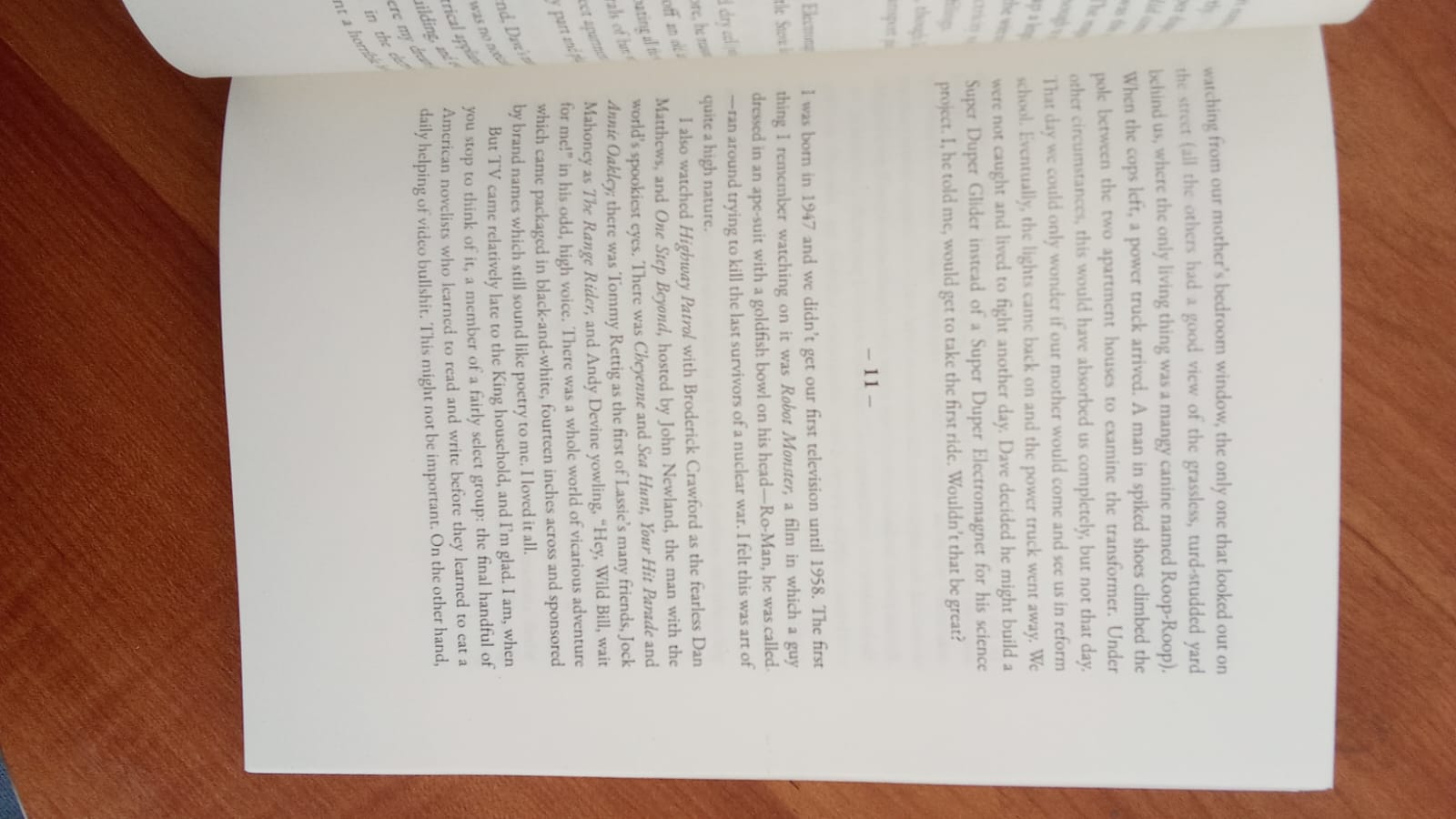
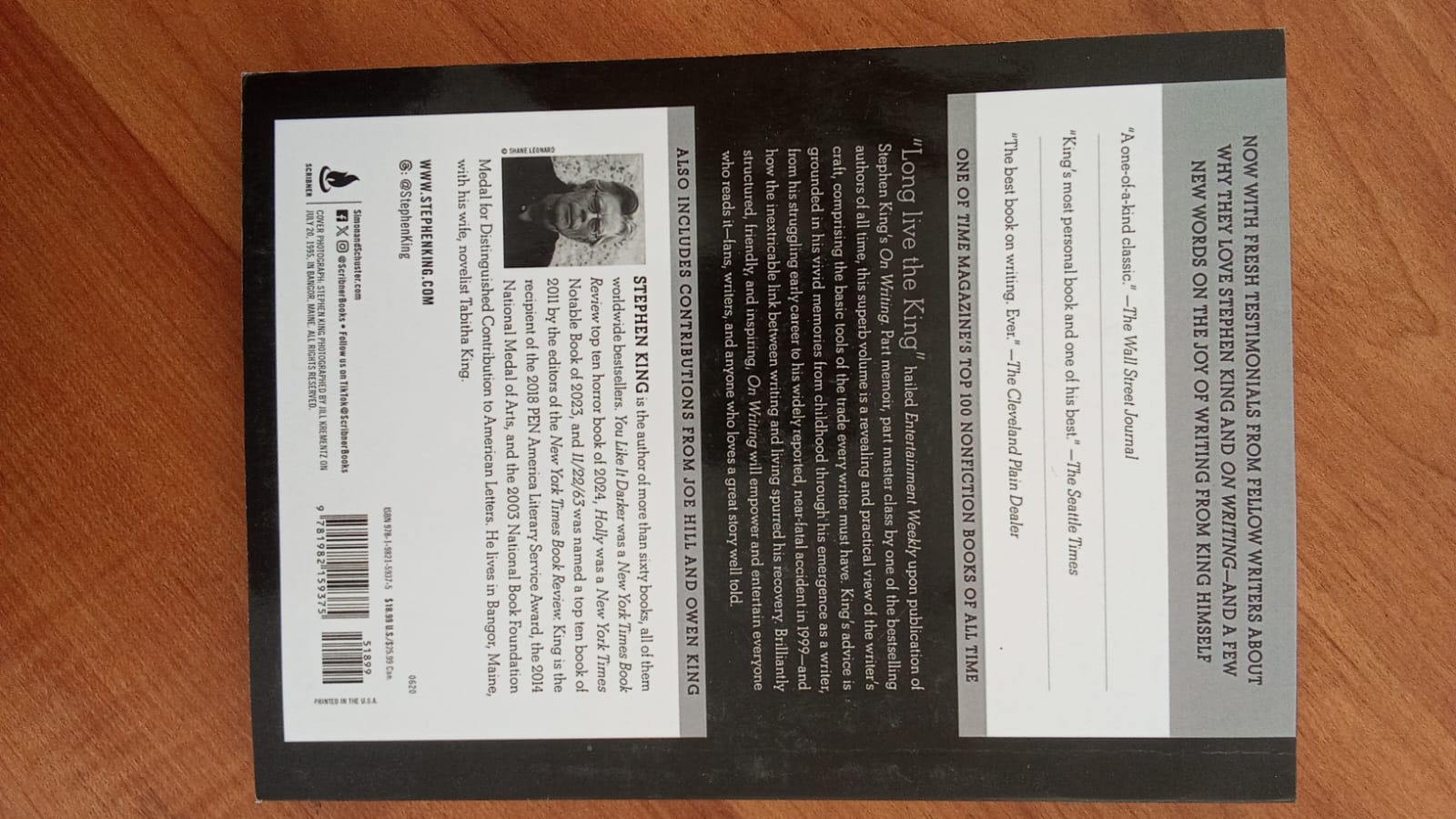
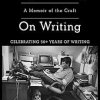
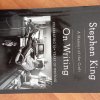

On Writing: A Memoir of the Craft by Stephen King

රු1,750.00
3 X Rs. 583.33 or 8% Cashback with


or 3 X රු583.33 with


or up to 4 X රු437.50 with


A Masterclass in Writing and Storytelling
On Writing by Stephen King is a celebrated blend of memoir and practical writing guide in which the bestselling author shares the experiences, habits and techniques that shaped his career. Covering reading, vocabulary, grammar, description, dialogue, character, revision, rejection, discipline and the creative process, King offers clear and encouraging advice for aspiring and experienced writers alike. Part personal story and part master class, it is an essential read for anyone interested in writing, storytelling and the life behind a successful author.
5 in stock
On Writing by Stephen King is an inspiring combination of personal memoir and practical writing guide from one of the world’s most successful storytellers.
Rather than presenting writing as a mysterious talent available only to a few gifted people, King describes it as a craft that can be strengthened through:
Reading.
Practice.
Observation.
Revision.
Discipline.
Honesty.
And persistence.
The book begins with memories from King’s childhood, adolescence and early writing career.
Readers learn about his first attempts at storytelling, his fascination with books and movies, the rejection letters he received, the financial struggles he experienced before becoming successful and the long road that eventually led to the publication of Carrie.
King then turns directly to the craft itself.
What makes writing clear?
How much description is enough?
How do characters become believable?
Should a writer plan every plot in advance?
How important is grammar?
How much should you revise?
How often should you write?
How much should you read?
His answers are practical, direct and often funny.
On Writing by Stephen King is not a rigid rulebook.
Instead, King gives readers a toolbox.
Some tools are basic.
Vocabulary.
Grammar.
Sentence structure.
Others are more advanced.
Dialogue.
Description.
Character.
Revision.
Narrative momentum.
The larger message is simple:
If you want to become a better writer, you must actually write—and you must read a lot.
The memoir also becomes more personal when King describes the serious accident he suffered in 1999 and how returning to writing became part of his recovery. Stephen King’s official site confirms that the accident occurred while he was working on the book and that writing became closely connected to his physical and emotional recovery.
On Writing by Stephen King – Book Overview
On Writing by Stephen King is unusual because it refuses to separate the writer from the life of the writer.
King does not begin with:
Rule 1.
Rule 2.
Rule 3.
Instead, he begins with memory.
Childhood.
Family.
Books.
School.
Jobs.
Marriage.
Rejection.
Alcohol.
Success.
Accident.
Recovery.
Why?
Because writing does not appear from nowhere.
Writers bring their experiences into their work.
What they have seen.
What they fear.
What makes them laugh.
What they remember.
What they regret.
All of this becomes part of the creative toolbox.
Part Memoir, Part Master Class
Simon & Schuster describes the book as part memoir and part master class, which is exactly what makes it so accessible.
Readers interested in Stephen King’s life can enjoy the autobiographical material.
Aspiring writers can focus on the craft advice.
Many readers enjoy both.
Stephen King’s Childhood
King writes about growing up with a fascination for stories.
He read widely.
Watched films.
Experimented with writing.
Imitated stories he admired.
Gradually, he began discovering his own voice.
This is reassuring for new writers because it shows that professional writers do not necessarily begin with a perfect original style.
They develop it.
Writers Begin as Readers
One of the strongest ideas in On Writing by Stephen King is the relationship between reading and writing.
If you want to write well, King argues that you need to read.
A lot.
Reading teaches things that formal rules cannot always explain.
You begin absorbing:
Rhythm.
Dialogue.
Pacing.
Structure.
Tone.
Characterization.
Sentence flow.
You also learn what does not work.
Read Widely
Do not read only the genre you want to write.
A fantasy writer can learn from literary fiction.
A business writer can learn from memoir.
A novelist can learn from journalism.
A thriller writer can learn from biography.
Reading widely expands the possibilities available to your own writing.
Writing Requires Practice
Reading alone is not enough.
At some point, you have to write.
That sounds obvious.
But many aspiring writers spend years:
Thinking about writing.
Planning writing.
Watching videos about writing.
Buying notebooks about writing.
Without producing much actual work.
On Writing by Stephen King repeatedly returns to the importance of doing the work.
Write Regularly
Skill grows through repetition.
A person who writes consistently learns:
How sentences behave.
How scenes develop.
How characters surprise you.
Where stories slow down.
Where dialogue feels artificial.
Writing becomes less intimidating when it becomes normal.
The Writer’s Toolbox
One of the most memorable sections in On Writing by Stephen King is the idea of a writer’s toolbox.
Imagine a physical toolbox.
Different levels contain different tools.
Writing works similarly.
Basic tools include:
Vocabulary.
Grammar.
Sentence structure.
More advanced tools include:
Description.
Dialogue.
Character.
Narrative structure.
The point is not to use every tool at once.
It is to know what you have available.
Vocabulary
King advises writers not to become obsessed with using unnecessarily complicated words.
If a simple word works, use it.
Good writing does not require sounding impressive.
It requires being understood.
Trying too hard to sound intelligent can make prose awkward.
Grammar
Grammar matters because clarity matters.
Readers should not have to struggle to understand what a sentence means.
But King’s approach is practical rather than academic.
Grammar is not there to make writing stiff.
It gives writers control.
Once you understand how language works, you can use it more effectively.
Avoid Unnecessary Adverbs
One of King’s most famous writing preferences is his suspicion of excessive adverbs, especially in dialogue attribution.
For example:
“Stop!” she shouted angrily.
If the dialogue and situation already show anger, “angrily” may be unnecessary.
The deeper lesson is not:
Never use an adverb.
It is:
Do not add words merely because you do not trust the sentence to communicate clearly.
Strong Verbs
A strong verb often reduces the need for extra explanation.
Instead of piling on modifiers, choose precise language.
This makes writing:
Cleaner.
Faster.
More confident.
Passive Voice
King also warns against overusing passive constructions.
Compare:
“The door was opened by John.”
with:
“John opened the door.”
The second is usually more direct.
Again, passive voice is not automatically wrong.
The lesson is to choose deliberately rather than writing weakly out of habit.
Description
Description helps readers see the world.
But too much description can stop the story.
King encourages writers to provide enough detail for readers to imagine the scene without explaining every possible object.
You do not need to describe every chair.
Every wall.
Every shirt button.
Give the reader meaningful details.
Then let imagination complete the picture.
The Reader Participates
This is an important concept.
Writing is a collaboration between writer and reader.
The writer supplies enough information.
The reader creates the final image mentally.
That means over-explaining can actually reduce involvement.
Dialogue
Good dialogue sounds believable without becoming a literal transcription of real speech.
Real conversations contain:
Repetition.
Half-finished sentences.
Meaningless filler.
Writing needs to create the feeling of natural conversation while still remaining purposeful.
Dialogue should reveal:
Character.
Conflict.
Personality.
Relationships.
Listen to People
Writers improve dialogue by listening.
How do people actually speak?
What words do different generations use?
How does a confident person speak compared with someone nervous?
People reveal themselves through language.
Character
King generally prefers discovering characters through the situations they face rather than forcing them into predetermined behavior.
A character becomes interesting when readers can believe:
This person would actually make this decision.
That requires consistency, motivation and psychological credibility.
People Are Contradictory
Real people are rarely only:
Good.
Bad.
Brave.
Cowardly.
Generous.
Selfish.
They can be several things at once.
Strong fictional characters often contain similar contradictions.
Plot Versus Situation
One of the more debated ideas in On Writing by Stephen King is his preference for beginning with an interesting situation rather than constructing a highly detailed plot in advance.
King often asks:
What would happen if…?
Then he places characters inside that situation and discovers where their choices lead.
This approach may work wonderfully for some writers.
Others prefer detailed outlines.
The useful lesson is not that outlining is wrong.
It is that stories can also grow through discovery.
Discovery Writing
Some writers are planners.
Others are discovery writers.
Planners may know the ending before beginning.
Discovery writers may learn the story by writing it.
Neither approach is universally correct.
On Writing by Stephen King offers one successful writer’s method, not a law that every novelist must obey.
Story Before Formula
King generally favors story over excessive structural calculation.
Readers care about:
What happens.
Who it happens to.
Why it matters.
Technical structure should serve that experience rather than becoming more important than the story itself.
Theme
King recommends allowing theme to emerge naturally before consciously strengthening it during revision.
A writer may begin with a situation.
Then after writing, notice that the story is really about:
Fear.
Family.
Addiction.
Loss.
Power.
Memory.
Revision can then make those themes clearer without turning the story into a lecture.
First Draft
The first draft does not need to be perfect.
Its job is to exist.
Many new writers become trapped because they edit every sentence before moving forward.
Three paragraphs take three days.
Momentum disappears.
King’s process emphasizes getting through the story before obsessing over perfection.
Writing With the Door Closed
One memorable principle is to write the early draft privately.
Do not let everyone interfere immediately.
Too much outside opinion during the earliest stage can weaken confidence and distort the original idea.
First, discover what the story is.
Then seek feedback.
Revising With the Door Open
After the draft exists, the process changes.
Now readers matter.
Feedback matters.
Clarity matters.
Revision becomes the stage where the writer considers how effectively the work communicates.
Revision
Good writing is often rewritten writing.
Revision may involve:
Removing unnecessary words.
Clarifying scenes.
Strengthening dialogue.
Changing pacing.
Fixing contradictions.
Improving endings.
Cutting material you like but do not need.
This can be painful.
But revision is part of the craft.
Cut What Does Not Serve the Story
Writers often become attached to:
Clever sentences.
Beautiful descriptions.
Funny scenes.
Interesting characters.
But a good piece of writing is not a museum containing every good sentence you created.
If something damages the larger work, it may need to go.
Kill Your Darlings—Carefully
King is often associated with the broader writing principle of cutting beloved but unnecessary material.
This does not mean deleting everything you like.
It means refusing to keep something only because you like it.
The question is:
Does it improve the work?
Recommended Revision Formula
King famously describes a revision principle roughly equivalent to reducing a second draft to about 90% of the first draft’s length.
The exact number should not become a rigid rule.
Its value is psychological.
Most drafts contain material that can be tightened.
Backstory
Writers often know far more about their characters than readers need to know.
Backstory should help the present story.
It should not become an excuse for endless explanation.
Give readers the pieces that matter.
Research
Research is useful.
But research should support the story rather than overwhelm it.
A novelist may learn a hundred facts.
Perhaps only ten belong in the book.
The reader needs enough information to believe the world.
Not every note from the research folder.
Writing What You Know
“Write what you know” is often misunderstood.
It does not mean you can write only about your own occupation, hometown or exact experiences.
It means writing emotional and human truth from a foundation you understand.
A writer who has never been to Mars can write science fiction.
But they still need to understand:
Fear.
Loneliness.
Hope.
Competition.
Love.
Those human elements create credibility.
Writing Space
King discusses the importance of creating a place and routine for writing.
The perfect room is not required.
What matters is creating conditions where the mind recognizes:
Now we work.
A consistent environment reduces friction.
Schedule
Many writers wait for inspiration.
Professional writers often work whether inspiration appears or not.
This does not mean every session will be brilliant.
It means consistency gives inspiration more opportunities to arrive.
Writing Goals
A daily word goal can help because it converts a vague ambition into measurable action.
Instead of:
“I want to write a novel.”
you have:
“Today I will write X words.”
Huge goals become manageable when divided into daily work.
Protect Writing Time
If writing always comes after:
Email.
Social media.
Phone calls.
Television.
Every other responsibility.
it may never happen.
Creative work often requires protecting time deliberately.
Rejection
Stephen King experienced rejection long before becoming successful.
He famously collected rejection slips.
This is important because beginners often interpret rejection as proof they have no talent.
Sometimes rejection means the work needs improvement.
Sometimes it means the work was sent to the wrong place.
Sometimes an editor simply did not want it.
Rejection hurts.
It is also normal.
Persistence
A writer cannot control every outcome.
You can control:
Reading.
Practice.
Revision.
Submission.
Learning.
Persistence.
You cannot completely control:
Publishing decisions.
Reviews.
Sales.
Awards.
Focus on the part you can influence.
Carrie
King reflects on the period leading up to the publication of Carrie, the novel that significantly changed his professional life.
Before success, he and his family experienced financial pressure.
This makes the story especially valuable because readers see the period before the famous author existed.
Success looks obvious in retrospect.
It did not feel obvious while he was living through rejection and uncertainty.
Tabitha King
King also writes about the importance of his wife, novelist Tabitha King, in his life and writing career.
Her encouragement and belief in his work form an important part of his memoir.
Creative careers are often presented as solitary.
In reality, relationships and support can matter enormously.
Addiction
On Writing by Stephen King also discusses difficult periods involving addiction and substance abuse.
The memoir does not present the writing life as romantic perfection.
Success did not eliminate personal problems.
This makes the book more honest and more useful than a simple success story.
The 1999 Accident
In 1999, King was seriously injured after being struck by a vehicle while walking.
The accident occurred while he was working on On Writing and threatened both his health and his ability to continue the project.
His eventual return to writing becomes one of the most moving parts of the book.
Writing and Recovery
Writing was no longer merely:
Career.
Craft.
Income.
It became part of returning to ordinary life.
This gives the final sections of the memoir emotional weight.
The book that teaches readers how to write also becomes a story about why writing mattered to King personally.
Writing Is Work
King loves writing.
But love does not eliminate difficulty.
Writing still requires:
Sitting down.
Beginning.
Continuing.
Revising.
Finishing.
That is one reason On Writing by Stephen King remains encouraging.
It treats creativity seriously without pretending creativity is magical.
Talent Matters, But Practice Matters Too
King does not claim that every person who writes enough will become a bestselling novelist.
People begin with different levels of talent.
But skill can improve.
A reasonable goal is not:
Become Stephen King.
It is:
Become a stronger writer than you were yesterday.
Find Your Voice
Imitating writers you admire can be useful while learning.
Eventually, however, you need to discover your own natural voice.
Trying to sound permanently like someone else often creates artificial writing.
Read widely.
Learn techniques.
Then write in a way that feels true to you.
Honesty
King repeatedly values honesty in writing.
Readers can sense when prose feels fake.
Characters should not behave conveniently only because the plot needs them to.
Emotions should not be exaggerated merely to manipulate the audience.
Honesty builds trust.
Simplicity
Simple writing is not automatically simplistic writing.
Clear prose can carry complex ideas.
Writers sometimes make sentences more complicated because complexity looks intelligent.
Strong writing often does the opposite.
It removes unnecessary difficulty.
Writing for One Reader
King discusses the concept of an Ideal Reader—the person he imagines responding to the work.
Writing for one imagined reader can be more useful than trying to please everybody.
If you try to satisfy everyone:
The book may become generic.
If you understand who the work is for:
Choices become clearer.
Feedback
Feedback matters.
But not all feedback is equal.
Some readers understand the kind of work you are trying to create.
Others want you to write a different book.
A writer must learn the difference.
Repeated Feedback Deserves Attention
If one reader dislikes a scene, maybe it is personal preference.
If five trusted readers become confused at exactly the same point, there is probably a problem.
Patterns matter.
Writing Cannot Be Completely Taught
No writing book can hand you a finished voice.
A guide can teach:
Principles.
Tools.
Questions.
Examples.
The writer still needs to practice.
That is why On Writing by Stephen King works best when read alongside actual writing.
Is On Writing a Stephen King Autobiography?
Partly.
It contains substantial autobiographical material, but it is not a comprehensive biography covering every part of Stephen King’s life.
It focuses especially on experiences related to:
Reading.
Writing.
Career development.
Addiction.
Family.
The 1999 accident.
And recovery.
Is On Writing a Writing Manual?
Yes, but not in the style of a formal textbook.
It is conversational and personal.
Readers receive practical advice while also understanding where that advice came from.
Is It Only for Fiction Writers?
No.
Novelists will probably gain the most from some sections, especially those involving character, dialogue and story.
But the advice about:
Clarity.
Reading.
Revision.
Discipline.
Vocabulary.
Consistency.
can help writers of many kinds.
Bloggers.
Students.
Content writers.
Screenwriters.
Business writers.
Journalists.
Essayists.
Is It Good for Beginners?
Yes.
On Writing by Stephen King is particularly approachable because King avoids making the craft sound unnecessarily academic.
Beginners can learn practical fundamentals.
More experienced writers may recognize familiar principles but appreciate King’s perspective and examples.
Do You Need to Read Stephen King’s Novels First?
No.
You can enjoy On Writing without reading It, The Shining, Carrie or any other Stephen King novel.
Readers familiar with his fiction may appreciate additional context, but previous reading is not required.
Is It a Horror Book?
No.
Stephen King is famous for horror, but On Writing is nonfiction.
It belongs primarily under:
Writing & Creativity
Biography & Memoir
Literary Reference
It discusses King’s career and fiction, but it is not itself a horror novel.
Edition Note
The book was originally released in 2000 by Scribner. Stephen King’s official site lists it as nonfiction and confirms its original release year.
A widely available Twentieth Anniversary Edition was published by Scribner on June 2, 2020, with 320 pages and ISBN 9781982159375. It also contains contributions from Joe Hill and Owen King.
Other editions have different page counts and ISBNs, so use the details printed on your physical copy when filling the WooCommerce attributes.
Content Considerations
On Writing by Stephen King includes mature autobiographical subjects such as:
- Addiction and substance abuse
- Alcoholism
- Serious physical injury
- Hospitalization and recovery
- Financial hardship
- Rejection and career struggles
- References to death and difficult life experiences
These topics are discussed as part of King’s personal history rather than as graphic fictional horror.
Important Themes
On Writing by Stephen King explores:
- Writing
- Reading
- Creativity
- Storytelling
- Vocabulary
- Grammar
- Dialogue
- Description
- Character
- Revision
- Discipline
- Rejection
- Persistence
- Memoir
- Creative routine
- Writing careers
- Recovery
- Finding your voice
- Editing
- The relationship between life and art
7 Powerful Lessons From On Writing by Stephen King
- Read a lot if you want to write well. Reading develops an intuitive understanding of language, pacing, character and storytelling that rules alone cannot provide.
- Write regularly rather than waiting for inspiration. Inspiration is useful, but a sustainable writing practice depends on consistency and discipline.
- Use clear language instead of trying to sound impressive. Strong writing communicates effectively; unnecessary complexity often weakens prose.
- Let readers participate through imagination. Give enough description to make the scene vivid without explaining every detail.
- Finish the first draft before demanding perfection from it. Early drafting is for discovering the story; revision is where much of the improvement happens.
- Learn to cut material that does not serve the work. A sentence or scene can be beautifully written and still be unnecessary.
- Rejection and failure are part of a writing career. Writers improve by continuing to read, practice, revise and submit instead of treating each setback as a final judgment on their ability.
Why Read On Writing by Stephen King?
On Writing by Stephen King is an excellent choice for readers interested in:
- Stephen King
- Creative writing
- Fiction writing
- Becoming an author
- Storytelling
- Writing advice
- Writing memoirs
- Editing
- Revision
- Character development
- Dialogue
- Reading and writing
- Writing careers
- Creativity
- Discipline
- Writer motivation
- Author memoirs
- Publishing
- Improving prose
- Finding a writing voice
What makes the book especially useful is its balance.
It is practical without feeling like a textbook.
Personal without becoming only autobiography.
Motivational without pretending writing is easy.
King shows that writing can be deeply meaningful while still requiring ordinary, repetitive work.
Who Should Read This Book?
On Writing by Stephen King may especially appeal to aspiring novelists, creative-writing students, published writers, bloggers, journalists, content writers, editors, teachers, Stephen King fans and anyone who wants to understand how a professional storyteller thinks about language and craft.
It is also a strong choice for readers who love books about creative careers and want to see the difficult years behind a famous author’s success.
On Writing by Stephen King – Writing Is a Craft, Not a Magic Trick
On Writing by Stephen King is ultimately encouraging because it removes some of the mystery surrounding authorship.
Writers are not mysterious people who sit down and automatically produce perfect books.
They read.
They practice.
They write bad sentences.
They revise them.
They get rejected.
They try again.
They make mistakes.
They continue.
Stephen King’s career eventually became extraordinary.
But the habits behind the work are surprisingly ordinary.
Read.
Write.
Observe.
Revise.
Repeat.
That does not guarantee a bestseller.
Nothing does.
But it creates the conditions under which improvement becomes possible.
King also reminds readers that writing is connected to life.
A writer’s material comes partly from:
Memory.
Work.
Relationships.
Fear.
Failure.
Humor.
Grief.
The things that happen when the writer is away from the desk.
That is why the memoir portion matters so much.
Before Stephen King became a famous author, he was a child reading stories.
A young writer receiving rejection slips.
A husband and father trying to earn money.
A teacher.
A struggling novelist.
Then a successful novelist.
Then a man recovering from a devastating accident who had to discover whether he could return to the page.
Through all those stages, writing remained important.
For aspiring writers, that may be the most valuable lesson in On Writing by Stephen King.
You do not need to know exactly where your writing career will lead.
You need to read.
You need to write.
And you need to continue learning the craft.
Learn more about On Writing: A Memoir of the Craft by Stephen King on the official Stephen King website.
Explore more memoir and writing books at Bargain Books.
Be the first to review “On Writing: A Memoir of the Craft by Stephen King”
Related products
-23%
Non-Fiction & Knowledge
Original price was: රු2,200.00.රු1,700.00Current price is: රු1,700.00.
3 X Rs. 566.67 or 8% Cashback with
or 3 X රු566.67 with
or up to 4 X රු425.00 with
Out of stock
Non-Fiction & Knowledge
රු1,600.00
3 X Rs. 533.33 or 8% Cashback with
or 3 X රු533.33 with
or up to 4 X රු400.00 with
-24%
Out of stock
Non-Fiction & Knowledge
Original price was: රු2,500.00.රු1,900.00Current price is: රු1,900.00.
3 X Rs. 633.33 or 8% Cashback with
or 3 X රු633.33 with
or up to 4 X රු475.00 with
-14%
Out of stock
Self-Help & Psychology
Original price was: රු2,900.00.රු2,500.00Current price is: රු2,500.00.
3 X Rs. 833.33 or 8% Cashback with
or 3 X රු833.33 with
or up to 4 X රු625.00 with
-21%
Non-Fiction & Knowledge
7 Secrets to Investing Like Warren Buffett by Mary Buffett & Sean Seah
Original price was: රු1,900.00.රු1,500.00Current price is: රු1,500.00.
3 X Rs. 500.00 or 8% Cashback with
or 3 X රු500.00 with
or up to 4 X රු375.00 with
රු2,000.00
3 X Rs. 666.67 or 8% Cashback with
or 3 X රු666.67 with
or up to 4 X රු500.00 with
-33%

Self-Help & Psychology
Original price was: රු2,300.00.රු1,550.00Current price is: රු1,550.00.
3 X Rs. 516.67 or 8% Cashback with
or 3 X රු516.67 with
or up to 4 X රු387.50 with
-34%
Self-Help & Psychology
Original price was: රු2,350.00.රු1,550.00Current price is: රු1,550.00.
3 X Rs. 516.67 or 8% Cashback with
or 3 X රු516.67 with
or up to 4 X රු387.50 with
Reviews
There are no reviews yet.