
No products in the cart.
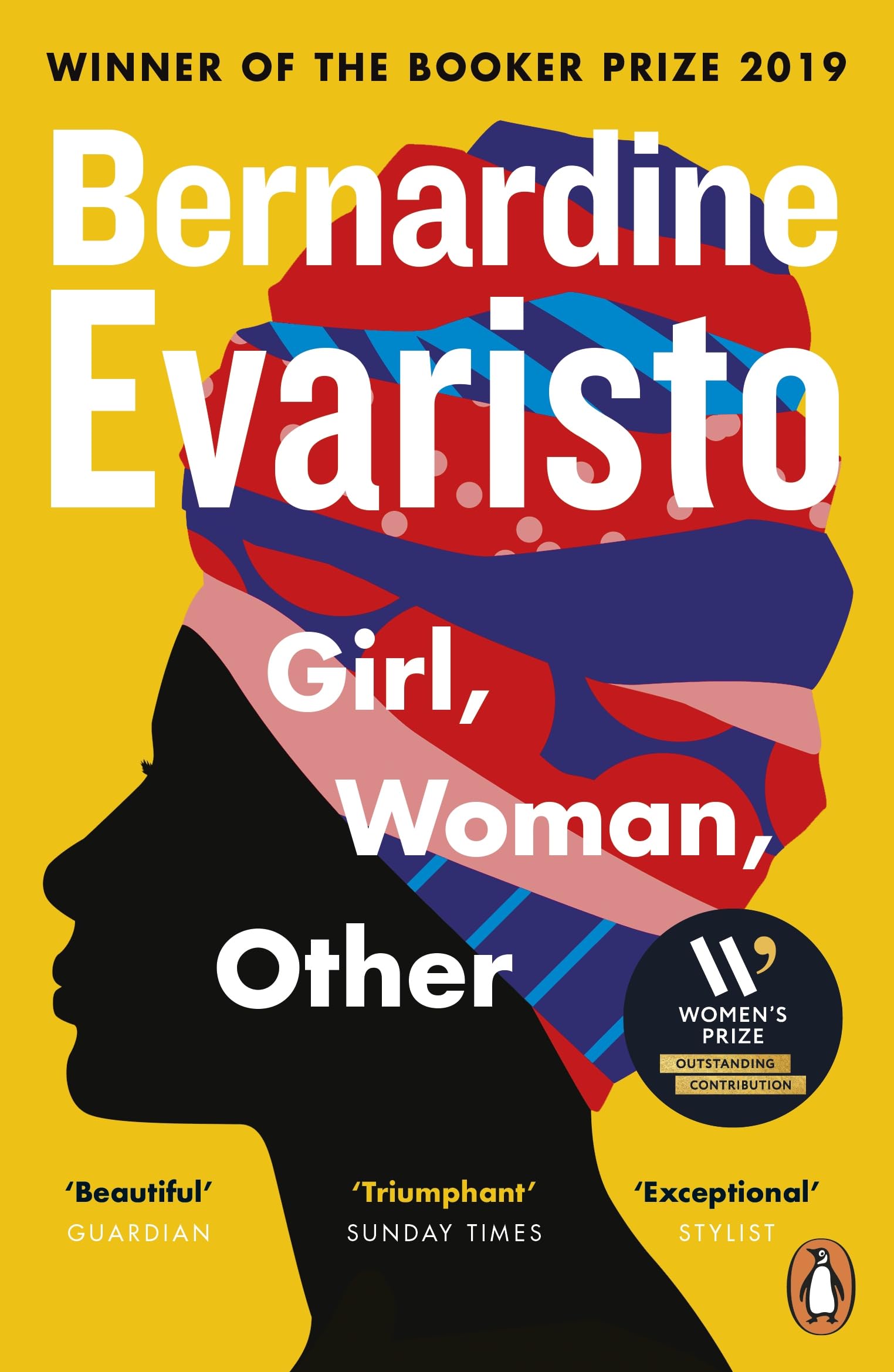
Girl Women Other by Bernardine Evaristo


රු1,950.00
3 X Rs. 650.00 or 8% Cashback with


or 3 X රු650.00 with


or up to 4 X රු487.50 with


Girl, Woman, Other by Bernardine Evaristo is a powerful and award-winning novel that weaves together the lives of twelve interconnected characters, mostly Black British women, across different generations and backgrounds. Through unique storytelling and poetic prose, the book explores identity, race, gender, relationships, and what it means to live in modern Britain.
At its core, the novel celebrates diversity, individuality, and the complexity of human experiences.
5 in stock
Girl, Woman, Other by Bernardine Evaristo is a bold, moving, and beautifully interconnected novel about identity, womanhood, family, love, race, class, sexuality, friendship, and belonging in Britain.
There is no single traditional hero.
Instead, there are twelve lives.
Twelve perspectives.
Different generations.
Different backgrounds.
Different ideas about what it means to be a woman, a parent, a daughter, a partner, a friend, or simply a person trying to belong.
Some characters are young.
Others are elderly.
Some are wealthy.
Others struggle financially.
Some are immigrants.
Others were born in Britain.
Some are heterosexual.
Some are queer.
Some reject traditional ideas about gender altogether.
Their lives look very different.
Yet as Girl, Woman, Other develops, readers begin to discover how closely connected these people really are.
The novel moves across more than a century of British life, from the early twentieth century into contemporary Britain, exploring how history, migration, family, prejudice, opportunity, and personal choices shape each generation.
Why Read Girl, Woman, Other?
Girl, Woman, Other is ideal for readers who enjoy character-driven literary fiction with multiple perspectives.
Readers can expect themes involving:
- Womanhood
- Black British identity
- Family
- Motherhood
- Friendship
- Feminism
- Race
- Class
- Sexuality
- Gender identity
- Migration
- Generational differences
- Relationships
- Careers
- Belonging
- British history
- Social change
The novel is not built around one central mystery or action plot.
Its power comes from people.
Their lives.
Their contradictions.
Their mistakes.
Their hopes.
And the ways their stories unexpectedly cross.
Girl, Woman, Other and Its 12 Characters
The novel follows twelve central characters.
They are mostly women, mostly Black, and connected to Britain in very different ways.
The Booker Prize describes the book as following these characters across different generations and social classes while creating a broad portrait of modern Britain.
Some characters know each other directly.
Others are linked through:
Family.
Friendship.
Work.
Education.
History.
Relationships.
Or connections they may not initially understand.
This structure allows the reader to see the same society through very different eyes.
Amma in Girl, Woman, Other
One of the first major characters is Amma.
She is a theatre director.
Independent.
Political.
Creative.
And deeply connected to feminist and radical artistic movements.
In her younger years, Amma rejects many traditional expectations about women and builds a life around experimental theatre and activism.
By the time readers meet her in the present day, she has finally achieved major recognition.
Her new play is being staged at an important London theatre.
But success creates new questions.
What happens when someone who spent years fighting the establishment finally becomes part of it?
Has she changed?
Has society changed?
Or both?
Amma represents one generation of feminism while also becoming a bridge to younger characters.
Yazz in Girl, Woman, Other
Yazz is Amma’s daughter.
She is younger.
Confident.
Opinionated.
University-educated.
And convinced that her generation understands the world better than the one before it.
Naturally, that creates conflict with Amma.
Amma once saw herself as a radical outsider.
Now her daughter occasionally sees her as outdated.
Their relationship captures something universal.
Every generation believes it is challenging the assumptions of the previous one.
Then eventually, that generation becomes the older one.
The Booker Prize specifically highlights Amma and Yazz as one of the novel’s important mother-daughter relationships.
Dominique in Girl, Woman, Other
Dominique is one of Amma’s oldest friends.
Together, Amma and Dominique establish a radical theatre company during the 1980s.
Their friendship develops through activism, art, independence, and shared ideas.
But Dominique’s life later changes dramatically through a romantic relationship that becomes increasingly controlling.
Her story explores how intelligent and independent people can still become trapped inside unhealthy relationships.
It also shows the importance of rebuilding identity after emotional control.
Amma and Dominique’s friendship is one of several strong female friendships running through the novel.
Carole in Girl, Woman, Other
Carole comes from a very different world.
She grows up in a working-class environment but is academically gifted.
She eventually studies at Oxford and enters the world of high-level banking.
Her story explores social mobility.
Education.
Class.
Ambition.
Race.
Trauma.
And the pressure to transform yourself in order to succeed inside elite spaces.
Carole’s life raises difficult questions.
What does success cost?
Can you enter a new social class without losing connection to the people and culture that shaped you?
And how much of yourself should you change in order to belong?
The Booker Prize notes the contrast between Carole and her childhood friend LaTisha, whose adult lives take dramatically different paths.
Bummi in Girl, Woman, Other
Bummi is Carole’s mother.
Her life gives readers a different perspective on migration, sacrifice, motherhood, and ambition.
She wants her daughter to succeed.
She wants Carole to have opportunities.
But success can also create distance between parent and child.
Bummi’s story explores how immigrant parents may work incredibly hard to create possibilities for the next generation.
Then the next generation enters a world the parents themselves never fully experienced.
Love remains.
But understanding can become complicated.
LaTisha in Girl, Woman, Other
LaTisha grows up alongside Carole.
Their lives begin close together.
Then they separate.
Carole eventually reaches Oxford and moves into banking.
LaTisha leaves school earlier and later manages a grocery shop while raising children.
Neither life is presented as a simple symbol of success or failure.
Instead, Evaristo shows how circumstances, decisions, relationships, opportunity, and personality shape very different futures.
This is one of the strengths of Girl, Woman, Other.
Characters are not reduced to lessons.
They are allowed to be complicated.
Shirley in Girl, Woman, Other
Shirley becomes a teacher.
She enters education hoping to make a difference.
But ideals can become difficult to maintain over decades.
Work changes people.
Institutions change people.
Disappointment changes people.
Shirley’s story explores professional ambition, education, marriage, friendship, and the gap between the person someone expected to become and the person they eventually became.
She is also connected to several other characters in ways that gradually deepen the structure of the novel.
Winsome in Girl, Woman, Other
Winsome is Shirley’s mother.
She arrives in Britain from Barbados as part of the generation associated with post-war Caribbean migration.
Penguin describes her as a young Windrush bride when introducing her part of the story.
Her perspective adds another generation.
For younger characters, Britain is simply home.
For Winsome, migration is part of her personal history.
She remembers arrival.
Adjustment.
Marriage.
Raising a family.
And the expectations that came with building a new life.
This generational contrast is central to Girl, Woman, Other.
Penelope in Girl, Woman, Other
Penelope initially seems different from many of the other central characters.
She is white.
She is older.
And her life appears to occupy another part of British society.
Her story includes adoption, marriage, teaching, identity, and questions about ancestry.
As the novel progresses, Penelope’s role becomes increasingly important.
Her experiences remind readers that identity may contain hidden histories.
The person you believe yourself to be may depend partly on information you have never been given.
Morgan in Girl, Woman, Other
Morgan, who was known earlier in life as Megan, explores gender identity and a different relationship with social expectations.
Penguin describes Morgan as a social-media activist and influencer.
Morgan’s story adds another dimension to the book’s examination of gender.
What does it mean to be a woman?
What does it mean not to identify with that category?
How do language and identity change across generations?
And how do older family members respond when younger people understand themselves differently?
Morgan’s relationship with Hattie becomes especially important.
Hattie in Girl, Woman, Other
Hattie is an elderly farmer.
At more than ninety years old, she represents one of the oldest living generations in the novel.
She has experienced decades of social change.
Her understanding of race, family, gender, and belonging comes from a completely different historical context than Morgan’s.
Yet the two develop a meaningful connection.
Penguin highlights Hattie and Morgan as an example of an important relationship across generations.
Their bond shows that difference does not automatically prevent understanding.
Grace in Girl, Woman, Other
Grace takes the novel further into the past.
Penguin describes her as a Victorian orphan who dreams about the African father she never knew.
Her story reveals how family histories extend beyond the memories of living characters.
People inherit:
Names.
Stories.
Silences.
Prejudices.
Traditions.
And unanswered questions.
By moving back through time, Girl, Woman, Other shows that identity is not created in one generation.
It develops across many.
Girl, Woman, Other and Interconnected Lives
One of the most rewarding parts of the novel is discovering how the characters connect.
Someone who seemed like a minor figure in one person’s story may later become central.
A mother becomes a protagonist.
Then a daughter.
Then a friend.
Then someone from an earlier generation.
Each perspective changes what the reader thought they understood.
This structure creates empathy.
From one person’s point of view, someone may appear:
Difficult.
Selfish.
Cold.
Arrogant.
Old-fashioned.
But then the narrative moves into that person’s life.
Suddenly, we understand more.
Not necessarily enough to agree with them.
But enough to see that people are rarely as simple as they appear from outside.
Girl, Woman, Other and Womanhood
The title itself invites readers to think about categories.
Girl.
Woman.
Other.
Who gets included?
Who defines these words?
Do all women experience womanhood in the same way?
Obviously not.
The novel presents many versions of female life.
Young and old.
Mothers and daughters.
Queer and heterosexual.
Wealthy and working-class.
Immigrant and British-born.
Traditional and radical.
The point is not to identify one correct version of womanhood.
It is to show how varied the experience can be.
Girl, Woman, Other and Race
Race is an important part of many characters’ lives.
But it does not define everything about them.
The Booker Prize notes that most of the twelve characters are Black and British while emphasizing the diversity within those identities.
Characters come from different:
Families.
Countries.
Classes.
Generations.
Professions.
Sexual identities.
Political beliefs.
Experiences.
This prevents the book from suggesting there is one single “Black British experience.”
Instead, there are many.
Girl, Woman, Other and Class
Class is another major theme.
Some characters grow up with limited money.
Others reach highly paid professional careers.
Education becomes a route into different social environments.
But moving between classes can create complicated feelings.
Belonging.
Embarrassment.
Ambition.
Alienation.
Pride.
Guilt.
Characters sometimes change the way they speak or behave depending on the room they enter.
The novel asks whether social mobility always produces freedom—or sometimes creates a new kind of pressure.
Girl, Woman, Other and Motherhood
Mothers and daughters appear throughout the novel.
Amma and Yazz.
Bummi and Carole.
Winsome and Shirley.
And other family relationships across generations.
The Booker Prize specifically describes the novel as containing multiple mother-daughter pairings with very different experiences and expectations.
Parents want children to succeed.
Children want independence.
Then both sides discover that they may define success differently.
A mother’s sacrifice does not automatically guarantee that her daughter will make the choices she expected.
A daughter’s independence does not mean she does not love her mother.
That tension gives many of the relationships their emotional power.
Girl, Woman, Other and Friendship
Friendship can be just as important as family.
Amma and Dominique build part of their adult identities together.
Other friendships change through:
Time.
Distance.
Career.
Marriage.
Political beliefs.
Different lifestyles.
Some survive.
Others weaken.
This gives the novel a realistic view of friendship.
Not every important relationship lasts unchanged forever.
Sometimes two people love one another and still grow apart.
Girl, Woman, Other and Feminism
Different generations of feminism appear throughout Girl, Woman, Other.
Amma’s activism grows from one historical period.
Yazz understands feminism differently.
Other characters may reject certain ideas entirely.
This creates debate rather than one simple message.
What counts as liberation?
Does professional success equal liberation?
Can one generation’s progressive ideas become another generation’s outdated assumptions?
Can women support equality while still holding prejudices about other women?
The novel is willing to let these contradictions exist.
Girl, Woman, Other and Gender Identity
Morgan’s story expands the novel’s discussion beyond traditional categories of womanhood.
Identity can be deeply personal.
Language evolves.
Families do not always understand immediately.
Generations may interpret gender differently.
Rather than isolating Morgan completely from the rest of the book, Evaristo places this experience inside a wider history of people searching for language to describe themselves.
Girl, Woman, Other and Migration
Migration shapes several families.
Caribbean migration.
African heritage.
European connections.
Movement within Britain.
People leave one place hoping for something different.
Their children grow up with another relationship to home.
Then grandchildren inherit multiple layers of identity.
Where is home?
The country where your parents were born?
Where you were raised?
Where your ancestors lived?
Or wherever you finally feel that you belong?
Girl, Woman, Other does not provide one answer.
Girl, Woman, Other and Modern Britain
The novel covers more than one hundred years.
Victorian history.
Post-war migration.
Radical movements of the twentieth century.
Modern universities.
Corporate careers.
Social media.
Contemporary activism.
Through individual lives, the reader sees Britain changing.
Penguin describes the novel as moving from Newcastle to Cornwall and from the beginning of the twentieth century into the twenty-first.
This allows history to appear through ordinary people rather than only politicians or famous events.
The Writing Style of Girl, Woman, Other
The writing style is unusual.
Evaristo has described it as “fusion fiction.”
The prose has a flowing, almost poetic quality.
Traditional punctuation is used differently.
Paragraph structures are unconventional.
Thoughts can move between past and present without the rigid structure readers may expect from standard prose.
Evaristo has explained that the form allowed her to move fluidly between characters, memories, inner thoughts, and different periods of time.
At first, some readers may notice the unusual formatting.
After a few pages, many find the rhythm surprisingly natural.
Is Girl, Woman, Other Difficult to Read?
Not necessarily.
It is literary fiction.
There are many characters.
There are complex themes.
And the writing style is unconventional.
But the individual stories are highly character-focused.
Readers quickly become involved in:
Careers.
Relationships.
Arguments.
Families.
Ambitions.
Secrets.
Regrets.
Because each section concentrates strongly on a particular character, the large cast remains manageable.
Is Girl, Woman, Other a Collection of Short Stories?
Not exactly.
It can sometimes feel like interconnected stories because different sections concentrate on different characters.
But Girl, Woman, Other is a novel.
The characters’ lives overlap and eventually create a larger connected narrative.
The Booker Prize describes the novel as following twelve people whose lives intersect across generations and social classes.
Is Girl, Woman, Other Based on True Stories?
No.
The central characters are fictional.
However, the social and historical environments surrounding them reflect real aspects of British life.
Migration.
Racism.
Feminism.
Class mobility.
Changing ideas about gender.
Political activism.
Education.
Family expectations.
These realities make the fictional characters feel believable.
Girl, Woman, Other and the Booker Prize
Girl, Woman, Other won the 2019 Booker Prize, sharing the award that year with Margaret Atwood’s The Testaments.
The win was historically significant.
Bernardine Evaristo became the first Black woman to win the Booker Prize.
The novel later won additional recognition, and Penguin notes that it received Fiction Book of the Year at the 2020 British Book Awards while Evaristo was also named Author of the Year.
7 Powerful Reasons to Read Girl, Woman, Other
1. Twelve Memorable Perspectives
Instead of one protagonist, the novel gives readers twelve interconnected lives.
2. A Powerful Portrait of Modern Britain
Girl, Woman, Other moves across more than a century of British history and several generations.
3. Complex Female Characters
The women are allowed to be flawed.
Ambitious.
Funny.
Wrong.
Brave.
Selfish.
Loving.
Contradictory.
In other words, human.
4. Deep Family Relationships
Mothers, daughters, partners, grandparents, and chosen families all play important roles.
5. Race, Gender and Class Without Simplifying Them
The novel shows that identities overlap.
No single label completely explains a person.
6. Distinctive Writing Style
Evaristo combines prose and poetic rhythm in the form she calls fusion fiction.
7. Booker Prize-Winning Literature
Girl, Woman, Other won the 2019 Booker Prize and made Bernardine Evaristo the first Black woman to receive the award.
What You Can Expect From Girl, Woman, Other
Readers can expect:
- Literary fiction
- Multiple perspectives
- 12 interconnected characters
- Black British experiences
- Womanhood
- Feminism
- LGBTQ+ themes
- Gender identity
- Mother-daughter relationships
- Friendship
- Migration
- Family history
- Race
- Class
- Careers
- Social mobility
- British history
- Humour
- Emotional storytelling
- Experimental prose
Who Should Read Girl, Woman, Other?
Girl, Woman, Other is ideal for:
Literary fiction readers.
Booker Prize readers.
Readers interested in contemporary Britain.
Readers interested in women’s stories.
Fans of multi-generational fiction.
Readers interested in Black British history and identity.
People who enjoy interconnected characters.
Readers interested in feminism.
Readers interested in race and class.
Readers who enjoy LGBTQ+ fiction and questions of gender identity.
Book clubs.
University literature students.
Readers who enjoy novels where character development matters more than fast-paced action.
A Powerful Novel About Identity and Belonging
Girl, Woman, Other begins with individual lives.
One woman.
Then another.
Then another.
At first, each person appears to occupy her own world.
A theatre director.
A daughter.
A friend.
A banker.
A mother.
A teacher.
An immigrant.
A farmer.
An activist.
A Victorian orphan.
But slowly the boundaries between their stories disappear.
Families connect.
Friendships connect.
History connects.
Choices made decades earlier affect people who come later.
And readers begin to understand that no life exists completely alone.
Bernardine Evaristo uses those connections to create a larger portrait of Britain.
A country shaped by:
Migration.
Race.
Class.
Gender.
Colonial history.
Family.
Love.
Conflict.
And constant social change.
Yet Girl, Woman, Other is not simply a novel about social issues.
It is a novel about people.
People who succeed.
Fail.
Judge others.
Change their minds.
Love badly.
Love deeply.
Leave.
Return.
Forgive.
Grow older.
Discover secrets.
And try to understand who they are.
For readers who enjoy beautifully interconnected literary fiction about womanhood, identity, family, race, friendship, sexuality, class, migration, and modern Britain, Girl, Woman, Other is a rich and rewarding novel.
Book Details
Title: Girl, Woman, Other
Author: Bernardine Evaristo
Genre: Literary Fiction / Contemporary Fiction / Social Fiction
Number of Central Characters: 12
Primary Setting: Britain
Time Span: More than a century
Original Publisher: Hamish Hamilton
Original Publication Date: 2 May 2019
Major Award: Winner of the 2019 Booker Prize.
Penguin Paperback Edition
ISBN-13: 9780241984994
Format: Paperback
Publisher / Imprint: Penguin
Publication Date: 5 March 2020
Pages: 464
Dimensions: approximately 19.7 × 12.9 × 3.1 cm
Weight: approximately 329 g.
Original 2019 Edition
A 2019 Penguin/Hamish Hamilton edition is catalogued as:
ISBN-13: 9780241364901
ISBN-10: 0241364906
Publication Year: 2019
Pages: approximately 452 in the Google Books catalogue.
Ebook Edition
Penguin lists the 2019 ebook as:
ISBN-13: 9780241985007
Publication Date: 2 May 2019
Length: 464 pages in the publisher’s digital catalogue.
Edition Note
Different editions of Girl, Woman, Other have different ISBNs and pagination.
The common 2020 Penguin paperback is 464 pages, while the original 2019 edition is catalogued at approximately 452 pages.
For your WooCommerce product page, use the ISBN physically printed on your copy before entering exact page count, dimensions, weight, or publication information.
Learn more about Girl, Woman, Other by Bernardine Evaristo on the official Penguin website.
Explore more literary fiction books at Bargain Books.
Be the first to review “Girl Women Other by Bernardine Evaristo”
Related products

Out of stock
Classics & Literary Fiction
රු1,750.00
3 X Rs. 583.33 or 8% Cashback with
or 3 X රු583.33 with
or up to 4 X රු437.50 with
-28%

Out of stock
Classics & Literary Fiction
Original price was: රු1,800.00.රු1,300.00Current price is: රු1,300.00.
3 X Rs. 433.33 or 8% Cashback with
or 3 X රු433.33 with
or up to 4 X රු325.00 with
-17%

Out of stock
Classics & Literary Fiction
Original price was: රු2,900.00.රු2,400.00Current price is: රු2,400.00.
3 X Rs. 800.00 or 8% Cashback with
or 3 X රු800.00 with
or up to 4 X රු600.00 with
-19%

Classics & Literary Fiction
Original price was: රු2,700.00.රු2,200.00Current price is: රු2,200.00.
3 X Rs. 733.33 or 8% Cashback with
or 3 X රු733.33 with
or up to 4 X රු550.00 with
-48%

Out of stock
Classics & Literary Fiction
Original price was: රු3,000.00.රු1,550.00Current price is: රු1,550.00.
3 X Rs. 516.67 or 8% Cashback with
or 3 X රු516.67 with
or up to 4 X රු387.50 with

Out of stock
Adventure Fiction
Death on the Nile – Film Tie-In Edition | Agatha Christie Paperback
රු2,400.00
3 X Rs. 800.00 or 8% Cashback with
or 3 X රු800.00 with
or up to 4 X රු600.00 with
Out of stock
Classics & Literary Fiction
රු1,750.00
3 X Rs. 583.33 or 8% Cashback with
or 3 X රු583.33 with
or up to 4 X රු437.50 with
-17%

Classics & Literary Fiction
Original price was: රු2,400.00.රු1,990.00Current price is: රු1,990.00.
3 X Rs. 663.33 or 8% Cashback with
or 3 X රු663.33 with
or up to 4 X රු497.50 with
Reviews
There are no reviews yet.