
No products in the cart.
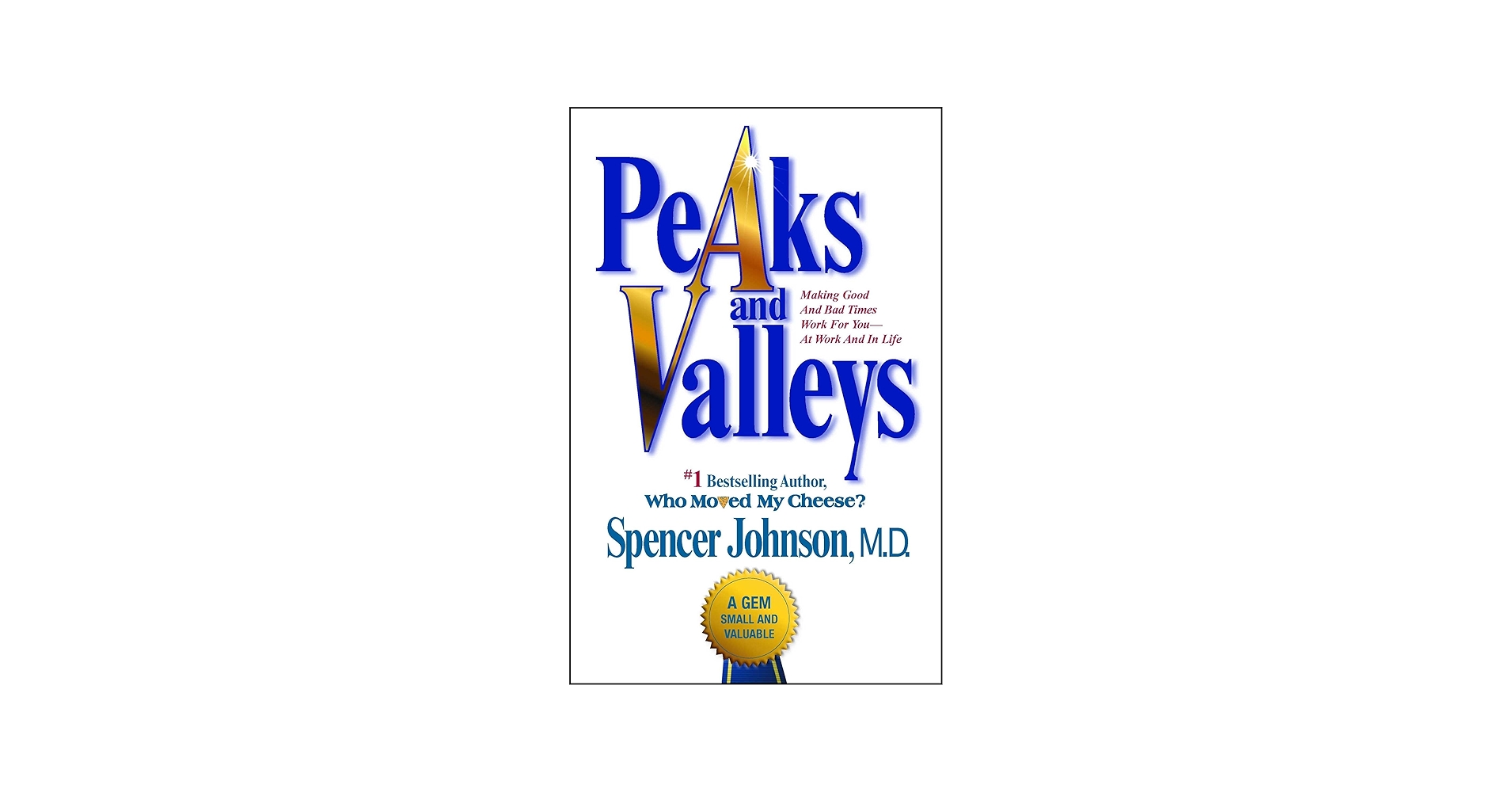
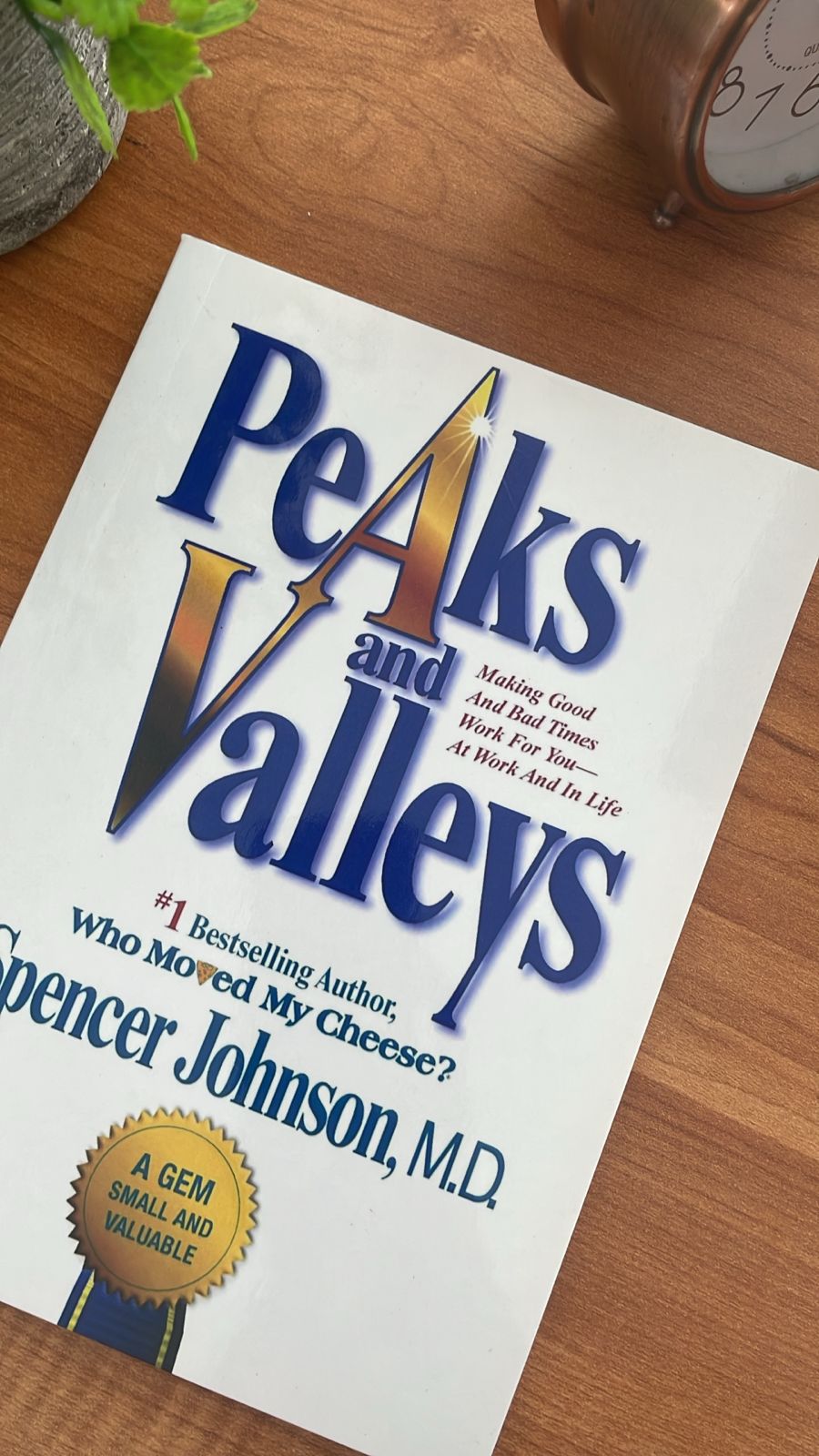
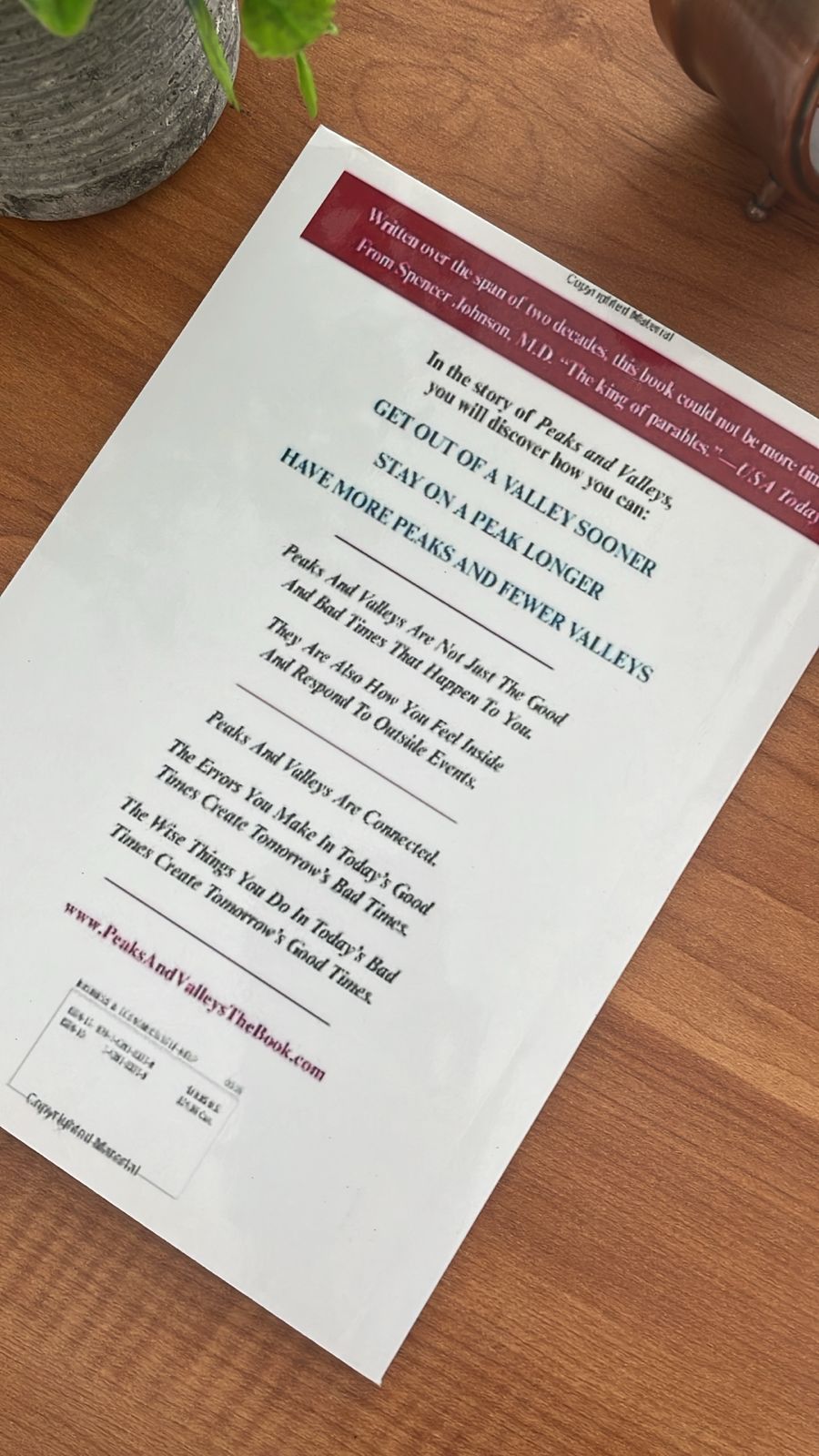
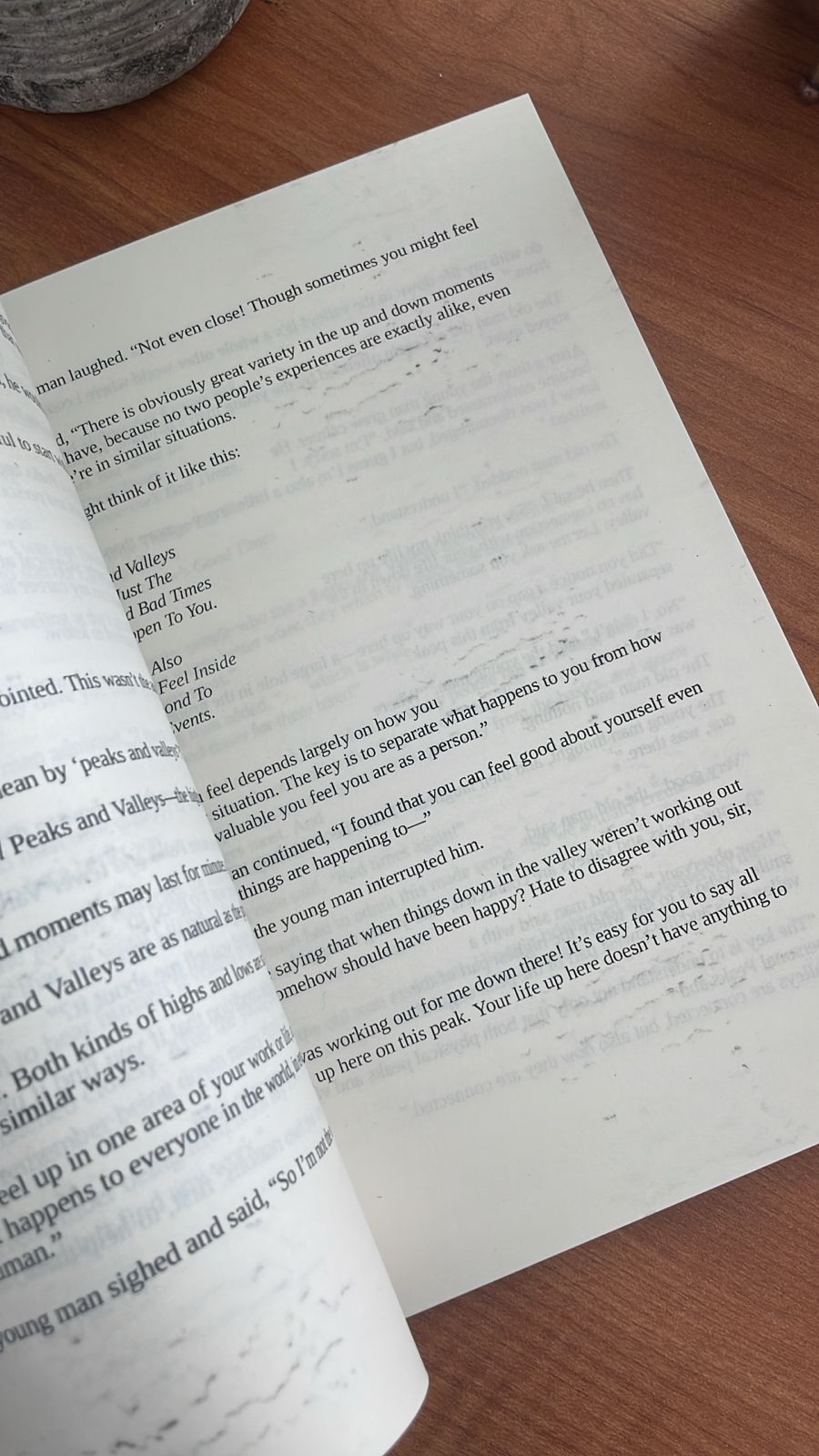
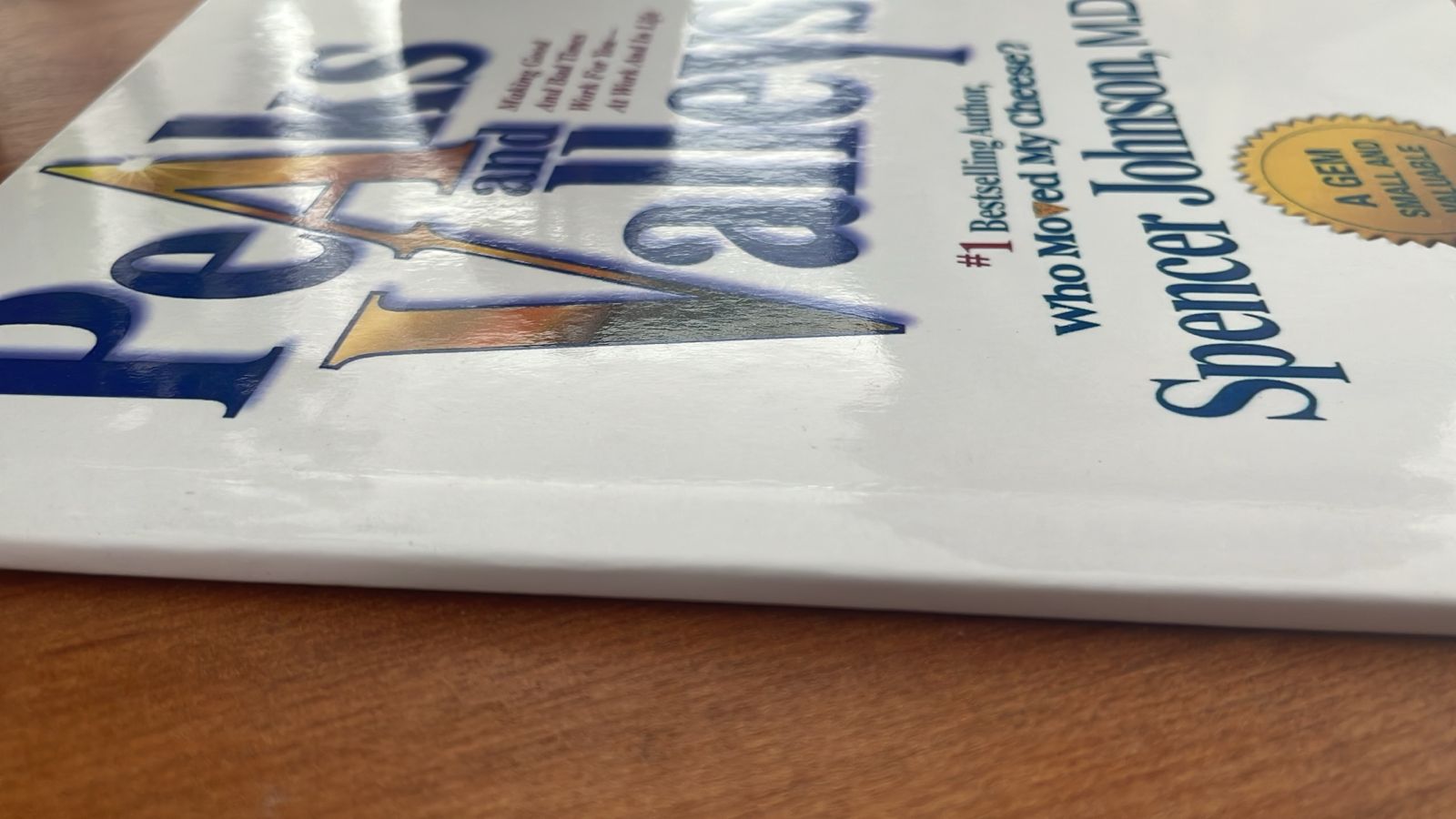





Peaks And Valleys by Spencer Johnson


රු1,300.00
3 X Rs. 433.33 or 8% Cashback with


or 3 X රු433.33 with


or up to 4 X රු325.00 with


Peaks and Valleys by Spencer Johnson is a simple yet powerful self-help book that explains how to handle both good times (peaks) and difficult times (valleys) in life and work. Written as a short story, the book uses a clear metaphor to show how people can manage success and failure more effectively.
It teaches that both positive and negative experiences are part of life, and understanding how to respond to them can lead to lasting success and happiness.
6 in stock
Peaks and Valleys by Spencer Johnson is a simple yet powerful motivational story about learning how to handle both the high points and difficult periods of life more wisely.
A young man lives unhappily in a valley.
He feels trapped.
Frustrated.
Unsatisfied with his work and his life.
Looking up toward the mountain peaks, he imagines that life must be much better there.
Eventually, he climbs out of the valley and meets an older man living peacefully on a peak.
The old man appears calm, successful and content.
At first, the young man assumes the old man’s life must simply be easier.
But through conversations and experiences, he gradually discovers something more important:
Everyone experiences peaks and valleys.
The real difference is not whether difficult periods happen.
It is how people respond to them.
The old man teaches him that peaks and valleys are connected.
What we do during a good period can influence how long it lasts.
What we do during a difficult period can influence how quickly we recover.
And sometimes our own fear, ego, habits or choices can keep us in a valley longer than necessary.
Peaks and Valleys by Spencer Johnson turns these ideas into an easy-to-understand parable that can be applied to:
Career setbacks.
Business challenges.
Relationships.
Personal goals.
Financial difficulties.
Success.
Failure.
Stress.
Change.
And everyday decision-making.
Rather than promising a life without problems, the book offers a more realistic idea:
Learn how to use both the good times and the bad times to create a better future.
Peaks and Valleys by Spencer Johnson – Book Overview
Peaks and Valleys by Spencer Johnson uses the physical image of mountains and valleys as a metaphor for life.
A peak represents a positive period.
Success.
Confidence.
Opportunity.
Progress.
Happiness.
A valley represents a difficult period.
Failure.
Stress.
Disappointment.
Loss.
Fear.
Uncertainty.
Most people naturally want to remain on the peaks forever.
But life does not work that way.
Circumstances change.
Markets change.
Relationships change.
Health changes.
Jobs change.
Even our own priorities change.
Johnson’s message is that a wise person learns how to navigate both conditions instead of expecting permanent success.
The Young Man in the Valley
The young man begins the story dissatisfied with his life.
He believes the valley itself is the problem.
If he can just reach the peak, everything will become better.
This reflects a common way of thinking.
We often tell ourselves:
“When I get that promotion, I’ll finally be happy.”
“When the business succeeds, everything will be easier.”
“When I earn more money, I’ll stop worrying.”
“When I finish university, life will become simple.”
“When I find the right relationship, I’ll feel complete.”
The peak becomes an imagined destination where all problems disappear.
But the story gradually challenges that assumption.
Peaks Do Not Last Forever
A peak is valuable.
Enjoy it.
Appreciate it.
Celebrate progress.
But do not assume it will remain unchanged forever.
A successful business can decline.
A strong career can face disruption.
A happy period can change.
This does not make success meaningless.
It means success should be used wisely.
Use Good Times Well
One of the strongest lessons in Peaks and Valleys by Spencer Johnson is that good times should not make us careless.
When life is going well, people may stop:
Learning.
Saving.
Planning.
Improving.
Listening.
Adapting.
Success can create confidence.
Too much confidence can become complacency.
Peaks Can Create Valleys
This is one of Johnson’s most useful ideas.
Sometimes what we do during a peak creates the next valley.
For example:
A business grows quickly.
The owner assumes growth will continue forever.
Costs rise.
Debt increases.
Customer feedback is ignored.
Then the market changes.
The same success that created confidence also created vulnerability.
Success Can Hide Problems
When results are good, weaknesses become easier to ignore.
A team may tolerate poor systems because revenue is growing.
A student may stop studying because previous exams were easy.
A professional may stop learning because a current skill is in demand.
Peaks can hide future problems.
Wise people use good periods to prepare.
Valleys Do Not Last Forever Either
Difficult times often feel permanent while we are inside them.
A failed exam can feel like the end of a career.
A business loss can feel impossible to recover from.
A rejection can feel personal and permanent.
But valleys change too.
That is an important message in Peaks and Valleys by Spencer Johnson.
Separate Facts From Fear
A valley becomes harder when we add fear to the actual problem.
Imagine losing a job.
The fact is:
“I lost my current job.”
Fear may add:
“I will never work again.”
“I am a failure.”
“No company will ever hire me.”
“My career is over.”
Those statements may feel true.
They are not necessarily facts.
The Story We Tell Ourselves Matters
Two people can experience the same event and interpret it differently.
Person A:
“This setback proves I cannot succeed.”
Person B:
“This is painful, but I need to understand what happened and decide what to do next.”
The situation may be identical.
The interpretation changes the response.
Valleys Can Teach
Nobody needs to pretend difficult experiences are pleasant.
Loss hurts.
Failure hurts.
Rejection hurts.
But valleys can reveal information that peaks hide.
During difficult periods, we may discover:
Which systems are weak.
Which relationships are genuine.
Which habits are hurting us.
Which skills we lack.
Which goals no longer matter.
Find the Useful Truth
Johnson’s approach encourages readers to ask:
What is true here?
What can I learn?
What can I control?
What needs to change?
These questions turn a valley into something more useful than simple suffering.
Do Not Make the Valley Worse
A difficult situation can become worse through poor reactions.
A financial problem becomes bigger through panic spending.
A bad exam result becomes worse when a student stops studying entirely.
A business problem becomes worse when leaders hide the numbers.
A relationship problem becomes worse when communication stops.
The valley may be real.
But we can still avoid digging it deeper.
Ego Can Keep Us in a Valley
Sometimes people know what needs to change but refuse because of pride.
“I can’t admit I was wrong.”
“I can’t ask for help.”
“I already invested too much.”
“I need to prove everyone wrong.”
Ego can turn a temporary setback into a long-term problem.
Adaptation Is Strength
Changing direction does not always mean giving up.
It may mean becoming smarter.
A business changes its product.
A student changes study methods.
A professional learns a new skill.
A team changes a process.
The goal can remain while the method changes.
The Old Man on the Peak
The old man represents experience.
He has lived through both success and difficulty.
That is why he appears calm.
Not because nothing bad ever happens to him.
But because he understands that both peaks and valleys are temporary.
Experience has changed his perspective.
Perspective Reduces Panic
When you understand that circumstances change, you are less likely to treat one moment as the whole story.
A bad week is not your entire life.
One failed project is not your whole career.
One successful month does not guarantee permanent success either.
Perspective helps with both extremes.
Enjoy the Peak Without Becoming Arrogant
Success should be enjoyed.
But it can become dangerous when success turns into:
Entitlement.
Overconfidence.
Carelessness.
Complacency.
The person who reaches a peak and assumes they can no longer fall may stop paying attention.
Humility Protects Success
Humility means remembering:
Conditions can change.
Other people helped.
There is still more to learn.
Today’s strategy may not work tomorrow.
This attitude makes it easier to adapt.
Prepare for Future Valleys
During good periods, build resilience.
Save money.
Develop skills.
Strengthen relationships.
Improve systems.
Take care of health.
Create alternatives.
Preparation during the peak can make the next valley much easier to manage.
Business Lesson From Peaks and Valleys
Imagine a bookstore experiencing strong sales.
A poor response would be:
“Sales are great. Nothing needs to change.”
A smarter response would be:
Why are sales strong?
Which categories are performing?
Which marketing campaigns are working?
Can we strengthen inventory systems?
Should we improve customer loyalty?
Can we create an emergency reserve?
Then if sales later decline, the business is better prepared.
The Valley Can Be Temporary
When something goes wrong, do not automatically redesign your entire life around the assumption that the problem will last forever.
First understand the situation.
Some valleys are short.
Others require major change.
The key is responding to reality rather than fear.
Fear Distorts Decisions
Fear can make us:
Overreact.
Underreact.
Avoid information.
Delay decisions.
Become defensive.
The more emotional the situation becomes, the more useful it may be to slow down and identify facts.
Ask Better Questions
Instead of:
“Why does this always happen to me?”
try:
“What exactly happened?”
“What part can I influence?”
“What can I learn?”
“What is the next useful action?”
Better questions often create better decisions.
Peaks and Valleys at Work
Peaks and Valleys by Spencer Johnson is especially useful for workplace situations.
Careers naturally contain peaks and valleys.
Peak:
Promotion.
Successful project.
Recognition.
Strong salary.
Valley:
Layoff.
Conflict.
Poor performance.
Rejected application.
Industry change.
No career moves upward in a perfect straight line.
Career Valleys
A career valley can sometimes become an opportunity to reconsider direction.
Maybe the job no longer fits.
Maybe your skills need updating.
Maybe another industry offers better opportunities.
The valley does not automatically mean:
Your career is over.
It may mean:
Your strategy needs to change.
Career Peaks
A promotion is a peak.
What should you do with it?
Celebrate.
But also learn.
Build relationships.
Develop leadership skills.
Save money.
Prepare for greater responsibility.
Do not assume the title alone guarantees future success.
Peaks and Valleys in Business
Entrepreneurs understand this cycle especially well.
One month:
High sales.
Next month:
Low sales.
One campaign:
Huge success.
Next campaign:
Weak results.
One product:
Popular.
Next product:
Ignored.
Business requires emotional stability through changing conditions.
Don’t Become Too Emotional About Short-Term Results
A business owner who becomes euphoric after every good week and devastated after every bad week will struggle to make rational decisions.
Look at patterns.
Understand data.
Separate temporary fluctuations from structural problems.
Financial Peaks and Valleys
Income also changes.
During a financial peak, people may increase spending too quickly.
Then when income falls, the lifestyle remains expensive.
A useful lesson is to use strong financial periods to:
Save.
Invest carefully.
Reduce unnecessary debt.
Build emergency reserves.
Relationships Have Peaks and Valleys Too
No healthy relationship feels perfect every day.
There are periods of:
Connection.
Distance.
Stress.
Joy.
Conflict.
Growth.
Expecting permanent emotional intensity can create disappointment.
Strong relationships survive because people learn to move through different seasons.
Health Has Peaks and Valleys
Energy levels change.
Fitness changes.
Health circumstances change.
A good period can be used to build habits that help during more difficult periods.
Sleep.
Exercise.
Nutrition.
Preventive care.
Routine.
Students Experience Peaks and Valleys
A student may perform extremely well one semester and struggle the next.
The danger during a peak is:
“I’m naturally smart, so I don’t need to prepare.”
The danger during a valley is:
“I failed, so I’m stupid.”
Both interpretations can be wrong.
Results are information.
Use them.
Do Not Confuse a Result With Identity
This is a useful extension of the book’s message.
“I failed an exam” is not the same as:
“I am a failure.”
“My business lost money” is not the same as:
“I am a bad entrepreneur.”
A valley is a situation.
It does not automatically define your identity.
Change Happens
Spencer Johnson is especially well known for writing about change, most famously in Who Moved My Cheese?
Peaks and Valleys by Spencer Johnson continues that interest from a different angle.
Instead of focusing primarily on adapting to change, it focuses on how people manage the natural cycles of success and difficulty.
Is Peaks and Valleys Similar to Who Moved My Cheese?
Yes in style.
Both books use:
Short stories.
Simple metaphors.
Practical lessons.
Easy language.
Short length.
But they focus on different problems.
Who Moved My Cheese? focuses mainly on responding to change.
Peaks and Valleys focuses on handling good times and bad times.
Is Peaks and Valleys a Self-Help Book?
Yes.
It can be categorized under:
Self-Help & Personal Development
and also has relevance to:
Business.
Career development.
Motivation.
Leadership.
The publisher describes it as a parable for applying practical principles in work and life.
Is Peaks and Valleys a Novel?
Not in the conventional literary-fiction sense.
It is better described as a motivational parable.
The fictional story exists mainly to communicate practical ideas.
Is It Easy to Read?
Yes.
The book is intentionally short and accessible.
The current Simon & Schuster paperback editions are around 112 pages.
This makes it suitable for readers who want meaningful ideas without a long, technical self-help book.
Can You Read It in One Sitting?
Many readers could.
Because the book is short and written as a story, it can be completed much faster than many business or psychology books.
However, the useful part is not simply finishing it.
It is thinking about:
What peak am I currently in?
What valley am I currently in?
What am I doing that is making it better or worse?
Is the Book Scientifically Based?
It is primarily a motivational parable rather than an academic psychology textbook.
Readers should treat its principles as practical reflections, not as a comprehensive scientific theory of human behavior.
For clinical depression, severe anxiety, trauma or other mental-health conditions, motivational books should not replace appropriate professional support.
The Peak Is Not the Goal Forever
This is perhaps one of the deepest lessons in Peaks and Valleys by Spencer Johnson.
Many people spend life trying to reach permanent peaks.
Permanent success.
Permanent happiness.
Permanent certainty.
But life is dynamic.
The goal is not eliminating every valley.
The goal is becoming better at moving through them.
Emotional Stability
A person who understands cycles may become calmer.
During success:
Enjoy it without assuming it will last forever.
During difficulty:
Respond without assuming it will last forever.
That emotional balance can improve decision-making.
Gratitude During Peaks
Good times are easy to take for granted.
A peak becomes more valuable when you recognize it while it is happening.
Health.
Stable income.
Good relationships.
Progress.
Peace.
Gratitude does not prevent future difficulties.
It helps you actually experience the good period instead of constantly chasing the next achievement.
Learn While Things Are Going Well
Success is an excellent time for analysis.
Ask:
Why is this working?
What should I continue?
What could still go wrong?
How can I strengthen this?
Learning during a peak helps preserve what created the success.
Learn While Things Are Going Badly
A valley requires different questions.
What changed?
What did I miss?
Which assumption was wrong?
What is outside my control?
What action is still available?
This turns difficulty into information.
Do Not Waste Either Experience
That may be the central idea behind the book.
Do not waste the peak through arrogance.
Do not waste the valley through despair.
Use both.
Edition Details
Several editions of Peaks and Valleys exist.
Simon & Schuster’s current UK paperback lists:
Title: Peaks and Valleys
Subtitle: Making Good and Bad Times Work for You – At Work and in Life
Author: Spencer Johnson
Publisher: Simon & Schuster UK
ISBN-13: 9781847396488
Pages: 112
A current Atria Books U.S. trade paperback uses ISBN 9781501108082 and is also listed at 112 pages.
Because multiple editions exist, use the ISBN printed on your physical copy when filling the WooCommerce ISBN field.
Important Themes
Peaks and Valleys by Spencer Johnson explores:
- Success
- Failure
- Change
- Resilience
- Perspective
- Personal growth
- Career development
- Business challenges
- Adaptability
- Fear
- Ego
- Gratitude
- Preparation
- Decision-making
- Learning from setbacks
- Managing success
- Emotional resilience
- Work and life
- Motivation
- Self-awareness
7 Powerful Lessons From Peaks and Valleys by Spencer Johnson
- Good and bad times are temporary. Neither success nor difficulty remains unchanged forever, so avoid becoming arrogant during peaks or hopeless during valleys.
- How you use a peak influences what comes next. Success should be used to learn, prepare, save, improve and strengthen the systems that created it.
- Do not make a valley worse through fear. Separate the actual problem from frightening assumptions about what might happen next.
- Look for the useful truth inside difficult situations. A setback may reveal weaknesses, outdated assumptions or changes that need to be made.
- Ego can turn a short valley into a long one. Refusing to admit mistakes, ask for help or change direction can prolong unnecessary difficulty.
- Enjoy success while remaining prepared. Appreciation and humility help you benefit from good times without assuming they are permanent.
- You can create your next peak through better choices today. The future is not controlled entirely by circumstances; your responses, habits and decisions influence what happens next.
Why Read Peaks and Valleys by Spencer Johnson?
Peaks and Valleys by Spencer Johnson is an excellent choice for readers interested in self-help, motivation, career development, business, resilience, success, failure, personal growth and handling change more calmly.
It is especially useful for readers currently experiencing:
A difficult career period.
Business uncertainty.
Failure.
Low motivation.
Financial pressure.
A major change.
Or even a period of success where they want to avoid becoming complacent.
The book does not promise that problems will disappear.
Instead, it offers a simple framework:
Understand where you are.
Use the situation intelligently.
Do not allow fear or ego to make it worse.
Prepare for what comes next.
Who Should Read This Book?
Peaks and Valleys by Spencer Johnson may especially appeal to:
- Spencer Johnson readers
- Fans of Who Moved My Cheese?
- Students
- Entrepreneurs
- Managers
- Employees facing career change
- Business owners
- Readers going through setbacks
- People trying to manage success wisely
- Readers interested in short motivational books
- Leaders
- Anyone facing an uncertain period in life
Peaks and Valleys by Spencer Johnson – Use Every Season of Life
Peaks and Valleys by Spencer Johnson teaches a simple truth:
Life is not one continuous climb.
Sometimes you are moving upward.
Sometimes you are on the peak.
Sometimes you are heading downward.
Sometimes you are deep in the valley.
The mistake is believing that any one of these places is permanent.
Success can change.
Failure can change.
Circumstances can change.
And your response can change.
The young man in the story initially believes happiness exists somewhere else.
On the mountain.
At the top.
In a better situation.
But the wisdom he discovers is more useful.
You do not control every mountain.
You do not control every valley.
But you can influence what you do while you are there.
During a peak:
Enjoy it.
Learn from it.
Stay humble.
Prepare.
During a valley:
Face the truth.
Avoid panic.
Learn.
Adapt.
Keep moving.
This makes Peaks and Valleys by Spencer Johnson especially valuable because it does not ask readers to pretend that everything is positive.
Bad times are real.
The lesson is simply that a difficult chapter does not need to become the entire story.
And a successful chapter should not make you forget that circumstances can change.
For readers who want a short, accessible and practical story about handling success and setbacks more wisely, Peaks and Valleys by Spencer Johnson offers memorable lessons that can be applied at work, in business and throughout everyday life.
Learn more about Peaks and Valleys by Spencer Johnson on the official Simon & Schuster website.
Explore more personal development and motivational books at Bargain Books.
Be the first to review “Peaks And Valleys by Spencer Johnson”
Related products
Non-Fiction & Knowledge
රු2,450.00
3 X Rs. 816.67 or 8% Cashback with
or 3 X රු816.67 with
or up to 4 X රු612.50 with
-17%

Out of stock
Non-Fiction & Knowledge
Original price was: රු2,900.00.රු2,400.00Current price is: රු2,400.00.
3 X Rs. 800.00 or 8% Cashback with
or 3 X රු800.00 with
or up to 4 X රු600.00 with
-29%

Self-Help & Psychology
Original price was: රු1,750.00.රු1,250.00Current price is: රු1,250.00.
3 X Rs. 416.67 or 8% Cashback with
or 3 X රු416.67 with
or up to 4 X රු312.50 with
Out of stock
Self-Help & Psychology
රු1,900.00
3 X Rs. 633.33 or 8% Cashback with
or 3 X රු633.33 with
or up to 4 X රු475.00 with
-26%
Non-Fiction & Knowledge
The 7 Habits of Highly Effective People by Stephen R. Covey – Blue Cover
Original price was: රු2,300.00.රු1,700.00Current price is: රු1,700.00.
3 X Rs. 566.67 or 8% Cashback with
or 3 X රු566.67 with
or up to 4 X රු425.00 with
-24%
Non-Fiction & Knowledge
Original price was: රු2,300.00.රු1,750.00Current price is: රු1,750.00.
3 X Rs. 583.33 or 8% Cashback with
or 3 X රු583.33 with
or up to 4 X රු437.50 with
Out of stock
Non-Fiction & Knowledge
රු1,500.00
3 X Rs. 500.00 or 8% Cashback with
or 3 X රු500.00 with
or up to 4 X රු375.00 with
-34%

Non-Fiction & Knowledge
Original price was: රු2,250.00.රු1,490.00Current price is: රු1,490.00.
3 X Rs. 496.67 or 8% Cashback with
or 3 X රු496.67 with
or up to 4 X රු372.50 with
Reviews
There are no reviews yet.