
No products in the cart.
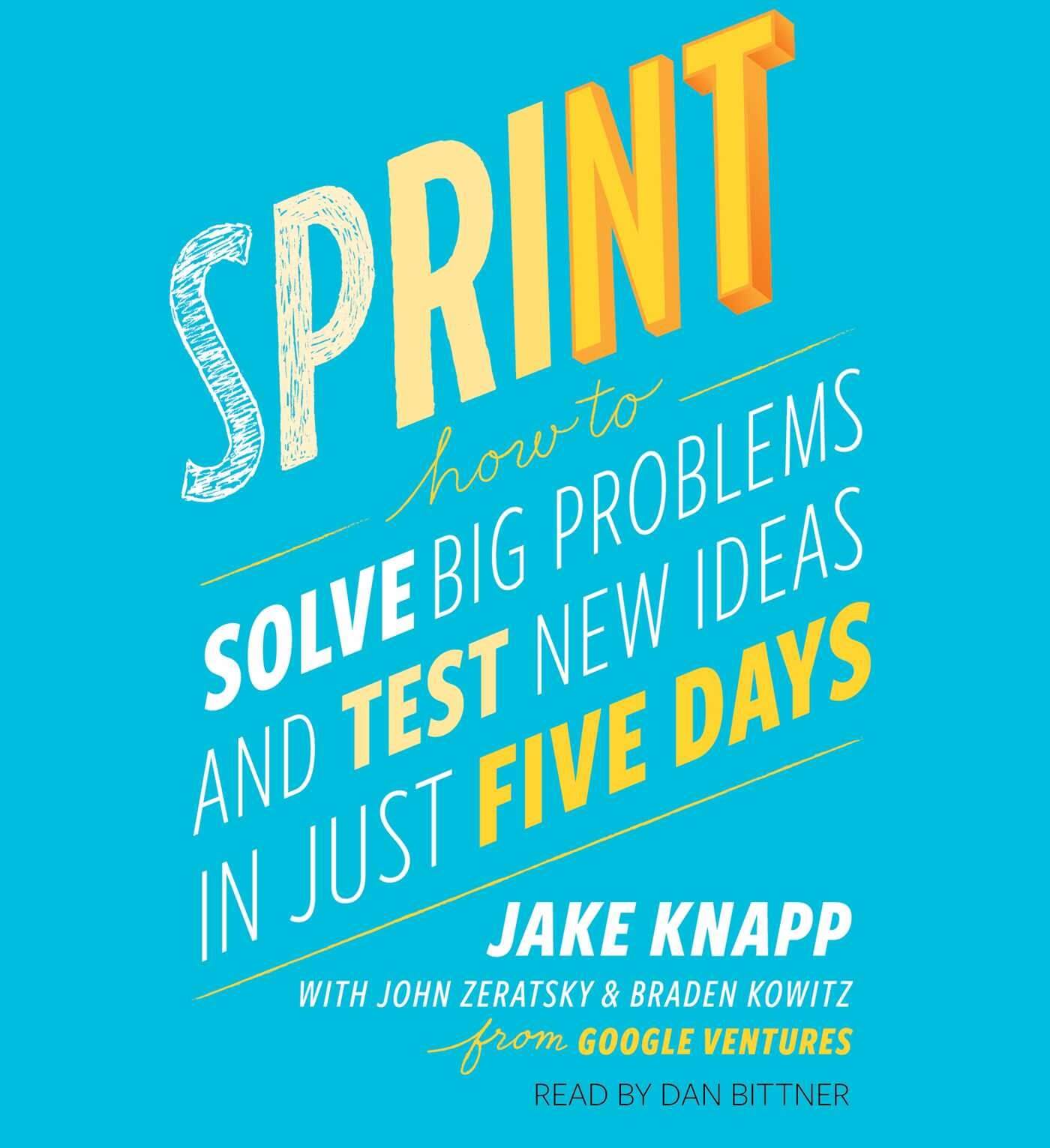
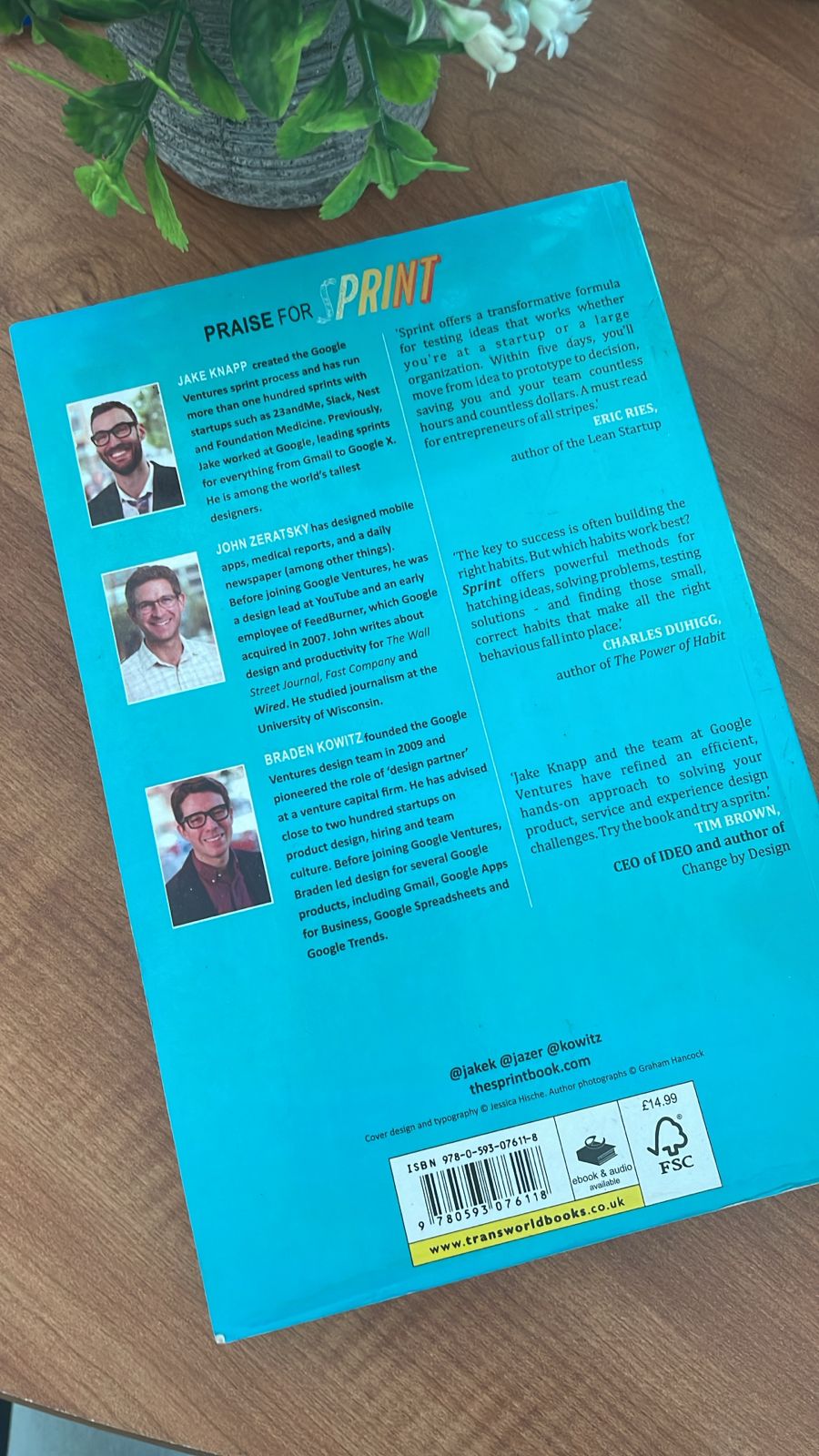


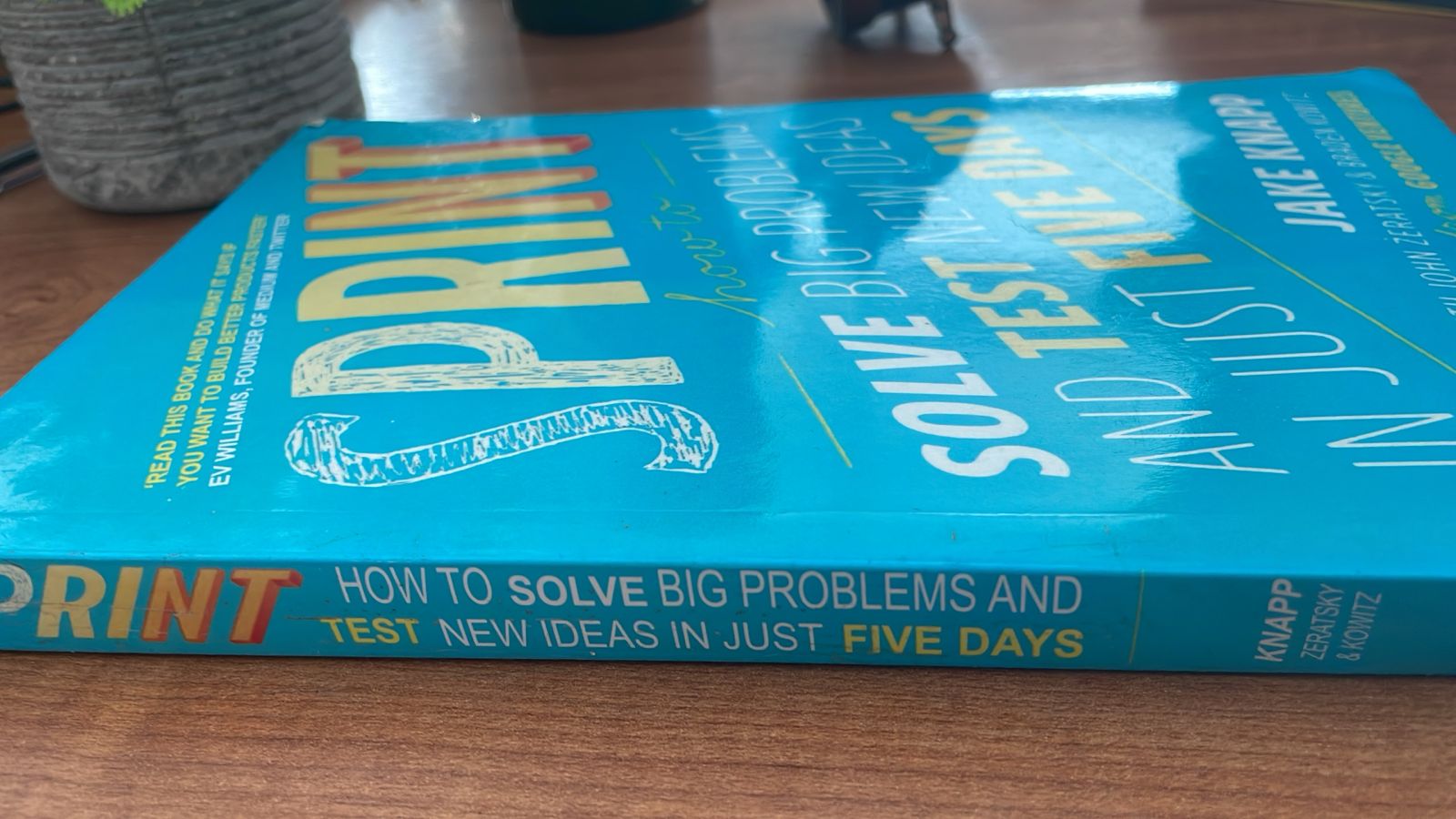


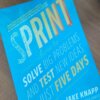



Sprint by Jake Knapp, John Zeratsky and Braden Kowitz
Sprint by Jake Knapp, John Zeratsky, and Braden Kowitz is a practical business guide for solving difficult problems and testing new ideas in just five days.
Instead of spending months discussing possibilities, teams can use the Design Sprint process to move quickly from a problem to a realistic prototype.
That prototype can then be tested with real customers.
The result is faster learning before a company invests significant time, money, and resources.
About Sprint
Sprint introduces a structured five-day method originally created by Jake Knapp at Google.
The process was later developed and tested through work at Google Ventures.
It is designed for teams facing an important problem, opportunity, product decision, or business challenge.
The goal is not to build an entire finished product in one week.
The goal is to answer important questions quickly.
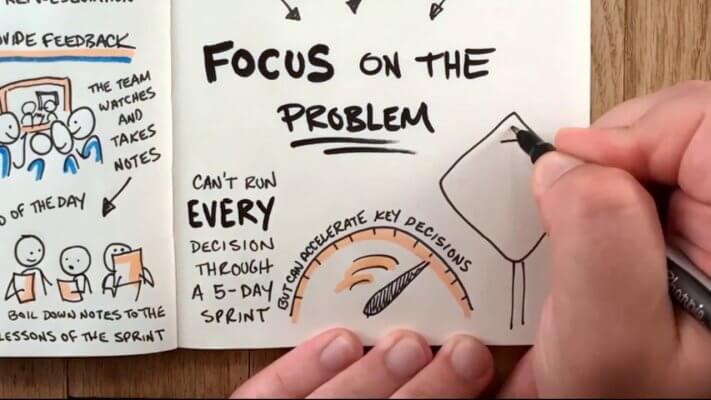
Teams identify the challenge, generate possible solutions, choose a direction, create a realistic prototype, and test it with users.
Why the Design Sprint Method Matters
Companies often spend weeks or months discussing ideas.
Meetings can continue without producing a clear decision.
Teams may also invest heavily in products before discovering whether customers actually want them.
A Design Sprint changes that process.
Instead of debating endlessly, the team creates something people can react to.
Real feedback replaces assumptions.
This helps businesses learn faster while reducing unnecessary risk.
5 Powerful Steps from Sprint
1. Understand the Problem
The process begins by defining the challenge.
Teams need to understand where they want to go and what could prevent them from getting there.
The authors encourage participants to think about long-term goals.
They also identify the most important questions that must be answered.
Without a clearly defined problem, it is easy to spend time solving the wrong thing.
2. Generate Possible Solutions
Once the challenge is clear, team members explore possible solutions.
This stage does not depend on one person having the perfect idea.
Different participants can bring different experience and perspectives.
Ideas are developed individually before being compared.
This can prevent louder personalities from dominating the creative process.
The aim is to create several strong possibilities.
3. Decide What to Test
A sprint moves quickly.
There is not enough time to develop every idea.
The team must choose which solution has the strongest potential.
Structured decision-making helps the group avoid endless debate.
The selected ideas are then combined into a clear plan.
By the end of this stage, everyone should understand what the team intends to prototype.
4. Build a Realistic Prototype
The next stage is one of the most important parts of Sprint.
The team creates a prototype that looks realistic enough for customers to understand and use.
However, it is not a complete finished product.
The goal is to create only what is necessary for the test.
This saves enormous amounts of development time.
A realistic prototype allows the team to learn without first building the full solution.
5. Test with Real Customers
The final stage is testing.
Customers interact with the prototype while the team observes their reactions.
What do users understand immediately?
Where do they become confused?
What do they like?
What expectations do they have?
These observations provide evidence the team can use when deciding what to do next.
From Problem to Prototype in Five Days
The strength of the Design Sprint process is its speed.
Each day has a purpose.
The team does not attempt to solve everything simultaneously.
The structure keeps everyone focused on the most important decisions.
By the end of the week, the organization has learned something meaningful.
The original idea may be validated.
It may need significant changes.
Or the test may reveal that the team should explore another direction.
All three outcomes can be useful.
Stop Wasting Time on Endless Meetings
One of the problems addressed in Sprint is inefficient collaboration.
Meetings can consume hours without producing decisions.
Different people may repeat the same arguments.
The Design Sprint method creates deadlines and structured activities.
Everyone knows what needs to happen next.
This can make teamwork more focused.
Instead of simply talking about an idea, the team works toward something that can actually be tested.
Test Before You Invest
Imagine spending six months building a new product.
The team works hard.
The company invests significant money.
Then customers finally see the product and reveal that they do not understand or want it.
That is an expensive lesson.
The sprint method attempts to move that learning much earlier.
A prototype can reveal important problems before full development begins.
This makes the method particularly valuable for startups and product teams.
Useful for More Than Technology Companies
The method was developed in the technology and startup world.
However, the principles can be applied more broadly.
Businesses can use sprints to test services.
Marketing teams can test campaign ideas.
Organizations can explore new customer experiences.
Nonprofits and educational teams can also use structured problem-solving techniques.
The key requirement is an important question that can benefit from rapid experimentation.
Better Team Decision-Making
Teams often struggle when everyone has a different opinion.
One person may prefer option A.
Another strongly supports option B.
Without a process, the conversation can become repetitive.
Sprint introduces methods for gathering ideas and evaluating them without depending entirely on open discussion.
This allows different voices to contribute while still moving toward a decision.
The objective is not perfect agreement.
The objective is progress.
Customer Feedback Matters
A business can believe an idea is excellent.
Customers may disagree.
That is why testing is so important.
Real users can reveal problems that internal teams never noticed.
They may misunderstand an interface.
They may respond positively to something the company considered unimportant.
They may completely reject an assumption.
Customer feedback gives teams evidence instead of guesses.
Reduce Business Risk
A sprint does not eliminate risk.
No business method can guarantee that an idea will succeed.
However, early testing can reduce uncertainty.
A company can discover serious problems before making a much larger investment.
This makes the method especially useful when the stakes are high.
It can also help teams decide which opportunities deserve additional resources.
Who Should Read This Book?
Sprint is ideal for entrepreneurs, product managers, designers, developers, marketers, business owners, and team leaders.
Startup founders may find the rapid-testing method especially useful.
Product teams can use it when deciding what features or concepts to pursue.
Managers can use the principles to improve collaborative decision-making.
Students interested in entrepreneurship, innovation, UX, and product development can also learn from the framework.
The book is particularly valuable for anyone who regularly hears the question, “How do we know if this idea will work?”
About the Authors
Jake Knapp created the Design Sprint process while working at Google.
He later brought the method to Google Ventures.
John Zeratsky has worked in product and design roles and was also a partner at Google Ventures.
Braden Kowitz founded the Google Ventures design team and has advised many startups on product design and company building.
Together, the authors transformed their practical experience into a repeatable process for testing ideas quickly.
For additional information, readers can visit the official Simon & Schuster page for Sprint.
Product Details
Title: Sprint
Subtitle: How to Solve Big Problems and Test New Ideas in Just Five Days
Authors: Jake Knapp, John Zeratsky and Braden Kowitz
Genre: Business / Entrepreneurship / Product Design / Innovation
Language: English
Publisher: Simon & Schuster
Original Publication: 2016
Hardcover ISBN-13: 9781501121746
Hardcover Pages: 288
Page count, ISBN, dimensions, cover design, and format can vary between editions.
Always check your physical copy before entering final WooCommerce specifications.
Explore More Business Books
Sprint provides a practical alternative to spending months debating whether an idea might work.
The five-day framework encourages teams to focus on the problem, explore solutions, create a prototype, and test it with real people.
That approach can save time.
It can reduce expensive mistakes.
Most importantly, it helps teams replace assumptions with evidence.
Readers interested in entrepreneurship, innovation, management, and business strategy can explore more Business, Finance & Economics Books at Bargain Books.
For teams facing a difficult problem or an exciting new idea, Sprint offers a clear framework for learning quickly and deciding what to do next.
Learn more about the Design Sprint method on the
official Simon & Schuster Sprint page
.
Explore more
Business, Finance & Economics Books at Bargain Books
.
| Author | Jake Knapp |
|---|---|
| Type | Paperback Printed Book |
| ISBN/ISSN | 0241493218, 978-0241493212 |
| Language | English |
| Pages | 128 |
Be the first to review “Sprint by Jake Knapp”
Related products
-24%

Out of stock
Non-Fiction & Knowledge
Original price was: රු2,100.00.රු1,600.00Current price is: රු1,600.00.
3 X Rs. 533.33 or 8% Cashback with


or 3 X රු533.33 with


or up to 4 X රු400.00 with

-26%
Non-Fiction & Knowledge
The 7 Habits of Highly Effective People by Stephen R. Covey – Blue Cover
Original price was: රු2,300.00.රු1,700.00Current price is: රු1,700.00.
3 X Rs. 566.67 or 8% Cashback with
or 3 X රු566.67 with
or up to 4 X රු425.00 with
-24%

Out of stock
Non-Fiction & Knowledge
Original price was: රු2,500.00.රු1,900.00Current price is: රු1,900.00.
3 X Rs. 633.33 or 8% Cashback with
or 3 X රු633.33 with
or up to 4 X රු475.00 with

Non-Fiction & Knowledge
රු2,450.00
3 X Rs. 816.67 or 8% Cashback with
or 3 X රු816.67 with
or up to 4 X රු612.50 with
-34%

Non-Fiction & Knowledge
Original price was: රු2,250.00.රු1,490.00Current price is: රු1,490.00.
3 X Rs. 496.67 or 8% Cashback with
or 3 X රු496.67 with
or up to 4 X රු372.50 with

Out of stock
Non-Fiction & Knowledge
රු1,800.00
3 X Rs. 600.00 or 8% Cashback with
or 3 X රු600.00 with
or up to 4 X රු450.00 with

Out of stock
Autobiography
රු2,750.00
3 X Rs. 916.67 or 8% Cashback with
or 3 X රු916.67 with
or up to 4 X රු687.50 with
-33%

Self-Help & Psychology
Original price was: රු2,300.00.රු1,550.00Current price is: රු1,550.00.
3 X Rs. 516.67 or 8% Cashback with
or 3 X රු516.67 with
or up to 4 X රු387.50 with
Reviews
There are no reviews yet.