
No products in the cart.
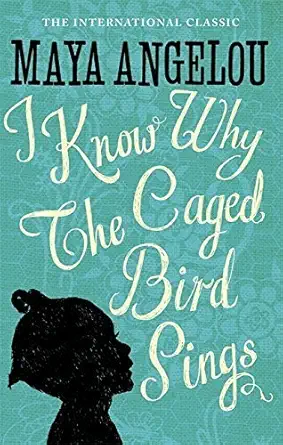
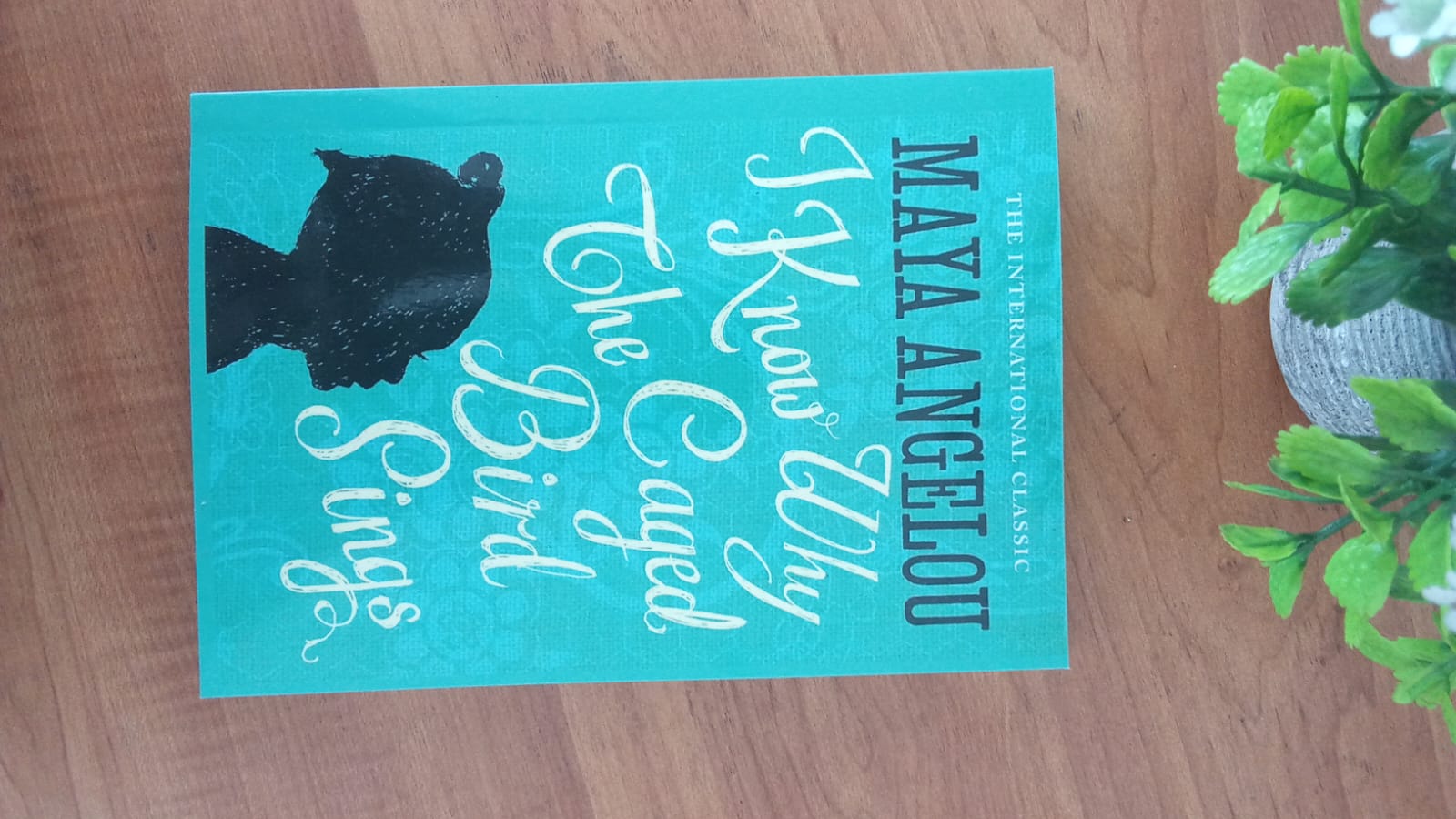
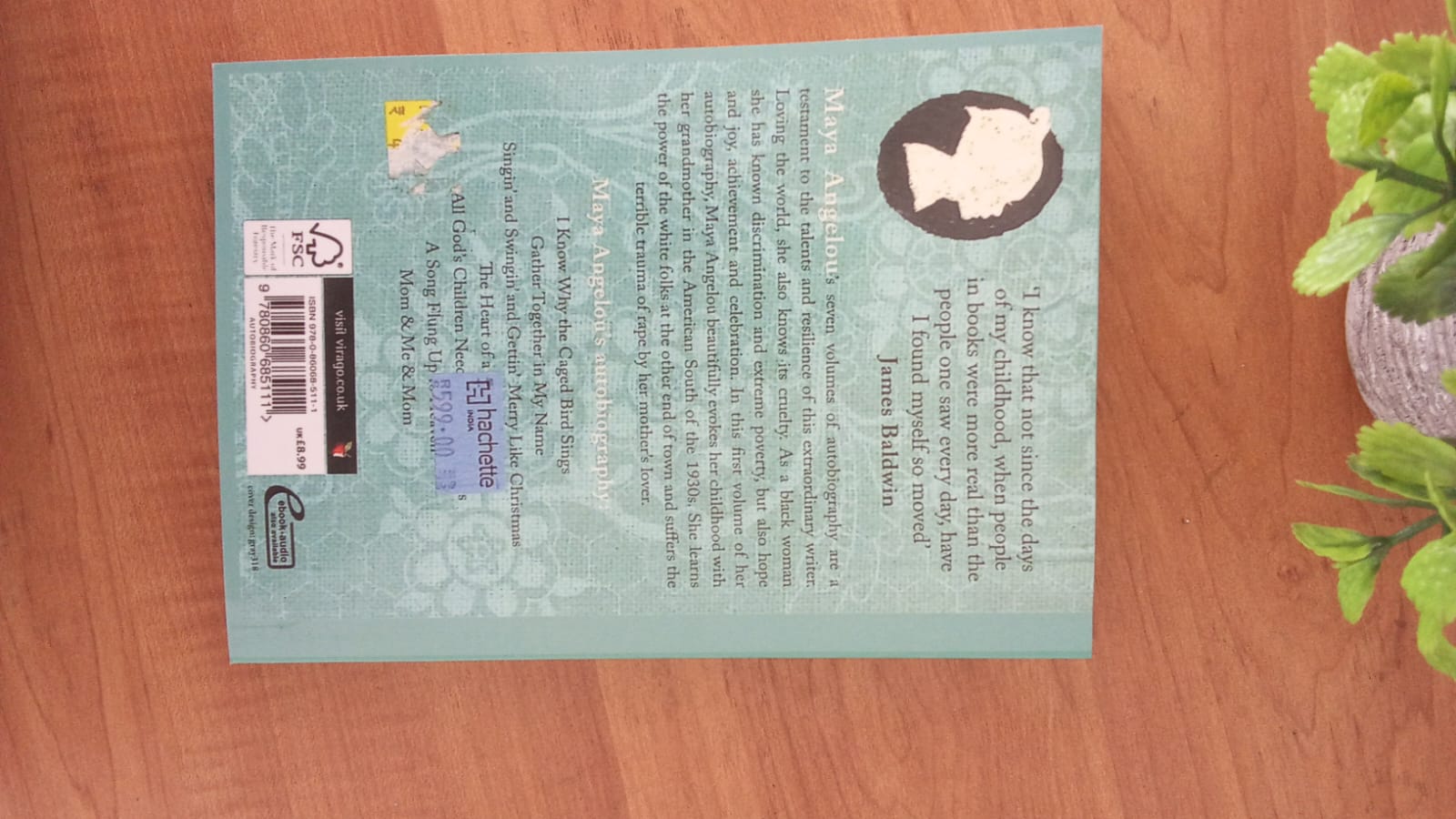
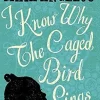

I Know Why The Caged Bird Sings by Dr Maya Angelou
රු1,750.00
3 X Rs. 583.33 or 8% Cashback with


or 3 X රු583.33 with


or up to 4 X රු437.50 with


I Know Why the Caged Bird Sings is a powerful and inspiring memoir that tells the story of Maya Angelou’s early life, exploring themes of identity, resilience, and self-expression. Through honest and emotional storytelling, the book reveals her journey of overcoming hardship and finding her voice. This timeless classic highlights the strength of the human spirit and the importance of courage, dignity, and hope.
3 in stock
I Know Why the Caged Bird Sings by Maya Angelou is a powerful, beautifully written, and unforgettable memoir about childhood, racism, family, trauma, identity, literature, resilience, dignity, and the difficult journey toward finding one’s own voice.
Maya Angelou became one of the most influential writers, poets, and public voices of the twentieth century.
But before becoming the woman known around the world, she was a young girl named Marguerite growing up in a society shaped by racism, inequality, family separation, and expectations about who she was allowed to become.
I Know Why the Caged Bird Sings by Maya Angelou tells the story of those early years with extraordinary honesty.
Maya and her older brother Bailey are sent to live with their grandmother in the small Southern town of Stamps, Arkansas.
There, Maya begins learning about family, community, religion, education, prejudice, and the painful racial divisions surrounding everyday life.
Later, she experiences devastating trauma that deeply affects the way she communicates with the world.
For a period, silence becomes a form of protection.
But books, language, poetry, caring people, and her own growing strength gradually help her rediscover her voice.
The memoir transforms personal experience into a larger exploration of what it means to survive circumstances designed to make someone feel powerless.
I Know Why the Caged Bird Sings by Maya Angelou – Book Overview
I Know Why the Caged Bird Sings by Maya Angelou begins during Maya’s childhood.
She and her brother Bailey are sent away from their parents to live with their paternal grandmother, Annie Henderson, whom they call Momma.
The siblings grow up in Stamps, Arkansas, where Momma runs a store and provides structure, discipline, faith, and stability.
Maya quickly becomes aware of racial inequality.
She sees the differences between how Black and white people are treated.
She witnesses prejudice.
She experiences humiliation.
She begins understanding that society may judge her before knowing anything about her personality, intelligence, or dreams.
But racism is not the only challenge Maya faces.
Her childhood also includes family separation, loneliness, insecurity, and traumatic experiences that shape the person she becomes.
Throughout everything, language gradually becomes one of the most important forces in her life.
Maya and Bailey
The relationship between Maya and her older brother Bailey is one of the emotional foundations of I Know Why the Caged Bird Sings by Maya Angelou.
Bailey is more than a sibling.
He is a companion.
Protector.
Friend.
And one of the people who understands Maya most deeply.
Their shared childhood experiences create a strong bond.
When adults make decisions that affect their lives, the siblings often have each other.
That connection provides emotional security during unstable periods.
The memoir shows how sibling relationships can become especially important when children experience uncertainty around them.
Growing Up in Stamps, Arkansas
Stamps is one of the most important settings in I Know Why the Caged Bird Sings by Maya Angelou.
Maya grows up within a Black community shaped by family, faith, work, tradition, and the realities of segregation.
Her grandmother’s store becomes a centre of daily life.
People visit.
Stories are exchanged.
Workers prepare for long days.
Children observe adults.
But beyond the warmth of the community exists the constant reality of racism.
Maya learns early that there are social rules based entirely on race.
She sees adults forced to behave carefully around white people.
She witnesses disrespect that she knows is undeserved.
These experiences shape her understanding of dignity and injustice.
Racism and Inequality
Racism is one of the central themes in I Know Why the Caged Bird Sings by Maya Angelou.
Angelou does not discuss racism only as a political concept.
She shows how it enters ordinary life.
Where people live.
How they are addressed.
What opportunities are available.
How children understand themselves.
How adults behave in public.
How fear influences decisions.
This personal perspective makes the subject especially powerful.
For a child, racism is not an abstract historical issue.
It becomes something experienced directly.
Maya has to understand why people who know nothing about her may still believe she is inferior.
That realization affects identity.
But the memoir also shows her gradually learning that racist assumptions do not determine her actual worth.
Momma – Strength and Stability
Maya’s grandmother, Momma, plays an important role throughout I Know Why the Caged Bird Sings by Maya Angelou.
She is disciplined.
Religious.
Independent.
Hardworking.
And deeply respected within her community.
Momma owns and operates her store, demonstrating strength and economic independence in circumstances where both racism and sexism create barriers.
Through Momma, Maya witnesses a particular kind of strength.
Not loud or dramatic.
Steady.
Controlled.
Persistent.
Momma’s dignity becomes especially important when other people behave disrespectfully toward her.
She demonstrates that maintaining self-respect can itself become a form of resistance.
Childhood and Abandonment
The memoir also explores the emotional impact of children being separated from their parents.
Maya and Bailey are sent away at a young age.
Even though their grandmother provides stability, the children still experience feelings connected to abandonment and uncertainty.
Why were they sent away?
Did their parents want them?
Where do they truly belong?
These questions affect Maya’s sense of identity.
I Know Why the Caged Bird Sings by Maya Angelou shows that childhood experiences can influence the way people understand love, security, and self-worth long into the future.
Trauma and Silence
One of the most difficult parts of Maya’s childhood involves sexual abuse.
Readers should know that I Know Why the Caged Bird Sings by Maya Angelou discusses sexual violence and its emotional consequences.
After experiencing devastating trauma, Maya becomes deeply affected by what happened.
She withdraws.
For years, she speaks very little.
Silence becomes a way of protecting herself.
The memoir shows how trauma can change someone’s relationship with language, trust, and other people.
Maya’s silence is not presented as simple shyness.
It is connected to fear, guilt, confusion, and the overwhelming emotional burden placed on a child.
Finding Her Voice Again
The recovery of Maya’s voice is one of the most moving elements of I Know Why the Caged Bird Sings by Maya Angelou.
Books become important.
Poetry becomes important.
Language becomes important.
A supportive adult helps Maya understand that words are not simply something written on a page.
They can be spoken.
Felt.
Performed.
Shared.
Language begins becoming a path back toward connection.
This transformation is especially meaningful because Maya later becomes famous precisely for her extraordinary voice as a poet, writer, speaker, and performer.
The child who once stopped speaking eventually becomes known around the world for the power of her words.
The Power of Literature
Literature plays an important role in Maya’s development.
She finds comfort and possibility in books.
Reading introduces her to voices beyond her immediate environment.
It gives her language for experiences she may not yet know how to explain.
I Know Why the Caged Bird Sings by Maya Angelou demonstrates why books can be especially powerful for children who feel isolated.
Reading can provide companionship.
Perspective.
Imagination.
A sense that other possibilities exist.
Literature helps Maya understand that language can create worlds larger than the circumstances surrounding her.
Education and Self-Worth
Education also becomes important to Maya’s growing sense of identity.
Learning provides something racism cannot easily take away.
Knowledge.
Language.
Understanding.
The ability to think independently.
I Know Why the Caged Bird Sings by Maya Angelou shows how education can become a form of empowerment.
When a society sends messages suggesting someone is less capable because of race or gender, education can provide evidence that those assumptions are false.
Maya’s intellectual development strengthens her confidence.
Identity and Belonging
Identity is another major theme.
Maya is trying to understand several things simultaneously.
Who is she within her family?
Where is home?
What does it mean to be a Black girl in America?
What does beauty mean?
What kind of future can she imagine?
I Know Why the Caged Bird Sings by Maya Angelou captures how identity develops gradually.
Children absorb messages from family.
School.
Religion.
Media.
Society.
Some messages build confidence.
Others create shame.
Growing up often involves deciding which messages deserve to be believed.
Beauty and Social Expectations
Maya becomes aware from childhood that dominant ideas of beauty often centre white features.
This affects the way she imagines herself.
I Know Why the Caged Bird Sings by Maya Angelou explores how damaging beauty standards can become when children rarely see themselves represented positively.
Beauty is not simply about appearance.
It becomes connected to belonging.
Acceptance.
Worth.
Maya’s growing confidence requires challenging assumptions about what she is supposed to look like in order to deserve admiration.
This theme remains highly relevant in discussions of representation today.
Family Is Complicated
Family in I Know Why the Caged Bird Sings by Maya Angelou is loving but complicated.
Maya experiences life with her grandmother.
Brother.
Mother.
Father.
Other relatives.
Different family members provide different forms of security and instability.
The memoir avoids presenting family as automatically perfect.
People can love one another and still make decisions that create pain.
Children can feel loyalty toward adults while also being confused by their behaviour.
This complexity gives the memoir emotional authenticity.
Strength Through Community
Community plays an important role in Maya’s childhood.
The Black community in Stamps contains workers, families, church members, customers, educators, and neighbours.
People share experiences shaped by segregation and inequality.
I Know Why the Caged Bird Sings by Maya Angelou demonstrates how communities can help people survive systems that attempt to diminish them.
Shared culture matters.
Faith matters.
Stories matter.
Businesses matter.
Celebrations matter.
These forms of community life create dignity even within difficult circumstances.
Language as Freedom
One of the deepest ideas in the memoir is that language can create freedom.
Maya’s life repeatedly shows two possibilities.
Words can wound.
But words can also heal.
People can use language to humiliate.
But literature can give someone strength.
Silence can protect.
But eventually speaking can become liberation.
I Know Why the Caged Bird Sings by Maya Angelou traces Maya’s movement from silence toward expression.
That journey makes the memoir especially meaningful because Angelou’s future career becomes centred on language.
Courage Is Not Always Loud
Courage takes many forms throughout the memoir.
Sometimes courage means speaking.
Sometimes it means surviving.
Sometimes it means maintaining dignity when someone tries to humiliate you.
Sometimes it means continuing after trauma.
I Know Why the Caged Bird Sings by Maya Angelou challenges the idea that courage always looks dramatic.
Maya’s strength develops slowly.
Through reading.
Relationships.
Observation.
Memory.
And eventually self-expression.
Resilience is not presented as becoming unaffected by pain.
It is continuing despite the pain.
Coming of Age
At its heart, I Know Why the Caged Bird Sings by Maya Angelou is also a coming-of-age story.
Maya begins as a young child trying to understand the world.
As she grows older, she becomes more aware of racism, sexuality, family relationships, independence, and her own identity.
Childhood assumptions disappear.
New questions appear.
The process is uncomfortable.
But it is also empowering.
Growing up means recognizing that adults do not always have the correct answers.
It means beginning to decide what you believe for yourself.
San Francisco and a Changing World
Later portions of Maya’s story move to California.
The change in location exposes her to different environments and possibilities.
I Know Why the Caged Bird Sings by Maya Angelou shows how place can affect identity.
A person may behave differently when surrounded by new expectations.
Moving does not erase past experiences.
But new environments can create room for growth.
Maya continues developing greater independence and self-awareness.
Becoming a Young Mother
The memoir eventually follows Maya into adolescence and early motherhood.
This adds another important layer to her coming-of-age story.
At a young age, she begins facing adult responsibilities.
I Know Why the Caged Bird Sings by Maya Angelou does not pretend growing up happens at one specific moment.
Instead, maturity arrives through experiences.
Some chosen.
Others forced upon her.
By the end, readers have watched Maya move from a deeply vulnerable child toward a young woman beginning to trust herself.
Why the Caged Bird?
The title I Know Why the Caged Bird Sings carries powerful symbolic meaning.
A bird in a cage is restricted.
It cannot move freely.
Yet it still sings.
The image becomes a metaphor for people whose freedom is restricted by racism, trauma, social expectations, or other forms of oppression.
The song represents voice.
Expression.
Hope.
The refusal to become completely silent.
This symbolism captures Maya Angelou’s larger story.
She experiences circumstances that could have silenced her permanently.
Instead, language eventually becomes one of her greatest sources of freedom.
A Modern American Classic
I Know Why the Caged Bird Sings by Maya Angelou has become one of the most influential memoirs in modern American literature.
Its importance comes partly from Angelou’s willingness to discuss experiences that were often treated as subjects people should hide.
Racism.
Sexual abuse.
Childhood trauma.
Family instability.
Teenage pregnancy.
Identity.
By writing openly about these experiences, Angelou helped create space for other writers to tell personal stories with similar honesty.
The book demonstrates how memoir can turn one person’s experiences into something that helps millions of readers understand larger social issues.
Difficult but Important Themes
Readers should know that I Know Why the Caged Bird Sings by Maya Angelou contains mature and potentially distressing material.
Themes include:
- Racism
- Segregation
- Sexual abuse
- Sexual violence
- Childhood trauma
- Family separation
- Violence
- Prejudice
- Emotional distress
- Teenage pregnancy
These subjects are handled within the context of Angelou’s own life story.
The memoir can be emotionally difficult, but its larger journey is one of survival, dignity, identity, and finding a voice.
7 Powerful Lessons From I Know Why the Caged Bird Sings
I Know Why the Caged Bird Sings by Maya Angelou contains many meaningful lessons, but seven stand out:
- Your circumstances do not define your worth – Racism and prejudice may attempt to reduce people, but they cannot determine their true value.
- Language can become a form of freedom – Books, poetry, and self-expression can help people understand and reclaim their lives.
- Healing takes time – Trauma can deeply affect someone, and recovery does not happen instantly.
- Education creates power – Learning gives people tools to challenge assumptions and imagine different futures.
- Dignity can be a form of resistance – Maintaining self-respect in the face of humiliation can be extraordinarily powerful.
- Community matters – Family, teachers, friends, and supportive communities can help people survive difficult circumstances.
- Finding your voice can change your life – Maya’s journey from silence to becoming one of the world’s most recognized literary voices makes this lesson especially powerful.
Why Read I Know Why the Caged Bird Sings by Maya Angelou?
I Know Why the Caged Bird Sings by Maya Angelou is an excellent choice for readers interested in:
- Memoirs
- Autobiographies
- Maya Angelou
- American literature
- Black history
- Civil rights
- Racism
- Coming-of-age stories
- Women’s experiences
- Personal resilience
- Poetry and literature
- Family relationships
- Trauma and healing
- Identity
- Inspirational true stories
The memoir combines deeply personal storytelling with wider questions about race, gender, childhood, dignity, and freedom.
Who Should Read This Book?
I Know Why the Caged Bird Sings by Maya Angelou may especially appeal to:
- Memoir readers
- Literature students
- University students
- Teachers
- History readers
- Readers interested in civil rights
- Readers interested in Black American history
- Maya Angelou fans
- Readers interested in women’s lives
- Readers who appreciate powerful autobiographical writing
- Readers interested in resilience
- People exploring identity and belonging
- Readers interested in literature as a form of healing
- Anyone who enjoys important modern classics
Because of its mature themes, younger readers may benefit from appropriate guidance when encountering the book.
A Powerful Story About Finding Your Voice
I Know Why the Caged Bird Sings by Maya Angelou tells the story of a girl growing up inside circumstances that repeatedly attempt to limit her.
Racism tells her where society thinks she belongs.
Trauma pushes her toward silence.
Family changes create uncertainty.
Beauty standards make her question herself.
Yet those experiences do not become the end of her story.
Books give Maya another world.
Language gives her another possibility.
Supportive people help her rediscover trust.
Experience gives her strength.
And gradually, the child who had withdrawn into silence begins finding her voice again.
That transformation is what makes the memoir so powerful.
Maya Angelou does not present resilience as pretending that painful experiences never happened.
She shows that people can carry difficult histories while still building meaningful lives.
For readers interested in memoir, American literature, racism, family, trauma, education, identity, resilience, and the extraordinary power of language, I Know Why the Caged Bird Sings by Maya Angelou remains an essential and unforgettable modern classic.
Learn more about I Know Why the Caged Bird Sings by Maya Angelou on the official Penguin Random House website.
Explore more memoir and biography books at Bargain Books.
Be the first to review “I Know Why The Caged Bird Sings by Dr Maya Angelou”
Related products
-33%
Non-Fiction & Knowledge
Original price was: රු2,850.00.රු1,900.00Current price is: රු1,900.00.
3 X Rs. 633.33 or 8% Cashback with
or 3 X රු633.33 with
or up to 4 X රු475.00 with
Non-Fiction & Knowledge
රු1,950.00
3 X Rs. 650.00 or 8% Cashback with
or 3 X රු650.00 with
or up to 4 X රු487.50 with

Non-Fiction & Knowledge
රු1,700.00
3 X Rs. 566.67 or 8% Cashback with
or 3 X රු566.67 with
or up to 4 X රු425.00 with

Non-Fiction & Knowledge
රු1,900.00
3 X Rs. 633.33 or 8% Cashback with
or 3 X රු633.33 with
or up to 4 X රු475.00 with
-13%

Out of stock
Non-Fiction & Knowledge
Original price was: රු3,900.00.රු3,400.00Current price is: රු3,400.00.
3 X Rs. 1,133.33 or 8% Cashback with
or 3 X රු1,133.33 with
or up to 4 X රු850.00 with
-18%
Out of stock
Original price was: රු2,800.00.රු2,300.00Current price is: රු2,300.00.
3 X Rs. 766.67 or 8% Cashback with
or 3 X රු766.67 with
or up to 4 X රු575.00 with
-21%
Non-Fiction & Knowledge
7 Secrets to Investing Like Warren Buffett by Mary Buffett & Sean Seah
Original price was: රු1,900.00.රු1,500.00Current price is: රු1,500.00.
3 X Rs. 500.00 or 8% Cashback with
or 3 X රු500.00 with
or up to 4 X රු375.00 with
රු2,000.00
3 X Rs. 666.67 or 8% Cashback with
or 3 X රු666.67 with
or up to 4 X රු500.00 with
Reviews
There are no reviews yet.