
No products in the cart.
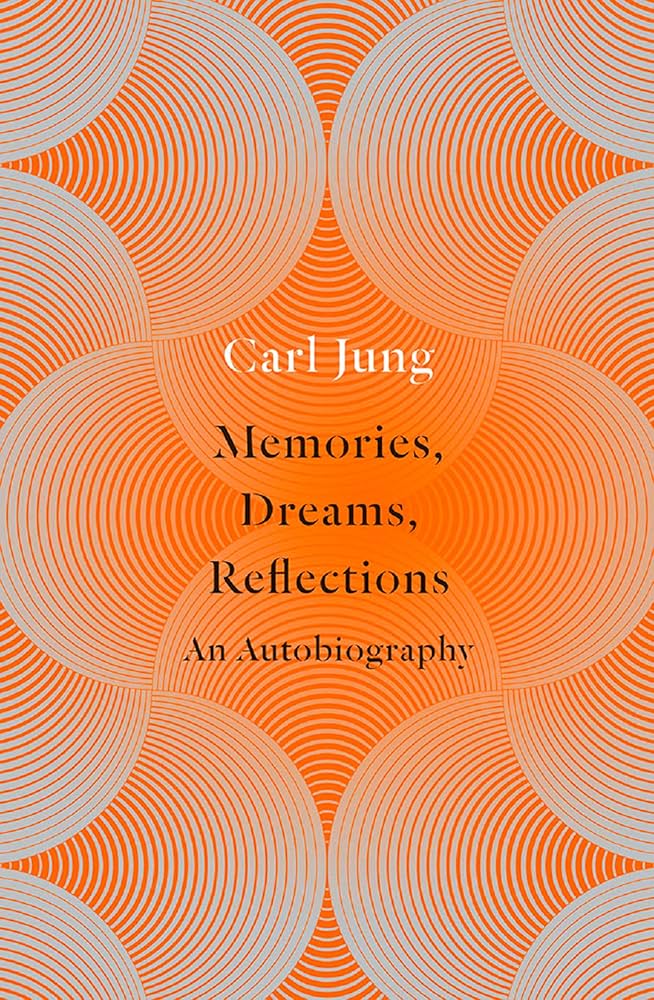
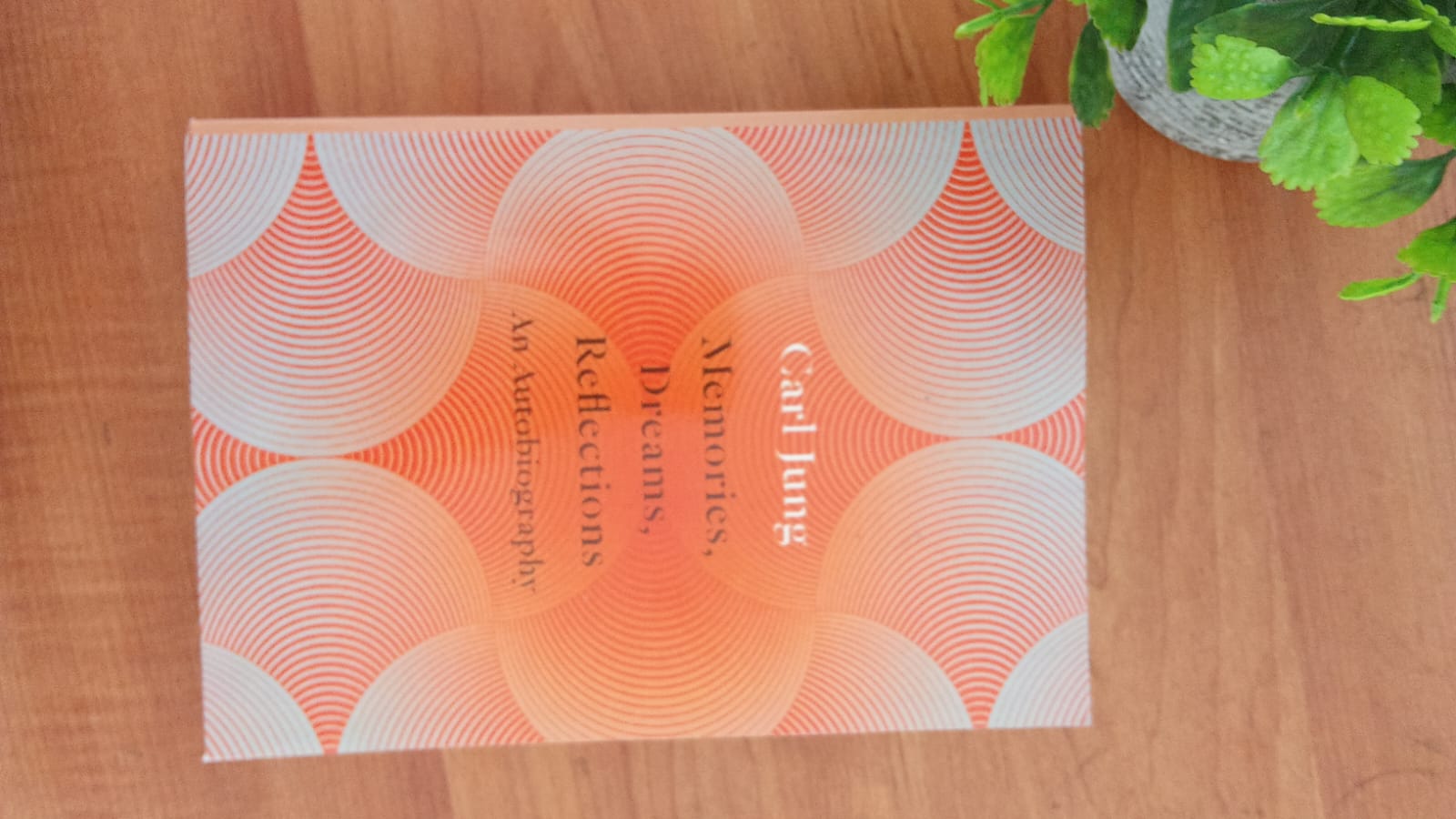
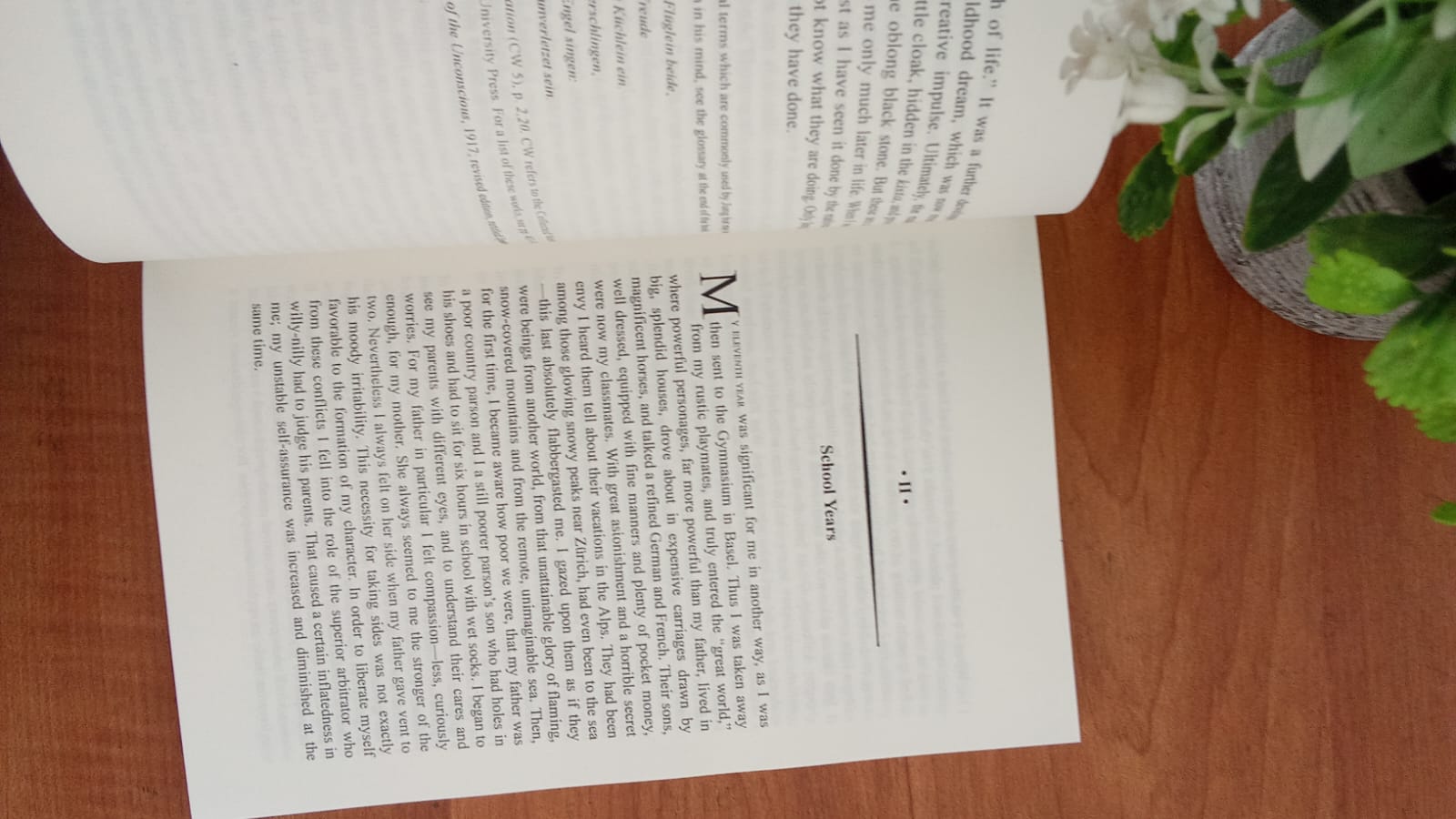




Memories dreams reflections by Carl G. Jung


රු2,200.00
3 X Rs. 733.33 or 8% Cashback with


or 3 X රු733.33 with


or up to 4 X රු550.00 with


Memories Dreams Reflections by Carl Jung is the remarkable autobiographical memoir of pioneering psychologist Carl Gustav Jung, recorded and edited by Aniela Jaffé. Through childhood memories, dreams, visions, his relationship with Sigmund Freud, travels and spiritual reflections, Jung reveals the experiences behind ideas such as the collective unconscious, archetypes, the shadow and individuation. Ideal for readers interested in psychology, dreams, philosophy, spirituality, consciousness and self-discovery.
3 in stock
Memories Dreams Reflections by Carl Jung is a deeply personal and intellectually fascinating account of the life, dreams, visions and ideas of one of the most influential psychologists of the twentieth century.
Carl Gustav Jung helped transform modern understanding of the human mind.
His work introduced and developed influential ideas involving:
The collective unconscious.
Archetypes.
The shadow.
Individuation.
Personality.
Dream interpretation.
Symbolism.
Religion.
Mythology.
The relationship between consciousness and the unconscious.
But Memories, Dreams, Reflections is not simply a textbook explaining Jungian psychology.
It is something far more personal.
Jung looks back on the experiences that shaped him.
He remembers childhood moments that remained psychologically important throughout his life.
He describes strange and vivid dreams.
He discusses powerful inner experiences and visions.
He reflects on his friendship and eventual break with Sigmund Freud.
He explores his fascination with:
Religion.
Myth.
Alchemy.
Ancient civilizations.
Eastern philosophy.
Symbolism.
Death.
The possibility of meaning beyond ordinary rational explanation.
The book was developed through conversations with Aniela Jaffé, who recorded and edited Jung’s recollections, alongside autobiographical material written by Jung himself.
The result is an unusual combination of:
Memoir.
Psychology.
Spiritual reflection.
Intellectual autobiography.
Dream analysis.
Philosophy.
For readers interested in psychology, consciousness, spirituality, dreams, personality and the deeper questions surrounding human existence, Memories Dreams Reflections by Carl Jung offers a rare opportunity to encounter Jung not only as a theorist but as a person trying to understand his own inner world.
Memories Dreams Reflections by Carl Jung – Book Overview
Memories Dreams Reflections by Carl Jung follows Jung’s life primarily through the experiences he considered psychologically meaningful.
This is important because the book is not structured like a conventional biography.
A traditional biography may emphasize:
Dates.
Jobs.
Academic appointments.
Major publications.
Historical events.
Jung often emphasizes something different.
A dream he had as a child.
A symbol that appeared repeatedly.
A religious question.
An encounter with another person.
A period of intense inner conflict.
A vision.
A conversation.
For Jung, the internal life could be just as important as external events.
Carl Gustav Jung
Carl Gustav Jung was a Swiss psychiatrist and psychologist who founded the school of analytical psychology.
He became one of the most influential figures in modern psychology.
His ideas later influenced:
Psychotherapy.
Literature.
Art.
Religion.
Philosophy.
Mythology.
Popular culture.
Personality theory.
Jung believed that understanding the human mind required more than examining conscious thought.
The unconscious also mattered.
Childhood
Jung gives significant attention to childhood in Memories Dreams Reflections by Carl Jung.
He describes himself as a deeply introspective child.
Even when young, he was fascinated by:
Religion.
Mystery.
Nature.
Death.
Dreams.
Identity.
He sometimes felt as though different parts of his personality existed simultaneously.
These early experiences later influenced his psychological theories.
Personality No. 1 and Personality No. 2
One particularly interesting aspect of Jung’s childhood reflections is his sense of having what he described as two different personalities.
One was connected with:
Ordinary daily life.
School.
Family.
The present.
The other seemed older, deeper and more mysterious.
This second inner identity contributed to Jung’s lifelong interest in the complexity of personality.
The Inner World
Modern life often emphasizes external achievement.
Career.
Income.
Status.
Education.
Reputation.
Jung believed the inner world deserves equal attention.
Dreams.
Emotions.
Symbols.
Unconscious fears.
Hidden desires.
Ignored parts of personality.
These can influence behavior even when people do not consciously recognize them.
The Unconscious
The unconscious is central to Jungian psychology.
It refers broadly to mental processes and contents outside immediate conscious awareness.
People may believe:
“I understand exactly why I behave this way.”
But motives can be more complicated.
Past experience.
Emotional patterns.
Unrecognized fears.
Cultural symbols.
Hidden assumptions.
can influence behavior.
Personal Unconscious
Jung distinguished between the personal unconscious and the collective unconscious.
The personal unconscious contains experiences connected with an individual’s own life.
These may include:
Forgotten memories.
Suppressed emotions.
Personal conflicts.
Unrecognized desires.
Collective Unconscious
One of Jung’s most distinctive theories is the collective unconscious.
He proposed that human beings share deep psychological patterns that are not created only through personal experience.
These recurring patterns appear across:
Myths.
Religions.
Dreams.
Stories.
Cultures.
He connected them with what he called archetypes.
Archetypes
Archetypes are another important Jungian concept.
They are recurring symbolic patterns or psychological structures that appear across human cultures.
Common Jungian archetypal ideas include:
The Shadow.
The Hero.
The Mother.
The Wise Old Man.
The Child.
The Self.
These are not simply fixed fictional characters.
They represent deeper patterns through which people may understand human experience.
The Shadow
The Shadow is one of Jung’s best-known ideas.
It refers to aspects of ourselves that we:
Reject.
Hide.
Deny.
Dislike.
Do not want other people to see.
Someone who believes:
“I am always kind.”
may suppress anger.
Someone who sees themselves as fearless may deny vulnerability.
The shadow does not disappear simply because it is ignored.
Integrating the Shadow
Jung’s approach does not suggest eliminating every undesirable characteristic.
Instead, psychological growth involves becoming more aware of what exists inside us.
If anger is unconscious, it may control behavior unexpectedly.
If anger is recognized, it can be managed more consciously.
Awareness creates choice.
Individuation
One of the central ideas behind Memories Dreams Reflections by Carl Jung is individuation.
Individuation refers to the process of becoming a more complete and integrated person.
It involves gradually bringing different parts of the personality into greater relationship with one another.
The goal is not perfection.
It is wholeness.
Becoming Who You Are
People often build identities around what society expects.
Successful employee.
Good child.
Strong leader.
Responsible parent.
Popular person.
But those roles may not represent the complete personality.
Individuation asks:
Who are you beyond your social roles?
What parts of yourself have you ignored?
What values genuinely belong to you?
Persona
Jung used the term persona for the social face people present to the world.
A persona can be useful.
A doctor behaves professionally.
A manager adopts authority.
A teacher takes responsibility.
But problems appear when someone begins believing:
The mask is the entire person.
Identity Beyond the Mask
A person may become so identified with:
Career.
Status.
Authority.
Social image.
that they lose connection with other parts of themselves.
Retirement.
Failure.
Job loss.
Relationship change.
can then create an identity crisis.
Jungian psychology encourages deeper self-knowledge.
Dreams
Dreams play an enormous role in Memories Dreams Reflections by Carl Jung.
Jung regarded dreams as psychologically meaningful.
He did not believe every dream should be interpreted using one fixed dictionary.
Instead, symbols need to be understood in relation to:
The individual.
Their life.
Their emotional situation.
The wider cultural meaning of the symbol.
Why Dreams Matter
Dreams can present material that conscious thought avoids.
A person may consciously say:
“Everything is fine.”
Yet repeatedly dream about:
Being trapped.
Losing something.
Running away.
Falling.
Jung would ask what psychological tension might be expressed symbolically.
Dreams Are Not Simple Predictions
Jung’s interest in dreams should not be reduced to fortune-telling.
Dream analysis in analytical psychology primarily concerns understanding psychological meaning.
The question is less:
“What will happen tomorrow?”
and more:
“What is the unconscious communicating?”
Symbols
Symbols appear throughout the book.
A symbol can contain more meaning than a simple literal statement.
Examples may include:
Water.
Darkness.
Houses.
Circles.
Animals.
Trees.
Journeys.
Death.
Rebirth.
Jung became deeply interested in how similar symbolic forms appear across different cultures.
Mythology
Myths fascinated Jung because they contain recurring human experiences.
Heroes.
Monsters.
Death.
Transformation.
Parents.
Children.
Journeys.
Trials.
Rebirth.
These themes appear repeatedly across civilizations.
Jung believed this repetition reveals something important about human psychology.
Religion
Religion occupies a major place in Memories Dreams Reflections by Carl Jung.
Jung grew up in a religious environment and wrestled intensely with questions about:
God.
Christianity.
Faith.
Doubt.
Spiritual experience.
Meaning.
Unlike writers who dismiss religion simply as superstition, Jung took religious experience seriously as a psychological phenomenon.
Psychology and Spirituality
Jung did not see psychology and spirituality as completely separate.
Human beings have repeatedly created:
Religions.
Rituals.
Myths.
Sacred symbols.
For Jung, psychologists should ask why these patterns are so persistent.
What psychological needs do they express?
Meaning
Meaning is one of the deepest concerns in Jung’s work.
A person may possess:
Money.
Career.
Comfort.
Status.
and still experience profound emptiness.
Jung observed that psychological problems can sometimes involve a lack of meaning.
The Second Half of Life
Jung was especially interested in psychological development during adulthood.
The first half of life often focuses on:
Education.
Career.
Family.
Building a place in society.
The second half may raise different questions.
What was all of this for?
Who am I now?
What remains meaningful?
What parts of myself were neglected?
Midlife
Midlife can therefore become psychologically important.
Goals that motivated someone at twenty may no longer satisfy them at fifty.
This does not necessarily mean something is wrong.
It may signal a new developmental stage.
Sigmund Freud
One of the most historically important sections of Memories Dreams Reflections by Carl Jung concerns Jung’s relationship with Sigmund Freud.
Freud was already a major figure when Jung became closely associated with him.
For a time, Freud regarded Jung as an important intellectual ally and possible successor.
Freud and Jung
Both men agreed that unconscious processes play a major role in psychology.
But major disagreements eventually emerged.
Their interpretations of:
Libido.
Religion.
Symbols.
The unconscious.
Human motivation.
became increasingly different.
The Break With Freud
The eventual break between Freud and Jung was both intellectual and personal.
For Jung, separating from Freud created a difficult period.
He lost not only an important professional relationship but also a major intellectual structure around which his thinking had developed.
Developing His Own Psychology
After the break, Jung increasingly developed his own approach.
This period contributed to ideas involving:
Archetypes.
The collective unconscious.
Individuation.
Psychological types.
Dream interpretation.
Symbolism.
Psychological Types
Jung also developed influential ideas about personality differences.
His work introduced concepts involving:
Introversion.
Extraversion.
Thinking.
Feeling.
Sensation.
Intuition.
These ideas later influenced many personality systems.
Introversion and Extraversion
An introverted orientation tends to direct energy more strongly toward the inner world.
An extraverted orientation tends to direct energy more strongly toward the external world.
Jung did not intend this as a simple label where everyone belongs completely to one category.
People contain both tendencies.
Thinking and Feeling
Jung also explored different ways people make judgments.
Thinking emphasizes:
Logic.
Analysis.
Principles.
Feeling evaluates through:
Values.
Relationships.
Personal significance.
Neither is automatically superior.
Sensation and Intuition
Sensation focuses on:
What is present.
What can be observed.
Concrete details.
Intuition focuses more on:
Possibilities.
Patterns.
Future potential.
Connections.
Again, people use both, but tendencies differ.
Jung and Modern Personality Tests
Systems such as the Myers-Briggs Type Indicator were later influenced by Jung’s psychological-type theory.
However, readers should distinguish Jung’s original ideas from later personality-testing systems.
They are related but not identical.
The Red Book Period
After the break with Freud, Jung entered a period of intense inner exploration.
He experienced vivid fantasies, dreams and visions.
Rather than simply rejecting them, he recorded and explored them.
Much of this material later became associated with his famous Red Book.
Confrontation With the Unconscious
Jung described this period as a confrontation with the unconscious.
He allowed symbolic images to emerge and interacted with them through imaginative practices.
This became important in the development of his psychology.
Active Imagination
Jung later developed the idea of active imagination.
This involves consciously engaging with images or fantasies emerging from the unconscious rather than simply observing them passively.
The aim is psychological dialogue.
Mental Crisis or Creative Transformation?
Modern readers may interpret some of Jung’s intense inner experiences differently.
Some may see:
Spiritual experience.
Creative imagination.
Psychological crisis.
Altered states.
Jung himself interpreted them through his developing psychological framework.
Readers should avoid diagnosing historical figures casually from autobiographical descriptions alone.
Alchemy
Alchemy became another major interest for Jung.
At first glance, medieval alchemical texts seem far removed from psychology.
But Jung saw psychological meaning in their symbolism.
Transformation of materials could symbolically resemble transformation of the personality.
Psychological Transformation
Alchemy frequently involved images of:
Separation.
Purification.
Death.
Union.
Transformation.
Jung believed these processes could mirror psychological development.
The Self
The Self is one of the most important Jungian archetypes.
It represents the totality of the personality, including both conscious and unconscious dimensions.
The ego is not the whole self.
This distinction is fundamental to analytical psychology.
Ego
The ego is the center of conscious identity.
It says:
I am this person.
I have these beliefs.
I want this.
But Jung argues that personality extends beyond what the ego consciously understands.
Wholeness
The goal of psychological growth is not making the ego more powerful.
It is bringing the ego into healthier relationship with the larger psyche.
This is why wholeness matters more than perfection.
Travel
Jung’s travels also influenced his thinking.
He encountered cultures outside Europe and became interested in how different societies understand:
Religion.
Community.
Nature.
Dreams.
Ritual.
Human identity.
These experiences broadened his comparative approach to psychology.
Cultural Difference
Jung’s writing about other cultures reflects the intellectual assumptions of his historical era and should sometimes be read critically.
Modern readers may disagree with particular generalizations or terminology.
However, these encounters were influential in his attempt to understand psychology across cultural boundaries.
India
Jung traveled in India and reflected on Indian religious and philosophical traditions.
He was interested in differences between Western and Eastern approaches to consciousness and spirituality.
Eastern Philosophy
Jung engaged with ideas from:
Hinduism.
Buddhism.
Taoism.
Other Asian traditions.
He did not simply recommend that Western readers copy Eastern traditions.
Instead, he explored what psychological insights could emerge from comparison.
Africa
Jung’s travels in Africa also influenced his reflections on culture and consciousness.
Again, modern readers should approach some historical descriptions with awareness of the colonial-era context in which European writers often interpreted non-European societies.
Nature
Nature plays an important role throughout Memories Dreams Reflections by Carl Jung.
Jung often describes a deep connection with:
Forests.
Water.
Stone.
Animals.
Landscapes.
He saw human psychology as existing within nature rather than completely separate from it.
Bollingen Tower
One of the most important physical places in Jung’s life was his retreat at Bollingen in Switzerland.
He built a stone tower there over time.
The structure became a deeply personal place for:
Reflection.
Solitude.
Writing.
Inner development.
Solitude
Jung valued solitude.
This does not mean rejecting human relationships.
Instead, solitude creates space where a person can encounter their own thoughts without constant social influence.
Modern Distraction
Jung lived before smartphones and social media.
Yet his emphasis on inner attention feels especially relevant today.
Modern life creates constant stimulation.
Messages.
Notifications.
Videos.
News.
Work.
Entertainment.
Without periods of silence, deeper reflection becomes difficult.
Self-Knowledge
A major message of Memories Dreams Reflections by Carl Jung is that self-knowledge is not simple.
People often know much less about themselves than they assume.
True self-knowledge requires examining:
Contradictions.
Fears.
Dreams.
Motives.
Patterns.
Relationships.
The shadow.
Accepting Contradictions
A person can be:
Kind and angry.
Confident and afraid.
Independent and dependent.
Generous and selfish.
Human personality contains contradictions.
Growth requires acknowledging them rather than pretending we are perfectly consistent.
Projection
Projection is another important psychological idea associated with Jung.
People sometimes perceive qualities in others that they refuse to recognize in themselves.
For example, someone may intensely dislike another person’s arrogance while remaining unaware of their own need for superiority.
Relationships as Mirrors
Strong emotional reactions can therefore become psychologically informative.
Ask:
Why does this person affect me so strongly?
What exactly am I reacting to?
Does this reveal something about me?
This does not mean every criticism is projection.
But the question can be useful.
Synchronicity
Jung later developed the concept of synchronicity to describe meaningful coincidences that appear connected through meaning rather than straightforward cause and effect.
This remains one of his more controversial ideas.
Meaningful Coincidence
Imagine thinking intensely about someone you have not seen for years.
Then they unexpectedly contact you.
Most psychology would treat this as coincidence.
Jung became interested in the subjective meaning such events can have.
Science and Mystery
Jung was trained in medicine and psychiatry.
But he was also willing to explore experiences conventional science struggled to explain.
This makes his work attractive to some readers and controversial to others.
Critical Reading
Readers can appreciate Memories Dreams Reflections by Carl Jung without accepting every theory literally.
Some of Jung’s ideas remain influential.
Others are debated.
A thoughtful reader can ask:
What is psychologically useful?
What is historically significant?
What evidence exists?
What should be interpreted symbolically?
Death
Death becomes increasingly important in Jung’s later reflections.
He was interested not only in physical death but in the psychological meaning humans attach to mortality.
Religions across cultures develop ideas about:
Afterlife.
Rebirth.
Judgment.
Continuation.
Transformation.
Jung considered these beliefs psychologically significant even where empirical certainty was impossible.
Near-Death Experience
Jung describes a serious medical crisis during which he experienced powerful visions.
He interpreted these experiences as personally meaningful.
Modern readers may view them through:
Neurology.
Psychology.
Spirituality.
Or a combination of perspectives.
Mortality and Meaning
Awareness of death can change how a person lives.
If life is finite, choices matter.
What deserves attention?
What should be left behind?
Which relationships matter?
What kind of person are you becoming?
Old Age
Jung’s later reflections carry the perspective of someone looking back across a long life.
Age changes the meaning of:
Success.
Failure.
Relationships.
Death.
Identity.
The book therefore becomes not only psychological autobiography but a meditation on aging.
Memory
The title itself emphasizes memory.
Memory is not a perfect recording.
What people remember is influenced by:
Emotion.
Meaning.
Time.
Identity.
Jung focuses on memories that remained psychologically significant rather than attempting to document every event equally.
Dreams
Dreams represent another category in the title.
For Jung, dreams connect conscious life with psychological material that may otherwise remain hidden.
Some dreams influenced his thinking for decades.
Reflections
The final word in the title matters equally.
This is not merely:
“What happened?”
It is:
“What did these experiences mean?”
Reflection transforms autobiography into psychological exploration.
Is Memories Dreams Reflections an Autobiography?
Yes, but with an important qualification.
Memories Dreams Reflections by Carl Jung is generally described as Jung’s autobiography or autobiographical memoir.
However, it was developed collaboratively with Aniela Jaffé, who recorded conversations, organized material and edited the work.
Some chapters were written directly by Jung, while other sections emerged through this collaborative process.
Who Is Aniela Jaffé?
Aniela Jaffé was a Jungian analyst and longtime associate of Carl Jung.
She played a major role in developing Memories, Dreams, Reflections from Jung’s recollections and writings.
Her editorial contribution is important to understanding how the book was created.
Is This a Psychology Textbook?
No.
Readers looking for a systematic introduction to Jungian theory may find other works easier for that purpose.
This book is more personal.
It explains ideas through:
Life experiences.
Dreams.
Memories.
Relationships.
Reflections.
Is It Good for Beginners?
It can be.
Readers new to Jung may find his life story a compelling introduction to his ideas.
However, some sections dealing with:
Alchemy.
Religion.
Symbolism.
Philosophy.
can be intellectually challenging.
Reading slowly is recommended.
Should You Read Jung Before This Book?
No previous Jung reading is required.
In fact, Memories Dreams Reflections by Carl Jung can be a fascinating starting point because it explains why certain questions became so important to him.
Readers may then continue to works such as:
Man and His Symbols
Modern Man in Search of a Soul
Psychological Types
The Archetypes and the Collective Unconscious
Memories Dreams Reflections and Man and His Symbols
Readers new to Jung often encounter these two titles.
Memories, Dreams, Reflections focuses strongly on:
Jung’s life.
Experiences.
Dreams.
Personal development.
Man and His Symbols provides a more accessible introduction to Jungian ideas about symbols, dreams and the unconscious.
The two complement each other well.
Memories Dreams Reflections and The Red Book
The Red Book contains much more extensive material from Jung’s intense period of imaginative and visionary exploration.
Memories Dreams Reflections by Carl Jung provides useful autobiographical context for understanding why that period mattered.
Psychology and Philosophy
Although Jung was a psychiatrist, this book repeatedly crosses into philosophy.
It asks:
What is the self?
What is consciousness?
Does life have meaning?
What happens psychologically when people deny parts of themselves?
What role does spirituality play?
These questions make the book appealing beyond psychology students.
Psychology and Literature
Jung’s ideas have strongly influenced literature because concepts such as:
Archetypes.
The shadow.
The hero.
Transformation.
are naturally connected with storytelling.
Readers interested in novels, mythology or screenwriting may recognize Jungian patterns everywhere.
Creativity
Artists often describe ideas arriving from somewhere beyond deliberate conscious planning.
Jung’s model of the unconscious provides one way of thinking about this experience.
Creativity can involve a dialogue between conscious effort and unconscious material.
The Search for Wholeness
Perhaps the deepest theme in Memories Dreams Reflections by Carl Jung is the search for wholeness.
People often try to become only:
Successful.
Good.
Strong.
Rational.
Productive.
But the psyche contains much more.
Weakness.
Emotion.
Fear.
Creativity.
Contradiction.
Mystery.
Wholeness means recognizing the complete person.
Becoming Conscious
Jung believed consciousness itself was an important human achievement.
The more unconscious our patterns remain, the more likely we are to repeat them automatically.
Awareness creates possibility.
Personal Responsibility
Self-understanding should lead toward responsibility.
Recognizing your shadow does not excuse bad behavior.
It makes you more responsible for managing it.
Psychology should increase accountability, not eliminate it.
Why Jung Still Matters
Jung remains widely read because his questions have not disappeared.
Modern people still struggle with:
Identity.
Meaning.
Relationships.
Dreams.
Anxiety.
Career.
Midlife.
Spirituality.
Mortality.
His answers may be debated, but the questions remain powerful.
Content Considerations
Memories Dreams Reflections by Carl Jung contains potentially challenging or sensitive material involving:
- Death and mortality
- Grief and bereavement
- Mental illness and psychiatric treatment
- Vivid dreams and disturbing symbolic imagery
- Visions and altered states of consciousness
- Religious and spiritual experiences
- Discussions of war
- Historical cultural attitudes that may feel dated
- Psychological crisis
- Illness and near-death experiences
- Discussions of sexuality and relationships
Readers should also remember that some Jungian theories are influential historically but remain debated within contemporary psychology.
7 Powerful Insights From Memories Dreams Reflections by Carl Jung
There are many ideas in Memories Dreams Reflections by Carl Jung, but seven stand out:
- The inner world deserves serious attention – Dreams, emotions, symbols and unconscious patterns can influence life even when they are not immediately visible.
- Self-knowledge requires confronting the parts of ourselves we dislike – Ignoring the shadow does not eliminate it; awareness makes more conscious behavior possible.
- A meaningful life requires more than social success – Career, money and status may provide achievement without necessarily answering deeper questions about purpose.
- Psychological growth is a lifelong process – Individuation continues as people move through different stages of life and gradually integrate more of themselves.
- Dreams can become tools for self-reflection – Jung treated dreams as meaningful psychological material rather than random experiences or simple predictions.
- Intellectual independence sometimes requires leaving a teacher behind – Jung’s break with Freud was painful but allowed him to develop a distinct psychological system.
- Wholeness is more realistic than perfection – Human beings contain contradictions, strengths, weaknesses and unconscious dimensions; growth comes from integration rather than pretending undesirable parts do not exist.
Why Read Memories Dreams Reflections by Carl Jung?
Memories Dreams Reflections by Carl Jung is an excellent choice for readers interested in:
- Carl Jung
- Jungian psychology
- Analytical psychology
- Psychology
- Dreams
- Dream interpretation
- Archetypes
- Collective unconscious
- The shadow
- Individuation
- Personality
- Sigmund Freud
- Spirituality
- Religion and psychology
- Mythology
- Philosophy
- Self-discovery
- Consciousness
- Personal growth
- Psychological memoirs
It is particularly valuable for readers who want to understand the experiences behind Jung’s influential psychological ideas.
Who Should Read This Book?
Memories Dreams Reflections by Carl Jung may especially appeal to:
- Psychology students
- Therapists and counselors
- Jungian psychology readers
- Philosophy readers
- Readers interested in dreams
- Readers interested in spirituality
- People exploring personal identity
- Readers interested in Sigmund Freud and psychoanalysis
- Writers and artists interested in archetypes
- Mythology enthusiasts
- Personal-development readers
- Readers interested in consciousness
- People exploring midlife and meaning
- Readers who enjoy intellectual autobiographies
- Anyone curious about the inner life of Carl Jung
Memories Dreams Reflections by Carl Jung – A Journey Into the Inner World
Memories Dreams Reflections by Carl Jung is ultimately not the story of a psychologist simply listing his achievements.
It is the story of a person trying to understand himself.
Jung looks backward and asks:
Which memories shaped me?
Why did certain dreams remain unforgettable?
Why was religion so psychologically powerful?
What did Freud teach me?
Why did I eventually need to disagree with him?
What happened when I confronted parts of my own unconscious?
What gives life meaning?
What does it mean to become whole?
These questions make the book deeply personal.
Jung’s theories may sometimes feel abstract when encountered in psychology textbooks.
Archetypes.
Collective unconscious.
Individuation.
Shadow.
Self.
But in this memoir, readers see the experiences from which many of these ideas emerged.
A childhood dream becomes psychologically important decades later.
An intellectual friendship changes the direction of a career.
A psychological crisis becomes a period of creative discovery.
A journey becomes a new way of thinking about culture.
Old age becomes an opportunity to reflect on mortality.
The result is a book about much more than psychology.
It is about the mystery of being a person.
We spend enormous amounts of time learning about:
Jobs.
Technology.
Money.
Other people.
The outside world.
Jung asks whether we are equally willing to explore the world inside ourselves.
That exploration may reveal things we do not like.
Contradictions.
Fears.
Anger.
Dependency.
Ambition.
But it may also reveal:
Creativity.
Purpose.
Meaning.
Strength.
Possibility.
The aim is not to create a perfect personality.
It is to become more conscious of the whole person already there.
For readers interested in psychology, dreams, archetypes, spirituality, self-discovery and the life of one of history’s most influential thinkers, Memories Dreams Reflections by Carl Jung is a challenging, intimate and unforgettable journey into both Carl Jung’s life and the depths of the human psyche.
Learn more about Memories, Dreams, Reflections by C. G. Jung on the official Penguin Random House website.
Explore more psychology and biography books at Bargain Books.
Be the first to review “Memories dreams reflections by Carl G. Jung”
Related products
-24%

Non-Fiction & Knowledge
Original price was: රු2,300.00.රු1,750.00Current price is: රු1,750.00.
3 X Rs. 583.33 or 8% Cashback with
or 3 X රු583.33 with
or up to 4 X රු437.50 with
Non-Fiction & Knowledge
රු2,250.00
3 X Rs. 750.00 or 8% Cashback with
or 3 X රු750.00 with
or up to 4 X රු562.50 with
-26%

Out of stock
Non-Fiction & Knowledge
Original price was: රු2,000.00.රු1,490.00Current price is: රු1,490.00.
3 X Rs. 496.67 or 8% Cashback with
or 3 X රු496.67 with
or up to 4 X රු372.50 with
-13%
Out of stock
Non-Fiction & Knowledge
Original price was: රු3,900.00.රු3,400.00Current price is: රු3,400.00.
3 X Rs. 1,133.33 or 8% Cashback with
or 3 X රු1,133.33 with
or up to 4 X රු850.00 with
-18%

Out of stock
Original price was: රු2,800.00.රු2,300.00Current price is: රු2,300.00.
3 X Rs. 766.67 or 8% Cashback with
or 3 X රු766.67 with
or up to 4 X රු575.00 with

Out of stock
Non-Fiction & Knowledge
රු1,500.00
3 X Rs. 500.00 or 8% Cashback with
or 3 X රු500.00 with
or up to 4 X රු375.00 with
-26%
Non-Fiction & Knowledge
The 7 Habits of Highly Effective People by Stephen R. Covey – Blue Cover
Original price was: රු2,300.00.රු1,700.00Current price is: රු1,700.00.
3 X Rs. 566.67 or 8% Cashback with
or 3 X රු566.67 with
or up to 4 X රු425.00 with
-33%

Non-Fiction & Knowledge
Original price was: රු2,850.00.රු1,900.00Current price is: රු1,900.00.
3 X Rs. 633.33 or 8% Cashback with
or 3 X රු633.33 with
or up to 4 X රු475.00 with
Reviews
There are no reviews yet.