
No products in the cart.
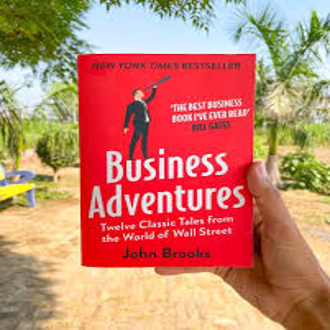
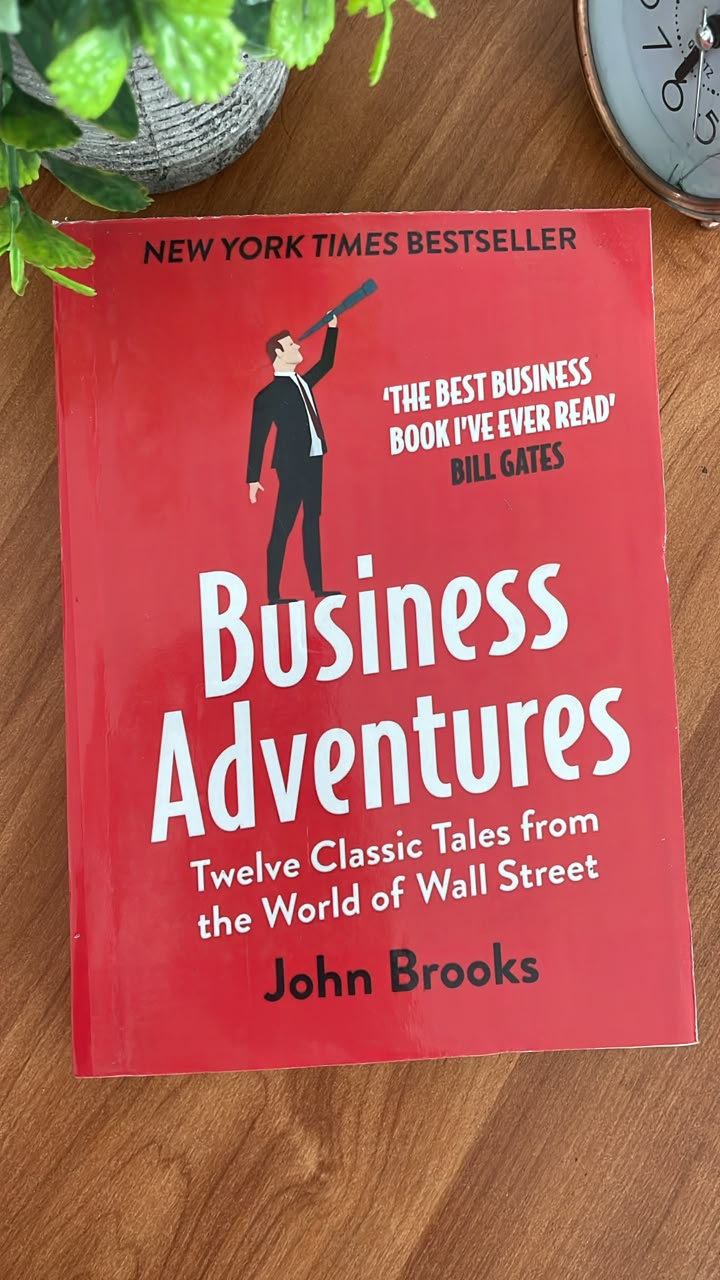
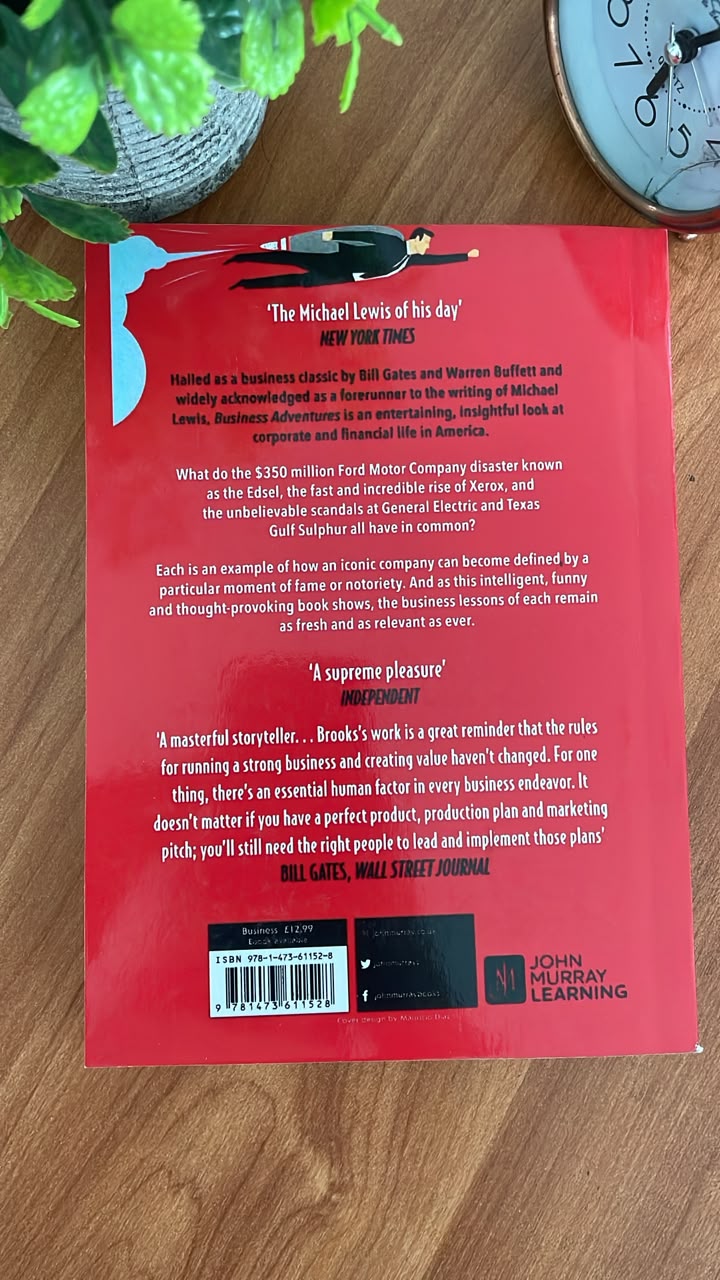

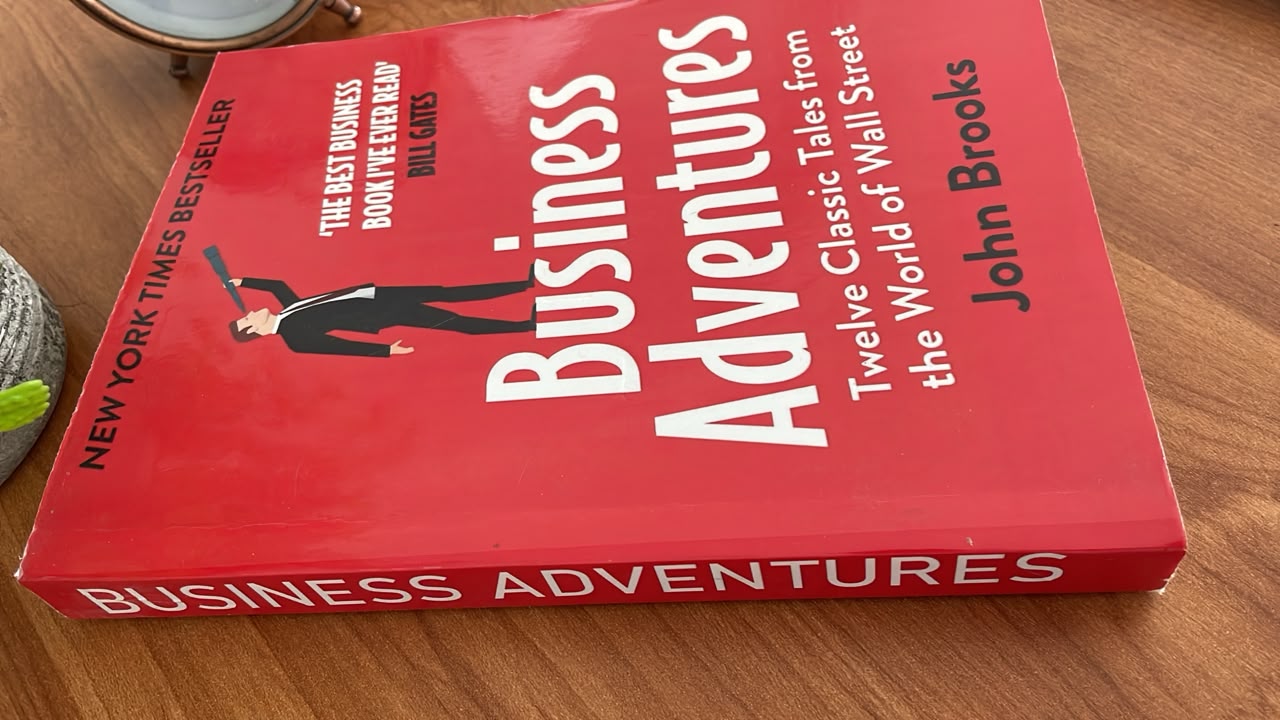
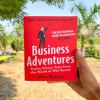
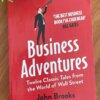


Business Adventures by John Brooks

රු2,250.00
3 X Rs. 750.00 or 8% Cashback with


or 3 X රු750.00 with


or up to 4 X රු562.50 with


Business Adventures: Twelve Classic Tales from the World of Wall Street is a timeless business classic that explores real-life stories from the world of finance and corporate America. Written by John Brooks, a longtime contributor to The New Yorker, the book presents a collection of engaging essays that reveal how businesses succeed, fail, and evolve.
4 in stock
Business Adventures by John Brooks
Business Adventures by John Brooks is a classic business and finance book exploring leadership, corporate failure, innovation, investment, market psychology, risk, and the unpredictable behaviour of companies and people.
Instead of offering a simple list of business rules, Brooks tells twelve detailed stories drawn from American corporate and financial history.
These stories examine companies, executives, investors, regulators, and financial markets during moments when important decisions produced extraordinary consequences.
The result is a business book that reads more like investigative storytelling than a traditional management textbook.
Why Read Business Adventures?
Business Adventures is an excellent choice for entrepreneurs, managers, investors, business students, and readers interested in the history of Wall Street.
Brooks examines what happens when ambitious plans meet unpredictable customers, financial markets, corporate politics, regulation, and human behaviour.
Some stories focus on spectacular mistakes.
Others explore successful innovation.
Together, they demonstrate how difficult business decisions can become when large amounts of money, reputation, competition, and uncertainty are involved.
Business Lessons Through Real Stories
Many business books explain principles first and provide examples later.
John Brooks takes almost the opposite approach.
He starts with events.
Readers watch companies make decisions, respond to problems, and deal with unexpected consequences.
The lessons emerge naturally from what happens.
This storytelling style makes Business Adventures particularly useful for readers who prefer real corporate cases to abstract theories.
The Ford Edsel Disaster
One of the most famous cases in the book concerns Ford Motor Company’s Edsel.
Penguin Random House describes the Edsel as a major Ford failure and one of the defining corporate stories examined by Brooks.
The case raises important questions about market research, product development, customer expectations, positioning, and management confidence.
A large company can spend enormous resources developing a product.
That does not guarantee customers will want it.
The Rise of Xerox
The book also examines the remarkable rise of Xerox.
This provides a useful contrast to stories of corporate failure.
Innovation can transform an organization when a product solves an important problem and reaches the market successfully.
But rapid growth creates its own challenges.
A successful company must still think about leadership, competition, corporate identity, and what happens after the breakthrough.
Corporate Scandals
Brooks also examines scandals involving major corporations, including General Electric and Texas Gulf Sulphur.
These cases raise questions about information, ethics, regulation, responsibility, and trust.
A company can be financially successful while still creating serious problems through poor judgment or unethical behaviour.
That makes corporate governance an important part of the book’s wider message.
The Stock Market Crash of 1962
Another story explores the dramatic stock market decline of 1962.
Markets are influenced by numbers.
They are also influenced by people.
Fear can spread.
Confidence can disappear.
Investors may react to the actions of everyone around them.
Brooks’ storytelling shows why understanding human psychology can be just as important as understanding financial calculations.
Business Is About People
A major lesson running throughout Business Adventures is that organizations are ultimately made of people.
Executives make assumptions.
Employees react to incentives.
Investors become emotional.
Customers behave unexpectedly.
Boards make difficult decisions.
Even excellent strategies can fail when human behaviour is misunderstood.
This is one reason older corporate stories can still feel familiar to modern business readers.
Leadership Under Pressure
Leadership is easiest when everything is going well.
The more interesting test comes when something goes wrong.
A product fails.
A market collapses.
A scandal develops.
A competitor appears.
A decision that seemed intelligent produces an unexpected result.
The cases in Business Adventures allow readers to examine how organizations respond when pressure exposes weaknesses in strategy or leadership.
Innovation Is Never Risk-Free
Businesses need innovation to grow.
But innovation contains uncertainty.
Companies must often invest before knowing whether customers will respond positively.
That creates a difficult balance.
Too little experimentation can leave a company behind.
Too much confidence in an untested idea can create expensive failure.
The contrast between cases such as Xerox and the Edsel makes this tension especially clear.
Corporate Culture Matters
Business performance is not determined only by products and financial statements.
Corporate culture can influence how people communicate, make decisions, respond to mistakes, and behave under pressure.
A healthy organization needs more than talented individuals.
It needs systems that encourage good decisions.
Brooks’ stories repeatedly show how organizational behaviour can shape outcomes.
Risk and Uncertainty
No business decision comes with perfect information.
Leaders make forecasts.
Investors make predictions.
Companies study customers.
But unexpected events still happen.
Business Adventures is valuable because it does not present business as a world where every outcome can be calculated perfectly.
Uncertainty is part of the game.
The challenge is learning how to make better decisions despite incomplete information.
Saving the British Pound
Brooks also writes about an attempt by American bankers to help protect the British pound during a financial crisis.
This expands the book beyond individual companies.
Financial markets are connected internationally.
Decisions made by banks, governments, investors, and institutions can influence economies far beyond one company.
That makes the collection useful for readers interested in both corporate strategy and financial history.
Why Old Business Stories Still Matter
Technology changes quickly.
Human behaviour changes much more slowly.
Companies still become overconfident.
Investors still panic.
Executives still misunderstand customers.
Successful organizations still struggle to maintain momentum.
This is why historical business cases can remain useful long after the specific products or companies involved have changed.
Open Road Media describes Brooks’ corporate stories as continuing to offer insight into the complexities of business life.
12 Classic Tales of Corporate Life
Business Adventures contains twelve stories examining different areas of business and finance. Penguin Random House describes them as twelve classic tales of American corporate and financial life.
Rather than presenting twelve identical lessons, each story approaches business from a different direction.
Readers encounter innovation, market crashes, corporate scandals, product failure, financial institutions, and major strategic decisions.
This variety makes the book useful even for readers who do not normally enjoy finance books.
7 Powerful Lessons from Business Adventures
1. Great companies can make terrible decisions.
Size and experience do not eliminate the possibility of failure.
2. Customers decide whether innovation succeeds.
A company can believe strongly in a product and still misunderstand the market.
3. Human psychology moves markets.
Fear, confidence, expectations, and herd behaviour influence financial decisions.
4. Corporate culture matters.
The way an organization behaves internally can eventually affect its external performance.
5. Ethics and reputation are valuable assets.
Corporate scandals can create consequences far beyond immediate financial losses.
6. Success creates new problems.
Rapid growth requires organizations to adapt their leadership and systems.
7. Business history can help us recognize recurring patterns.
Brooks’ cases demonstrate how similar problems can appear again under different names and circumstances.
About John Brooks
John Brooks lived from 1920 to 1993 and was an award-winning writer and financial journalist best known for his work with The New Yorker.
He wrote ten nonfiction books about business and finance, along with novels and book reviews.
His other well-known financial books include Once in Golconda and The Go-Go Years.
Perfect for Readers Interested In
Business Adventures is a strong choice for readers interested in:
- Business and economics
- Wall Street
- Entrepreneurship
- Corporate strategy
- Investing
- Leadership
- Business history
- Financial markets
- Management
- Innovation
- Corporate culture
- Risk management
Build Your Business Book Collection
Readers who enjoy Business Adventures may also want to explore Built to Last, Good to Great, The Intelligent Investor, The Psychology of Money, The Black Swan, and Business Adventures-style corporate histories.
Add internal links to your Business & Economics, Finance, Investing, and Business Strategy categories.
These internal links can also help improve your Rank Math SEO score.
Buy Business Adventures in Sri Lanka
Looking for Business Adventures in Sri Lanka?
John Brooks’ classic collection is an excellent choice for entrepreneurs, managers, investors, business students, and readers who enjoy real stories about corporate success, failure, innovation, Wall Street, leadership, and financial markets.
Its twelve stories turn major events from corporate history into memorable lessons about decision-making and human behaviour.
Add Business Adventures to your business and finance collection today. https://openroadmedia.com/ebook/business-adventures/9781497638853
Be the first to review “Business Adventures by John Brooks”
Related products
-34%
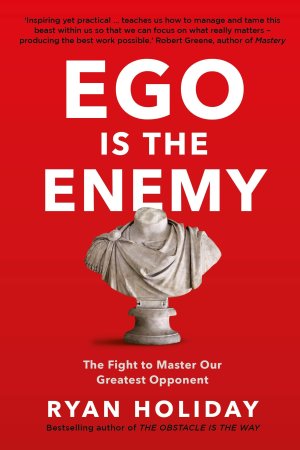
Non-Fiction & Knowledge
Original price was: රු2,250.00.රු1,490.00Current price is: රු1,490.00.
3 X Rs. 496.67 or 8% Cashback with
or 3 X රු496.67 with
or up to 4 X රු372.50 with
-19%
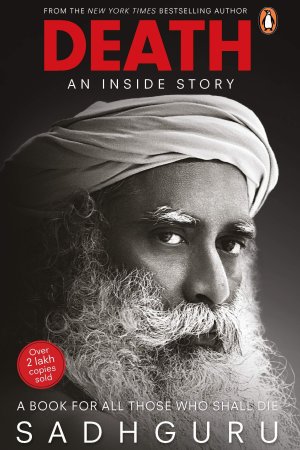
Out of stock
Non-Fiction & Knowledge
Original price was: රු2,650.00.රු2,150.00Current price is: රු2,150.00.
3 X Rs. 716.67 or 8% Cashback with
or 3 X රු716.67 with
or up to 4 X රු537.50 with

Out of stock
Non-Fiction & Knowledge
රු1,500.00
3 X Rs. 500.00 or 8% Cashback with
or 3 X රු500.00 with
or up to 4 X රු375.00 with

Non-Fiction & Knowledge
රු1,700.00
3 X Rs. 566.67 or 8% Cashback with
or 3 X රු566.67 with
or up to 4 X රු425.00 with

Out of stock
Autobiography
රු2,750.00
3 X Rs. 916.67 or 8% Cashback with
or 3 X රු916.67 with
or up to 4 X රු687.50 with
Out of stock
Non-Fiction & Knowledge
රු1,800.00
3 X Rs. 600.00 or 8% Cashback with
or 3 X රු600.00 with
or up to 4 X රු450.00 with
-26%
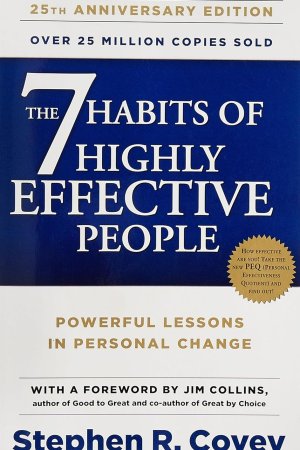
Non-Fiction & Knowledge
The 7 Habits of Highly Effective People by Stephen R. Covey – Blue Cover
Original price was: රු2,300.00.රු1,700.00Current price is: රු1,700.00.
3 X Rs. 566.67 or 8% Cashback with
or 3 X රු566.67 with
or up to 4 X රු425.00 with
Non-Fiction & Knowledge
රු2,250.00
3 X Rs. 750.00 or 8% Cashback with
or 3 X රු750.00 with
or up to 4 X රු562.50 with
Reviews
There are no reviews yet.