
No products in the cart.
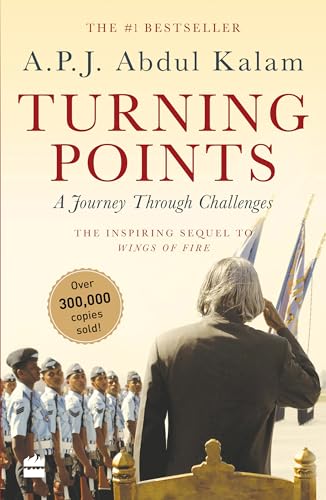

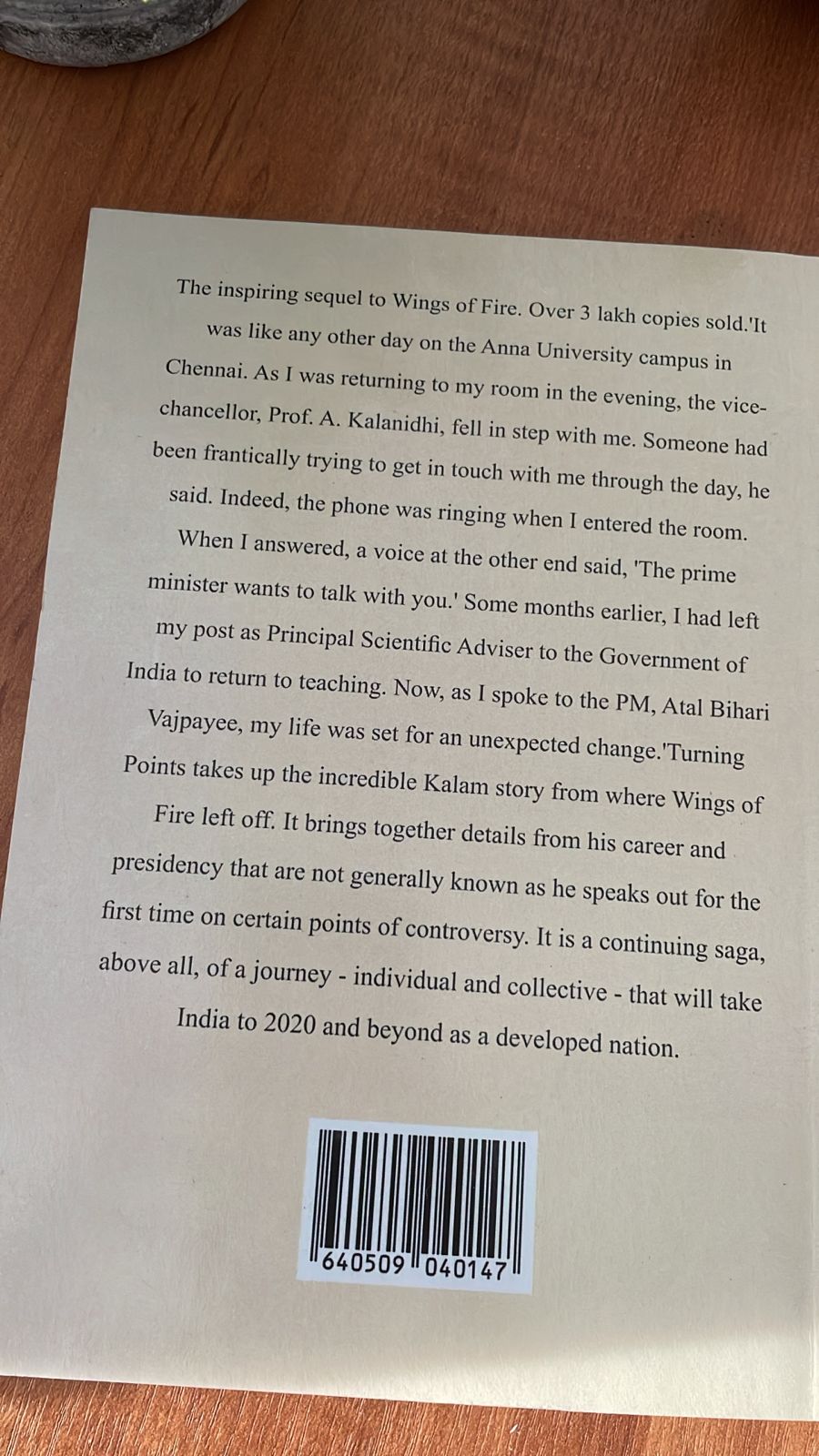

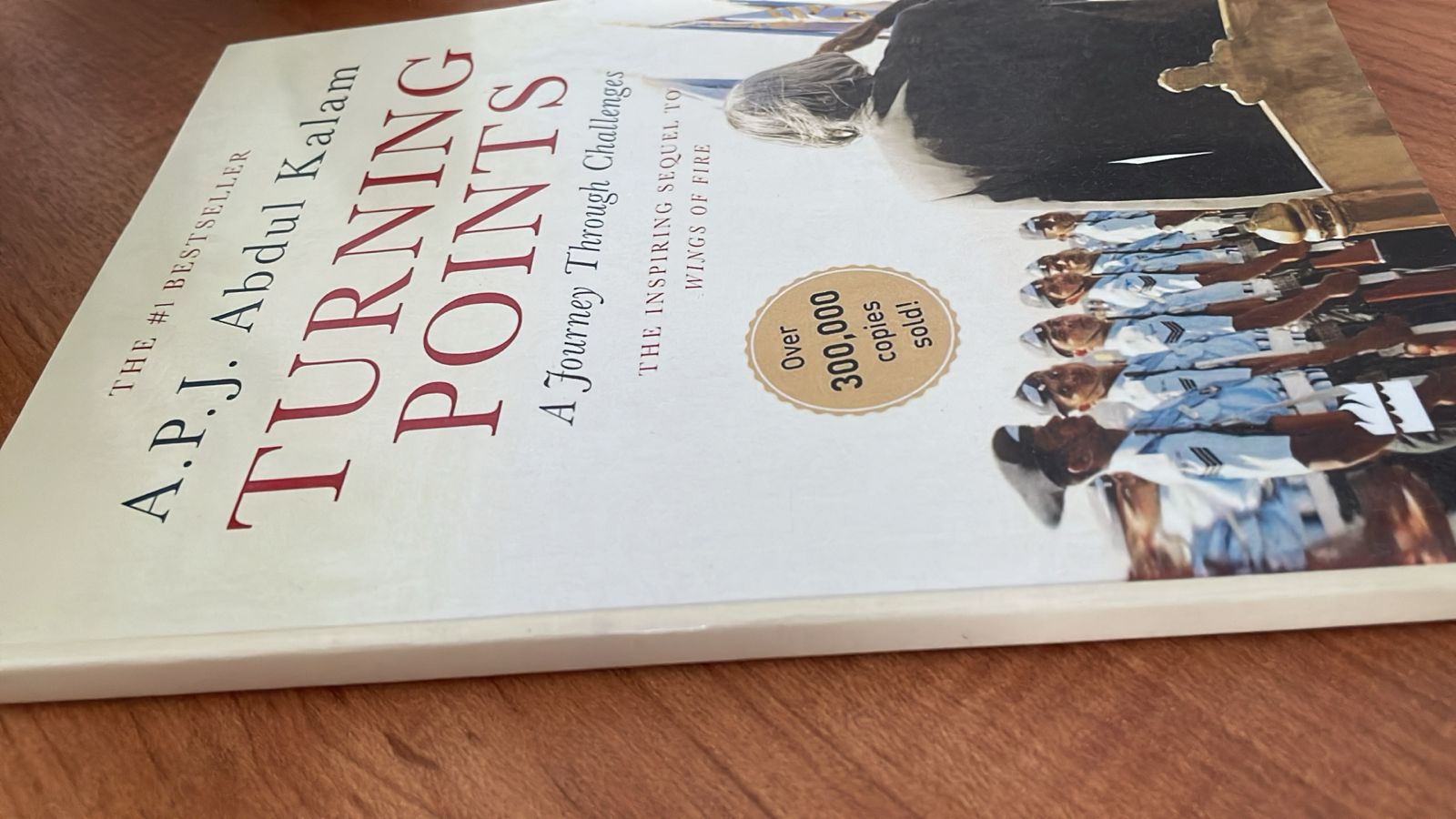





Turning Points by A.P.J Abdul Kalam


රු1,700.00
3 X Rs. 566.67 or 8% Cashback with


or 3 X රු566.67 with


or up to 4 X රු425.00 with


• Inspirational autobiography focused on leadership and life lessons
• Reflects on key moments after serving as President of India
• Ideal for students, leaders, and motivational readers
3 in stock
Turning Points by APJ Abdul Kalam
Turning Points by APJ Abdul Kalam is an autobiographical book that continues the story of one of India’s best-known scientists and former presidents.
The full title is Turning Points: A Journey Through Challenges.
In this book, A. P. J. Abdul Kalam looks back on important stages of his professional and public life after the period covered in Wings of Fire.
He writes about science, technology, leadership, education, national development, public service, and his years as President of India.
The book combines personal memories with Kalam’s own reflections on India’s future.
About Turning Points by APJ Abdul Kalam
Turning Points by APJ Abdul Kalam was first published in 2012.
The book follows his journey through several major phases of his career.
Kalam had already worked extensively in India’s space and defence programmes before entering the highest constitutional office in the country.
He later served as the eleventh President of India from 2002 to 2007.
The memoir discusses experiences from these later years and explains how Kalam viewed some of the difficult decisions he faced.
It also presents his ideas on education, technology, governance, rural development, and national progress.
A Continuation of Wings of Fire
Readers familiar with Wings of Fire will recognize Turning Points as a continuation of Kalam’s autobiographical journey.
Wings of Fire focuses heavily on his childhood, education, scientific career, and work with India’s aerospace and missile programmes.
Turning Points moves further into his public life.
It explores the period in which Kalam became more directly involved with national policy, government institutions, and the presidency.
The two books therefore complement each other.
7 Key Lessons from Turning Points by APJ Abdul Kalam
1. Difficult Decisions Require Preparation
One of the recurring themes in Turning Points by APJ Abdul Kalam is decision-making under pressure.
Kalam describes situations in which he had to consider legal, constitutional, scientific, and administrative advice before making important choices.
His account emphasizes preparation rather than impulsive judgment.
The book presents leadership as a responsibility that requires information, consultation, and careful thinking.
2. Education Can Transform Society
Kalam frequently returns to education.
He believed young people could play a major role in shaping India’s future.
The book discusses the importance of science, curiosity, creativity, and access to knowledge.
Students were especially important to Kalam.
He regularly interacted with young people and encouraged them to think ambitiously about their own contributions to society.
3. Technology Should Solve Real Problems
Technology is not presented only as an achievement.
Kalam repeatedly connects technology to practical development.
Energy.
Communication.
Healthcare.
Agriculture.
Infrastructure.
Education.
He argues that scientific progress becomes more meaningful when it improves ordinary lives.
4. Leadership Requires Responsibility
Holding a major public office means making decisions that affect many people.
Kalam discusses the responsibility attached to leadership.
He also describes occasions when public decisions attracted controversy.
His account represents his own perspective on these events.
Readers interested in a fuller historical understanding may wish to compare the memoir with independent reporting and official records.
5. Rural Development Matters
One of Kalam’s recurring development ideas was PURA—Providing Urban Amenities in Rural Areas.
The concept aimed to improve physical, electronic, and knowledge connectivity in rural communities.
The larger idea was to reduce the gap between urban and rural opportunities.
This fits with Kalam’s broader belief that development should reach people beyond major cities.
6. Young People Need a Vision
Kalam believed nations need long-term goals.
He often spoke about India becoming a developed nation through education, science, entrepreneurship, infrastructure, and social development.
In Turning Points, he repeatedly emphasizes the role of younger generations in that process.
The book encourages readers to think beyond short-term problems.
7. Progress Requires Collective Effort
Kalam does not present national development as the responsibility of one leader.
Scientists matter.
Teachers matter.
Students matter.
Entrepreneurs matter.
Public officials matter.
Communities matter.
The book repeatedly connects progress with teamwork and shared responsibility.
Kalam’s Years as President
A major portion of the book reflects on Kalam’s presidency.
He served as President of India from 2002 until 2007.
He discusses interactions with political leaders, government institutions, universities, students, and citizens.
He also addresses several constitutional and political issues from his term.
Because this is Kalam’s own memoir, these sections present his interpretation of events rather than an independent account.
The Bihar Assembly Controversy
One issue discussed in the book concerns the dissolution of the Bihar Legislative Assembly in 2005.
Kalam explains how he approached the decision and the advice available to him.
The event generated significant legal and political debate.
Readers interested in this episode may benefit from comparing Kalam’s account with court records and contemporary reporting.
The book is useful for understanding how he personally viewed his role in the decision.
The Office of Profit Bill
Kalam also discusses his handling of the Office of Profit Bill.
He returned the bill for reconsideration.
The episode became an important constitutional and political discussion during his presidency.
Again, the memoir presents Kalam’s own reasoning.
The value of this section is that readers can see how he describes decision-making from inside the presidency.
Capital Punishment
The book also touches on capital punishment.
Kalam reflects on mercy petitions and the responsibilities of the president.
This is another politically and legally sensitive subject.
His discussion provides insight into his personal thinking at the time.
It should be understood as his own account rather than a neutral summary of the wider debate.
India 2020
Kalam frequently spoke about a long-term development vision for India.
His ideas included stronger infrastructure, better education, technological development, energy security, agricultural productivity, and greater economic opportunity.
Turning Points by APJ Abdul Kalam continues many of these themes.
The book reflects his belief that national development requires both vision and implementation.
PURA – Providing Urban Amenities in Rural Areas
PURA was one of Kalam’s better-known development concepts.
The idea was to connect rural regions through infrastructure, communication, knowledge, and economic opportunity.
Instead of assuming development must always move people into major cities, PURA focused on improving opportunities where people already lived.
The concept illustrates Kalam’s preference for combining technology with practical social development.
Science and National Development
Kalam’s scientific background strongly influences the book.
He spent much of his career working with technology and national research programmes.
As a result, he often approaches public problems through the lens of innovation.
He discusses areas such as energy, aerospace, information technology, healthcare, and rural development.
Scientific capability, in his view, was closely connected to national independence and economic progress.
Energy and Sustainability
Energy is another important subject.
Kalam discusses the need for reliable and sustainable energy systems.
He was interested in renewable technologies, including solar energy.
He also considered the relationship between energy security and national development.
These ideas reflect the technological optimism that appears throughout his writing.
Interaction with Students
One of the most recognizable aspects of Kalam’s public life was his relationship with students.
He frequently visited educational institutions.
He answered questions.
He encouraged young people to develop ambitious goals.
In Turning Points, these interactions are not treated as minor events.
They are central to his idea of leadership.
He believed inspiring younger generations was an important form of national service.
Knowledge and Innovation
Kalam saw knowledge as a major economic resource.
Countries that invest in education, research, and innovation can develop new industries and solve difficult problems.
But knowledge must be converted into action.
Research needs application.
Education needs opportunity.
Ideas need implementation.
This connection between knowledge and practical progress appears throughout the book.
Leadership Without Personal Glory
Kalam often presents leadership as service rather than status.
He emphasizes teamwork.
He describes learning from colleagues.
He frequently credits scientists, teachers, officials, and young people.
This does not mean the book avoids discussing his own achievements.
But the overall message emphasizes collective work.
Learning From Failure
Kalam’s earlier scientific career included unsuccessful projects as well as major achievements.
That experience shaped his approach to leadership.
Failure can reveal weaknesses.
It can improve future planning.
It can also test how leaders treat their teams.
The book encourages readers to treat setbacks as information rather than permanent defeat.
Dreams and Action
Kalam became widely associated with encouraging young people to dream.
But his message was not simply motivational.
Dreams need knowledge.
Knowledge needs effort.
Effort needs discipline.
And long-term goals need consistent action.
Turning Points by APJ Abdul Kalam connects optimism with practical work.
Who Should Read This Book?
Turning Points by APJ Abdul Kalam is ideal for readers interested in autobiography, leadership, science, Indian history, public service, education, technology, and national development.
It may especially appeal to readers who have already read Wings of Fire.
Students may appreciate Kalam’s discussions of education and ambition.
Professionals may find useful reflections on leadership and decision-making.
Readers interested in Indian politics and constitutional history may also find the presidential chapters informative, while keeping in mind that they are written from Kalam’s own perspective.
About A. P. J. Abdul Kalam
Avul Pakir Jainulabdeen Abdul Kalam was an Indian scientist and public figure.
He worked with India’s space and defence programmes and later served as the eleventh President of India from 2002 to 2007.
He received several major Indian civilian honours, including the Bharat Ratna.
His books include Wings of Fire, Ignited Minds, India 2020, and Turning Points.
Product Details
Title: Turning Points
Full Title: Turning Points: A Journey Through Challenges
Author: A. P. J. Abdul Kalam
Genre: Autobiography / Memoir / Leadership / Public Affairs
Language: English
Publisher: HarperCollins Publishers India
Original Publication: 2012
Common English Paperback Edition
ISBN-13: 9789350293478
ISBN-10: 9350293471
Format: Paperback
Publisher: HarperCollins
Publication Year: 2012
Bibliographic records list the physical paperback at around 182 pages plus preliminary pages and index, while retailer metadata sometimes lists approximately 176–192 pages depending on edition and counting method.
A later HarperCollins edition from 2017 carries ISBN 9789352772940 and is listed at 192 pages.
Always check the ISBN printed on your physical copy before entering final WooCommerce specifications.
Explore More Biography and Leadership Books
Turning Points by APJ Abdul Kalam combines autobiography with reflections on science, public service, education, technology, and national development.
It continues the story begun in Wings of Fire and gives readers Kalam’s own account of important events from his later career and presidency.
Readers looking for more life stories can explore Biography Books at Bargain Books.
You can also explore Non-Fiction & Knowledge Books at Bargain Books.
For readers interested in leadership, science, public service, education, and A. P. J. Abdul Kalam’s life journey, Turning Points offers a concise continuation of his autobiographical story.
Learn More About A. P. J. Abdul Kalam
For more information about A. P. J. Abdul Kalam, his books, public service, and legacy, visit the official A. P. J. Abdul Kalam website.
Readers can also explore more Biography Books at Bargain Books and Non-Fiction & Knowledge Books.
Learn more about A. P. J. Abdul Kalam on the
official A. P. J. Abdul Kalam website
.
Explore more

Biography Books at Bargain Books
.
Be the first to review “Turning Points by A.P.J Abdul Kalam”
Related products
-34%

Non-Fiction & Knowledge
Original price was: රු2,250.00.රු1,490.00Current price is: රු1,490.00.
3 X Rs. 496.67 or 8% Cashback with
or 3 X රු496.67 with
or up to 4 X රු372.50 with
-7%

Out of stock
Original price was: රු4,500.00.රු4,200.00Current price is: රු4,200.00.
3 X Rs. 1,400.00 or 8% Cashback with
or 3 X රු1,400.00 with
or up to 4 X රු1,050.00 with
-14%

Out of stock
Non-Fiction & Knowledge
Original price was: රු3,500.00.රු3,000.00Current price is: රු3,000.00.
3 X Rs. 1,000.00 or 8% Cashback with
or 3 X රු1,000.00 with
or up to 4 X රු750.00 with
-33%

Non-Fiction & Knowledge
Original price was: රු2,850.00.රු1,900.00Current price is: රු1,900.00.
3 X Rs. 633.33 or 8% Cashback with
or 3 X රු633.33 with
or up to 4 X රු475.00 with
-19%

Out of stock
Non-Fiction & Knowledge
Original price was: රු2,650.00.රු2,150.00Current price is: රු2,150.00.
3 X Rs. 716.67 or 8% Cashback with
or 3 X රු716.67 with
or up to 4 X රු537.50 with

Non-Fiction & Knowledge
රු2,250.00
3 X Rs. 750.00 or 8% Cashback with
or 3 X රු750.00 with
or up to 4 X රු562.50 with
-19%

Out of stock
Biography
Original price was: රු2,400.00.රු1,950.00Current price is: රු1,950.00.
3 X Rs. 650.00 or 8% Cashback with
or 3 X රු650.00 with
or up to 4 X රු487.50 with

Non-Fiction & Knowledge
රු2,450.00
3 X Rs. 816.67 or 8% Cashback with
or 3 X රු816.67 with
or up to 4 X රු612.50 with
Reviews
There are no reviews yet.