
No products in the cart.
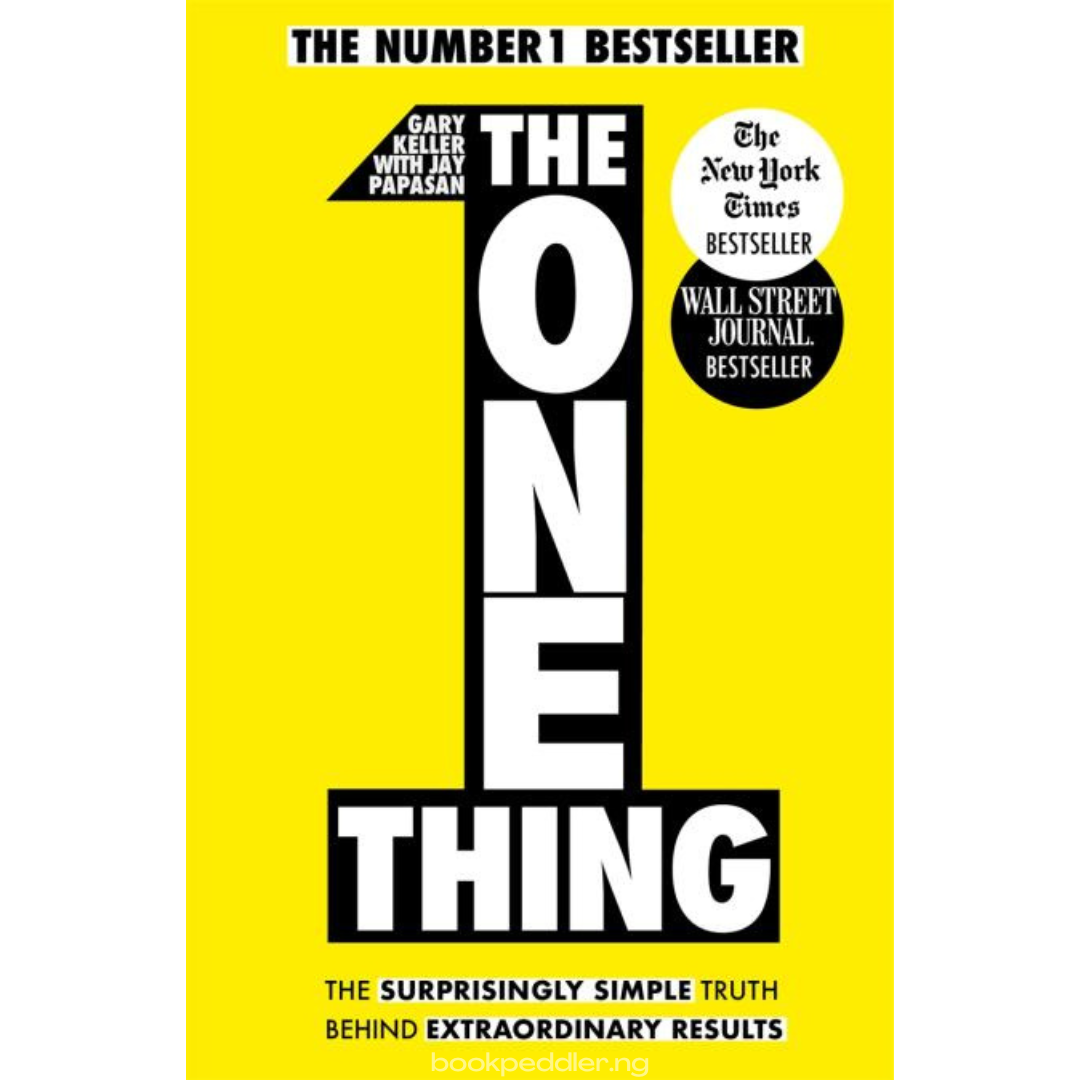
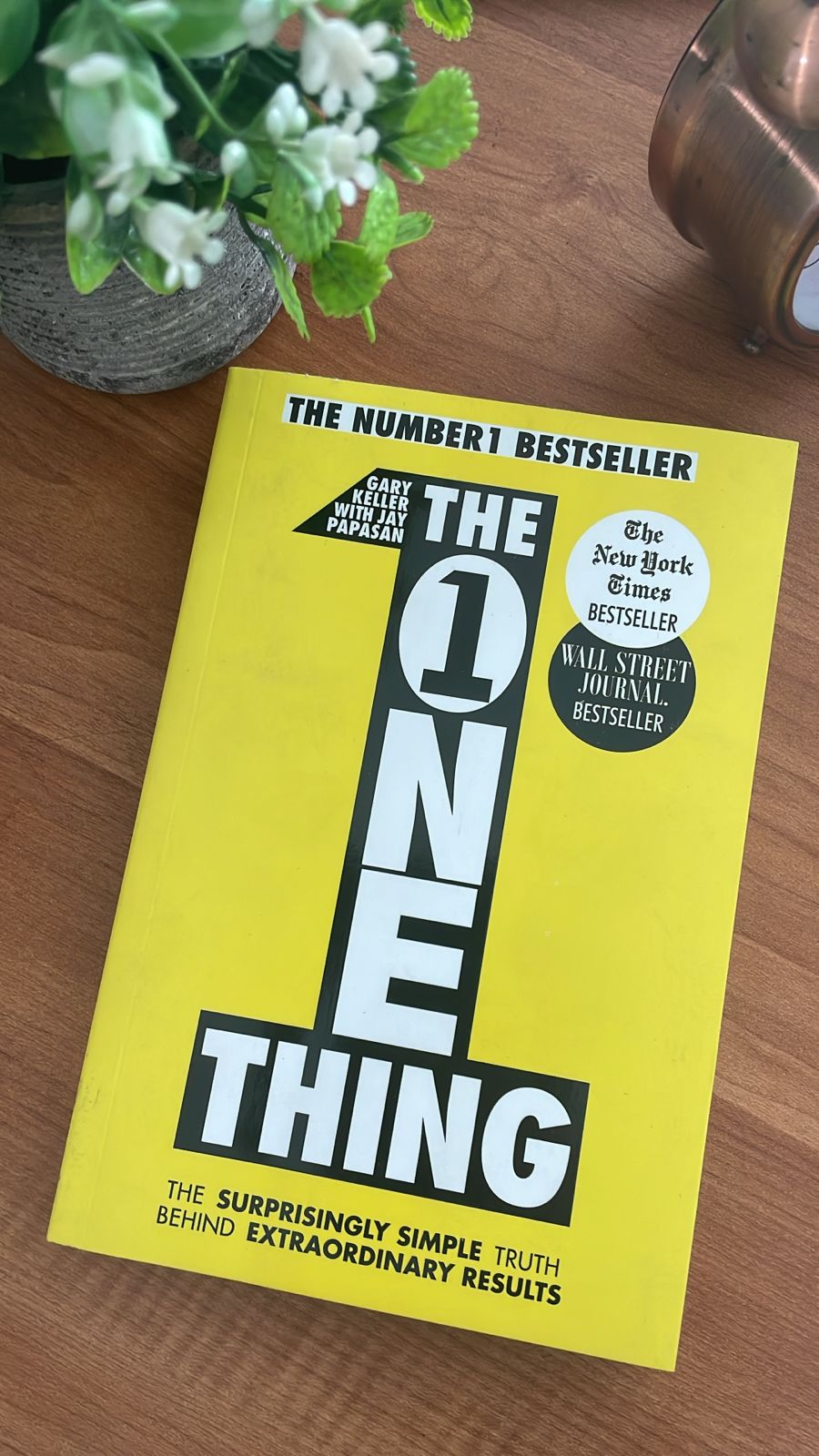
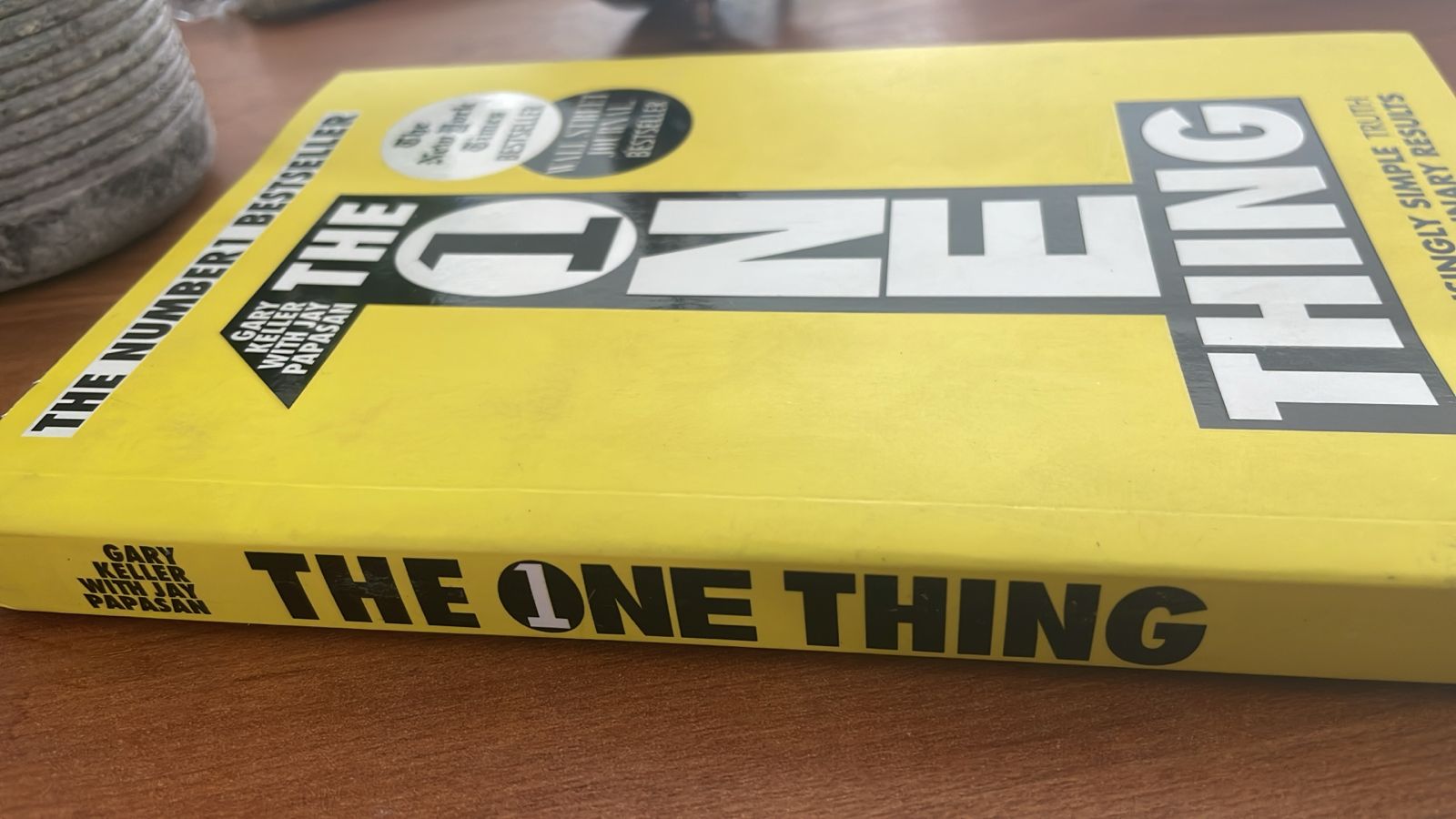
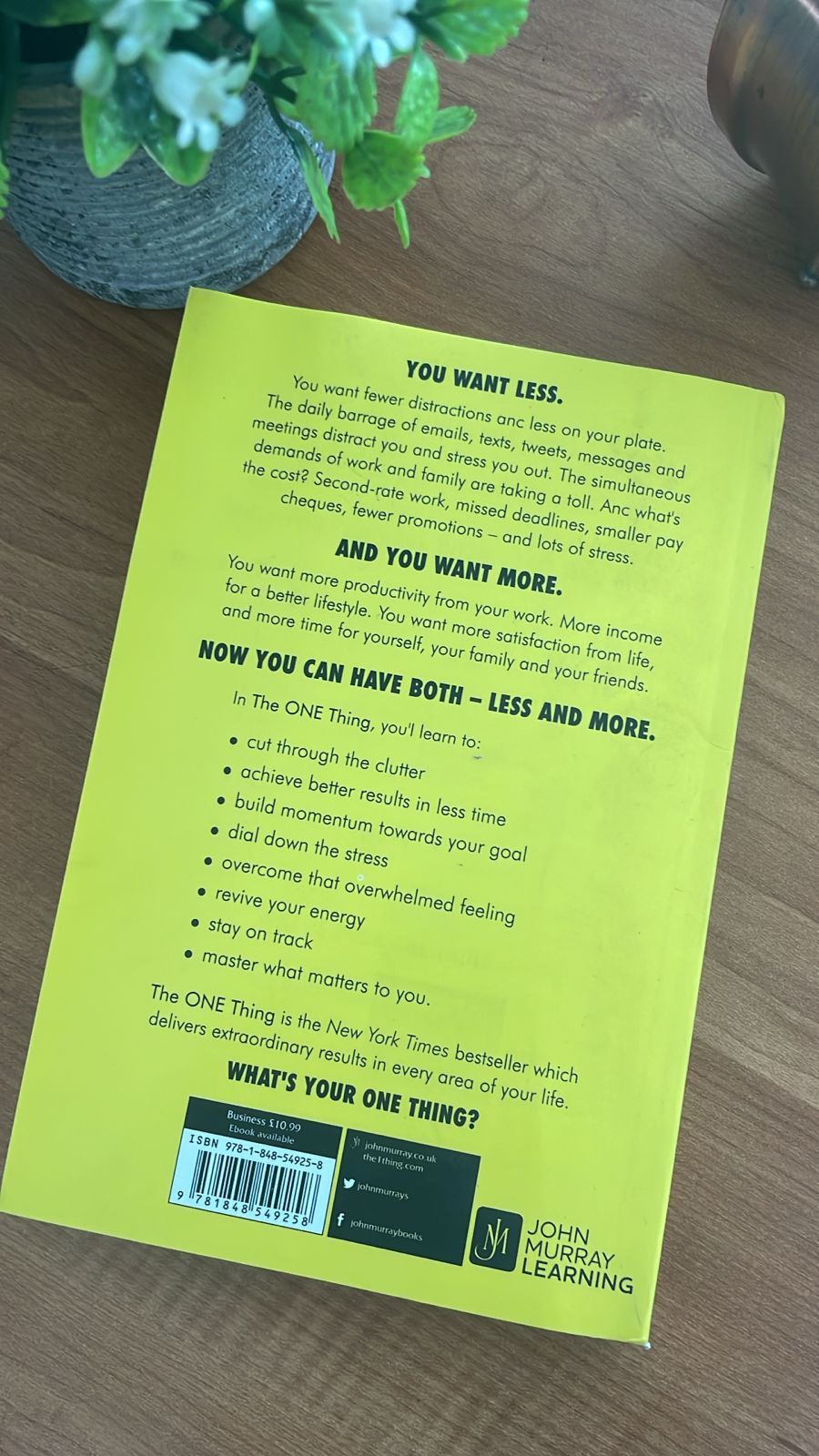


The One Thing (Paperback) by Gary Keller and Jay Papasan

රු1,500.00
3 X Rs. 500.00 or 8% Cashback with


or 3 X රු500.00 with


or up to 4 X රු375.00 with


Unlock extraordinary results with “One Thing” by Gary Keller. This Paperback edition reveals the power of focus, offering actionable strategies to simplify your efforts and achieve exceptional outcomes. Order now to streamline your path to success.
5 in stock
The One Thing Paperback by Gary Keller and Jay Papasan is a powerful productivity and personal-development guide built around one deceptively simple idea: extraordinary results often come from identifying the most important thing you can do and giving it your best attention.
Modern life constantly asks us to do more.
More emails.
More meetings.
More notifications.
More goals.
More responsibilities.
More multitasking.
The result is often not greater achievement.
It is distraction.
Stress.
Half-finished work.
And the feeling that you are extremely busy without making enough progress on what really matters.
The ONE Thing challenges that pattern.
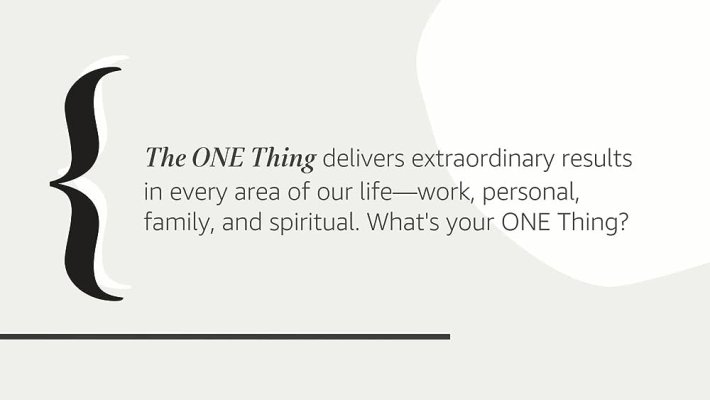
Instead of trying to treat everything as equally important, Keller and Papasan encourage readers to identify the priority that has the greatest impact and organize their time around it.
The official book site describes the goal as cutting through clutter, achieving stronger results in less time, reducing overwhelm, building momentum and staying focused on what matters most.
The One Thing Paperback is especially valuable for entrepreneurs, students, managers, professionals and anyone who regularly feels overwhelmed by too many competing priorities.
The One Thing Paperback – Book Overview
The One Thing Paperback asks readers to reconsider a common assumption:
If you want more success, you need to do more things.
The authors argue that this is often wrong.
Doing many things poorly may create less progress than doing the right thing exceptionally well.
The challenge therefore becomes identifying what deserves your attention first.
Not:
What can I do?
But:
What matters most?
This shift from activity to priority forms the foundation of the book.
The Focusing Question
One of the central tools in The ONE Thing is a focusing question.
The basic purpose is to identify the action with the highest leverage.
Instead of creating a huge list of equally weighted tasks, ask yourself which action would make other actions easier, less urgent or unnecessary.
This changes the way you think about productivity.
Most people ask:
What do I need to finish today?
A more strategic question is:
What action would create the greatest progress?
Priority Versus Priorities
Today people commonly talk about having many “priorities.”
But the concept of priority originally points toward something that comes first.
When everything becomes a priority, nothing truly is.
Imagine a to-do list containing twenty items.
If all twenty are labeled urgent, the label becomes almost meaningless.
The One Thing Paperback encourages readers to create hierarchy.
Some tasks matter more than others.
Some produce much greater results.
Your job is to identify them.
Not All Tasks Produce Equal Results
This connects naturally with the Pareto Principle, commonly expressed as the idea that a relatively small proportion of causes can produce a large proportion of results.
In work, a few customers may produce most revenue.
A few products may generate most profit.
A few habits may create most improvement.
A few decisions may determine the direction of an entire project.
Effective productivity therefore requires more than working hard.
It requires knowing where effort matters most.
The Domino Effect
The book uses the idea of falling dominoes to explain how one important action can create momentum.
A small first action leads to another.
Then another.
Eventually, a large result emerges from a sequence of focused steps.
For example:
Write one page.
Then another.
Eventually you have a report.
Make one sales call.
Then another.
Eventually you build a pipeline.
Study one topic properly.
Then another.
Eventually you understand the course.
Large achievements are often built from smaller actions performed in the correct order.
Success Is Sequential
One of the strongest ideas in The One Thing Paperback is that major achievements are often sequential rather than simultaneous.
People sometimes look at a successful entrepreneur, athlete or author and imagine they handled everything at once.
Usually, progress happened in stages.
One important goal.
Then the next.
Then the next.
This is very different from trying to make maximum progress everywhere simultaneously.
Multitasking
The book strongly challenges multitasking.
What people call multitasking is often rapid task-switching.
You answer an email.
Return to your report.
Check your phone.
Return to your report.
Respond to a message.
Return again.
Every switch has a cognitive cost.
Attention has to be redirected.
Context must be rebuilt.
Important work becomes fragmented.
Deep Attention
Some tasks can be completed with partial attention.
Others cannot.
Writing.
Programming.
Studying.
Strategic planning.
Complex analysis.
Creative work.
These activities improve when you can stay with them long enough to reach deeper concentration.
That makes attention an important resource.
Busy Is Not the Same as Productive
A full calendar can look impressive.
But it does not prove meaningful progress.
You can spend an entire day:
Replying.
Reacting.
Attending.
Organizing.
Checking.
and still avoid the task that actually matters.
The One Thing Paperback encourages readers to judge productivity by results rather than visible busyness.
The Success List
Instead of an endless to-do list, the book encourages thinking in terms of the work most directly connected to success.
A traditional to-do list asks:
What could I do?
A success-oriented list asks:
What should I do to create the desired result?
This difference appears small.
In practice, it can completely change how a day is structured.
Goal Setting
The ONE Thing approach does not reject large goals.
It connects large goals with immediate actions.
Suppose your goal is to build a successful business.
That is too broad to act on directly.
You might narrow it to:
Annual goal.
Monthly target.
Weekly objective.
Today’s priority.
Then ask:
What should I do now that moves the larger goal forward?
From Someday to Today
Large ambitions become useful only when they influence present behavior.
“I want financial independence someday” is a wish.
“What action should I take this month to improve my financial position?” is more actionable.
The same idea works for:
Fitness.
Study.
Career.
Business.
Relationships.
Personal development.
Time Blocking
One practical strategy associated with The One Thing Paperback is protecting time for the most important work.
If your highest-priority task receives only whatever time remains after meetings and messages, it may never receive enough attention.
Time blocking reverses the sequence.
Protect the most valuable work first.
Then organize lower-value activity around it.
Protect Your ONE Thing
Putting important work on a calendar is only the beginning.
You also need to defend that time.
Distractions appear.
Someone asks for a meeting.
A message arrives.
A minor problem feels urgent.
Protecting focused time may require saying:
Not now.
Later.
No.
That can be uncomfortable.
But without boundaries, other people’s priorities can control your day.
The Four Thieves of Productivity
The book discusses forces that can undermine productivity, including difficulty saying no, fear of chaos, poor health habits and an environment that does not support your goals.
These are useful because productivity problems are not always caused by laziness.
Sometimes the environment itself makes focused work difficult.
Learn to Say No
Every yes uses time.
If you say yes to:
Another meeting.
Another project.
Another request.
Another commitment.
you are simultaneously saying no to something else.
The cost is simply less visible.
A productive life therefore requires selective refusal.
Saying No Without Being Rude
Boundaries do not require hostility.
You can say:
I cannot take that on right now.
I can help next week.
I can give you ten minutes rather than an hour.
Clear boundaries help protect your most important commitments.
Discipline Versus Habit
A common belief is that successful people possess endless discipline.
The authors argue instead that discipline is most useful when it helps create habits.
You do not want every valuable behavior to require an exhausting daily battle.
The goal is to make good actions increasingly automatic.
Build One Habit at a Time
Trying to change ten habits simultaneously often fails.
Exercise.
Diet.
Reading.
Meditation.
Early waking.
Budgeting.
Studying.
All at once.
The ONE Thing approach suggests narrowing the challenge.
Build one useful habit strongly.
Then build from there.
Habit Formation Takes Time
There is no magical universal number of days that guarantees a permanent habit.
Different behaviors and people vary.
The more important principle is consistency.
Repeated behavior gradually lowers the effort required to begin again.
Willpower Is Limited
Willpower is not equally strong at every moment of the day.
Fatigue.
Stress.
Hunger.
Decision overload.
Poor sleep.
all affect self-control.
That means scheduling important work when your energy is strongest can improve performance.
Energy Management
Productivity is not only time management.
Two people can each have two hours.
One is rested and focused.
The other is exhausted.
The same two hours will produce different outcomes.
That makes sleep, movement, nutrition and recovery relevant to professional performance.
Purpose
The book connects daily priority with a larger sense of purpose.
A highly productive person who works toward goals they do not value may still feel dissatisfied.
Purpose helps answer:
Why does this matter?
Priority answers:
What should I do next?
When purpose and priority align, work becomes much clearer.
Purpose, Priority and Productivity
These ideas form a useful sequence:
Purpose gives direction.
Priority identifies what matters now.
Productivity turns that priority into action.
Many productivity systems begin with tasks.
This approach begins one level higher.
Why are you doing the task at all?
Big Goals
The One Thing Paperback encourages ambitious thinking.
Focusing on one thing does not mean thinking small.
It means directing effort toward the actions most capable of producing a large result.
A big goal may require years.
But today still contains only a limited number of hours.
Think Big, Act Small
This is one of the most practical combinations in the book.
Think big about the destination.
Act small about the next step.
You may want to:
Build a company.
Write a book.
Earn a degree.
Become financially independent.
But today’s work needs to be specific.
The Six Lies
The authors challenge several common beliefs about success, including the ideas that everything matters equally, multitasking works well, discipline must be constantly available, willpower is always ready on demand, balance is always the ideal state and big goals are inherently dangerous.
The broader lesson is important:
Some widely accepted productivity advice can actually create distraction.
Everything Does Not Matter Equally
This may be the most important “lie” to challenge.
A customer complaint affecting hundreds of orders does not deserve the same priority as changing the font in an internal spreadsheet.
Yet people often complete easy minor tasks first because they feel satisfying.
That creates the illusion of progress.
Why Easy Tasks Feel Productive
Checking off ten small tasks creates immediate satisfaction.
Working for three hours on one difficult task may produce only one completed item.
But that one item may be worth more than all ten smaller tasks combined.
Productivity should therefore be measured by impact, not checkmarks.
Work-Life Balance
The book offers a more nuanced view than simply trying to keep every area of life perfectly balanced every day.
Sometimes an important goal demands unusual concentration for a period.
The key is not permanently neglecting everything else.
It is recognizing that life naturally moves through different periods of emphasis.
Counterbalancing
Rather than perfect daily balance, think about returning attention where it is needed.
A work deadline may temporarily demand extra focus.
Later, family or health may require more.
The goal is to avoid neglect becoming permanent.
Productivity for Entrepreneurs
The One Thing Paperback is especially relevant to entrepreneurs because founders constantly face too many possibilities.
Marketing.
Hiring.
Sales.
Finance.
Product development.
Operations.
Customer support.
The question becomes:
Which bottleneck matters most right now?
Solving that one problem may unlock progress everywhere else.
Productivity for Managers
Managers can apply the same idea to teams.
Instead of giving employees twenty equally urgent objectives, define the most important outcome.
Clarity improves when people know what success actually looks like.
Too many goals dilute attention.
Productivity for Students
Students can also use the method.
Instead of:
Study everything tonight.
Ask:
What topic will have the greatest impact on my understanding or examination performance?
Then protect focused study time.
One deeply understood concept can sometimes unlock several related topics.
Productivity for Software Developers
Developers frequently face:
Features.
Bugs.
Messages.
Meetings.
Refactoring.
Documentation.
Technical debt.
A ONE Thing approach asks:
What is currently blocking the most value?
A single infrastructure issue may matter more than five cosmetic fixes.
Productivity for Sales
Sales teams can ask:
Which action is most closely connected to revenue?
It might be:
Prospecting.
Following up.
Improving conversion.
Reactivating previous customers.
Not every sales activity produces equal results.
Productivity for Marketing
Marketing teams may generate endless ideas.
Videos.
Posts.
Emails.
Ads.
Blogs.
Partnerships.
Rather than doing everything poorly, identify the channel or campaign most likely to produce the desired outcome.
Focus allows better execution and better learning.
The ONE Thing and the 80/20 Principle
The ONE Thing philosophy works well alongside the Pareto Principle.
The 80/20 idea helps identify a small number of high-impact activities.
The ONE Thing pushes the process one step further:
Among those high-impact activities, what matters most right now?
Success Creates Momentum
Once the most important action starts producing results, momentum develops.
Progress creates confidence.
Confidence makes continued action easier.
This is why beginning with the right domino matters.
Accountability
Knowing the right priority is not enough.
Execution matters.
An accountability partner, manager, coach or tracking system can help convert intention into consistent behavior.
Ask regularly:
Did I protect the time?
Did I complete the priority?
What interfered?
What needs to change?
Environment Matters
If your phone is beside you and produces a notification every few minutes, concentration becomes harder.
If your calendar allows constant interruptions, deep work becomes harder.
Willpower is not the only solution.
Change the environment.
Silence notifications.
Close unnecessary tabs.
Use a focused workspace.
Make the desired behavior easier.
The Book Is Not Saying Only Do One Thing Forever
This is an important misunderstanding.
You still need to:
Eat.
Sleep.
Exercise.
Respond to people.
Handle responsibilities.
The idea is not literally to have only one task in life.
It is to understand that at any important moment, one action may deserve greater attention than the others.
Is The One Thing Paperback a Business Book?
Yes.
The official Hachette listing places The One Thing under business, management, personal development and time management.
It is equally useful as a broader productivity and goal-setting book.
Is It a Self-Help Book?
Yes, particularly in the areas of:
Focus.
Productivity.
Habits.
Goals.
Time management.
Personal effectiveness.
But many examples are also directly applicable to business and leadership.
Is It Easy to Read?
Yes.
The book presents a relatively simple central idea and repeatedly applies it to different areas of life.
Readers do not need business or psychology training to understand the framework.
Does It Teach Time Management?
Yes, although its philosophy is broader than traditional scheduling.
It focuses on choosing the right use of time rather than merely fitting more activity into a calendar.
Does It Help With Procrastination?
It can.
Procrastination sometimes occurs because a task feels too large or the person has too many competing tasks.
Identifying one specific next action can reduce that overwhelm.
However, persistent procrastination can also have causes beyond simple prioritization.
Is It About Multitasking?
Multitasking is one major topic, but not the whole book.
The larger theme is concentrated effort.
The authors argue that exceptional results are more likely when attention is directed rather than continually divided.
Gary Keller
Gary Keller is a co-founder and executive chairman associated with Keller Williams Realty and has written several bestselling business books. The official ONE Thing site identifies him as the author of The ONE Thing.
His business experience heavily influences the book’s practical focus on priorities, leverage and results.
Jay Papasan
Jay Papasan is credited as co-author of The ONE Thing. His background includes publishing, writing, speaking and work with Keller Williams.
The book is therefore commonly displayed as:
Gary Keller with Jay Papasan
or
Gary Keller and Jay Papasan
Paperback Edition Note
Hachette UK currently lists a paperback edition of The One Thing under ISBN 9781848549258, released October 3, 2019. It is categorized under business, management, personal development and time management.
An earlier UK paperback listing also exists, so check the ISBN printed on your physical copy before entering the WooCommerce ISBN and page-count fields.
For your product title, I recommend:
The ONE Thing (Paperback) by Gary Keller and Jay Papasan
Important Themes
The One Thing Paperback explores focus, productivity, priority, goal setting, time management, habits, discipline, willpower, purpose, business success, concentration, deep work, decision-making, personal development, work-life management, saying no, accountability and extraordinary results.
7 Powerful Lessons From The One Thing Paperback
- Everything is not equally important. Identify the task with the greatest impact instead of treating every item on your list as equally urgent.
- Success often happens sequentially. Extraordinary results can emerge from completing the right actions in the right order rather than trying to do everything simultaneously.
- Multitasking weakens focused performance. Repeated task-switching divides attention and makes complex work harder to complete at a high standard.
- Protect time for your highest priority. Important work should receive scheduled, defended attention rather than whatever time happens to remain.
- Build habits instead of depending forever on willpower. Consistent routines reduce the amount of daily effort required to make useful choices.
- Say no to protect what matters most. Every new commitment consumes time and attention that cannot simultaneously be used elsewhere.
- Think big but act on the next important step. Large goals become achievable when they are connected to a clear action you can take today.
Why Read The One Thing Paperback?
The One Thing Paperback is an excellent choice for readers who feel:
Busy but not productive.
Overwhelmed by large to-do lists.
Distracted by too many projects.
Unable to decide what to work on first.
Interested in improving focus.
Trying to build a business.
Preparing for exams.
Managing teams.
Developing better habits.
Working toward a major long-term goal.
The book’s strength is not that it gives readers hundreds of productivity tricks.
It does almost the opposite.
It asks readers to simplify.
Instead of constantly searching for another app, system or technique, identify what truly matters.
Then give it sufficient attention.
Who Should Read This Book?
The One Thing Paperback is especially suitable for entrepreneurs, business owners, managers, students, software developers, marketers, sales professionals, freelancers, leaders and anyone who wants to become more effective without simply adding more activity to an already crowded schedule.
It may be particularly valuable for someone who regularly ends the day thinking:
“I was busy all day, but I did not finish the thing that mattered most.”
The One Thing Paperback – Do Less, but Make It Matter More
The One Thing Paperback challenges the idea that success belongs to the person who can juggle the greatest number of tasks.
Instead, it asks a much harder question:
What deserves your attention most?
That question sounds simple.
Answering it honestly may require removing:
Distractions.
Meetings.
Minor tasks.
Unnecessary goals.
Other people’s expectations.
Once the priority becomes clear, another challenge appears.
Protect it.
A meaningful goal will always compete with something easier.
Email feels easier.
Social media feels easier.
Cleaning your desk may feel easier.
The important task is often difficult precisely because it matters.
That is why focus must become deliberate.
The central philosophy of The ONE Thing can be applied almost anywhere.
A student asks:
What topic do I need to understand first?
A business owner asks:
What problem is currently limiting growth?
A salesperson asks:
What activity produces the greatest number of qualified opportunities?
A developer asks:
What technical bottleneck is preventing the project from moving forward?
A person trying to improve health asks:
What habit would create the biggest positive change?
The answers differ.
The principle remains.
You do not need to solve your entire life today.
You need to identify the action that matters most now.
Then do it well.
For readers looking for a practical book about focus, priorities, productivity and building meaningful progress through concentrated effort, The One Thing Paperback offers a simple framework with wide application to business, study and everyday life.
Learn more about The ONE Thing by Gary Keller and Jay Papasan on the official The ONE Thing website.
Explore more productivity and personal development books at Bargain Books.
| Author | Gary Keller and Jay Papasan |
|---|---|
| Type | Paperback Brand new Printed (Indian Locally published) |
| ISBN/ISSN | 978-1848549609, 9781848549609 |
| Language | English |
| Pages | 256 |
Be the first to review “The One Thing (Paperback) by Gary Keller and Jay Papasan”
Related products
-14%
Out of stock
Self-Help & Psychology
Original price was: රු2,900.00.රු2,500.00Current price is: රු2,500.00.
3 X Rs. 833.33 or 8% Cashback with
or 3 X රු833.33 with
or up to 4 X රු625.00 with
-24%
Non-Fiction & Knowledge
Original price was: රු2,300.00.රු1,750.00Current price is: රු1,750.00.
3 X Rs. 583.33 or 8% Cashback with
or 3 X රු583.33 with
or up to 4 X රු437.50 with
Out of stock
Self-Help & Psychology
රු1,900.00
3 X Rs. 633.33 or 8% Cashback with
or 3 X රු633.33 with
or up to 4 X රු475.00 with
-26%
Out of stock
Non-Fiction & Knowledge
Original price was: රු2,000.00.රු1,490.00Current price is: රු1,490.00.
3 X Rs. 496.67 or 8% Cashback with
or 3 X රු496.67 with
or up to 4 X රු372.50 with
-34%
Self-Help & Psychology
Original price was: රු2,350.00.රු1,550.00Current price is: රු1,550.00.
3 X Rs. 516.67 or 8% Cashback with
or 3 X රු516.67 with
or up to 4 X රු387.50 with
-34%
Non-Fiction & Knowledge
Original price was: රු2,250.00.රු1,490.00Current price is: රු1,490.00.
3 X Rs. 496.67 or 8% Cashback with
or 3 X රු496.67 with
or up to 4 X රු372.50 with
-33%
Self-Help & Psychology
Original price was: රු2,300.00.රු1,550.00Current price is: රු1,550.00.
3 X Rs. 516.67 or 8% Cashback with
or 3 X රු516.67 with
or up to 4 X රු387.50 with
Non-Fiction & Knowledge
රු2,450.00
3 X Rs. 816.67 or 8% Cashback with
or 3 X රු816.67 with
or up to 4 X රු612.50 with
Reviews
There are no reviews yet.