
No products in the cart.
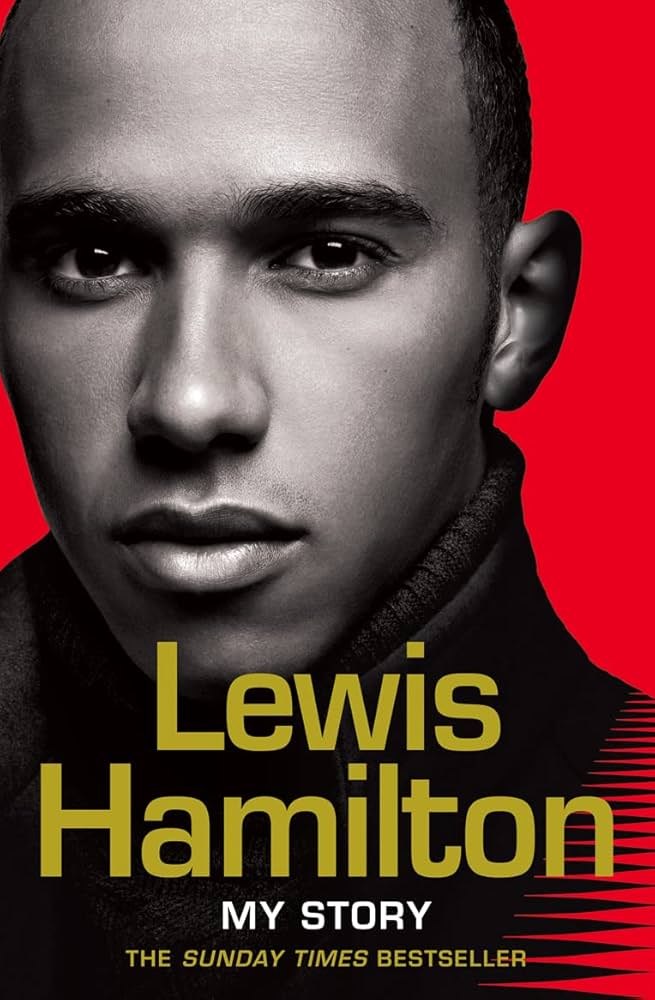
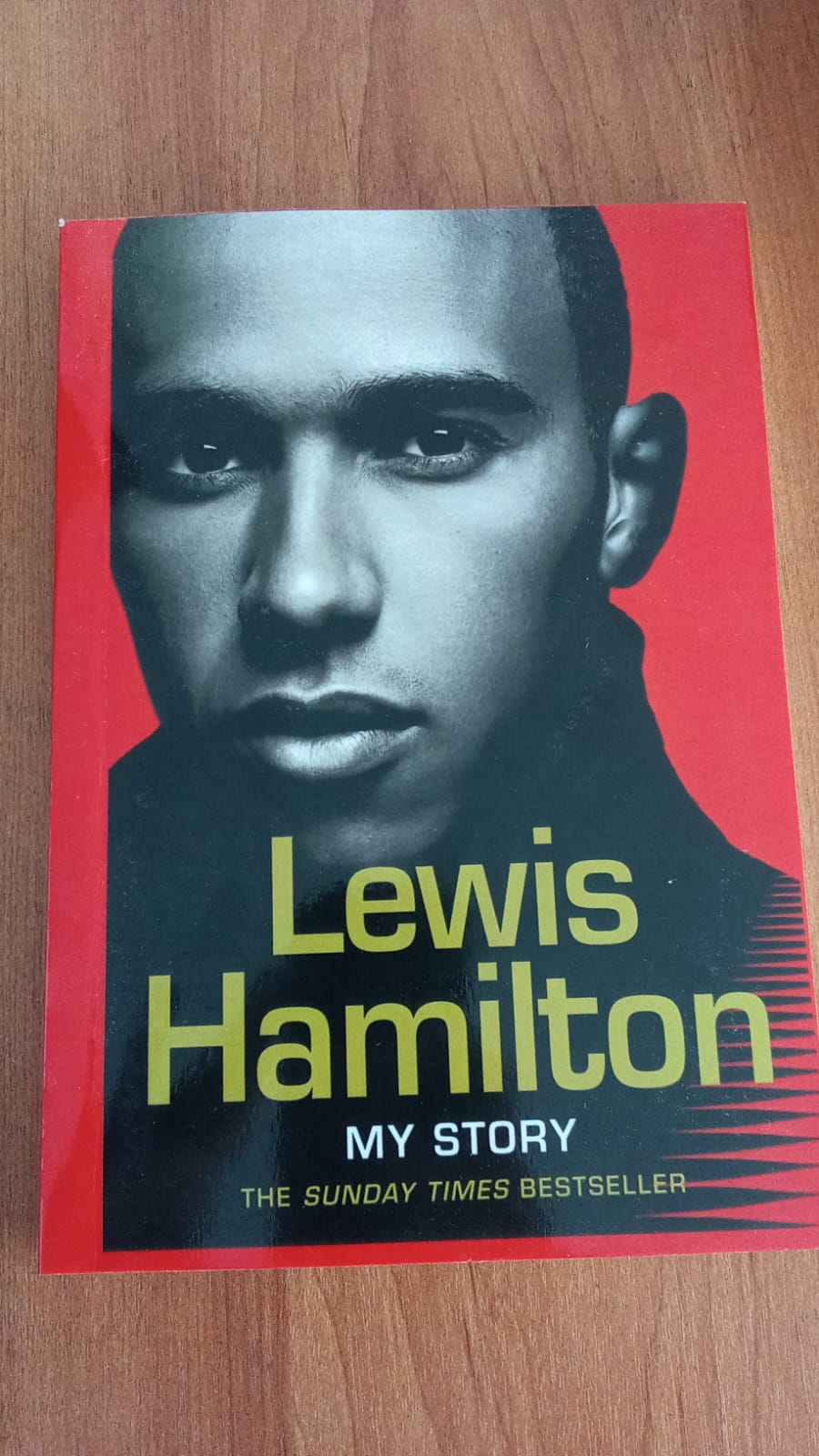
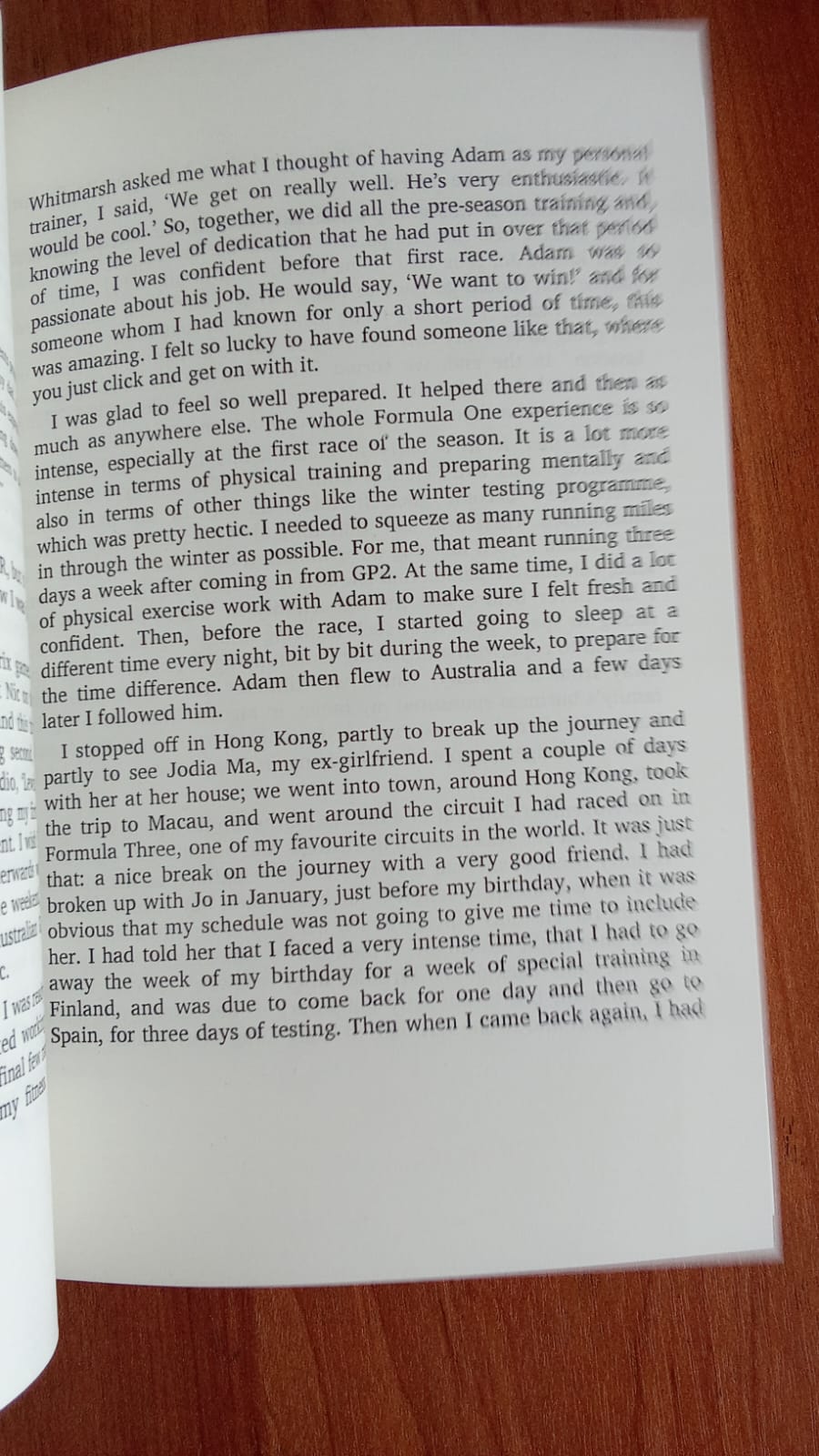
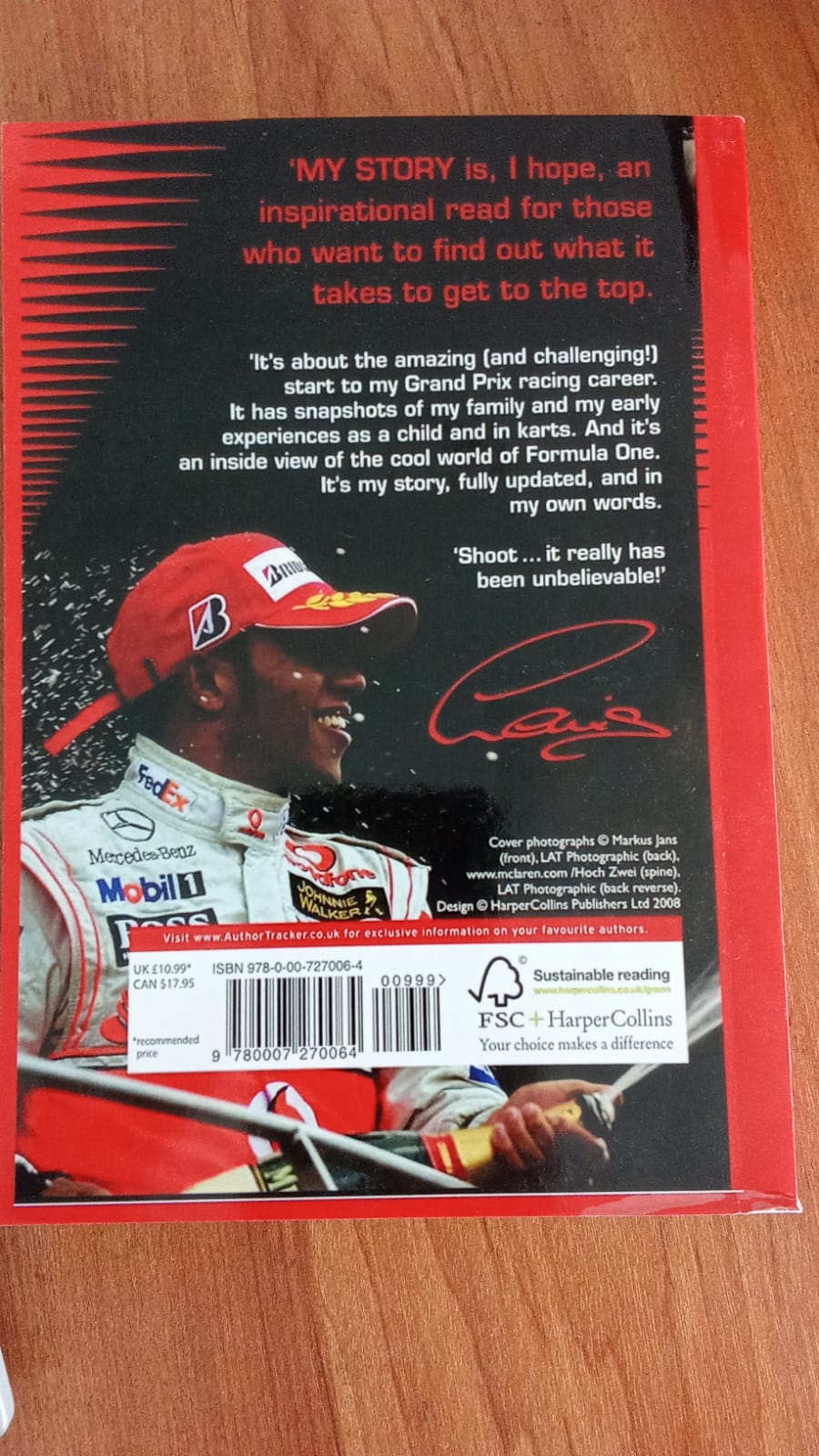


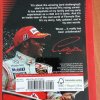
My Story by Lewis Hamilton


රු1,950.00
3 X Rs. 650.00 or 8% Cashback with


or 3 X රු650.00 with


or up to 4 X රු487.50 with


Lewis Hamilton My Story is Lewis Hamilton’s inspiring autobiography about his journey from childhood karting in Stevenage to his extraordinary breakthrough in Formula One. Hamilton shares memories of his family, the sacrifices behind his racing career, his development with McLaren and the pressure and excitement of his sensational 2007 rookie season. A compelling sports memoir about determination, self-belief, resilience and elite competition, it is an excellent choice for Formula One fans and readers who enjoy inspirational true stories.
2 in stock
Purchase & earn 20 points!
Category: Self-Help & Psychology
Lewis Hamilton My Story is the inspiring autobiography of one of Formula One’s most successful and influential racing drivers, taking readers inside Lewis Hamilton’s remarkable journey from a determined young kart racer in Stevenage to an extraordinary debut season at the highest level of motorsport.
Long before the championships, records and worldwide fame, Hamilton was simply a young boy fascinated by speed.
His dream looked enormous.
Formula One is one of the most competitive and expensive sports in the world.
Only a tiny number of drivers ever reach the grid.
Fewer still arrive and immediately challenge established champions.
Yet Hamilton’s path was built through years of:
Practice.
Family sacrifice.
Financial pressure.
Discipline.
Competition.
Setbacks.
Self-belief.
And relentless improvement.
In Lewis Hamilton My Story, Hamilton reflects on the people, experiences and decisions that shaped his early life and racing career.
He writes about his childhood, his father Anthony Hamilton’s support, his early karting experiences, his relationship with McLaren, the pressure of entering Formula One and the extraordinary 2007 season that turned him into an international sporting star almost overnight.
This is not simply a book about fast cars.
It is a story about what happens when talent meets opportunity—and how much work is required to be ready when that opportunity finally arrives.
Lewis Hamilton My Story – Book Overview
Lewis Hamilton My Story gives readers Hamilton’s own account of the years that led to his breakthrough in Formula One.
The book explores a journey that begins far away from the glamour commonly associated with Grand Prix racing.
Before:
Private jets.
Huge sponsorships.
International fame.
Championship trophies.
there were kart tracks, long journeys, financial sacrifices and a family trying to support an extremely ambitious young driver.
Hamilton’s story is therefore interesting even for readers who are not already Formula One experts.
At its core, it is about pursuing a difficult goal for years before anyone can guarantee that the effort will succeed.
Growing Up in Stevenage
Lewis Hamilton was born in Stevenage, Hertfordshire, in 1985.
His route into motorsport did not begin with an established Formula One family dynasty.
He developed his fascination with racing as a child and began karting at a young age.
The early years were crucial because racing requires far more than simply driving quickly.
Young drivers must learn:
Racecraft.
Braking.
Overtaking.
Defending.
Consistency.
Mechanical awareness.
Pressure management.
Competitive discipline.
Hamilton began developing these skills while still a child.
Discovering Karting
Karting became the foundation of Hamilton’s racing career.
To an outsider, a small kart may look very different from a Formula One car.
But karting teaches many of the fundamentals elite racing drivers later depend upon.
A young racer learns how to:
Find grip.
Choose racing lines.
Judge braking points.
Control a vehicle near its limits.
Compete closely with other drivers.
Make decisions instantly.
Hamilton showed unusual ability early.
Anthony Hamilton
One of the most important figures in Lewis Hamilton My Story is Hamilton’s father, Anthony Hamilton.
Lewis’s racing career required enormous family commitment.
Motorsport is expensive.
Entry fees.
Equipment.
Travel.
Repairs.
Tyres.
Race preparation.
All create financial pressure.
Hamilton describes the sacrifices surrounding his early racing years and the role his father played in supporting his ambition.
Success Is Rarely Completely Individual
Athletes often receive the trophy alone.
But the journey behind the trophy may involve many people.
Parents.
Coaches.
Mechanics.
Mentors.
Sponsors.
Teachers.
Team members.
Hamilton’s early story is a reminder that exceptional individual performance can depend on a larger support system.
Family Sacrifice
Supporting a child in elite motorsport is not like paying for an ordinary hobby.
The costs can become enormous.
The time commitment is intense.
Weekends disappear into races.
Equipment needs replacing.
Travel becomes constant.
There is no guarantee that the investment will eventually produce a professional career.
That uncertainty makes the Hamilton family’s commitment particularly significant.
Talent Is Only the Beginning
Hamilton clearly possessed natural ability.
But talent alone could not carry him from karting to Formula One.
He also needed:
Training.
Consistency.
Fitness.
Technical understanding.
Mental strength.
Opportunity.
The right relationships.
Years of competition.
Lewis Hamilton My Story demonstrates why talent should be treated as a starting point rather than a final advantage.
Meeting Ron Dennis
One famous part of Hamilton’s early story involves Ron Dennis, then a major figure at McLaren.
As a young racer, Hamilton approached Dennis and told him about his ambition to race for McLaren one day.
It was an extremely bold goal for a child.
Years later, Hamilton became part of the McLaren development system.
The Power of Asking
There is an important lesson here.
Hamilton did not control whether McLaren would eventually support him.
But he could communicate ambition.
Many people never ask because they are afraid the answer will be no.
The answer may indeed be no.
But silence guarantees that some opportunities never even begin.
The McLaren Young Driver Programme
Hamilton’s connection with McLaren gave him access to a more structured path through motorsport.
But support created new pressure.
Being selected did not mean success was guaranteed.
It meant expectations became higher.
Now Hamilton needed to continue proving that the opportunity was justified.
Opportunity Creates Responsibility
Receiving a major opportunity can feel like achieving the goal.
Often it is only the beginning.
A scholarship.
A new job.
Investment.
A promotion.
A professional contract.
Each creates another level at which performance must continue.
Hamilton still needed results.
Moving Through the Racing Categories
Before Formula One, drivers generally progress through increasingly competitive racing categories.
Hamilton developed through junior formula racing, gaining experience in faster and more technically demanding cars.
Each level requires adaptation.
A driver who dominates one category is not automatically guaranteed to dominate the next.
Learning to Adapt
Different cars behave differently.
Different championships create different competition.
Different circuits demand different techniques.
Adaptability becomes one of the essential abilities of professional racing drivers.
This lesson applies outside sport too.
A skill that made you successful at one level may need to evolve at the next.
Pressure
Motorsport creates constant measurement.
Lap time.
Qualifying position.
Race result.
Championship points.
There is little room to hide.
If you are slower, the stopwatch shows it.
This can create enormous psychological pressure.
Competition
Competition appears throughout Lewis Hamilton My Story.
Racing drivers are competing not only against:
Other teams.
Other drivers.
but sometimes directly against their own teammate in identical or similar machinery.
That creates a particularly intense environment.
Formula One
Formula One represents the highest level of international single-seater motorsport.
Drivers compete with extremely sophisticated machines capable of extraordinary speed.
But F1 is not simply about the driver.
Performance also involves:
Engineering.
Aerodynamics.
Strategy.
Tyres.
Pit stops.
Reliability.
Weather.
Team communication.
Thousands of decisions can influence one race.
Hamilton’s Formula One Debut
Hamilton entered Formula One with McLaren in 2007.
For almost any rookie, simply reaching Formula One would already represent a remarkable achievement.
Hamilton did something more unusual.
He became immediately competitive near the front.
The 2007 Australian Grand Prix
Hamilton made his Formula One debut at the Australian Grand Prix.
Instead of spending a long period adjusting quietly at the back of the field, he immediately demonstrated that he could compete against experienced drivers.
His arrival attracted enormous attention.
Nine Consecutive Podiums
During his remarkable rookie season, Hamilton finished on the podium in his first nine Formula One races—a historic start that immediately established him as a championship contender.
This changed the narrative around him.
He was no longer merely:
A promising rookie.
He was competing for major results.
First Formula One Victory
Hamilton took his first Formula One victory in Canada during his debut season.
He also won in:
The United States.
Hungary.
Japan.
For a rookie driver, this was an extraordinary level of immediate success.
The 2007 Championship Fight
Hamilton entered his first Formula One season and found himself fighting for the World Drivers’ Championship.
The championship battle remained intense until the final race.
Ultimately, he finished second in the standings.
Missing the title so narrowly could easily dominate the story as a failure.
But context matters.
A rookie had nearly won Formula One’s greatest individual prize in his first attempt.
Near Success Can Still Hurt
One interesting psychological lesson from elite sport is that objectively extraordinary results can still feel disappointing.
Second place in Formula One is remarkable.
Second place after coming extremely close to first can feel devastating.
Both things can be true.
Fernando Alonso
Hamilton’s 2007 teammate was Fernando Alonso, already a Formula One World Champion.
Their relationship became one of the most discussed aspects of that season.
Having two highly competitive drivers inside the same team creates difficult questions.
Both want to win.
Both expect opportunity.
Both compare themselves directly against the other.
Competing With the Best
One way to discover your real level is to compete against people who are already excellent.
That can be uncomfortable.
Weakness becomes visible.
But so does potential.
Hamilton’s ability to compete immediately against elite drivers helped demonstrate that he belonged at Formula One level.
Teamwork Inside an Individual Competition
Formula One creates an unusual tension.
A driver needs the team.
Engineers.
Mechanics.
Strategists.
Designers.
Pit crew.
Yet the driver’s teammate is simultaneously one of his closest competitors.
Success therefore requires balancing:
Cooperation
and
competition.
Mental Strength
Driving a Formula One car requires physical skill.
But mental performance is equally important.
A driver must maintain concentration while travelling at extreme speeds and processing enormous amounts of information.
One mistake can destroy an entire race.
Focus
Hamilton’s story demonstrates the importance of focusing on the task immediately in front of you.
On race day, worrying endlessly about:
Media.
Championship calculations.
Criticism.
Future races.
can distract from the next corner.
High performance often requires narrowing attention.
Preparation
Elite performance is built long before the visible event.
A Grand Prix lasts only a few hours.
Preparation involves:
Training.
Simulator work.
Engineering meetings.
Track study.
Fitness.
Nutrition.
Practice sessions.
Qualifying.
The public sees the race.
The athlete lives the preparation.
Physical Fitness
Formula One drivers require significant physical conditioning.
They experience:
High G-forces.
Heat.
Long periods of concentration.
Heavy braking loads.
Physical stress.
Driving may look like sitting inside a car, but elite motorsport demands serious fitness.
Discipline
Lewis Hamilton My Story repeatedly points toward discipline.
Motivation can begin a dream.
Discipline keeps it moving.
Training when you would rather rest.
Preparing when nobody is watching.
Reviewing mistakes.
Doing the repetitive work.
These habits separate ambition from progress.
Self-Belief
Hamilton needed to believe he belonged in environments where the competition was extraordinary.
Self-belief does not mean believing:
“I cannot fail.”
A healthier version is:
“I am capable of competing here.”
That belief allows someone to perform rather than becoming overwhelmed by reputation.
Confidence Versus Arrogance
Elite competition requires confidence.
But confidence and arrogance are not identical.
Confidence says:
I believe in my preparation.
Arrogance says:
I have nothing left to learn.
The best competitors continue learning even after success.
Learning From Failure
Racing guarantees disappointment.
Mechanical failures.
Poor qualifying.
Mistakes.
Crashes.
Lost championships.
No driver avoids all of them.
The question becomes how quickly the athlete can learn and reset.
Resilience
Resilience means returning after disappointment without pretending disappointment never happened.
You can:
Feel frustrated.
Analyze the problem.
Learn.
Then continue.
That process appears repeatedly in high-level sport.
Pressure From Public Attention
Hamilton’s rapid rise created intense media interest.
Suddenly, performances were discussed internationally.
Success creates opportunities.
It also creates scrutiny.
Every mistake becomes visible.
Every comment may become a headline.
Life in the Spotlight
Lewis Hamilton My Story gives readers insight into what happens when a young athlete becomes globally famous very quickly.
Privacy changes.
Expectations change.
Relationships with media change.
Even ordinary mistakes receive extraordinary attention.
Staying Grounded
Hamilton’s family background becomes especially important once fame arrives.
When the outside world begins treating someone like a superstar, connections to people who knew them before fame can provide perspective.
Identity Beyond Results
Athletes can become psychologically trapped when identity depends entirely on winning.
Win:
I am valuable.
Lose:
I am worthless.
A sustainable identity needs more than the result of one competition.
Race, Representation and Breaking Barriers
Hamilton’s arrival in Formula One also carried wider significance because he became the first Black driver to race in Formula One.
That made his visibility important beyond ordinary sporting achievement.
Representation can change what younger people imagine is possible.
Barriers
People entering spaces where few others share their background may face additional pressure.
They may feel that mistakes represent more than themselves.
Hamilton’s later public work would increasingly address diversity and inclusion, but Lewis Hamilton My Story captures the earlier stage of the journey when he was entering a historically exclusive sporting environment.
Ambition
Hamilton’s ambition was obvious from childhood.
Ambition can sometimes be criticized as excessive.
But difficult goals often require a willingness to believe in possibilities that appear unrealistic to other people.
The challenge is combining ambition with work.
Dreams Need Systems
Saying:
“I want to become a Formula One driver”
is a dream.
Then comes the system:
Karting.
Practice.
Junior championships.
Fitness.
Technical learning.
Funding.
Relationships.
Performance.
Goals become real through systems.
Financial Reality of Motorsport
Motorsport is expensive.
Talent can be limited by lack of funding.
This is one reason family sacrifice and sponsorship become such important parts of racing careers.
Hamilton’s story therefore also illustrates how access and opportunity affect who can pursue elite sport.
Mentorship
Hamilton’s development involved people who believed in his potential.
A mentor cannot drive the car for you.
But the right mentor can:
Open a door.
Give feedback.
Provide structure.
Create opportunity.
Challenge you.
Opportunity Meets Preparation
Hamilton’s story can be summarized partly through this equation:
Opportunity + Preparation = Possibility.
The McLaren opportunity mattered.
But if Hamilton had not spent years developing the skill required to use it, the opportunity would not have produced the same result.
Is Lewis Hamilton My Story a Complete Career Autobiography?
No.
This is important for customers.
Lewis Hamilton My Story primarily covers Hamilton’s childhood, early racing career and breakthrough into Formula One, especially his extraordinary 2007 rookie season. The original book appeared before most of the career achievements for which he is now famous.
Hamilton later became a seven-time Formula One World Drivers’ Champion, but readers should not expect the original autobiography to provide a complete account of his entire later Mercedes-era career.
Different Editions
Several editions of the book exist.
The original 2007 edition is listed at 308 pages, while a 2008 reprint is listed at 336 pages. Another updated 2008 edition includes material covering Hamilton’s first World Championship victory.
Therefore, when entering the exact page count or ISBN into WooCommerce, use the details printed on the specific physical copy you are selling.
Is It an Autobiography?
Yes.
Hamilton tells the story from his own perspective.
That makes Lewis Hamilton My Story different from a biography written by an outside journalist or historian.
Readers receive Hamilton’s own recollections and interpretation of events.
Autobiography Means Perspective
An autobiography is valuable because it gives direct access to the subject’s viewpoint.
But it is still one person’s perspective.
For a complete historical understanding of controversial events, readers may also compare:
Race records.
Journalism.
Team accounts.
Other biographies.
This does not reduce the value of Hamilton’s story; it simply explains what type of source it is.
Is It Only for Formula One Fans?
No.
F1 fans will naturally gain the most from the racing details.
But the broader themes make the book relevant to readers interested in:
Success.
Sports psychology.
Family sacrifice.
Ambition.
Leadership.
Resilience.
Goal setting.
Is It Good for Young Readers?
Teen readers interested in:
Motorsport.
Sports careers.
Determination.
Success stories.
may especially enjoy the book.
Hamilton’s progression from childhood karting to Formula One makes the journey easy to follow.
Is It Motivational?
Yes, although it is primarily an autobiography rather than a traditional self-help manual.
The motivational value comes from the real journey.
Readers see the years of work behind the public success.
Formula One Beginners
You do not need detailed knowledge of Formula One before reading Lewis Hamilton My Story.
Understanding some basic motorsport terminology can help, but the human story remains accessible.
Important Themes
Lewis Hamilton My Story explores:
- Formula One
- Motorsport
- Karting
- Lewis Hamilton
- Family sacrifice
- Ambition
- Self-belief
- Discipline
- Competition
- Resilience
- Pressure
- Racing
- Teamwork
- Mentorship
- Opportunity
- Diversity
- Success
- Failure
- Personal growth
- Elite sport
7 Powerful Lessons From Lewis Hamilton My Story
- Start before the dream looks realistic – Hamilton began karting years before there was any guarantee that Formula One would ever become possible.
- Family support can change the direction of a life – The sacrifices made during his early racing years demonstrate how important a committed support system can be.
- Talent needs disciplined preparation – Natural speed was valuable, but years of practice, competition, fitness and technical learning were required before Hamilton could succeed in Formula One.
- Ask for opportunities – Hamilton’s confidence in expressing his ambition to Ron Dennis shows that sometimes a career-changing opportunity begins simply because someone is willing to introduce themselves and state their goal.
- Competing against exceptional people can accelerate growth – Entering Formula One alongside world-class competitors immediately tested Hamilton at the highest possible level.
- Near failure does not erase extraordinary progress – Losing the 2007 championship narrowly did not change the fact that Hamilton had produced one of the most remarkable rookie seasons in Formula One history.
- Success creates a new challenge rather than ending the journey – Reaching Formula One was not the finish line. It created higher expectations, greater pressure and another level of work.
Why Read Lewis Hamilton My Story?
Lewis Hamilton My Story is an excellent choice for readers interested in:
- Lewis Hamilton
- Formula One
- F1 biographies
- Motorsport
- Racing drivers
- Sports autobiographies
- Inspirational biographies
- Kart racing
- McLaren
- Formula One history
- Elite athletes
- Competition
- Mental strength
- Resilience
- Family sacrifice
- Goal setting
- Self-belief
- Leadership
- High performance
- Success stories
It is especially valuable for readers who know Hamilton as a multiple world champion but want to understand what happened before the championships and global fame.
Who Should Read This Book?
Lewis Hamilton My Story may especially appeal to:
- Formula One fans
- Lewis Hamilton fans
- Motorsport enthusiasts
- Teen readers interested in racing
- Athletes
- Students
- Entrepreneurs
- Sports biography readers
- People interested in high-performance psychology
- Readers interested in inspirational true stories
- Young people pursuing competitive goals
- Fans interested in Hamilton’s early McLaren years
Lewis Hamilton My Story – Before the Championships Came the Journey
Lewis Hamilton My Story is compelling because readers already know that the young racer in these pages eventually became one of Formula One’s most decorated drivers.
But the future was not guaranteed when the journey began.
A child in a kart cannot know with certainty that he will one day compete in Formula One.
A family spending money and weekends at kart tracks cannot know whether the sacrifices will pay off.
A young driver joining a development programme cannot know whether he will reach the final level.
Even a rookie arriving in Formula One cannot know whether he will win.
The outcome becomes obvious only afterward.
While the journey is happening, there is uncertainty.
That is what makes Hamilton’s early story powerful.
He had to work before the results existed.
He had to believe before worldwide recognition existed.
His family had to sacrifice before championship trophies existed.
And when the Formula One opportunity finally arrived, he had to perform immediately against some of the best racing drivers in the world.
That is the deeper lesson behind Lewis Hamilton My Story.
Success often looks fast from the outside.
Hamilton appeared in Formula One in 2007 and almost immediately became a global star.
From the outside:
Instant success.
From the inside:
Years of karting.
Years of racing.
Years of financial pressure.
Years of training.
Years of preparation.
That difference matters.
For Formula One fans, sports readers and anyone interested in ambition, resilience and what happens behind extraordinary achievement, Lewis Hamilton My Story offers an engaging first-person account of the early journey that transformed a determined young kart racer into an international Formula One star.
Learn more about Lewis Hamilton: My Story by Lewis Hamilton on Google Books.
Explore more biography and memoir books at Bargain Books.
Be the first to review “My Story by Lewis Hamilton” Cancel reply
Related products
-24%
Out of stock
Non-Fiction & Knowledge
3 X Rs. 533.33 or 8% Cashback with
or 3 X රු533.33 with
or up to 4 X රු400.00 with
Non-Fiction & Knowledge
රු1,500.00
Purchase & earn 15 points!
3 X Rs. 500.00 or 8% Cashback with
or 3 X රු500.00 with
or up to 4 X රු375.00 with
-28%
Self-Help & Psychology
3 X Rs. 433.33 or 8% Cashback with
or 3 X රු433.33 with
or up to 4 X රු325.00 with
රු2,000.00
Purchase & earn 20 points!
3 X Rs. 666.67 or 8% Cashback with
or 3 X රු666.67 with
or up to 4 X රු500.00 with
-39%
Self-Help & Psychology
3 X Rs. 500.00 or 8% Cashback with
or 3 X රු500.00 with
or up to 4 X රු375.00 with
-29%
Self-Help & Psychology
3 X Rs. 416.67 or 8% Cashback with
or 3 X රු416.67 with
or up to 4 X රු312.50 with
-21%
Non-Fiction & Knowledge
7 Secrets to Investing Like Warren Buffett by Mary Buffett & Sean Seah
3 X Rs. 500.00 or 8% Cashback with
or 3 X රු500.00 with
or up to 4 X රු375.00 with
-17%
Non-Fiction & Knowledge
3 X Rs. 800.00 or 8% Cashback with
or 3 X රු800.00 with
or up to 4 X රු600.00 with
Reviews
There are no reviews yet.