
No products in the cart.
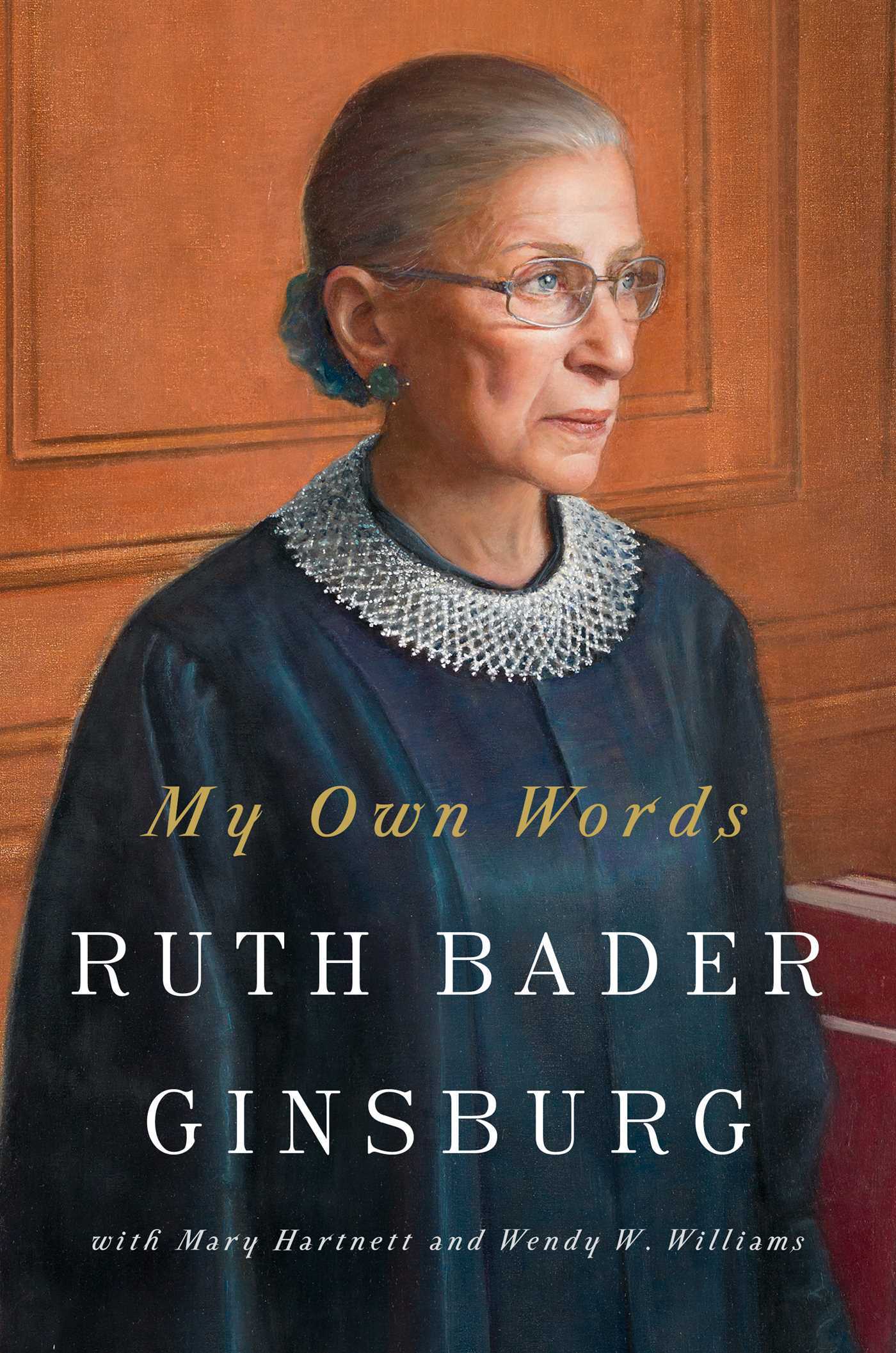
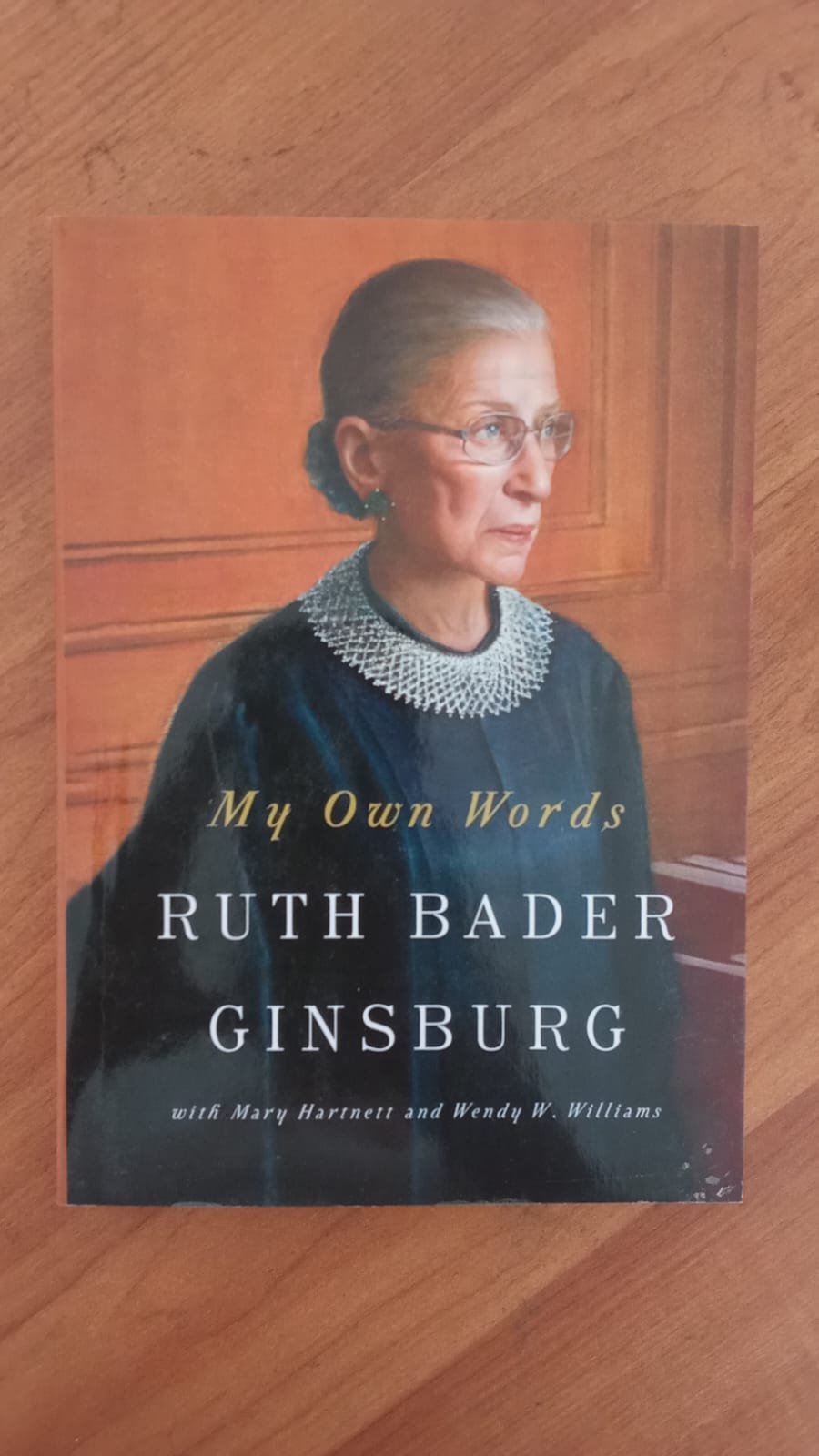



My Own Words by Ruth Bader Ginsburg


රු2,200.00
3 X Rs. 733.33 or 8% Cashback with


or 3 X රු733.33 with


or up to 4 X රු550.00 with


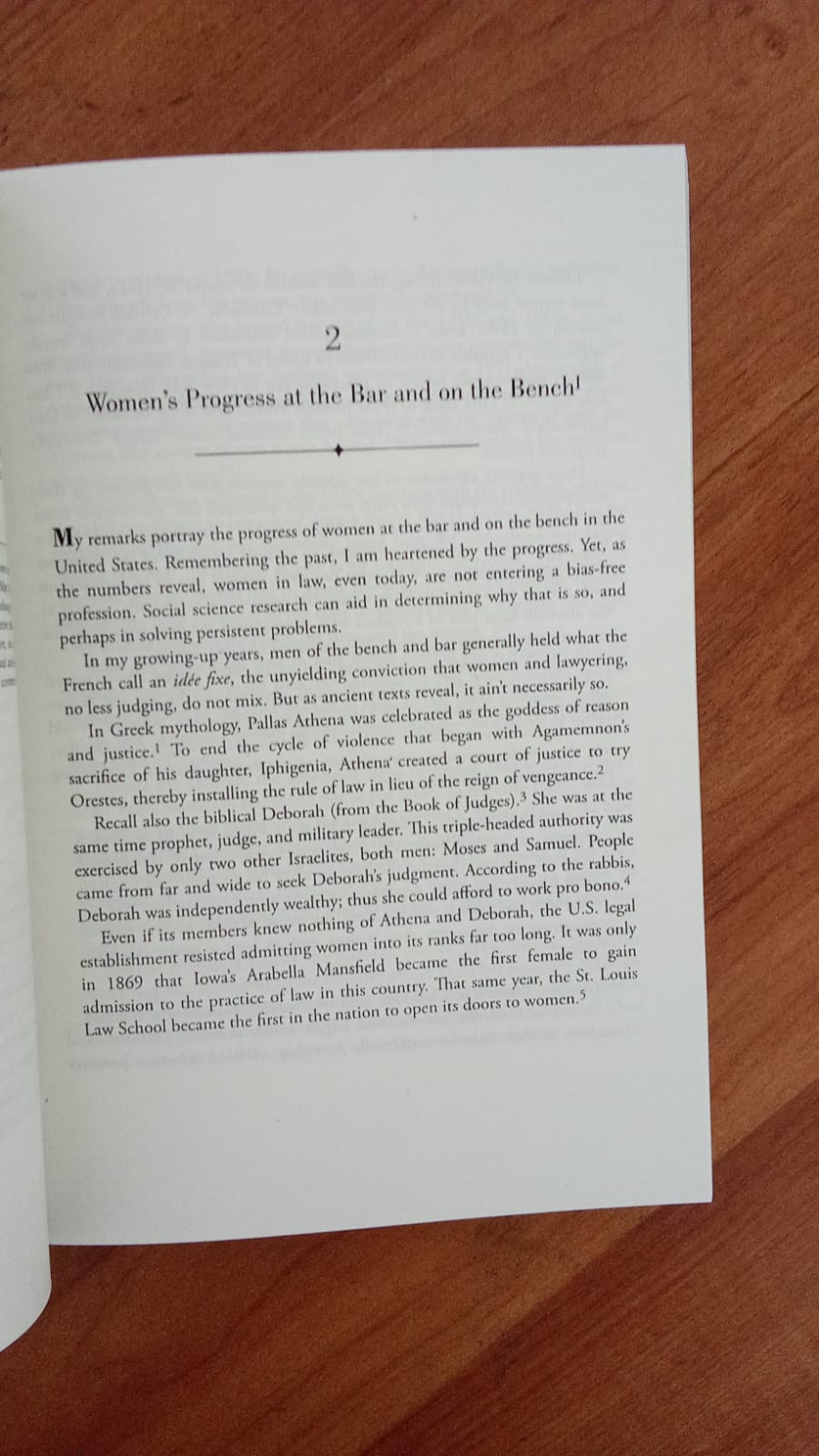
My Own Words by Ruth Bader Ginsburg is a compelling collection of writings and speeches from the influential U.S. Supreme Court Justice, presented with Mary Hartnett and Wendy W. Williams. Covering gender equality, women’s rights, constitutional law, the Supreme Court, Jewish identity, leadership, professional relationships and Ginsburg’s love of opera, the book offers readers an opportunity to encounter RBG through her own reasoning and reflections. Ideal for law students, history readers, leadership enthusiasts and anyone interested in equality, public service and one of the most influential American jurists of her generation.
5 in stock
My Own Words by Ruth Bader Ginsburg is an engaging collection of speeches, writings and reflections that allows readers to encounter the celebrated U.S. Supreme Court Justice through her own ideas, arguments, humor and experiences.
Rather than being a conventional autobiography told from beginning to end, this book brings together pieces from different stages of Ginsburg’s life and career.
Readers encounter her thoughts on:
Gender equality.
Law.
The U.S. Supreme Court.
Women in the legal profession.
Constitutional interpretation.
Jewish identity.
Education.
Professional relationships.
Opera.
Leadership.
Public service.
And the importance of disagreement without hostility.
Mary Hartnett and Wendy W. Williams provide introductions and biographical context that help connect Ginsburg’s speeches and writings with the events surrounding them.
The result is both personal and intellectual.
Readers learn about the legal arguments that shaped Ginsburg’s career, but they also encounter a woman who loved opera, valued friendship, respected careful preparation and believed strongly in the possibility of changing institutions through patient, persistent work.
My Own Words by Ruth Bader Ginsburg is particularly valuable because it does not ask readers to understand Ginsburg only through biographies, news stories or popular culture.
Much of the material comes directly from her.
Her words.
Her reasoning.
Her memories.
Her humor.
Her view of the law.
For readers interested in biography, law, history, women’s rights, equality, leadership or public service, it provides an accessible introduction to one of the most influential American legal figures of her generation.
My Own Words by Ruth Bader Ginsburg – Book Overview
My Own Words by Ruth Bader Ginsburg is a collection rather than a traditional chronological memoir.
That distinction is important.
You are not simply reading a story that begins in childhood and moves steadily toward the Supreme Court.
Instead, the book moves through speeches, essays, statements and other writings selected from across Ginsburg’s life.
Mary Hartnett and Wendy W. Williams help provide the historical and biographical framework needed to understand those selections.
This format allows readers to see how Ginsburg thought about issues across different periods of her career.
Ruth Bader Ginsburg
Ruth Bader Ginsburg was born in Brooklyn, New York, in 1933.
She studied at Cornell University, attended Harvard Law School and completed her legal education at Columbia Law School.
Her career eventually included:
Legal practice.
Teaching.
Advocacy.
Federal appellate judging.
And service on the United States Supreme Court.
She joined the Supreme Court in 1993 and served until her death in 2020.
But her influence on American law began long before she became a justice.
A Woman Entering a Male-Dominated Profession
When Ginsburg began her legal career, women faced substantial barriers within the profession.
Law schools.
Law firms.
Judicial clerkships.
Universities.
Many institutions were still structured around expectations that favored men.
Her own professional experience therefore became closely connected with the legal questions she would later pursue.
Gender Equality
One of the central themes in My Own Words by Ruth Bader Ginsburg is gender equality.
Ginsburg became particularly well known for legal work challenging laws that treated men and women differently simply because of traditional assumptions about gender roles.
Her approach was often strategic.
Rather than arguing that every inequality could be removed immediately through one dramatic case, she helped build legal principles gradually.
Equality Helps Everyone
An important part of Ginsburg’s approach was recognizing that gender stereotypes can harm both women and men.
A law based on the assumption that:
Women should always be caregivers.
Men should always be providers.
may limit both.
Equality means giving individuals greater freedom to make choices that do not automatically depend on sex.
Stereotypes
Stereotypes may appear positive.
Women are naturally nurturing.
Men are naturally strong.
But even apparently flattering stereotypes can become restrictive when institutions use them to determine what people are allowed to do.
A central principle in Ginsburg’s legal work was that individual opportunity should not be unnecessarily limited by generalized assumptions.
Women and the Law
My Own Words by Ruth Bader Ginsburg provides useful historical context for readers who have grown up after many legal barriers affecting women were removed.
Some rights that appear obvious today were once actively contested.
The book therefore demonstrates how legal change can occur gradually across decades.
Change Rarely Happens Overnight
Social progress is often presented afterward as inevitable.
It was not.
Someone had to:
Challenge existing rules.
Build legal arguments.
Find appropriate cases.
Persuade judges.
Change public understanding.
Repeat the process.
This makes Ginsburg’s career especially interesting to readers studying leadership and institutional change.
Strategy
One of the strongest lessons from Ginsburg’s career is the importance of strategy.
Knowing what you want is not enough.
You also need to understand:
Where change is possible.
Which argument is strongest.
Which audience must be persuaded.
What precedent already exists.
What step should come next.
Persuasion
Law is not simply about believing you are right.
You must persuade other people.
Judges.
Colleagues.
Clients.
Legislators.
The public.
That requires understanding how another person thinks.
Strong Arguments Need Structure
Ginsburg became known for careful legal reasoning.
A persuasive argument normally needs:
Evidence.
Logic.
Precedent.
Clarity.
An understanding of opposing arguments.
This lesson extends far beyond law.
Business presentations.
Academic essays.
Negotiations.
Leadership decisions.
All benefit from structured reasoning.
Preparation
Great communicators can sometimes appear effortless.
But clarity usually requires preparation.
Ginsburg’s career demonstrates the value of:
Reading carefully.
Researching thoroughly.
Understanding details.
Preparing before speaking.
The strongest short argument is often built on a large amount of unseen work.
Speak Clearly
Legal writing can become extremely complicated.
One of the useful qualities readers may notice in My Own Words by Ruth Bader Ginsburg is an effort toward clarity.
Complex subjects do not always require complicated language.
Good communication means helping the audience understand the argument.
The Supreme Court
A significant portion of the book concerns the United States Supreme Court and the judicial system.
For readers unfamiliar with constitutional law, the book provides insight into the work of a justice beyond the public image.
Supreme Court cases involve:
Written briefs.
Oral arguments.
Legal precedent.
Private conferences.
Majority opinions.
Concurring opinions.
Dissents.
The process is far more deliberate than the dramatic courtroom scenes often shown in movies.
Majority Opinions
When a majority of participating justices agree on an outcome and reasoning, an opinion explains the legal basis of the Court’s decision.
These opinions can influence:
Future cases.
Government policy.
Lower courts.
Legal rights.
That makes precise writing extremely important.
Dissent
Ginsburg became especially famous later in her career for dissenting opinions.
A dissent does not control the immediate outcome of a case.
So why write one?
Because a dissent can:
Explain disagreement.
Highlight consequences.
Suggest another legal interpretation.
Influence future judges or lawmakers.
Preserve an argument for later generations.
Losing Today Does Not Always End the Argument
This creates an important lesson.
A person can lose a decision and still influence the future.
In law.
Business.
Politics.
Science.
Social change.
An idea rejected today may later become important.
The way you respond to losing therefore matters.
Disagreeing Without Becoming Enemies
Another important theme in My Own Words by Ruth Bader Ginsburg is professional disagreement.
Ginsburg famously maintained a close friendship with Justice Antonin Scalia, despite major differences in legal philosophy.
They disagreed strongly on many questions.
Yet they shared interests, respected each other’s intelligence and enjoyed opera.
Their friendship became a widely discussed example of disagreement without personal hatred.
Civility
Civility does not mean pretending differences do not matter.
People can disagree strongly.
The question is whether disagreement must automatically become personal hostility.
Ginsburg’s professional relationships suggest another possibility.
Challenge the argument.
Not necessarily the humanity of the person making it.
Listen Before Responding
Effective disagreement requires listening.
If you misunderstand the opposing argument, your response may attack something nobody actually claimed.
This principle applies to:
Law.
Management.
Marriage.
Negotiation.
Politics.
Everyday conversation.
Supreme Court Colleagues
Public discussion often portrays courts only through outcomes.
But judges also work inside institutions that depend on professional relationships.
People who disagree on one case may need to work together on another.
Long-term cooperation requires a different mindset from winning a single online argument.
The Constitution
Constitutional interpretation also appears within My Own Words by Ruth Bader Ginsburg.
Different judges can agree on the importance of the Constitution while disagreeing about how its language should be interpreted and applied.
Questions may involve:
Text.
History.
Precedent.
Changing social conditions.
Institutional limits.
The book gives readers insight into Ginsburg’s own approach without requiring them to agree with every conclusion.
Read With an Open Mind
Because the book concerns law and public policy, readers may approach it with strong existing opinions.
A useful way to read is to ask:
What is the argument?
What evidence supports it?
What assumption does it make?
What would an opposing argument say?
This produces deeper understanding than simply asking whether you already agree.
Law and Social Change
Law can influence society.
Society can also influence law.
The relationship moves in both directions.
A court may recognize a principle after social attitudes have begun changing.
A judicial decision may also accelerate institutional change.
Understanding that relationship helps readers see why legal history develops gradually.
Courts Have Limits
Judges are powerful but not unlimited.
Courts operate within constitutional and institutional boundaries.
Legislatures.
Executives.
Courts.
Citizens.
all play different roles.
This is important because social change cannot usually depend on one institution alone.
Teaching
Before joining the federal judiciary, Ginsburg was also a law professor.
Teaching requires a different form of mastery.
It is one thing to understand something yourself.
It is another to explain it clearly enough that someone else can understand.
That ability appears throughout her writing.
Learn by Explaining
One practical lesson is:
If you want to know whether you understand an idea, try explaining it simply.
Where explanation becomes confusing, understanding may still be incomplete.
Jewish Identity
The official publisher highlights Ginsburg’s reflections on being Jewish as one of the subjects in the collection.
Her identity, family history and awareness of exclusion informed parts of her understanding of equality and justice.
For readers interested in how personal background shapes professional values, these reflections add another dimension to the book.
Memory and History
People do not develop ideas in isolation.
Family.
Culture.
Education.
Historical events.
Personal experiences.
all influence how people understand the world.
The book gives readers opportunities to see some of those influences in Ginsburg’s own thinking.
Women Who Open Doors
Ginsburg’s generation entered institutions where women were significantly underrepresented.
Those who succeeded often became examples for people following them.
Representation matters partly because it changes what younger people imagine is possible.
Being the First Is Not Enough
Individual success does not automatically remove structural barriers.
A woman reaching an important position is significant.
But broader equality requires making it easier for many qualified people to follow.
Mentorship
Professional progress is rarely entirely individual.
Teachers.
Colleagues.
Partners.
Friends.
Family members.
can influence a career.
My Own Words by Ruth Bader Ginsburg repeatedly reminds readers that public accomplishments exist within networks of relationships.
Marriage and Partnership
Ginsburg frequently spoke warmly about her marriage to Martin Ginsburg.
Their partnership became notable partly because he strongly supported her career during an era when professional expectations often assumed the opposite arrangement.
A supportive partnership is not a competition over whose career matters more.
It can involve helping each other succeed.
Work and Family
Ginsburg’s life also raises questions about combining:
Career.
Marriage.
Parenthood.
Public responsibility.
There is no single formula that works for every family.
But shared responsibility can make ambitious careers more sustainable.
Support Systems
People sometimes tell success stories as though one exceptional person did everything alone.
Usually that is incomplete.
Behind many successful people are:
Partners.
Family members.
Mentors.
Assistants.
Colleagues.
Institutions.
Recognizing support does not diminish achievement.
It makes the story more realistic.
Opera
One of the more personal and enjoyable elements of My Own Words by Ruth Bader Ginsburg is Ginsburg’s love of opera.
She was an enthusiastic opera fan, and the collection includes discussion of law and lawyers in opera.
This reveals a person beyond the courtroom.
Serious People Can Have Playful Interests
Public figures are often reduced to one identity.
Judge.
Politician.
CEO.
Professor.
But people contain many interests.
Ginsburg’s enthusiasm for opera reminds readers that demanding professional lives can still include art, humor and friendship.
Humor
The collection is not relentlessly formal.
The publisher describes it as both serious and playful.
Humor can make difficult subjects more approachable.
It can also reduce unnecessary tension.
Leadership Without Loudness
Leadership is often associated with:
Charisma.
Volume.
Dominance.
Visibility.
Ginsburg represented another style.
Careful preparation.
Precise language.
Persistence.
Institutional knowledge.
Quiet determination.
There is no single personality required for influence.
You Do Not Need to Be the Loudest Person
Some people lead by commanding attention.
Others lead by making the argument nobody can easily ignore.
This can be encouraging for readers who are naturally:
Quiet.
Analytical.
Reflective.
Leadership can take different forms.
Persistence
Ginsburg’s career stretched across decades of legal and social change.
Long-term reform requires patience.
Many important goals cannot be completed:
This week.
This month.
This year.
Persistence means continuing even when progress is slower than hoped.
Incremental Change
Large change is sometimes built through small precedents.
One case.
Then another.
One policy.
Then another.
One person persuaded.
Then another.
Incremental progress can appear unimpressive in the moment but substantial over decades.
Choose Battles Carefully
Not every disagreement deserves equal energy.
A strategic person asks:
What matters most?
Where can I actually create change?
Which argument has the greatest chance of succeeding?
Which issue can wait?
Focus protects energy.
Reputation
Professional reputation is built over time.
People learn whether you are:
Prepared.
Reliable.
Fair.
Accurate.
Respectful.
Those qualities create credibility.
Credibility Compounds
One brilliant performance can help.
But repeated reliability creates something stronger.
Trust.
Once people trust your preparation, your arguments receive greater attention.
Independence
Judicial work requires independence.
A judge should not simply decide what is popular.
The role involves applying legal reasoning even when outcomes may be controversial.
Whether readers agree with a particular decision or not, understanding the importance of institutional independence is essential to understanding courts.
Public Opinion and Law
Courts exist within society but are not identical to opinion polls.
That creates tension.
Legal institutions need legitimacy, but judicial reasoning cannot simply change every time public sentiment changes.
This tension appears throughout constitutional democracies.
Women in Leadership
Ginsburg’s career became symbolically important to many women entering:
Law.
Government.
Academia.
Leadership.
Her public visibility demonstrated that women could occupy institutions from which they had once been largely excluded.
Representation and Substance
Representation matters.
But representation alone is not the entire story.
What someone does after gaining authority matters too.
Competence.
Judgment.
Integrity.
Impact.
Leadership should be evaluated by substance as well as symbolism.
The Notorious RBG Phenomenon
Late in her career, Ginsburg became an unexpected popular-culture icon sometimes nicknamed “Notorious RBG.”
This transformed a Supreme Court justice into a figure recognized well beyond legal circles.
It also demonstrates how social media can reshape the public image of an institution traditionally associated with formality.
Public Figure Versus Real Person
Popular culture simplifies.
A public figure becomes:
A meme.
A slogan.
A symbol.
But My Own Words by Ruth Bader Ginsburg offers something more substantial.
Readers encounter legal reasoning, personal reflections and professional history rather than only the cultural image.
Read the Source, Not Only the Reputation
This may be one of the best reasons to read the book.
People often form strong opinions about famous figures without reading anything they actually wrote.
Primary-source material gives readers a better opportunity to judge the person’s ideas directly.
Mary Hartnett and Wendy W. Williams
Mary Hartnett and Wendy W. Williams played an important role in shaping the collection.
The publisher describes them as Ginsburg’s authorized biographers who selected material with her and provided introductions and biographical context based partly on extensive interviews.
That structure helps make the collection accessible to readers who may not already know the legal or historical background.
Is My Own Words an Autobiography?
Not exactly.
My Own Words by Ruth Bader Ginsburg contains autobiographical material and offers significant insight into Ginsburg’s life.
But it is primarily a collection of her writings and speeches, organized with contextual introductions.
Readers wanting a conventional birth-to-later-life narrative should understand this distinction.
Is My Own Words a Law Book?
Partly.
Law is central to the collection.
But the book also includes:
Personal history.
Gender equality.
Jewish identity.
Education.
Opera.
Professional relationships.
Reflections on public service.
Therefore, readers do not need to be lawyers to appreciate it.
Do You Need Legal Knowledge?
No.
Some sections naturally contain legal terminology and constitutional ideas.
However, the contextual material helps general readers understand why the subjects matter.
Law students may notice additional detail, but the book was designed for a broader audience.
Is the Book Political?
The book discusses Supreme Court decisions, constitutional issues, equality and public institutions, so some material naturally overlaps with political debate.
However, it is better understood as a collection of legal and personal writings than as a modern party-political campaign book.
Readers can engage with Ginsburg’s arguments critically whether they agree with every position or not.
Is My Own Words a Biography?
It contains biographical material but is not a traditional third-person biography.
The strongest description is:
A collection of Ruth Bader Ginsburg’s own writings and speeches, presented with biographical context.
Is It Good for Students?
Yes.
My Own Words by Ruth Bader Ginsburg may be especially useful for students interested in:
Law.
History.
Gender studies.
Politics and government.
Public speaking.
Leadership.
Constitutional studies.
Women’s history.
It also provides examples of careful argumentation and persuasive writing.
Is It Good for Law Students?
Yes.
Law students may appreciate seeing how a major jurist:
Frames arguments.
Explains precedent.
Discusses judicial institutions.
Approaches equality.
Communicates complex ideas.
The value is not limited to agreeing with her legal conclusions.
Studying strong reasoning can improve your own reasoning.
Is It Only for Readers Who Admire Ginsburg?
No.
You do not need to agree with a public figure to benefit from reading their own work.
In fact, reading primary material can produce a more informed opinion than relying on supporters or critics.
Readers should approach the text thoughtfully and compare legal or historical claims with other perspectives when deeper study is required.
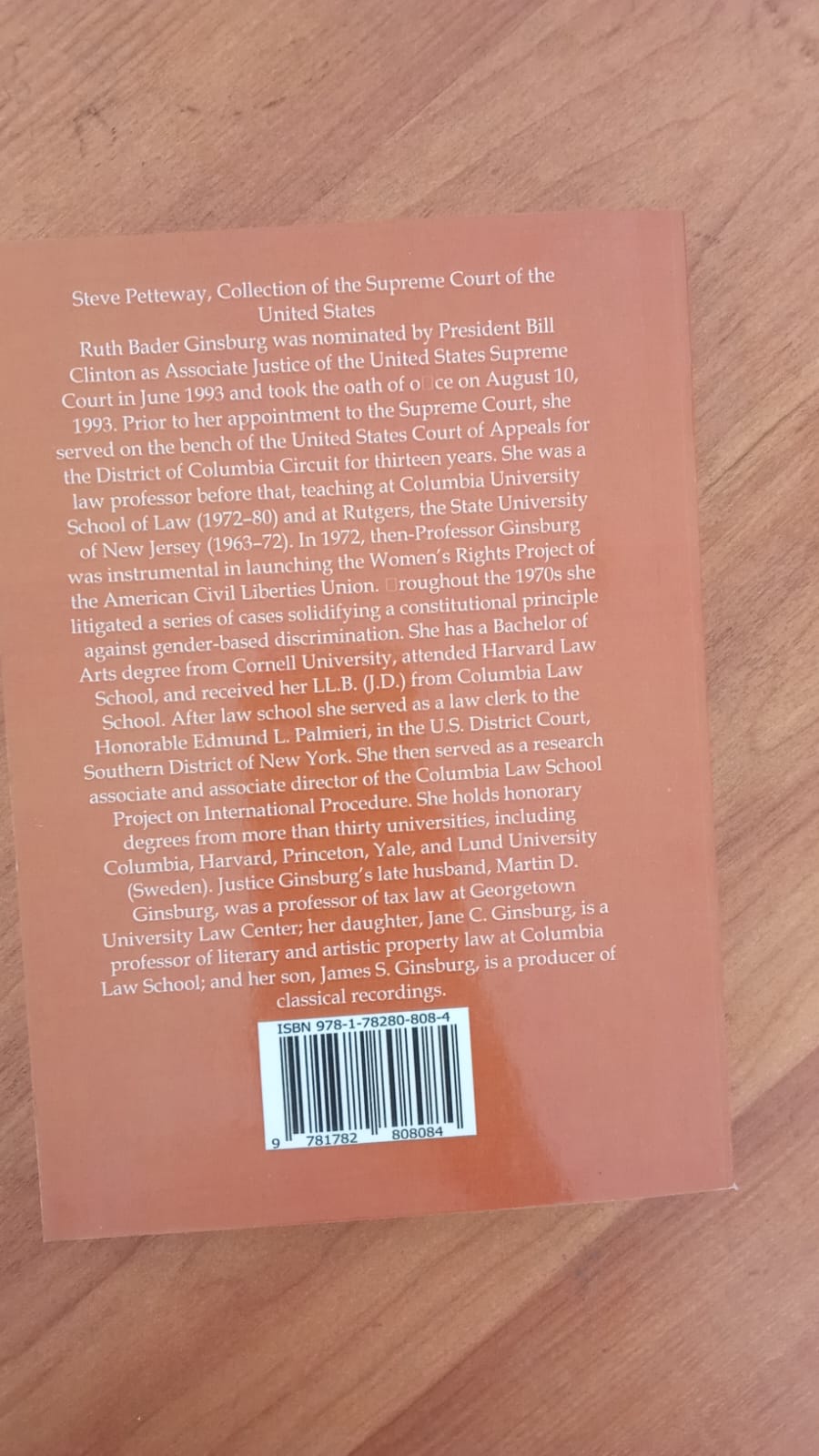
Official Edition Details
For the Simon & Schuster trade paperback:
Title: My Own Words
Author: Ruth Bader Ginsburg
With: Mary Hartnett and Wendy W. Williams
Publisher: Simon & Schuster
Pages: 400
Trade Paperback ISBN: 9781501145254
Paperback Publication Date: August 7, 2018
The original hardcover edition was published in October 2016.
Important Themes
My Own Words by Ruth Bader Ginsburg explores gender equality, constitutional law, women’s rights, the Supreme Court, judicial reasoning, professional persistence, public service, disagreement, civility, Jewish identity, education, leadership, legal history, marriage, mentorship, opera, writing, advocacy, institutional change and equality before the law.
7 Powerful Lessons From My Own Words by Ruth Bader Ginsburg
- Prepare before you speak – Strong arguments often look simple because enormous preparation happened before they were presented.
- Fight stereotypes by focusing on individual ability – Assumptions about what men or women are “supposed” to do can restrict everyone, while equality expands individual choice.
- Change can be built step by step – Large institutional reforms often emerge through many smaller legal, cultural and professional victories rather than one dramatic moment.
- Disagreement does not require personal hatred – Ginsburg’s professional relationships demonstrate that strong intellectual differences can coexist with respect and friendship.
- A dissent can matter even when it loses today – An argument that does not control the immediate outcome can still influence future conversations, courts and generations.
- Persistence is a form of leadership – Long-term influence often comes from continuing careful work through setbacks rather than demanding instant results.
- Use your position to make opportunity wider for others – Personal success becomes more significant when it helps challenge barriers that prevented others from receiving the same opportunities.
Why Read My Own Words by Ruth Bader Ginsburg?
My Own Words by Ruth Bader Ginsburg is an excellent choice for readers interested in Ruth Bader Ginsburg, biography and memoir, women’s history, gender equality, law, the Supreme Court, constitutional history, leadership, public service, persuasive writing, civil rights, legal education, American history and influential women.
The collection is particularly valuable for readers who want to move beyond the popular image of “RBG” and encounter Ginsburg through her own arguments, speeches and reflections.
Who Should Read This Book?
My Own Words by Ruth Bader Ginsburg may especially appeal to law students, university students, lawyers, teachers, historians, readers interested in women’s rights, aspiring leaders, public-policy readers, biography fans, students of American government and anyone interested in understanding how carefully constructed arguments can influence institutions over time.
It is also a strong choice for readers who value primary-source material and prefer to learn about an important public figure through what that person actually wrote and said.
My Own Words by Ruth Bader Ginsburg – A Life Expressed Through Ideas
My Own Words by Ruth Bader Ginsburg is ultimately a book about ideas expressed across a remarkable professional life.
Readers encounter a young woman entering a profession where opportunities for women were restricted.
A lawyer building arguments against gender discrimination.
A professor teaching future lawyers.
A judge learning how institutions work from within.
A Supreme Court Justice writing opinions and dissents that would become part of American legal history.
But the book also reveals interests beyond law.
Family.
Friendship.
Opera.
Humor.
Heritage.
Education.
These dimensions matter because public figures are often reduced to symbols.
Ruth Bader Ginsburg became a symbol to many people.
For some, she represented women’s advancement and equality.
For others, she was principally an influential jurist whose constitutional views should be studied and debated.
A serious reader does not need to choose between admiration and critical thinking.
You can read carefully.
Consider the reasoning.
Agree in some places.
Disagree in others.
And understand more afterward than you did before.
That is one of the greatest values of primary-source writing.
It gives the person an opportunity to make their own case.
The reader then has the responsibility to think.
For students, lawyers, leaders and readers interested in equality, justice and institutional change, My Own Words by Ruth Bader Ginsburg offers a compelling collection from a woman whose professional life intersected with some of the most important legal and social changes of modern American history
Learn more about My Own Words by Ruth Bader Ginsburg on the official Simon & Schuster website.
Explore more biography and memoir books at Bargain Books.
Be the first to review “My Own Words by Ruth Bader Ginsburg”
Related products

රු2,000.00
3 X Rs. 666.67 or 8% Cashback with
or 3 X රු666.67 with
or up to 4 X රු500.00 with
-13%
Out of stock
Non-Fiction & Knowledge
Original price was: රු3,900.00.රු3,400.00Current price is: රු3,400.00.
3 X Rs. 1,133.33 or 8% Cashback with
or 3 X රු1,133.33 with
or up to 4 X රු850.00 with
Out of stock
Autobiography
රු2,750.00
3 X Rs. 916.67 or 8% Cashback with
or 3 X රු916.67 with
or up to 4 X රු687.50 with
-19%

Out of stock
Non-Fiction & Knowledge
Original price was: රු2,650.00.රු2,150.00Current price is: රු2,150.00.
3 X Rs. 716.67 or 8% Cashback with
or 3 X රු716.67 with
or up to 4 X රු537.50 with
Non-Fiction & Knowledge
රු2,250.00
3 X Rs. 750.00 or 8% Cashback with
or 3 X රු750.00 with
or up to 4 X රු562.50 with
Non-Fiction & Knowledge
රු1,600.00
3 X Rs. 533.33 or 8% Cashback with
or 3 X රු533.33 with
or up to 4 X රු400.00 with

Non-Fiction & Knowledge
රු1,500.00
3 X Rs. 500.00 or 8% Cashback with
or 3 X රු500.00 with
or up to 4 X රු375.00 with

Out of stock
Non-Fiction & Knowledge
රු1,900.00
3 X Rs. 633.33 or 8% Cashback with
or 3 X රු633.33 with
or up to 4 X රු475.00 with
Reviews
There are no reviews yet.